





Software projects rarely fall apart because a developer “can’t code.” They fall apart because the work gets blurry, priorities drift, decisions happen too late, or releases feel like a gamble. That is why a clear delivery system matters.
A good software development lifecycle gives you a repeatable way to move from an idea to production, and then keep the product healthy after launch. It helps you reduce second-guessing, align people who think differently, and spot risks before they become expensive surprises. In the end, you ship more calmly, fix problems sooner, and build trust with users because every release has a plan behind it.
What is the Software Development Life Cycle?
Let’s address the question people search for: what is software development life cycle?
In plain terms, it is a structured approach to building and maintaining software so you can deliver quality consistently. If you want the formal phrasing, here it is once, clearly: definition of software development life cycle means a defined set of activities that guide software from planning to ongoing maintenance with controls for quality, cost, and risk.
Now, the more helpful view: SDLC is your delivery rhythm. It is the thing that keeps product, design, engineering, QA, security, and operations from pulling in different directions.
Here’s what SDLC is not (keeping this as a short bullet section, as requested):
- It is not a giant document that nobody touches again.
- It is not “one kickoff checklist” and then chaos.
- It is not only for slow enterprise projects.
- It is not the enemy of Agile delivery.
Instead, SDLC is the structure that lets you move quickly without breaking important things.
And yes, people use overlapping terms. They often mean the same big idea, but with a different focus. You’ll see that in job posts, vendor pitches, and internal docs.
They all connect to one truth: software is never “done.” It keeps moving. SDLC is how you keep that motion under control.
How The SDLC Flows From Start To Finish
Even though teams work differently, most teams touch the same building blocks. Requirements still exist, even in Agile. Design still happens, even if it’s lightweight. Testing still matters, even if you automate most of it. Operations still exist, even if you call it “DevOps.”
To make the big picture easy to visualize, here’s a text-based software development life cycle diagram that matches the seven-phase structure you asked for:
Plan → Define → Design → Build → Test → Release → Maintain → (Repeat)
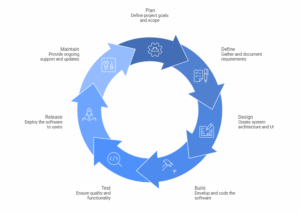
That loop is the general software development life cycle in one line. It also describes the full software development life cycle as a cycle rather than a one-way road.
The key idea is continuity. Each phase produces outputs that make the next phase easier. When a phase is skipped or rushed, pain shows up later in the form of rework, bugs, rollbacks, or security issues.
Why SDLC Discipline is Essential In 2026?
Modern delivery pushes two forces at the same time: speed and complexity. Those forces create pressure on every part of the cycle, not just coding.
Mid-cycle reality check: GitLab’s 2025 Global DevSecOps survey reports that 82% deploy to production at least weekly. That same report highlights tool sprawl: 60% use more than 5 tools for software development; 49% use more than 5 AI tools. These numbers show why a solid lifecycle matters: frequent releases plus many tools can either become smooth automation, or it can become confusion and handoffs. The reference link is here and kept as requested:
The same GitLab report adds another detail that affects how you run SDLC: 97% are using or planning to use AI in the SDLC, but only 37% would trust AI to handle daily tasks without human review. That gap is important. You can move faster with AI, yet you still need guardrails, reviews, and evidence-based quality checks.
Now look at the near future. Gartner forecasts that 40% of enterprise applications will include task-specific AI agents by the end of 2026, up from <5% in 2025. That matters because “agent-like” features increase the need for permission boundaries, auditability, predictable behavior, and monitoring. The reference link is here and kept:
So the SDLC does not become less important because tools improve. It becomes more important because the system becomes more dynamic.
Key Applications Where SDLC Makes The Biggest Difference
SDLC applies everywhere, but it has the biggest impact when mistakes cost money, safety, trust, or compliance effort.
- Consumer web and mobile apps where releases affect conversion, churn, and reviews
- SaaS products where uptime and stability decide renewals
- Fintech and payment systems where audit trails and access controls are required
- Healthcare systems where privacy and correctness matter every day
- Data platforms where pipeline errors cause expensive decisions
- IoT and embedded software, where late change can force hardware changes
If you build in any of these spaces, SDLC is not an “extra process.” It is protection.
The 7 SDLC Phases, Explained Like You Actually Run Them
You also asked about SDLC phases, specifically the seven phases of the software development life cycle. Below is a practical version you can use across most teams. You’ll see these stages of the SDLC show up whether you work in Agile, DevOps, or a hybrid software development life cycle setup.
Phase 1: Planning And Feasibility
Planning is where you decide what you’re solving and why it matters. Feasibility is where you face reality. Can it be built with your current stack? Do you need a vendor? Will compliance review slow you down? Are there technical constraints that could block the plan?
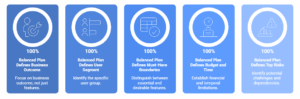
This phase sounds simple, yet it’s where many projects drift off-track. If scope stays vague, every later phase becomes guesswork. On the other hand, if planning becomes too heavy, you delay learning. A balanced plan defines:
- the business outcome (not just features)
- the user segment
- the “must-have” versus “nice-to-have” boundaries
- budget and time constraints
- top risks and dependencies
This phase is also where you choose your approach. Do you run strict gates? Do you run sprints? Do you ship continuously? These choices shape your delivery flow.
Phase 2: Requirements And Analysis
This phase converts goals into buildable work. It answers: what must the software do, under what conditions, with what constraints?
Strong requirements include acceptance criteria, edge cases, and non-functional needs like performance, reliability, privacy, and accessibility. If those are missing, you can deliver the “feature” and still fail in production.
Requirements are also a communication tool. They keep product, engineering, QA, and stakeholders aligned. Without clarity here, arguments happen later, usually under deadline pressure.
Phase 3: Architecture And Experience Design
Design is where your product becomes concrete. It includes UX flows and UI structure. It also includes technical design: architecture, data model, API contracts, integration patterns, and operational concerns like logging and scalability.
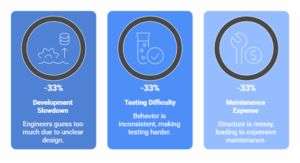
If design is rushed, your team pays in three places:
1.Development slows because engineers guess too much
2.Testing becomes harder because behavior is inconsistent
3.Maintenance becomes expensive because structure is messy
Design does not have to be a huge document. It should be clear enough that another engineer can understand the plan, the trade-offs, and the constraints.
Phase 4: Development And Implementation
This is the build phase, but it includes more than coding. It includes code review habits, branch strategy, build automation, and keeping environments consistent. Good teams treat development as a flow, not a one-person action.
This is also where AI tools often show up. That can speed output, but it can also create mismatches, insecure defaults, or inconsistent code style if it’s not reviewed.
That’s why the earlier GitLab detail matters: 97% are using or planning to use AI in the SDLC, yet only 37% trust AI to handle daily tasks without human review. If you want speed without chaos, keep human review where it matters and automate the repeatable checks.
Phase 5: Testing And Quality Assurance
Testing proves behavior, reliability, and safety. It is not only QA at the end. It is a set of checks that run throughout the cycle.
A realistic testing strategy validates:
- functional correctness (does it do what it should?)
- integration correctness (does it work with other systems?)
- regression safety (did the change break something else?)
- performance expectations (does it slow down under load?)
- security basics (does it protect data and access properly?)
Release speed makes this phase even more important. Remember, GitLab’s 2025 report says 82% deploy to production at least weekly. Weekly releases do not work if testing is an afterthought. Testing must move earlier and become more automated, otherwise the pipeline breaks.
Phase 6: Deployment And Release Management
Deployment moves the change into production. Release management controls risk during that move. This phase includes rollout strategy, monitoring checks, release notes, feature flags, and rollback readiness.
A calm deployment is not luck. It’s design. It’s automation. It’s repeatable. When releases feel “dramatic,” the pipeline usually lacks clear gates or observability.
Tool sprawl can also create release friction. GitLab reports 60% use more than 5 tools for software development; 49% use more than 5 AI tools. When releases cross too many tools, handoffs and context switching multiply. A clean release process reduces those cracks.
Phase 7: Maintenance And Continuous Improvement
Maintenance is where your software lives. It includes bug fixes, performance tuning, monitoring, incident response, dependency updates, security patches, and user support feedback.
This phase often decides your long-term cost. If you keep the product healthy, future changes get easier. If you ignore health work, every change becomes risky, slow, and stressful.
Maintenance also completes the cycle: it feeds learning back into planning. That feedback loop is what makes SDLC a cycle rather than a checklist.
What Each Phase Produces (So Everyone Stays Aligned)
| Phase | Output You Should Expect | Why It Matters |
| Planning And Feasibility | scope boundaries, risks, success metrics | prevents drift and late surprises |
| Requirements And Analysis | acceptance criteria, constraints, NFRs | reduces rework and confusion |
| Architecture And Experience Design | diagrams, contracts, decision notes | makes implementation predictable |
| Development And Implementation | reviewed code, build artifacts | supports stable, repeatable delivery |
| Testing And QA | test evidence, defect triage plan | protects quality and user trust |
| Deployment And Release | rollout steps, monitoring checks, rollback plan | reduces incident blast radius |
| Maintenance And Improvement | patch plan, learnings, backlog updates | keeps long-term costs under control |
This table alone removes a lot of “who owns what?” confusion.
Common SDLC Models And How To Choose The Right One
Your process shape matters, and that’s exactly why SDLC models exist. If you’re looking for common software development life cycle models, a lot of content stays surface-level. The better framing is this: an SDLC approach isn’t a trend. It’s a risk strategy that shapes how teams plan, build, and release software.
Here are some of the most widely used software development life cycle (SDLC) approaches, starting with a classic model.
Waterfall: The Traditional Approach
In the Waterfall software development life cycle, phases run in a strict sequence. Teams lock requirements early, then move through design, development, testing, and finally release. Because each stage depends on the previous one, the waterfall model is often treated as the “traditional” SDLC; it mirrors older enterprise delivery patterns.
This SDLC model can work well when requirements are stable, and change is costly or constrained by policy. It tends to struggle, though, when frequent user feedback is critical, and priorities shift midstream.
V-Model: Verification Paired With Each Stage
The V-Model pairs each development stage with a matching test stage. It strengthens verification discipline and traceability.
It fits regulated environments where you must prove that requirements map to tests and outcomes. Like Waterfall, it can become rigid when requirements change frequently.
Iterative Model: Deliver In Cycles
Iterative work delivers value in cycles, improving each iteration. It’s useful when you want to learn without losing structure.
Iterative delivery can drift if you don’t manage scope carefully. Still, it fits many product teams better than rigid gating.
Spiral Model: Risk-Driven Iteration
Spiral runs iterative loops but adds explicit risk analysis at each loop. It’s common in complex systems with uncertain requirements or high risk.
Spiral can be powerful. It can also become heavy if leadership lacks clarity. Use it when risk is the dominant factor.
Agile Model: Short Cycles And Fast Feedback
Agile focuses on short cycles, frequent feedback, and continuous adjustment. Agile is not “no process.” Agile is disciplined learning.
Agile works well when you need speed and flexibility, but you still need a strong definition of done, testing discipline, and stable release practices.
DevOps Model: Delivery And Operations As One System
DevOps blends development and operations and emphasizes automation, monitoring, and fast recovery.
This aligns naturally with high-release cadence environments, like the teams reflected in the GitLab 2025 report, where 82% deploy to production at least weekly. That speed needs automation, safe rollouts, and observability.
Lean Model: Reduce Waste, Protect Flow
Lean focuses on reducing waste and improving flow. It encourages small batch sizes, fast feedback loops, and continuous improvement.
Lean helps when teams feel stuck in handoffs, waiting, and unclear priorities. It works best when you measure outcomes, not activity.
| If Your Reality Looks Like This… | Strong Options | What You Gain |
| Stable requirements, heavy compliance | Waterfall, V-Model | traceability and predictable gates |
| Product changes often, fast feedback needed | Agile, Iterative | speed without constant rework |
| High uncertainty, high risk | Spiral | risk control and structured learning |
| Frequent releases, uptime pressure | DevOps + Agile | safer automation and faster recovery |
| Too many delays and handoffs | Lean | smoother flow and less waste |
A model should match your risk, not your preferences.
Secure SDLC Without Turning Delivery Into Bureaucracy
Security is not a final stage. It’s a quality dimension that touches every stage. That’s what people mean by a secure software development life cycle. You prevent security issues by designing for safety early, and by verifying safety continuously.
Security becomes more important as AI changes software behavior. Gartner forecasts a jump in agent-enabled applications: 40% of enterprise apps will include task-specific AI agents by the end of 2026, up from <5% in 2025. As autonomy increases, permission boundaries and audit trails become more important, not less.
Security also ties into AI use inside the lifecycle itself. GitLab reports that 97% are using or planning to use AI in the SDLC, yet only 37% trust AI daily without human review. That implies a practical approach: automate repeatable security checks, then keep human review for high-impact decisions.
A secure SDLC works best when it stays concrete:
- During planning, teams define data sensitivity levels and identify regulatory constraints.
- At the requirements stage, abuse cases are added alongside clear permission and access rules.
- Within design, trust boundaries are mapped, and access-control flows are specified.
- Throughout development, engineers follow secure coding standards and maintain strong dependency hygiene.
- As testing progresses, authorization, session handling, and common misuse scenarios are thoroughly validated.
- When deployment begins, safe rollout strategies and monitoring controls are enforced.
- Across maintenance, teams patch rapidly and incorporate lessons learned from incidents.
This approach scales because it avoids dramatic security reviews at the end.
| Risk Type | What It Looks Like | What Reduces It |
| Access control gaps | users see or edit what they shouldn’t | clear permission rules + tests |
| Weak boundaries | services trust each other too easily | trust boundary design + least privilege |
| Dependency exposure | old libraries with known issues | scanning + upgrade schedule |
| Risky releases | one rollout breaks many users | staged rollout + rollback plan |
| Poor visibility | bugs appear and nobody knows why | logging + monitoring + alerting |
Security becomes manageable when it’s designed into the flow.
Where SDLC Creates Real Benefits (Not Just “Process”)
You asked for benefits and importance. The easiest way to see SDLC value is to look at the problems it reduces.
Less Rework, Less Waste
When planning and requirements are clear, fewer features get rebuilt. When design is solid, fewer changes require rewiring core parts. When testing is integrated early, fewer bugs escape. Rework drops. Waste drops.
More Predictability
Teams don’t need perfect forecasts. They need reliable signals. SDLC creates checkpoints with evidence: acceptance criteria, tests, release readiness, and monitoring.
Better Quality And User Trust
Quality is not only “no bugs.” It’s consistency, performance, and stability after updates. SDLC helps you protect those outcomes as the product grows.
Stronger Security Posture
Security becomes repeatable. It becomes less about last-minute audits and more about continuous controls.
Faster Delivery Over Time
This sounds backward, yet it’s true. Structure makes speed sustainable. Without structure, speed creates incidents. Incidents create emergency work. Emergency work destroys velocity. SDLC breaks that loop.
Best Practices That Keep SDLC Lean And Effective
This is one of the limited bullet sections, as requested. These are best practices in the software development life cycle that keep things simple without making the process fragile.
- Define “done” using evidence: tests, review, and release readiness, not opinions
- Keep changes small so review, testing, and rollout stay safer
- Automate repeatable checks so humans focus on tricky risks
- Document key decisions briefly so context survives team changes
- Use feature flags to separate deployment from user exposure
- Treat incidents as feedback that improves the next cycle
This is where many teams win: not by adding steps, but by tightening the steps they already do.
How AI Changes Delivery (Without Replacing The Lifecycle)
AI can speed drafting and reduce busywork. Yet it also changes where risk appears.
You already saw the adoption gap: 97% are using or planning to use AI in the SDLC, but only 37% trust AI to do daily tasks without human review. That tells you how to use AI responsibly: as an accelerator, not as a final authority.
Then the 2026 forecast changes product design itself. If 40% of enterprise applications include task-specific AI agents by the end of 2026, you will see more workflows where software triggers actions, suggests next steps, or automates tasks. That expands the scope of what “correctness” means. Now you must test not only output, but behavior boundaries and failure modes.
This does not require fear. It requires clarity and verification.
Common Mistakes That Make SDLC Feel Painful
This is the third and final bullet section to keep within your limit.
- Skipping requirements clarity, then “discovering” the real need during development
- Treating design as optional, then paying for architectural churn later
- Testing too late, which forces rushed fixes and unstable releases
- Deploying without monitoring, which turns incidents into long guessing games
- Neglecting maintenance, which quietly increases cost and slows future delivery
These issues are common because they feel small at first. Then they compound. SDLC exists to stop that compounding effect.
Conclusion: Streamline Your Success with LITSLINK
Choosing the right SDLC model is a strategic decision that defines your product’s success. Whether it’s the flexibility of Agile or the speed of Lean, a structured process is essential for minimizing risks and ensuring high quality.
At LITSLINK, we don’t just follow frameworks—we optimize them for your business. By partnering with us, you gain:
-
Advanced AI Expertise: We integrate AIaaS and Machine Learning to future-proof your product.
-
Rapid Delivery: From MVP prototyping to full-scale SaaS solutions, we accelerate your time-to-market.
-
Proven Quality: Our end-to-end approach ensures seamless development, testing, and deployment.
Ready to build something extraordinary? Contact LITSLINK today, and let’s choose the perfect development roadmap for your project.