





The Most Advanced AI Systems in 2026: A Developer & Business Guide
Compares the 18 most advanced AI systems of October 2026 across text, coding, media, agents and open-weight models, with benchmark scores, pricing and the best pick for each job.
Services.
End-to-end product development — from AI prototypes to scalable web and mobile platforms.
View all services →Not sure where to start?
Book a free discovery call →Software Development
Industries.
Domain expertise that shortens discovery and gets compliance right from day one.
Not sure where to start?
Book a free discovery call →Core Expertise
AI Agents.
Custom AI agents that take routine work off your team — built and deployed in weeks.
View all AI agents →Not sure where to start?
Book a free discovery call →AI Agents For
Technologies.
A modern stack for every layer of your product — pick one or let us recommend.
View all technologies →Not sure where to start?
Book a free discovery call →Hire.
Vetted senior engineers who join your team in as little as 48 hours.
View all roles →Not sure where to start?
Book a free discovery call →Case Studies.
1540+ projects delivered for startups and enterprises in 82+ countries.
View all case studies →Not sure where to start?
Book a free discovery call →Resources.
Guides, live sessions and tools to plan your product and budget.
Visit the blog →Not sure where to start?
Book a free discovery call →Company.
The team behind 1540+ projects for 1000+ clients worldwide.
Get in touch →Not sure where to start?
Book a free discovery call →In Numbers
Enter to search·Esc to close
Insights on AI, software engineering, and product design from the LITSLINK team — practical takes, not just trend recaps.
Compares the 18 most advanced AI systems of October 2026 across text, coding, media, agents and open-weight models, with benchmark scores, pricing and the best pick for each job.
A seven-step AI implementation roadmap for enterprises: why most AI projects fail, how to go from business goals and data readiness to use case selection, integration, scaling and measurable ROI.
 Viacheslav PetrenkoChief Technology Officer
Explains the real differences between conversational AI and rule-based chatbots: how each works, what each costs, when each makes sense, and how to tell which one a vendor is actually selling.
 Volodymyr MatusSenior ML/AI Engineer at LITSLINK
A practical guide to vetting AI development vendors: why most AI projects fail, the questions that separate real production experience from polished demos, and the red flags worth leaving over.
 Oleg KhanachivskyiHead of Upwork Sales
Explains how ERP and MES differ in manufacturing, what each system does, ERP types and implementation timelines, and what 2026 data says about why ERP projects overrun.
Viacheslav PetrenkoChief Technology OfficerBreaks down what a telemedicine app costs to build in 2026 by tier and feature, including HIPAA compliance, EHR integration, video infrastructure and the ongoing costs budgets often miss.
Viacheslav PetrenkoChief Technology OfficerExplains how AI is used in marketing, with real examples from Amazon, Sephora and Michaels, practical use cases, the market outlook and a step-by-step pilot plan for small businesses.
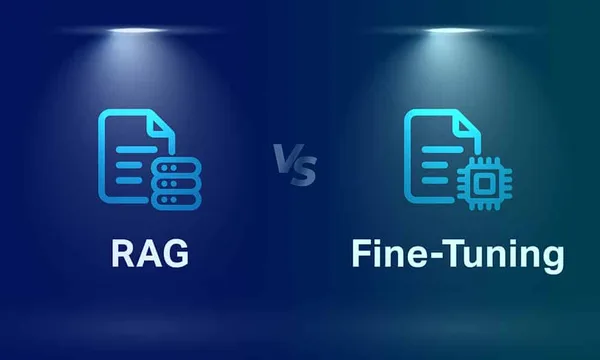
Oleg KhanachivskyiHead of Upwork SalesCompares RAG and fine-tuning for 2026 AI projects: how each works, real costs, timelines and accuracy trade-offs, and a framework for choosing one or combining both.
Volodymyr MatusSenior ML/AI Engineer at LITSLINKShows 21 non-obvious ways AI shapes everyday life in 2026, from maps, spam filters and fraud checks to health wearables, with current adoption data and new AI rules.
Oleg KhanachivskyiHead of Upwork SalesCovers the global life science software market in 2026: size and growth to 2033, key players, clinical trial and lab tools, cloud and AI adoption, and the barriers slowing adoption.
Oleg KhanachivskyiHead of Upwork SalesExplains why custom mechanical keyboards matter: switch types, layouts, QMK firmware and six keyboards worth buying, with notes from the LITSLINK team's visit to Mechanicon 2026.
 Julia MushakSenior Editor and Copywriter at LITSLINK
Compares 9 ChatGPT alternatives for 2026, including Claude, Gemini, Perplexity and Copilot, by current models, pricing, free plans and the task each does best.
Oleg KhanachivskyiHead of Upwork SalesSaaS development cost in 2026 by tier, phase and region: MVPs from $25K, mid-market $75–200K, enterprise $500K+, plus hidden costs like compliance, maintenance and AI features.
A guide to the 7 startup stages, from idea and bootstrapping to pre-seed, seed, Series A, growth and exit, with what to build and how funding works at each phase.
Viacheslav PetrenkoChief Technology OfficerA business guide to healthcare application development: app types, key features, the build process, costs, AI capabilities, compliance and how to pick a development partner.
Viacheslav PetrenkoChief Technology OfficerA step-by-step guide to building your own AI assistant: defining its purpose, choosing a tech stack, preparing data, training it, designing the interface and deploying.
Oleg KhanachivskyiHead of Upwork SalesOur own website revamp went through several rework cycles this year: test rounds that failed, forms that broke after a release, a stretch of bad UX we shipped and had to unship, and security fixes we...
A practical 2026 comparison of the main machine learning frameworks - TensorFlow, PyTorch, Keras, JAX, scikit-learn, XGBoost, Hugging Face, Spark MLlib and ONNX Runtime - and how to choose.
Viacheslav PetrenkoChief Technology Officer50 common questions about AI answered: how it works, generative AI and LLMs, tools, business use, jobs and education, safety, ethics, and regulation, backed by 2026 data.
Viacheslav PetrenkoChief Technology OfficerWeb app development costs $15K–$250K+ in 2026. Breakdown by complexity tier, feature, AI, team location, and project stage, plus hidden costs and the 15–20% annual maintenance most budgets miss.
Get new posts in your inbox
You're subscribed!