




Skip to content

Full-Cycle Unity Game Development Services for Mobile, PC, Console, and XR

LITSLINK builds games and real-time 3D products on Unity for studios, publishers, and product companies across the US. Our custom Unity game development services cover 2D and 3D titles, real-time multiplayer, AR/VR, and training simulations that ship to iOS, Android, Windows, macOS, WebGL, and Meta Quest from one C# codebase. Same team from the first gray-box prototype to the first live-ops event.

  • 1,540+ products shipped since 2014
  • 80+ startups launched
  • 4.8 on Clutch
  • Palo Alto HQ, Orlando office
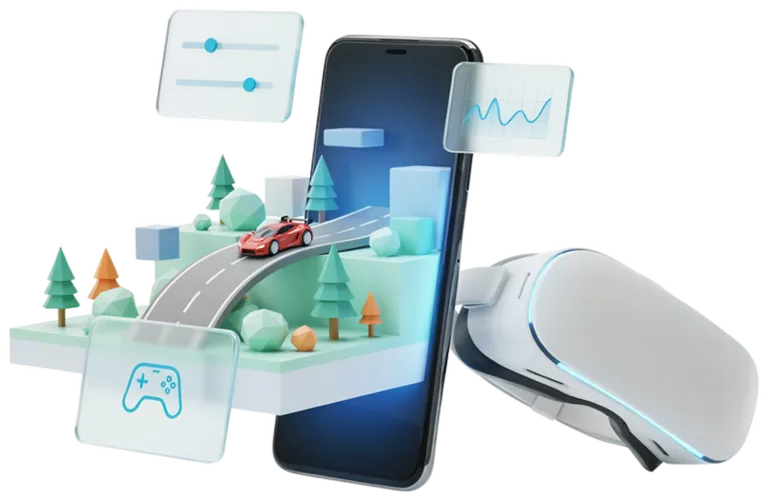
A pale 3D scene on a dark background: a smartphone stands upright showing a racing game, a red car on a winding road through a toy landscape of pine trees. A tile with a game controller and two cards with line charts float around the phone, and a white VR headset rests in front of it.

What We Do

Unity Game Development Services

There are two ways to buy Unity work from us. Hand over the whole project and get a studio that owns it from concept to store listing, or bring in Unity developers who slot into a pipeline you already run. We write the contract so it is obvious which one you have, and you can switch between them mid-project without renegotiating from scratch.

Custom Unity Game Development Services

Game ideas arrive in every state: a two-line pitch, a 60-page GDD, a build from a previous vendor that no longer compiles. We start wherever you are. The team turns the concept into a playable core loop first, then layers on game mechanics, progression systems, economy, UI, and the content tools your designers will keep using after we leave. Genres change the work, not the discipline. A hyper-casual title with 30-second sessions and a mid-core RPG with a 40-hour campaign get the same early question: is the loop fun in gray-box? If it is not, no amount of art will fix it. Indie projects and publisher-backed titles alike get a game design document before the first sprint. Cheap to change on paper. Expensive in month four.

Full-Cycle Unity Game Development Services

Full-cycle game development means one team is accountable for everything between the GDD and the first live-ops event: the Unity client, the backend, matchmaking, in-app purchases, analytics, store certification, and the patch schedule after release. On the Solana game project, that meant 40+ documented backend endpoints shipped alongside the Unity client, a custodial wallet the player never has to think about, and 8-player rooms holding around 85 ms. The studio walked away with a platform it could build a second title on. That is the difference between hiring a full-cycle team and hiring a contractor who finishes the scenes and leaves.

Core Expertise

Unity 2D & 3D Game Development

One editor handles a sprite-based match-3 and a physics-driven 3D world, so one Unity team can run both. The pipelines underneath differ. 2D work leans on Sprite Atlas, Tilemap, 2D Animation, and Spine. 3D game development adds URP or HDRP, Shader Graph, VFX Graph, Cinemachine, Timeline, and Addressables, so content streams in bundles instead of landing as a 2 GB first install.

01

Unity 3D Development Services

3D game development on Unity is a budget conversation about frames before it is anything else. We profile from the first playable: draw calls, static and GPU batching, LOD groups, occlusion culling, baked versus real-time lighting, texture streaming. A scene that hits 120 fps on a developer’s laptop and 22 fps on a three-year-old Android phone is not done. Immersive gameplay dies at 22 fps. Our Unity 3D work also sets art production rules up front (poly budgets, texture sizes, naming, export settings), so outsourced models drop straight into the project without a cleanup sprint. Animation runs through Animator state machines or Playables, with root motion and IK where the design calls for them.

02

Unity Mobile Game Development Services

Most of our Unity work ships to phones. iOS and Android from one project, with per-platform build pipelines, IL2CPP, ARM64, and the store rules that change every year. We integrate in-app purchases through Unity IAP with server-side receipt validation, rewarded ads with mediation, push notifications, and analytics from the first build, because a mobile game without retention data is a guess. Session length, the device matrix, and thermal throttling shape the design before the first asset exists. Mobile devices from budget to flagship sit in our test lab, and we tune for the mid-range phone, since that is the one most players own.

03

Unity App Development Services

Not every Unity project is a game. We build training simulators, product configurators, architectural walkthroughs, medical visualization, and interactive experiences for trade shows and museums on the same engine. These apps borrow the game toolkit (physics, animation, real-time rendering, spatial audio) and skip what a business app does not need. Unity earns its place when the content is spatial or 3D. For a form-and-list app, we will tell you to use Flutter or native instead, and we build those too.

Networking

Unity Multiplayer Game Development

Multiplayer game development fails in the places single-player never visits: state sync, latency, cheating, and the server bill. We pick the networking model per project, not per habit.

Netcode for GameObjects with Unity Relay and Lobby covers co-op and small-session games without running your own servers. Photon Fusion or PUN fits real-time multiplayer with rooms and matchmaking across iOS, Android, and PC in a single session. Mirror with a custom authoritative server on AWS covers competitive titles where the server has to be the referee. Each of those costs something different to run at 10,000 concurrent players, and that number goes into the estimate.

One rule holds on every multiplayer Unity game we ship: anything worth money or rank is decided server-side. Match results, rewards, inventory, leaderboard writes. On the Solana racing title, 8-player rooms ran at 20 Hz through Photon Cloud while the backend wrote an authoritative result before any token moved, so a dropped connection at the finish line could not pay a reward twice. Player accounts, cloud save, leaderboards, and friends lists come from Unity Gaming Services or PlayFab, depending on what your backend team already runs. Multiplayer games also get soak tests before launch.

Extended Reality

AR/VR Development with Unity

Unity is still the default engine for AR and VR, and most of our XR work runs on it. The hard part is not the headset SDK. The hard part is holding 72 or 90 fps when a dropped frame makes a person physically sick, so every XR project gets a frame-time budget on day one and a profiling pass every sprint.

Augmented reality on Unity

Our AR app development services use AR Foundation on top of ARKit and ARCore, plus Vuforia where image or object tracking matters, to put interactive 3D content into a real room, onto a store shelf, or across a factory floor. Typical builds: furniture and product try-on, AR maintenance guides with step-by-step overlays, location-based games, and marketing activations that run in a browser through WebAR when an app install is too much to ask of a passerby.

Virtual reality on Unity

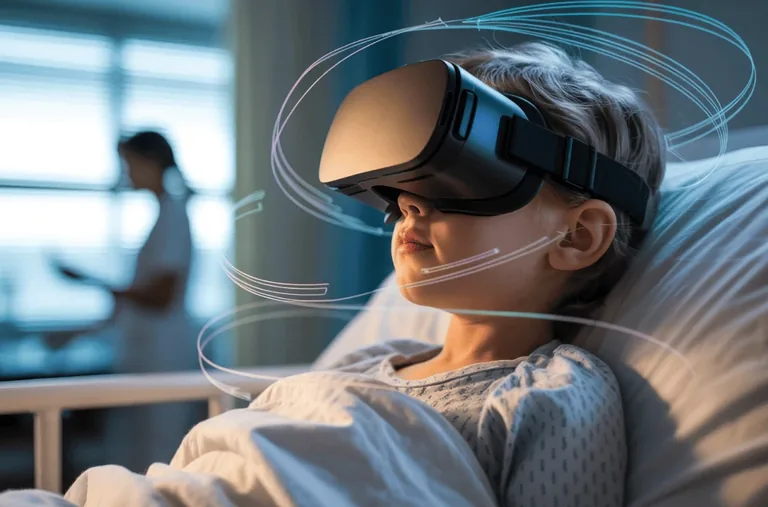
Our VR development services cover Meta Quest, PICO, SteamVR, and Apple Vision Pro through OpenXR and the XR Interaction Toolkit: training modules, procedure simulations, shared VR spaces, and VR therapy kits like the one we built for Mighty Immersion. Comfort options (teleport, snap turn, vignette on fast motion) are designed in from the start, not bolted on after the first round of nausea reports.

Platforms

Unity Game Porting and Migration

Cross-platform game development is Unity’s main selling point, but “supports 25+ platforms” and “your game runs on Xbox” are different sentences. Plenty of game development companies ship the mobile build to Steam and call it a port. We treat porting and migration as projects with their own scope, their own QA pass, and their own certification calendar.

01

Mobile to PC and console

Input remapping for gamepad and keyboard, achievement and trophy systems, save-data rules, memory ceilings on last-gen hardware, the UI rework a 10-foot TV screen demands, and the certification checklist each platform holder enforces. Windows, macOS, Xbox, PlayStation, and Nintendo Switch, with console SDK work under NDA.

02

PC to mobile devices

Touch controls designed rather than mapped, a device matrix with real budget phones in it, thermal management, and an install size cut through Addressables and per-platform texture compression. Cross-platform support goes both directions, and the mobile version has to feel native to the phone.

03

Legacy Unity and other engines

Projects stuck on Unity 2019 or 2021 LTS miss the Unity 6 rendering and build-time gains and eventually lose store compliance. We upgrade engine versions, move Built-in render pipeline scenes to URP, replace deprecated networking (UNET is long gone) with Netcode or Photon, and bring titles from other engines or in-house frameworks into Unity when the client needs multiple devices from one codebase. A migration audit comes first: two to three days, a written list of what breaks, and an estimate you can argue with.

Quality

Unity Game Testing and Optimization

Game testing covers more than “does it crash.” QA on a Unity project runs functional, gameplay, balance, compatibility, and localization passes, with automated checks through the Unity Test Framework in CI so a broken build never reaches a human tester. Compatibility means a real device lab, not emulators: iPhones back several generations, Android phones from budget to flagship, and every headset we target. Optimization is its own discipline on the team, not a week at the end. Unity Profiler, Memory Profiler, Frame Debugger, Xcode Instruments, and Android GPU Inspector tell us where each frame goes. Typical fixes: GC allocation hunts, object pooling, texture compression per platform, shader variant stripping, Addressables to cut install size, and load-time work so a session starts in seconds rather than a progress bar. Smooth gameplay on a mid-range phone is the bar.

Performance budgets go into the contract
  • Frame-time budget agreed per platform before production starts
  • Profiling report every sprint, not only before release
  • Device matrix signed off by the client (we propose, you approve, nobody is surprised in month eight)
  • Soak and load tests for anything multiplayer or live-service
  • Store pre-submission checklist run on every release candidate
  • Crash-free sessions tracked from soft launch onward

After Launch

Unity Game Maintenance and Support

A shipped game has a life after launch, and that life runs on a calendar. We offer post-launch support as a monthly retainer or a fixed team, and we write the runbooks so your own people can take over whenever you decide to.

Live ops

Seasonal events, balance patches, new content drops, A/B tests on the economy, and the monitoring that catches a crash spike before your store reviews do. The work is planned a quarter ahead with you and shipped on two-week cycles, with analytics reviews after every drop.

Platform upkeep

iOS and Android SDK deadlines, console firmware updates, Unity LTS upgrades, third-party SDK breakages. The unglamorous part. Miss one and the game vanishes from a store for a week. We track all of it for every title we maintain and bundle the fixes into the next scheduled release.

Content pipeline handover

Your designers should be able to ship an event without a developer in the loop. We hand over ScriptableObject-driven content, remote config, a build pipeline your team can run, and documentation a new hire can follow on their first day.

How We Work

Our Unity Game Development Process

Six stages, two-week sprints, a demo build at the end of every sprint. You see working software, not a status deck. Each stage closes with a deliverable you can hold, and the estimate gets re-checked at every gate so the number you took to investors is still the number you are spending.

Two to three weeks. We turn the pitch into a GDD: core loop, game mechanics, progression systems, monetization, platform list, art direction, and a feature list ranked by business value. Output: a scoped backlog and a fixed-price or time-and-materials estimate.

01 Discovery and game design document

Two to three weeks. We turn the pitch into a GDD: core loop, game mechanics, progression systems, monetization, platform list, art direction, and a feature list ranked by business value. Output: a scoped backlog and a fixed-price or time-and-materials estimate.

02 Prototype

A gray-box build of the core loop in two to four weeks. No art, placeholder UI, real feel. If the loop is not fun here, more polish will not save it, and this is the cheapest moment to find that out.

03 Pre-production and art pipeline

Art production rules, technical design for the backend, networking model, and a vertical slice: one level or one match finished to shipping quality, so every later sprint has a reference to measure against.

04 Production

Sprints deliver features, levels, animation, and audio against the backlog. Profiling runs every sprint. Client playtests happen on real devices, and the backlog gets re-ranked when the data says so.

05 QA, certification, and launch

Full test passes, store and console certification, soft launch in one or two markets to read retention, then worldwide release. We handle store accounts, listings, and first-week monitoring.

06 Live ops and support

Patches, events, SDK upkeep, and analytics reviews on a schedule you set. Handover documents and runbooks are part of the deliverable, not a paid extra.

Tech Stack

Unity Technologies and Tools We Use

Unity 6 LTS is the default for new projects. We maintain titles back to 2019 LTS and plan the upgrade as part of support rather than as a separate sales conversation. The list below is what ships in production.

Engine and languages

Unity 6 LTS, Unity 2022 LTS (legacy support), C# on .NET through our C# development services for gameplay logic and editor tooling, Java and Objective-C for native plugins

Rendering and content

URP, HDRP, Shader Graph, VFX Graph, Cinemachine, Timeline, Addressables, ProBuilder, DOTS/ECS for high-entity-count scenes

2D

2D Animation, Sprite Atlas, Tilemap, 2D Physics, Spine

Multiplayer and backend

Netcode for GameObjects, Unity Relay and Lobby, Photon Fusion / PUN, Mirror, Unity Gaming Services (Matchmaker, Cloud Save, Leaderboards), PlayFab, Firebase, Node.js and .NET backends on AWS, PostgreSQL, REST and WebSockets

Monetization and analytics

Unity IAP with server receipt validation, Unity Ads and LevelPlay mediation, Unity Analytics, Firebase Analytics, GameAnalytics

AR/VR

AR Foundation, ARKit, ARCore, Vuforia, OpenXR, XR Interaction Toolkit, Meta XR SDK, SteamVR, PICO SDK, Apple visionOS (PolySpatial)

Art and animation

Blender, Maya, 3ds Max, ZBrush, Adobe Substance, Photoshop, Spine

Testing and performance

Unity Test Framework, Unity Profiler, Memory Profiler, Frame Debugger, Xcode Instruments, Android GPU Inspector, real-device lab

Build, CI, platforms

Unity Build Automation, GameCI on GitLab, Fastlane, Xcode, Android Studio, Steamworks SDK, console SDKs under NDA (Xbox, PlayStation, Nintendo Switch), WebGL

Who We Build For

Industries and Use Cases for Unity Development

Games pay most of the bills on a Unity team, but the same engine, the same people, and the same profiling habits carry into training, real estate, healthcare, and retail work. What changes between them is the tolerance for a crash. A puzzle game can afford one. A surgical simulator cannot.

Game studios and publishers

Mobile, PC, and console titles across casual, mid-core, racing, card, and puzzle genres. We take full-cycle ownership or co-develop inside your pipeline when your own game developers are booked solid through the next two releases.

Web3 and blockchain gaming studios

Wallets, NFT assets, and token rewards wired into a Unity client without the player ever learning the phrase “seed phrase.” Custodial wallets, server-side settlement, and store-compliant purchase flows, so the game passes Apple and Google review instead of living on a sideloaded APK.

Healthcare and medical training

VR therapy and distraction kits, procedure simulators, and anatomy visualization. Frame-time discipline, headset fleet management, and a session a nurse can start in seconds matter more here than shader work.

Real estate and construction

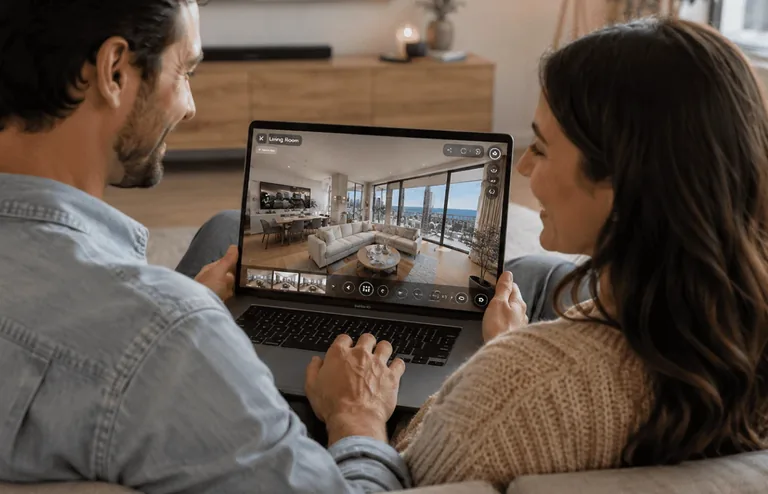
360° and interactive 3D property tours, BIM walkthroughs, and configurators that let a buyer change finishes in real time on a tablet. Camera integrations for agents who shoot tours themselves, and a web viewer for prospects who will never put on a headset.

Education and corporate training

Gamified learning apps and simulation-based training for equipment, safety, and soft skills, with progress tracking exported to your LMS through xAPI or SCORM so HR gets the numbers without a developer pulling a report.

Manufacturing, automotive, and retail

Digital twins, product configurators, AR maintenance guides, and in-store interactive experiences. Same engine, same team, different tolerance for crashes.

Our Work

Unity Development Case Studies

Three projects, told in the order a buyer cares about: what was broken, what we built, what changed. One is a game. Two are not, which is most of what Unity does outside the app stores.

WEB3 GAMINGUNITY MOBILE

Unity Game Development Case Study: A Mobile Racing Game With a Solana Backend

Challenge

A Web3 studio had a good-looking Unity build for iOS and Android and nothing behind it. Currency, items, and race results lived on the phone, where any determined player could edit them. Their first attempt called the Solana RPC node straight from the client, which worked on a desktop and fell apart on a mid-range Android device.

Solution

Splitting the architecture came first: the Unity client renders and plays, a Node.js backend on AWS signs and audits everything with money attached. A custom HashiCorp Vault plugin derives a wallet from the player’s login token, so no seed phrase and no lost wallet after a password reset. Photon Cloud runs 8-player rooms at 20 Hz; match results are written server-side before any token is paid. Five people, six months, 12+ two-week sprints.

Impact

  • 98% of blockchain transactions cleared during testing, with automatic retry covering the rest
  • Purchase confirmed on device in ~1.4 s, wallet created in ~1.2 s, 8-player rooms at ~85 ms
  • Wallet questions under 3% of support tickets after launch; the studio shipped its first item drop alone six weeks after handover
Read the full Solana game development case study →
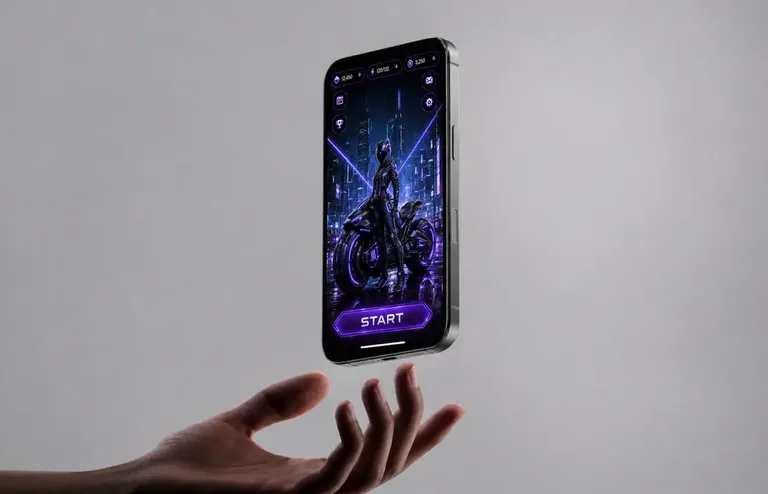
A hand holds up a smartphone showing a mobile racing game: a neon-lit motorcycle and rider against a purple city skyline, with a START button across the bottom of the screen.
The People

Meet Our Unity Team

The Unity developers you talk to on the first call are the ones who write your code. Two of them are below. The rest of the team scales from a single engineer to a full squad with QA, 2D/3D artists, and a backend lead, depending on what the GDD asks for.

Olexandr Shcherbonos

Olexandr Shcherbonos

Senior Unity Developer — «With Unity 6, we start most projects from one codebase and ship to iOS, Android, PC, and Quest without rewriting the core. What I value most is how fast a gray-box prototype tells you whether the loop is fun, before any art budget is spent.»

Pavel Vinogradov

Pavel Vinogradov

Unity Developer — «Unity is the technology developers were waiting for so long. Earlier, you had to choose a specific platform for your product, as migrating was a time-consuming and challenging process. Unity makes it simpler for businesses to implement their ideas with lots of out-of-the-box solutions and multiplatform support. With Unity, prototyping has never been such a fascinating and creative process.»

Get a line-item estimate in 48 hours

Get an estimate

Why LITSLINK

Why Choose LITSLINK for Unity Development?

Every Unity game development company on your shortlist will say “experienced,” “passionate,” and “client-focused.” None of those words survive a reference call. Here is what does.

A proven track record you can check

1,540+ products shipped since 2014, 80+ startups launched, a 4.8 rating on Clutch, and case studies with figures a buyer can verify against the live product. Ask for references in your genre, and we will connect you with the client, not with a sales deck. Extensive experience building games for mobile and XR is only worth something if you can call someone who paid for it.

One team from game design document to live ops

Unity developers, C# backend engineers, 2D and 3D artists, QA, and DevOps sit inside one company, so there is no handoff gap between “the game is done” and “the game is live and earning.” Clients describe this as working with a business partner rather than a vendor. The Willo founder put a number on it: 150% month-on-month user growth after launch.

US-based, with engineering in Europe

A Unity game development company headquartered in Palo Alto with an office in Orlando, engineering teams in Ukraine, and project leads who overlap with US business hours every day. A US entity handles contracts, invoicing, and IP assignment. You own the code, the assets, and the store accounts from day one.

Flexible engagement, and a straight answer when Unity is wrong

Fixed price for scoped builds, time-and-materials for live ops, dedicated Unity developers within 48 hours for team extension. And if your project is a form-and-list app or a photoreal AAA shooter, we will point you to Flutter or Unreal before taking your money. That has cost us a few deals. It has also kept the Clutch rating where it is.

Verified Reviews

Our Reputation on Top Platforms

LITSLINK is recognized across leading industry platforms for delivering high-quality software solutions. See what clients and the design community say about our work.

Clutch B2B Ratings & Reviews

4.8

78 reviews

Top Developer
GoodFirms Research & Reviews Platform

4.8

32 reviews

Top Company
Behance Creative Portfolio Platform

150+

design projects

View projects

Questions

Unity Game Development FAQ

01 Is Unity still worth using in 2026?

Yes. The per-install Runtime Fee that caused the 2023 backlash was canceled in September 2024, Unity Personal stayed free, and Unity 6 LTS now gets annual price adjustments rather than surprise policy changes. It remains the most widely used engine for high-quality games on mobile, for AR/VR, and for cross-platform game development. Unreal (Epic Games) still wins for photorealistic AAA on PC and console. We pick per project, and we will say which one on the first call.

02 How much does it cost to develop a game in Unity?

From about $25,000 for a prototype to $800,000+ for a multiplayer cross-platform title. The cost section above shows the ranges and what moves them. The engine itself costs nothing until your revenue passes $200,000 a year; after that, $2,310 per seat per year.

03 Is Unity overkill for a 2D game?

No, as long as the team uses the 2D toolset rather than fighting the 3D defaults. Sprite Atlas, Tilemap, 2D physics, and Spine give a 2D project a smaller build and a faster workflow than most 2D-only engines once you add IAP, ads, and analytics.

04 Can you use Unity to develop mobile games for both iOS and Android?

That is the most common use of it. Most of our Unity game projects ship to both stores from one codebase, with cross-platform support for PC and consoles added later from the same project. Platform-specific pieces (push notifications, IAP receipts, store review prompts) are handled per platform behind a shared interface.

05 Do you handle multiplayer and backend architecture, or only the Unity client?

Both. Netcode for GameObjects, Photon, or Mirror on the client side; Node.js or .NET services, matchmaking, cloud save, and server-authoritative match logic on the backend. On the Solana project, the backend shipped 40+ documented endpoints next to the Unity game.

06 What hiring models does your Unity game development company offer?

Three. A fixed-price project for a scoped build, a dedicated team (Unity developers plus QA, art, and a lead) billed monthly, or team extension where one or two engineers join your existing pipeline. Dedicated engineers can start within 48 hours of signing.

07 Who owns the code and assets?

You do. Source, art, store accounts, and documentation transfer to you under a US contract, with no revenue share.

08 Can your team work in US time zones?

Project leads overlap with US business hours daily. Our game developers in Europe give you overnight progress and a demo waiting in the morning, and Clutch reviews mention communication cadence more than any other point.

Need a Unity development team?

You get a scoped estimate with a team list and a sprint plan within 48 hours. Most game development companies answer in a week with a calendar link. Send us whatever exists today: a GDD, a playable build, a deck, or two paragraphs and a target platform. A 30-minute call with a Unity lead follows, and an NDA comes first if you want one.

Next steps

1

LITSLINK specialist reviews your request and contacts you to discuss the details

2

If needed, we sign an NDA before moving forward

3

We send a project proposal – estimates, timeline, and team CVs included

4

After launch, we stay on for any updates your product needs