






App for Organizing and Optimizing Medical Shifts - ShiftRx
- 8 weeks to MVP
- 99.6% crash-free session rate
- 12 clinics onboarded at launch
ShiftRx is a cross-platform medical shift app built for hospital teams — giving physicians a single place to register patients, flag clinical risks, manage drug administration, and hand off complete.
Request Similar Solution
Project Details
There’s a moment at the end of every hospital shift that rarely makes it into pitch decks or product briefs. It’s the 15, sometimes 20 minutes, when an outgoing doctor tries to transfer everything they know to someone who’s just walked through the door. And it’s precisely the problem that ShiftRx, a medical shift app developed by LITSLINK, was designed to solve.
 CLIENTS
- ShiftRx
 INDUSTRY
- HealthCare / Clinical Ops
 SOLUTION
- Patient shift handoff & management app
 SERVICE
- UX Design + Full-Cycle Mobile Dev
 PLATFORM
- iOS & Android (Flutter)
 SCOPE
- Cross-functional: Design, Dev, QA
 DURATION
- 6 months
 LOCATION
- US
Technologies We Used


Business Challenge
Before ShiftRx, the shift workflow for most physician teams looked something like this: arrive, get a hurried verbal update from the colleague desperate to get home, mentally piece together a picture from notes scribbled on whatever was nearby, then spend the rest of the shift acting on information that may or may not have been complete. It’s not a people problem. It’s a structural one.
What the client needed was something closer to a clinical workflow app – a platform capable of carrying the full weight of a shift: intake, monitoring, risk flagging, and a clean, documented transition to the next team.
The client had identified three recurring pain points that no existing physician shift scheduling software was addressing cleanly:
-

Patient intake was too slow
Registering a new arrival (name, date of birth, full health history, lab results, imaging) required jumping between disconnected systems. During an active shift, that friction compounds quickly.
-

No system for flagging risk
If a patient needed elevated attention, the only mechanism was a verbal reminder or a sticky note. Neither survives a shift change.
-

Handoffs were inconsistent
No standardized format. No reliable record. No shared source of truth for the incoming team – just the hope that they caught everything in that brief, pressured transition.
Our Solution
Here’s the core constraint that shaped every decision in this project: medical professionals don’t have time to learn complex software. A tool that takes three taps to flag a critical patient is a tool that will get abandoned. That reality — not the feature list — drove every design and architecture call the team made.
LITSLINK selected Flutter to build a cross-platform solution running on both iOS and Android. A deliberate choice: it meant physicians could use the app on whatever device they already had in their pocket. No forced hardware upgrades, no platform lock-in, no excuse not to use it.
As a patient handoff app, it transforms what was an informal, memory-dependent process into something structured and reliable. The incoming team doesn’t have to trust that they caught everything in a rushed hallway exchange. It’s there when they log in.
-
Patient Registration
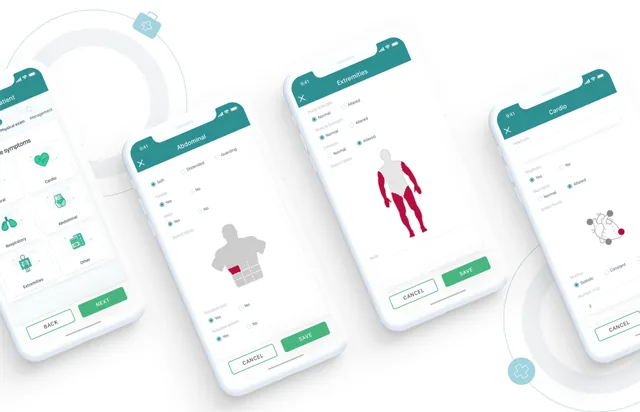
Physicians log new patients directly within the app, capturing complete records: full name, age, date of birth, health history, and all medical, laboratory, and imaging data.
-
Condition & Risk Flagging
Any patient can be marked for elevated monitoring or specific conditions, immediately visible to every team member carrying the case.
-
Shift Handoff Summaries
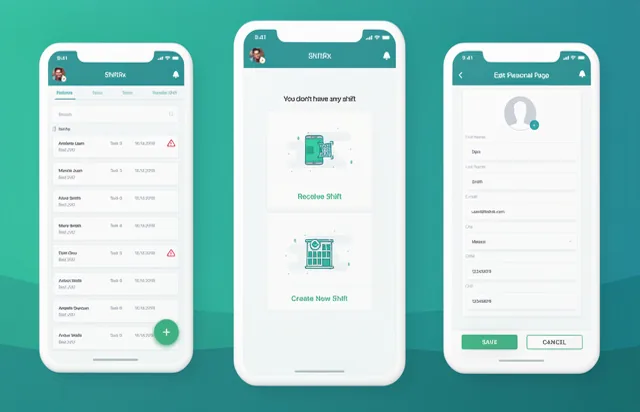
Before a shift ends, the outgoing doctor compiles a structured summary that gives the incoming team a full 360° picture of every active patient.
-
Drug Administration & Patient Flow
Tracking medications and managing transfers between departments happens within the same interface, eliminating context-switching.
Ready to build a clinical tool your team will actually rely on?
Tell us about your projectScrum Methodology
Project Journey
The ShiftRx project was managed using the Scrum methodology — chosen for its structured, iterative approach and its ability to surface problems early rather than late.
- Weeks sprint cycles
- 2
- Sprints completed
- 12
- On-time delivery
- 97%
- Team members
- 8
Step-by-Step Process
-
Release Planning
- Establish release goal
- Define highest-priority features
- Set probable delivery date & costs
-
Product Backlog
- Prioritised features list
- Desired by the client
- Refined per sprint
-
Sprint Planning
- Review product backlog
- Set sprint goal
- Estimate & commit
-
Sprint · 1–2 Weeks
- Daily Scrum stand-ups
- Team expands backlog
- Continuous integration
-
Sprint Demo
- Client review every sprint
- Feedback loop
- Sprint sign-off
-
Ready Product
- Shippable increment
- Sprint retrospective
- Inspect & adapt
Scrum Process Flow
Healthcare software development doesn’t benefit from big-bang releases. Scrum’s sprint cadence meant the client saw working software regularly and could give feedback before decisions became expensive to reverse.

Inside Each Sprint
-
Daily Scrum
15-min sync every morning
-
Sprint Review
Demo to stakeholders
-
Retrospective
Inspect & adapt process
-
Increment
Shippable product update
UI/UX Design
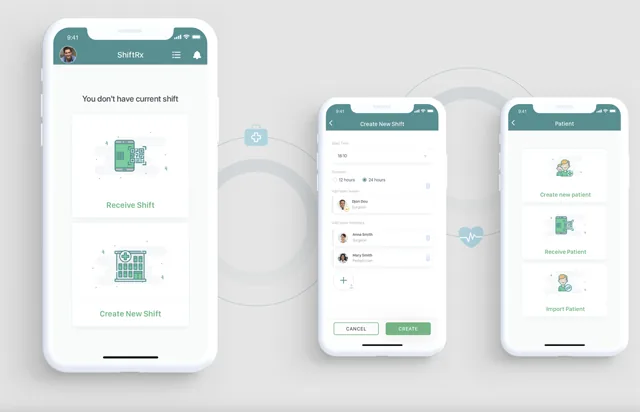
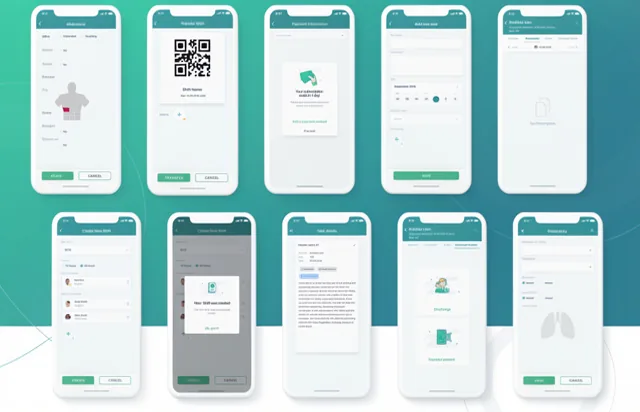
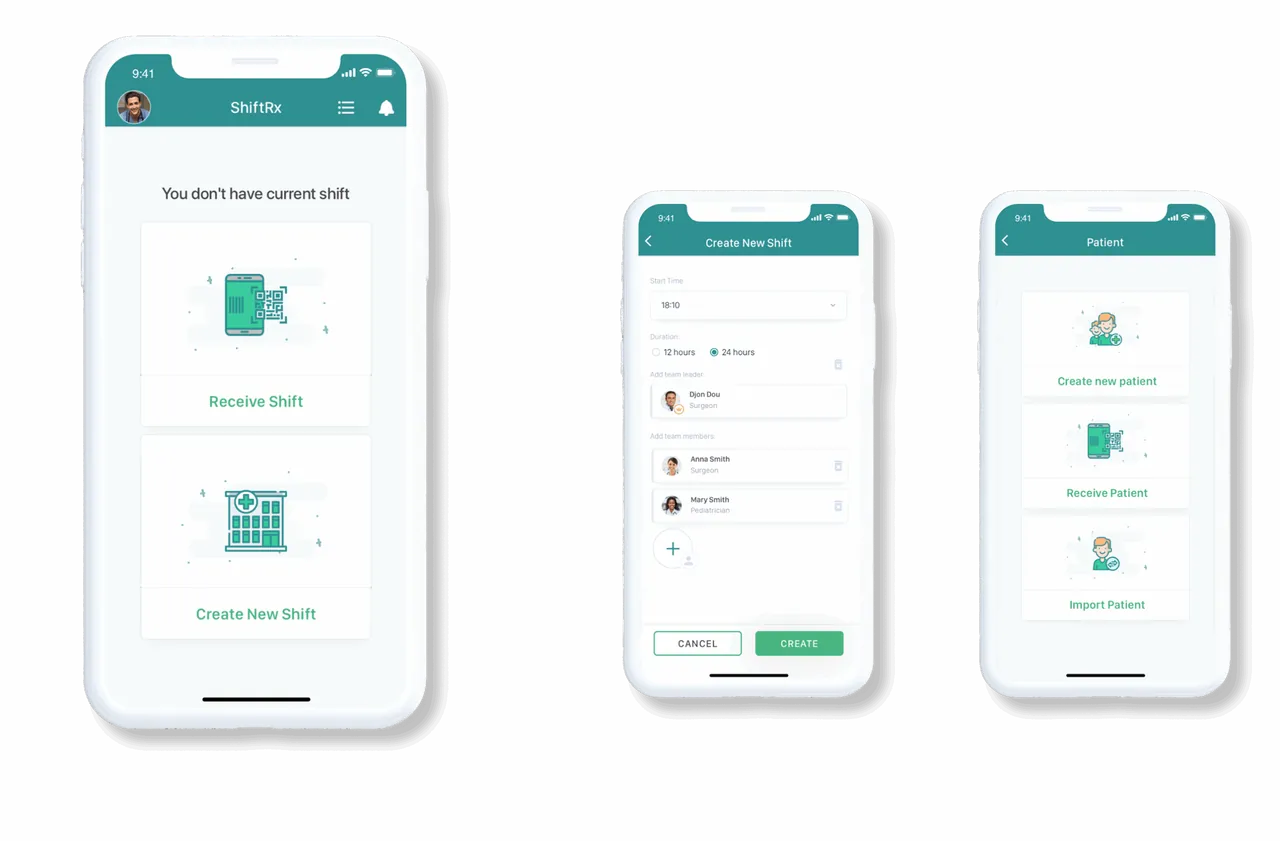
A healthcare shifts app lives or dies by its interface. The people using it are managing genuine complexity under pressure — a clean, intuitive design is a functional requirement.
LITSLINK’s approach was intentional minimalism: every frequent action reachable in as few steps as possible, risk flags color-coded for instant visibility, patient summaries designed to be scanned rather than read.
The goal was to redesign the old workflow so that physicians would reach for this medical shift app because it genuinely made their shift easier, not because administration required it. That distinction matters. Adoption rates depend on it.
Timeline
Five phases, clearly defined
-
Consulting
2 months
- Defining client objectives and targets
- Conducting risk assessment & devising mitigation plans
- Evaluating project strengths and weaknesses
- Choosing the project management methodology
-
Product Design
2 months
- Formulating a comprehensive development roadmap
- Creating prototypes for visualising the product concept
- Selecting the appropriate platform & technology stack
- Assigning skilled team members
-
Product Engineering
4 months
- Identifying the optimal development environment
- Designing a user-friendly interface
- Crafting clean and efficient code
- Conducting rigorous testing and resolving bugs
- Ensuring a seamless deployment process
-
Launch
2 weeks
- Deploying to iOS & Android stores
- Initiating integration and acceptance testing
- Preparing the system for alpha/beta testing
- Ensuring compliance with all platform requirements
-
Support
Ongoing
- Ongoing maintenance and monitoring
- Technical support for queries & enhancements
- Leveraging client feedback for improvement
- Regular updates: bug fixes and new features
Results
Before
- Shift transitions depended on verbal updates and informal notes: no standardized format, no documentation.
- Incoming physicians had no reliable overview of active patients, risk flags, or medication status at handoff.
- Patient intake happened across disconnected systems, slowing registration during active shifts.
- Critical patient context could be – and was – lost between teams.
After
- Every shift ends with a structured, documented handoff summary, fully accessible to the incoming team at login.
- Risk-flagged patients are immediately visible; no context is lost between physicians.
- Patient registration, history, labs, and imaging are captured in a single flow – faster intake, fewer errors.
- A shared, permanent record gives every team member the same reliable source of truth.

The Impact
ShiftRx launched and performed. What this project demonstrated, beyond the feature list, is that shift handoff software doesn’t have to feel like bloated enterprise software wearing a mobile costume. Built with the right constraints and the right priorities, it can be fast, lean, and designed specifically for the people who depend on it most.
It replaced an inconsistent, informal process with a structured one, giving every member of the clinical team a shared, reliable source of truth at the highest-stakes moment of the day. And as medical shift management software, it addressed the whole operational layer underneath it:
What's Next: ShiftRx v2
Version two of the nursing shift handoff tool is already in planning, with extended functionality on the roadmap. The foundation is solid — a proven cross-platform architecture, a UX model tested in real clinical conditions, and a workflow that has already demonstrated its value in practice.
The broader lesson from this project applies well beyond this one app. Building effective tools for medical teams requires more than technical skill. It requires understanding the environment clinicians actually work in — the pressure, the pace, and the specific moments where the right tool makes a measurable difference.
Verified Reviews
Our Reputation on Top Platforms
LITSLINK is recognized across leading industry platforms for delivering high-quality software solutions. See what clients and the design community say about our work.
Have a project in mind?
If you’re working on a similar HealthTech product, we’d like to help you build it — shaped around your users, your compliance requirements, and your timeline.
Next steps:
- LITSLINK specialist reviews your request and contacts you to discuss the details;
- If needed, we can sign an NDA before moving forward;
- We send a project proposal – estimates, timeline, and team CVs included;
- After launch, we stay on for any updates your product needs.
- 48h Response
- 500+ Projects
Thank you for your message. It has been sent.


