






Hire Dedicated Python Developers – Vetted Experts Ready in 48 Hours

Companies hire dedicated Python developers through us when the roadmap outruns the hiring pipeline. Every Python developer we send has shipped production code.

  • 300+ specialists, deep Python practice
  • Pre-vetted Python developers, 48 hours
  • Backend, data pipelines, machine learning
  • US management, senior European engineering
Hire Dedicated Python Developers – Vetted Experts Ready in 48 Hours

Tech Stack Checklist Before You Hire A Python Developer

The clearest brief wins the best Python developer. That sounds obvious, and still, about half the requests that reach us describe the opening as “a strong Python developer for a growing product,” which describes roughly four million people in the global talent pool.

Python is a broad programming language, and the label “Python expert” fits a data science lead, a Django specialist, and a DevOps engineer who mostly writes Python scripts to hold infrastructure together. Vague input costs money in three predictable ways. You spend evenings interviewing Python programmers whose experience sits one layer away from your real problem. Onboarding stretches from days into weeks while somebody reverse-engineers the requirements from a Figma file. And the work gets rebuilt a year later.

Specificity fixes all three. When a client sends expected load figures, a database choice, and a deployment target, our matching team swiftly filters a 300+ specialist bench down to two or three names. That is where the 48-hour promise comes from, and it rests on your input as much as on our sourcing. Ten minutes here is the cheapest way to find Python developers whose background matches the build.

Python Frameworks Worth Naming In The Brief

Name the Python frameworks you already run, along with the Python libraries your team depends on: pandas, NumPy, SQLAlchemy, Celery, PyTorch. Python expertise runs deep rather than wide at senior level, so name the stack and let the Python experts who fit it come forward.

Backend Requirements For Performance And Security

Define expected load, p95 latency targets, your auth model, and the standards you answer to, such as SOC 2, HIPAA, or PCI DSS. A Python developer who has held a 200 ms p95 under heavy concurrency has a different history from one who built internal admin tools, and both are the right hire for different backend systems. Senior Python developers ask for these numbers unprompted.

Database And Caching Expectations

Say whether you run PostgreSQL, MongoDB, or both, and where Redis sits in the picture. SQL databases and document stores reward different instincts around data structures and query design, so one line here filters out a surprising share of mismatched Python engineers.

CI/CD And Deployment Needs

Name the pipeline: GitHub Actions or GitLab CI, Docker, Kubernetes or plain ECS, and which of the cloud platforms you already pay for. Python developers who deploy their own work onboard in days. Ones who hand-build to a separate ops team will need somebody else on the rota.

API And Integration Requirements

Specify REST or GraphQL, public or internal, plus the third-party services that have to stay in sync: Stripe, Twilio, Salesforce, or a legacy SOAP endpoint somebody wrote in 2011. API development experience is easy to claim and easy to verify once you name the integrations.

Scalability And Load Expectations

Describe the traffic you expect twelve months out rather than today’s numbers. Python developers who have grown a service from 500 users to 500,000 make different early choices than prototype builders, and those choices are expensive to reverse.

Testing And Code Quality Standards

State the coverage you expect, how reviews work, and whether type hints and linting are mandatory. Code quality standards agreed in week one cost nothing. Retrofitted across 40,000 lines eighteen months later, they cost a quarter of runway.

Data And Reporting Requirements

If the role touches data processing, data analysis, or data pipelines, say so plainly. Python developers who have built data engineering pipelines think in terms of idempotency, backfills, and the data structures that keep a nightly job under an hour, and that habit rarely shows up on a pure web development CV. Where the work leans into data science and modeling, we pair a backend hire with one of our data scientists rather than asking one person to carry both.

Who Should Hire Dedicated Python Developers

A dedicated developer is one of four realistic ways to get Python work done, and it earns its place for one reason: the same person stays with your codebase long enough to form opinions about it.

Freelance platforms suit a bounded task with a visible finish line. In-house hiring makes sense once the role is permanent and the salary band is approved. A full agency team fits when the entire product ships as one package. A dedicated Python developer sits between those options, working inside your sprints, reporting through your process, with the commitment of an employee and the contract flexibility of a vendor.

Teams hire Python developers on this model at every stage of growth. Weigh the engagement model against the other hiring models further down the page, then find your situation below.

A full-time backend hire takes three months and a salary band you may still be negotiating with your board. Startups hire Python developers on a dedicated basis to start this month, build the MVP, and stay through the first cohort of real users. LITSLINK has acted as technical co-founder for 80+ funded startups that went on to raise their next round.

Large teams rarely need a whole vendor. They need two more senior Python developers who bring discipline around security review and patience for an established codebase. Dedicated engineers plug into an existing sprint cadence and take a defined slice of backend or platform work. On machine learning projects, they sit beside your own data science group instead of replacing it.

Maintenance is where rotating contractors hurt most, because every handover costs two weeks of context. Teams hire Python developers for this reason more often than for greenfield work, and a dedicated Python developer who has lived in your repository for a year fixes in an hour what a newcomer would spend a day tracing.

Dashboards, reporting, in-product analytics, and the data analysis behind them sit across backend and data work at once. Python developers who handle both sides build the pipeline and the API that serves it, which removes a handoff and a standing meeting from every feature. Python engineers with reporting experience also spot the metrics your dashboard will need next quarter.

Modernizing a Python 2 service or a decade-old Django monolith is a long grind of small, risky steps. Short-term contractors optimize for the ticket in front of them. Companies that hire a Python developer for a migration keep one reviewer across every slice, which is the only way the risk stays manageable. LITSLINK moves legacy systems to modern architecture in around ten months, and that work depends on the same people staying through it.

Client work arrives in waves, and permanent headcount priced for peak season hurts in the quiet months. Agencies hire Python developers from us under a white-label arrangement, scale to three during a big build, and drop back to one afterward.

Business Benefits of Hiring Dedicated Python Developers

The case for hiring dedicated Python developers is a business case before it is a technical one. Six outcomes come up again and again with the clients who hire Python developers this way.

Python moves quickly by design. Django and FastAPI ship authentication, an ORM, admin tooling, and API scaffolding out of the box, so a developer spends the first sprint on your product logic instead of plumbing. Add uninterrupted focus, and delivery cycles compress. Our figures show products landing 30–50% faster than the vendor average, with MVPs going from signed contract to working software in ten weeks.

A developer who knows why the caching layer was built that way originally will extend it correctly months later, while a newcomer works around it and doubles the problem. Senior developers inherit those shortcuts, and new developers repeat them. Teams that keep the same Python engineers end up with cleaner module boundaries, and maintainable architecture becomes the foundation for reliable systems as products grow, helping their services survive the jump from prototype to scalable systems with far less rework.

Audits reward consistency. When the same person owns dependency updates, secrets handling, and access control across two years, the answers to an auditor’s questions live in one head and one changelog. Regulated teams hire Python developers with audit history for exactly this reason, since closing evidence gaps before a SOC 2 review costs more than the original work did. One Python developer owning that history beats three who each owned a slice of it.

The hidden cost of freelance work is constant re-onboarding. Two weeks of ramp-up per contractor, repeated quarterly, compounds quickly when Python rates range from $20 to $120 per hour. High turnover also means senior devs waste hours reviewing hit-and-run code, while newcomers rebuild features they didn’t know existed. Keeping one dedicated developer for eighteen months completely eliminates this overhead.

The same programming language runs your API and your model training, which is the quiet advantage of the Python ecosystem. One Python developer can build the backend endpoint, the data analysis behind it, and the machine learning model that scores the result, working with pandas, scikit-learn, or PyTorch. Companies that would otherwise hire a backend engineer plus a data science specialist often cover both with a single senior hire. Heavier workloads move to our machine learning development services team, where Python engineers work with data science leads on training and evaluation.

Undocumented knowledge is the real asset you lose when a contractor leaves: the reason behind a schema choice, the customer who triggered an edge case, the deploy step that fails on Fridays. A dedicated Python developer keeps that context inside the team, and writes it down because they will need it themselves in March.

What Sets Expert Python Developers Apart

Years on a CV measure patience more than skill. The signals worth checking are narrower: how much of the candidate’s Python code has run in production under real load, whether they have made architectural calls that survived contact with users, and whether they have owned something end to end rather than closing assigned tickets. Senior Python developers typically have 5+ years of experience, but that benchmark still says less than the production decisions they made and the ownership they carried. Assessing a developer’s skills also means looking beyond syntax and frameworks to how they communicate trade-offs, handle ambiguity, and work with a team.

Ask senior Python developers to describe a decision they now regret, then listen for specifics about the trade-off. Mid-level developers describe what they built. Expert Python developers describe what they chose, what they rejected, and what it cost them six months later. That gap appears within ten minutes of a technical conversation, and it predicts performance better than any certificate. This is also why experienced developers tend to protect code quality, security, and scalability before those issues become expensive. Senior Python developers disagree with you early. It feels awkward at first, but it saves a quarter’s worth of wasted budget later on.

Specialization is a real trade-off, so decide before you interview. A machine learning specialist with three years in PyTorch will build you a better recommendation model and a weaker payments API, which is why the best Python developer for a fintech team is rarely the best Python developer for a recommendation engine. The same applies when you need skilled Python developers for AI, automation, robotics, or other scalable application work where depth in one domain does not automatically transfer to another.

Find Vetted Python Developers and Build Trust

Vetting is the difference between a hire and a gamble. Too often, hiring failures happen when companies rely on claims and generic screening instead of evidence, and some of the strongest Python programmers we have interviewed would have struggled inside a distributed team because they explained their reasoning poorly.

You hire Python developers on evidence, so here is how we gather ours before you meet anyone. We keep a standing bench of Python experts rather than starting a search the day your email arrives, and every one of the pre-vetted Python developers on it has been through all three stages below.

Technical And Communication Screening

Every candidate works through a technical interview with one of our architects, plus a structured conversation about trade-offs, disagreement, and how they raise a blocker. We test communication skills directly, since we ask every candidate to explain one technical decision to a listener with no background in it. Technical skills carry the interview, and communication skills carry the next two years, so a Python developer who writes brilliant code and explains it badly stays on our bench.

Code Samples And Live Walkthroughs

We review real repositories and ask the developer to walk through a past project live: why this structure, what broke, what they would change today. Twenty minutes of that reveals more about problem-solving ability than a resume or a certificate ever will.

Client References And Case Studies

We provide references from previous engagements and short case studies covering comparable work, so you get independent evidence rather than self-reported experience. Our own record is public: 1,540+ projects for 1,000+ clients across 82 countries since 2014, rated 4.8 on Clutch across 70+ reviews.

Hire Dedicated Python Programmers For Web, Backend, And API Projects

“Python developer” covers at least six distinct jobs, and the differences matter more than the shared language does. A Django specialist and a data engineer both write Python programming for a living and would struggle in each other’s sprint. The dedicated Python programmers we place are matched to one of the tracks below, based on the tech stack and the outcomes you describe in the brief. Most clients hire Python developers for a single track and expand into a second later, while a few hire Python programmers across three at once. Our Python development services page covers the same ground for project-based work.

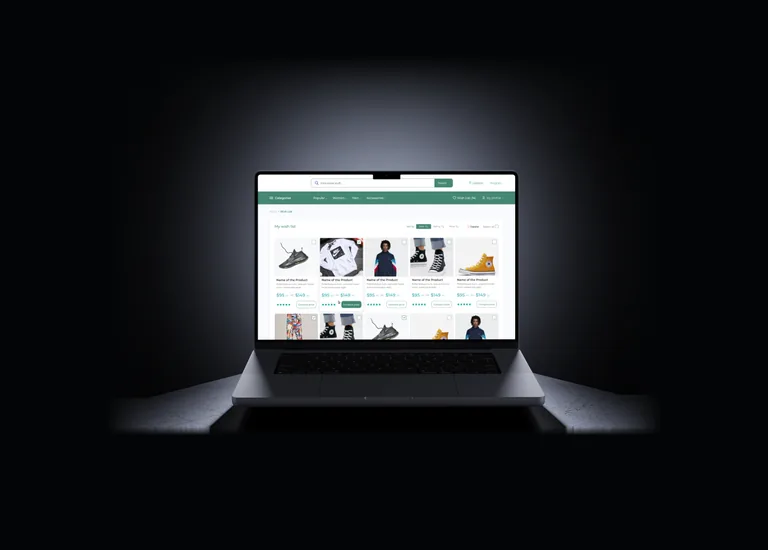
Product-facing web development: server-rendered apps, admin portals, and API-backed frontends built on Django, Flask, or FastAPI. Our Python developers work alongside your React or Vue team, or cover both layers where the scope allows. For an e-commerce client, we built an online shop marketplace on React.js and Python, where seven people supported four user roles across two years of continuous work, and the same patterns carry into scalable web applications with much heavier catalogs.

Server-side logic, database architecture, and queueing: the design work that decides whether traffic growth becomes a good week or a bad one. Backend development shows itself in schema choices, indexing, background jobs, and reliable systems behavior when a dependency times out. Python engineers who came up through infrastructure own the deployment path too, which keeps backend systems and failure modes in the same head.

REST and GraphQL APIs, third-party integrations, webhooks, and microservices that keep separate systems in agreement. Backend APIs are where most integration bugs start, so we look for Python developers who write contract tests and version endpoints deliberately. API development work here also covers deprecation, which most teams postpone until it hurts. The MySquire travel marketplace runs on this pattern, with a provider-side web platform and a traveler mobile app kept in sync through one API and a live geolocation layer.

ETL jobs built with Python scripts, Airflow, or Prefect, plus the automation scripting that removes recurring manual work from your operations team. Data processing runs, scheduled reports, data manipulation for analytics, and internal tooling all live here. Data pipelines built by someone who also understands the reporting layer need far fewer emergency fixes, and serious data engineering work benefits from a hire who stays past the first release. Python programmers on data projects are measured by how rarely you hear from them at 6 a.m.

Deployment and operation of Python applications on AWS, GCP, or Azure, including containerization, infrastructure as code, monitoring, and CI/CD setup. Clients hire Python developers with DevOps range for this track, and our cloud services team steps in when a project outgrows a single instance.

Refactoring and migration of older Python projects: Python 2 to 3, a monolith to modular services, unsupported dependencies to maintained ones. Teams hire Python developers for this work in slices, so the running product stays available throughout. Our typical legacy-to-modern timeline sits around ten months rather than the multi-year rewrites other vendors quote.

Ready to hire Python developers who deliver results?

Contact us

How To Hire A Python Developer: Hiring Process Steps

The six steps below are how to hire a Python developer with a predictable result. Most companies hire Python developers once every couple of years, so the sequence below is written for people doing it fresh. Follow it, and you hire a Python developer once, instead of twice in eighteen months.

Write down what has to exist in ninety days and who uses it. A defined project scope, with deliverables and a rough sequence, turns “we need a developer” into a target you can screen against, and project complexity will shape hiring timelines, onboarding, and how quickly that developer becomes productive. A Python developer can estimate against a defined scope and can only guess against a vague one. This step also surfaces the questions you have yet to answer, which is uncomfortable and useful in equal measure.

Write down what has to exist in ninety days and who uses it. A defined project scope, with deliverables and a rough sequence, turns “we need a developer” into a target you can screen against, and project complexity will shape hiring timelines, onboarding, and how quickly that developer becomes productive. A Python developer can estimate against a defined scope and can only guess against a vague one. This step also surfaces the questions you have yet to answer, which is uncomfortable and useful in equal measure.

Name the tech stack, the seniority level, the time zone overlap, and the product context in three paragraphs. A job description that reads like a template attracts template applications. One that mentions FastAPI, Postgres, and a fintech compliance deadline attracts experienced Python developers who have handled exactly that. If you want to hire python experts, target job listings to Python-specific communities, which typically yields better candidate sourcing than posting to generic boards.

We screen against your requirements rather than general Python knowledge, which is why a shortlist stays at three names instead of thirty. Filters include framework depth, domain experience, the size of the systems a candidate has worked on, and whether they have worked successfully as one of your remote Python developers if the role is distributed. Every profile you see arrives with the reasoning behind the match, and this screening approach also works when you need to hire remote Python developers quickly.

A short take-home task or a paired session on a realistic problem, scoped to two hours of the candidate’s time. This is where hiring failures happen: when teams rely on generic interviews instead of practical assessments that show real capability in realistic conditions. We share the task and the evaluation criteria with you in advance.

You meet the finalists yourself. The best interviews here skip syntax and ask how the candidate would design your actual system, where it would break first, what they would monitor, and how they handle project management for delivery decisions in senior roles. Their technical skills matter, and the way they reason about trade-offs matters more across a two-year engagement. The Python developer you pick should leave that call with better questions than they arrived with.

Begin with one paid sprint before committing to a long engagement. Two weeks of real work tells you more about code quality, communication, and daily fit than any interview, and it gives the developer the same chance to assess you. Teams hire Python developers with far more confidence after two weeks of shipped work.

Hiring Models Compared: Freelance Platforms To Dedicated Teams

Every hiring model on this list wins in some situation. The right answer depends on how long the work runs, how much control you want over the code, and how much time you can spend on management. You can hire a Python developer under any of the four arrangements below, so compare the trade-offs honestly before you commit budget.

Freelance Platforms For Short Tasks

Companies hire Python developers on Upwork and similar freelance platforms for bounded jobs: a scraper, a migration script, a one-off integration. The trade-off is quality variance and a vetting burden that lands entirely on you. Accountability also ends the day the invoice clears, so recurring work sourced through freelance marketplaces gets expensive in management time. A Python expert on a two-week contract has little reason to flag the architectural problem they noticed on day three.

Staff Augmentation For Temporary Scaling

Adding remote developers to an existing internal team for a busy quarter is a clean fit for this engagement model, especially when your own architects lead the work. Continuity is the trade-off. Once the engagement ends, the context leaves with it, and your team absorbs the maintenance.

Dedicated Teams For Long-Term Ownership

One or more Python developers assigned to your product full time, inside your process, for as long as the roadmap needs them. Codebase knowledge compounds, communication settles into a rhythm, and accountability stays with the people who made the original decisions. Most teams hire a Python developer on this basis after trying the other three. For any product you plan to run beyond a year, this engagement model returns the most per dollar.

Hybrid Models For Cost And Control Balance

Teams hire Python developers as the permanent core of this hiring model, then add freelancers or junior developers for overflow, which keeps architecture stable while volume flexes. Seasonal workloads suit the arrangement well. The senior owns quality and review, and the variable capacity absorbs the peaks.

Trusted by Over 1540+ Companies Since 2014

  • Willo
  • mush
  • Rentfol.io
  • ShiftRx
  • healthread
  • Skyward 360 Tours

Why Hire Python Developers from LITSLINK?

Customized Solutions for Every Business Challenge

We customize development to meet your needs, from MVPs to enterprise-scale platforms.

Best Developers for Hire with Proven Expertise

Each developer is vetted for communication, experience, and skill.

On-Time, Efficient Project Delivery

We make sure there are no expensive delays by coordinating timelines with your business objectives.

Powered by a Board of Experienced Software Architects

Our architects supervise projects to ensure performance and scalability.

What Clients Say About Partnering With LITSLINK

Our ability to provide scalable, long-lasting solutions that expedite development timelines is praised by clients. Many point out that, in addition to writing clear, maintainable code, our developers also foresee problems early on, avoiding expensive rework later. Without compromising long-term stability, security, or performance, this proactive approach guarantees that projects are finished more quickly.

Clutch B2B Ratings & Reviews

4.8

78 reviews

Top Developer
GoodFirms Research & Reviews Platform

4.8

32 reviews

Top Company
Behance Creative Portfolio Platform

150+

design projects

View projects

Python Development Services for Every Industry

Healthcare

HIPAA-compliant solutions and AI-driven health platforms.

Entertainment

Streaming, gaming, and content delivery solutions.

Social Media

Custom apps with messaging, feeds, and integrations.

Management & CRM

Tools for internal operations and client management.

Explore our Python development services and see how we can help.

Contact us!

Expertise of Our Python Developers for Hire

Robust apps built with Django, Flask, and FastAPI.

Predictive analytics, recommender systems, and NLP.

Integrating AI and machine learning into real-world applications.

Lean MVPs to validate and scale ideas quickly.

Custom systems designed for scalability and ROI.

Seamless migration from legacy systems to Python-powered platforms.

Python Case Studies

HR TECH

Candidate Matching App

The Challenge

Small business owners were spending hours reviewing irrelevant applications, while suitable candidates waited days for a response. The client needed a mobile recruitment platform that could match applicants to real job requirements and simplify shortlisting.

The Solution

LITSLINK built a swipe-based candidate matching app with resume parsing, relevance scoring, and real-time ranking. Employers review candidates based on experience, location, and shift availability, then connect through in-app messaging once both sides match. Two-way interview ratings create a feedback loop for future matches.

The Impact

  • 65% fewer irrelevant applications reaching employers
  • Average time to hire reduced from 26 to 11 days
  • Candidate pools ranked in under 400 milliseconds
Read Full Case Study
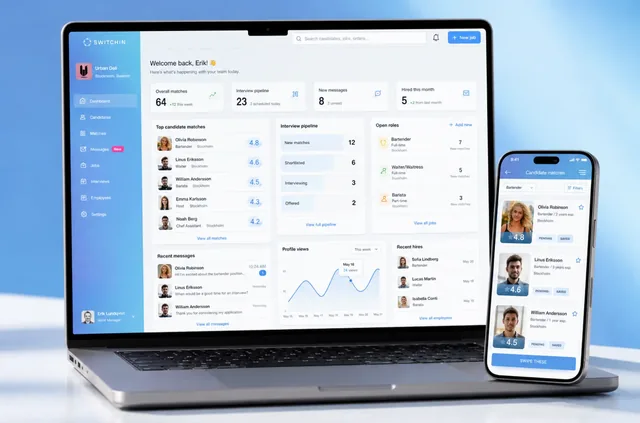
Switchin recruiter dashboard showing overall matches, interview pipeline, top candidate matches with scores and open roles, with a mobile candidate-matches swipe view

Frequently Asked Questions About Hiring Python Developers

The work of a Python developer is much more than just writing code. Using frameworks like Django, Flask, and FastAPI, they design and develop web applications. They also build data pipelines to guarantee seamless information flow across platforms and develop APIs to connect systems. Furthermore, Python specialists are essential in creating AI and machine learning models, incorporating automation tools, and even enhancing the functionality of outdated systems for contemporary use. They are crucial for projects ranging from small MVPs to large-scale enterprise systems because of their adaptability.

The complexity of the project, the level of experience, and the type of engagement (full-time, part-time, or hourly) all affect how much it costs to hire Python developers. A developer who focuses on creating a simple web solution will be less expensive than one who specialises in enterprise-grade systems or AI-driven applications.

We are aware that occasionally a hire might not live up to your standards. By providing prompt developer replacements without interfering with your project’s timeline, LITSLINK reduces risks. You can scale teams up or down with our flexible hiring models, which guarantee that you always work with Python experts who satisfy your cultural and technical needs.

In the rapidly evolving tech world of today, speed is essential. You can hire Python developers with LITSLINK and have them onboarded right away in as little as 48 hours. We save you time by handling sourcing, screening, and interviews so your project can proceed smoothly from planning to completion.

Ready to Start Hiring Your Top Python Developer Team?

Start your project

Have a Python Project in Mind?

Tell us about your use case, constraints, and goals. Our team reviews every inquiry and responds within 48 hours.

Next steps

1

LITSLINK specialist reviews your request and contacts you to discuss the details

2

If needed, we sign an NDA before moving forward

3

We send a project proposal – estimates, timeline, and team CVs included

4

After launch, we stay on for any updates your product needs

Litslink icon