





AI Travel Bot for Travel Industry: Case Study
- 70%+ automated resolution rate within the first 3 months
- <3 sec average response time
- 5+ travel data sources integrated
- 10+ languages supported
What if every customer got a personalized travel plan in under three seconds — without a single support agent involved? LITSLINK built an AI travel bot that turns vague requests like "a week somewhere warm, not too expensive" into structured, bookable itineraries, helping travel businesses reduce operational costs and free their teams for high-value work.

Project Details
A US-based travel technology company needed an AI travel bot to reduce the load on its support team without sacrificing response quality. LITSLINK built a solution that interprets natural-language queries, extracts traveler intent, and pulls real-time data from multiple sources.


Business Challenge
The travel industry has always depended on fast, accurate information and the ability to surface the right option from a genuinely enormous pool of choices. The challenge was to build something that understands traveler intent well enough to be useful — not just technically operational.
Before this project, the client was managing travel queries the way most companies in the space still do: a mix of search interfaces, email support, and human agents fielding repetitive questions. The volume was manageable at first. Then it wasn’t. Three specific problems kept surfacing:

High query variability
Travelers phrase the same request in many ways, and keyword-based systems failed to capture these variations, leading to missed or misrouted queries.

Overloaded support team
Around 70–80% of queries (availability, pricing, destinations, itinerary changes) didn’t require human input, yet there was no reliable AI bot for travel planning to handle them at scale.

Lack of entity-level understanding
The existing chatbot matched phrases but couldn’t connect related concepts like “early October,” “first weekend of October,” and “October 4th” within a single request.
Technologies Behind the AI Travel Bot





Our AI Travel Bot Solution
The architecture decisions here were shaped by a single question the team kept returning to: where does the friction actually happen in a user’s planning flow?
The answer was clear: the user’s intent (book a flight, find a hotel, adjust a reservation) lived in one place, and the ability to act on it lived in several disconnected systems. The solution had to collapse that gap.
Pandas and NumPy handled preprocessing of the training dataset for the NER model.
LITSLINK built the system on Google Dialogflow as the conversational backbone, extended with a custom Named Entity Recognition model trained on travel-specific language patterns. Alongside it, a classification layer categorized incoming messages by type before routing them to the appropriate response path.
The two models worked together: NER extracted the relevant details (destinations, dates, traveler counts, budget signals), and the classifier determined what kind of query it was dealing with — planning request, availability check, booking modification, or general information.
This is the kind of custom AI travel chatbot that doesn’t come from a generic template. The NER model had to be trained on the actual language travel users produce, which is messier and more varied than most chatbot training sets account for.
AI Travel Planning
The bot interprets open-ended, natural-language planning requests and translates them into structured queries against live travel data. Users can describe a trip loosely, and the system finds the structure underneath. It's closer to talking to a knowledgeable AI Travel Agent than using a search filter.
Customer Service Automation
Routine queries are resolved instantly, without routing to a human agent. The AI travel bot for customer service automation handles the high-volume, low-variance traffic that previously consumed most of the support team's capacity, freeing human agents for the cases that genuinely require judgment.
Smart Recommendations
Beyond answering direct questions, the system surfaces relevant options based on entities extracted from the conversation: destination alternatives, seasonal timing considerations, and nearby experiences.
Seamless Integrations
The bot connects to multiple travel data sources, pulling real-time information on flights, hotels, and destination details within a single conversational thread. This is what makes it a custom travel chatbot for booking and planning — users can move from "show me options" toward a confirmed choice without switching systems.
Multi-language Support
The system handles queries across 10+ languages. In a travel context, this matters for reach and usability. Language switching mid-conversation is handled gracefully, without disrupting the conversation flow.
Scrum Methodology
Project Journey
The project ran on a Scrum framework with short, focused sprints. Early sprint demos surfaced edge cases that nobody had anticipated during requirements gathering: ambiguous date references, multi-destination itineraries nested within a single query, and questions that switched context halfway through.
Discovery and scoping came first: defining the intent taxonomy (what kinds of queries would the system handle?), mapping the entity types relevant to travel (locations, dates, traveler types, price points, travel class), and agreeing on the integration architecture. That foundation shaped everything downstream.
How the AI travel bot works
- Traveler types a query in natural language via the chat interface.
- NER and classification models extract entities — destination, dates, preferences, and budget signals.
- System queries connected travel APIs and data sources instantly.
- The bot generates a structured, relevant response within seconds.
- User adjusts the plan or proceeds to booking — all within the same session.
- User proceeds to booking via the integrated link or is handed off to the booking platform
Scrum Process Flow
AI chatbot development doesn’t benefit from big-bang releases. Scrum’s sprint cadence meant the client saw working functionality regularly and could give feedback before decisions became expensive to reverse.

How we deliver AI travel bot project
- We define the project goal together, agree on priority features, and set a realistic delivery date and budget.
- We build a ranked list of everything the product needs, starting with what matters most to your business.
- Work is broken into 2-week cycles. At the start of each, we select the next set of features to deliver.
- The team builds, tests, and integrates features throughout the sprint.
- At the end of every sprint, you see working software and give feedback that shapes the next cycle.
- Each sprint produces a shippable piece of the product. We review what worked, adjust, and move forward.
-Timeline
Five phases, clearly defined
Discovery & Workshop
- Aligning on use cases and project goals
- Defining travel-domain entity taxonomy
- Mapping integration touchpoints and architecture
UX Prototyping
- Early wireframes tested against realistic query scenarios
- Conversation-first design validated before model training
- Quick-action shortcuts and response card structures defined
Agile Development (Sprints)
- Engineering is focused on short sprint cycles
- NLP layer tested against real-world query samples
- Edge cases surfaced early via sprint demos
QA & Testing
- Model adjustments based on observed real-user behavior
- Testing against varied natural-language travel inputs
- Integration and performance validation across all data sources
Launch & Support
- Post-launch monitoring for production edge cases
- Ongoing model refinements based on real user data
- Support handoff with full documentation and updates
UI/UX Design for an AI travel bot
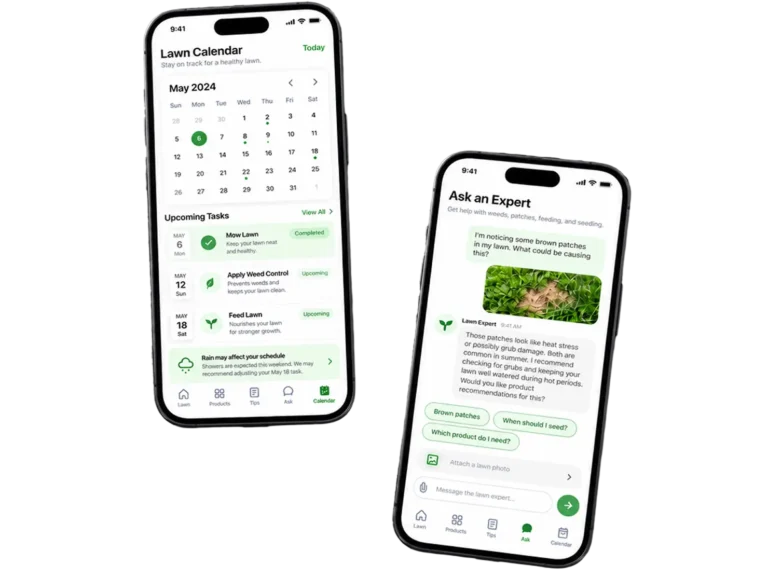
The product was designed as a conversation-first experience, eliminating complex navigation. The core goal: reduce the steps from “I have a travel idea” to “I have a concrete option in front of me,” with response times <3 sec and answers structured enough to scan but specific enough to act on.
Early research focused on the actual language users bring to travel planning — the imprecision, the trade-offs, the “I’m not entirely sure what I want yet” energy that traditional search interfaces fail to handle. That shaped both the bot’s tone and the scaffolding around it. Quick action buttons — Plan, Modify, and Book — sit persistently at the bottom of the chat, making the most common intents reachable in a single tap.
Responses are delivered as structured itinerary blocks rather than walls of text, segmented into destination overview, day-by-day breakdown, logistics, and estimated costs. Smart suggestions surface contextually at the end of each block: alternative dates if prices are high, nearby destinations if availability is low, or pacing adjustments if the itinerary looks dense — anticipating the follow-up before the user has to ask it.
The result is an interface that narrows, confirms, and proposes, turning a vague intention into a scannable plan in one exchange.


Results
Before
- ✕Support queues processed hundreds of repetitive queries daily, all routed through human agents.
- ✕Response times for standard queries ranged from several minutes to longer, depending on staffing and shift timing.
- ✕ Traveler inputs arrived in inconsistent language; existing tools matched keywords but missed intent, sending valid requests to dead ends.
- ✕Every new conversation started from zero — no memory of user preferences, past trips, or stated constraints.
- ✕Planning and support were fragmented across email, phone, and a static FAQ page. No unified interface.
After
- ✔70%+ of incoming queries are now resolved automatically without human handoff, freeing the support team for complex cases only.
- ✔ Response time dropped to under 3 seconds for the automated layer — a categorical improvement, not an incremental one.
- ✔The NER model recognizes entities in varied natural language, so "early October, non-stop, somewhere Mediterranean" maps correctly to a structured query.
- ✔The system retains context across a conversation session, allowing it to build on what the user already said.
- ✔Travel planning and customer support are unified in a single chat interface — one entry point, one interaction layer.

The Impact

-Verified Reviews
Our Reputation on Top Platforms
LITSLINK is consistently rated among the top AI and software development companies on Clutch, GoodFirms, and other industry review platforms. Client reviews highlight the team’s technical depth in NLP and conversational AI, communication throughout the engagement, and ability to navigate complex integration requirements.
Have a travel project in mind?
Ready to build your AI travel bot? Tell us what you’re working on — we’ll respond within 48 hours with a clear plan forward.
Thank you for your message. It has been sent.


