






HR teams, recruiters, hiring teams, and staffing agencies use AI hiring tools to automate repetitive tasks such as resume parsing, screening candidates, scheduling interviews, and reaching out to candidates. The right AI hiring tool for a company depends on the bottleneck you want to solve in your hiring workflow: sourcing candidates and identifying talent, screening resumes, matching candidates, conducting video interviews, or engaging with candidates. Some AI platforms go a step further by integrating hiring AI into the entire workflow, combining applicant tracking system (ATS) automation, high-volume hiring, and full-cycle hiring workflows into a single system.
Key Takeaways
- AI recruiting tools help hiring teams save time by automating resume parsing, candidate sourcing and screening, scheduling interviews, candidate outreach, and follow-up communication.
- The best AI hiring tool depends on the hiring workflow, whether you are managing high-volume hiring, staffing agency recruitment, startup hiring, enterprise talent acquisition, or internal HR operations.
- AI hiring software can improve candidate matching and support better hiring decisions, but organizations should still maintain human oversight and regularly check the system for fairness and transparency.
- Some platforms offer solutions that serve as full ATS or AI recruiting systems. Others focus on specific use cases such as candidate sourcing, video interviews, screening tools, job descriptions, or candidate engagement.
- Companies that require proprietary recruiting workflows may benefit more from custom AI hiring software than from ready-made SaaS platforms. This is where a custom development partner like LITSLINK can help.
- Teams should compare factors such as ATS integrations, pricing quotes, setup requirements, candidate experience, analytics capabilities, data privacy controls, and product updates released in 2026 before selecting a platform.
What Are AI Hiring Tools?
AI hiring tools are software platforms that use AI technology, machine learning, natural language processing (NLP), automation, and data analysis to improve various stages of the recruitment process. With these tools, recruiters can delegate manual tasks in the hiring workflow, such as parsing resumes, sourcing candidates, screening applicants, building candidate profiles, scheduling interviews, writing job descriptions, answering candidate questions, or improving candidate engagement. AI allows recruiters to identify qualified candidates faster and improve communication throughout the hiring process.
Some AI platforms also provide actionable insights for hiring teams to help them identify issues in their organizations, such as talent shortages, and optimize their talent acquisition strategies.
AI Hiring Tools vs AI Recruiting Platform vs ATS Platforms
The terms AI hiring tools, AI recruiting software, and applicant tracking systems are often used interchangeably in the industry, but they are not the same.
An applicant tracking system serves as a centralized database for applications, candidate records, job postings, and recruitment workflows. ATS platforms help recruiters organize hiring processes and manage candidate pipelines.
AI hiring tools add intelligent automation capabilities to such workflows. They can automatically parse resumes, support screening decisions, rank candidates, and send out candidate outreach campaigns.
AI recruiting platforms combine ATS functionality and AI-powered automation into a unified system. Such solutions cover the whole recruiting process, from sourcing candidates to onboarding new hires. You can go over the AI in recruitment guide for a deeper look at how AI technology is changing recruitment workflows.
Best AI Hiring Tools: Quick Comparison
| Tool | Best For | Main AI Hiring Use Case | 2026 Pricing or Update to Check |
| Paradox | High-volume hiring | Conversational hiring AI and chatbot workflows | Custom enterprise pricing |
| HireVue | Enterprise recruiting | AI video interviews and assessments | Enhanced interview intelligence features |
| Humanly | Candidate engagement | Conversational screening and scheduling | Growing focus on recruiting automation |
| Manatal | SMB recruiting teams | Resume parsing and candidate matching | Affordable AI recruiting software plans |
| Workable | Mid-market organizations | ATS workflows and sourcing candidates | Expanded AI-powered sourcing capabilities |
| Eightfold AI | Enterprise talent intelligence | Skills-based candidate matching | Workforce intelligence and internal mobility updates |
| Greenhouse | Structured hiring | Hiring team collaboration and workflows | Enhanced analytics and AI-assisted workflows |
| hireEZ | Talent sourcing teams | Candidate sourcing and outreach automation | Improved talent intelligence capabilities |
| Fetcher | Recruiter productivity | Automated sourcing and outreach | Expanded diversity-focused recruiting workflows |
| Textio | Recruitment content optimization | Job descriptions and bias reduction | Advanced language intelligence features |
10 Best AI Tools for Hiring Managers
Let’s dive deep into the best AI tools for hiring managers that are being widely used right now.
1. Manatal
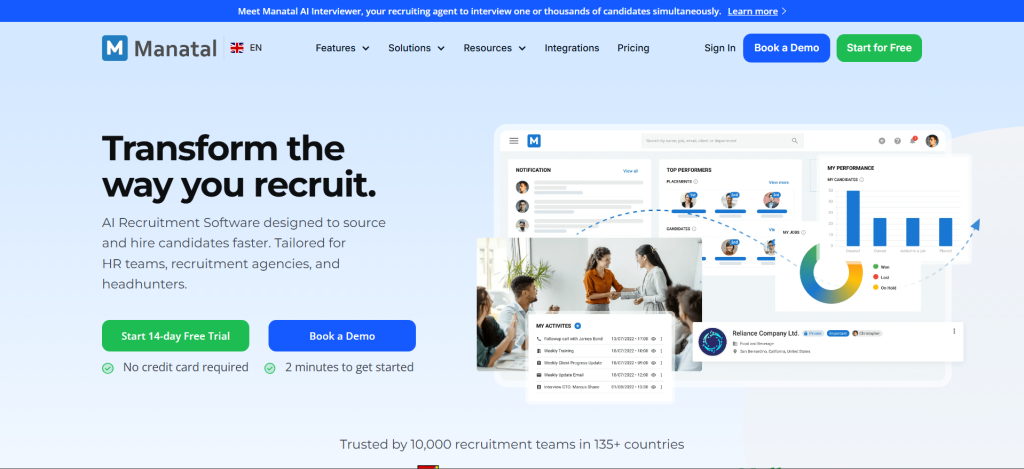
Best For: Small and mid-sized recruiting teams looking for an affordable AI recruiting platform.
Manatal is a good fit for recruiting companies that want automation in recruitment without the enterprise-level complexity. Manatal combines ATS functionality with resume parsing, AI-driven candidate matching, social profile lookup and enrichment, and recruitment analytics. It enables growing businesses to improve hiring efficiency without having to manage multiple recruiting tools.
Key Use Cases:
- Resume parsing and candidate profile creation
- AI candidate matching
- Applicant tracking workflows
- Recruitment analytics
- Talent pool management
2026 Updates and Pricing:
Manatal offers a free version of the software with limited functionality. The paid plans start at around $15-$39 per user per month for small teams, with free trials available. The Enterprise Plus plan enables native integration with LLMs like Claude and ChatGPT, which leads to smart parsing, generative tasks, and custom pipeline workflows.
Limitations:
Businesses with complex hiring needs, such as large enterprises, might require more advanced customization than Manatal can provide.
2. Humanly
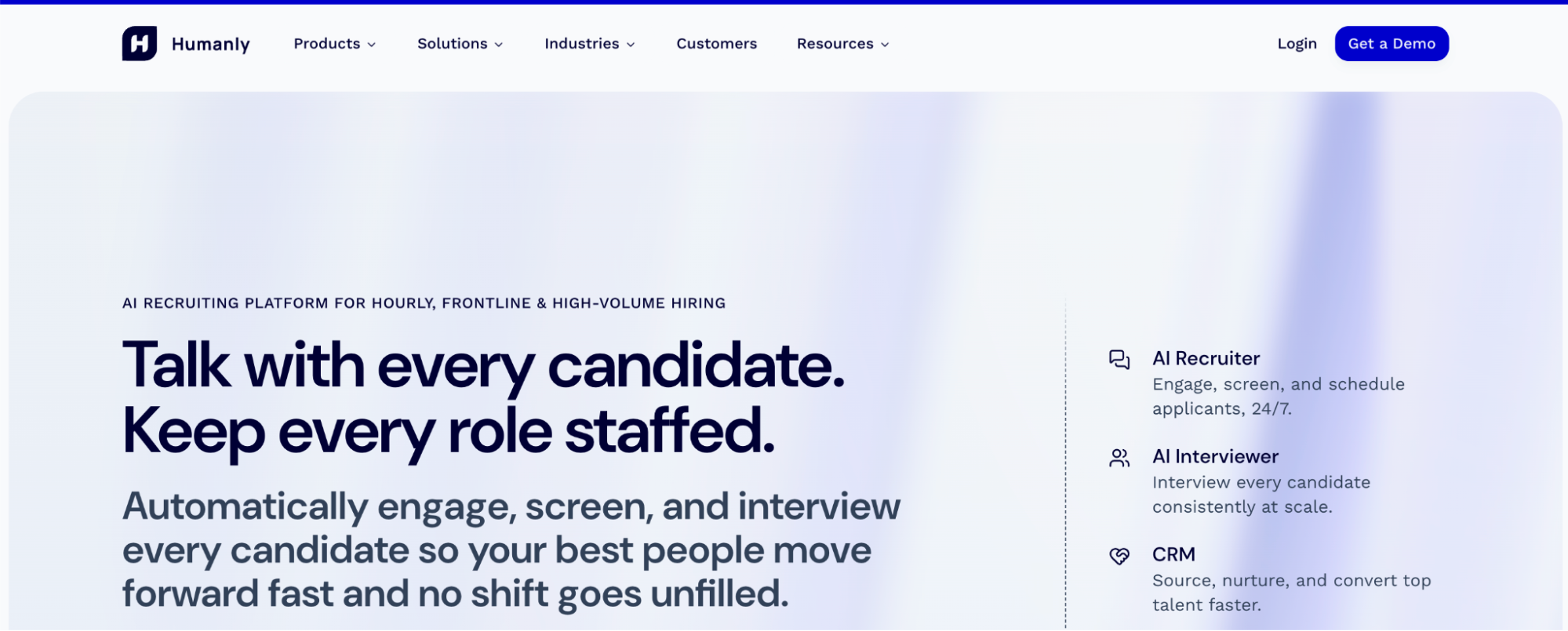
Best For: High-volume recruiting teams that are focused on conversational AI and candidate engagement.
Humanly uses AI to automatically screen candidates, answer questions, and schedule interviews, freeing recruiters from the manual management of every interaction. It performs best where recruiters must process many applicants quickly, improving response times with chat flows that feel natural.
Key Use Cases:
- Candidate outreach
- Conversational screening and initial interviews
- Automated interview scheduling
- Recruiting workflow automation
- Processing a high volume of applicants
2026 Updates and Pricing:
Humanly uses a per-hire or per-conversation pricing model, and can be contacted for quotes. A free trial is available, and they focus on their Talent CRM, which builds and nurtures talent pools and automatically re-engages past applicants, reducing reliance on job boards.
Limitations:
It is better suited to high-volume hourly hiring than to executive search or specialized technical recruitment.
3. Paradox
Best For: High-volume hiring industries such as retail, hospitality, and logistics.
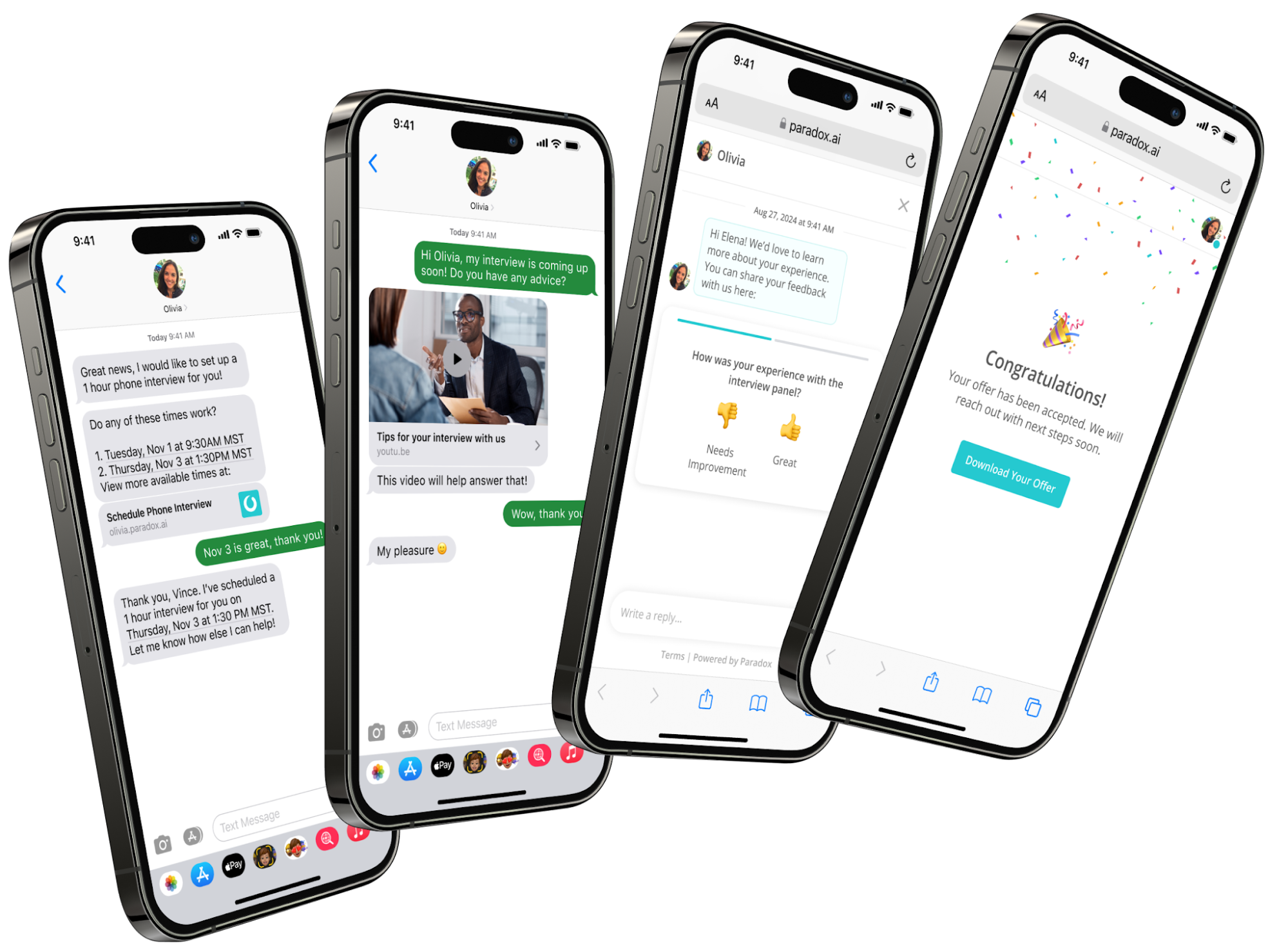
Paradox operates Olivia, an AI assistant that interacts with candidates as a human would: answering questions, interviewing candidates, scheduling interviews, sending updates, and even making offers. It’s designed for hourly and retail hiring, where speed matters and turnover is high.
Key Use Cases:
- Interview scheduling
- Conversational AI chatbots
- Candidate outreach
- Delivering offers
2026 Updates and Pricing:
Paradox uses custom pricing based on volume and features; you can expect mid-market pricing for high-volume hiring operations. A free demo is available. Paradox is getting into deeper bi-directional syncs with major ATS providers like Workday, Greenhouse, Lever, etc., allowing data to flow instantly and trigger actions directly in a browser.
Limitations:
While Paradox is strong in high-volume hiring environments, it may be more than some smaller organizations need.
4. HireVue
Best For: Enterprise teams relying on structured interviews and assessments.
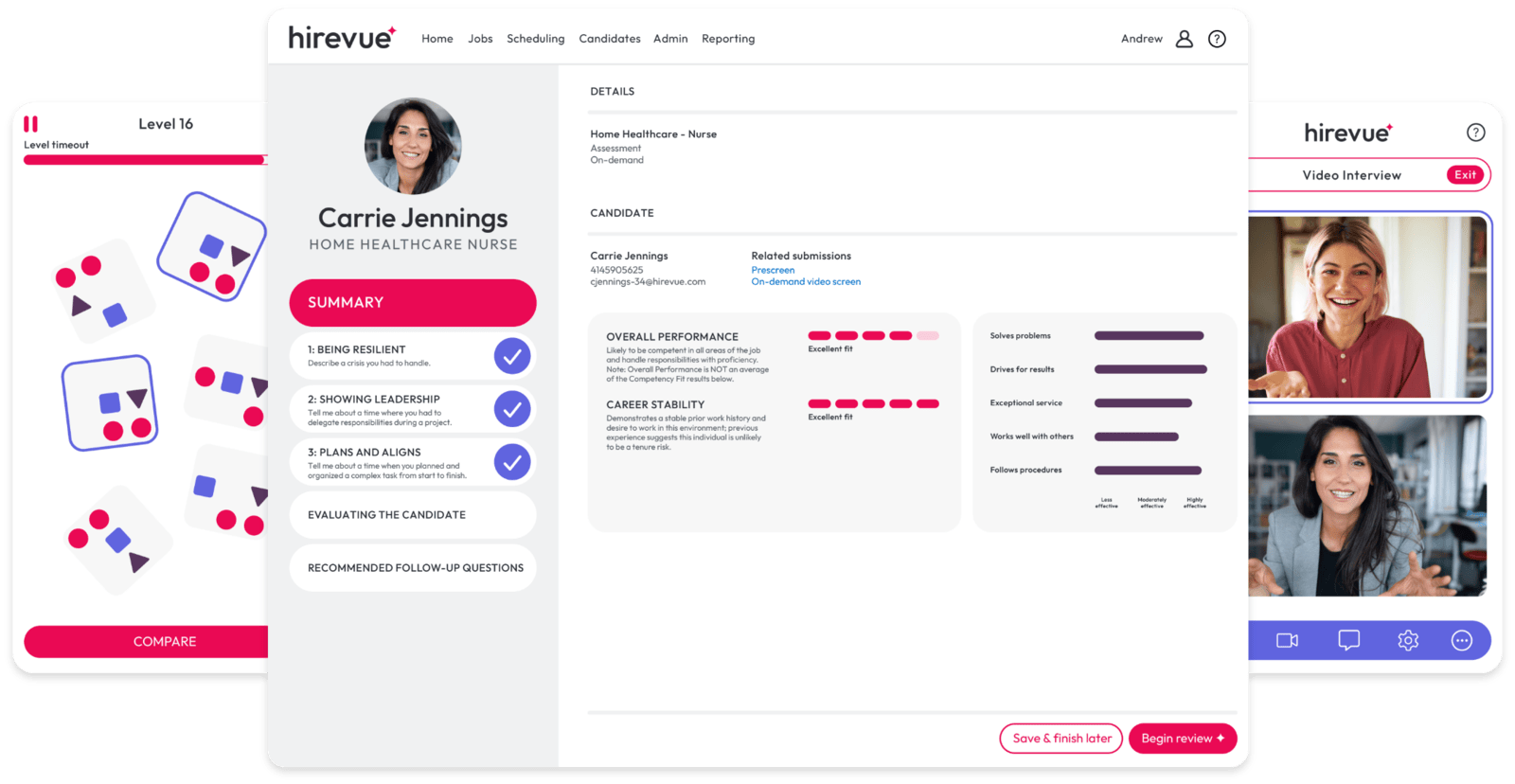
HireVue is a well-known name in AI-powered recruiting efforts. The platform combines video interviews, assessments, interview guides, and workflow automation to help teams evaluate candidates more consistently. The platform also supports on-demand interviews, allowing candidates to complete interview questions asynchronously.
Key Use Cases:
- Video interviews
- Structured candidate assessments
- Hiring scorecards
- Enterprise recruitment
- Interview workflow management
2026 Updates and Pricing:
Pricing is custom and typically aimed at enterprise buyers. The assessment builder was launched in 2026, and it analyzes job descriptions to create specific tests and virtual job tryouts.
Limitations:
The platform is complex to implement, requiring extensive setup and training for hiring managers to ensure they use the scorecards correctly.
5. Workable
Best For: Mid-market recruitment teams that need a single system that handles everything from posting to hiring.
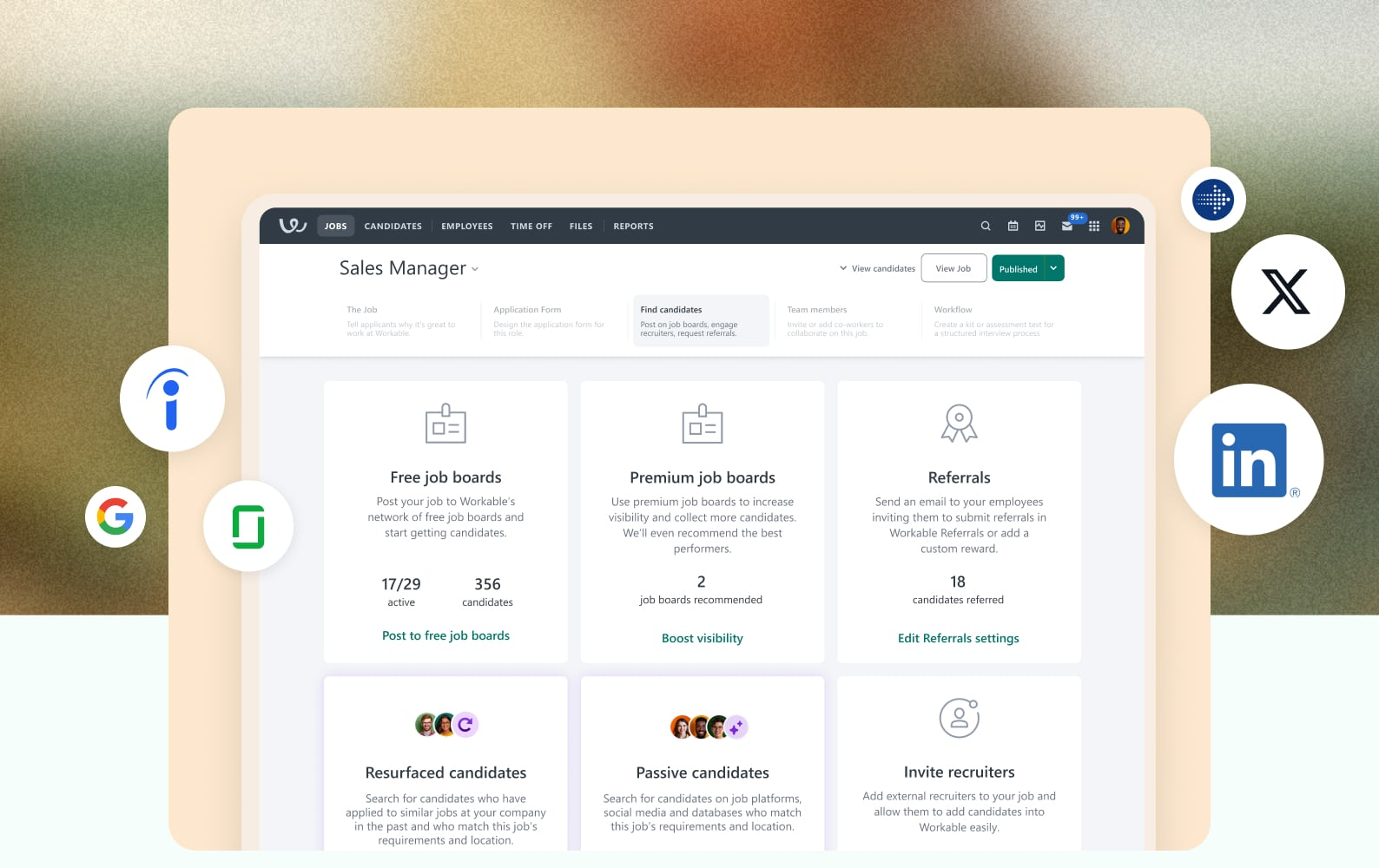
Workable blends classic applicant tracking with AI-driven discovery, supporting growing businesses that need scalable recruiting. From a single platform, recruiters publish jobs to multiple job boards, manage candidate pipelines, search talent databases, and screen applicants.
Key Use Cases:
- AI sourcing
- Resume screening
- Applicant tracking
- Job posting automation
- Hiring team collaboration
2026 Updates and Pricing:
Workable has a free trial and three payment plans: $299, $599, and $719 per month for small teams (payment varies depending on company size). Their flagship autonomous assistant is getting more updates to help proactively search for passive candidates and manage initial outreach 24/7.
Limitations:
While Workable is a capable all-rounder, companies that need specialized technical sourcing might still need dedicated external sourcing tools.
6. Eightfold AI

Best For: Large enterprises, talent-driven organizations, and companies focused on internal talent mobility.
Eightfold AI is a talent intelligence platform that can map the skills of your entire workforce and candidate pool, and help organizations gauge other metrics, such as retention.
Key Use Cases:
- Talent intelligence
- Skills-based matching
- Internal mobility
- Workforce planning
2026 Updates and Pricing:
Eightfold is for enterprises only and uses custom pricing plans. The newly introduced Talent Agent serves as an AI interview companion for candidates throughout their application journey.
Limitations:
Pricing and implementation can be complex. It’s best for companies with the budget for enterprise software.
7. hireEZ
Best For: Sourcing teams and recruiters targeting passive candidates in competitive fields like healthcare and engineering.
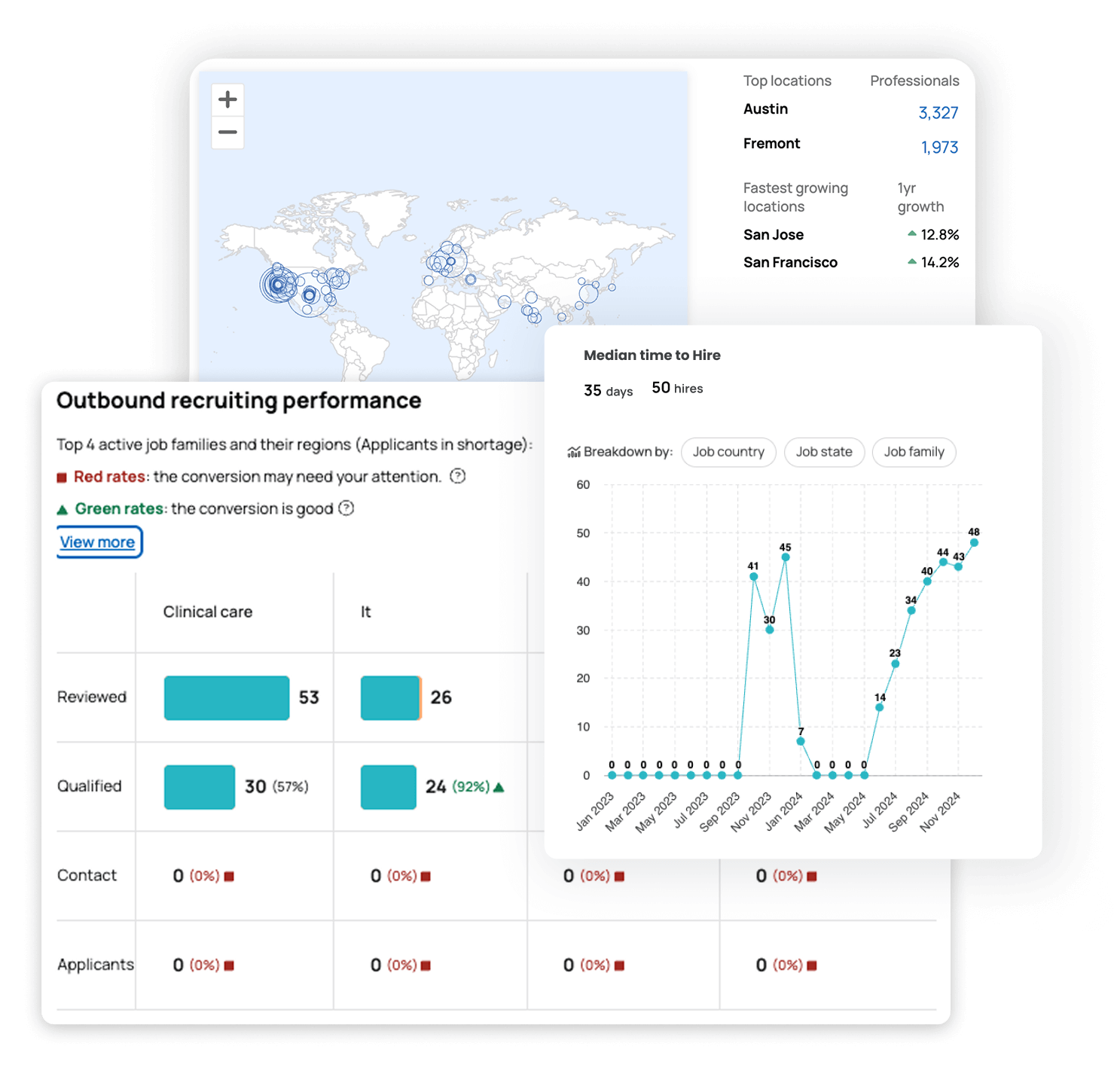
hireEZ focuses on sourcing candidates and outbound recruiting. The platform aggregates talent data from multiple sources, helping recruiters identify candidates who are not actively searching for job opportunities. Teams can build targeted talent pools with detailed filters, and AI-powered search makes it easier to find professionals in any field.
Key Use Cases:
- AI-powered sourcing
- Automated outreach
- Candidate enrichment
- Talent pool management
- Recruitment analytics
2026 Updates and Pricing:
hireEZ typically charges per recruiter seat, and pricing is quote-based. ResumeSense was launched, and it assists recruiters in evaluating applicant resumes and detecting potential AI-driven biases.
Limitations:
Companies still need an ATS. hireEZ will find the people and get them to reply, but companies must move them into their own tracking systems to manage the interview process.
8. Fetcher
Best For: Companies committed to diverse hiring, recruitment teams with limited time, and organizations building talent pools.
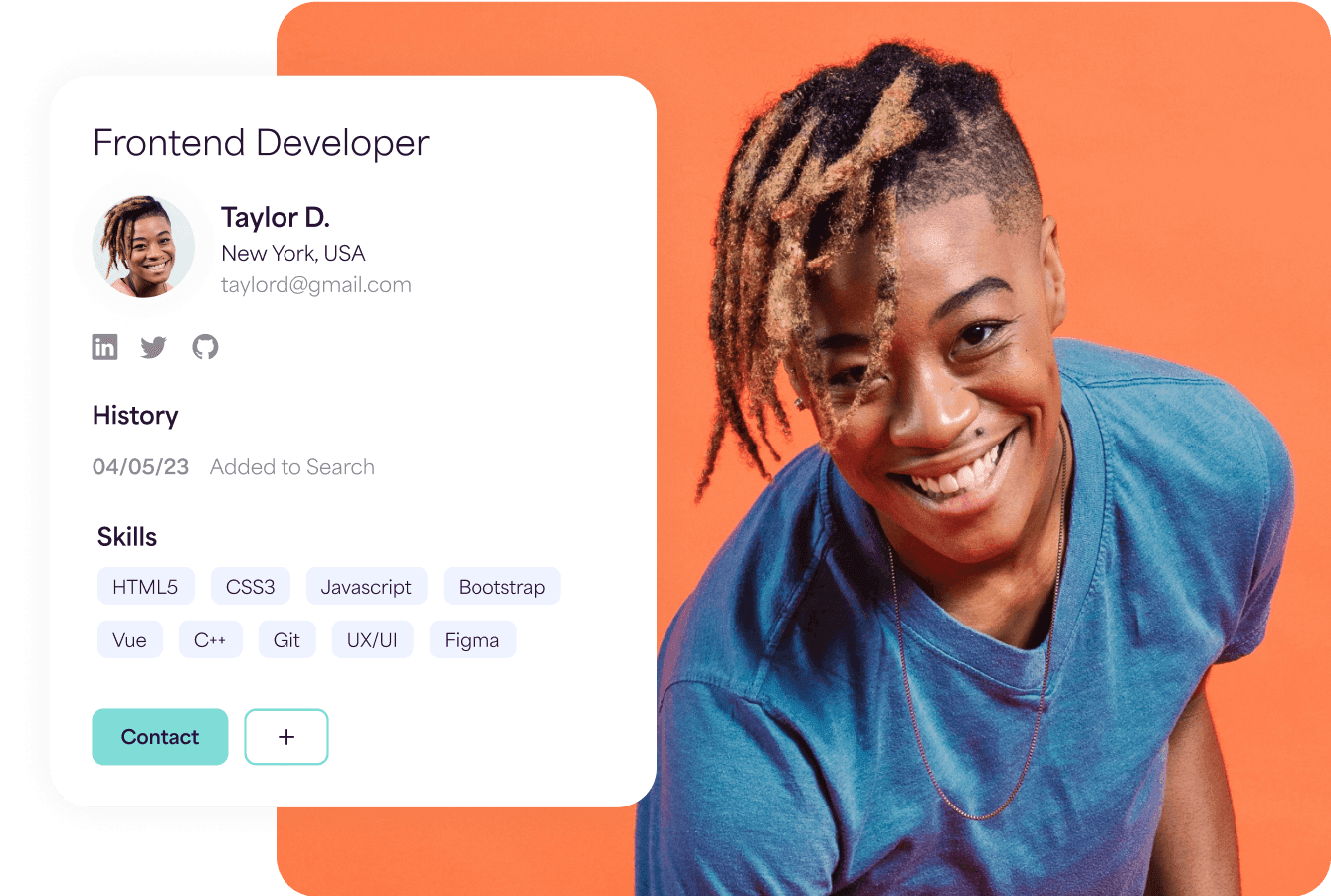
Fetcher automates candidate sourcing with a focus on diversity. Companies can use it to build diverse candidate pipelines, automate outreach emails, and pull prospective hires from underrepresented talent pools. Fetcher reduces the time recruiters spend searching for prospects and managing communications. Teams can use the platform to define their hiring criteria, and Fetcher’s machine-learning models generate curated candidate lists. Fetcher works best for smaller recruiting teams that often struggle to manage multiple sourcing and outreach tools simultaneously.
Key Use Cases:
- Automated candidate sourcing
- Personalized outreach campaigns
- Candidate pipeline management
- Diversity sourcing support
- Team collaboration tools
2026 Updates and Pricing:
Fetcher has three monthly subscription plans: Self-serve – $115/mo, Growth – $379/mo, and Amplify – $649/mo, with annual savings available for the Growth and Amplify plans ($379 and $649 per month, respectively). Enhanced DEI analytics help teams to track their inclusion goals.
Limitations:
To ensure quality in candidate batches, Fetcher includes a human review step in its workflow, so batches may take a day or two to be processed rather than immediately.
9. Greenhouse
Best For: Hiring teams and managers, companies that want a standardized recruitment process
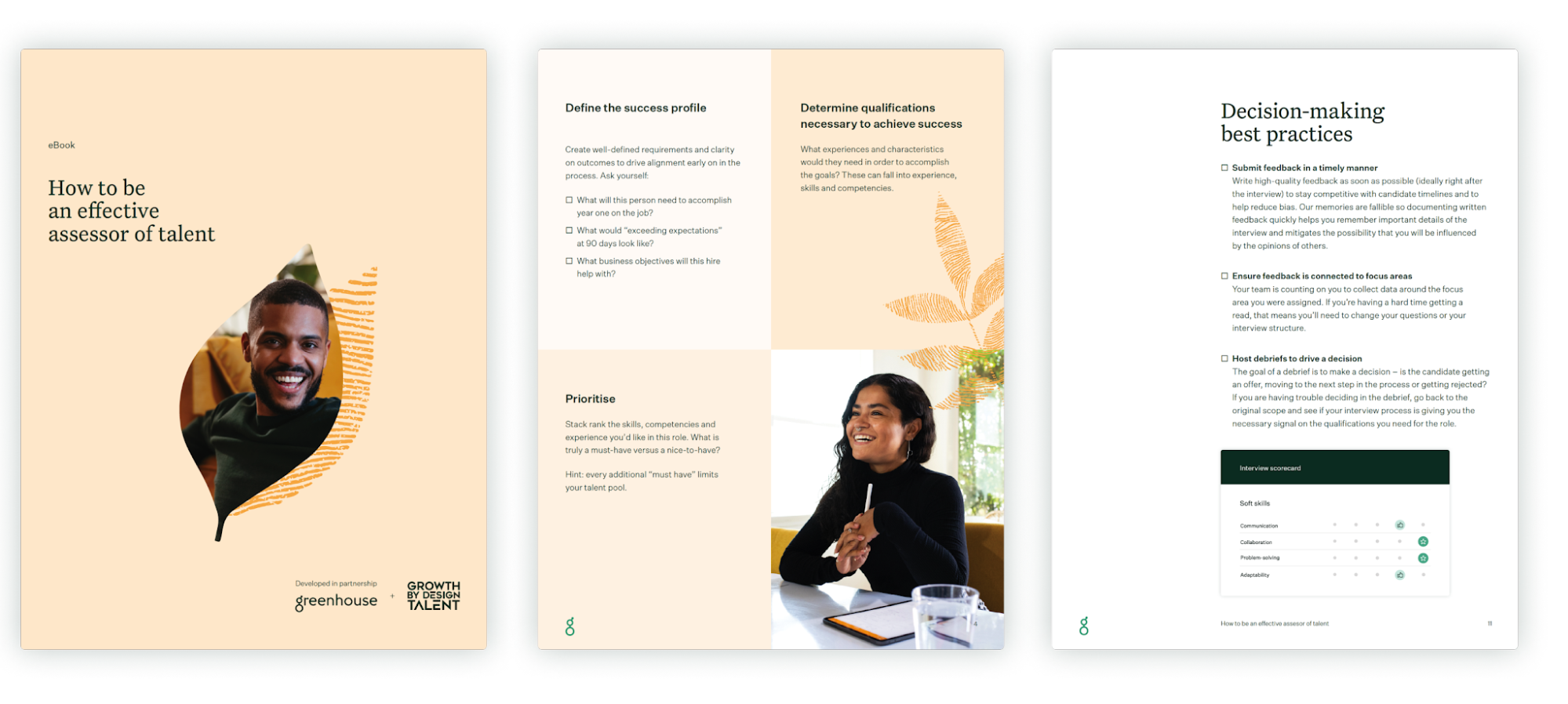
Greenhouse is heavily focused on how recruitment teams make decisions, which pushes companies toward a structured approach to hiring. It’s one of the most adopted applicant tracking systems in modern recruiting. Although it’s not an exclusive AI platform, it features numerous AI-powered tools and automation features that help streamline hiring workflows. Recruiters gain visibility into the process, and hiring managers benefit from having standardized workflows and collaboration tools.
Key Use Cases:
- Applicant tracking
- Scheduling interviews
- Structured hiring workflows
- Reporting and analytics
- Extensive integrations
2026 Updates and Pricing:
Greenhouse has a pricing model that starts at around $500/month, with free demos available. Their Real Talent $ Fraud Defense protects the timeline with built-in identity verification and AI-powered fraud detection.
Limitations:
It’s expensive, and implementation takes time. Overall, it’s better for companies with more than 50 employees.
10. Textio
Best For: Marketing, employer brand, and recruitment leaders who control job descriptions.
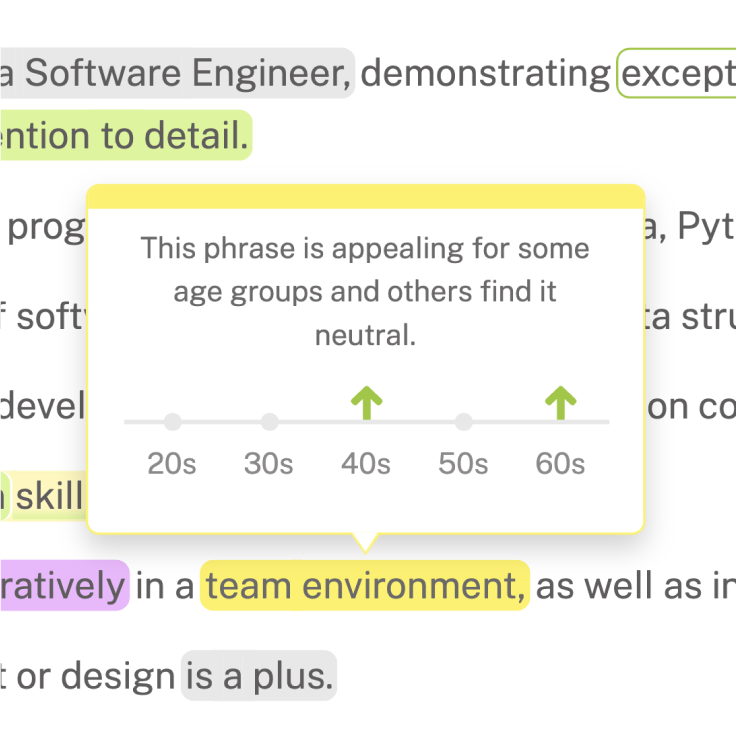
Textio optimizes job descriptions, relying on the principle that better descriptions attract more qualified applicants. It analyzes language for bias, suggests inclusive wording, and predicts which job posts attract top talent. The platform helps identify language patterns that may discourage job seekers from applying or unintentionally exclude certain groups, and provides suggestions that promote inclusivity and engagement.
Key Use Cases:
- AI-powered writing for job descriptions
- Recommendations for inclusive language
- Optimizing communication with candidates
- Performance benchmarking
- Real-time guidance on writing
2026 Updates and Pricing:
There is a free version with limited features. Textio offers team pricing starting from $300-$500/month for smaller teams. Textio Feedback for managers translates raw managerial thoughts into very detailed performance reviews.
Limitations:
Limited customization and value beyond job description optimization.
Other AI Hiring Tools Worth Mentioning
Let’s look at other AI hiring tools grouped by use case.
ATS and recruiting workflow expansion – Tools like Zoho Recruit, Pinpoint, and ClearCompany combine features like applicant tracking, recruiting automation, candidate communication, reporting, and talent management. They suit organizations strengthening ATS workflows and recruiter-manager collaboration.
Candidate Sourcing and Talent Intelligence – In this niche, platforms such as SeekOut, Betterleap, and Findem drive proactive candidate sourcing and offer deep talent intelligence and market insights.
They help organizations fully cover the sourcing side of the hiring process, especially for hiring teams seeking qualified candidates beyond the applications they receive.
Screening and Skills Assessment Tools – Platforms that specialize in this include Interviewer.ai, Canditech, and Jobma. They support AI interviews, candidate assessments, video interviews, and skills-based hiring.
Organizations that prefer objective screening processes and competency evaluations will find these smart solutions valuable additions to their existing recruitment strategies.
Interview Intelligence and Video Engagement – Here, you have tools like Metaview and Hinterview that add coverage for interview notes, conversation intelligence, video engagement, candidate presentations, and recruiter productivity.
These smart solutions help organizations achieve better, more consistent interview documentation.
Candidate Data Enrichment and ATS Database Activation – CandidateIQ is more focused on candidate data quality as a data-enrichment tool. Many teams already have large databases, but the struggle lies in incomplete profiles and outdated information.
CandidateIQ makes existing ATS records more valuable by improving candidate profiles, data enrichment, and streamlining recruiter workflows.
Reference Checks and Compliance – In this niche, you have platforms such as Checkr and Referoo that support the latter stage of the hiring process through background checks, employment verification, reference checks, and compliance workflows.
They fit regulated industries and high-volume hiring.
What Problems Do AI Hiring Tools Solve?
Here are some of the problems in hiring workflows that AI hiring tools solve and provide value.
Candidate Sourcing and Finding Qualified Candidates
A common recruiting challenge is finding qualified candidates before competitors do. AI sourcing tools can analyze databases, social networks, job boards, and existing ATS records to identify top talent faster. Recruiters can access targeted talent pools generated in minutes by AI sourcing tools, rather than manually searching through job applications.
Resume Screening and Candidate Matching
AI screening tools can automate resume parsing, analyze candidate profiles, identify relevant skills, and generate shortlists based on job requirements. Advanced filtering features can generate matches based on skills rather than keywords, which helps recruiters identify strong candidates who might otherwise have been overlooked.
AI Interview Scheduling and Follow-Ups
Coordinating calendars is a persistent bottleneck in recruitment. AI recruiting tools cut the back-and-forth, automate interview scheduling, send reminders, and improve response times.
Companies exploring advanced automation usually integrate these capabilities with custom chatbots and intelligent workflows developed via AI chatbot development services.
Candidate Experience and Engagement
AI hiring tools help organizations engage candidates via automated outreach, conversational AI, personalized messaging, and candidate engagement workflows. They reduce response delays and keep potential candidates informed throughout the recruitment process.
Hiring Bias, Fairness, and Explainable AI
AI can help create consistent screening processes, but it should not replace human judgment. AI recruitment software can reduce unconscious bias by evaluating all candidates against standardized criteria. However, recruiters still need transparent criteria, human review, and regular checks for bias to ensure AI tools support better hiring decisions.
How to Choose the Best AI Recruiting Tool
Use this framework to make sure your investment improves hiring metrics. Also, to understand how to build AI recruiting models that support hiring decisions, explore our AI agent development services.
1. Check ATS Integrations and Data Flow
If data doesn’t flow automatically between your AI tool and your database, recruiters lose hours on manual entry. Before selecting an AI tool, check how well it integrates with existing systems like Greenhouse, Workday, Lever, Bullhorn, Zoho Recruit, and other ATS platforms.
2. Match the Tool to Your Hiring Workflow
Different organizations require different recruiting software — for high-volume hiring, executive search, staffing agencies, startups — and the right platform should align with your specific recruitment process. Hiring teams should not be forced to change established workflows when integration is possible.
3. Evaluate AI Screening and Candidate Matching Quality
Check beyond the marketing claims: evaluate how the platforms score candidates, prioritize skills, and explain recommendations. The best systems provide transparent reasoning behind their decision-making rather than making black-box decisions.
4. Review Pricing, Free Trial, and Time to Value
Understand the pricing first. Some tools are self-serve and quick to set up, with immediate value and free trials. Enterprise platforms may require months of onboarding and training, along with custom pricing that can run into the thousands per year.
5. Look at Candidate Experience Before Automating Everything
Automation should remove friction in the hiring process, not add it. Test the software from the applicant’s point of view to keep the process smooth and respectful, not cold, confusing, or impersonal to applicants.
Final Checklist Before Choosing AI Recruiting Software
Use this buyer’s checklist:
- ATS Integration – Does the tool stand alone, or does it sync with your ATS?
- Data Privacy – Where is candidate data stored? Does it comply with GDPR, CCPA, and local regulations?
- Bias Controls – Can you monitor and audit the AI for bias? Are there controls to reduce unfair screening?
- Explainable AI – Does the tool explain its decisions? Can the recruiters see why a candidate scored high or low?
- Candidate Experience – Is the process clear and respectful?
- Pricing Model – What is the pricing model? What features cost extra?
- Recruiter Adoption – Is the tool easy to use?
- Setup Time – How long until you are up and running? Is it going to be days or months?
- Analytics – Can you measure the hiring analytics?
- Scalability – Does the tool scale with your team? Can it handle 1,000 or 10,000 applications per role, month, or campaign?
Why LITSLINK Is Worth Considering for Custom AI Recruiting Software
Most AI hiring tools are broad-market SaaS products. They automate routine tasks but may not suit organizations with specialized hiring workflows, unique compliance requirements, or proprietary recruitment processes.
That’s where LITSLINK takes a different approach, developing custom AI recruitment software tailored to an organization’s specific needs. We can build these systems from scratch, including AI screening workflows, CV screening software, candidate matching engines, video interviewing platforms, recruiting chatbots, ATS integrations, and end-to-end automation in the recruitment process.
Instead of fitting your business’s hiring process into a vendor tool, you can build a tool that fits your process. If you need recruiting solutions in the form of software that integrates deeply with your existing systems, have unique hiring requirements, or want full control and ownership of the recruitment technology, then LITSLINK may be a strong fit. Our broader AI services cover other custom AI solutions, predictive analytics, recommendation engines, LLM-based assistants, and document processing pipelines.