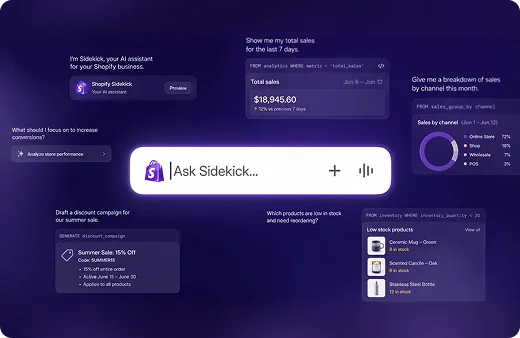
Content generation agents help businesses create large volumes of personalized material with a consistent brand voice across your marketing stack. These systems can create email copy, landing page headlines, ad descriptions, calls to action, blog outlines, video scripts, and product descriptions.
They are also capable of changing their tone depending on the intent of the audience. For instance, someone purchasing a luxury item would receive premium-focused messaging, whereas someone who is budget-conscious would receive a discount-oriented copy.
Many companies already use AI marketing agents to:
- Generate ad copy for Google and Meta campaigns: AI can generate different ad variations based on customer data and campaign goals (for new customers, returning users, luxury audience, discount-seekers, etc.).
- Personalize landing pages based on referral traffic: AI agents can dynamically personalize landing page content (change headings, images, CTAs) based on customer behavior, traffic source, industry, or purchase intent.
- Create e-commerce product descriptions: An AI agent based on search intent and customer data can adapt the tone of voice, show different benefits to different audiences, and emphasize luxury, eco, or budget aspects.
- Produce SEO metadata and optimization suggestions: They create automated recommendations about content improvement for marketing teams.
- Generate captions for social media platforms: They automatically generate social media captions and multiple social media post variations for different platforms, audiences, and campaign goals. They adapt content based on engagement data, brand voice, and user behavior, using emojis, hashtags, and CTA variations.
- Personalize push notifications and SMS campaigns: Based on customer data, AI agents can send messages at the appropriate time, adapt offers for a specific user, and launch reminders based on user activity.
- Draft scripts for TikTok and video ads: Agents can automatically adapt hooks, messages, and CTAs for different audiences and social platforms.
- Build article outlines and keyword clusters: AI can write drafts adapted to the brand’s tone of voice, generate blog outlines, and find keywords and semantic topics.
- Localize multilingual campaigns: AI agents can translate marketing content, adapt the tone of voice to the local market, and create multilingual campaigns.
- Produce proposals and sales enablement materials: AI agents can generate personalized sales enablement materials such as proposals, pitch decks, follow-up emails, and product summaries based on client data and sales context.
Some brands also use these systems to automate content creation across multiple channels. As a result, marketing agents can easily and quickly create first drafts and pass them to editors for refinement without having to wait for multiple approvals and revisions.
It’s important to note that AI does not fully replace human marketers and their creativity. Rather, it changes where humans apply effort. In the past, creatives often repeated routine marketing tasks, which took up their time. Now with AI, teams can focus on storytelling, positioning a product, and making strategic decisions.