








Today, artificial intelligence is deeply integrated into daily financial workflows. From data analysis automation to streamlining reporting, AI tools help companies optimize their work and focus on what really matters — efficiency.
At LITSLINK, we have extensive experience in AI development for the financial industry. In this post, we want to focus on the top 10 AI tools used in finance. When evaluating the tools, we paid close attention to accuracy, automation, integration, and ease of use.
Key Takeaways
- AI-powered finance tools can be easily integrated into existing financial systems to help companies make informed decisions, as well as increase automation and accuracy.
- AI tools for finance should be treated as efficiency boosters, not as human substitutes.
- The main use cases of AI financial tools are financial planning, data analysis, and automation.
- Before choosing the right AI tool for your financial team, it’s best to check integration capabilities, review models and features, and evaluate pricing.
Quick Answer: Best AI Tools for Finance
In 2026, financial teams are under pressure to find the best AI-powered financial software. They are expected to increase productivity, support compliance, and replace manual workflows with AI.
Here is the quick summary of the top 10 financial AI tools in 2026:
| Name | Best for |
| Datarails | Teams staying in Excel |
| Planful | Enterprise-scale planning |
| HighRadius | Operational cash management |
| DataSnipper | Audit document verification |
| Workiva | Regulatory compliance and financial reporting |
| Cube | Spreadsheet-based FP&A |
| Trullion | Revenue recognition and lease accounting |
| Alteryx | Analytics and financial data preparation |
| MindBridge | Anomaly detection and risk analysis |
| Vic.ai | Accounts payable |
There is no AI tool that can do everything. However, you can find a specific AI for your particular needs.
What Are AI Tools for Finance?
A few decades ago, a one-size-fits-all legacy system was used to run the financial industry. AI is changing that by using specialized tools for each particular task, whether it’s financial forecasting, compliance, or reporting.
Financial AI agents rely on a combination of technologies. They use machine learning (ML) to spot patterns in datasets, natural language processing (NLP) to understand human text, and workflow automation to handle repetitive tasks. Together, they ensure faster analysis, more precise financial forecasts, and better visibility.
With AI tools, the bottleneck of waiting days for analyses from data engineers is gone. Companies can use NLP-powered AI models to ask questions about their financial data in everyday language.
AI responses involve intricate chains of action. First, they translate your questions from plain English into a strict database query. Then, AI tools retrieve the hard data. And last but not least, they wrap that data into a logical output for you, the user.
10 Best AI Tools for Finance
Below are some of the best examples of financial AI tools available in 2026.
1. Datarails
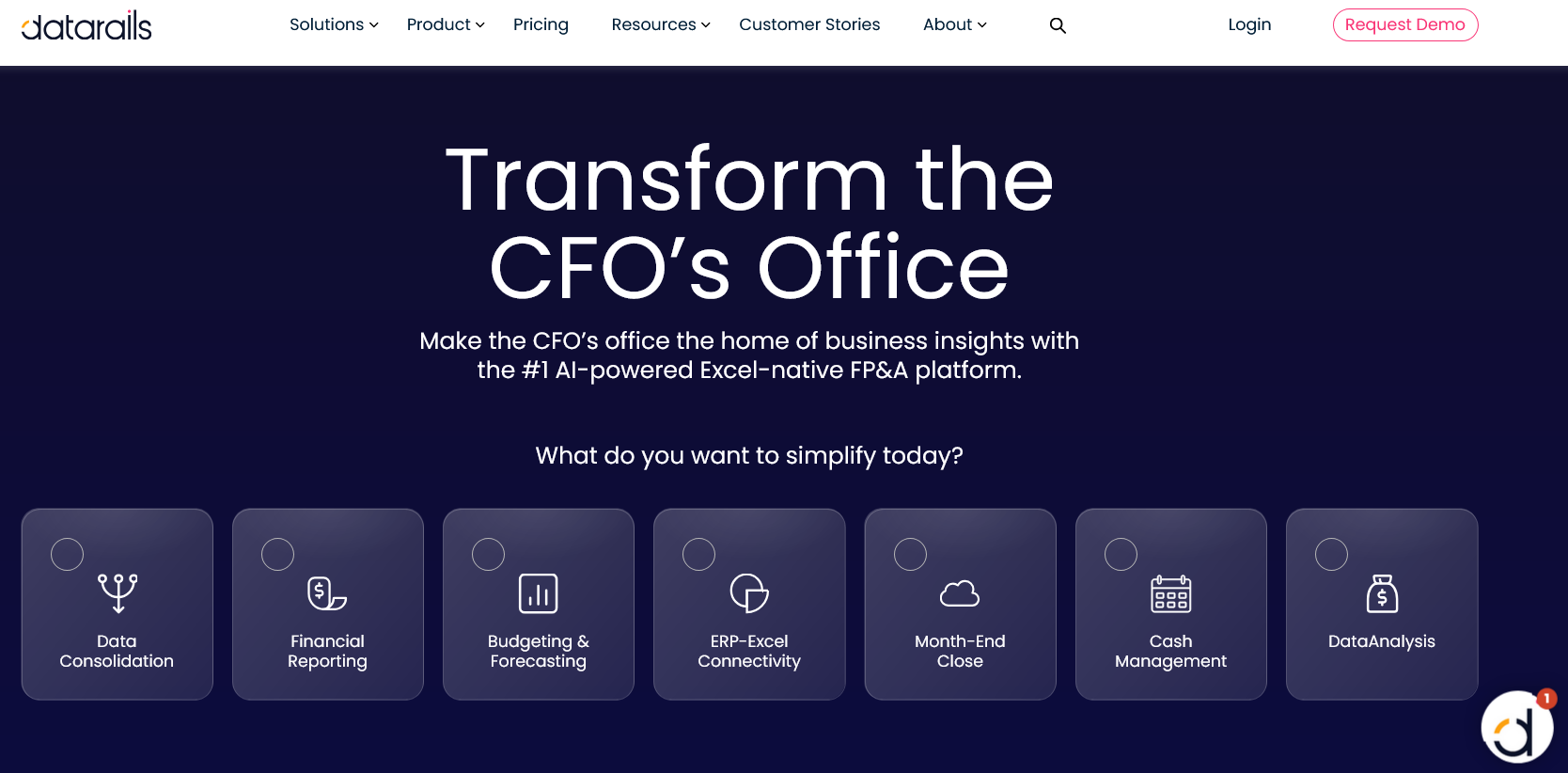
Datarails is an AI tool built for accounting teams who want stronger financial forecasting. A major advantage of this system is that it stays in the familiar Excel environment.
Experts behind Datarails realized that forcing teams to abandon their spreadsheet workflows is a barrier to adoption. So, they decided to give Excel users a boost. Datarails can consolidate fragmented data from your ERP, CRM, and payroll and house it in a secure cloud database. The interface analysts interact with remains Excel.
Key use cases:
- Scenario planning.
- Budget management.
- Variance analysis.
- Financial reporting.
- Board reporting.
- Executive dashboards.
- Predictive forecasting.
- Anomaly detection.
As of 2026, Datarails has three pricing categories:
- Datarails FP&A Professional for up to two users.
- Datarails FP&A Premium for up to five users.
- Datarails FP&A Expert for up to 15 users.
Best for: CFOs, FP&A professionals, corporate finance teams, and organizations looking for better forecasting.
Watch out for: Compatibility with your existing ERP, accounting software, and spreadsheet structure.
2. Planful

Another AI tool for financial management is Planful. You can use it for scenario analysis, budget planning, and financial forecasting. Its key use cases:
- Rolling forecasts.
- Improving forecast recommendations.
- Workforce planning.
- Variance analysis.
- Budget management.
- Executive reporting.
- Cash flow forecasting.
- Revenue planning.
Its main AI solution is called Planful Predict. It offers a way for finance companies to make decisions with higher accuracy and speed. Planful Predict can run various business simulations to model exact scenarios.
Best for: Companies with mature, centralized FP&A processes.
Watch out for: Implementation complexity and pricing (especially for smaller teams).
3. HighRadius
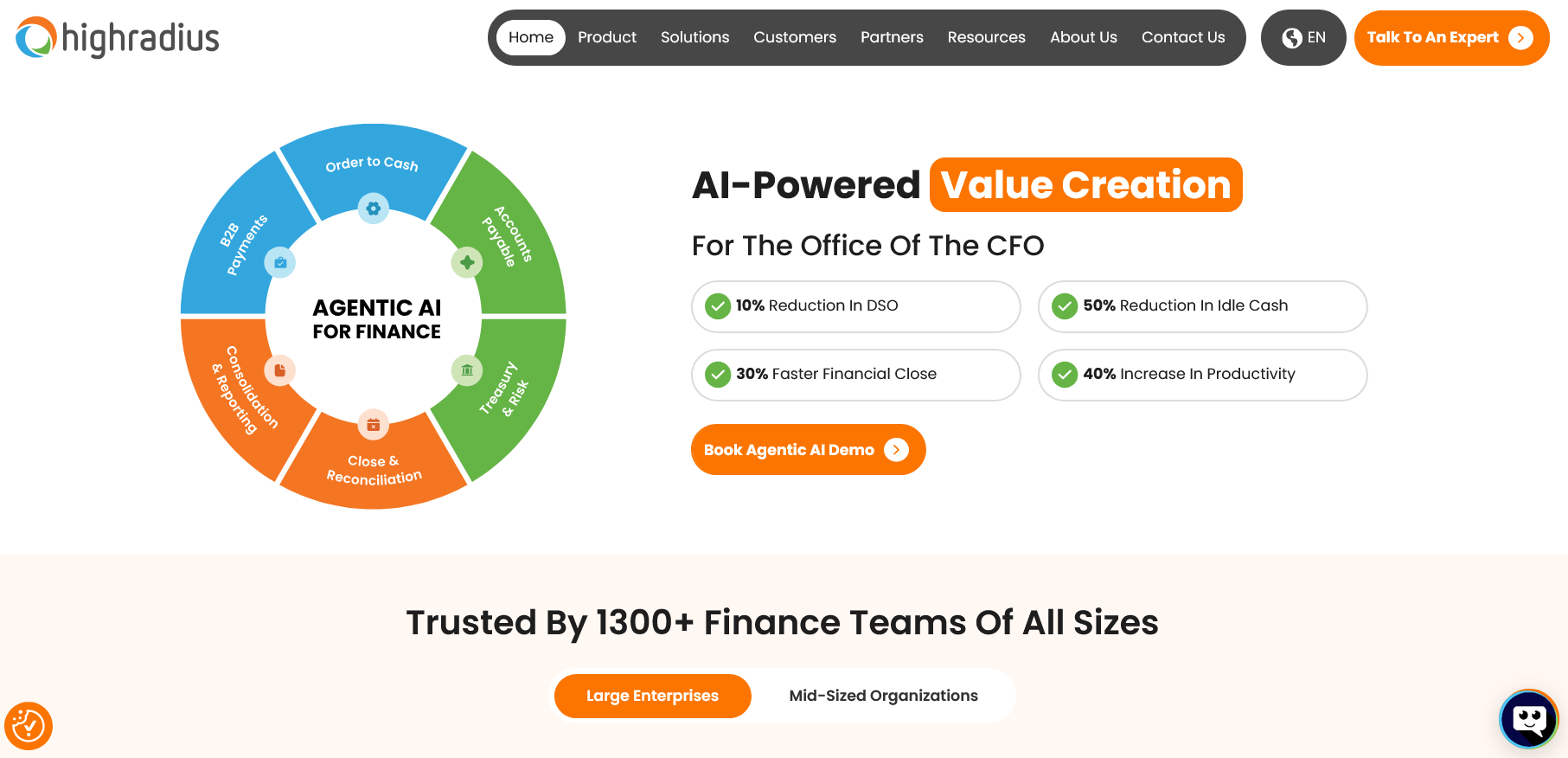
HighRadius is an AI tool for financial analysis and automation. It changes how companies manage their days’ sales outstanding (DSO). Instead of having multiple collection clerks manually calling clients who are late paying invoices, this tool uses predictive AI. It can analyze clients’ past payment behavior, current macroeconomic environment, and sentiment in customer’s’ email responses.
HighRadius can read emails and predict what a specific customer is most likely to pay. It also automates personalized follow-up nudges to accelerate payments. This tool can lower DSO without increasing your company’s headcount. HighRadius is the perfect option for accounts receivable forecasting, cash application automation, treasury management, and credit management. In 2026, HighRadius offers a subscription-based model to its clients.
Key use cases:
- AR forecasting.
- Cash application.
- Collections management.
- Credit management.
- Treasury automation.
- Balance sheet reconciliation.
- Financial close.
- Consolidation reporting.
Best for: Large finance teams that look to automate receivables, improve cash flow visibility, and optimize liquidity.
Watch out for: Integration specifics and solution size (may be too much for smaller teams).
4. DataSnipper
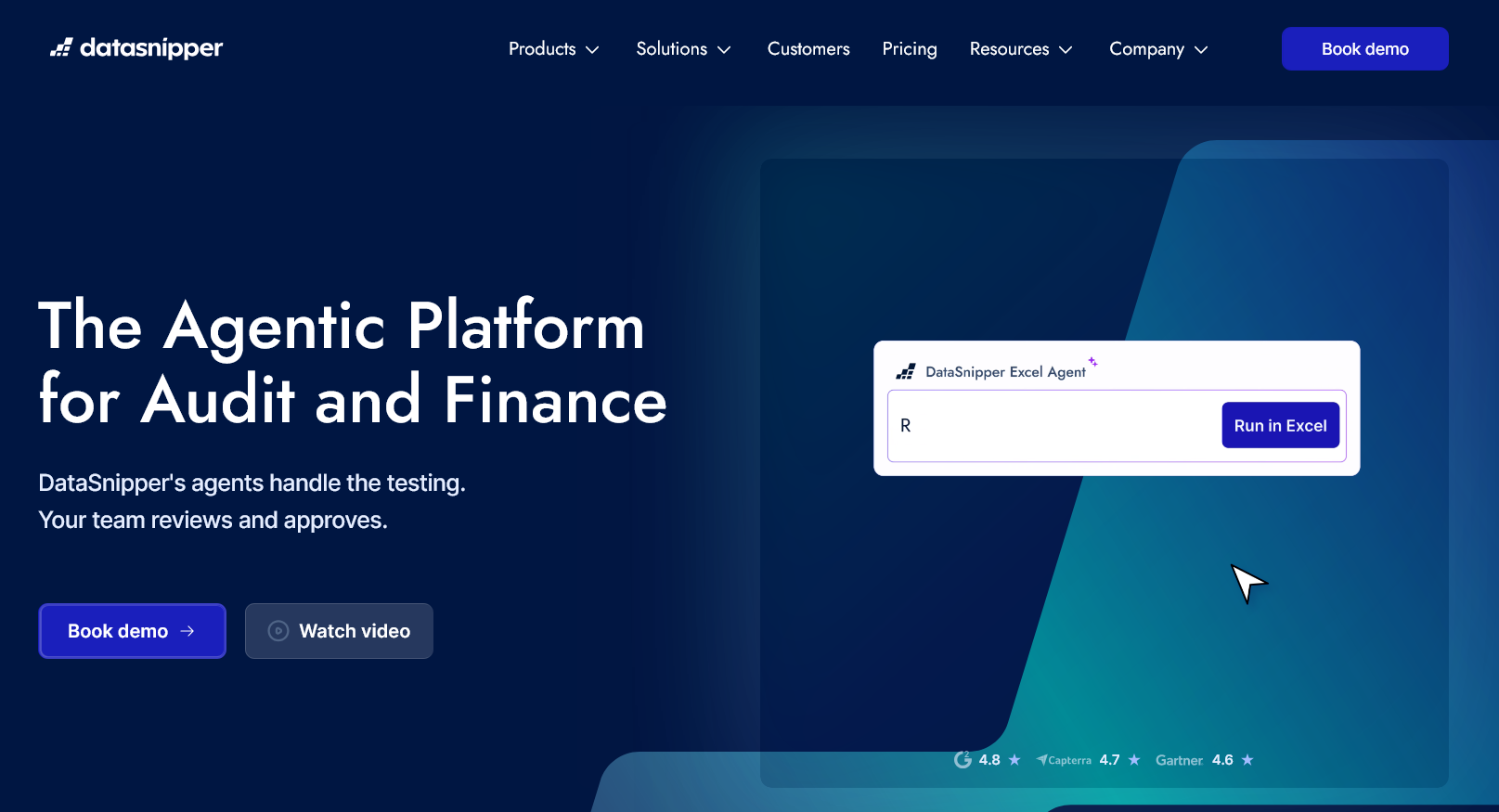
DataSnipper is a digital tool that performs evidence verification with AI. It deploys AI to automate cross-referencing text and pixels in a PDF document with specific cells in an Excel worksheet. It creates permanent links between evidence and spreadsheet cells. It saves financial teams time.
You can upload thousands of PDF documents into Excel. Then, DataSnipper analyzes them, structures the logic, and creates a verified link between an Excel cell and the source evidence.
In early 2026, DataSnipper released its v26.1 update. It improved the overall performance of the tool and introduced new features like Excel Agents and AI Extractions.
Key use cases:
- Documenting, auditing, and verifying data inside Excel.
- Audit testing and documentation.
- Invoice and contract validation.
- Bank statement reconciliation.
- Evidence matching for compliance audits.
DataSnipper has several packages in 2026. Those are Start, Accelerate, and Elevate options.
Best for: Finance teams that rely on Excel and deal with large volumes of data.
Watch out for: Limited use outside Excel, complex implementation.
5. Workiva
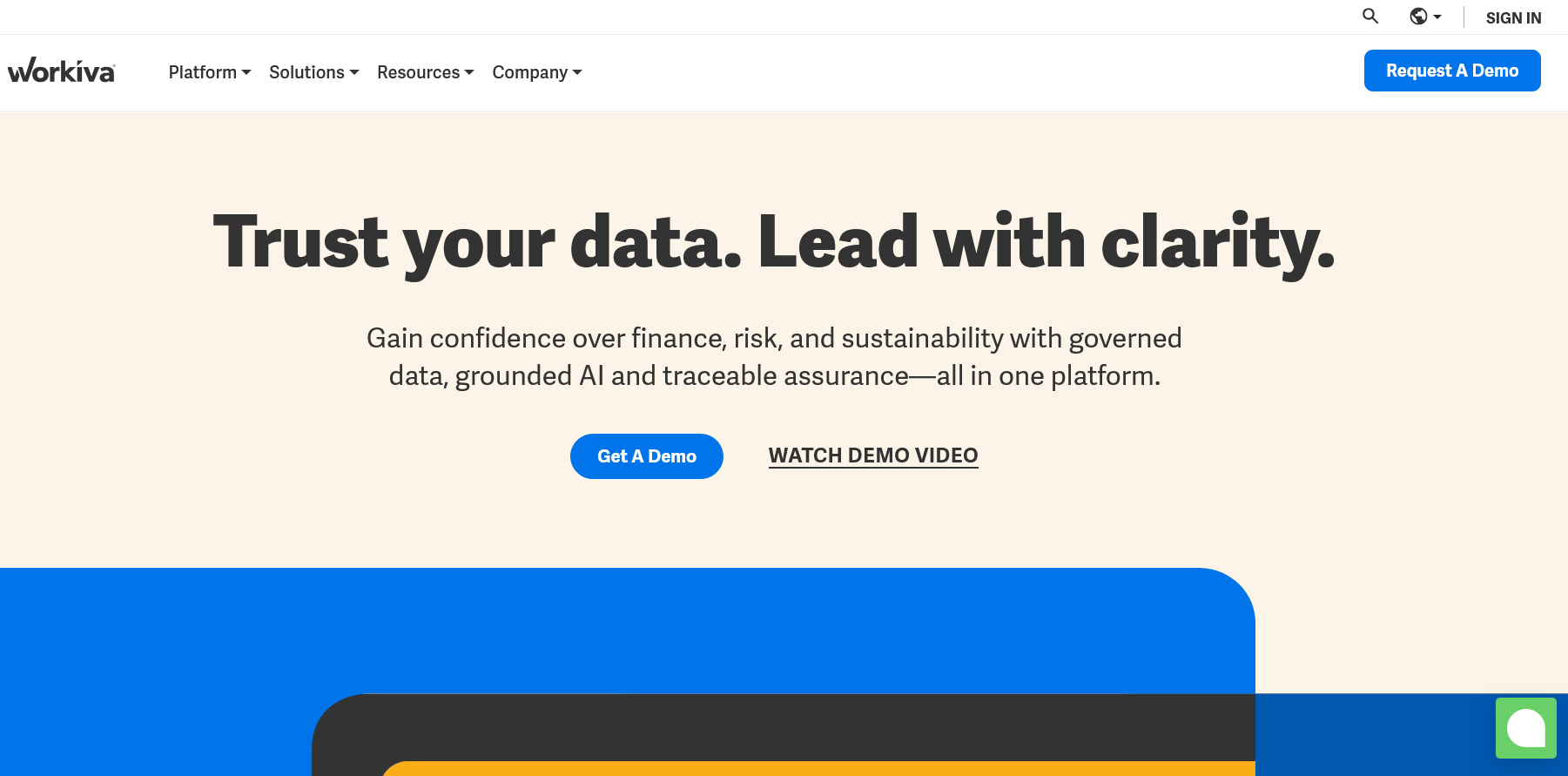
Workiva is an AI financial reporting tool for regulated environments. It handles the massive burden of the US Securities and Exchange Commission (SEC) filing and eXtensible Business Reporting Language (XBRL) reporting. Workiva integrates AI-driven governance, risk, and compliance updates directly into the reporting workflow. If the regulatory compliance changes mid-quarter, the system flags the required updates across connected documents.
This tool solves issues with version control and connected reporting. With Workiva, if one number changes, it automatically updates across all linked compliance documents. Its AI algorithms assist companies with drafting reports and detecting disclosure anomalies.
Key use cases:
- SEC filings and regulatory reporting.
- ESG and sustainability reporting.
- Internal controls over financial reporting.
- Audit preparation and documentation.
- Risk reporting and disclosures.
- Board-level reporting.
Best for: Public companies, finance leaders, compliance departments, or any compliance-heavy teams.
Watch out for: Absence of other common functions like cash flow forecasting or daily FP&A planning.
6. Cube
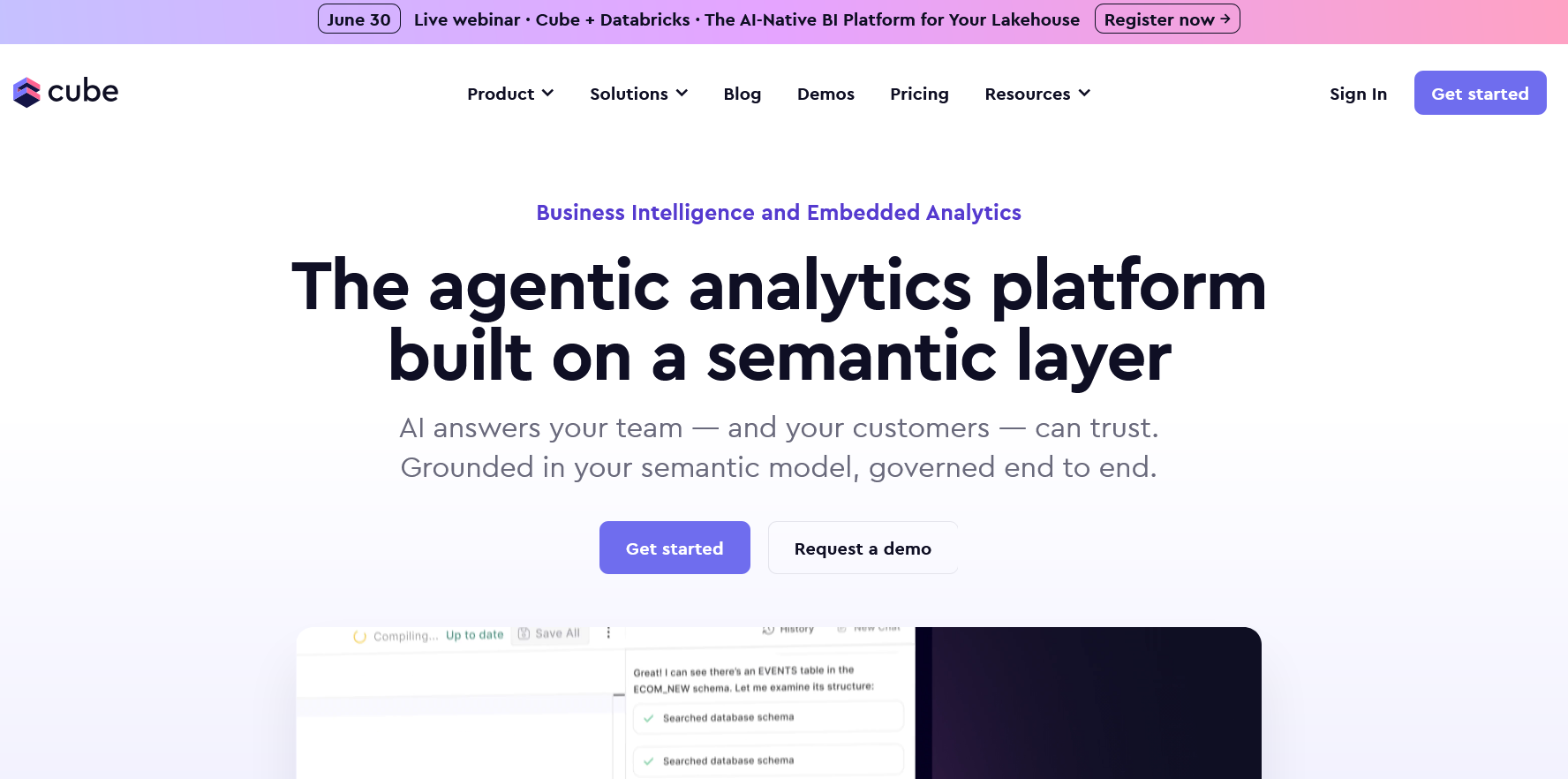
Cube is an AI tool that teams can use for financial planning while working in spreadsheets. It is a flexible bridge that connects raw financial data to Excel or Google spreadsheets. Cube’s main selling point is speed of adoption. It occupies a middle ground between spreadsheets and full enterprise FP&A platforms.
This tool can help your company reduce repetitive tasks. Cube provides its users with a centralized database layer. It pulls data from your ERP, standardizes it, and allows you to pull that data into your spreadsheets.
In 2026, Cube introduced two new features. The first is Cube Agent Skills. It turns repeated workflows into named, versioned skills that Cube can run the same way every time. The second is Embedded Agentic Analytics, which is the first AI-powered semantic layer analytics.
Key use cases:
- Connect multiple data sources to spreadsheets.
- Automate reporting updates.
- Improve forecasting accuracy.
- Reduce manual data consolidation.
- Build lightweight financial models.
Cube has three pricing options: Bronze, Silver, and Gold (all quote-based).
Best for: Finance teams that want to keep working in spreadsheets but improve and automate planning, reporting, and forecasting.
Watch out for: Limited use outside of spreadsheets.
7. Trullion
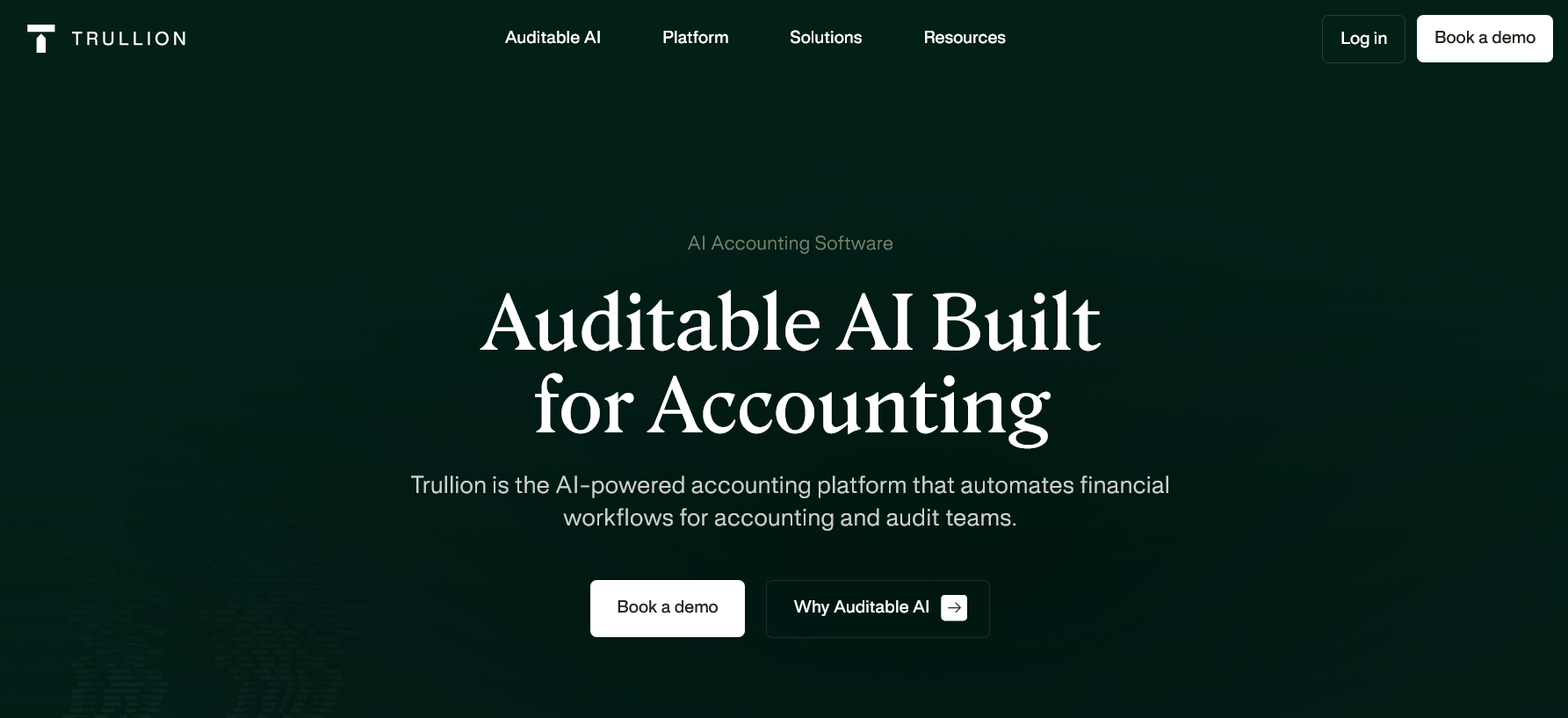
Trullion is a compliance AI automation tool. It can target most niche finance industry standards like ASC 606 and IFRS 15 revenue recognition, or IFRS 16 and ASC 842 lease accounting.
Instead of manually going through massive documents and extracting information, companies can use Trullion with its specialized optical character recognition and natural language algorithms. They can read microscopic fine print, extract the required financial data, validate it against the standard, and create an instant audit trail. It does in seconds what a team used to do in weeks.
Key use cases:
- Lease accounting automation (ASC 842, IFRS 16).
- Revenue recognition workflows (ASC 606, IFRS 15).
- Contract data extraction.
- Audit documentation and validation.
- Financial compliance reporting.
Best for: Controllers, CFOs, audit teams, and accounting departments that work with contracts, invoices, leases, financial statements, etc.
Watch out for: Limited functionality when it comes to budgeting, cash flow forecasting, or strategic FP&A.
8. Alteryx
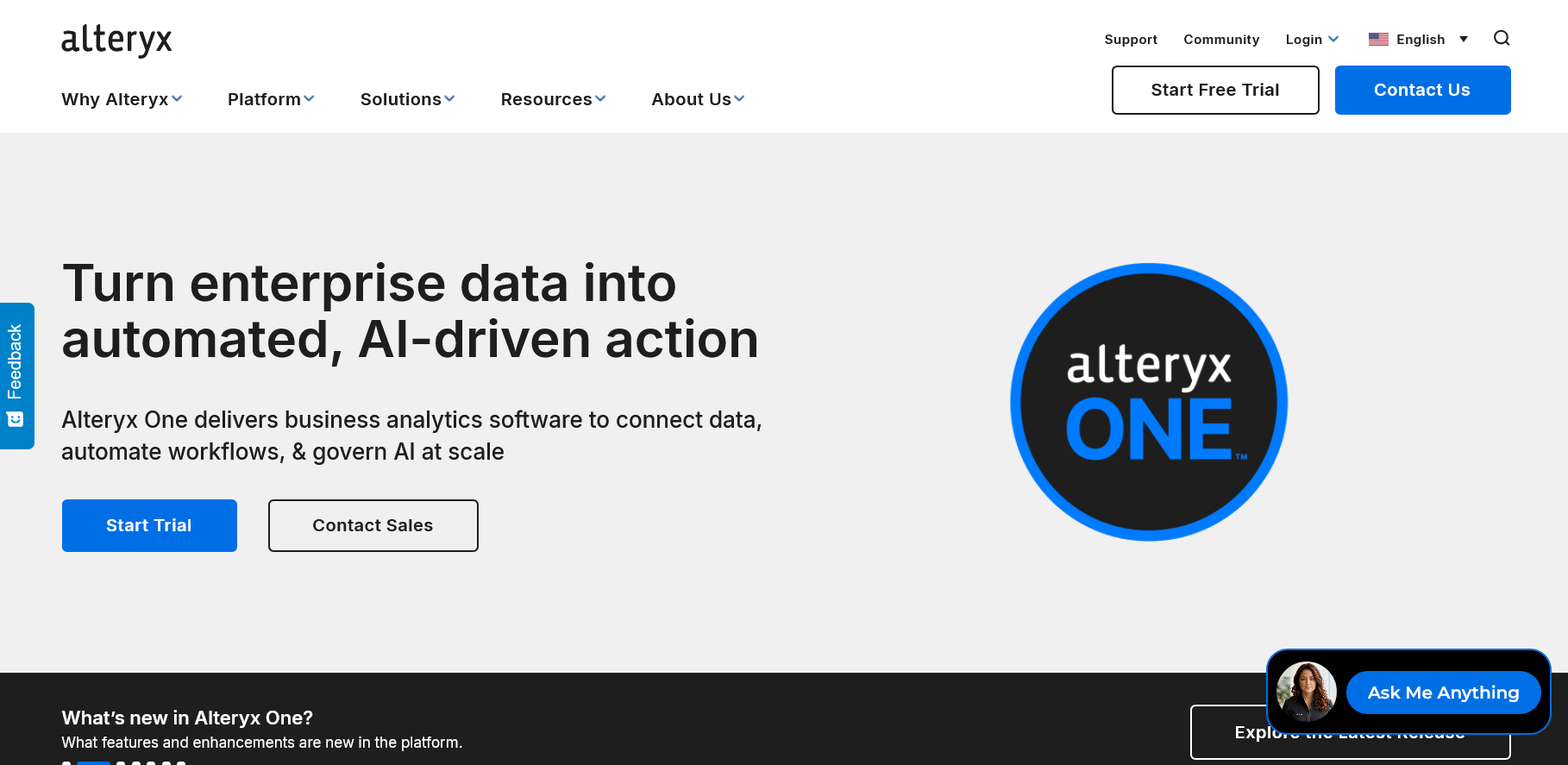
Alteryx is a premier tool for structuring messy data. It operates as a digital finance data translator. This tool uses ML algorithms for fuzzy matching and NLP to clean, standardize, and combine your unstructured data.
In 2026, Alteryx introduced a unified desktop app. Besides all the features available at your disposal, you can ask questions right in the app. It will provide an answer and teach you the most efficient way to use Alteryx.
Key use cases:
- Combine ERP, CRM, and accounting data.
- Clean and standardize financial datasets.
- Automate repetitive data preparation tasks.
- Build analytics-ready data pipelines.
- Support forecasting and reporting systems.
Users can choose from three Alteryx subscription plans: Starter ($250 per user per month), Professional (quote-based), and Enterprise (quote-based).
Best for: Teams dealing with multiple data sources for forecasting and reporting.
Watch out for: Complex technical setup and resource intensity that can be too high for smaller teams.
9. MindBridge
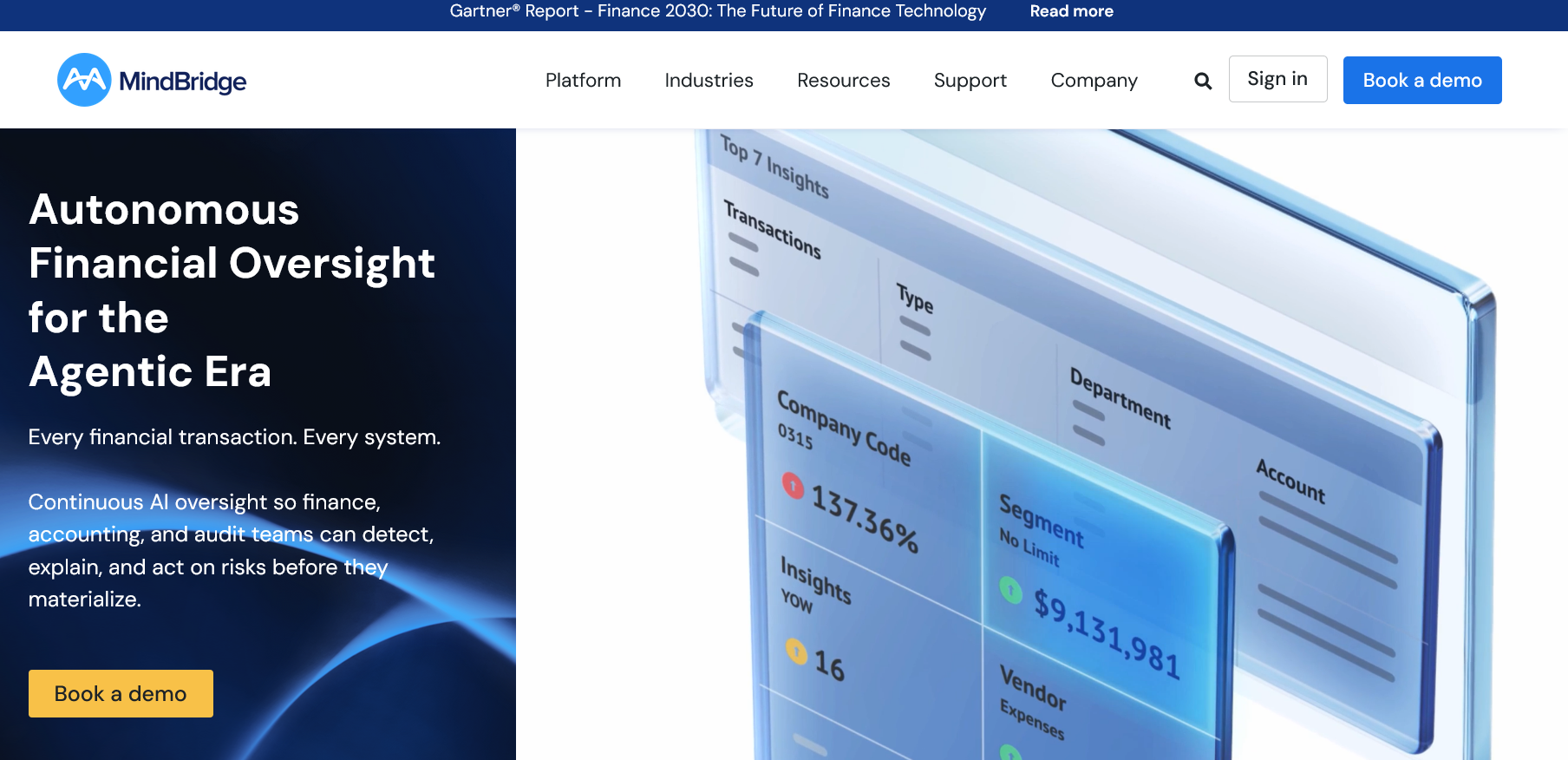
MindBridge is an AI tool for financial analysis used by audit and accounting teams. It uses anomaly detection algorithms and analyzes the metadata behind the numbers. MindBridge can flag a transaction by its time and the person responsible for posting it. With this tool, you can find a behavioral footprint of fraud.
With the 2026 update, MindBridge expanded its platform’s audit and assurance capabilities. It introduced unified and enhanced Subledger Analysis and more robust Risk Assessment features.
Key use cases:
- Fraud detection and risk scoring.
- Audit sampling and review optimization.
- Transaction anomaly detection.
- Financial statement analysis.
- Compliance monitoring.
Best for: Finance teams that specialize in anomaly detection.
Watch out for: Quality of data you provide to the tool, as poor data will lead to incorrect detection.
10. Vic.ai
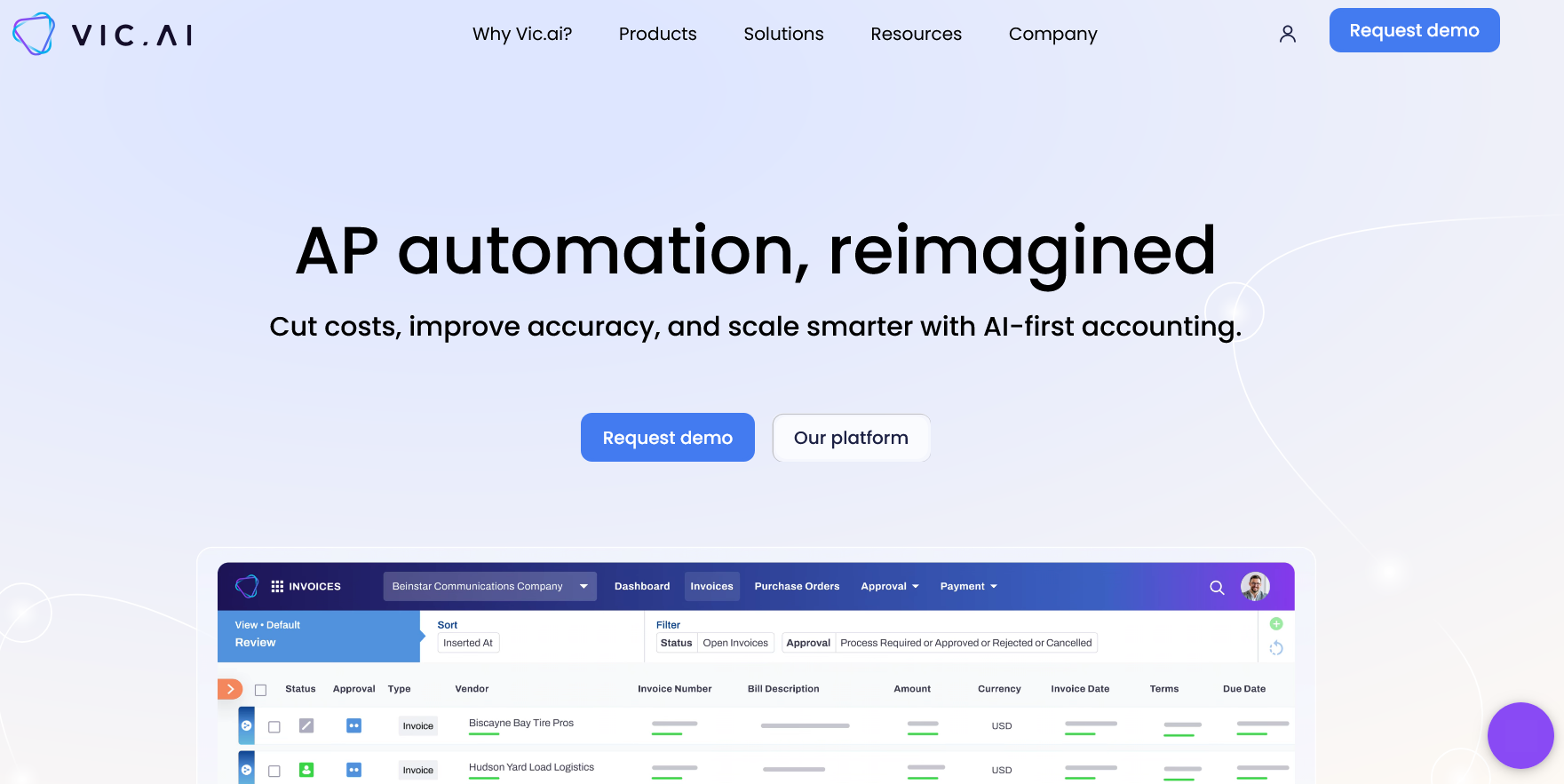
Vic.ai is an AI accounts payable platform for finance. It can categorize expenses as they arrive and has a feedback loop feature. If AI incorrectly categorizes a complex software subscription as a hardware expense and a human account corrects it, Vic.ai updates the company’s internal AI network. It learns from corrections and reduces the likelihood of repeating similar classification mistakes.
Key use cases:
- Invoice processing automation.
- AP workflow management.
- Expense categorization.
- Vendor payment tracking.
- Approval routing.
Best for: Teams with a lot of repetitive accounting processes.
Watch out for: Possible extensive time needed to train the tool on company-specific data.
Why Finance Teams Use AI Tools
Finance teams use AI tools to work faster and make better decisions. The focus is on accuracy, efficiency, and automation.
AI speeds up data analysis. Teams can process large volumes of financial data in real time and get useful insights without delays. This helps businesses react quickly to changes.
Forecasting also improves. AI models use historical data and patterns to produce more accurate forecasts. This supports better planning and reduces uncertainty.
Manual work is reduced. Repetitive tasks like data entry, reconciliation, and report updates can be automated. This frees up time for higher-value work.
Reporting becomes more accurate and consistent. AI tools reduce human error and keep data aligned across systems. Many platforms also support self-service analytics, so users can access reports and insights without relying on technical teams.
Three Categories of AI Tools for Finance
AI finance tools can be grouped into three categories:
1. Financial Planning
Financial planning or FP&A tools can be used for budgeting, scenario planning, and forecasting. AI-powered financial planning tools help companies forecast cash flows, expenses, and revenue. This information is particularly valuable for CEOs, CFOs, and FP&A teams who need a clear understanding of where their business is heading.
Datarails and Cube are AI tools for finance that dominate this category. Those tools model and compare the outcomes of different financial decisions. They offer opportunities for a structured approach in financial planning.
AI won’t give you an error message if you feed an AI model a pipeline full of duplicated payments, outdated CRM entries, or inconsistent currency conversions. Instead, it will generate a convincing, structured chart that confidently tells you to avoid a business decision mistake. This means the data you feed AI models should be clean, validated, and well-governed.
2. Data Analysis
Data analysis tools are designed to help finance professionals process and interpret large volumes of financial data from multiple sources. For example, MindBridge and Alteryx can process financial data from multiple sources. They turn it into insights that are actually useful for decision-making.
Using ML and NLP, data analysis tools can identify patterns, highlight trends, and detect anomalies that might otherwise go unnoticed. They can scan large spreadsheets or reports. They can also flag unusual transactions or unexpected changes in spending.
They are especially useful when teams deal with complex data spread across reports, dashboards, and documents. By empowering deeper analysis and faster reporting, these tools help finance experts move from raw data to actionable insights much more efficiently.
3. Automation
The third category of AI tools for finance is about automating repetitive work. Solutions like HighRadius, DataSnipper, Trullion, and Vic.ai focus on simplifying repetitive workflows through the use of automation. They target processes like io planning, forecasting, accounting tasks, invoice processing, reporting, reconciliations, and approvals. These tools ensure that your company’s workflows run smoothly with minimal human oversight. They help finance teams save time, improve consistency, and reduce human error.
How to Choose the Best AI Tool for Finance Teams
Before planning your budget for AI finance tool implementation, you have to decide which AI tools will fulfill your company’s needs the most. Each company needs its own solutions based on its use cases, task complexity, existing systems, budget, security requirements, and integration needs.
Here are the step-by-step guidelines on choosing the best AI tool for your finance team:
Check Integration With Existing Systems, ERP, and Google Workspace
First of all, you should check the tool’s integration architecture. Most teams already work across multiple systems. These include ERP platforms, accounting software, spreadsheets, Google Workspace, Microsoft tools, BI dashboards, and internal databases. A good AI tool must integrate seamlessly into the existing system.
Well-integrated tools automate data flow between systems. They keep financial data consistent and up to date. This allows teams to work faster and make decisions based on real-time information.
Compare AI Models, Data Accuracy, and Historical Data Quality
Next, you should evaluate the model the tool is using. Look for strong ML models and predictive analytics. The second check is an audit of your data quality. If your historical data is duplicated, unstructured, or outdated, deploying AI tools on top of it will lead to wrong decisions.
The tool should also use clear logic for data processing, anomaly detection, and other functions it performs. This will make the use of AI outputs more transparent and efficient.
Review Natural Language Processing Features for Finance Professionals
NLP makes financial tools easier to use. It allows teams to ask questions, search reports, and analyze data using plain language. There is no need to write complex formulas or queries.
These features help users summarize long documents, explore dashboards, and get insights faster. This is especially useful for teams that need quick access to financial reports and analysis.
It is important to test how well the tool understands finance-specific language. This includes accounting terms, industry vocabulary, and company-specific data. Poor understanding can lead to inaccurate or misleading results.
Evaluate Pricing, Use Cases, and Time to Get Started
As the last step before setting up an AI tool, you should evaluate pricing, use cases, and the time it takes to implement it. The company should evaluate whether the cost of implementing and using the tool will pay off by improving the workflow. See if the tool offers a free trial.
An effective AI assistant should solve your company’s pain points, so make sure the advertised use cases align with your specific needs.
Some tools are lightweight and easy to set up. Enterprise-level platforms might take weeks to transfer the data, train the model, integrate with the existing environment, etc.
Final Thoughts: Which AI Finance Tool Is Best?
AI and finance can go hand-in-hand. The best AI finance tool for your company depends on the workflow you want to improve. For FP&A, budgeting, forecasting, and financial planning, you might want to consider tools like Datarails or Planful.
With this guide, we have given you a structured approach to finding the right tool for you. You can choose between AI tools for predicting the future, agents that reduce emotional decision-making, platforms that ensure your data is true, and specialized agents reading microscopic fine print in your compliance documents.
Companies prefer Cube for spreadsheet-based planning and reporting. For financial data preparation, automation, and complex data workflows, your choice is Alteryx. MindBridge is often used for risk analysis, anomaly detection, and fraud-related review. However, for accounts payable automation, invoice processing, and accounting task reduction, Vic.ai is best.
HighRadius is the best AI tool for enterprise finance operations, accounts receivable, treasury, cash forecasting, and working capital optimization. For audit, document review, accounting validation, lease accounting, revenue recognition, and compliance-heavy finance processes, go for DataSnipper or Trullion.
FAQs About AI Tools for Finance
What Are the Best AI Tools for Finance?
There is no single best AI for finance tool you can use to solve all of your problems. They are all use-case specific. You need to identify your core needs and search for the features that will satisfy them.
How Is AI Used in Financial Analysis?
AI can process massive amounts of data, find hidden correlations, and spot patterns much faster than a human.
Can AI Tools Create Financial Forecasts?
Yes, they can. AI tools use predictive analytics to create financial forecasts. However, a human expert should review the forecast before making decisions.
Are AI Tools for Finance Accurate?
It depends on the data you feed them. If your data is clean and the AI model is calibrated correctly, you can rely on AI tools.
What Is the Best AI Tool for Excel Finance Work?
The best tools for Excel are: Cube for flexible data modeling and DataSnipper for audit document validation.
Do AI Finance Tools Replace Analysts?
AI tools cannot replace financial experts. Human oversight remains crucial for compliance and strategic planning.


