




Skip to content

Android Mobile App Development Services

Most of the world’s smartphones run Android, so wherever your customers are, they are already there. We provide Android app development services for teams that need an app to do real work: win users, cut support tickets, open a new revenue line. We have done it for lenders, health communities, farms, and on-call engineers who just want to sleep.

  • Proof of Concept in 4–6 weeks
  • US-managed, Europe-engineered teams
  • 30–50% faster delivery
  • 100% code ownership, always
android app development services usa – LITSLINK Android developers reviewing a Kotlin build in Android Studio

Custom Android App Development Services We Provide

Our mobile app development services cover app design, development, and post-launch support. To strengthen your existing team, you can hire Android developers to work on your application.

The following is a list of the services we provide as part of our custom Android app development, starting from the initial scoping call and ending with the fifth Google Play release. Each project is tailored to meet your business requirements, so you can choose to take the complete set of services or just one component of them.

Android App Development Consulting

We check that the app idea is sound before anyone starts to write Kotlin; specifically, we look into who the users are, what the app must do on its first day, and what market research has to say regarding other Android apps that are already competing on Google Play. As a result, we deliver technical requirements, an architecture recommendation, and a development roadmap aligned with your business goals, budget, and timeline.

If you need both iOS and Android app development services, explore our Flutter development services or React Native development services as cross-platform options.


Custom Native Android App Development Services

The Android app development services we provide include apps developed in either Kotlin or Java and give full access to the camera, the sensors, Bluetooth, background operations, and every new Android API as soon as it is released. For clients who wish to have native Android app development carried out during U.S. working hours, project management is carried out from both Palo Alto and Orlando, all custom features and third-party integrations are developed right from the first sprint, and an architecture is put in place that will allow the application to scale from its initial release to millions of installations without any need for a security or performance rewrite.

Android UI/UX Design

A good design for an Android device begins with some user research and concludes with a screen that a first-time user is able to operate without having to go through a tutorial. We start with wireframes, move to clickable prototypes, and then develop responsive layouts that follow Android design guidelines; we test usability on actual Android devices before writing any production code.

Android Backend Development

Mobile app reliability depends on the servers that support it, so we also develop these servers, including REST or GraphQL APIs, database integration, authentication, cloud services, and third-party integrations. Secure data processing and horizontal scaling are incorporated into the design, so Android applications that start out with 500 users don’t need to be rewritten when the number of users reaches 50,000.

Android App Modernization

Android apps originally developed with older SDK targets, Java-only code, or heavy reliance on XML layouts become slower, riskier, and harder to publish each year. To address this, we restructure the architecture, migrate screens to Jetpack Compose, update the UI and UX, close performance and security gaps, and bring the app up to current Android requirements, so Google Play will continue to accept your releases.

For Android projects with an existing Java codebase, our Java development services cover custom functionality and software modernization.

Android App Maintenance & Support

After launch, Android support helps keep the app stable well beyond launch day through bug fixes, performance monitoring, security patches, and updates to ensure compatibility with each new version of the Android operating system. Feature improvements and continuous optimization are also carried out as part of the same maintenance agreement, so it is the same team that developed the app that is also responsible for keeping it running.

LITSLINK Reputation on Top Platforms

Leading industry platforms recognize LITSLINK for delivering software that ships and holds up in production. See what clients and the design community say about our work.

Clutch B2B Ratings & Reviews

4.8

78 reviews

Top Developer
GoodFirms Research & Reviews Platform

4.8

32 reviews

Top Company
Behance Creative Portfolio Platform

150+

design projects

View projects

Ready to Build Your Android App?

Discuss Your Project

Android App Development Solutions for Different Industries

Industry rules determine the requirements Android apps must meet before any feature is designed—for example, HIPAA in healthcare, PCI DSS for payments, and an offline-first approach on a factory floor. Our Android app development solutions start with these requirements, then incorporate user expectations in each market so the app feels native to both the industry and Android.

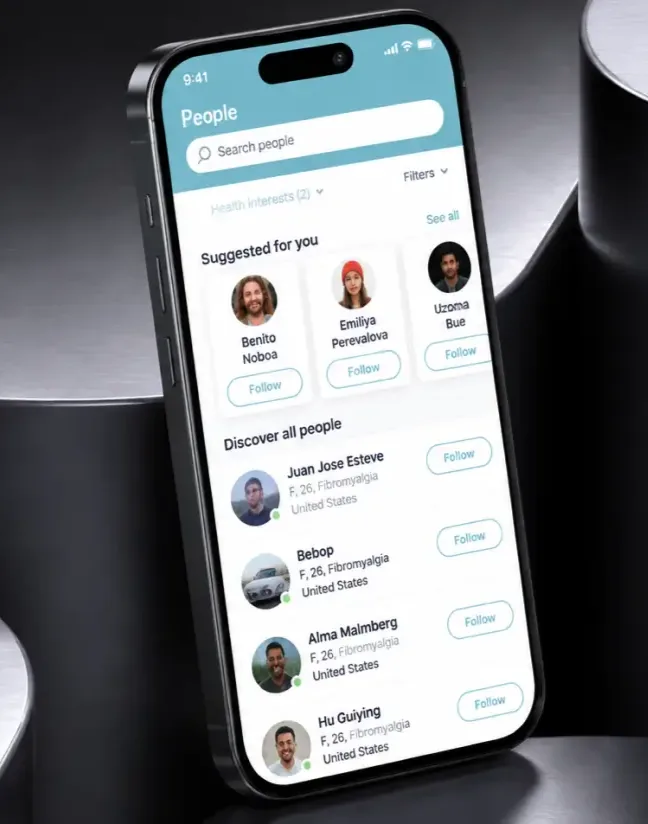
The Android healthcare apps that we develop include features such as telemedicine, remote patient monitoring, appointment scheduling, fitness tracking, and health management, together with integration with Bluetooth wearables and HIPAA-compliant handling of patient data. Before it was submitted to the store, our health community app had successfully undergone a WCAG 2.1 AA audit based on 50 criteria and now has more than 50,000 downloads on Google Play.

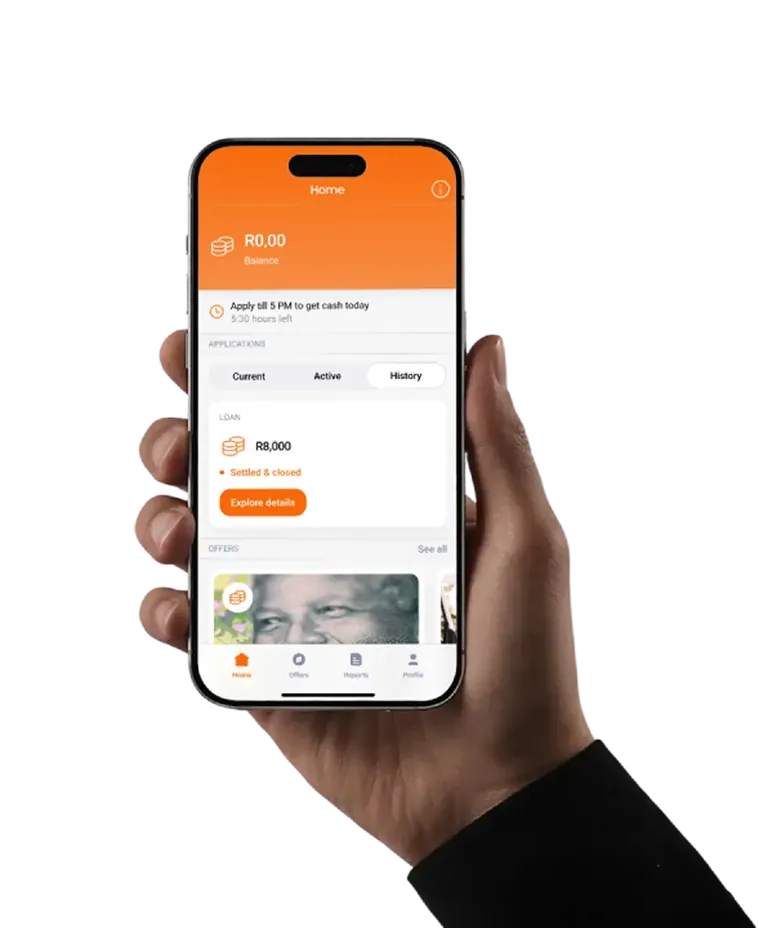
Mobile banking, digital wallets, payment processing, personal finance, and investment apps all require biometric authentication, secure transaction management, and real-time notifications sent to customers before they contact support. We provide integration with payment gateways, credit bureaus, and core financial services, and with our payday loan app, we reduced the approval time from 24 to 48 hours to minutes.

Android shopping apps include product catalogs, personalized recommendations, loyalty schemes, mobile payments, and checkout to complete the journey. These apps also synchronize your inventory with your ERP or POS system and send out push notifications when items are restocked in order to maintain customer engagement following the first order.

Beyond a sophisticated search function, interactive mapping, location-specific results, virtual property tours, and appointment scheduling between agents and clients, the app’s property management capabilities and CRM integration ensure all leads generated in the app flow into your agents’ pipeline.

Android apps are available for shop floor and field use to monitor equipment, manage inventory, conduct field inspections, track projects and coordinate the workforce. Integration with IoT systems means sensor data feeds into real-time reporting, while offline functionality lets inspectors work in plant or yard areas without WiFi.

We develop connected-vehicle systems, fleet management solutions, vehicle diagnostics, navigation services and mobility applications with GPS tracking, real-time vehicle data and by combining telematics and automotive systems. Our solutions support Android Auto and Android Automotive OS, and we also offer EV charging solutions to enable one product to be used by drivers in the vehicle and by fleet managers at their desks.

The app offers live scores, allows fans to engage, tracks fitness, plans workouts, and monitors athlete performance, incorporating wearable devices and providing real-time statistics. It offers tailored training programs and records metrics, making it a strong incentive to log in daily and providingh performance data you can leverage to create subscriptions.

Gaming, Media & Entertainment

We offer Android game app development and media-related services for casual and multiplayer games, video and music streaming, OTT platforms, and interactive entertainment. Adaptive streaming ensures smooth content delivery, while in-app purchases, subscriptions, and customized content suggestions drive monetization and user retention across all price points on Android.

Our Android App Development Process

Our mobile app development services for Android run through six stages, each with a deliverable you can review before the next one starts. Clients who need Android mobile app design and development services end-to-end go through all six; clients with approved designs start at stage three.

Step 1

Discovery & Requirements Analysis

Turning the business goals, target users, functional requirements, and technical constraints into a project scope is an app idea converted into a backlog.

Step 2

UI/UX Design & Prototyping

We design user flows, wireframes and interactive prototypes for every screen, following the Material Design principles and validating on all Android screen dimensions from tiny phones to tablets and foldables. Stakeholders review the prototype, and then it is tested by real users, and then any usability issues are straightened up in Figma (not Kotlin).

Step 3

Architecture & Technical Planning

We select the Android technologies (using Kotlin and Java where appropriate, along with the Android SDK and Jetpack), decide on the application architecture, and plan the backend, the APIs, the databases, and the third-party integrations. The security requirements, scalability, and performance budgets are established at this stage, since it is cheaper to set them now than to add them during sprint eight.

Step 4

Android App Development

We develop native Android in 2-week sprints, followed by a demo at the end of each sprint, with your feedback fed into the next sprint. The frontend works concurrently with the backend; API integrations are released as they are ready, and continuous integration ensures every merge is a buildable app.

Step 5

Android App Testing & Quality Assurance

Android App Testing involves conducting functional, regression, compatibility, security, and performance testing on the different Android devices, screen sizes, and versions, with both physical devices and emulators. Bugs are addressed prior to the release of the app and the build is tested to be compliant with the Google Play policy, so that the submission will not be denied.

Step 6

Google Play Store Deployment & Ongoing Support

We put together the release version of the app, carry out the signing of the application, prepare the store listing, submit the app, and remain with Google Play through the review process, including the phased rollouts. Once the app has been launched, we keep an eye on crashes and performance, issue security updates and fixes for Android OS compatibility, and then build the next set of features on the same codebase.

Advanced Technologies We Integrate into Android Applications

Advanced technologies are where Android apps pull ahead of a mobile website, and where many app development companies stop. We integrate emerging technologies into new and existing mobile apps, from AI agents to AR, and the engineers who build the app handle the integration.

Rather than responding to questions, AI agents in Android apps can book appointments, make orders, reschedule appointments, or file a report on behalf of the user. We develop AI-driven virtual assistants, intelligent task management, and context-sensitive recommendations connected to your backend services, with explicit user permissions and human supervision for any expense-related or record-altering action.

Machine learning transforms raw usage data into personalized recommendations, predictive analytics, smart search, and analysis of user behavior. When latency or privacy matters, models run on the device so responses come in milliseconds, work offline, and keep personal data on the phone.

Generative AI & Conversational AI

With generative AI, LLMs, and NLP, you can add to your knowledge base and make your Android apps talk to you, search the content in a way that’s conversational, and generate content based on your needs. With RAG, answers are drawn from your own documents with the appropriate context; our AI Chatbot Development Services team constructs the conversational layer.

Mobile apps can use cloud-native backends on AWS or Firebase to get scalable infrastructure, secure data storage, real-time data synchronization, and push notifications without needing a server room. As the number of users grows, the capacity will grow as well, and the bill will not go up by huge amounts.

Image recognition, document scanning, text extraction, barcode and QR code scanning, and visual search run straight from the phone camera. We have applied computer vision in retail, healthcare, logistics, and document management, and the same models can be added to Android apps you already run.

IoT & Connected Devices

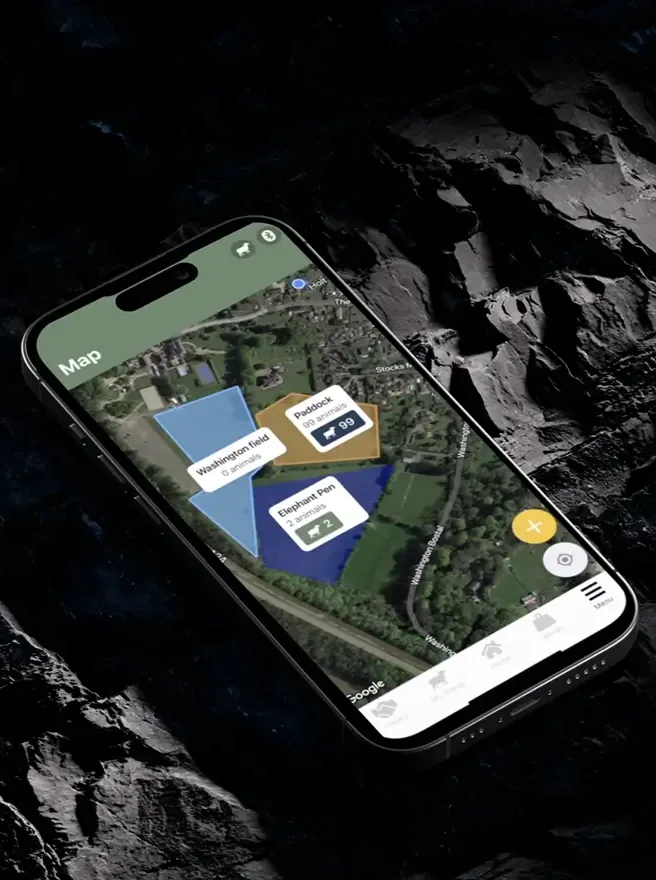
Android applications that communicate with smart home devices, wearables, industrial sensors, and other connected equipment using Bluetooth and NFC, featuring real-time data synchronization, remote control of the devices, and integration with IoT cloud platforms. Our livestock app pairs with a Bluetooth scale and records the animal’s weight within 5 to 10 seconds; the same approach is used in smart homes, healthcare, manufacturing, and logistics.

ARCore enables product visualization, virtual try-ons, interactive navigation, and 3D experiences to be included in Android apps, and it also develops training simulations for VR headsets that are compatible. Since immersive features help to sell products, train staff, and reduce the number of returns, they should be on the roadmap rather than in the ‘someday’ column.

Power your Android app with advanced technologies.

Discuss Your Project

Our Android App Development Tech Stack

This is the stack our Android app developers use day-to-day for native Android apps, chosen for long-term maintainability rather than novelty.

Programming Languages

Kotlin, Java, C++, XML

Development Tools & SDKs

Android Studio, Android SDK, Android NDK, Gradle

UI Development

Jetpack Compose, Android Jetpack, Material Design 3, Android Views

Architecture & Libraries

MVVM, Clean Architecture, Hilt, Coroutines, Kotlin Flow

Databases & Storage

Room, SQLite, DataStore, Firebase Cloud Firestore

Backend & Integrations

Retrofit, OkHttp, REST APIs, GraphQL, Firebase

Testing & CI/CD

JUnit, Espresso, UI Automator, GitHub Actions, Firebase App Distribution


Our Successful Projects for Android Devices

Each of these mobile apps shipped on Google Play. Results come first, then what the client needed and what we built.

Health Community App

The Challenge

Individuals who had just been diagnosed posted their health worries on general social networking sites or unmoderated forums; without a mobile app, screen reader users were excluded from that category. The client wanted a single app that would connect people with similar conditions, keep health discussions private, and comply with ADA requirements from the first version.

The Solution

LITSLINK handled the business analysis, product design, and development of a social health network that let members find others with the same condition, post messages, send messages, and join live group chats. The Android and iOS apps share a codebase, with a React.js web application and admin panel running on the same Ruby on Rails backend via GraphQL, and Firebase handling push notifications. There were separate tickets allocated to accessibility, accounting for nearly 40% of the QA time in the first three sprints.

The Impact

  • 50K+ downloads on Google Play, 3 platforms and 3 user roles on one backend
  • 50 WCAG 2.1 AA success criteria audited before store submission
  • 15 core features in the first release, delivered in about 9 months
Read Full Case Study
A smartphone showing a health community app's People screen: a search field, a «Suggested for you» row of member cards with Follow buttons, and a «Discover all people» list of members with their condition, age and country.

FAQs About Android Mobile App Development Services

01 How Much Does It Cost to Develop an Android App?

Cost depends on scope, integrations, and design complexity far more than on any hourly rate, and a Proof of Concept or MVP costs a fraction of a full product, which is why we recommend starting there. Get a ballpark in a few minutes with our App Cost Calculator.

02 How Long Does It Take to Develop an Android Application?

A Proof of Concept takes 4–6 weeks and an MVP about 10 weeks; a full-featured product runs on a multi-release roadmap we scope in discovery. Our US Android mobile app development services team works in two-week sprints, so you see a working build every two weeks from the first month.

03 How Do I Choose the Right Android App Development Company?

Search for case studies that are specific to Android and include figures, verified reviews on Clutch or GoodFirms, clear terms regarding code ownership, and project management within your time zone. A company that provides Android app development services in the United States while at the same time employing engineers in Europe, such as ours, not only offers this time zone overlap but also has a larger pool of engineering resources than one that operates only locally.

04 What Is the Best Android App Development Company in the USA?

There is no single answer, because the best Android app development services in the US for a fintech startup are not the best for a factory app. LITSLINK holds a 4.8 rating on Clutch and GoodFirms and appears on top-developer lists for mobile app development, so if you are comparing Android mobile app development services in the US, start with the reviews and the case studies above.

05 Do You Develop Apps for Android TV?

Yes, we build for Android TV and Google TV with Compose for TV, D-pad navigation, and 10-foot UI patterns, and the app can share a backend with your phone app.

06 Do You Have an In-House Android App Development Team?

Yes. Our Android developers are LITSLINK engineers, and you can hire Android developers from that team on a dedicated basis to extend your own.

07 Can You Optimize Android Apps for Different Devices and Screen Sizes?

Yes. We design with adaptive layouts, test on physical phones, tablets, and foldables across OS versions, and tune performance for the low-end Android devices that make up a large share of the market.

08 Do You Sign an NDA Before Starting an Android App Development Project?

Yes. If you need one, we sign an NDA before any detailed discussion; it is a standard step in our proposal process.

09 Can You Publish My Android App on the Google Play Store?

Yes. We handle the release build, app signing, store listing, data safety form, submission, and review responses, and we can run a phased rollout that starts with a small percentage of users.

10 Which Programming Languages and Technologies Do You Use for Android App Development?

Kotlin first, Java where an existing codebase requires it, with Android Studio, Android SDK, Jetpack Compose, Room, Retrofit, and Firebase; the full stack is listed above. For cross-platform apps, we use Flutter or React Native.

11 Can You Convert an iOS App into an Android App?

Yes. We rebuild the iOS app natively in Kotlin or, when you want one codebase going forward, move both to Flutter or React Native; either way, our Android and iOS app development services keep feature parity and share the backend.

12 Should I Choose Native Android or Cross-Platform App Development?

Choose native Android app development services when the app depends on hardware, background processing, performance, or the newest Android features; choose cross-platform when you need iOS and Android at once on a tighter budget. We compare mobile app development services, iOS, Android, and cross-platform, during consulting, and since our Android native app development services and cross-platform teams sit in one company, the recommendation is based on your app, not on what we sell.

13 Can You Integrate AI Features into an Existing Android App?

Certainly. Chatbots, recommendation systems, OCR, and AI agents can be incorporated into existing mobile apps via a backend service or an on-device model without having to rewrite the app; for this purpose, we first carry out an audit of the present codebase.

14 Who Owns the Source Code After Android App Development?

You do; upon completion, 100 per cent of the project-specific intellectual property, including the source code, the designs, and the documentation, passes to you, provided that the agreement is in place.

15 Do You Provide Android App Maintenance and Support After Launch?

Yes. Ongoing maintenance covers bug fixes, OS compatibility, security patches, monitoring, and new features under a support agreement sized to your app.

Have a Project in Mind?

Whether you’re planning to build a custom Android application, modernize an existing app, or integrate advanced features like AI and IoT, LITSLINK is here to help. Share your project requirements, business goals, and technical challenges, and our team will help you explore the best approach to bringing your Android app idea to life.

Next steps

1

LITSLINK specialist reviews your request and contacts you to discuss the details

2

If needed, we sign an NDA before moving forward

3

We send a project proposal – estimates, timeline, and team CVs included

4

After launch, we stay on for any updates your product needs