







What is happening in retail today feels more like a revolution than a transition. Consumers demand speed, brands demand efficiency, and technology sets the pace. Globally, the smart retail market could reach $450.7 billion by 2033, showing 30.3% annual growth from 2025. This figure shows the scale of change ahead.
Rising costs, endless choices, and complex buying behavior make business harder than ever. Retailers need better strategies, deeper personalization, and fresh technology adoption to stay competitive. In this blog, we explore retail trends shaping 2026 and beyond, using real data, industry reports, and forward-looking predictions.
Key Takeaways
- The global smart retail market is on track to hit $450.7 billion by 2033, growing 30.3% a year from 2025.
- Agentic commerce is the breakout retail trend of 2026 — AI platforms are projected to drive $20.9 billion in retail spending this year, nearly 4x 2025 (Elogic).
- TikTok Shop is forecast to generate $23.4 billion in U.S. e-commerce sales in 2026 — a larger U.S. e-commerce business than Target, Costco, or Best Buy (Retail Dive).
- Tariffs are resetting the supply chain: 95% of retail executives expect trade policy to raise costs, and 77% of supply-chain leaders have already shifted sourcing out of China (Deloitte, Thomson Reuters).
- AI pays off fast: 89% of retailers using AI report revenue gains and 95% report cost cuts (Ringly.io).
- NRF forecasts U.S. retail sales will grow 4.4% in 2026 to $5.6 trillion (NRF).
Top Retail Trends for 2026 and Beyond
Retail industry trends are not about one channel or one idea. They merge consumer habits, technology, and social change. Every move counts because customers compare not just products but experiences.
Below, we break down the top retail trends every business should understand.
1. AI-Powered Personalization and Retail Automation
AI does not sit quietly in the corner anymore. In 2026, it will run the show for many retailers. The AI in the retail market is set to reach $14.49 billion in 2025 and keep growing with a CAGR of 23% through 2030. This is not a theory. Retailers already use AI to decide pricing, predict demand, and manage stock.
But the biggest shift is personalization. When customers shop online or offline, they want brands to truly know them. AI-powered personalization uses data to suggest the right product at the right moment. A small business can use solutions like AI for small firms to successfully compete with larger rivals.
Automation also reduces labor costs. Robots now pick items in warehouses and chatbots answer simple queries. In the U.K., 61% of retailers have AI leadership in-house, and 99% report AI expertise. Still, not all trust AI for big calls. Only 8% expect AI to make autonomous retailing decisions soon.
- Retail store trends lean heavily on AI for service, marketing, and operations.
- Retailing trends show clear growth in adoption, but also gaps in trust and cost.
Retail market trends in AI show fast adoption and high expectations. Retailers who wait risk falling behind.
The business case keeps tightening. Ringly.io’s 2026 AI in retail report found that 89% of retailers who deployed AI reported measurable revenue gains, while 95% recorded cost reductions. Retailers leveraging AI typically see 5–15% annual revenue growth and cut operating costs by up to 30%. In our own retail projects, that ROI shows up fast — usually inside the first optimization cycle, not a year later.
2. Omnichannel Retail: Seamless Shopping Experiences Across Platforms
Consumers want a smooth path across channels. They research online, buy offline, and return through apps. Omnichannel is no longer just a strategy; it is survival. Retail marketing trends in 2026 show that shoppers expect no difference between browsing a website and walking into a store.
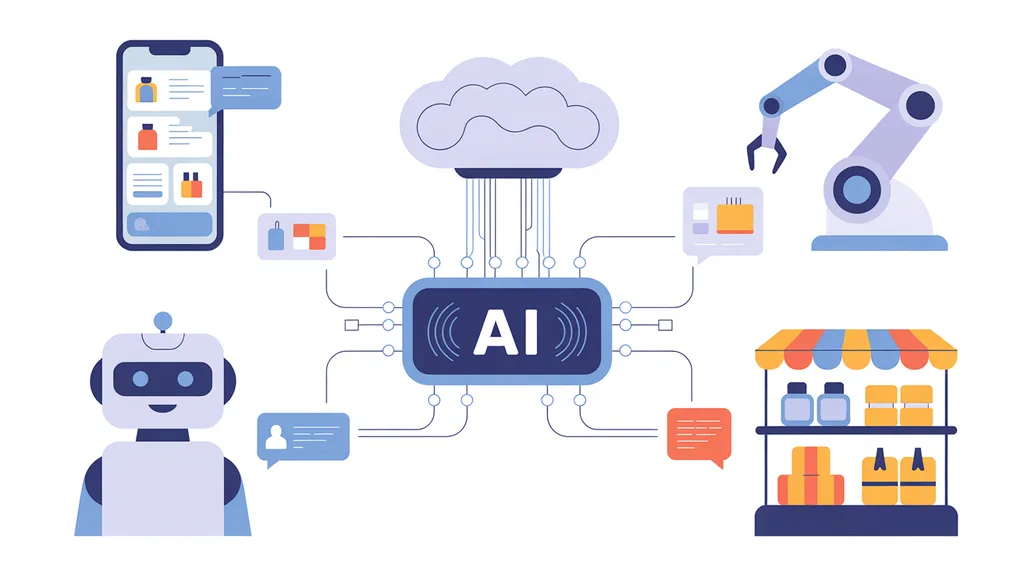
Retailers respond by linking systems:
- Inventory is synced across online and offline.
- Returns happen in-store for online orders.
- Loyalty points track across all channels.
Omnichannel experiences drive higher loyalty and sales. A shopper who interacts with a brand on multiple channels spends more than one who uses just one. Current retail trends prove this: 70% of U.S. shoppers mix channels in a single purchase journey.
Retail store trends focus on phygital solutions. Augmented reality allows customers to try products virtually. In-store kiosks let people order out-of-stock items. This keeps customers engaged without friction. Marketplace app development now helps brands build ecosystems where everything connects.
Emerging trends in retailing show stronger integration of payment methods, too. Contactless payments and mobile wallets grow in popularity, making checkout faster.
These retailing industry trends align with consumer demand for speed and freedom. Brands that fail to merge digital and physical will not stay in the list of top retail trends leaders.
3. Experiential Retail: Creating Immersive Shopping Environments
Traditional stores lose ground when they only sell. Experience is what keeps people walking in. Retail industry trends show stores now act as entertainment, community spaces, and brand theaters.
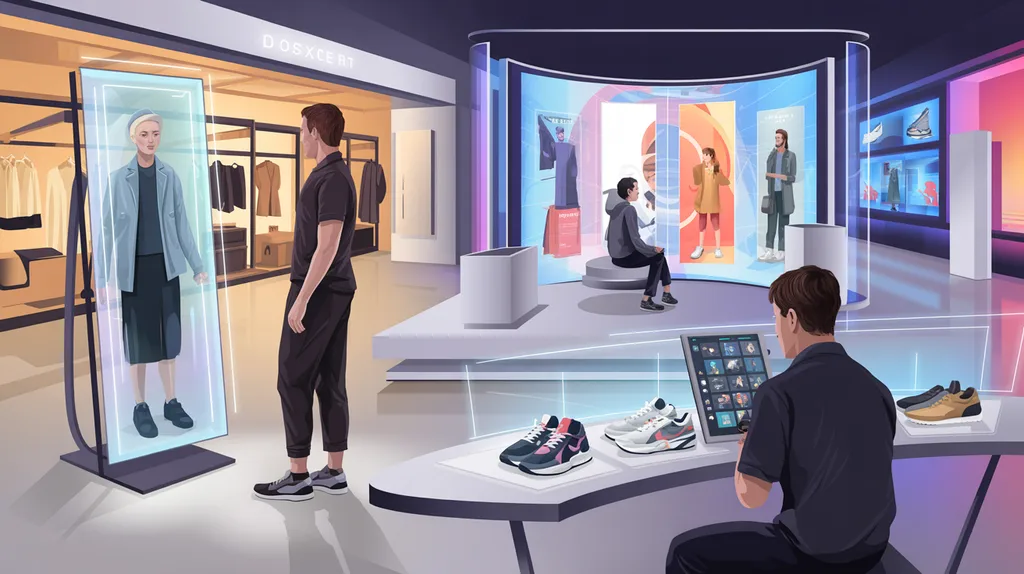
Consumers no longer want shelves stacked with goods. They want interactive zones, workshops, or AR-based trial rooms. Retail store trends highlight brands investing in in-store events, gaming, and personalized tours.
Nike creates immersive store experiences with digital screens and customized sneaker stations. Sephora integrates AR mirrors where shoppers try makeup virtually. These are the latest trends in the retail industry, showing how experience now replaces discounts as the hook.
Retail market trends point to the younger generation driving this shift. Gen Z spends more on experiences than on physical goods. Retail predictions suggest experiential retail will grow faster than traditional retailing trends in the coming years.
Retail marketing trends in 2026 also focus on Instagrammable spaces. If a store looks good on social media, it becomes free advertising. For this reason, retail store trends move toward design-heavy investments. E-commerce product photo generation also feeds into this by creating visual-first retailing.
| Brand / Retailer | Immersive Element | Customer Impact | Example Stat / Insight |
| Nike | Custom sneaker stations + AR zones | Higher personalization | Shoppers spend more when customizing products |
| Sephora | AR “try-on” mirrors | Boosts trial-to-purchase conversion | 30% increase in basket size in test stores |
| IKEA | Virtual room setups | Helps customers visualize furniture | Reduces returns by up to 20% |
| Apple | Live in-store demos & events | Builds community | Longest average in-store dwell time |
| Fashion resale boutiques | In-store workshops & styling sessions | Drives engagement beyond shopping | Supports 325% growth in resale brands since 2021 |
So, what is happening in retail today is not only selling. It is entertaining, inspiring, and involving. These new retail trends show that retail spaces will remain alive if they evolve.
What is mallmaxxing? Mallmaxxing is the Gen Z return to physical malls — not to buy, but to discover, film content, and connect in person. The movement is reviving mall foot traffic that many analysts had written off (StupidDope). It fits the experiential shift: 78% of Gen Z and millennials say digital touchpoints make a physical store better, not worse (RockStep). For retailers, the lesson is direct — the mall is a content set and a community hub now, so design and shareability drive visits as much as product does.
4. Sustainability and Ethical Retailing in 2026
Sustainability is no longer a buzzword. It is one of the most powerful retailing industry trends in 2026. Customers expect brands to show where products come from and how they are made.
The resale market proves this. 153 U.S. fashion brands now offer resale directly, a 325% increase since 2021. This stat shows how fast circular retail grows. The RealReal, a resale luxury platform, reported $165 million in revenue in Q2 2025.
Ethical sourcing is also a must. Retail market trends show demand for supply chain transparency. Blockchain and AI in logistics now track products end-to-end. Tools like AI in logistics show how retailers optimize transportation while cutting emissions.
Consumer retail trends indicate buyers punish greenwashing. Authenticity matters more than marketing claims. Retail predictions show that by 2028, resale and sustainable product lines will account for 20% of apparel sales.
- Industry trends in retail point toward recycling and resale as new norms.
- Retail trends report highlights eco-packaging as the next battleground.
| Sustainability Focus | Growth Trend | Consumer Behavior Impact | Example Stat / Forecast |
| Resale platforms | Mainstream adoption | More brands launching resale programs | 153 U.S. fashion brands offer resale directly |
| Circular economy | Scaling fast | Shoppers prefer repair & reuse | Circular sales are expected to reach 20% of apparel by 2028 |
| Eco-friendly packaging | Expanding rapidly | Preference for recycled packaging | Brands cutting plastic use by 30–40% |
| Ethical sourcing (blockchain) | Rising adoption | Trust through transparency | Retailers track products end-to-end |
| Carbon-neutral delivery | Becoming standard | Customers choose greener options | Growing demand for electric fleets in the last-mile delivery |
These global retail trends force brands to rethink operations. If a business ignores sustainability, it risks losing both market share and brand trust.
The resale story is bigger than fashion’s headline brands. Secondhand fashion is now a $256 billion global business, on track to reach $367 billion by 2029, and mid-market branded resale grew 300% between 2021 and 2025 (Trellis). Demand is real, not performative: 62% of global consumers prioritize brands with ethical sourcing, and 58% will pay a premium for sustainable products (Reconomy). Tariffs are pouring fuel on this fire — when new goods get pricier, resale and repair become the value play, not just the green one.
5. Value-Driven and Budget-Conscious Shopping Trends
Inflation in 2026 continues to impact wallets. Consumers buy smarter, not necessarily less. They want deals, loyalty benefits, and flexible financing. Retail industry trends show a rise in value-driven shopping.
Retail predictions indicate that discount retailers like Walmart and Costco remain strong performers despite global uncertainty. Consumer retail trends confirm that budget remains a top factor in purchase decisions.
Buy now, pay later systems grow further. Retail marketing trends show higher adoption of installment payments across categories beyond electronics. Loyalty programs now use AI to send real-time personalized offers. AI for customer service also helps keep shoppers informed about deals.
Retailing trends suggest a split in behavior. Affluent customers keep buying luxury, but middle-market buyers shift to value brands. What is happening in retail today is a polarization. Brands in the middle feel pressure the most.
These trends in the retail industry shape strategy for pricing, promotions, and even packaging sizes. For example, smaller packs allow customers to pay less upfront. These emerging trends in retailing show that adapting to budget sensitivity is not optional.
6. The Evolving Role of Physical Stores in a Digital Era
Physical stores are not dying; they are changing. Current retail trends show stores turning into showrooms, pickup centers, and service hubs. The BOPIS market is expected to hit $509.4 billion by 2033, showing how much in-store pickup will matter.
Retail store trends focus on hybrid models. Customers try products in-store but order through apps. Stores also function as fast return centers. This cuts logistics costs and keeps shoppers loyal.
Retail industry trends also show the use of sensors, RFID, and computer vision in stores. Autonomous checkout reduces wait times. Web development services support these changes by integrating online and offline.
Global retail trends highlight the different roles stores play. In developed markets, stores become experience hubs. In emerging markets, they still act as primary shopping channels.
So, trends in retail suggest physical spaces still matter, but their purpose evolves. They must blend with digital platforms instead of competing.
7. The Rise of Social Commerce and Influencer-Led Shopping
Social media is no longer just for marketing; it is now a full shopping channel. Retailing industry trends forecast social commerce reaching $8.5 trillion by 2030.
Consumer retail trends show Gen Z and Millennials buy directly through TikTok, Instagram, and YouTube. Influencers guide decisions as much as ads. Retail marketing trends emphasize creator partnerships because authentic voices drive higher conversion.
Retail store trends even integrate social features in apps, letting customers share purchases instantly. These new trends in the retail industry mix entertainment with shopping.
Retail predictions expect U.S. social commerce adoption to double by 2027. Changing retail industry with AI proves how AI adds personalization to social feeds, matching products with user behavior.
These latest retail trends make it clear: brands that ignore social commerce will miss entire demographics.

TikTok Shop is the standout. It is forecast to generate $23.4 billion in U.S. e-commerce sales in 2026 — a 48% jump that gives it a larger U.S. e-commerce business than Target, Costco, or Best Buy (Retail Dive). Live commerce is climbing with it: U.S. live-shopping GMV is projected to grow 42% year over year, with conversion rates of 12–18% during live sessions (Search Engine Land). The reason brands chase TikTok is conversion — it converts more than double Instagram and nearly triple Facebook.
| Platform | Conversion Rate | Note |
| TikTok Shop | 4.7% | Highest social conversion |
| Instagram Shopping | 2.1% | ~Half of TikTok Shop |
| Facebook Shops | 1.8% | ~One-third of TikTok Shop |
Source: Sellers Commerce, 2026. Social commerce overall is set to clear $87 billion in 2026 and head toward $119 billion by 2027 (Ringly.io).
8. Data Privacy, Trust, and the Digital Consumer
Data is power, but consumers grow cautious. A study of 300 e-commerce users found distrust in AI-backed retail handling of personal data.
Retailing industry trends show privacy becoming as important as price. Transparency wins trust. Brands now share how they collect, store, and use data. Retail trends report predicts new rules around AI use in consumer-facing platforms.
Retail industry trends also point to ethical AI audits. Companies test algorithms for bias and include customer feedback loops. AI in customer service shows how automation can respect privacy when done right.
Consumer retail trends show trust becomes a key differentiator. Retail store trends suggest that data protection becomes part of the value proposition, not an afterthought.
9. Regional Perspectives on the Future of Retail
Retail market trends differ by geography. In the U.S., value and omnichannel dominate. In Asia, digital-first retailing trends grow faster due to super apps. India’s e-commerce alone is $147.3 billion in 2024, with 18.7% CAGR through 2028.
Europe focuses on sustainability. Retail industry trends show circularity gaining more attention than in other regions. Meanwhile, Latin America grows fast in mobile-driven retail.
Global retail trends suggest no one-size-fits-all strategy. Retail store trends depend on infrastructure, culture, and economy. Retail predictions point toward convergence, but at different speeds.
For businesses, the takeaway is clear: study local trends in the retail industry before scaling.
10. Generative AI on Product Design and Retail Innovation
Generative AI changes how products are designed and marketed. Retail marketing trends show AI tools generating product prototypes faster than traditional design teams.
Retailing trends in 2026 show retailers using AI to create product descriptions, photos, and even new designs. AI in e-commerce product photos helps brands save cost and time.
Retail predictions suggest generative AI will cut product launch timelines by 40%. Retail store trends also show brands testing designs with customers virtually before production.
Industry trends in retail show AI shifting retail innovation from guesswork to data-driven creation. These emerging trends in retailing reduce waste and improve speed to market.
Agentic Commerce: When AI Shops for You
Agentic commerce is the defining retail story of 2026. Instead of a shopper clicking through a site, an AI agent browses, compares prices, and checks out on the user’s behalf. AI platforms are projected to drive $20.9 billion in retail spending in 2026 — nearly four times what they drove in 2025 (Elogic). By 2030, roughly half of online shoppers are expected to use AI agents, accounting for about 25% of their spending and adding an estimated $115 billion to U.S. e-commerce.

Consumers are ready for it: 70% say they are at least somewhat comfortable letting an AI agent make purchases for them (Commercetools). A protocol war is already underway. OpenAI and Stripe built the Agentic Commerce Protocol (ACP), while Google, Shopify, and two dozen retailers — including Etsy, Wayfair, Target, Walmart, Visa, and Mastercard — launched the Universal Commerce Protocol (UCP) in January 2026 (Fast Company). Gemini now offers real-time pricing, inventory, and in-chat checkout via Google Pay; Gap became the first major fashion retailer to allow a full purchase inside chat, and Ulta Beauty followed in April 2026.
This rewires retailer priorities. As Fast Company put it, “A detailed article about your product category will not improve your ranking in a ChatGPT shopping result as much as a complete, accurate, real-time product feed will.” Clean, structured product data now matters more than blog SEO for AI-driven sales. Gartner expects 40% of enterprise applications to include task-specific AI agents by the end of 2026, and 68% of retail executives expect agentic AI adoption within the next 12–24 months (Deloitte).
Tariffs, Nearshoring, and the Retail Supply Chain Reset
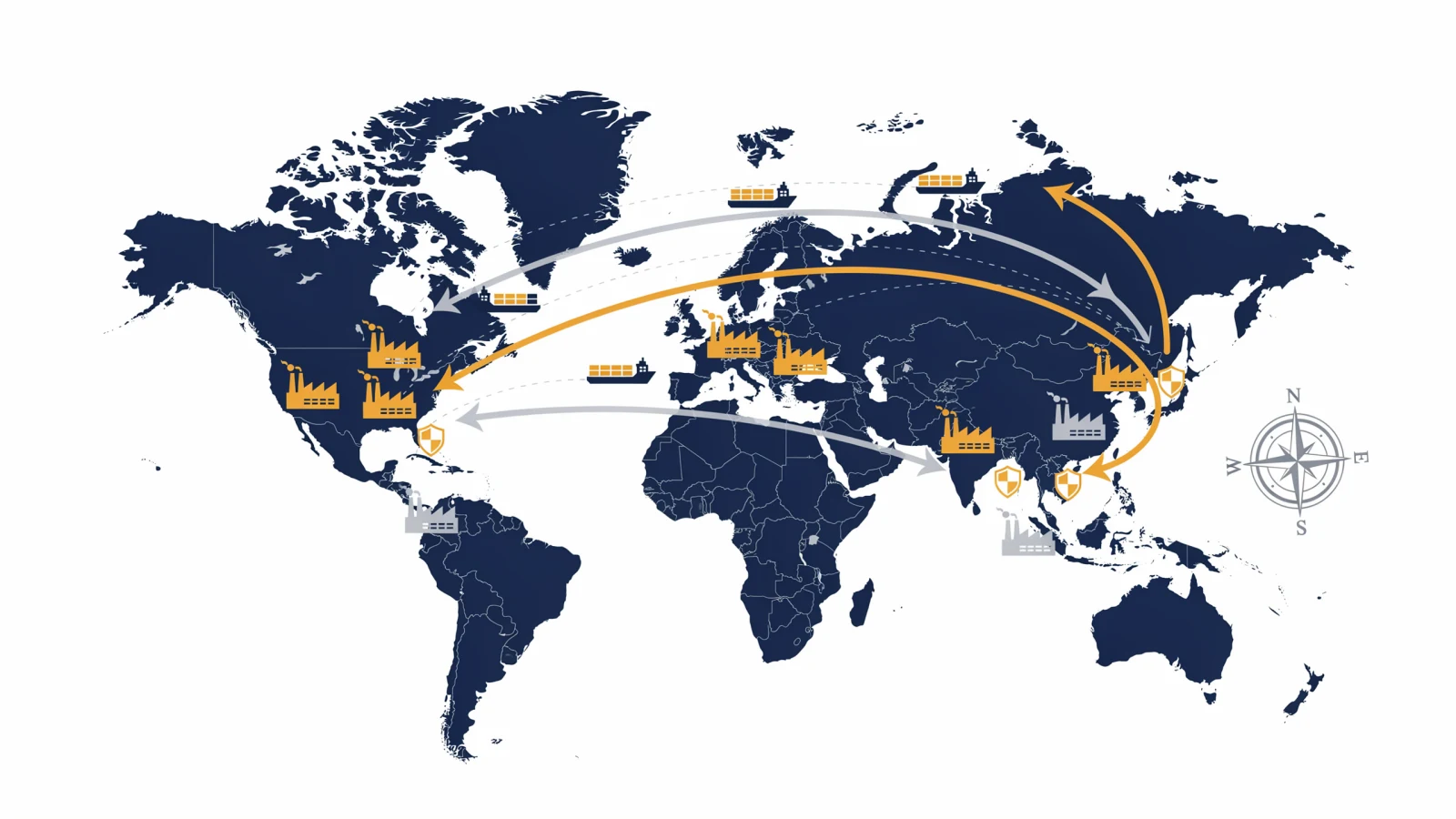
Tariffs are the macro force reshaping retail economics in 2026. 95% of retail executives expect global trade policies to push costs higher this year (Deloitte), and 72% of trade professionals now name U.S. tariff volatility as the single most impactful regulatory change — up sharply from 41% a year earlier (Thomson Reuters).
Retailers are restructuring supply chains in response. 77% of supply-chain leaders have already shifted sourcing away from China toward tariff-neutral countries, 66% have brought onshoring or nearshoring into operational planning, and 87% are increasing buffer inventory to hedge volatility (Ivalua). Consumers feel it directly — prices in exposed categories can rise up to 20% within six months of a tariff taking effect.
There is a second-order effect, too. Higher new-goods prices push shoppers toward resale and thrift. ShopGoodwill.com generated about $450 million in GMV in 2026, up 22% year over year, and 4 in 10 Americans — including higher-income households — now describe themselves as deal-driven (Deloitte).
Technologies Shaping the Next Era of Retail
Technology trends in retail are not just support systems. They form the base of new strategies. By 2026, connected systems, autonomous stores, and predictive analytics will define how businesses grow.
The connected retail market is already worth $36.53 billion in 2023 and keeps expanding at 14.9% CAGR until 2030. Retail predictions show sensors, AI, and blockchain transforming inventory management, checkout, and delivery.
Retail industry trends in automation also push robotics to new levels. Warehouses rely on autonomous picking robots, and in-store assistants guide shoppers. These technology trends in retail improve speed and reduce costs.
| Technology | Impact on Retail | Stat / Forecast | Example Use Case |
| AI Personalization | Smart customer journeys | AI retail $14.5B in 2025 | Real-time product recommendations |
| Smart Retail | Connected store systems | Global smart retail $450.7B by 2033 | Cashierless checkout |
| Robotics & Automation | Faster fulfillment, lower cost | U.S. smart retail 28.4% CAGR | Warehouse robots |
| AR / VR | Immersive experiences | Growth in phygital retail | Virtual try-on |
| Blockchain | Transparency in sourcing | Expanding globally | Supply chain tracking |
These retail industry trends prove that retail technology no longer waits for late adopters. Retail store trends move faster than customer expectations.
The robotics numbers back this up: the retail robotics market jumped past $34 billion in 2025 and is on pace for $46 billion-plus in 2026 (Troc Global). The economics keep improving too — the cost of sensor arrays and computer-vision systems for cashierless stores has dropped about 40% since 2023, which is why Walmart already runs 150+ “Stores of the Future” with autonomous inventory and cashierless checkout.
The Growth of Subscription-Based Retail Models
Subscriptions keep growing because they make life easier. Customers want convenience, exclusivity, and predictable savings. That is why subscription-based retail models expand across categories.
Retail industry trends show that food boxes, beauty kits, and fashion memberships are becoming common. Consumer retail trends also point to hybrid options, tiered memberships with different perks. Retailing trends confirm that customers stay loyal once they join.
Retail predictions show that subscription models cut acquisition costs for businesses. Instead of spending heavily on ads each time, retailers build a reliable base of recurring revenue. Current retail trends highlight that retention rates are higher in subscription commerce compared to one-time purchases.
Retail store trends already test monthly “refill and save” options. AI in customer service ensures members never miss reminders or deliveries. These retailing trends lock customers into long-term relationships.
The scale is striking: the subscription e-commerce market is set to jump from $536.72 billion in 2025 to $859.52 billion in 2026 (Internet Retailing), and subscription-based companies grow at 4.1x the rate of S&P 500 firms. The model is also shifting — flexibility is now the number one reason people subscribe, so rigid tiers are giving way to modular, AI-managed plans. About 40% of subscription businesses already use AI to predict churn and recover failed payments.
Why Choose LITSLINK for Retail Solutions
The future of retail is not just about watching change. It is about acting now. Retail industry trends confirm that technology, personalization, and sustainability drive the market forward. At LITSLINK, we build tools that support this shift.
We deliver AI development services and marketplace solutions that align with global retail trends. We also develop web platforms that connect digital and physical channels. Our team already builds AI-powered e-commerce tools that reduce costs and speed up sales.
Artificial intelligence transforms retail trends in 2026. From product personalization to warehouse automation, AI touches every part of the retail industry. It changes how stores manage inventory, talk to customers, and even design new products.
We help small and large businesses follow AI adoption paths and scale through AI-driven logistics. These are not concepts; they are tested solutions.
The retail market is competitive. Consumers move fast. Retail predictions for 2026 and beyond show clear winners: those who act now. The question is: will you wait or will you lead? Reach us at LITSLINK today, and let’s shape the future of retail together.
Related reads: see how AI is changing the retail industry, how AI helps small firms compete with bigger players, and the benefits of AI in logistics for retail supply chains.
Retail Trends 2026: Frequently Asked Questions
The biggest are agentic commerce (AI agents that shop for you), AI-powered personalization, social commerce led by TikTok Shop, tariff-driven supply-chain reshoring, and the resale/circular economy. Each is backed by hard 2026 data from NRF, Deloitte, and Grand View Research.
Agentic commerce is when an AI agent browses, compares, and completes purchases on a shopper’s behalf. AI platforms are projected to drive $20.9 billion in retail spending in 2026, and 70% of consumers say they are at least somewhat comfortable letting an agent buy for them.
AI now sets prices, predicts demand, personalizes offers, and runs warehouse robots. 89% of retailers using AI report revenue gains and 95% report lower costs, and Gartner expects 40% of enterprise apps to include task-specific AI agents by the end of 2026.
Mallmaxxing is the Gen Z return to physical malls for curated discovery, content creation, and in-person connection. It is reviving mall foot traffic, and 78% of Gen Z and millennials say digital touchpoints make physical shopping better.
Tariffs are pushing costs up and forcing supply-chain changes. 95% of retail executives expect trade policy to raise costs, prices in exposed categories can rise up to 20% within six months, and 77% of supply-chain leaders have shifted sourcing away from China.