





Building a Web3 Crypto Trading Platform With Trendlines and Multi-Blockchain Support
- 3-month MVP from scratch
- 3 user roles built into the platform from launch
- 4 specialists on the build
- 100K+ online users in target architecture
- Multi-blockchain support from day one
Everyday investors can place informed trades across several markets, set their own risk rules, and follow live crypto trends in one place — all inside a single Web3 trading platform.
Project Details
Our client is a crypto startup founder targeting the US market. The brief was a consumer-facing cryptocurrency trading platform app built for two very different users at once: people placing their first trade and traders who live in charts. We owned the project from business analysis through commercial deployment.


Business Challenge: Making Web3 Trading Simple for Beginners and Powerful for Pros
Our client had a clear target user and a hard problem: most trading apps are built for people who already know what a candlestick means, which quietly locks out everyone else. The brief was to build one product that a first-time buyer and a seasoned trader could both use, without watering either experience down.
There was nothing to start from. No codebase, no requirements, no design. The marketing team had already booked a launch date, so the MVP had a hard 3-month ceiling. Three problems stood in the way.

A 3-Month MVP From Zero
The team had to scope, design, build, and ship a working trading product in twelve weeks. Requirements, UI, backend, and QA all had to happen at once. A standard sequential plan would have blown the date.

Multiple Blockchains, One Platform
Traders do not want to juggle five apps. Supporting multiple blockchain protocols inside a single product meant the architecture had to stay clean while the protocol list kept growing.

Accessible Trading for Beginners
Make it too simple and pros leave. Make it too dense, and newcomers bounce. The platform had to serve cryptocurrency trading for inexperienced users without dumbing down the experience for veterans.
Technologies Behind the Platform


Our Web3 Cryptocurrency Trading Platform Solution
One question shaped almost every decision: how do you make a powerful trading tool that a beginner is not scared of? Most platforms answer this by hiding features behind menus. We took a different route and built the complexity in layers, so the surface stays calm while the depth is one click away.
The real friction in crypto is not the trading. It’s the onboarding. A new user knows they want to buy Bitcoin but has no idea what a stop loss is or why a candlestick is red. So we put an interactive onboarding guide right inside the product, walking people through their first trade instead of dropping them into a chart and wishing them luck.
On the engineering side, we chose a Node.js and TypeScript backend for fast iteration, with Python handling the data and trend-aggregation work. MongoDB stored flexible market and user data, and Redis kept the real-time crypto trading feeds and session state quick. Those choices let two engineers move in parallel without tripping over each other.
The trading engine itself is built around trendlines. Instead of asking users to read raw price action, the platform lets them draw a line, set their conditions against it, and let the system watch the market. Configurable trading conditions like stop loss and take profit live at the trade level, so risk rules belong to the trader, not some hardcoded default.
This was not a template dropped onto a crypto logo. Every screen, from the Buy/Sell flow to the Ichimoku-equipped analysis view, was designed for this audience and this timeline.
Trendline-Based Trading Engine
Users draw a trendline on the chart and attach trade conditions to it. The engine watches the price against that line and acts when the rule is met. It puts a technique that used to live in third-party tools directly in the platform.
Configurable Stop Loss and Take Profit
Every trade carries its own stop loss and take profit settings. Traders set the numbers, and the system enforces them. No hardcoded defaults, no surprises.
Multi-Blockchain Protocol Support
Several blockchain protocols run inside one interface. People trade across chains without switching apps or re-learning a new layout each time.
Interactive Onboarding for Beginners
A guided walkthrough teaches first-time users how to read the screen and place a trade. Interactive onboarding for beginners turns a confusing first session into a finished first trade.
User Role Management
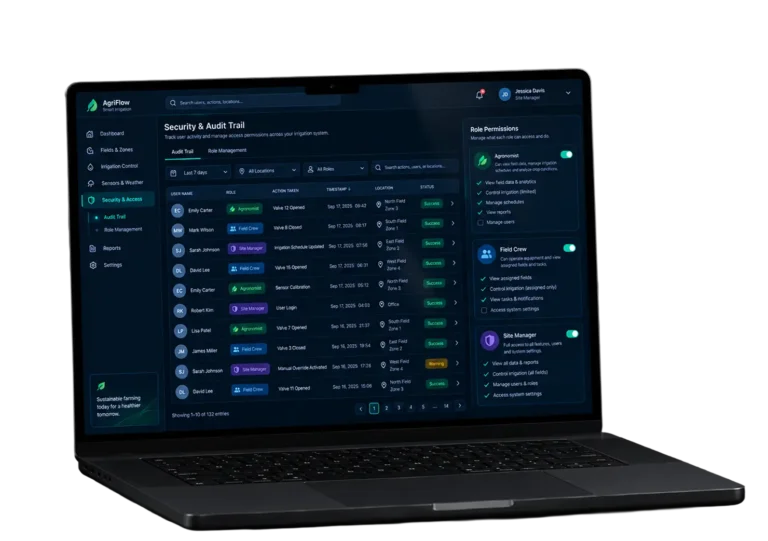
Three roles ship with the platform, each with its own permissions and views. User role management keeps admins, traders, and support cleanly separated.
Real-Time Crypto Trends Aggregation
The platform pulls the latest signals from across the crypto world and surfaces them in one feed. Traders see what's moving without bouncing between sites.
Scrum Methodology
Project Journey: 3-Month MVP
Twelve weeks do not leave room for a waterfall. We ran two-week sprints and reviewed working software with the client at the end of each one. That cadence caught scope creep early, before it could eat the timeline.
Discovery was fast and deliberate. A Business Analyst and Solution Architect scoped the MVP feature set and wrote detailed requirements while design and engineering started in parallel. By the time the requirements firmed up, the backend skeleton and first UI screens already existed.
How the Crypto Trading Platform Works
- A new user registers and lands in the role that fits them. Interactive onboarding starts here.
- The trader sets a spend amount, picks a payment method, and selects the crypto market they want.
- On the analysis view, the user draws a trendline and reads the live chart with indicators like Ichimoku.
- Stop loss and take profit are configured per trade, so the system knows when to act.
- Buy or sell runs against the chosen market and blockchain protocol.
- The trader follows positions, watches the aggregated trends feed, and adjusts conditions anytime.
Scrum Process Flow
Financial software on a 3-month clock does not benefit from a single big release. Scrum’s sprint cadence meant the client saw working functionality every two weeks and could redirect priorities before any decision became expensive to reverse. When the multi-blockchain scope expanded mid-build, we absorbed it inside a sprint instead of renegotiating the whole plan.

-Timeline
Development Process — Five Phases
Discovery & Product Workshop
- Scoping the MVP feature set with a BA and Solution Architect
- Writing detailed requirements while the design starts in parallel
- Locking the 3-month timeline and team structure
UX Prototyping
- Designing the Buy/Sell, Market, and Analysis screens
- Mapping the interactive onboarding flow for beginners
- Defining the dark theme, mint accent, and Poppins type scale
Agile Development (Sprints)
- Running backend and UI builds at the same time
- Adding multi-blockchain protocol support from the first sprint
- Wiring the trendline engine and configurable trading conditions
QA & Testing
- Testing trade flows against stop loss and take profit rules
- Load-checking against a 100K+ concurrent-user target
- Verifying role permissions across all three user roles
Launch & Support
- Commercial deployment to production
- Monitoring real-time feeds and session performance
- Planning the next round of features with the client
UI/UX Design: Intuitive Interface for Web3 Traders of All Levels
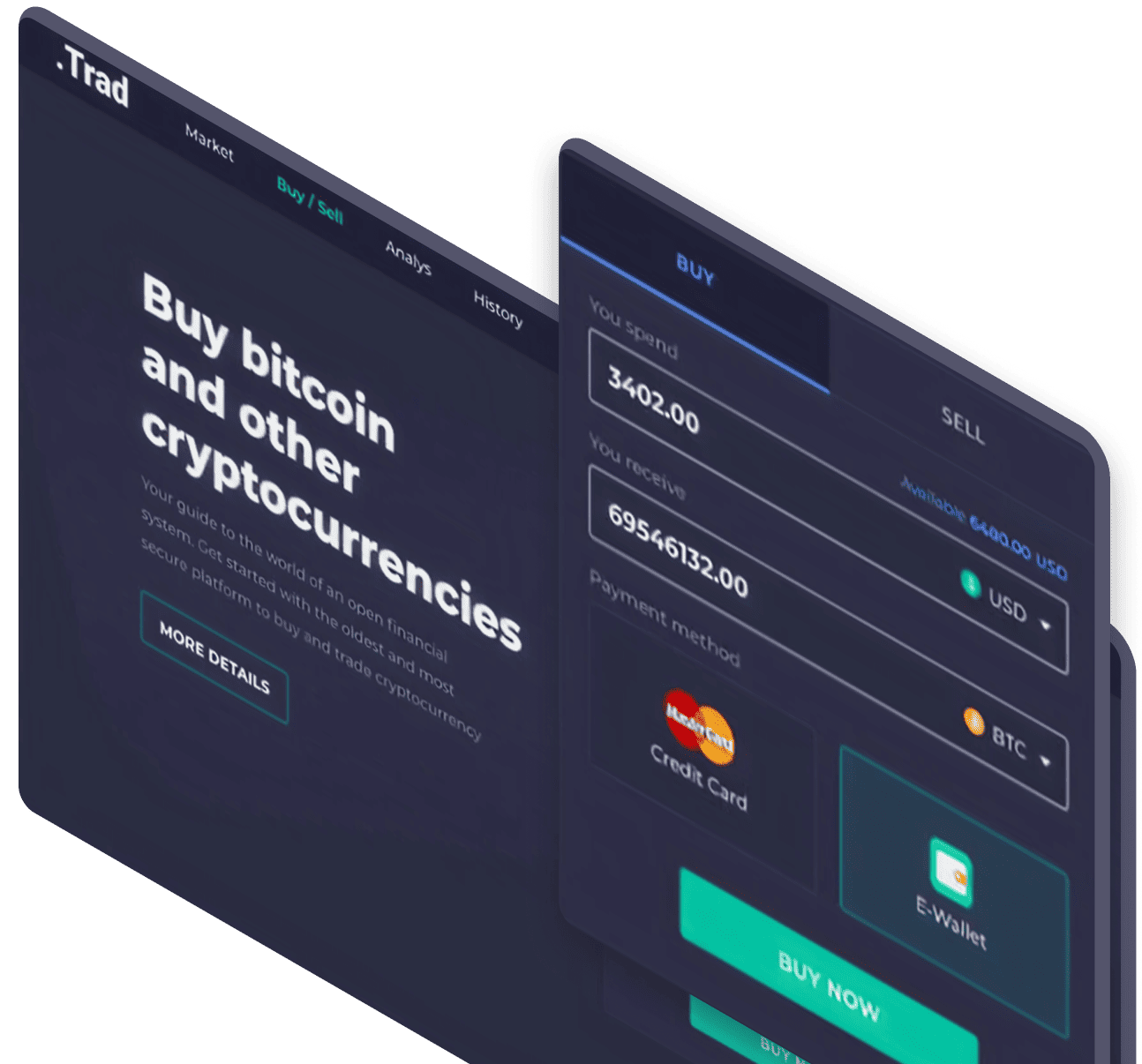
The interface had one job: stay calm. A first-time visitor opens the Buy/Sell screen and sees two fields, You spend, and You receive, plus two payment tiles, Credit Card and E-Wallet, and a single green Buy Now button. No order books, no margin sliders, nothing to decode. Behind that simplicity sits the full toolkit: the Analysis view carries a drawing toolbar, an Ichimoku indicator, OHLC readouts, and a live exchange ticker tape running across Bitfinex and Binance pairs. The same product that sells a beginner their first Bitcoin also hands a pro a trendline tool and a multi-timeframe chart.
We kept the visual system tight on purpose. A dark navy canvas reduces eye strain during long sessions, a single mint-green accent marks every primary action so the eye always knows where to click, and Poppins keeps numbers legible at small sizes. The Market screen sorts pairs into clear zones: Spot, Futures, Fiat, and favorites, so depth never reads as clutter. Powerful when you want it, quiet when you don’t.


Results
Before
- ✕An idea on paper, with no codebase, design, or requirements.
- ✕A hard 3-month marketing deadline and no room to slip.
- ✕ Beginners priced out of trading by jargon-heavy competitor apps.
- ✕ Trendline trading is locked away in separate third-party tools.
- ✕No single place to trade across multiple blockchains.
After
- ✔A commercially deployed product shipped in 3 months.
- ✔Parallel backend and UI tracks that protected the launch date.
- ✔ Interactive onboarding that walks beginners through their first trade.
- ✔ A built-in trendline-based trading engine, no add-ons needed.
- ✔ Multi-blockchain support inside one unified interface.

Impact of the Crypto Trading Platform After Launch

-Verified Reviews
Our Reputation on Top Platforms
LITSLINK is consistently rated among the top software development and FinTech engineering teams on Clutch, GoodFirms, and similar review platforms. Client reviews point to technical depth in real-time systems, clear communication, and a knack for hitting tight timelines without cutting corners.
Have a Trading Project in Mind?
Need a Web3 trading platform, a decentralized finance trading app, or a secure crypto trading platform for your business? Tell us what you’re building, and we’ll get back to you within 48 hours.
Thank you for your message. It has been sent.