




Custom EHR/EMR Software Development Services

We build custom EHR and EMR software for US hospitals, clinics, and digital health startups. As an EHR and EMR software development company with deep roots in the US healthcare market, we ship products that are HIPAA-compliant, HL7 FHIR-interoperable, and built for real clinical workflows.

  • 12+ years in custom software development
  • 14+ EHR/EMR and healthcare projects delivered
  • HIPAA, HITECH, and ONC-ready engineering
  • HL7 FHIR interoperability and SMART on FHIR app development
  • From EHR MVP to enterprise-grade platform
Custom EHR/EMR Software Development Services

WHY US

Why US Healthcare Companies Choose LITSLINK

Most agencies treat “healthcare” as a vertical they tag onto a generic dev pitch. We treat it as a set of constraints that shape every decision, from data model to consent screen. Here is what that looks like in practice.

We Speak US Healthcare Regulation

HIPAA, HITECH, ONC certification, meaningful use, MIPS. We translate the parts that touch your build into plain engineering decisions, so compliance shows up in the architecture instead of a panic two weeks before launch. PHI security, audit trails, and role-based access are scoped on day one. If your roadmap points toward CEHRT, we start the gap analysis in discovery.

Interoperability-First Engineering

Your data has to move. We build on HL7 and FHIR from the start, ship SMART on FHIR apps, and stand up the interfaces that let your EHR/EMR software talk to labs, pharmacies, imaging, and an HIE without a brittle middle layer. Epic and Cerner integration included when your clients live inside those systems.

Clinician-Centered UX

A chart that takes nineteen clicks is how you lose a hospital contract. Our UI/UX design team works from real clinical workflows, cuts documentation friction, and tests with the people who will use the thing at 2 a.m. Fewer clicks, faster charting, less burnout.

Production-Ready AI Expertise

We have shipped AI into live products, not slide decks. Ambient documentation, predictive analytics, automated coding support. Our artificial intelligence services team treats AI as a feature that has to survive a real workload, audit trail, and all.

SERVICES

EHR & EMR Software Development Services

You can start an EHR and EMR software development project at almost any point. A discovery call and a rough idea. A stalled MVP. A legacy system that still runs but quietly costs you every quarter. We pick up the work where it actually is and take it through to go-live.

EHR/EMR Consulting & Strategy

Before a line of code, we map workflows, compliance scope, and the integrations that will make or break the project. You leave with a build plan, a risk list, and a realistic number.

Custom EHR Software Development

Custom EHR built to your specialty and your charting reality, not a template bent to fit. EHR system development for primary care, behavioural health, oncology, and the workflows in between

Custom EMR Software Development

Practice-grade EMR development with the clinical documentation, scheduling, and billing your front office actually runs on. Lightweight where you want speed, deep where you need control.

EHR/EMR Integration Services

EHR/EMR integration services that connect your system to labs, e-prescribing networks, imaging, billing, and third-party APIs. We sweat the edge cases that break interoperability after go-live.

Legacy EHR Modernization & Migration

EHR/EMR software modernization services for systems that work but cost you every quarter. We re-platform on a FHIR-based microservices architecture, migrate the data with integrity checks, and keep you running through the cutover.

EHR Implementation Services

EHR implementation services that cover configuration, data migration, staff readiness, and a go-live that does not take the clinic offline. We stay on through the first chaotic week.

Patient Portal Development

Patient portals and engagement tools that patients actually open. Records, messaging, scheduling, and results in a flow that does not require a help-desk call. Pairs with mobile app development when you need an electronic health record EHR app development built for iOS and Android.

Telehealth & EHR Integration

A telemedicine module is wired into the chart, so a video visit writes back to the record instead of living in a separate tool nobody reconciles.

EHR Support & Maintenance

EMR software support and ongoing maintenance: monitoring, security patching, FHIR spec updates, and the small enhancements that keep clinicians from filing tickets. US business-hours coverage with on-call escalation.

FEATURES & MODULES

Key EHR/EMR Features We Build

These are the EHR/EMR modules we build most. Each one works on its own, so you can start with two or three and grow the system from there, instead of buying a platform you grow into for years.

  • Clinical Documentation & Charting SOAP notes, structured templates, and medical charting that fit the specialty instead of fighting it.
  • e-Prescribing (e-Rx) Connected prescribing with drug interaction checks and pharmacy routing.
  • Appointment Scheduling Booking, reminders, and provider calendars that sync with the front desk.
  • Patient Portal Self-service records, secure messaging, and results, on web and mobile.
  • Medical Billing & Claims ICD-10 and CPT coding support, claim generation, and clean handoffs to your clearinghouse.
  • Lab & Diagnostics Integration Two-way lab integration so orders go out and results land back in the chart.
  • Clinical Decision Support (CDS) Alerts and guidance surfaced in context, tuned to cut noise rather than add it.
  • Reporting & Analytics Population and operational dashboards your team will actually check.
  • Patient Monitoring & IoT Device data streamed into the record for remote monitoring and chronic care.
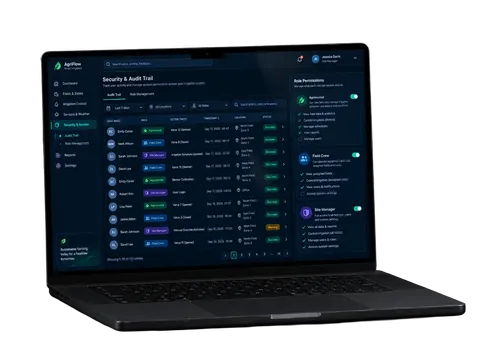
  • Role-Based Access & Audit Role-based access control and full audit logging, because PHI access is never “trust me.”

WHO WE WORK WITH

Healthcare Organizations We Serve

We build EHR/EMR software for organizations across the US healthcare. The six below are who we work with most, and what each one actually needs from a build partner.

Hospitals & Health Systems

Enterprise builds and modernizations where uptime, interoperability, and uptime again are the whole job.

Specialty Clinics & Medical Groups

Specialty-fit EMR software solutions for cardiology, behavioral health, ortho, and multi-site groups.

Digital Health Startups

From EHR MVP to a fundable product, with a dedicated healthcare team that moves at startup speed.

Telehealth Providers

Virtual-first platforms where the chart, the visit, and billing are one system, not three.

Medical Labs & Diagnostic

Lab software and integrations that handle order volume and DICOM imaging without choking.

HealthTech & SaMD Companies

Product engineering for software vendors and SaMD teams who need a build partner fluent in FDA and ONC realities.

INTEROPERABILITY & INTEGRATIONS

EHR Interoperability & Integration

Records have to move between systems that were never designed to talk to each other. We build EHR and EMR integration on HL7 and FHIR from the first sprint, so your data crosses to labs, pharmacies, imaging, and an HIE without a fragile translation layer holding it together.

HL7 FHIR Interfaces

FHIR-native data exchange and HL7 FHIR integration that holds up across versions.

SMART on FHIR Apps

Apps that launch inside the EHR and read or write to the record under proper scopes.

Epic, Cerner & Healthie Integration

Connect to the systems your customers already use, the right way.

Lab, Pharmacy & Imaging (DICOM)

Orders, results, e-prescribing, and DICOM imaging tied back to the chart.

Health Information Exchange (HIE)

Participation in regional and national HIE networks.

Third-Party API Integrations

Billing, identity, payments, and whatever else your stack needs, through API integration, we own end-to-end.

COMPLIANCE & CERTIFICATIONS

Healthcare Compliance & Certifications

EHR software handles the most sensitive data your business will ever touch. We design compliance into the architecture rather than bolting it on before an audit. That means encryption, access control, and audit logging are part of the data model, not a checklist someone fills in later.

HIPAA

PHI security, access controls, and breach-ready logging across the stack.

HITECH

Breach notification readiness and the security rigor HITECH expects.

ONC Certification

Built to current ONC certification criteria including HTI-1 requirements: USCDI v3, standardized FHIR endpoints, and DSI transparency.

Meaningful Use / MIPS

Reporting and measures your providers are scored on.

HL7 FHIR Standards

Built to current FHIR specs, kept current as they change.

ICD-10 / CPT Coding

Coding handled correctly, so billing and reporting hold up.

CASE STUDIES

Healthcare Projects We’ve Delivered

Patient engagementEHR integrationSaaSHIPAA

Dalth: SaaS Patient Engagement Platform & EHR Integration

The Challenge

Dalth needed one platform that could pull EHR data from several providers, answer urgent care requests in minutes, and serve six different user types, each with its own permissions and workflow.

The Solution

We mapped the information architecture across all six roles first, so data visibility and permissions never collided in the field. The web app was built in Vue 3 with the Composition API, Pinia, and TypeScript, picked because the interface had to surface live data from multiple EHR sources at once. Patients book and track appointments, upload documents, check medical data, and manage contacts from a single screen.

The Result

  • Urgent care requests are now resolved in minutes instead of bouncing across disconnected systems.
  • Six user roles, from patients to admins, run on one role-aware platform.
  • EHR data from multiple providers is pulled into a single source clinicians actually trust.

Stack

Vue 3Composition APIPiniaTypeScript
See Full Case Study
Dalth: SaaS Patient Engagement Platform & EHR Integration

DEVELOPMENT PROCESS

How We Build EMR/EHR Software

A predictable path from idea to go-live. We move fast, but compliance scoping happens first, because retrofitting HIPAA into a finished system is the most expensive mistake in this field.

We map workflows, EMR software requirements, integration points, and your compliance scope. You get a build plan and an honest number.

We map workflows, EMR software requirements, integration points, and your compliance scope. You get a build plan and an honest number.

Data model, FHIR strategy, security architecture, and the integration design that makes building an EHR system survivable later.

Two-week sprints, working software you can see, and an EHR developer team that ships against the workflow, not a spec doc nobody reads.

Functional QA, penetration testing, and compliance checks before anything touches real PHI.

Configuration, data migration, staff readiness, and a go-live, our EHR implementation services team runs with you, not at you.

Monitoring, EMR software support, FHIR updates, and the enhancements that keep the system fitting the clinic as it changes.

Technologies

React / React Native Node.js Python AWS / Azure (healthcare) HL7 FHIR Mirth PostgreSQL TensorFlow

Hours

US business hours overlap with on-call escalation.

TESTIMONIALS

What clients say about partnering with LITSLINK

LITSLINK is recognized across leading industry platforms for delivering high-quality software solutions. See what clients and the design community say about our work.

Clutch B2B Ratings & Reviews

4.8

70+ reviews

Top Developer
GoodFirms Research & Reviews Platform

4.8

30+ reviews

Top Company
Behance Creative Portfolio Platform

Portfolio

Design projects

Featured Work

WHY CUSTOM

Why Custom EMR/EHR Outperforms Off-the-Shelf

A licensed EHR is something you rent. A custom EMR is something you own. That difference shows up everywhere that matters later, in how the system fits your clinical workflow, who controls your patient data, and whether you can add an integration without asking permission. Here is where custom EHR pulls ahead.

Workflow Fit

The system bends to your clinic, not the reverse. Specialty templates, your charting logic, your rules.

Full Data Ownership

Your PHI lives in your infrastructure, exportable and yours. No hostage situation at renewal.

Lower Long-Term Cost

Higher build cost up front, no per-seat license tax forever. The math crosses over faster than most teams expect.

Flexible Integrations

Connect anything. Labs, devices, billing, an HIE, a partner API, without waiting in a vendor queue.

Scalability on Your Terms

Add modules and users when the business is ready, on a microservices base built to grow.

Competitive Differentiation

Off-the-shelf makes you look like every competitor running the same software. Custom is a product, not a subscription.

Custom EHR vs. Off-the-Shelf (Epic, Cerner): What’s Right for You?

The real question is not “which is better.” It is “which trade-off fits your situation.” Off-the-shelf EHR platforms like Epic and Cerner trade speed for control. Custom EHR development trades time for ownership. Here is how they compare on the factors that actually drive the decision.

Factor Custom EHR (LITSLINK) Off-the-Shelf (Epic / Cerner)
Workflow fit Built around your exact clinical workflow You adapt your workflow to the product
Data ownership Full ownership and export, in your infrastructure Data lives in the vendor’s system. Migration out is a project in itself.
Licensing cost One-time build investment; no recurring per-seat license Recurring per-seat and per-module licensing that scales with every provider you add, plus annual maintenance fees on top
Customization Open to any change you fund, on your timeline Limited to vendor-approved configuration. Specialty modules require separate licensing and vendor involvement to activate.
Integrations Any system, any timeline, you own the interfaces Vendor-gated. Each new integration goes through the vendor’s approval and licensing process, which can add months and budget lines you did not plan for.
Time to deploy MVP: 3-5 months. Full platform: 8-14 months, depending on scope. Epic mid-size: 12-18 months. Epic hospital system: 24-36 months. Oracle Health mid-size: 12-18 months typical, with post-acquisition delays reported at some sites.
Best for Differentiated workflows, product companies, long horizons Large systems that need standard functionality now

Not sure whether to build or buy?

Get a free build-vs-buy assessment.

Talk to our team

AI IN EHR/EMR

AI Technologies in EHR/EMR Software

We build AI in as a working capability with a real audit trail. None of the four below overlap with the clinical decision support already in your feature set, and our AI development team owns each one from model to production.

  • Ambient Clinical Documentation The visit becomes a structured note without the clinician typing through it. Less after-hours charting.
  • Predictive Clinical Analytics Risk scoring and population signals surfaced from the data you already hold, in time to act on them.
  • Automated Medical Coding ICD-10 and CPT codes suggested from the clinical note and reviewed before they reach billing, so coding is faster, cleaner, and easier to defend.
  • AI Clinical Assistants & Chatbots Patient-facing triage and staff-facing lookup that answer from your data, with EMR cloud services for medical IT teams behind them on AWS or Azure.

Is Your EHR/EMR Project Ready to Build?

Run through this before you build or upgrade. It is the same checklist we walk in discovery, and it surfaces the gaps that cost money later: compliance, interoperability, security, usability, certification, and the data migration everyone underestimates.

HIPAA & Privacy

  • PHI is identified and mapped across every system it touches
  • Business Associate Agreements are in place with every vendor
  • A breach response process exists and someone owns it

Security

  • Encryption at rest and in transit is specified, not assumed
  • Role-based access control is defined per user type
  • Audit logging covers every PHI read and write

Interoperability

  • Required HL7 / FHIR interfaces are listed
  • Lab, pharmacy, and imaging integrations are scoped
  • HIE participation needs are confirmed

Clinical Workflows

  • Real clinicians have reviewed the charting flow
  • Documentation steps are counted and trimmed
  • Edge-case workflows are written down, not assumed

Performance & Reliability

  • Uptime targets and load expectations are set
  • Disaster recovery and backup are planned
  • A go-live rollback plan exists

Certification & Billing

  • ONC certification need is confirmed or ruled out
  • ICD-10 / CPT coding requirements are mapped
  • Billing and clearinghouse handoffs are defined

Download the full PDF guide with expanded recommendations for each item.

Get The PDF

COST & TIMELINES

How Much Does EMR/EHR Software Development Cost?

EHR development cost comes down to four things: how many modules, how many integrations, how strict the compliance scope, and how the team is structured. Below is a practical breakdown by tier so you can size the project before you ever talk to us.

EHR MVP / Single Module

A focused build: one or two core modules, one integration, HIPAA basics.

$50,000 – $150,000

3-5 months

  • One or two core modules
  • One integration
  • HIPAA basics

Best for: validating a digital health idea or shipping a single high-value workflow.

Get estimate

Enterprise EHR Platform

Health-system scale: deep interoperability, HIE, advanced analytics, ONC certification path.

$500,000 – $2M +

14-18+ months

  • Deep interoperability
  • HIE
  • Advanced analytics
  • ONC certification path

Best for: hospitals and platform vendors building for scale and certification.

Get estimate

Get a free, itemized estimate for your project.

Get Free Estimate

FAQ

Frequently Asked Questions About EHR/EMR Software Development

We start with discovery: workflows, EMR software requirements, integrations, and compliance scope. From there, an EMR developer team designs the data model and FHIR strategy, builds in two-week sprints, tests against security and compliance before any real PHI is involved, and runs the go-live with you. The short version of how to create EMR software is that the order matters: compliance and workflow first, features second.

Building an EHR system from scratch follows the same path but goes deeper on architecture. Knowing how to create an electronic medical record system means getting the data model, interoperability, and audit foundations right before you add modules, so the system can grow without a rebuild. We usually start with an MVP that proves the core workflow, then layer in scheduling, billing, labs, and the rest.

It is when it is built that way. We design HIPAA and HITECH requirements into the architecture: encryption, role-based access, audit logging, and PHI handling are part of the build, not a final-week scramble.

Yes. Our EMR integration services cover Epic, Cerner, and Healthie, plus labs, pharmacies, imaging, and HIE networks, using HL7 FHIR and SMART on FHIR. EHR EMR integration services are one of the most common reasons clients come to us.

Yes. Our EHR/EMR software modernization services include data mapping, cleansing, and migration with integrity checks, plus a cutover plan that keeps you running through the switch.

We do. EMR software support covers monitoring, security patching, FHIR spec updates, and enhancements, with US business-hours coverage and on-call escalation.

An MVP runs 3–5 months. A full platform takes 8–14 months. We confirm the exact timeline after discovery.

If your workflow is standard and you need to be live now, off-the-shelf may fit. If workflow fit, data ownership, or differentiation matter, custom wins over the life of the system. Ask us for the free build-vs-buy assessment.

Have an EMR/EHR Project in Mind?

Tell us what you are building and what is in the way. You get a 30-minute call with someone who has shipped healthcare software, a straight read on scope and risk, and a real estimate.

Next steps

1

A LITSLINK specialist reviews your request and reaches out to discuss the details.

2

If needed, we can sign an NDA before moving forward.

3

We send a project proposal — estimates, timeline, and team CVs included.

4

After launch, we stay on for any updates your product needs.

You can upload files. Maximum 3 files, 3 MB per file. Formats: doc, docx, pdf, ppt, pptx.

Drag & Drop Files Here or 0 of 3
    Litslink icon