




Health Insurance Software Development Services

LITSLINK is a US-based health insurance software development company that builds claims, policy, and member systems for payers, third-party administrators, and insurtech startups. Every platform we ship is designed around how your plans, your rules, and your members actually behave.

  • 12+ years in US healthcare and insurance software
  • 1540+ products shipped since 2014
  • Compliance built into every release: HIPAA, HITECH, NAIC, ACA, & CCPA
  • Senior engineers and US-hours project managers
  • Clearinghouse and EDI X12 connections (834, 837, 835, 270, 271)
  • AI for: fraud detection, auto-adjudication, & prior authorization
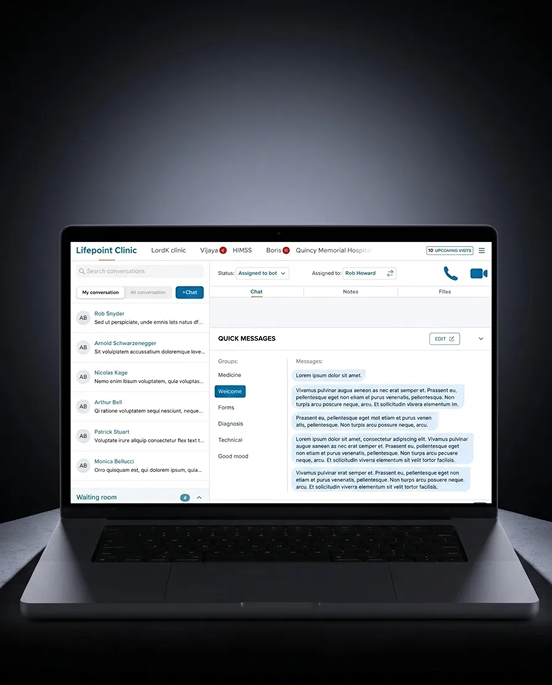
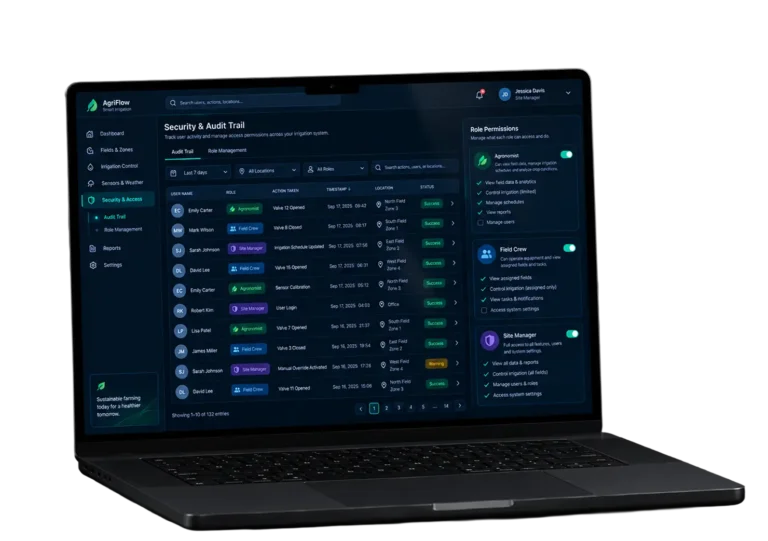
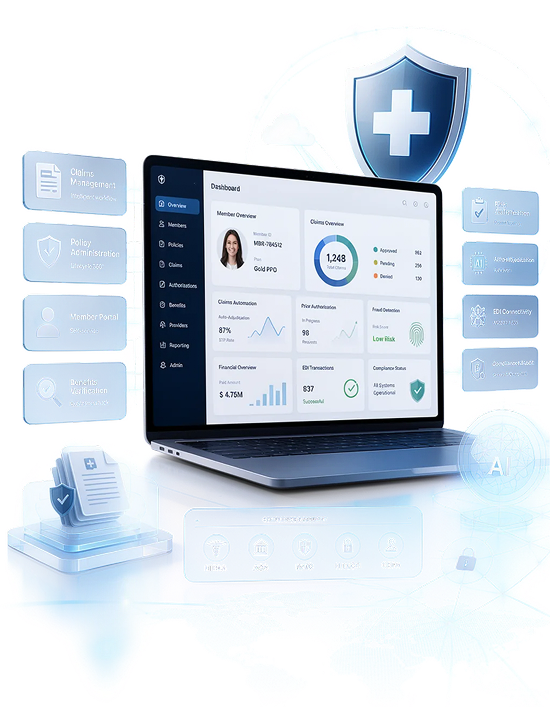
Health insurance platform dashboard on a laptop with feature callouts — claims management, policy administration, member portal, prior authorization, EDI connectivity — plus a medical shield and HIPAA/ACA/NAIC/HITECH compliance badges

HEALTH INSURANCE SOLUTIONS WE BUILD

Health Insurance Software Solutions We Build

These are the health insurance software solutions we build most, each as a standalone module or as part of a full platform.

Claims Management & Adjudication

This is where payers win or bleed money. We build claims processing software that captures, validates, and adjudicates 837 claims against auto-adjudication rules you control, with a clean exception queue for everything that needs a human. Edits, coordination of benefits, duplicate checks, and 835 remittance all sit in one pipeline.

Includes

  • auto-adjudication engine
  • configurable edits and rules
  • COB and duplicate detection
  • 837 / 835 handling
  • denial and appeal workflows
  • fraud, waste, and abuse flags

Stack

  • Node.js
  • Python
  • PostgreSQL
  • Kafka

Policy Administration (PAS)

A policy administration system should not fight you every time a product changes. We build PAS platforms that handle plan setup, enrollment software, eligibility, and renewals across multiple lines without a six-month change request for each new benefit. Add a plan, set the rules, go.

Includes

  • plan and benefit configuration
  • 834 enrollment
  • eligibility management
  • renewals and terminations
  • rate tables
  • audit history

Stack

  • .NET
  • Java
  • PostgreSQL

Member Portal & Mobile App

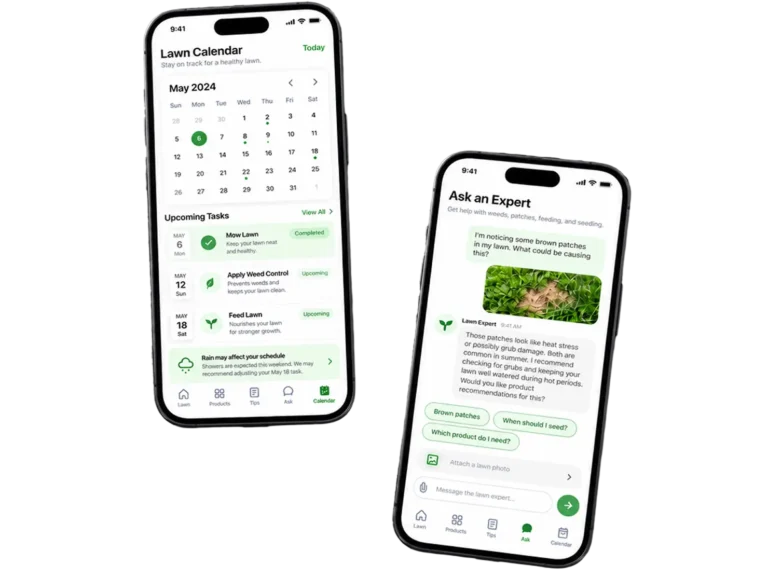
Members judge your plan by the app, not the actuarial tables. We build a member portal and companion mobile app where people check coverage, find in-network care, view claims, pay premiums, and message support without picking up the phone. Brokers and group admins get their own broker portal view of the same data.

Includes

  • coverage and benefits lookup
  • claims status
  • digital ID cards
  • provider search
  • premium billing and payments
  • secure messaging

Stack

  • React
  • React Native
  • Node.js

Provider Network Management

Out-of-network surprises are a compliance problem now, not just a member-experience one. We build provider network management software that tracks contracts, credentialing, fee schedules, and directory accuracy, with the data feeds to keep listings current under the No Surprises Act.

Includes

  • provider directory
  • credentialing workflows
  • contract and fee-schedule management
  • network adequacy reporting
  • directory accuracy checks

Stack

  • Java
  • PostgreSQL
  • Elasticsearch

Billing & Payments

Premium billing breaks in boring, expensive ways. We build premium billing and benefits administration software that calculates what is owed, generates invoices, posts payments, and reconciles against enrollment, for individual, group, and self-funded books alike.

Includes

  • premium billing
  • invoicing and dunning
  • payment posting
  • reconciliation
  • benefits administration
  • PCI DSS handling

Stack

  • Node.js
  • .NET
  • ACH and card rails

Underwriting & Rating

Rating logic should live in software, not in an analyst’s spreadsheet. We build underwriting and rating engines that price risk against your rules and external data, support risk adjustment, and keep an audit trail regulators will actually accept.

Includes

  • rating engine
  • risk scoring
  • risk-adjustment support
  • medical underwriting workflows
  • rate versioning
  • audit logs

Stack

  • Python
  • PostgreSQL
  • AI/ML

WHY CHOOSE US

Why Payers and Insurtechs Choose LITSLINK as Their Health Insurance Software Development Company

Here is what you get when you pick LITSLINK as your health insurance software development company.

We Speak US Insurance Regulation

HIPAA and HITECH are the floor, not the finish line. Our health insurance software developers build against NAIC model laws, ACA market rules, state DOI filing requirements, and the privacy regimes that shift depending on where your members live. Compliance shows up in the architecture, not in a slide deck.

EDI & Payer Integration Are Our Daily Tools

834, 837, 835, 270/271, 276/277. If those numbers meant nothing to your last vendor, that was the problem. We build and test EDI X12 transactions and clearinghouse connections as routine work, so payer-provider exchange does not become the thing that delays your launch.

Insurance Software Design That Cuts Call-Center Load

Most member calls are avoidable. Our insurance software design starts from the questions your call center answers a thousand times a day, then puts those answers in the portal where members can find them. Call-center deflection is a design outcome, and we treat it as one.

Production-Ready AI for Payers

We have shipped AI into real products, not demos. For payers, that means fraud detection that explains its flags, adjudication models with human review, and prior authorization that moves faster without skipping the audit trail.

500+ products shipped since 2014
12+ years in custom software
200+ clients across 30+ countries
A-rated security and SDLC practices

PROBLEMS WE SOLVE

Health Insurance Challenges We Solve

Health insurers lose money and members to slow, manual, error-prone processes. We build software that targets the exact bottlenecks payer and TPA leaders feel every day. Six problems, and what we put in their place.

01

Slow claims processing and low auto-adjudication

Claims sit in queues. Adjudicators rekey data. Your auto-adjudication rate is stuck in the low 60s, and every point you leave on the table costs you. We rebuild the claims pipeline so clean claims pay themselves and only true exceptions reach a person, which is how claims cycle time actually drops.

02

Fraud, waste, and abuse leakage

Pay-and-chase is a losing game. By the time a report flags the pattern, the money is already out the door. We add fraud, waste, and abuse detection that scores claims before payment, with explainable flags your SIU team can defend.

03

Manual, paper-heavy back-office work

Faxes. PDFs. Enrollment forms keyed in by hand. Every manual step is an error waiting to happen and a salary you are paying for data entry. We automate intake with document capture and 834 enrollment, so people review exceptions instead of typing every record.

04

Compliance and regulatory burden

HIPAA, ACA, state DOI, privacy law. The rules move, and one missed control becomes a fine or a stalled filing. We build the controls into the system as checks that run every sprint, with audit logs and reporting ready before the examiner asks.

05

High call-center volume and poor member experience

Members call because the app cannot answer them. Each call costs you, and a bad one costs you the member. We move the top call drivers into self-service, so the portal handles ID cards, claim status, and provider search on its own.

06

Rigid legacy core systems

Now every change is a project, and integrations are held together with overnight batch files. We modernize around the core or replace pieces of it, exposing clean APIs so a new product does not wait on a mainframe release cycle.

WHO WE SERVE

Software for Health Insurance Companies of Every Model

We build software for health insurance companies at every stage and size, from a two-person insurtech to a regional carrier replacing a core it has outgrown.

Health Insurance Carriers & Payers

Carriers carry the most rules and the most legacy. We build and modernize core systems, claims, PAS, and billing, then wrap them in member and provider experiences that match what people expect in 2026.

Third-Party Administrators (TPAs)

TPAs live or die on flexibility. We build configurable platforms that run many plans and clients at once, with the reporting each group sponsor wants on its own dashboard.

InsurTech Startups

Speed is the whole pitch. We help insurtech founders ship an MVP a real payer partner will trust, then grow it once the model proves out.

Brokers & Benefits Agencies

Brokers need a clean book and a fast quote. We build a broker portal, quoting tools, and commission tracking that keep agencies selling instead of chasing paperwork.

Health Plans & Self-Funded Employers

Self-funded employers want control without running an insurer. We build administration and reporting tools that give them claims visibility and cost levers their TPA relationship alone cannot.

Dental, Vision & Supplemental Insurers

Supplemental lines have their own quirks. We build claims, enrollment, and member tools tuned for dental, vision, accident, and other ancillary products, not bent out of a medical template.

INTEGRATIONS & INTEROPERABILITY

Integrations & Interoperability for Health Insurance Systems

A payer platform is only as good as its connections. We build and certify the data exchanges that keep claims, eligibility, and payments moving between payers, providers, and partners.

EDI X12 Transactions

The backbone of payer data. We implement and test 834 enrollment, 837 and 835 claims, 270/271 eligibility, and 276/277 status, validated against your real trading partners and not just a spec sheet.

Clearinghouse Connectivity

We connect to the clearinghouses your providers already use, Availity, Change Healthcare/Optum, and others, so claims and remits move without manual handoffs.

Payer-Provider Data Exchange

Real-time eligibility, prior auth, and status checks between your system and provider offices, built to keep both sides out of the phone queue.

EHR / EMR Connectivity

For plans coordinating care, we build EHR/EMR connectivity over HL7 and FHIR so clinical and coverage data line up. It is the same interoperability work behind our custom healthcare software.

Payment & PBM Integration

ACH and card rails for premium billing and claim payouts, plus PBM connections for plans that manage a pharmacy benefit.

CMS & Regulatory APIs

Patient Access and Provider Directory APIs, plus the reporting feeds CMS and state regulators expect, built in rather than bolted on after launch.

SECURITY & COMPLIANCE

Security & Compliance in Healthcare Insurance Software

Health insurance platforms sit at the intersection of PHI, payments, and insurance regulation. Every healthcare insurance software system we build treats compliance as an architecture requirement verified each sprint.

HIPAA & HITECH

PHI handling, access controls, encryption at rest and in transit, breach-notification readiness, and Business Associate Agreements that hold up.

NAIC Model Laws

Data security and market-conduct requirements modeled on NAIC guidance, mapped to the states you operate in and the filings each state DOI expects.

ACA Compliance

Plan rules, essential health benefit handling, and the reporting the marketplaces and CMS require.

CCPA / CPRA & Privacy

Consumer privacy rights and consent flows that flex by state, because a member in California is not governed like one in Texas.

AML / KYC

Identity and anti-fraud checks where money movement and member onboarding call for them.

SOC 2 & HITRUST

We build toward SOC 2 and HITRUST so your certification is a review, not a rebuild.

Engineering practices

Threat modeling, least-privilege access, audit logging, and dependency scanning baked into the SDLC. Our delivery carries an A security rating, and PCI DSS applies wherever cards do.

CASE STUDIES

Healthcare Software Projects We’ve Delivered

HEALTH INSURANCE AI

AI health risk platform for corporate insurance clients

The Challenge

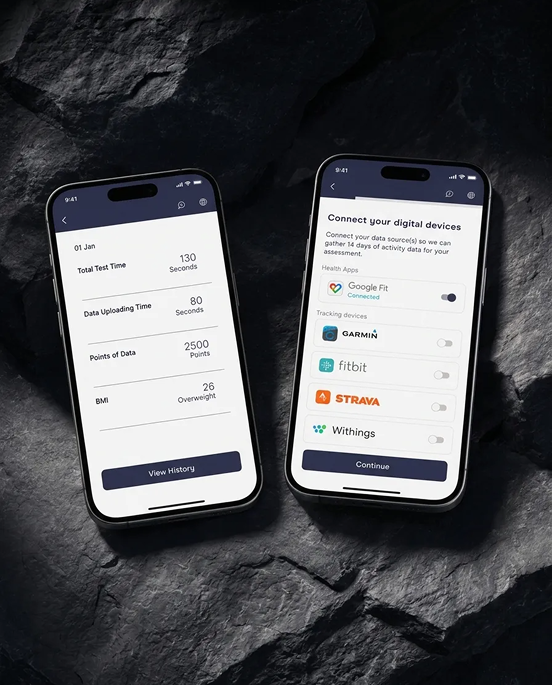
A corporate health insurer needed to replace manual health assessments with something real-time. The goal was to collect fitness-tracker data and turn it into a quantified, per-member view of future health risk.

The Solution

We built an AI-based mobile and web platform that aggregates wearable data, calculates an individual risk score for each insured employee, and pushes personalized recommendations straight to their phone. Three user roles, one data pipeline.

Result

Insurers get an accurate, forward-looking picture of risk per member, and real-time measurement replaces manual reporting. Built by 7 specialists over 12+ months.

Tags

AI/MLCorporate HealthWearables

Stack

React NativeReact.jsNode.jsPythonAI/ML
See Full Case Study
Two smartphones showing a health assessment app: a screen with test time, data points and BMI stats, and a "Connect your digital devices" screen linking Google Fit, Garmin, Fitbit, Strava, and Withings
WHY CUSTOM

Why Custom Health Insurance Software Outperforms Packaged Core Platforms

This is not an argument for custom in every case. Guidewire and HealthEdge are strong when your needs are standard and speed to launch matters most. The calculation changes when your products are unusual, or your volume is high enough that owning the roadmap beats renting one.

Faster Product Launches

A new line or benefit goes out in weeks, not in the next quarterly release train.

Built Around Your Products & Rules

The software fits your plans and edits, instead of forcing your plans to fit the software.

Automation That Protects Margins

Auto-adjudication, FWA detection, and prior-auth automation tuned to your book, where the margin actually leaks.

No Per-Member-Per-Month Fees

You pay to build it once. Your cost does not climb every time you add a member.

AI Vendors Can’t Ship Natively

Custom models trained on your claims and your rules, not a generic add-on bolted to a core you do not control.

You Own the Data & the Roadmap

Your data stays yours, and the next feature ships when you decide, not when a vendor schedules it.

Dimension Custom (LITSLINK) Packaged (Guidewire / HealthEdge)
Product & Rules Fit Built to your plans and edits Configure within vendor limits
Pricing Model One-time build, you own it License plus per-member-per-month
Data Ownership Yours, in full Vendor-hosted, export on their terms
Integrations Any partner, API-first Certified connectors, gaps cost extra
Speed of Change Ship in weeks Wait for the vendor release cycle
AI Capabilities Trained on your data Generic, where offered at all

Estimate the cost of your custom insurance platform

Book a free scoping call

COST & TIMELINES

How Much Does Health Insurance Software Development Cost?

Cost depends on your lines of business, your EDI scope, and the integrations you need. Most projects land in one of three tiers. Every engagement starts with a free scoping call and a fixed-scope discovery phase, so you see the number before you commit.

INSURTECH MVP

For founders validating a model. One line of business, core claims or enrollment, a member app, and the integrations you need to land a first payer partner.

from $90K +

~3 to 6 months

Best for: pre-Series A insurtechs

Get estimate

ENTERPRISE PAYER PLATFORM

For carriers modernizing or replacing a core. Multi-line, high-volume claims, deep integrations, AI automation, and a migration plan that does not take the business offline.

from $500K

12+ months, phased

Best for: established carriers

Get estimate

Not sure which tier fits? Book a 30-minute scoping call, and we’ll size it with you

Book a Scoping Call

AI IN HEALTH INSURANCE

AI Technologies in Health Insurance Software

Payers run on documents, rules, and repetitive decisions, which is exactly what AI is good at. We embed it with the guardrails the industry demands: human-in-the-loop review, explainability, audit trails, and PHI-safe deployment.

Claims Fraud, Waste & Abuse Detection

Models score claims before payment and surface patterns a rules engine misses, with flags your SIU team can defend. Pay-and-chase becomes prevent-and-review.

Automated Claims Adjudication

AI handles the gray-area claims that rules alone kick to a human, lifting your auto-adjudication rate while a reviewer signs off on anything the model is unsure about.

Prior Authorization Automation

Intake, clinical-criteria matching, and routing for prior authorization, so approvals move in minutes and providers stop waiting on the fax machine.

Risk Scoring & Predictive Underwriting

Risk-scoring and risk-adjustment models that price and segment your book using your own claims history, with an audit trail that holds up to scrutiny.

DEVELOPMENT PROCESS

How We Build Health Insurance Software

Step 1

Discovery & Compliance Scoping

We map your lines of business, regulatory footprint, and integration needs before anyone writes code. You leave with a scope, a timeline, and a fixed-price discovery output.

Step 2

Insurance Software Design & UX

We design the member, broker, and admin experiences around the calls and tasks they replace, then validate with real users before build.

Step 3

Architecture & Data Model

We design the data model and system architecture for the volume and compliance you actually face, APIs first, so integrations are not an afterthought.

Step 4

Agile Development

Our web development and mobile teams build in two-week sprints, with working software you can review every cycle instead of a big reveal at the end.

Step 5

Testing, Security Audit & Certification Prep

QA, security testing, and EDI validation run alongside development. We prep the evidence for SOC 2, HITRUST, and clearinghouse certification so go-live is not a gamble.

Step 6

Launch, Migration & Support

We migrate data, cut over without taking you offline, and stay on for support. Most clients keep us past launch for the next line of business.

Is Your Health Insurance Platform Production-Ready?

Launching a payer platform with gaps in compliance or EDI connectivity gets expensive fast. Fines, penalties, and a failed clearinghouse certification can stall go-live for months. Run your platform through the six areas that decide readiness.

HIPAA & Privacy

  • PHI encrypted at rest and in transit
  • Role-based access with least privilege, logged and reviewed
  • BAAs signed with every vendor that touches member data
  • Breach-notification process tested, not just written down

Security

  • Recent third-party penetration test, findings closed
  • Dependency and secrets scanning in the pipeline
  • MFA on every admin and member account
  • SOC 2 or HITRUST controls mapped and evidenced

EDI & Integration

  • 834, 837, 835, 270/271, and 276/277 validated with real trading partners
  • Clearinghouse connections certified, not just configured
  • Error handling for rejected and partial transactions
  • CMS and state reporting feeds in place

Claims & Core Workflows

  • Auto-adjudication rate measured and tuned
  • Denial, appeal, and COB workflows complete
  • FWA flags firing before payment, not after
  • Prior-authorization path tested end to end

Performance & Reliability

  • Load tested at expected peak claim and enrollment volume
  • Failover and backups verified with a real recovery drill
  • Monitoring and alerting on the transactions that matter

Payments & Regulatory Reporting

  • Premium billing reconciles against enrollment
  • PCI DSS in scope wherever cards are handled
  • Loss-ratio and statutory reports generated, not hand-built
  • An audit trail an examiner can actually follow

A one-page audit you can run with your own team before go-live

Get The PDF

TESTIMONIALS

What clients say about partnering with LITSLINK

LITSLINK felt like a business partner rather than a service provider. They understood HIPAA and our claims workflows well enough to challenge our assumptions, not just take orders.

VP of Engineering , US Health Insurtech

FAQ

Frequently Asked Questions About Health Insurance Software Development

An insurtech MVP typically takes 3 to 6 months, a full insurance platform 6 to 12 months, and an enterprise payer build 12+ months, depending on your lines of business, EDI scope, and compliance requirements.

Yes. We build to HIPAA and HITECH, plus NAIC model laws, ACA rules, state DOI requirements, and CCPA/CPRA privacy, with compliance designed into the architecture and verified each sprint.

Yes. We build and test EDI X12 transactions (834, 837, 835, 270/271, 276/277) and connect to the clearinghouses your providers already use, such as Availity and Change Healthcare/Optum.

Packaged platforms win when your needs are standard and speed matters most. Custom wins when your products are unusual or your volume is high enough that owning the roadmap beats renting one. We will tell you honestly which fits.

Both. We build the platform and the AI that runs on it: fraud, waste, and abuse detection, automated adjudication, prior-authorization automation, and risk scoring, all with human review and audit trails.

Most projects land in one of three tiers: from $90K for an insurtech MVP, from $200K for a full insurance platform, and from $500K for an enterprise payer platform. A free scoping call gives you a real number.

We work US business hours with US-timezone project managers and daily overlap, so you get standups and answers when your team is awake.

Have a Health Insurance Software Project in Mind?

Book a 30-minute scoping call, and you get a senior engineer’s read on scope, risks, and a ballpark number within 48 hours. No templated reply, no sales funnel. Start your project below.

Next steps

1

A LITSLINK specialist reviews your request and reaches out to discuss the details.

2

If needed, we can sign an NDA before moving forward.

3

We send a project proposal — estimates, timeline, and team CVs included.

4

After launch, we stay on for any updates your product needs.

Clutch 500+ products delivered Trusted by US companies

You can upload files. Maximum 3 files, 3 MB per file. Formats: doc, docx, pdf, ppt, pptx.

Drag & Drop Files Here or 0 of 3
    Litslink icon