








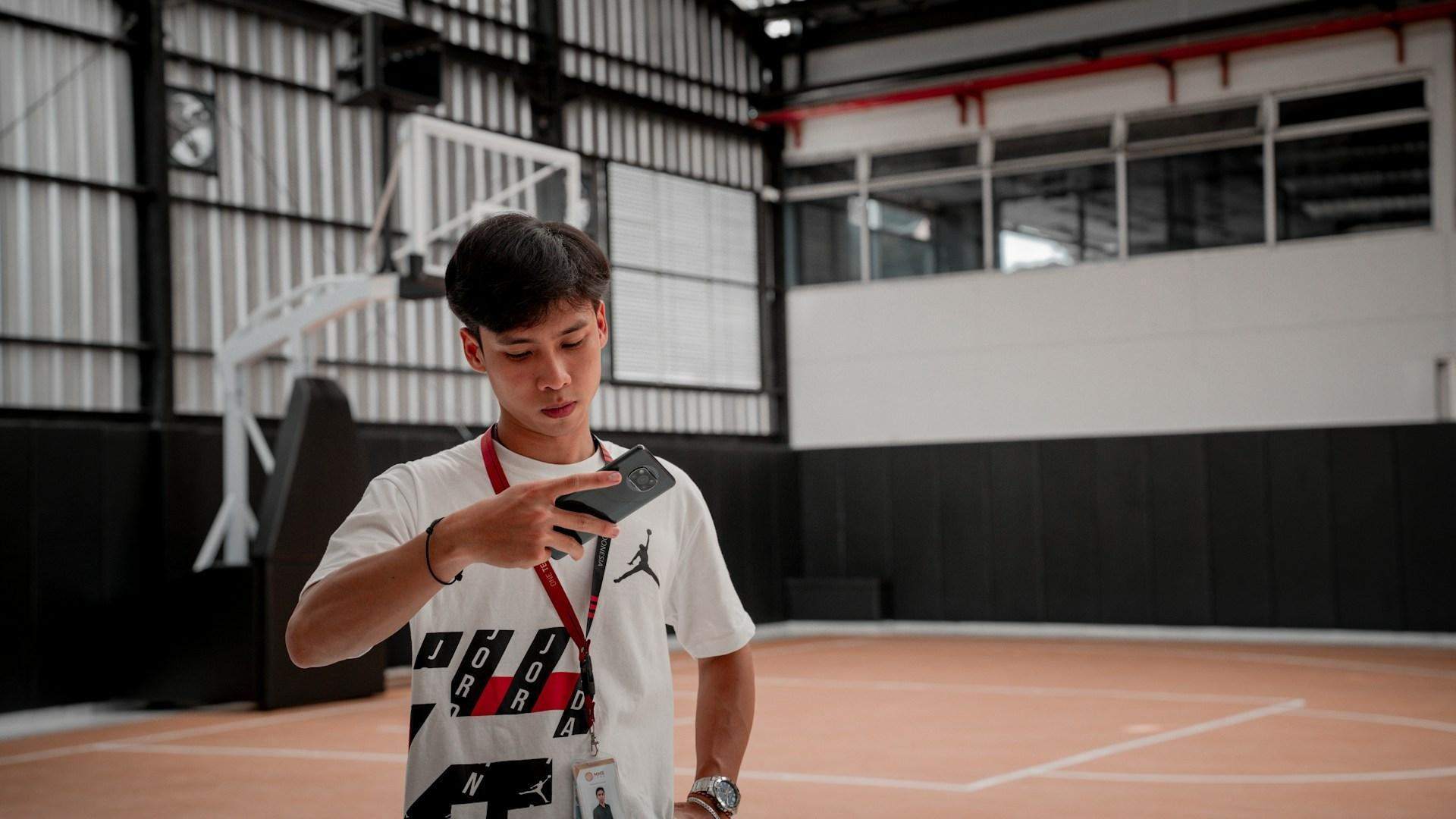
Photo by Fiqih Alfarish on Unsplash
The global AI-in-sports market was valued at approximately $10.6 billion in 2025 and is projected to grow at a compound annual growth rate of 21.6% from 2026 to 2033.
The integration of artificial intelligence into sports science and performance analysis is changing how teams evaluate athletes, monitor training, analyze movement, and support clinical and coaching decisions. AI acts as a shared reference point between a coach and a team, helping transform the enormous volume of biometric data and video segments into meaningful insights.
In this article, we explain each product’s main features, interface, compatibility with other programs, security measures, and overall value for coaches, sports scientists, and technology developers.
Key Takeaways:
- Injury-Risk Management and Training-Load Monitoring: Machine-learning-based algorithms analyze workout movements and sensor data to support training-load decisions based on their likelihood of injury.
- Optimized Recovery: With AI, the athlete’s physiological state can be tracked through heart rate variability (HRV) and movement during sleep. As a result, recovery and rest programs can be tailored to individual physiological responses, especially in high-level sports, where every second counts.
- Data-Powered Productivity: Sports professionals can make quick decisions based on insights thanks to the rapid processing and analysis provided by modern sports technology.
Best AI-Powered Tools for Sport Science: Quick Comparison
The platform that you select should reflect your area of focus. This can include biomechanical metrics, load tracking, or highly intensive data analysis for research purposes. To help you get started, here is a basic matrix showing how each AI tool in the market has its own competitive advantages.
| AI Tool | Best For | Key Applications | Pricing Model |
| Coachify AI | Basketball Coaching | Computer vision coaching, player development, form comparison, and training recommendations. | Subscription (Custom Team Tiers Available) |
| Sportsbox AI | Golf Biomechanics | 3D motion capture from 2D video, swing analysis, and technique optimization. | Tiered monthly subscriptions for coaches/players |
| Julius AI | Sports Data Analysis | Natural language data exploration, predictive analytics, automated charts, and reports. | Free basic plan; Premium starts at $20/month |
| SciSpace | Sports Science Research | AI literature reviews, complex paper summaries, PDF data extraction, and evidence synthesis. | Free tier; Premium research features from $20/month |
| Zone7 | Injury-Risk Management | Injury risk prediction, workload monitoring, and return-to-play data tracking. | Custom enterprise pricing for pro teams/leagues |
| Kitman Labs | Athlete Health Management | Holistic medical data management, performance optimization, automated workload adjustments. | Enterprise bespoke licensing |
| Ochy | Running Biomechanics | Markerless gait analysis, running technique optimization, and injury risk reduction via mobile video. | Free trial; individual and pro coach monthly plans |
| SkillCorner | Player Tracking | Broadcast video, computer vision, off-ball movement metrics, automated scouting insights. | Enterprise subscription for clubs and agencies |
| Hudl | Video Intelligence | Automated game breakdown, focus-point video capture, tactical insights, scouting workflows. | Custom annual packages based on team level |
| Opta AI | Match Prediction | Predictive modeling, expected goals (xG), advanced football metrics, and historical outcome analysis. | B2B enterprise data licensing |
To understand how deep data models are built for these types of platforms, see our comprehensive guide on AI in sport.
Best 10 AI Tools for Sports Science, Player Analytics & Coaches in 2026
Coachify: AI-Based Basketball Coaching & Game Analysis Platform
Coachify is an AI-powered basketball coaching platform that provides coaching teams with tools to analyze player movement patterns, compare player form with elite reference movements, and create coaching lessons from game footage. They teamed up with LITSLINK to develop their central computer vision engine, a scalable web platform, cloud infrastructure, and a real-time analytics workflow.
- Primary Use Cases: Automatic correction of shooting form, tracking player development, remote coaching through feedback loops, and tactical video analysis.
- Pros: High-precision markerless tracking; removes the need for costly sensor equipment; includes automated coach feedback templates.
- Cons: Fully optimized only for basketball; requires very clear and unobstructed video lines of sight.
- Integrations: Synergy Sports, Hudl, Apple Watch (for heart rate syncing), and major cloud storage providers (Google Drive, Dropbox).
- 2026 Updates & Pricing: Following a significant Q1 2026 update, Coachify released an enhanced Multi-Angle Sync that allows coaches to merge baseline and sideline videos into a single analytical view. Pricing: 14-day free trial; Team Starter plans at $79/month and enterprise custom pricing available for leagues and large academies.
Sportsbox: AI-Powered Golf Swing & Biomechanics Solution
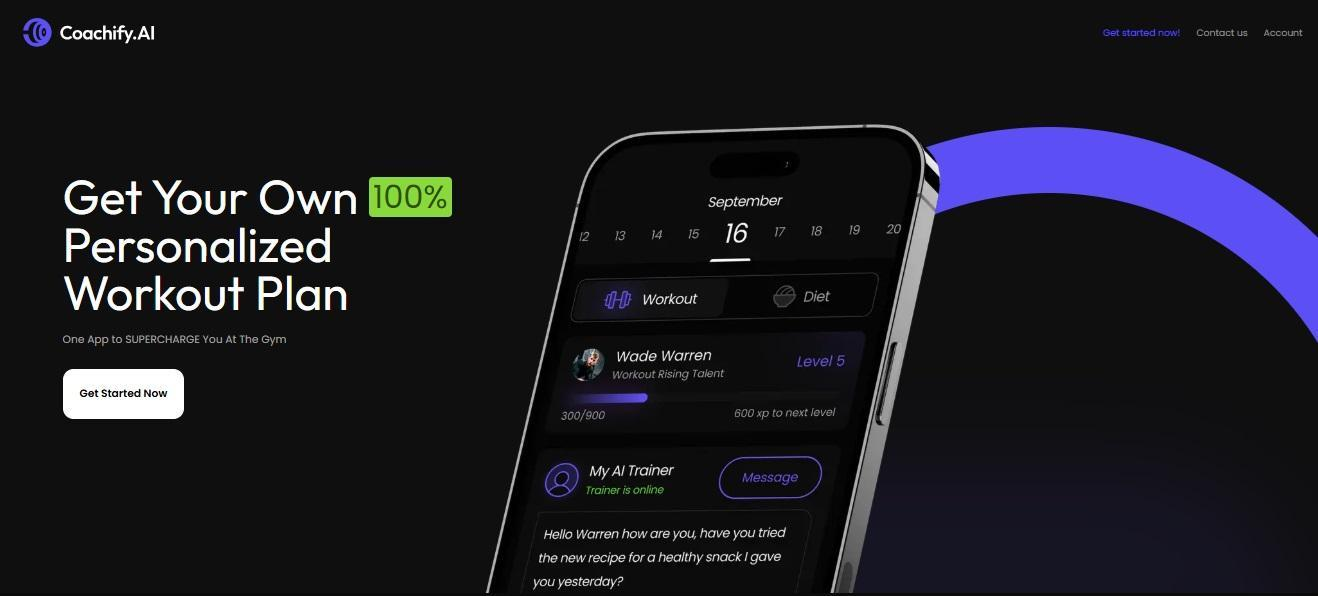
Sportsbox is a pioneer in sports technology, creating an AI golf swing analyzer for coaches and players who require lab-grade motion data without complicated body sensors or physical markers. LITSLINK collaborated on creating the advanced computer vision, 2D-to-3D pose estimation, cloud infrastructure, and mobile app backend that power the platform.
- Primary Use Cases: Extremely accurate golf swing biomechanics, markerless kinematic sequencing, remote golfer swing evaluations, and injury risk identification.
- Pros: 3D data of laboratory quality using a regular smartphone camera; interactive avatar representations.
- Cons: Very narrowly focused on golf; optimal deep joint analysis requires high-frame-rate video (slow-motion).
- Integrations: CoachNow, V1 Sports, TrackMan data exports, and typical iPadOS/iOS native video systems.
- Platform & Pricing Updates for 2026: In 2026, Sportsbox reoriented its focus on holistic rotational sport science, releasing beta modules for baseball batting analytics. Pricing: Free, basic version for standalone players limited in view counts; Pro Coach tiers are set at $110/month, allowing full 3D kinetic sequence tracking.
Julius AI: Athletic Performance Data Intelligence
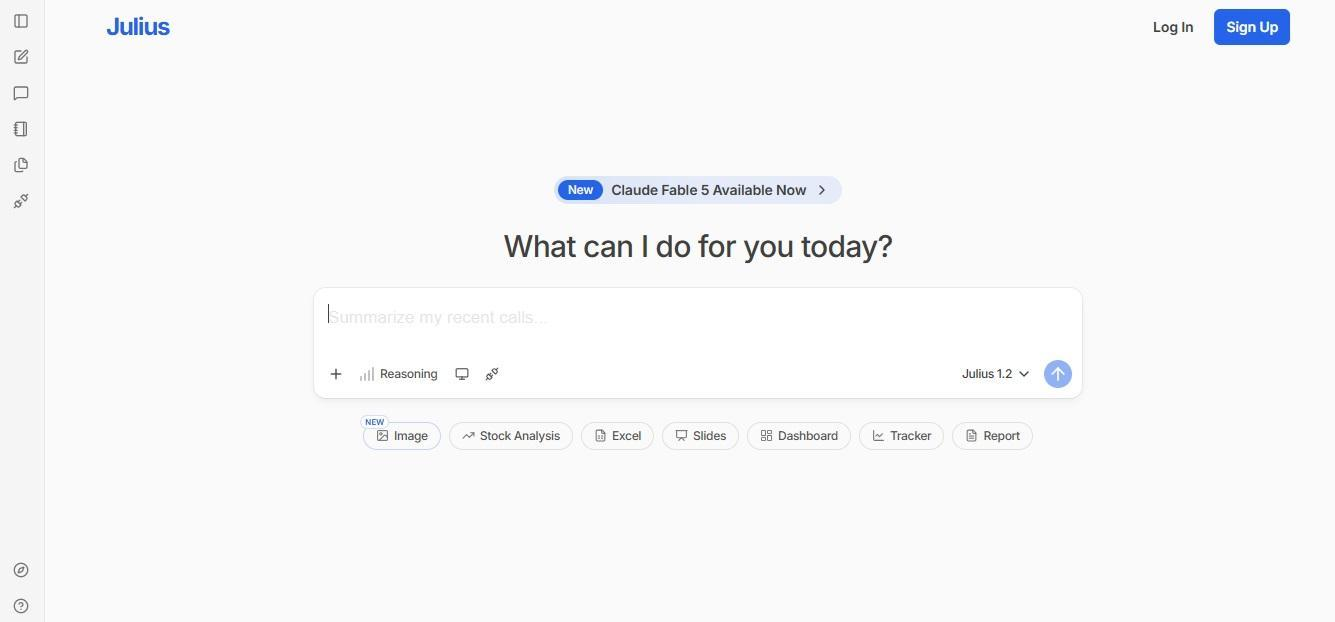
Julius AI has become a great helper for sports performance analysts and data analysts who work with large spreadsheets of performance data but don’t want to learn SQL or write Python scripts. If you have CSV files with thousands of rows of data, such as GPS tracking metrics, heart rate outputs, or training loads, you can give commands like: “Plot the relationship between high-speed running distance and next-day muscle soreness.” In a matter of minutes, the program will do everything itself: write the code, create an elegant data visualization, and identify the underlying statistical trends.
- Primary use cases: Quickly analyzing GPS and wearable data, creating automatic CSV/Excel reports, seasonal training loads trend tracking, and doing correlation analyses.
- Pros: Reduces the need for manual coding; recognizes almost all file formats for raw data; immediately generates presentation-ready charts.
- Cons: Struggles with dirty input data; it won’t fetch live hardware data on its own without you manually uploading the file.
- Integrations: Google Sheets, Microsoft Excel, PostgreSQL databases, CSV data exports from Catapult, STATSports, and Whoop.
- 2026 Platform Enhancements & Pricing: A recent 2026 feature release included a powerful “Predictive Analytics Kernel” that enables sports scientists to forecast training-stress outcomes through simulation. Cost: There is a free entry-level version (limited to 15 queries per month); a Premium plan costs $20/month; and the Pro plan costs $45/month.
SciSpace: Literature Reviews & PDF Documents
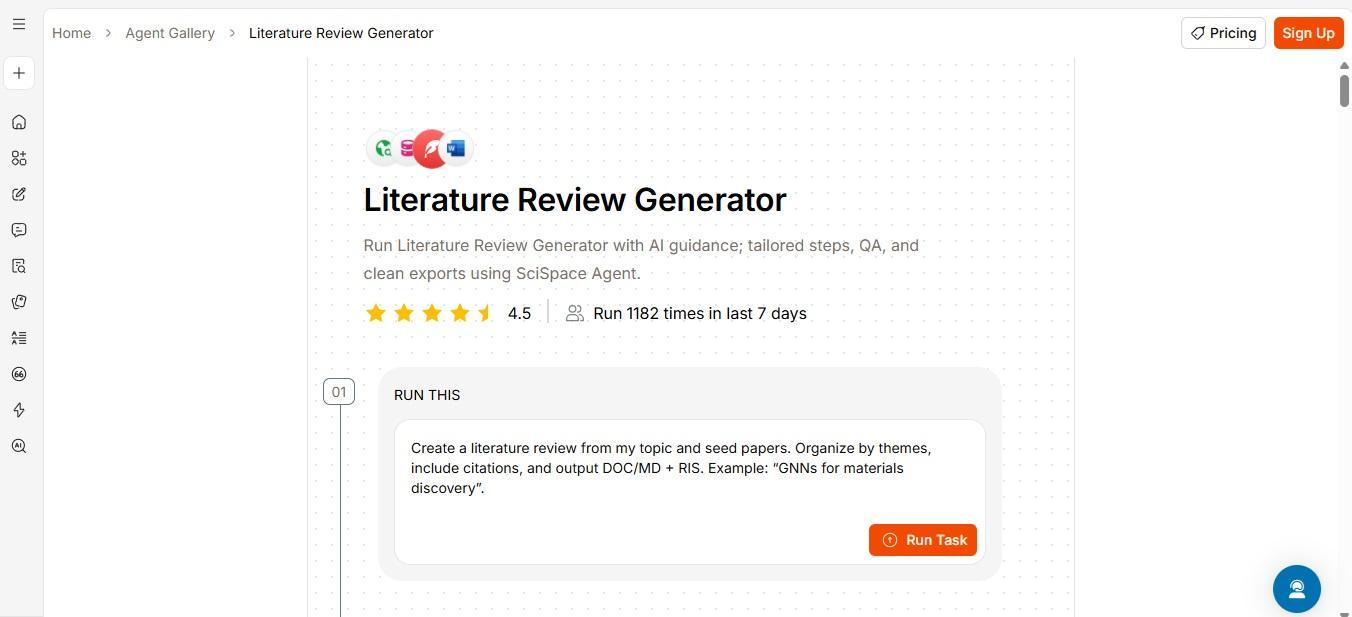
SciSpace is a highly efficient AI tool that enables sports performance analysts to conduct research quickly and support their methods with scientific evidence. It is regarded as one of the fastest research platforms, helping professionals instantly access millions of freely available scientific papers.
- Primary use cases: Speeding up academic literature reviews, automatic data extraction from clinical studies, meta-analysis synthesis, and citation organization.
- Pros: Removes the need for hours of intensive reading; offers interactive explanations for complicated biomedical jargon; excellent cross-paper matrix building.
- Cons: Only includes papers in its database or those uploaded by the user; slight risk of minor misinterpretation of context in very complex surgical texts.
- Integrations: Zotero, Mendeley, Google Scholar, as well as internal institutional library proxies.
- 2026 Platform Updates & Pricing: In 2026, SciSpace introduced “Copilot Pro for Teams,” a product designed for sports science departments and research institutes to annotate papers together. Pricing: Generous free tier; Researcher Premium subscription $20/month.
Zone7: Injury-Risk Management & Prediction
Zone7 uses sophisticated machine learning techniques to optimize the trade-off between cost and accuracy of injury forecasting in elite athletes. Instead of relying on simple threshold rules, its neural networks can analyze complex multi-variable relationships simultaneously, e.g., correlating current training spikes with sleep patterns, physiological responses, medical histories, match intensity, and daily biometric data to identify high-risk states.
This platform, trusted by Premier League, NBA, NFL, and MLS teams, equips coaches with timely alerts and high accuracy. By acting on these signals, the staff can change the training loads of individual players before minor micro-tears get aggravated into serious injuries.
- Primary Use Cases: Proactive Soft-Tissue Injury Risk Mitigation, Tactical Workload Forecasting, Supporting Individual Rehabilitation Pathways, and Validating Return-to-Play Timeline.
- Pros: Retrospective validation showing close to 75% sensitivity in forecasting injury risk; excellent flexibility for weighting models; capable of putting together complex siloed datasets.
- Cons: Requires a large, continuous supply of high-quality historical data; prohibitive in cost for amateur or youth teams.
- Integrations: Catapult, STATSports, Firstbeat, Kitman Labs, Kinduct, and major electronic medical record (EMR) software.
- 2026 Platform Updates & Pricing: Zone7 launched its “AI Biomechanical Deviation Scanner” for 2026, which pairs optical match data with the historical sensor records. Pricing: Enterprise B2B only, custom-quoted based on factors like the size of the organization, roster volume, and data complexity.
Kitman Labs: Athlete Health & Workload Management
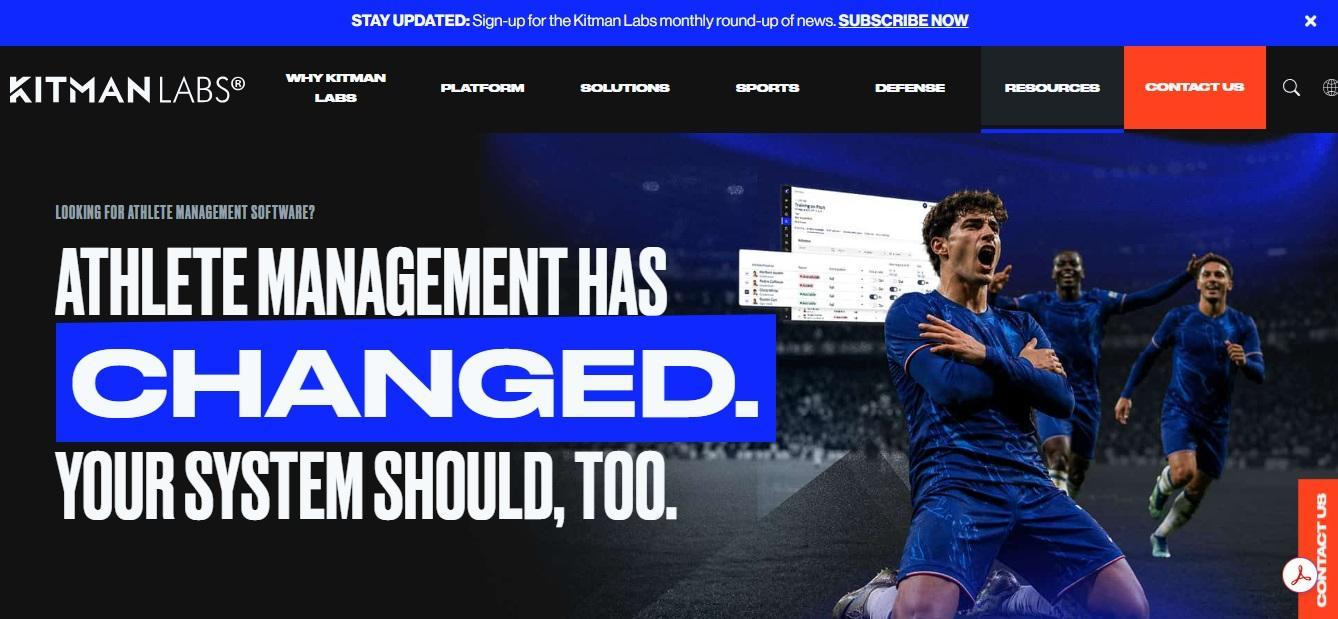
Kitman Labs has brought together a series of disconnected data streams, including medical records, physical performance data, and coaching notes, into one integrated ecosystem through its unified “Athlete Intelligence Platform.” Large-scale sports organizations such as Chelsea FC and Bayer Leverkusen, as well as several NFL and NBA teams, rely on it as their central operational platform.
It records an athlete’s development from the initial stages throughout their career. This enables the sports medicine department to collaborate smoothly with the strength and conditioning coaches. By using predictive analytics on clinical and training data, the software assists teams in developing objective return-to-play scenarios after a significant injury. Since it monitors a range of factors, from acute-versus-chronic workload ratios to daily subjective wellness surveys, it ensures that organizational decision-making is supported by data rather than just intuition.
- Primary use cases: Handling centralized electronic health and medical records, benchmarking organizational performance, reporting daily athlete readiness, and tracking youth academy progress over the long term.
- Pros: Centralized data across departments; compliance with security and regulatory requirements at the highest level; a very strong mobile app interface for athlete-related data entry.
- Cons: Very large system requiring dedicated operations staff to make full use of it; long initial team onboarding periods.
- Integrations: Works as an open API platform and is compatible with leading GPS wearables, Force Plates (Vald Performance), Smartabase, and top-level scouting systems.
- 2026 Platform Upgrades & Pricing: In 2026, Kitman Labs rolled out an integration that combines youth development metrics with senior team data, providing organizations with a single view across age levels. Pricing: Enterprise-level annual subscription models, scaling based on league or club-wide infrastructure.
Ochy: AI Running Biomechanics Analysis
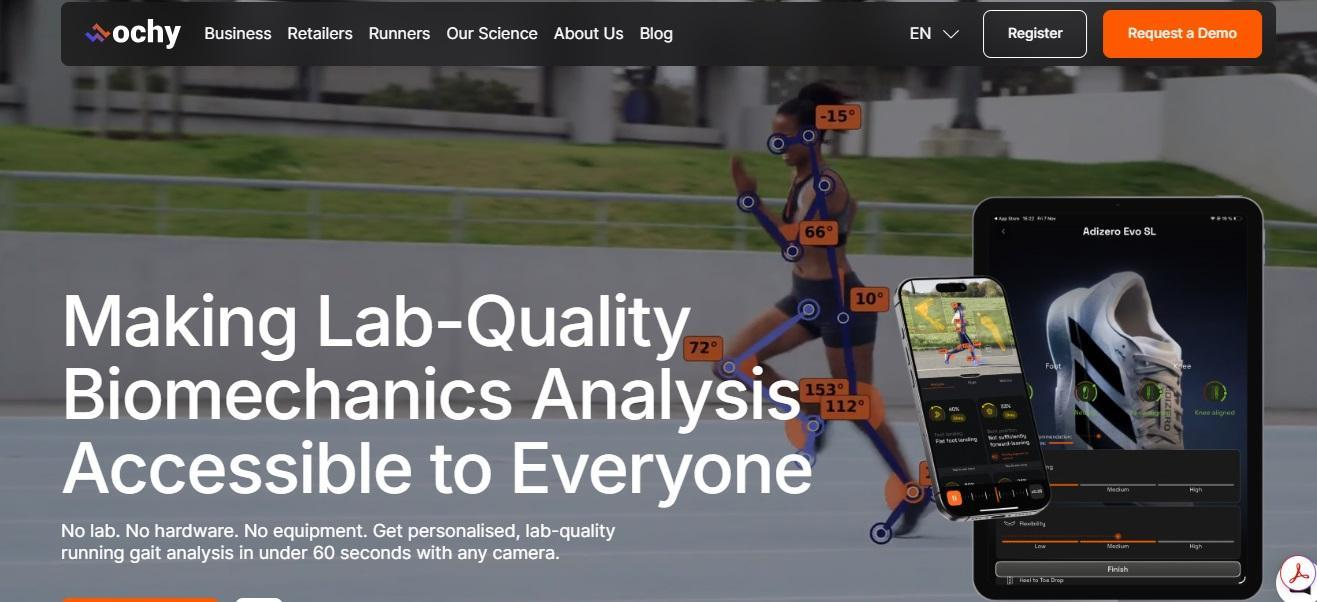
Ochy offers markerless video gait analysis to running coaches, physical therapists, and regular athletes. Ochy, using computer vision models via a regular smartphone camera, monitors a runner’s stride mechanics while they run on a treadmill or track.
The software produces a detailed analysis of foot strike style, vertical oscillation, torso lean, and joint angles at impact. It interprets this biomechanical data to detect structural imbalances and movement inefficiencies that may cause shin splints, runner’s knee, or stress fractures. By providing personalized exercise plans for each issue, it helps correct running form.
- Primary use cases: On-the-go running gait analysis, lower-limb injury-risk management screenings, stride-efficiency improvement coaching, and support for footwear-selection assessments.
- Pros: Feedback is provided instantly without laboratory equipment; it is quite budget-friendly for solo physiotherapy practices; visual feedback charts are simple to interpret.
- Cons: Requires optimal positioning of the smartphone camera; joint-tracking lines may be partially obscured if the person is wearing loose clothing or in heavy shadow.
- Integrations: Garmin Connect, Strava, Apple Health, and export options from a modern web browser.
- 2026 Updates & Pricing: Refreshed in 2026 with a powerful new “Footwear Adaptive Engine” that identifies shoe types based on the analysis of heel-to-toe striking pressure points. Basic: Able to run a few individual tests; Pro Coach plans begin at $35/month, supporting detailed group reporting and white-label client PDF exports.
SkillCorner: AI Player Tracking & Tactical Insights
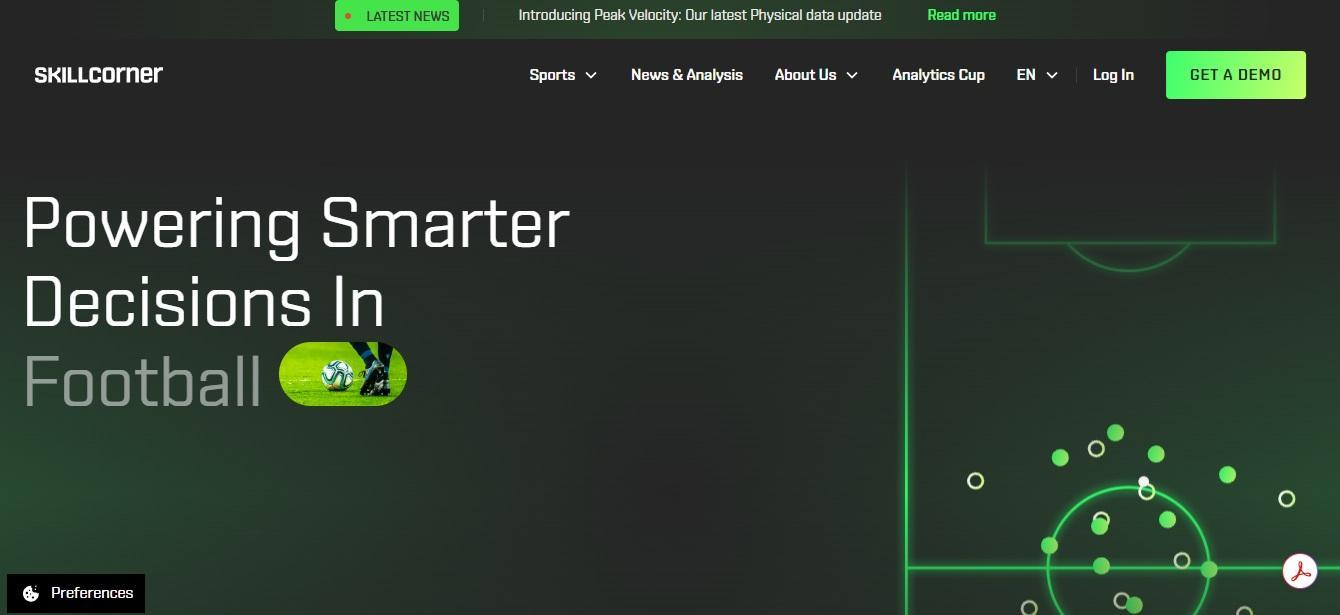
SkillCorner has reshaped scouting and match analysis by extracting physical tracking metrics directly from standard broadcast video feeds. To get data such as player sprint speeds, accelerations, and off-ball positioning, you used to need either extremely expensive stadium-mounted camera arrays or GPS vests worn by players.
Using AI computer vision, SkillCorner’s models detect and track the paths of all 22 players on a football pitch, even when players go off-screen or are obscured by others. It instantly converts pixel movements into accurate x-y coordinates. Now, scouting departments globally can quantitatively compare the physical characteristics of thousands of players across different leagues and pinpoint those with the high-intensity running capacity required by the highest-level tactical systems.
- Primary use cases: Scouting and recruiting players using data; revealing opponents’ physical profiles in context; collecting post-match physical metrics without vests; verifying tactical tracking.
- Pros: No athlete hardware; opens instant access to tracking data for rare international leagues; highly accurate off-ball motion metrics.
- Cons: Only works with broadcast or high-quality video recordings; cannot extract internal physiological indicators such as heart rate.
- Integrations: SkillCorner connects directly to today’s recruitment systems, club databases customized via API, and sports business suites of industry-standard software.
- Platform Expansions and Pricing 2026: In 2026, SkillCorner introduced major changes to its AI system, enabling it to track players’ skeletal orientation in addition to positional coordinates, thereby providing body-orientation metrics to scouting departments during player identification. Pricing: Licensing arrangements for leagues and teams on a B2B basis.
Hudl: Real-Time Video Intelligence for Teams
Hudl is one of the largest sports video-analysis platforms, combining AI, computer vision, and video intelligence. At present, Hudl covers more than 40 sports at professional, college, and youth levels.
With automatic cameras (like Hudl Focus), the system can record game action without a human operator and even upload the video automatically. The AI that comes with the system then segments the game footage into separate clips based on possession, player numbers, or tactical formations.
- Primary use cases: Automated team game recording, live play-by-play commentary generation, remote player video reviews, and cross-league scouting workflows.
- Pros: Established market presence; comprehensive hardware-to-software system; adaptable from youth to elite professional levels.
- Cons: More complex automated tagging systems are available only through subscription add-ons; video uploading speed depends heavily on the venue’s network.
- Integrations: Wyscout, Hudl Focus smart cameras, and leading sports video production tools.
- 2026 Platform Updates & Pricing: Hudl in 2026 confirmed its “Wyscout AI Integration Hub,” in which player tracking data is automatically generated from existing multi-angle tactical footage streams. Pricing: A multiple-tiered structure beginning from low-end youth club pricing (from $400 per year), reaching tailored elite professional packages costing thousands annually.

Opta AI: Predictive Match Modeling
By harnessing vast amounts of sports data spanning multiple decades, Opta AI creates predictive insights, enhanced metrics, and game predictions. Opta is widely known for bringing advanced football statistics such as Expected Goals (xG) and Expected Assists (xA) into the mainstream. By leveraging deep learning technologies, it quantifies the significance of each on-pitch action.
Opta AI is a rich data source for sports scientists and tactical analysts, as it clarifies how particular physical performances contribute to scoring opportunities. Teams equipped with predictive analytics engines can run virtual games, which are instrumental for coaches in identifying opponents’ weak spots and developing tactical game plans from historical data.
- Primary use cases: Elite-level match performance prediction modeling, sophisticated opponent tactical charting, real-time data feed delivery for sports media/betting, and intensive recruitment analytics.
- Pros: Decades-deep historical database; universally standardized situational benchmark metrics; very detailed recording for every minute on-pitch event.
- Cons: Very complex data feeds that will require expert engineers or data scientists to unpack; high price tiers.
- Integrations: Data feeds, analytics platforms, major TV broadcasting graphics systems, and APIs from advanced club infrastructure.
- Platform Features & Pricing Plans 2026: The 2026 version of Opta will enable live, on-the-fly recalculations of highly complex tactical chemistry metrics and track dynamic goal probability as passing chains are executed. Pricing: Enterprise and B2B licensing only; pricing is customized based on country, league coverage level, and endpoint usage.
General Artificial Intelligence Tools for Sports Science
Sports analytics platforms remain crucial in sports science, but general-purpose AI tools like ChatGPT and Google NotebookLM have also become valuable supplements to everyday work.
ChatGPT stands out for its skills in creative and communication-oriented tasks. Among other things, it can contribute to the generation of research guidelines, the creation of training templates, the explanation of very complex physiological concepts to athletes, and the development of training plans or research strategies through brainstorming sessions.
Google NotebookLM is essentially a safe research data store. In addition to peer-reviewed journals, PDFs, and athlete testing data, users can upload any other material. As it relies only on the provided verified materials, it can provide detailed summaries, respond to technical questions, and back up answers with source citations, thereby minimizing the risk of incorrect data.
But these platforms still cannot substitute human specialists. For one thing, Artificial Intelligence cannot account for all the factors that shape performance, including emotions, personal circumstances, and genetics. Because of this, these instruments should be considered adjuncts to professional judgment, with their output meticulously vetted by competent practitioners in athletic performance.
Develop Custom AI Tools for Sports Science With LITSLINK
Off-the-shelf products come with a set of features that are often incompatible with specific devices, legacy databases, or unique training methods. Custom development removes those limits, especially for new companies, sports organizations, and IT companies.
The workforce at LITSLINK, comprising over 300 experienced engineers, develops custom AI agents for sports science. Their software is compatible with the latest technologies, such as wearable devices, optical tracking, and existing performance assessment methods. The team has been honored to deliver complex computer vision and performance analysis solutions to clients such as Coachify and Sportsbox, turning complex spatial and movement data into usable technology.
All the services offered by LITSLINK encompass complete development alongside IP protection. Solutions may take the form of equipment for biomechanical analysis, methods for predicting injuries, and automated athlete management systems. Reach out to us for AI technologies that fit your needs.
AI tools can support sports-science and clinical workflows, but they should not independently diagnose injuries, prescribe rehabilitation, or determine return-to-play status. Medical decisions should remain under the supervision of qualified health professionals.
FAQs
What Is The Best AI Tool for Sports Scientists?
The best AI tool for sports scientists depends on your needs. Coachify is mainly a basketball performance analysis tool, while Sportsbox is a markerless 3D golf swing biomechanics tool. Julius AI makes data analysis easy, SciSpace makes research reviews easy, and Zone7 and Kitman Labs offer advanced injury-risk estimation and athlete health monitoring. For movement-specific work, Ochy analyzes running biomechanics; SkillCorner tracks player movement from broadcast video feeds; Hudl delivers AI-driven video intelligence; and Opta AI powers predictive match modeling.
How Do AI Tools Improve Sports Science Research?
AI tools help speed up research not only by automating tedious tasks like data processing and literature reviews, but also by handling large volumes of research data, extracting essential findings and performance trends, and identifying patterns that might be missed. In this way, researchers can focus more on experimental design and carrying out productive experiments.
Why Is Data Security Critical for AI Tools?
Athlete performance profiles are packed with sensitive biometric data, medical records, and confidential team strategies. Any leak or mishandling of this data can not only result in a breach of privacy laws but also negatively impact the athlete’s future career value. Choosing or designing an AI system should be done with the highest level of security that meets top international standards like GDPR, HIPAA, SOC 2, and ISO-compliant delivery. LITSLINK builds to these standards, protecting your custom AI models and sensitive performance data so teams can act on it with confidence.
What Ethical Considerations Should You Keep in Mind When Using AI in Sports Science?
The main ethical issues are data privacy, consent, and system bias. Athletes should clearly consent to their biometric and physical tracking data being analyzed by machine learning algorithms. Also, over-reliance on machines might take away the very important human aspect of coaching. AI continues to be used as a tool to help human experts be more effective, not as a “black box” that decides contracts and team changes all by itself without anyone monitoring it.
Will AI Replace Exercise Science?
No. AI is designed to help automate repetitive analytics work, handle large datasets, and identify statistical anomalies; it is not expected to replace human exercise science professionals. Elite athletic performance requires emotional intelligence, psychological coaching, clinical observation, and an understanding of human variables that sensors cannot measure. Implementing AI is like having a strong assistant who manages data processing, while human coaches and sports scientists dedicate their time to building meaningful relationships with their athletes