





DevOps Consulting Services for Scaling Software Teams

LITSLINK delivers DevOps consulting services that cut deployment time, eliminate configuration drift, and give your development and operations teams a CI/CD pipeline they can actually trust. We work with funded startups and scaling SaaS companies across the US and Europe.

  • CI/CD, infrastructure as code, and observability from one senior team
  • Vendor-agnostic: AWS, Azure, GCP, Kubernetes, Terraform, your CI of choice
  • SOC 2, HIPAA and GDPR-aware pipelines for regulated products
  • DevOps assessment with a 90-day roadmap in 2–3 weeks
  • US-based project management, EU engineering
DevOps Consulting Services for Scaling Software Teams

Our DevOps Consulting Services

DevOps consulting services help align development and operations to deliver software faster and more reliably. Here’s what that looks like in practice.

A structured audit of your delivery process: pipeline maturity, toolchain fit, cloud spend, security gaps. You get a prioritized 90-day roadmap with effort estimates in 2–3 weeks, not a 60-page deck nobody reads.

Key outcomes:

  1. Roadmap delivered within 15 business days.
  2. Bottlenecks ranked by business impact, not by what’s fun to fix.
  3. A build-vs-hire recommendation you can defend to your board.

Best for: Teams that feel the slowdown but can’t point to the cause, and founders running technical diligence before a raise or acquisition.

DevOps implementation services for the pipeline itself: automated build, test, and deploy with quality gates at every stage. Push to main, watch it ship. Rollback is one click, because it has to be.

Key outcomes:

  1. Deploys move from weekly to daily or better.
  2. Failed releases stop reaching users.
  3. Engineers stop babysitting deployments.

Best for: Development teams stuck with manual builds, flaky tests, or deployment processes that take hours.

Your environments defined in Terraform or Pulumi, versioned like application code. New environment in minutes, identical every time. No more “works on staging” mysteries.

Key outcomes:

  1. Environment provisioning drops from days to under an hour.
  2. Configuration drift disappears from your incident reports.
  3. Onboarding a new engineer stops requiring tribal knowledge.

Best for: Teams that manage infrastructure manually across multiple cloud environments, or those dealing with legacy infrastructure and environment drift.

Cloud DevOps services across AWS, Azure, and Google Cloud: architecture design, cloud migration, cost optimization, and internal developer platforms your team will actually use. Multi-cloud when it earns its complexity. Single cloud when it doesn’t.

Key outcomes:

  1. Cloud bills reviewed line by line, waste cut in the first sprint.
  2. Architecture that survives your next funding round.
  3. Developers self-serve infrastructure instead of filing tickets.

Best for: Companies scaling past their first architecture, or watching the cloud bill grow faster than revenue.

Kubernetes consulting services plus the honest question first: do you need Kubernetes at all? If yes, we set up Docker, Helm, and autoscaling properly. If no, we’ll tell you and save you a year of pain.

Key outcomes:

  1. Workloads move between environments without rewrites.
  2. Autoscaling matches traffic instead of guessing at it.
  3. Your cluster stops being one person’s dark art.

Best for: Teams migrating from monoliths, or those running containers without proper orchestration.

Prometheus, Grafana, Datadog, ELK, wired into alerts your team won’t mute. Site reliability engineering practices that shrink MTTR because incidents get found before customers find them.

Key outcomes:

  1. Mean time to recovery measured, then cut.
  2. Alert noise drops; only real problems page anyone.
  3. Postmortems point to data, not to memory.

Best for: Teams that learn about outages from customers, or whose on-call rotation drowns in alerts nobody trusts.

Security checks inside the pipeline, not bolted on after. Vulnerability scanning, secrets management, policy-as-code. Shift-left security that developers tolerate because it doesn’t slow them down.

Key outcomes:

  1. Vulnerabilities caught at commit time, not in production.
  2. Secrets leave your codebase for good.
  3. Audit prep shrinks from weeks to days.

Best for: SaaS companies preparing for SOC 2 certification, healthcare applications with HIPAA requirements, or any team handling PII under GDPR.

DevOps managed services for teams that want the whole function handled: 24/7 monitoring, incident response, continuous optimization. Senior engineers on call so yours can sleep.

Key outcomes:

  1. Round-the-clock coverage without three new hires.
  2. Infrastructure improves monthly instead of decaying.
  3. You budget one predictable retainer, not surprise overtime.

Best for: Teams with no in-house DevOps function, or those that just lost the one engineer who knew how everything ran.

AIOps puts machine learning to work on the telemetry your systems already produce: anomaly detection, alert correlation, predictive scaling, and automated root-cause hints. Less dashboard-staring, more problems caught before they page anyone.

Key outcomes:

  1. Correlated incidents surface as one signal, not forty separate alerts.
  2. Capacity and performance issues get flagged before users feel them.
  3. Root-cause analysis starts with a ranked hypothesis, not a blank terminal.

Best for: Teams whose observability stack produces more data than any human can triage, and on-call engineers losing hours to alert noise.

DevOps Consulting Pricing

Define measurable objectives before selecting a DevOps consulting company. Here’s how our pricing maps to different engagement scopes. Companies can achieve faster release cycles with DevOps, saving money. Cloud cost management consulting optimizes spending through automation.

1 · Assessment & Roadmap

$3k–$6k fixed

2–3 weeks

  • Maturity assessment, toolchain and cloud review, gap analysis, prioritized 90-day roadmap

Best for: Teams unsure where the bottlenecks are, or doing pre-funding diligence

2 · Implementation

$12k–$50k+ project

6–12 weeks

  • CI/CD pipelines, IaC, environments, containerization, observability, security baseline, knowledge transfer

Best for: Teams with a roadmap, ready to build pipelines, IaC, and cloud automation

3 · Managed DevOps

$6k–$18k/mo retainer

Ongoing, cancel with 30 days’ notice

  • 24/7 monitoring and incident response, on-call SRE, continuous optimization, embedded engineers

Best for: Teams that want senior DevOps run continuously without hiring in-house

Every project scopes differently, so treat the ranges as honest starting points. DevOps outsourcing through a dedicated team or staff augmentation is also on the table if you’d rather embed our engineers directly in yours.

Want a number for your actual scope?

Share your stack and team size, and a senior engineer replies with a scoped estimate within two business days.

Get a Custom Quote

How Our DevOps Consulting Works

Consulting engagements generally include assessments, roadmapping, and team training. Here’s how each phase breaks down.

We evaluate your current IT infrastructure, CI/CD maturity, toolchain, deployment frequency, and failure recovery patterns. We measure your team against DORA metrics (deployment frequency, lead time for changes, change failure rate, mean time to recovery) and interview your engineering leads to identify bottlenecks.

Consultants create a customized roadmap by auditing existing infrastructure and processes. Monitoring and logging provide insights into application performance, using logs and performance data to trace incidents back to root causes. You get a detailed report with prioritized recommendations, not a generic slide deck.

Timeline: 1–2 weeks for comprehensive analysis.

We evaluate your current IT infrastructure, CI/CD maturity, toolchain, deployment frequency, and failure recovery patterns. We measure your team against DORA metrics (deployment frequency, lead time for changes, change failure rate, mean time to recovery) and interview your engineering leads to identify bottlenecks.

Consultants create a customized roadmap by auditing existing infrastructure and processes. Monitoring and logging provide insights into application performance, using logs and performance data to trace incidents back to root causes. You get a detailed report with prioritized recommendations, not a generic slide deck.

Timeline: 1–2 weeks for comprehensive analysis.

The roadmap becomes a blueprint. We design the target infrastructure: environment layout, pipeline stages, and tooling choices, argued out with your engineering leads rather than handed down from a template. Every decision gets a written rationale, so six months from now nobody wonders why Terraform won over Pulumi.

Cloud architecture, network topology, and security controls are mapped before anything gets built. You review and sign off. Changes cost words at this stage, not sprints.

Timeline: 1–2 weeks, partly in parallel with the assessment.

We execute the roadmap. That means building pipelines, writing Terraform modules, configuring Kubernetes clusters, setting up monitoring tools, and integrating security scans. Everything is hands-on, paired with your DevOps engineers.

Cloud migration and containerization support more efficient software deployment. DevOps consulting fosters a culture of collaboration and shared responsibility across your development teams and operations teams. This cultural shift is where most consulting engagements either succeed or stall. We address it directly through pair programming, shared runbooks, and joint incident reviews.

Timeline: 4–12 weeks depending on scope. Knowledge transfer runs in parallel, not as an afterthought.

With the foundation live, we automate what humans still do by hand: testing gates, deployment approvals, rollback triggers, vulnerability scanning inside the pipeline. Secrets move out of the codebase and into a vault. Policy-as-code turns compliance requirements into checks that run on every commit.

The goal is a delivery process that behaves the same on a Friday afternoon as it does on a Tuesday morning.

Timeline: 2–4 weeks, overlapping with implementation.

After implementation, we set up monitoring tools to track metrics, analyze logs, and surface anomalies in real time. Monitoring and logging provide real-time application performance insights. We train your team on every tool, every pipeline, every alert threshold.

DevOps practices put observability first and leave architecture headroom for growth. You get complete documentation, recorded walkthroughs, and the option for managed DevOps services if you want ongoing support.

DevOps enhances user experience by enabling continuous updates. Automated CI/CD pipelines prevent interruptions in user experience. Scaling services efficiently minimizes operational disruptions.

Timeline: 2–4 weeks for optimization, training, and handoff.

If you want us to stay, managed DevOps covers 24/7 monitoring, incident response, and monthly optimization reviews on a rolling retainer. If you’d rather run it yourself, the handoff from Step 5 is built for exactly that: your team inherits a documented system with one former owner.

Timeline: rolling monthly retainer, cancel with 30 days’ notice

Why LITSLINK for DevOps Consulting

Most DevOps consulting companies hand you a report and disappear. We stay until your team owns every pipeline, every runbook, every monitoring dashboard. That’s the difference.

30–50% faster delivery times

through proven automation frameworks and CI/CD standardization. DevOps practices can reduce deployment times by up to 3x, and we consistently hit that benchmark.

Senior engineers only.

Every DevOps consultant on your project has 7+ years of hands-on infrastructure and pipeline experience.

US/EU time-zone overlap

for real-time collaboration. Your Slack messages don’t sit unanswered for 12 hours.

Full IP ownership and knowledge transfer.

We document everything, train your team, and walk away without vendor lock-in. You keep all code, configs, and runbooks.

DevSecOps built in.

DevOps consulting helps maintain GDPR, HIPAA, or SOC 2 compliance from day one. DevSecOps integrates security into the DevOps pipeline for continuous compliance.

Partner, not vendor.

Clients describe working with us as "a business partner rather than a service provider." We take that as the job description.

Our Reputation on Top Platforms

LITSLINK is recognized across leading industry platforms for DevOps and custom software work. See what clients say about working with us.

Clutch B2B Ratings & Reviews

4.8

78 reviews

Top Developer
GoodFirms Research & Reviews Platform

4.8

32 reviews

Top Company
Behance Creative Portfolio Platform

150+

design projects

View projects

DevOps case study

Start Your Project

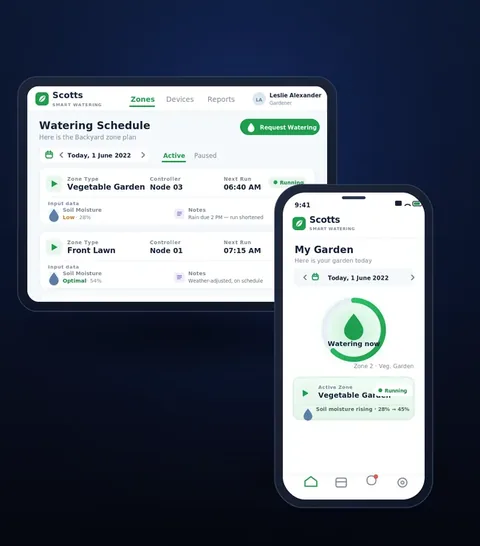
Shorter deployment cycles for Scotts Miracle-Gro's IoT platform

Client

Scotts Miracle-Gro, a leading American lawn and garden company whose smart irrigation system runs in US households nationwide.

Challenge

Scotts Miracle-Gro came to LITSLINK with two problems joined at the hip. Their irrigation product lets gardeners control watering systems from a mobile app connected to a physical controller, and the server-side software behind it needed to handle a growing fleet of smart pots and garden devices. At the same time, releases moved at enterprise speed: deployment cycles were long, and CI/CD and code lived in separate systems, which slowed every change.

Solution

We built a full IoT infrastructure for the garden device fleet and rebuilt the delivery pipeline around it. The team migrated the codebase from GitHub to GitLab so CI/CD and code sit in one place, wrote Terraform templates for all three environments, split each environment into its own project to cut the ops workload, optimized Kubernetes pod resources, separated Celery and frontend tasks into independent jobs, and configured custom SSL certificates for the ingress controllers. Security and testing processes got tightened along the way.

Result

The software deployment cycle got measurably shorter, and Scotts Miracle-Gro now deploys and scales with greater speed and less risk (litslink.com/case-studies/scottsmiraclegro). The irrigation platform gained third-party integrations, weather forecasts now inform watering decisions, and treating infrastructure, pipeline, and security as one system cut costs for the client significantly. Environment provisioning stopped being manual work; it’s a Terraform template.

Stack

GitLab CI/CDTerraformKubernetesCelerycustom SSL / ingress-controllers
Read the Full Case Study
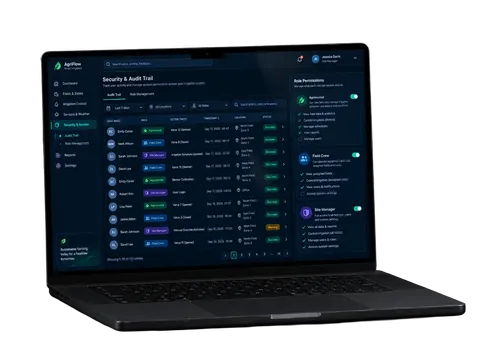
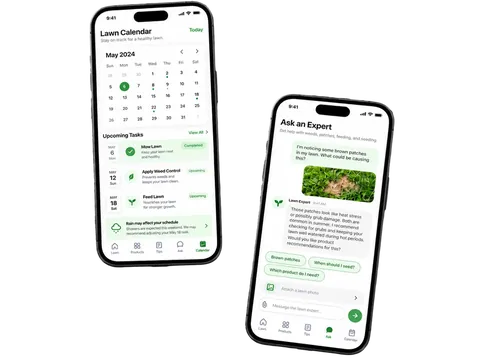
Scotts smart watering platform: a web dashboard listing garden zones with their controllers and next run times, beside the mobile app's garden view.

Industries we serve

Collaboration between development and operations improves efficiency and team cohesion across every vertical we work in. Our DevOps consultants bring domain-specific experience to:

Agriculture & AgTech

IoT device fleets for smart irrigation and sensors, telemetry pipelines, offline-tolerant deployments

Data-heavy products and analytics platforms

Data pipeline reliability, cloud migration, legacy modernization

IoT and connected products

Device fleet infrastructure, OTA update pipelines, telemetry ingestion at scale

E-learning and media platforms

Autoscaling for enrollment and launch spikes, video content delivery, uptime during peak usage

Tools & stack we work with

Vendor-agnostic on purpose. We build on the stack you already have and recommend a replacement only when the switching cost clearly pays for itself.

Jenkins, GitHub Actions, GitLab CI, ArgoCD (GitOps)

Terraform, Pulumi, Ansible, Helm

AWS, Azure, Google Cloud. AWS DevOps consulting and Azure DevOps consulting for platform-specific work: landing zones, cost governance, managed Kubernetes.

Docker, Kubernetes (EKS, AKS, GKE)

Prometheus, Grafana, Datadog, ELK, New Relic

Snyk, Trivy, Vault, policy-as-code with OPA

TECH STACK Your team keeps the tools they know, and the budget goes toward improvements you can measure.

Security & compliance built into delivery

A fast pipeline that ships vulnerabilities is just automated risk. So DevSecOps isn’t an add-on tier with us. Vulnerability scanning, secrets management, and access controls go into every pipeline we build, on every plan.

For regulated clients, the bar goes higher. Our DevSecOps services include SOC 2, HIPAA, GDPR, and PCI-DSS-aware delivery: audit trails by default, environment isolation, policy-as-code that turns compliance requirements into automated checks instead of quarterly panic. LITSLINK holds an "A" cybersecurity rating, and our FinTech and HealthTech clients lean on that when their own auditors come asking.

DevOps security isn’t a document you produce for the auditor. It’s how the pipeline behaves when nobody’s watching.

DevOps consulting FAQ

A typical engagement covers infrastructure assessment, CI/CD pipeline design and implementation, infrastructure as code setup, containerization, security integration, monitoring and logging configuration, documentation, and team training. DevOps consultants provide access to specialized expertise and best practices across the full software development lifecycle. The scope depends on your current maturity and business goals.

Our assessment tier runs $3k–$6k, implementation projects $12k–$50k+, and managed DevOps $6k–$18k per month. Scope drives the number; the pricing section above breaks down what each tier covers and who it fits.

Assessments take 2–3 weeks. Implementation ranges from 3–6 months for most SaaS teams. Full transformations involving cloud migration, monolith decomposition, or strict compliance frameworks can take 6–12 months. According to industry research, 57% of teams can deploy changes between environments within one hour after proper CI/CD implementation.

Do both, in that order reversed. Consulting gets senior capability now; we document everything and train your team, so when you do hire in-house, they inherit a working system. Several clients started with us and later built internal teams on top of what we shipped.

Yes, and we prefer it. We’re vendor-agnostic across Jenkins, GitHub Actions, GitLab, Terraform, Kubernetes, and the major clouds. Replacing tools is a last resort with a cost-benefit case attached, never the default recommendation.

Yes. Project-based (fixed scope and timeline), monthly retainer (ongoing optimization), staff augmentation (our DevOps engineers embedded in your team), and managed DevOps services (we run your infrastructure). Evaluate communication and collaboration practices when choosing the right DevOps consulting partner and model.

DevSecOps integrates security into the DevOps pipeline. We implement static/dynamic code analysis, dependency scanning, secrets management, and policy-as-code. For regulated industries, we configure pipelines to enforce SOC 2, HIPAA, or GDPR controls with full traceability. Continuous integration improves software quality and reduces release time while maintaining compliance gates. Continuous delivery ensures code changes are always production-ready and audit-compliant.

AWS, Azure, and Google Cloud. We also handle hybrid and multi-cloud configurations. Organizations using hybrid or multi-cloud strategies are 1.4–1.6× more likely to exceed performance targets, according to Google’s State of DevOps research. Our cloud services cover everything from initial cloud migration to ongoing cloud usage optimization and cost control.

Yes. Our managed DevOps services include continuous monitoring, incident response, pipeline maintenance, and periodic optimization reviews. Monitoring tools help track application performance and infrastructure health on an ongoing basis. We also provide complete documentation and recorded training, so your team can operate independently when ready. Assess expertise by reviewing case studies and client testimonials before committing to any long-term engagement.

Have a DevOps project in mind?

If you’re evaluating DevOps consulting services and want to discuss specifics about your infrastructure, constraints, and a realistic path forward, we’d like to hear from you. Our team reviews every inquiry and responds within 48 hours.

Next steps

1

A LITSLINK DevOps specialist reviews your request and contacts you to discuss the details;

2

If needed, we can sign an NDA before moving forward;

3

We send a project proposal with estimates, timeline, and team CVs included;

4

After rollout, we stay on for any support your infrastructure needs.

You can upload files. Maximum 3 files, 3 MB per file. Formats: doc, docx, pdf, ppt, pptx.

Drag & Drop Files Here or 0 of 3
    Litslink icon