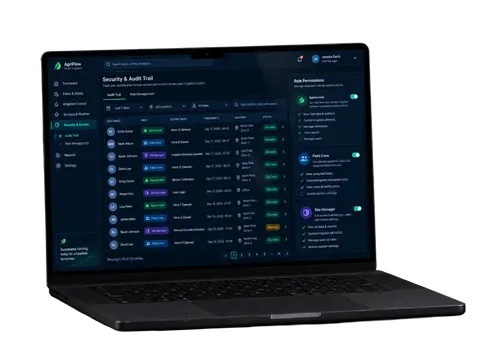
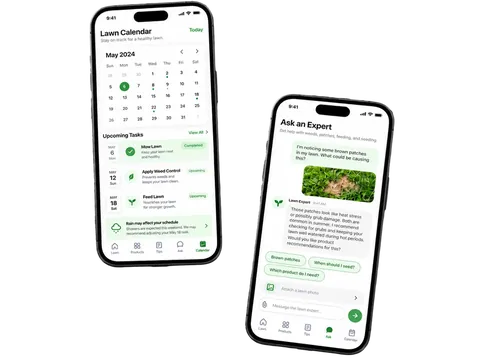
We are a travel software development company that builds booking engines, property management systems, and GDS integrations for OTAs, hotels, airlines, and tour operators across the US.
12+ years building software
500+ products delivered, including travel platforms
GDS integration depth across Amadeus, Sabre, Travelport, and NDC
Customized PMS, channel managers, and OTA platforms
AI-powered dynamic pricing, personalization, and trip planning
Why Travel Brands Choose LITSLINK as Their Travel Software Development Company
Plenty of agencies will quote you a booking engine. Fewer have argued with a Sabre response payload at 2 a.m. Here is what changes when your travel software development company already knows the terrain.
01
We know travel distribution
GDS, OTA connectivity, channel managers, and NDC are not line items we googled before the call. We build and integrate them. Your inventory stays in sync across every channel, so you stop overselling rooms you already sold.
02
Built for peak-season scale
Architecture and load testing tuned for holiday spikes and flash sales. When traffic triples, your booking engine stays fast, and checkout stays up. We test at peak volume before launch, not after the first outage.
03
Conversion-focused UX
Booking flows and apps designed to cut drop-off. Fewer steps from search to confirmed reservation, because every extra tap is a traveler you paid to acquire and then lost. As a travel software company, we measure flows by completed bookings, not screens shipped.
04
Production-ready AI
Dynamic pricing, personalization, and conversational trip planning that run on your live booking data and move revenue. Not a demo that impresses the board and never reaches production. Our AI travel bot case study shows how we built a conversational assistant that understands travel requests and retrieves real-time information from multiple sources.
Travel & Hospitality Challenges We Solve
Travel businesses lose money to slow systems, overselling, and tools that refuse to talk to each other. We build software against the bottlenecks operators feel every day. Pick the one that keeps you up at night.
Overbooking & inventory chaos
Manual or siloed inventory leads to oversells, walked guests, and refunded seats. We build real-time inventory and channel-management systems that keep availability synced across every OTA and your direct channel, so what’s sold is sold once.
Booking abandonment & low conversion
Clunky, multi-step flows lose travelers somewhere between search and pay. We design booking engines and apps that strip out steps and recover abandoned carts, so the people who came to buy actually finish.
Seasonal traffic spikes crash systems
Holiday rushes and flash sales break legacy platforms at the worst moment. We architect for elastic scale and load-test at peak volume, so performance holds the weekend your revenue depends on.
Fragmented, disconnected systems
PMS, CRM, payments, and channels that don’t share data create silent manual work and human error. We connect the stack into one flow your team isn’t constantly reconciling by hand.
Outdated legacy platforms
Aging systems are slow, expensive to change, and block every feature you want to ship. We modernize in stages with an API-first architecture you own, so you keep selling while we rebuild underneath you.
Generic, impersonal traveler experience
One offer for everyone leaves money on the table. We add AI personalization and dynamic pricing that tailor rates and offers to each traveler in real time, based on what they actually do.
Compliance and payment exposure
Card data, passports, and cross-border personal data are a liability the day before an audit, not after. We design payment and data flows around PCI DSS and GDPR from the first sprint, so compliance isn’t a launch-week scramble.
Travel & Hospitality Businesses We Serve
Different operators, different headaches. Our travel and tourism software development services flex to each.
Online Travel Agencies (OTAs)
Marketplace platforms, supplier aggregation, and dynamic packaging that scale bookings without scaling your headcount in lockstep.
Airlines & Aviation
Booking, ancillary sales, NDC distribution, and operations tools built for the complexity and volume airline systems actually run at.
Vacation Rentals & Short-Term Stays
Property and availability management, dynamic pricing, and multi-channel distribution for short-term rental operators juggling more listings than channels. Explore our rental property management software for tools that synchronize booking calendars and coordinate cleaning between guest stays.
Corporate Travel & TMCs
Corporate booking platforms with policy controls, approval workflows, expense and reporting integration, and duty-of-care features travel managers ask for by name.
Hotels & Hotel Chains
PMS, channel managers, and guest apps that lift direct bookings and cut OTA commission dependence, across one boutique property or a multi-brand portfolio.
Travel Agencies & Tour Operators
Itinerary builders, supplier management, and reservation systems for complex multi-day, multi-supplier, and group travel that spreadsheets stopped handling years ago.
Travel Startups
Custom travel software development for startups: MVP-first builds and pre-built modules that get a market-ready product live fast, on architecture that survives investor due diligence and keeps scaling after the round closes.
Travel Software Integrations We Deliver
A travel platform is only as good as the things it plugs into. We build and maintain the integrations that keep inventory, rates, and payments moving across the travel stack, then keep them alive when a partner changes their API on a Friday.
GDS & NDC
Amadeus, Sabre, and Travelport integration, plus NDC for modern airline content. Fare search, booking, and ticketing that behave consistently across all three.
OTA & Channel Connectivity
Two-way connections to Expedia, Booking.com, and other OTAs, with rate parity and real-time availability so the same room never sells twice.
Payment Gateways
Stripe, Adyen, and travel-specific processors with multi-currency, tokenization, and a PCI DSS-scoped architecture that keeps card data off your servers.
Property & Channel Managers
PMS, channel managers, and revenue-management tools wired into one synced inventory layer instead of five tabs and a prayer.
Maps, Reviews & Content
Geolocation and mapping, review platforms like TripAdvisor, and content and imagery providers, so listings look like something a traveler wants to book.
CRM, Identity & Loyalty
CRM, identity verification and KYC, and loyalty platforms tied into a single traveler profile that follows the guest across trips.
Security & Compliance in Travel Software
Travel platforms handle payments, passports, and personal data across borders. We build compliance into the architecture on day one, not the week before launch when it costs ten times as much to retrofit. Most vendors skip this section. We lead with it.
PCI DSS
Tokenized, scope-minimizing payment design, so raw card data never spreads across your platform in the first place.
GDPR & CCPA
Traveler data privacy, consent management, and data-subject rights handled for EU and US/California users, not bolted on as a cookie banner.
PSD2 / SCA
Strong customer authentication and 3-D Secure for European payment flows that clear instead of declining at checkout.
ADA / WCAG Accessibility
Accessible booking flows that meet WCAG, which lowers your legal risk and widens the market you can sell to.
SOC 2 Alignment
Development and infrastructure practices aligned with SOC 2 controls, so you pass enterprise procurement instead of stalling in it.
Data Residency & Cross-Border
Architecture that respects regional data-residency rules for a global traveler base, because “store it all in one region” stops working the moment you go international.
Travel & Hospitality Projects We’ve Delivered
Tour Guide App that Connects Travelers With Local Experts
AI Travel Bot
CRM for Travel Agents
React Native · Node.js · Geolocation
Tour Guide App that Connects Travelers With Local Experts
The Challenge
Frequent business travelers had no fast way to find a vetted guide, translator, or shopping assistant the moment they landed in a new city.
The Solution
We built two products that work as one. A web platform where tour guides, business consultants, shopping assistants, and translators list their services, and a cross-platform mobile app that shows travelers every available provider on a live geolocation map, with chat, audio, and video built in.
Result
MVP delivered on a tight timeline and moved into closed beta, ready to onboard providers and travelers at launch.
A US travel technology company was drowning in repetitive support queries that didn’t need a human, while keyword-based tools kept missing what travelers actually meant.
The Solution
We built a conversational AI travel bot on Google Dialogflow with a custom Named Entity Recognition model trained on real travel language, plus a classification layer that routes each query by intent and pulls live data from multiple travel sources.
Result
70%+ of incoming queries now resolve automatically within the first 3 months, average response time dropped under 3 seconds, and the bot handles 10+ languages across 5+ integrated data sources.
The client came to us with the idea of a marketplace for tourists and tour agents that would help: tourists and agents find each other; agents fill in data about potential clients, e.g. dates, locations, hosts, tourists’ preferences, etc; tourists choose and book the trips they prefer.
The Solution
We built a two-sided marketplace platform where agents can manage full client profiles — travel dates, locations, hosts, and individual preferences — while tourists browse, select, and book trips through a clean discovery interface. The platform includes a travel tracking calendar that gives agents a live view of active bookings: who is traveling, where, and when.
Result
As a result, we came up with the operating solution with real users that:
helps tourists and agents to get in touch with each other; allows agents to fill in data about trips, tourists, their preferences, potential clients, locations, dates and hosts; allows tourists to find, select and book trips;
provides a travel tracking calendar that displays dates, tourists’ names and the places they travel to.
Off-the-shelf travel platforms charge per booking, fence in your data, and bend your operation to fit their workflow. Custom software development for travel industry operators flips that math: the software matches your business, your distribution, and your growth plan, and the asset is yours.
Built around your operation
Packaged platforms force your rate rules, room types, fee logic, and supplier mix into their data model. The day your business does something their product team didn’t plan for (group rates, split payments, a regional bedbank, a non-standard cancellation policy), you either wait for their backlog or you can’t do it at all. A custom travel platform implements your flows exactly, so the software bends to how you sell.
No per-booking fees
Run the math on your own volume. A typical OTA commission of 15–20% on $10M in annual bookings is $1.5–2M a year. Every year, climbing as you grow. A one-time custom build plus predictable support often pays for itself before the second peak season, and everything after that stays in your margin instead of the vendor’s.
You own the data and roadmap
On a hosted platform, your booking and traveler data lives in their database, exports are usually gated or capped, and your analytics are whatever their dashboard decides to show. Own the stack and you own the raw data: feed it into your own reporting, your revenue models, your AI. No release-cycle waiting either. You decide what ships next, not a vendor prioritizing 4,000 other tenants.
Integrations on your terms
Most platforms either charge per connector or only talk to the partners inside their marketplace. Custom development connects any GDS, OTA, PMS, or payment provider you need, including the niche supplier API or regional OTA the big platforms ignore, plus your own NDC content for airline distribution. No per-connection toll, no “that integration is on our roadmap.”
Faster feature launches
On a shared platform, your feature request competes with every other customer’s on the vendor’s backlog, and most lose. When the code is yours, you set the order. A new market, a new currency, a new ancillary upsell, an experiment for the holiday rush: shipped in weeks, on your timeline.
AI built into your workflows
Off-the-shelf AI is usually a generic add-on sold separately and trained on data that isn’t yours. In a custom build, dynamic pricing, personalization, and a recommendation engine run on your live booking data, inside the flows your travelers already use, so the model improves the same numbers you report to the board.
Travel software development services cost depends on scope, integrations, and scale, and most projects fall into one of three tiers. Every engagement opens with a free scoping call and a fixed-scope discovery phase, so the number you get is a real estimate.
MVP / STARTUP
Travel startups validating a product. Our travel software development services for startups ship one core booking engine or app fast, with the integrations that prove the model.
$50,000 – $120,000
3 – 5 months
One core product (booking engine, PMS, or travel app)
Travel runs on demand signals, traveler preferences, and real-time pricing, which is exactly what AI is good at. Our travel AI software development services embed models where they move revenue, with the guardrails that keep them trustworthy: explainability, human oversight, and data privacy that hold up to a GDPR review.
AI Trip Planning & Itineraries
Conversational assistants that turn loose requests like “a week somewhere warm, not too pricey” into structured, bookable itineraries and answer traveler questions in plain language. It reads less like a search filter and more like talking to a knowledgeable travel agent. Our AI chatbot development services cover conversational design, natural-language processing, and integration with your existing travel systems.
Tech
LLM APIs
RAG
NLP
Dynamic Pricing & Revenue Management
We build demand-forecasting models that read historical patterns, real-time search volume, competitor rates, and seasonality, then feed a rules engine that adjusts prices automatically. Floor and ceiling rules plus a human override stay in your hands, so the system optimizes RevPAR and occupancy within bounds you control.
Tech
Python
forecasting models
rules engines
Personalization & Recommendations
A recommendation engine trained on booking history and on-site behavior ranks results and times upsells (a room upgrade, an airport transfer, insurance) to the moment a traveler is most likely to say yes. A feature store keeps those signals fresh across web and app, and we handle the cold-start case so first-time visitors still get useful suggestions.
Tech
recommendation models
feature stores
Fraud Detection
Travel is a favorite target for fraud: high ticket prices, instant fulfillment, and cross-border payments. We score bookings and payments in real time, combining anomaly detection with graph analytics that link related accounts, devices, and cards to expose patterns a single-transaction check would miss.
Tech
anomaly detection
graph analytics
How We Build Travel Software
Six steps, no surprises. Developing travel software well is mostly about catching the integration landmines early, so we front-load discovery and testing.
Step 11–2 weeks
Discovery & Strategy
Stakeholder interviews, market and competitor review, integration and scope mapping.
Deliverables
scope doc
budget and timeline
Step 22–3 weeks
UX & Conversion Design
Booking-flow mapping, prototyping, conversion work for web and mobile.
Deliverables
clickable prototype
validated flows
Step 32 weeks
Architecture & Integrations
System architecture, integration design for GDS, OTA, and payments, security design.
Deliverables
technical design doc
infrastructure-as-code setup
Step 43–8 months
Agile Development
Two-week sprints with live demos. Integration testing runs in parallel, not at the end. For travel platforms with a mobile component, our mobile application development services cover custom iOS, Android, and cross-platform apps.
Deliverables
working increments
sprint reports
Step 53–4 weeks
Testing & Load Optimization
QA, UAT, penetration testing, and load testing at peak-season volume.
Deliverables
test reports
performance and security audit
Step 62–4 weeks + ongoing
Launch & Support
Phased go-live, data migration, training, then ongoing SLA support and iteration.
Deliverables
runbooks
support plan
Tech Stack
Frontend
React
Next.js
TypeScript
React Native
Flutter
Backend
Node.js
.NET
Python
Java
Go
GDS & Integrations
Sabre
Amadeus
Travelport
NDC APIs
OTA/Channel Manager APIs
Payment Gateways
AI/ML
TensorFlow
PyTorch
OpenAI API
NLP
Recommendation Engines
Cloud
AWS
Azure
GCP
Infrastructure
Kafka
Kubernetes
Terraform
Docker
CI/CD Pipelines
Is Your Travel Software Project Ready to Build?
Run through this before the first call. The more boxes you can check, the faster we can scope.
Integrations
GDS (Travelport / Sabre / Amadeus)
OTA and channel managers
Payment gateways
Maps and content APIs
Scalability & Performance
Peak-season load handling
Cloud architecture
Caching
Uptime SLA
Payments & Security
PCI DSS compliance
Multi-currency
Fraud protection
Secure checkout
Booking & Inventory
Real-time availability
Overbooking prevention
Multi-channel sync
User Experience
Mobile-first booking flow
Minimal steps to book
Personalization
Accessibility
Data & Analytics
Booking analytics
Guest data
GDPR consent
Reporting dashboards
Get the full Travel Software Readiness Checklist as a PDF.
Travel founders and CTOs tend to repeat two things in reviews: we read as a partner, not an order-taker, and we don’t disappear when the integrations get ugly. The public scores back that up.
Frequently Asked Questions About Travel Software Development
01How much does travel software development cost?
It depends on features, integrations, and scope. MVPs start around $50K, full platforms run $120K–$300K, and enterprise builds go higher. You get a detailed estimate after a free consultation, not a guess.
02How long does travel and hospitality software development take?
An MVP runs 3–5 months, a full platform 6–10 months, and enterprise platforms 10+ months. We hand you a roadmap with real dates after discovery.
03Can you integrate with a GDS like Travelport, Sabre, or Amadeus?
Yes. We’ve integrated all three major GDS platforms for flights, hotels, and car rentals, plus NDC for modern airline content.
04Can you build a booking system for multi-destination itineraries?
Yes. Our booking engines handle complex, multi-destination, multi-vendor itineraries, including the nested and multi-day cases that trip up off-the-shelf tools.
05Can your software reduce overbooking and inventory issues?
Yes. Real-time inventory sync across every channel prevents double-bookings and overselling, so you stop walking guests you already confirmed.
06How do you handle scalability for seasonal fluctuations?
We build cloud-native architecture that scales automatically for peak travel seasons and load-test it at peak volume before launch.
07Do you build travel software for startups?
Yes. Custom travel software development for startups is a core engagement: fast, investor-ready MVPs with the key integrations built in from sprint one.
08Can you modernize our legacy travel software?
Yes. We assess what you have, migrate in phases, and roll out a modern cloud platform without taking your current system offline mid-rebuild.
09Do you handle PCI DSS, GDPR, and accessibility compliance?
Yes. PCI DSS payment scoping, GDPR and CCPA data privacy, PSD2/SCA for European payments, and WCAG accessibility are designed in from the start.
10Will we own the code and the data?
Yes. No vendor lock-in, no per-booking fees, full access to your codebase and your booking and traveler data.
Thank you! Your request has been sent — our team will get back to you within 48 hours.
Have a Travel or Hospitality Project in Mind?
Tell us what you’re building, and we’ll come back within 48 hours with a clear next step. As a travel and hospitality software development services partner, we’d rather scope it honestly now than oversell it.
Next steps
1
A LITSLINK specialist reviews your request and reaches out to discuss the details.
2
If needed, we can sign an NDA before moving forward.
3
We send a project proposal — estimates, timeline, and team CVs included.
4
After launch, we stay on for any updates your product needs.
12+ yearsGDS integration expertiseTrusted by US travel brands
FROM THE BLOG
Insights on Travel & Hospitality Software Development