



Skip to content

Computer Vision Software Development Services

We are a US-based engineering partner delivering custom computer vision solutions trained on client data and validated against real operating conditions. Our computer vision development services span the full project lifecycle, from initial dataset work through deployment and ongoing model monitoring.

  • 12+ years building custom software products
  • 150+ AI/ML and computer vision projects delivered
  • Production-ready models
  • Integration with the systems you already run: ERP, IoT, cloud
  • Ongoing model monitoring and retraining support after launch
Computer Vision Software Development Services
WHY US

Why Businesses Choose LITSLINK for Computer Vision Development

Plenty of vendors can train a model on a clean benchmark dataset. Fewer can make that model survive a dusty warehouse camera in December. LITSLINK is a computer vision software development company staffed by engineers who ship software first and publish demos second. That order matters. It means you get computer vision services and solutions built for your operating conditions rather than the conference stage. Teams also come to us when they want computer vision and software development handled by one partner instead of stitching together an ML shop and a separate dev agency.

We Speak Your Industry’s Visual Data

A defect on a denim roll looks nothing like a lesion on a CT scan, and a model trained for one will embarrass you on the other. Before writing code, we study how your footage is captured, lit, and occluded. Then we set accuracy targets in your terms: missed defects per shift, false alarms per camera per day, not abstract percentages.

Production-Ready Models, Not Just Demos

Acceptance criteria get written as measurable KPIs on your footage: IoU, precision, recall, latency per frame. If the model clears the benchmark set but fails your loading dock at dusk, it fails. Simple rule. It filters out a lot of impressive-looking work.

Full-Cycle: Data → Model → Deployment → Monitoring

One team owns the chain from data collection through machine learning services to deployment and drift detection. No handoff gap where the model becomes nobody’s problem. When accuracy sags six months in, the engineers who trained it are the ones who retrain it.

AI-Ready Engineering Team

Computer vision rarely lives alone. It feeds dashboards, triggers workflows, and increasingly talks to language models. Our broader artificial intelligence services practice means the same partner can build the model and the product around it, then grow into the AI development partner for computer vision your roadmap will eventually need.

SERVICES

Computer Vision Development Services We Provide

Nine services, one thread: every engagement ends with software your team actually uses. Our computer vision development services run from a two-week feasibility check to a multi-year platform build, and you can enter at any point.

Computer Vision Consulting & Feasibility Assessment

Our computer vision consulting services start with a blunt question: should this be a model at all? We score your use case on data readiness, achievable accuracy, and ROI to determine whether computer vision is the best option to address the business challenge, and sometimes the honest verdict is a barcode scanner. You get that verdict in two weeks, not after six months of billing, with expert consultation before any larger implementation begins.

Custom Computer Vision Development Services

When off-the-shelf APIs top out, we design the architecture around your hardest constraint, using computer vision technology built for your latency, lighting, or hardware budget. Tailored computer vision development means the model is shaped by your footage from day one. Some clients call it personalized computer vision development services. We call it starting from your data instead of an average template. For teams with unusual pipelines, we deliver custom computer vision software development services end to end, including the data work most vendors quietly outsource.

Bespoke Computer Vision Software Development

Some workflows have no template and often solve problems conventional software cannot handle. Bespoke computer vision software development covers those: multi-camera tracking across a site for object or asset location, custom computer vision software solutions that fuse visual data with sensor readings, or specialized computer vision software development for regulated environments where every inference needs an audit trail.

Computer Vision Web & Mobile App Development

Models are useless without a surface. Our computer vision application development services put inference where your users are: computer vision web development for browser-based dashboards, on-device mobile inference for field teams. As a computer vision app development company, we have shipped both, and we will tell you honestly which one your use case needs.

Computer Vision System Integration

Computer vision system software development that talks to what you already run. We connect models to ERP, existing camera networks, and IoT sensors through APIs and gateways, so the output lands in the workflow where a person acts on it, not in a standalone tool nobody opens, and successful implementation minimizes disruption to business operations.

Computer Vision Model Optimization

A model that needs a data center cannot live on a factory camera. We compress trained models through pruning, quantization, and ONNX conversion to optimize deployment, reducing memory usage and speeding up operations until models fit the hardware you have. Typical result: a fraction of the original footprint at near-identical accuracy, helping deliver the best performance on constrained devices.

Computer Vision Data Annotation & Labeling Services

Label quality caps model quality, full stop. Basic tasks may need 500 to 2,000 annotated images, intermediate use cases often need 5,000 to 10,000, and complex healthcare tasks can require around 20,000. Our computer vision data annotation services run on CVAT, Labelbox, and custom pipelines, with written annotation guidelines and QA sampling so two annotators stop disagreeing about what counts as a defect, and we also prepare data through cleansing, validation, and formatting before training.

AI Computer Vision Solutions for Your Industry

Generic detection models plateau fast on domain-specific footage. Our AI computer vision services fine-tune on your vertical’s visual patterns: retail shelves, fabric weaves, medical scans, which is where the last ten accuracy points hide.

Computer Vision MVP & PoC Development

De-risk before you commit. A PoC proves the model can hit target accuracy on your sample data. Budget tight? A no-code computer vision api development route, cloud vision APIs behind a thin integration layer, gets a working baseline live in weeks and tells you whether a custom build is worth it.

DELIVERABLES

What Our Computer Vision Solutions Can Do

The building blocks we combine into computer vision development solutions, per project:

  • Object Detection & Recognition — finds and tracks items, people, and vehicles across frames in real time
  • Image Classification — sorts visual content into your categories, from product SKUs to document types
  • Facial Recognition & Biometric Verification — identity matching with consent flows designed in, not patched on
  • OCR & Document Processing — turns invoices, IDs, and handwritten forms into structured, machine-readable data
  • Image & Video Segmentation — pixel-level instance segmentation for scenes where a bounding box is too crude
  • Anomaly & Defect Detection — catches deviations a tired human inspector misses at line speed
  • Video Analytics & Behavior Analysis — scene understanding across hours of footage, flagged down to the second
  • Pose Estimation & Motion Analysis — joint-level movement tracking, proven in our sports AI work below
  • 3D Vision & Spatial Analysis — depth and spatial mapping from standard cameras, no LiDAR required

AI TECHNOLOGIES

Where Computer Vision Meets Generative AI

The newest wave of AI computer vision development services pairs a vision model’s eyes with a language model’s mouth. We build hybrid CV + LLM systems on multimodal architecture, developed within our machine learning practice, that turn pixels into sentences your team can act on.

Multimodal Visual Search

Customers photograph a product; the system finds it in your catalog along with everything similar, helping you extract insights from product images as well as match catalog items. Text queries and image queries hit the same index.

Video Summarization & Q&A

Eight hours of surveillance or process footage becomes a searchable summary. Ask what happened at loading bay 3 and get an answer with timestamps.

Vision-Language Inspection Reports

The model spots the defect, and the language layer can generate a unique report a supervisor reads. Pair it with AI chatbot development and staff can query camera history in plain English.

INDUSTRIES

Industries We Build Computer Vision Solutions For

Different floors, same physics. As a computer vision development company, we get asked for these computer vision business solutions most often:

Computer vision retail solutions built around two jobs: visual search that lets shoppers find items by photo, and shelf monitoring that reads inventory straight from camera feeds instead of clipboard counts.

Manufacturing

Our computer vision solutions for manufacturing automate quality control on the line with automated visual inspection, spotting surface defects faster and more consistently than manual inspection. Industrial computer vision solutions of this kind already run live on a client’s factory floor. Details in the case studies below.

Medical imaging analysis that flags areas of interest in scans to assist diagnostics, built HIPAA-aware from the first architecture diagram.

Logistics & Supply Chain

Package and asset tracking through warehouses and delivery chains, so a lost pallet becomes a query, not an afternoon.

Agriculture

Crop and pest monitoring from drone or fixed-camera imagery that catches problems while they are still one field wide.

Driver and vehicle monitoring for ADAS-style safety checks: attention tracking, cabin monitoring, surface inspection at the app and cloud layer.

Security & Public Safety

Access control and surveillance analytics that flag unauthorized entry or anomalous behavior in real time, plus computer vision traffic solutions that read plates and detect violations from existing camera infrastructure.

Document and ID verification for onboarding, and fraud detection through visual analysis of submitted evidence, including OCR-based extraction from submitted documents to reduce manual review.

TECH STACK

Technologies & Engineering Standards We Use

A computer vision model is only as good as the engineering around it. We choose computer vision development tools for the constraint that actually bites your project: latency, lighting variance, or hardware budget, and we treat computer vision algorithm development as a benchmarked engineering discipline rather than an art project.

Languages

Python · C++ · R

CV Frameworks & Libraries

OpenCV · TensorFlow · PyTorch · Keras · Scikit-Image

Model Architectures

YOLO (object detection) · ResNet / EfficientNet (classification) · U-Net / Mask R-CNN (segmentation) · RetinaFace (face recognition) · CNN, GAN, and Transformer families where the task calls for them

Cloud & AI Vision Services

AWS Rekognition · Azure Cognitive Services · Google Cloud Vision AI

Data Annotation & Labeling

CVAT · Labelbox · custom annotation pipelines

MLOps & Deployment

Docker · Kubernetes · ONNX · CI/CD (GitHub Actions / GitLab CI) — giving teams clear vision on deployment estimates and ongoing model operations

Edge & Real-Time Processing

NVIDIA Jetson · edge deployment for on-premises and low-latency use cases


CASE STUDIES

Computer Vision Projects We’ve Delivered

Three projects from one computer vision software development company, three different vision problems, all running with real users.

Sports AIPose EstimationTensorFlowMobile

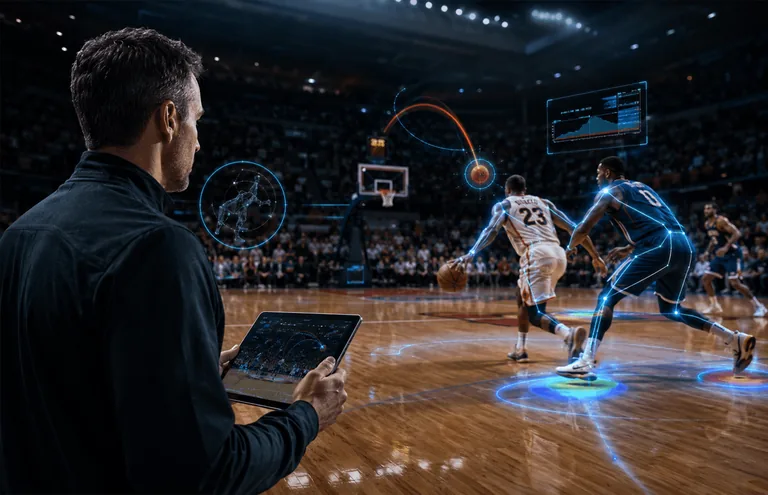
Virtual Basketball Coach: Real-Time Shooting Form Analysis

Challenge

Coaches at a basketball training brand were reviewing practice footage manually, so feedback reached players the next day, after the wrong muscle memory had already set.

Solution

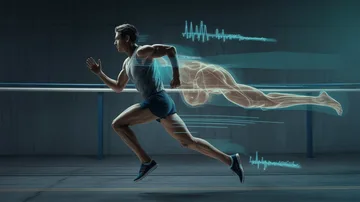
We trained a pose estimation pipeline on TensorFlow and OpenCV that reads shooting form frame by frame and flags incorrect elbow positioning, release timing, and follow-through. The engineering decision that mattered: optimizing the pipeline for real-time inference on GCP so analysis lands during the session, not in an overnight batch.

Result

  • Coaches review AI breakdowns with players in under two minutes per session
  • Manual video review replaced with automated real-time detection
  • Feedback moved from the next morning to mid-practice

Stack

TensorFlowPythonOpenCVGoogle Cloud
See full case study
Basketball Coaching App

SECURITY & COMPLIANCE

Security & Compliance in Computer Vision Development

Computer vision often touches the most sensitive visual data a business holds: faces, medical images, ID documents, surveillance footage. Compliance is built into our architecture, not bolted on after launch.

GDPR & Biometric Data Protection

Facial recognition counts as special category data under GDPR. We design consent flows and data minimization from day one, because retrofitting them costs more than the model did.

HIPAA Compliance

For medical imaging and patient-monitoring use cases, PHI handling shapes the pipeline: where footage is stored, who can query it, and what leaves the environment.

CCPA / BIPA Awareness

US state biometric laws, Illinois BIPA above all, carry real penalties for face and eye recognition products. We flag exposure during discovery, before your legal team finds out the hard way.

SOC 2 & ISO 27001-Aligned Practices

Development practices aligned with SOC 2 and ISO 27001 controls: access management, change tracking, incident procedures.

Data Anonymization & Encryption

Face blurring and identity stripping where the use case allows it, encryption at rest and in transit everywhere.

Role-Based Access & Audit Logging

Every inference and every human review leaves a trail, helping ensure each decision can be traced. In regulated environments, the audit log is part of the product.

PROCESS

How We Build Your Computer Vision Solution

Here is how our computer vision development services actually run, step by step, including the line competitors skip: what the process costs you in hours per week.

What happens: We audit the use case, data sources, and accuracy requirements, and answer whether computer vision beats a conventional approach for your problem.
Who runs it: Solution architect and ML lead.
You leave with: A feasibility verdict, a data readiness audit, target KPIs (IoU, precision, recall), and a cost band.
Your time: 2 to 3 hours per week for interviews and footage access.

01 Discovery & Feasibility Assessment

What happens: We audit the use case, data sources, and accuracy requirements, and answer whether computer vision beats a conventional approach for your problem.
Who runs it: Solution architect and ML lead.
You leave with: A feasibility verdict, a data readiness audit, target KPIs (IoU, precision, recall), and a cost band.
Your time: 2 to 3 hours per week for interviews and footage access.

02 Data Collection & Annotation

What happens: We set up collection pipelines, help prepare raw data before labeling, work from field photos when that’s how capture happens, label data in CVAT or Labelbox, and generate synthetic data where real examples are scarce.
Who runs it: Data engineers plus a supervised annotation team.
You leave with: A versioned, labeled dataset and written annotation guidelines your team can extend.
Your time: 1 to 2 hours per week, mostly a domain expert settling edge cases.

03 Model Development & Training

What happens: Architecture selection, training, fine-tuning, and human-in-the-loop review rounds on the hardest samples, using advanced techniques tuned to the use case.
Who runs it: ML engineers, with the architect checking benchmark progress.
You leave with: A trained model that clears the agreed KPIs, plus an evaluation report you can show your board.
Your time: 1 hour per week: a demo and a decision.

04 Integration & Deployment

What happens: The model gets wrapped in APIs, optimized through ONNX where needed, and deployed to cloud, on-premise, or edge hardware.
Who runs it: Backend and MLOps engineers.
You leave with: The model running in staging, connected to your actual systems.
Your time: Around 2 hours per week coordinating with your IT.

05 Testing & Validation

What happens: Validation against real-world conditions: lighting shifts, camera angles, load. Lab accuracy means nothing until it survives this.
Who runs it: QA together with the ML team.
You leave with: A validation report on your production footage and a go/no-go recommendation.
Your time: 1 to 2 hours per week reviewing results.

06 Monitoring & Continuous Optimization

What happens: Drift detection watches accuracy in production, retraining runs on a schedule or a trigger, with ongoing monitoring aimed at improving efficiency as production conditions change.
Who runs it: MLOps engineers on a support retainer.
You leave with: A monitoring dashboard and a retraining cadence, so the model in year two is better than at launch.
Your time: A 30-minute monthly review.

Technologies

Python OpenCV TensorFlow / PyTorch AWS / Azure / GCP Docker

What Clients Say About Partnering With LITSLINK

Before committing to a development partner, most clients want evidence beyond a portfolio. The verified reviews below describe how our teams performed across the full project cycle, from scoping to post-launch support.

Weighing whether your footage is enough to start? Talk to our team
CHECKLIST

Is Your Computer Vision Project Ready to Build?

Run through this checklist before you commit budget. Gaps found now cost a conversation. Gaps found in month four cost a rebuild.

Data & Feasibility

  • We have (or can collect) sample footage from the actual cameras and conditions the system will run on
  • Someone on our team can define what a positive detection looks like, unambiguously
  • We know roughly how many labeled examples exist today, even if the answer is zero

Accuracy & Performance Requirements

  • We can state the cost of a false positive versus a missed detection; they are rarely equal
  • Real-time versus batch processing is a decision, not an assumption
  • We have a number in mind that would make the system trustworthy to the people using it

Integration & Infrastructure

  • We know which existing systems (ERP, cameras, IoT) the output must reach
  • Cloud, on-premise, or edge deployment has an owner and an opinion
  • Our camera hardware is good enough for the accuracy we expect, worth checking before blaming the model

Team & Engagement Model

  • A domain expert can give the project 1 to 2 hours weekly during data work
  • We have decided between a dedicated vendor team and augmenting our own
  • Someone internally owns the system after launch

Budget & Timeline

  • Budget covers running costs after launch, not just the build
  • Timeline expectations survive contact with the data collection phase
  • A PoC-first path has been considered; it is usually the cheaper way to be wrong

Compliance & Post-Launch Monitoring

  • We know whether faces, medical images, or IDs will pass through the system
  • GDPR, HIPAA, or BIPA exposure has been named out loud, not buried in a terms-of-service checkbox
  • Model drift monitoring is in the plan; accuracy decays without it

COST & TIMELINES

How Much Does Computer Vision Development Cost?

Here is what computer vision development services cost:

CV PoC / Feasibility Prototype

One use case, your sample footage, a working model, feasibility verdict with an accuracy baseline

$10,000-$50,000

4-8 weeks

Enterprise-Scale CV Platform

Multi-site rollout, edge deployment, MLOps monitoring, compliance work, retraining pipeline

$250,000-$500,000+

6-12+ months

Where LITSLINK sits in that range: our model pairs US-based project management in Palo Alto and Orlando with a global engineering team, which is how a mid-tier build stays inside the market range above rather than at the top of it.

Not sure which tier fits your project?

Book a free 30-min scoping call

FAQ

Frequently Asked Questions About Computer Vision Development

01 What determines the cost of a computer vision project, and can you give me a range before we scope anything?

Yes: $10,000 to $50,000 for a PoC, $50,000 to $250,000 for most production systems, above that for enterprise platforms. The three levers that move your number are data readiness, accuracy requirements, and deployment environment. After a 30-minute call, we can usually narrow the band to something you can plan against.

02 Our dataset is small and messy. Does that rule out a custom model?

No. Small datasets are the normal starting point, not a disqualifier. Data augmentation and synthetic data generation stretch limited examples, and our computer vision data annotation services clean up what you have. For orientation, here is how much labeled data different jobs typically need: Task complexity Annotated images typically needed Narrow single-class detection (PoC level) 500-2,000 Multi-class production model 5,000-10,000 High-variance or safety-critical systems 20,000+ If you sit at the low end, custom computer vision solutions are still on the table. The pipeline just leans harder on augmentation and staged retraining.

03 Our accuracy looks fine in testing. How do you make sure it holds once the model hits real-world conditions?

We validate on footage from your actual environment before anything ships. Test-set accuracy and production accuracy are different animals: lighting shifts, camera grime, and seasonal changes all bite. Drift monitoring plus human-in-the-loop review of low-confidence detections keeps the gap visible and closing after launch.

04 We have not started collecting data at all. Where does a project like this even begin?

With a two-week feasibility assessment, which is exactly what our computer vision consulting services exist for. We map what data you can capture with the cameras you have, what needs new capture, and whether public or synthetic data can bridge the gap. Some clients discover they have been sitting on usable footage for years.

05 Can your models plug into our existing systems (ERP, cameras, IoT sensors) without a rebuild?

Yes, that is the default. Our computer vision system software development connects models to what you run through APIs and gateways, and existing IP cameras are usually sufficient as input. A rebuild only enters the conversation if the current hardware physically cannot capture what the model needs to see. With the right integration approach, rollout stays easy for internal teams and avoids workflow disruption.

06 What happens to accuracy and compliance once real, sensitive data is involved: faces, medical images, documents?

Both are designed together, because they constrain each other. Ai computer vision solutions that touch biometric or medical data get anonymization, consent flows, and role-based access wired into the pipeline, and we validate accuracy on the sensitive data inside your environment so nothing leaves it.

07 Do you only build for retail and manufacturing, or can this work for our specific industry?

It can work for yours. Retail and manufacturing are the loudest use cases, not the only ones, and our computer vision development services are industry-agnostic by design, with the same approaches extending to gaming experiences where vision is part of the product. Computer vision retail solutions and computer vision solutions for manufacturing share the same underlying stack as our sports, healthcare, and logistics work. What changes is the data and the accuracy trade-offs, which is what discovery is for, guided by teams with experience from various fields.

08 Can this run in real time, or only on pre-recorded footage?

Real-time is standard for us; both of the sports systems in the case studies above run live. For low-latency demands, we deploy on edge hardware like NVIDIA Jetson. For dashboards, computer vision web development streams results to the browser as they happen.

09 Who owns the trained model and the underlying code once the project wraps up?

You do. Every custom computer vision software development engagement transfers full IP ownership: model weights, training code, and dataset. We sign an NDA before seeing a single frame of your footage. No license fees, no lock-in clause hiding in appendix C. That ownership question is worth asking any computer vision development company before you sign, the answers vary more than you would expect.

10 What does support look like after launch? Does the model just sit there, or does it improve over time?

It improves, if you want it to. Post-launch support covers drift monitoring, scheduled retraining on new data, and quarterly accuracy reviews. Clients who skip this usually return within a year through our computer vision consulting services, asking why accuracy sagged. Models age. Plan for it.

Have a Computer Vision Project in Mind?

You will leave a 30-minute scoping call knowing whether your use case is feasible, what data it needs, and a realistic budget band. We reply within 2 business days.

Next steps

1

A LITSLINK specialist reviews your request and reaches out to discuss the details.

2

If needed, we can sign an NDA before moving forward.

3

We send a project proposal — estimates, timeline, and team CVs included.

4

After launch, we stay on for any updates your product needs.

Litslink icon