




Pharmacy Management Software Development

We develop pharmacy management software for retail counters, hospital pharmacies, and specialty or mail-order operators, and each of those runs on different rules, so we start by learning yours.

  • 1540+ products shipped since 2014
  • Full-cycle: web, mobile, cloud, and AI/ML engineering
  • HIPAA and HL7 requirements built into delivery
  • US-based project management, EU engineering
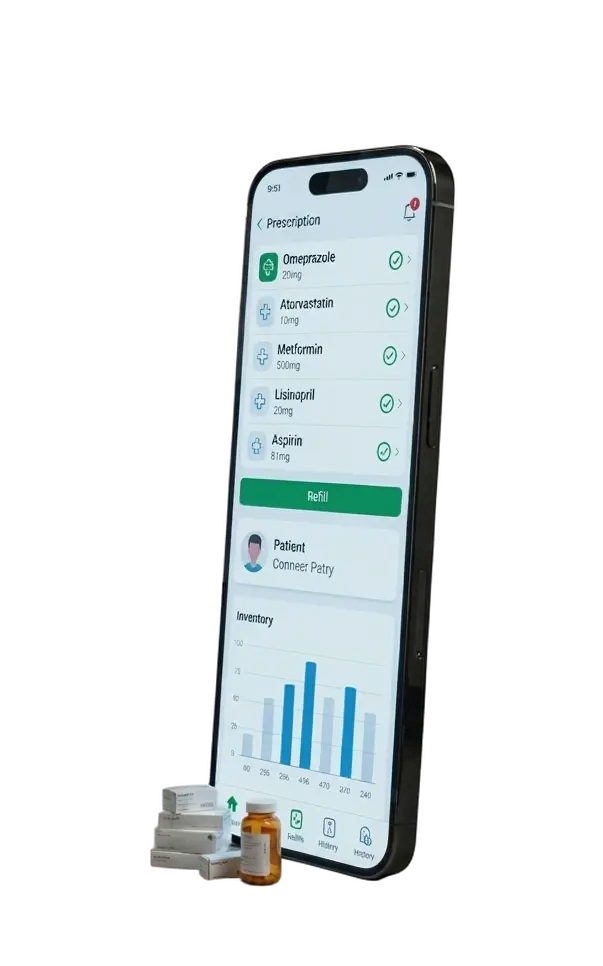
Illustration for LITSLINK pharmacy management software development services

Why Pharmacies Choose LITSLINK as a Pharmacy Management Software Development Company

We Speak Pharmacy Workflows: Inventory, Prescriptions, Billing

Dispensing has its own vocabulary. NDC numbers, days supply, DAW codes, partial fills, prior authorization loops that stall a patient at the counter for three days. Our discovery sessions start with a walkthrough of how your techs actually work, because mapping current technician behavior helps reduce manual errors and improve workflow efficiency, including the sticky notes on the monitor. Those sticky notes usually describe the feature you need most while also revealing stakeholder expectations surfaced during workflow walkthroughs.
Full-Cycle Web, Mobile, Cloud, and AI Engineering

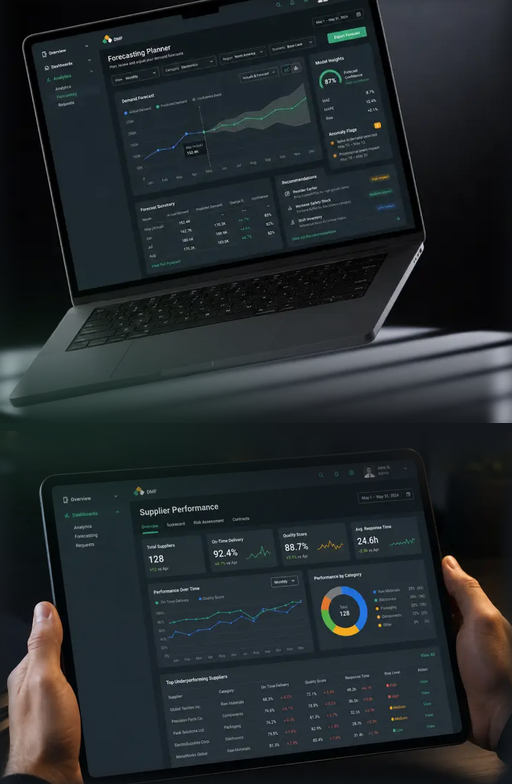
One team covers the patient app, the pharmacist console, the API layer, the cloud infrastructure, and the machine learning models behind demand forecasting. Fewer handoffs between vendors give pharmacies greater control over delivery, integrations, and future changes as operations grow.

Built With NCPDP, HIPAA, and HL7 Requirements in Mind

We design for these standards because they are not optional regulatory requirements and cannot be overlooked, and we integrate with providers who hold the formal certifications, such as Surescripts for e-prescribing and licensed drug-data vendors for interaction checking. LITSLINK has engineering process maturity, and we say so plainly in week one.

Agile Delivery From MVP to Enterprise Integration

Most pharmacy projects begin with one workflow that hurts. We ship that first, get it in front of real users, then widen scope. Clients on our AI and healthcare work report delivery running 30 to 50% faster than their previous vendor arrangements.

12+ years in custom software development
300+ engineers
4.8 on Clutch
30 to 50% faster delivery

Pharmacy Management Software Development Services We Provide

Before any pharmacy software development starts, we audit your business goals, current systems, and the team’s understanding of future reporting and compliance needs, then map that against where the business is heading, whether that means a second location, a mail-order line, or a payer contract with new reporting demands. The output is a written architecture recommendation with a build-versus-buy call on every module, including where technology solutions fit. Some of those recommendations tell clients to keep the platform they have.

Two audiences, two products. Patients get refill requests, delivery tracking, adherence reminders, and secure messaging on iOS and Android. Pharmacists get a console with a user-friendly interface built for speed, since user-centric design improves accessibility for patients and staff across mobile and web apps, and anything that adds a click to a fill gets abandoned by week two.

We connect your pharmacy management system software development work to the systems already running the business: hospital EHRs over HL7 or FHIR, retail POS terminals, healthcare CRM, telehealth platforms, and claims switches. Integration work gets scoped, tested, and monitored as its own workstream. It carries most of the project risk, so it deserves the attention.

We integrate pharmacy management software with suppliers, labs, insurers, EHRs via HL7 or FHIR, POS systems, healthcare CRMs, telehealth platforms, and claims switches. Each integration, including insurance claims and payment processing, is scoped, tested, and monitored separately to reduce project risk.

After launch, our support includes core maintenance activities such as uptime monitoring, dependency patching, performance checks, and standard updates like NCPDP SCRIPT version changes, and we keep a named engineer on your account. Support tiers run from business hours to 24/7. Pharmacies with a mail-order line usually want the second one.

For pharmacies with workflows that packaged platforms cannot support, we build custom solutions around specific needs such as compounding, 340B reporting, or specialty patient programs. Our custom pharmacy management software development also covers tailored security, permissions, and reporting while keeping standard functionality off-the-shelf to reduce complexity and recurring licensing costs.

Dispensing dashboards, patient portals, and back-office consoles each get their own design pass focused on the key elements of each interface, not just visuals. We test wireframes or prototypes against real prescription data volumes. Six tidy rows make every demo look fast, which is why demos are a poor test. Screens designed for a busy Monday hold up on a slow Tuesday.

Plenty of independent pharmacies run something that works fine and looks like 2009. Pharmacy software development on an aging codebase works best in stages, usually starting with a read-only API layer over the existing database so new interfaces can ship while the old system keeps dispensing. Full replacement comes later, once the data migration has been rehearsed twice.

Every release undergoes functional, performance, integration, and access-control testing. For pharmacy software, we also verify audit trails, role permissions, controlled-substance workflows, prescription accuracy, barcode validation, and automated interaction and allergy checks. Regression tests run on every merge, including scenarios involving security incidents and unauthorized access.

When the idea needs proof before the budget arrives, we scope a working slice: one workflow, real integrations, production-grade code. Eight to twelve weeks is typical. It gives your board something to click on.

Pharmacy Management Software Solutions We Build

1 01 / 10

Pharmacy Inventory Management

NDC-level tracking, expiration monitoring, lot and serial traceability, and reorder alerts tuned to your actual turn rate.

AI-Powered Pharmacy Management Software

AI earns its place in a pharmacy when it improves metrics teams already track. We build the engineering layer for that, while clinical data comes from licensed vendors. More on our approach on the AI services page: https://litslink.com/services/artificial-intelligence

Predictive Analytics for Medication Demand

  • Time-series and regression models use dispensing history, seasonality, and local prescribing patterns to reduce stockouts and expired inventory.

Automated Inventory Alerts

  • Reorder triggers adapt to usage patterns instead of relying on fixed thresholds, helping improve timing and stock decisions.

Medication Safety Checks

  • Automated cross-referencing against integrated drug-interaction databases from licensed providers such as First Databank, surfaced inside the pharmacist workflow.

Customer Behavior Insights

  • Segmentation and adherence analytics that show which patients drift after the second refill, early enough for outreach to matter.

Sitting on a platform that fights your workflow?

Send us the two screens your techs complain about most. We will tell you in a call whether that is a configuration problem or a build.

Types of Pharmacies We Build Software For

Retail and Community Pharmacies

High script volume, thin margins, and a counter where every extra second is visible. We build POS-integrated dispensing, loyalty, and refill apps that hold up during flu season.

Independent and Long-Term Care Pharmacies

Cycle fills, facility billing, and MAR integration with nursing homes. Independents get the most value from focused custom work layered over an affordable base platform.

Hospital Pharmacies

Inpatient dispensing tied to the HIS and HIE through HL7 and FHIR, with formulary management, unit-dose tracking, and controlled-substance reconciliation to help hospital systems meet internal policy and external regulatory requirements across dispensing and formulary workflows.

Specialty Pharmacies

Limited-distribution drugs, prior authorization workflows, patient enrollment, and the payer reporting that specialty contracts demand. Data capture requirements here run deeper than retail.

Compounding Pharmacies

Formulation management, batch records, beyond-use dating, and USP 795 and 797 documentation. Off-the-shelf platforms tend to stop short here, which is why compounders come to us.

Mail-Order and Delivery Pharmacies

Order management, carrier integration, route optimization, and cold-chain monitoring. Pharmacy delivery management software development is its own discipline once volume passes a few hundred packages a day.

Telepharmacy Providers

Remote verification, video consultation, and multi-site licensing controls, built so telepharmacy workflows can adapt across states when remote supervision rules differ, with one area needing special handling: state-by-state licensing and supervision rules.

Pharmacy Software Integrations We Support

E-prescribing runs through certified network partners, with integrations allowing seamless communication between pharmacy systems and outside partners.

EHR and EMR Interoperability

HL7 v2, FHIR APIs, and CCDA document exchange linking patient records to the pharmacy platform.

Interactive Voice Response (IVR)

Automated refill requests and prescription status by phone, which still carries a large share of patient contact at community pharmacies.

Healthcare CRM Integration

Centralized patient communication, campaign tracking, and follow-up scheduling tied to fill history.

Telehealth Integration

Remote consultation inside the pharmacy platform, with prescription handoff back into the dispensing queue.

Delivery and Shipping Integration

Carrier APIs, route optimization, and proof-of-delivery capture for mail-order and courier fulfillment.

POS Integration

Synchronized transactions, inventory decrements, and payment handling with payment processing across registers and locations.

Technologies We Use

Pharmacy management systems get judged on two things: how fast the fill screen responds at 4 pm, and whether the audit trail holds. Our stack choices follow from those:

React · Vue.js · Angular · TypeScript

Node.js · Python · .NET · Java

Flutter · React Native · Swift · Kotlin

Python · TensorFlow · scikit-learn

AWS · Azure · Google Cloud · Docker · Kubernetes · CI/CD

PostgreSQL · MongoDB · MySQL

HL7 · FHIR API · EDI · NCPDP SCRIPT

Architecture built for growth and adaptability as requirements change Secure by design · Agile delivery · NDA and IP ownership guaranteed

Custom vs Off-the-Shelf Pharmacy Software

Most of our clients end up running both. A packaged system handles routine dispensing while custom pharmacy management software solutions cover the workflow that actually differentiates the business. That answer costs less than either extreme.

Dimension Custom pharmacy management software Packaged platform (PioneerRx, BestRx, QS/1)
Time to running 3 to 12 months 4 to 8 weeks
Cost shape Build once, then hosting and support Monthly per-seat fee, forever
Workflow fit Software adapts to your process Your process adapts to the software
Integrations Whatever you can get an API for What the vendor supports
Ownership You own code, data, and roadmap Vendor owns the roadmap
Best for Compounding, specialty, 340B, mail-order, multi-state operations Standard retail dispensing, one or two locations

Related Projects We’ve Delivered

Clinical WorkflowHealthcareMedication TrackingFlutter

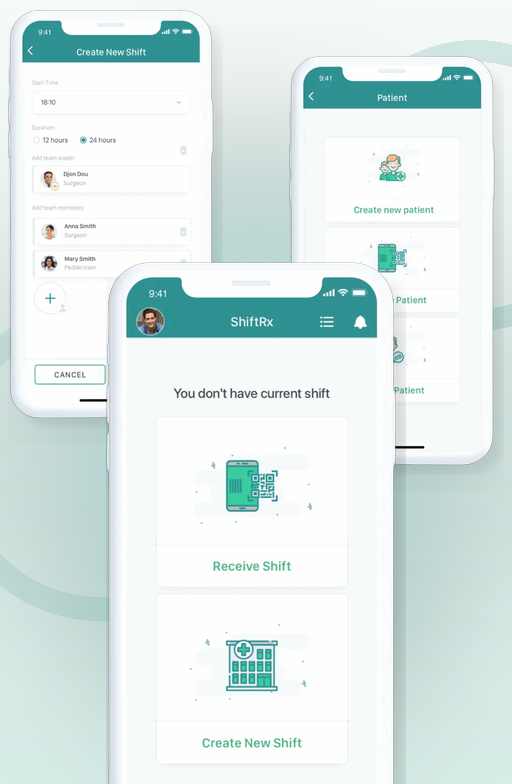
Medical Shift App With Drug Administration Tracking

Challenge

Hospital physician teams needed accurate drug administration records across shift changes, plus a way to register and flag patients for clinical risk, replacing rushed verbal handoffs and scattered notes.

Solution

LITSLINK built a cross-platform medical shift app in Flutter, delivered as an 8-week MVP. Physicians manage drug administration tracking alongside patient registration, risk flagging, and structured end-of-shift handoffs, so the incoming team opens the app to a full picture of every patient’s medication and care status.

Result

  • 8 weeks from kickoff to MVP in clinicians' hands
  • 99.6% crash-free session rate
  • 12 clinics onboarded at launch

Stack

Flutter · Scrum delivery

See full case study
ShiftRx medical shift app screens for creating a new shift, managing patients and receiving a shift

How We Build Your Pharmacy Management Software

We map workflows, data flows, and applicable requirements before development, including HIPAA, DEA/EPCS, NCPDP, and state regulations. The result is a compliance-ready requirements document covering retention, reporting, audit, and controlled-substance rules.

We map workflows, data flows, and applicable requirements before development, including HIPAA, DEA/EPCS, NCPDP, and state regulations. The result is a compliance-ready requirements document covering retention, reporting, audit, and controlled-substance rules.

Data model, API contracts, hosting decision, and an architecture plan covering the core functionalities required by each user group and integration point, with a fallback for each external system. Cloud or on-premises gets decided here, on your terms.

Two-week sprints, demo at the end of each. We build the highest-pain workflow first and put it in front of real pharmacy staff early, because feedback from a technician at the counter beats feedback from a spec review.

Functional and performance testing, integration testing against every connected system, security testing to help prevent data leaks, plus audit-trail verification and the role-permission checks specific to pharmacy operations. Load testing runs against your peak-hour script volume, with headroom, and test scenarios verify the system can stay compliant during routine use and exception handling.

Staged rollout, usually one location or one workflow at a time, with the legacy system live in parallel until the data reconciles. Migration gets rehearsed on a full copy of production data first.

Monitoring, patching, standards updates, and a quarterly review of what the analytics say people actually use, so the platform can continue to improve patient care as usage patterns change. Features nobody opens get retired.

Technologies

React / Flutter · Node.js / Python · AWS / Azure · PostgreSQL · HL7 and FHIR

Our Reputation on Top Platforms

Clients rate our healthcare and AI engineering work publicly, and the reviews name the projects. Read them before the sales call.

Clutch B2B Ratings & Reviews

4.8

78 reviews

Top Developer
GoodFirms Research & Reviews Platform

4.8

32 reviews

Top Company
Behance Creative Portfolio Platform

150+

design projects

View projects

Is Your Pharmacy Software Project Ready to Build?

Run this before you request quotes. Gaps here are what push pharmacy projects past their timeline.

Compliance and Data Readiness

  • You know which patient data the system will store and where it will live
  • Someone owns HIPAA sign-off on the architecture
  • Controlled-substance handling requirements are written down, per state
  • You have a current copy of your data, and someone has opened it recently

Integration and System Boundaries

  • Every external system is listed, with an owner and a contact
  • You know which vendors give you API access and which charge for it
  • Your e-prescribing path is decided (network partner, or existing platform)
  • Somebody has confirmed the POS vendor will talk to you

Custom vs Off-the-Shelf Fit

  • You can name the workflow that packaged software handles badly
  • That workflow connects to revenue, and you can say how
  • The rest of the operation could run on a standard platform

Team and Engagement Model

  • A pharmacist or lead technician can give the project four hours a week
  • Somebody internal can approve scope decisions inside two days
  • You know whether you want a dedicated team or a fixed-scope build

Budget and Timeline

  • You have a range, even a wide one
  • A launch date exists, and a real business event sits behind it
  • Post-launch support is in the budget, buried in nobody’s terms-of-service checkbox

Download the full guide with expanded recommendations for each item

Get The PDF →

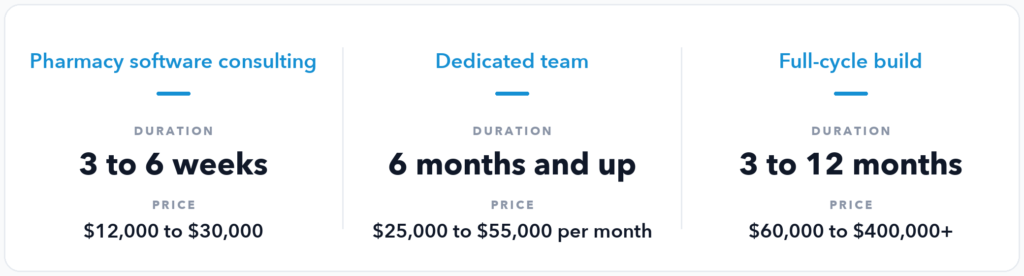
How Much Does Pharmacy Management Software Cost?

Below is how our pharmacy management software development services usually price out. Broader management solutions usually cost more because they cover more operational areas, and full platforms can increase revenue through efficiency and better throughput when the workflow justifies the investment.

MVP / PoC

One workflow, real integrations, production-grade code. Common starting point for pharmacy startups and for independents testing a delivery or adherence program.

$60,000 to $120,000

3 to 5 months

Enterprise-Scale Integration

Multi-site operations, hospital HIS and HIE connections, complex payer reporting, and migration off a legacy platform that has been running for a decade.

$400,000+

12 months and up

Not sure which tier fits?

Book a free 30-minute scoping call

Frequently Asked Questions About Pharmacy Management Software Development

Integration count drives the cost more than feature count. A single-workflow MVP runs $60,000 to $120,000 over 3 to 5 months. A full custom platform with dispensing, inventory, billing, and a patient app lands between $150,000 and $400,000 across 6 to 12 months. Enterprise-scale work with hospital system integration and legacy migration starts around $400,000. We give a written range after a 30-minute call, before any paid discovery.

For standard retail dispensing at one or two locations, a packaged platform usually wins on cost and speed. Custom work pays off where your process is the business: compounding, 340B, specialty patient programs, multi-state telepharmacy, or a mail-order line. Many of our clients keep a packaged system for routine fills and add custom pharmacy management software solutions for the differentiated part.

Cloud gives you access from any location, faster setup, lower upfront cost, and vendor-managed backups. It suits multi-site and mail-order operations, and is often chosen by teams that expect their operations to scale without rebuilding infrastructure. On-premise gives you full control of the hardware, keeps you running through an internet outage, and appeals to hospital pharmacies with existing data-center policy, at the cost of a larger upfront investment and backups you manage yourself. Both work. Most independents pick cloud; most hospital pharmacies pick whatever their IT department already runs.

Yes, and this is where most of the engineering goes. We work with HL7 v2, FHIR, CCDA, NCPDP SCRIPT, EDI, and vendor REST APIs. During discovery, we contact each vendor to confirm API access and cost, since some charge for it and a few gate it behind a partner program. That answer changes the project plan, so we get it early.

We design and build to those standards, and we integrate with certified partners who hold the formal status: Surescripts for e-prescribing and EPCS, licensed vendors such as First Databank for drug interaction data. LITSLINK itself provides engineering, so we make the architecture, audit trails, access controls, encryption, and reporting needed for DEA audits ready for your compliance review, and we leave certification claims to the parties who actually hold them. Clients appreciate hearing that in week one.

The time needed to develop pharmacy management software splits unevenly. An MVP reaches real users in 3 to 5 months. Market demand remains strong, with the pharmacy management software market expected to hit $19.6B by 2029. Integration approvals and vendor API access account for more schedule risk than development does, which is why we open those conversations during discovery.

That is where custom pharmacy management software development earns its budget. Compounding needs formulation libraries, batch records, beyond-use dating, and USP 795 and 797 documentation. Specialty needs prior authorization tracking, patient enrollment, limited-distribution handling, and manufacturer reporting. Packaged platforms cover these thinly, which is why both segments come to us.

You own all of it: source code, data, models, and documentation. Ownership transfers as work is delivered, sprint by sprint. We sign an NDA before the first technical conversation, and we can work under your paper.

Both. A dedicated team of 4 to 9 engineers with PM and QA runs $25,000 to $55,000 per month for long-term product work. Staff augmentation puts individual healthcare integration or ML specialists alongside your in-house developers, reporting to your leads.

Support runs from business hours to 24/7, with a named engineer who knows your codebase. It covers monitoring, dependency patching, standards updates such as NCPDP SCRIPT versions, and quarterly reviews of usage analytics. Pharmacies with delivery operations generally take the 24/7 tier, since a fulfillment outage becomes a patient problem within hours.

Each site keeps its own perpetual count, and a parent view rolls them up. The useful part is transfer logic: when one store is long on a fast mover, and another is short, the system proposes the move before the second store raises a purchase order. Multi-site inventory management also strengthens your buying position, since consolidated demand data gives you something concrete to bring to a wholesaler contract renewal. Most groups feel the limits of single-store tooling once pharmacy operations pass the third location.

A pharmacy database management system is the layer underneath the screens: patient records, prescription history, drug files, inventory counts, and the audit log that ties them together. Most pharmacies acquire one without noticing, because it ships inside the dispensing platform. It becomes a real question once you run several systems that each hold a partial copy of the truth, which is where reconciliation errors breed. A dedicated pharmacy database management system, or a properly designed data layer inside your platform, gives inventory management, billing, and clinical checks one source to read from.

In the places where a technician waits on software rather than on a person, yes. Prescription processing gets faster when the fill screen loads in under a second, when insurance rejections come back with a plain-English reason and a next action, and when refill requests arrive pre-matched to a patient record. We measure prescription processing in touches per fill and seconds per screen, then attack the two worst numbers. Any claim about pharmacy software cutting wait times means little without a before figure, so we take one during discovery.

Have a Pharmacy Software Project in Mind?

Tell us what your pharmacy runs on today, and we will tell you which integrations are going to be the expensive ones. You get the risks in writing, with a cost range attached to each path after a 30-minute call.

Next steps

1

A LITSLINK specialist reviews your request and reaches out to discuss the details.

2

If needed, we can sign an NDA before moving forward.

3

We send a project proposal — estimates, timeline, and team CVs included.

4

After launch, we stay on for any updates your product needs.

Book a consultation
Litslink icon