






Building a PPE and Face Mask Detection System for Real-Time Workplace Safety Compliance
- 2,500+ images processed per minute
- 7 PPE classes scored per frame
- 3 user roles supported
- 24/7 safety monitoring across 38 zones
This PPE detection software turns existing ceiling cameras into an AI-powered safety monitor that catches missing personal protective equipment and sends a compliance alert in under two minutes. Records sit in encrypted storage behind role-based access: safety managers get live PPE compliance dashboards, workers keep their privacy.
Project Details
A manufacturing client needed to replace manual safety inspections with automated PPE detection across three plants. The work began as an AI-based face mask detection system, then expanded to cover personal protective equipment (PPE) across seven classes. LITSLINK built the models, alert routing, and PPE compliance dashboards the EHS team runs today.


Technologies Behind the PPE Detection Software


Business Challenge: Developing Real-Time AI PPE Detection for Safety
Three plants, 72 cameras, two safety walkthroughs per shift. The client wanted PPE monitoring that would run on the hardware they owned and stand up as a workplace safety record.
Supervisors carried clipboards through material handling areas and logged PPE violations on paper. Each walkthrough covered 15% of the floor at a predictable hour, so PPE non-compliance right after an inspection never entered the record. Monthly PPE compliance reports cost the EHS team six to eight hours of retyping, with human error on both ends. Safety protocols lived on paper.
The PPE list was not short: hard hats and high-visibility vests on the floor, eye protection where flying debris was a risk, hearing protection near the presses, flame-resistant clothing in the welding bays, gloves in packaging after two hand injuries. Each rule carried its own workplace safety standards, checked by eye or not at all. Costly penalties loomed, but PPE non-compliance was a visibility problem first.

Accurate AI-Powered PPE Recognition
Hard hats read differently under sodium lamps, in low light, at 30 feet. Automated detection had to hold up on angles nobody chose for safety monitoring, with multiple workers overlapping in one frame. Accurate PPE detection was the bar.

Real-Time Compliance Monitoring
A PPE violation logged at the end of the shift changes nothing. Real-time monitoring had to catch PPE issues while the worker was still in the zone, without paging site managers over someone crossing a doorway without safety glasses.

Comprehensive Safety Analytics
Paper forms produce no trend line. The EHS team wanted PPE compliance rates by zone, shift, and equipment type, plus safety data exports that survive an OSHA or ISO 45001 safety program audit.
Our AI-Powered PPE Detection Solution
Inference runs at the edge. Streaming 72 feeds to the cloud would have cost more than the rest of the budget, so PPE detection sits on six edge processing nodes. Only detections and thumbnails travel upstream, so AI PPE detection and safety alerting survive an uplink outage.
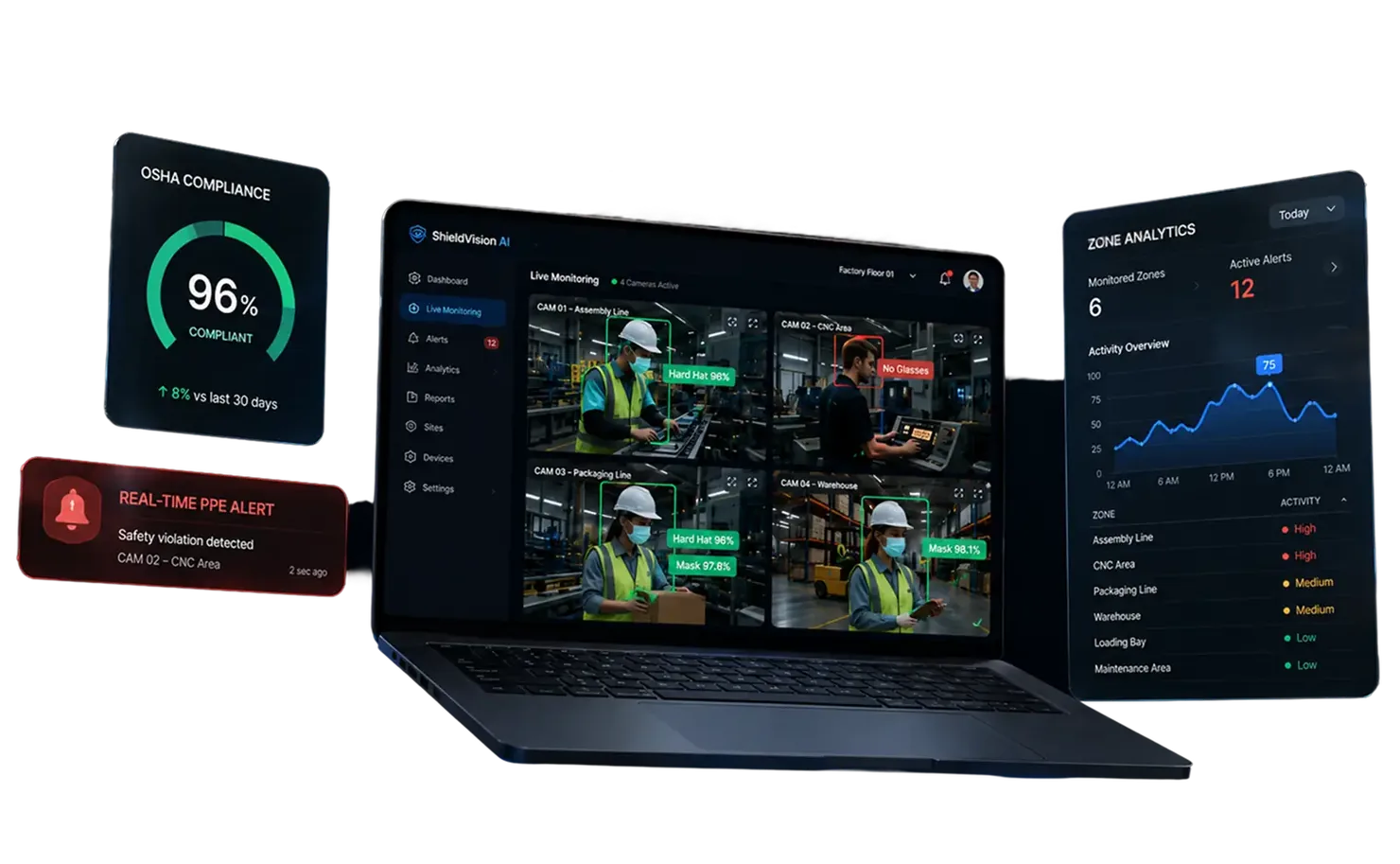
Personal protective equipment detection happens in two stages. A person detector isolates each individual, then a second model checks them against the PPE classes assigned to that camera. Hard hats, safety glasses, high-visibility vests, gloves, steel-toe boots, hearing protection, and face masks score separately: green for properly worn, red for missing. Video analytics run continuously, not on motion triggers.
Safety rules sit above the models. The zone-rule matrix ensures compliance checks match the work rather than the building, and a violation must persist across four consecutive detections, roughly three seconds, which cuts false alerts from one in six to one in thirty. Every detection writes to PostgreSQL with a timestamp, zone ID, and PPE class, making PPE compliance measurable by shift against safety standards like OSHA 1910 and ISO 45001.
AI-Powered PPE Recognition
Seven personal protective equipment (PPE) classes scored per person per frame, from hard hats and eye protection to hearing protection and respiratory protective equipment. Accuracy runs 94% to 97% by class, with masks strongest at 97.8%.
Real-Time Safety Alerts
PPE compliance alerts fire when workers enter a zone without required gear. The rule engine ensures compliance checks run against safety protocols for that area, so missing hard hats alert on the floor and stay silent in a corridor. Multiple workers are scored individually.
CCTV Integration
Models run on existing CCTV cameras and standard IP cameras with no hardware swap. Any ONVIF or RTSP feed joins the fleet, so real-time PPE detection started on day one on the existing CCTV infrastructure.
Compliance Dashboards
Live video analytics across multiple sites with zone-specific safety rules. Safety managers read PPE compliance trends by shift, zone, and equipment type, and site managers compare plants with repeat non-compliance two clicks away.
Automated Reporting
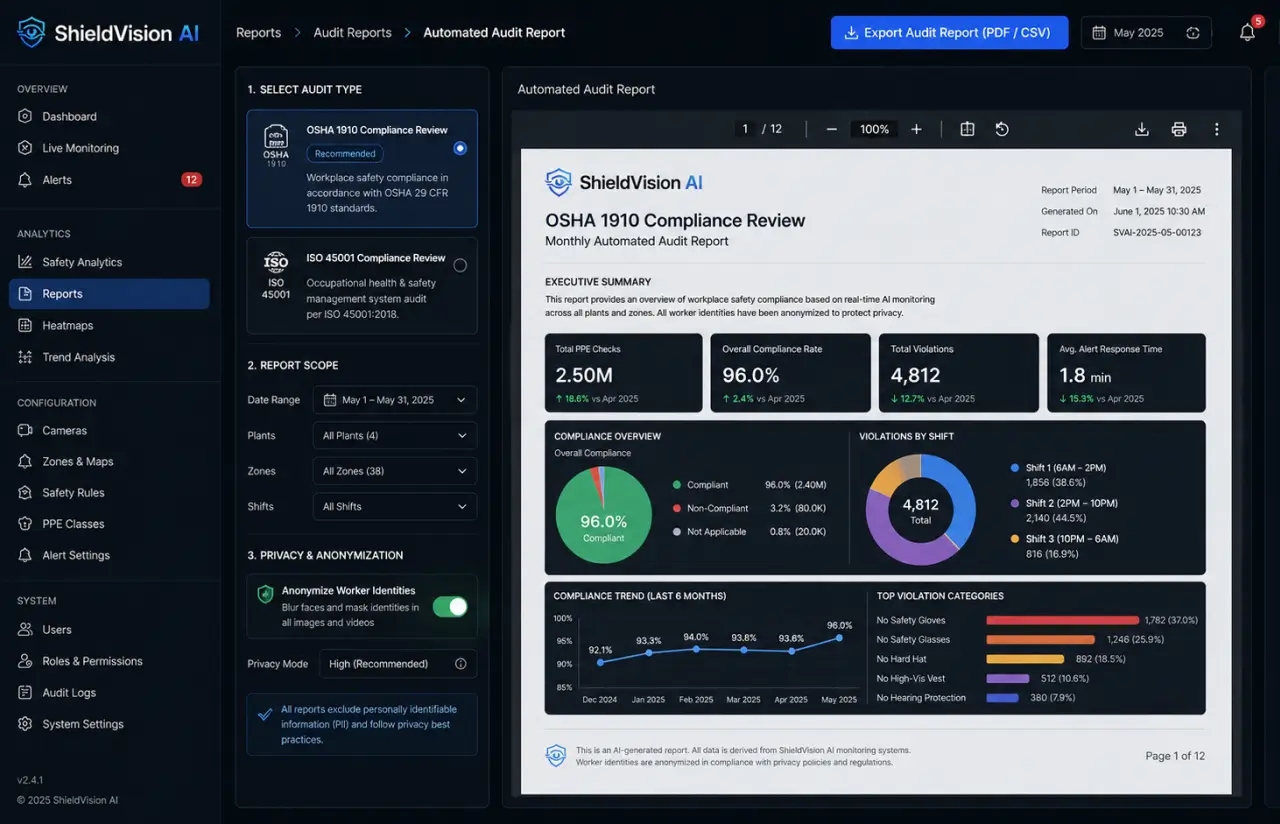
PPE detection AI builds the reports for audits and the PPE safety program review. Automated PPE monitoring maps to OSHA and ISO 45001 workplace safety standards, with PDF or CSV export in under 90 seconds.
Privacy-by-Design
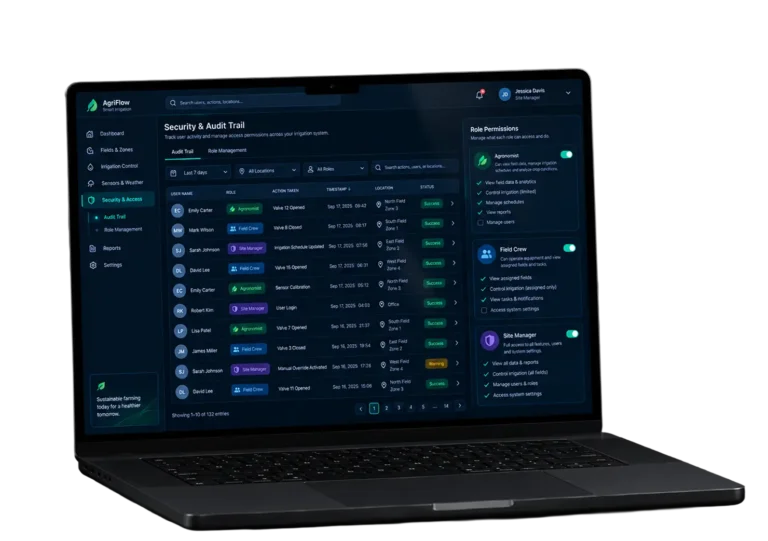
The system scores equipment, not identity. No facial identification database, no worker gallery. Video sits in encrypted storage for 30 days, and workers see only their own PPE compliance status.
Scrum Methodology
Project Journey
A two-week site assessment preceded model training. Camera angles, lighting, bandwidth, and PPE inventories were cataloged across all three plants with the workplace safety leads in the room, producing the zone-rule matrix: 38 zones, 72 cameras, 11 angles repositioned before sprint one. By sprint 9, the pilot zone ran real-time PPE detection on live feeds.
How the PPE Detection System Works
- Integrate with existing cameras or add units in the high-risk zones where safety exposure runs highest. Standard IP cameras work as they are.
- Every zone gets its own PPE list: hard hats and steel-toe boots on the floor, hearing protection near the presses, eye protection in machining, rules ensuring apron and glove use in packaging after two hand injuries.
- Advanced computer vision isolates each person and checks whether equipment is properly worn. AI PPE detection covers every shift, real-time detection through changeover.
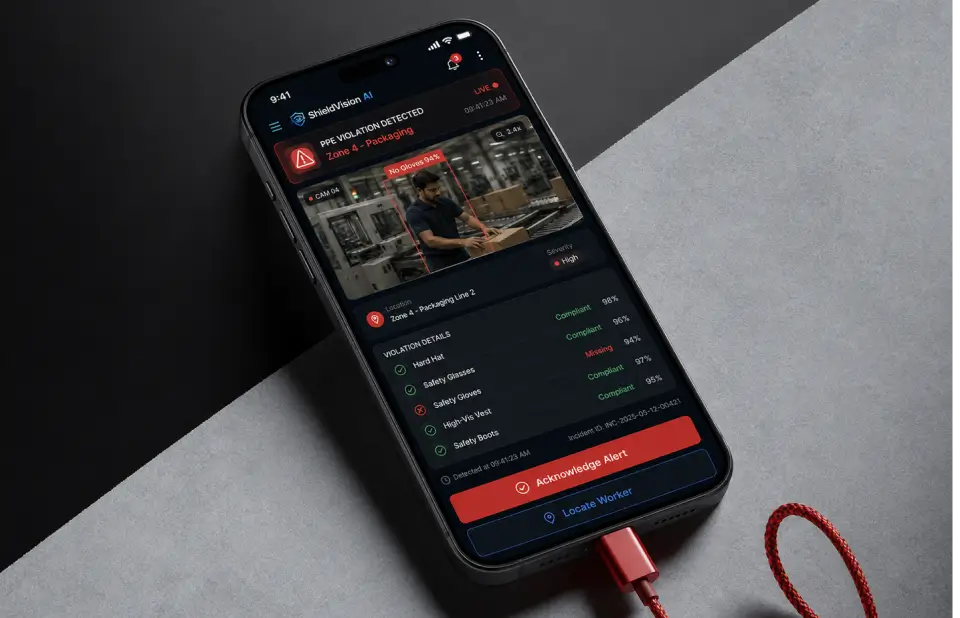
- Automated alerts reach safety supervisors when PPE violations pass the temporal threshold. Floor warnings and mobile push fire together.
- OSHA-ready documentation tracks PPE non-compliance by zone, shift, and PPE type, against the safety standards each plant reports on.
- Video analytics surface risk patterns: which zones produce the most PPE issues, which hours see the weakest compliance. That safety data feeds updates that improve safety on manufacturing floors.
Development Process Flow
AI development for safety-critical operations lives on feedback loops. Two-week sprints put working PPE detection in front of the safety team every fortnight, with plant safety officers in the room. Three sprints were re-scoped once pilot data came back, which beats learning that at launch across multiple sites and complex operations.
Timeline
How We Delivered the PPE Detection Project
Site Assessment & Requirements
- 72 cameras audited for angle, lighting, bandwidth
- Personal protective equipment (PPE) rules mapped to 38 zones
- Current PPE safety protocols and paper reporting documented
AI Model Training
- 38,000 labeled instances across 14,000 site frames
- Public datasets added for domain shift, low light
- Hard hats, high-visibility vests, reflective vests revalidated on holdout footage
Pilot Deployment
- One zone, 9 cameras, 20 shifts
- False positives and negatives measured by hand
- Safety baseline for PPE compliance set before rollout
Integration Testing
- VMS, alert routing, safety access control connected
- Edge nodes load-tested at 2,500+ images per minute
- Frame drops and failover checked per plant
Training & Handover
- Dashboard and alert sessions for shift supervisors
- Rule configuration documentation for the EHS team
- Worker safety briefings on what is not recorded
Production Launch
- Rollout across three plants in five weeks
- Quarterly retraining as PPE styles and layouts change
- Monthly safety review of PPE compliance trends with operations leaders
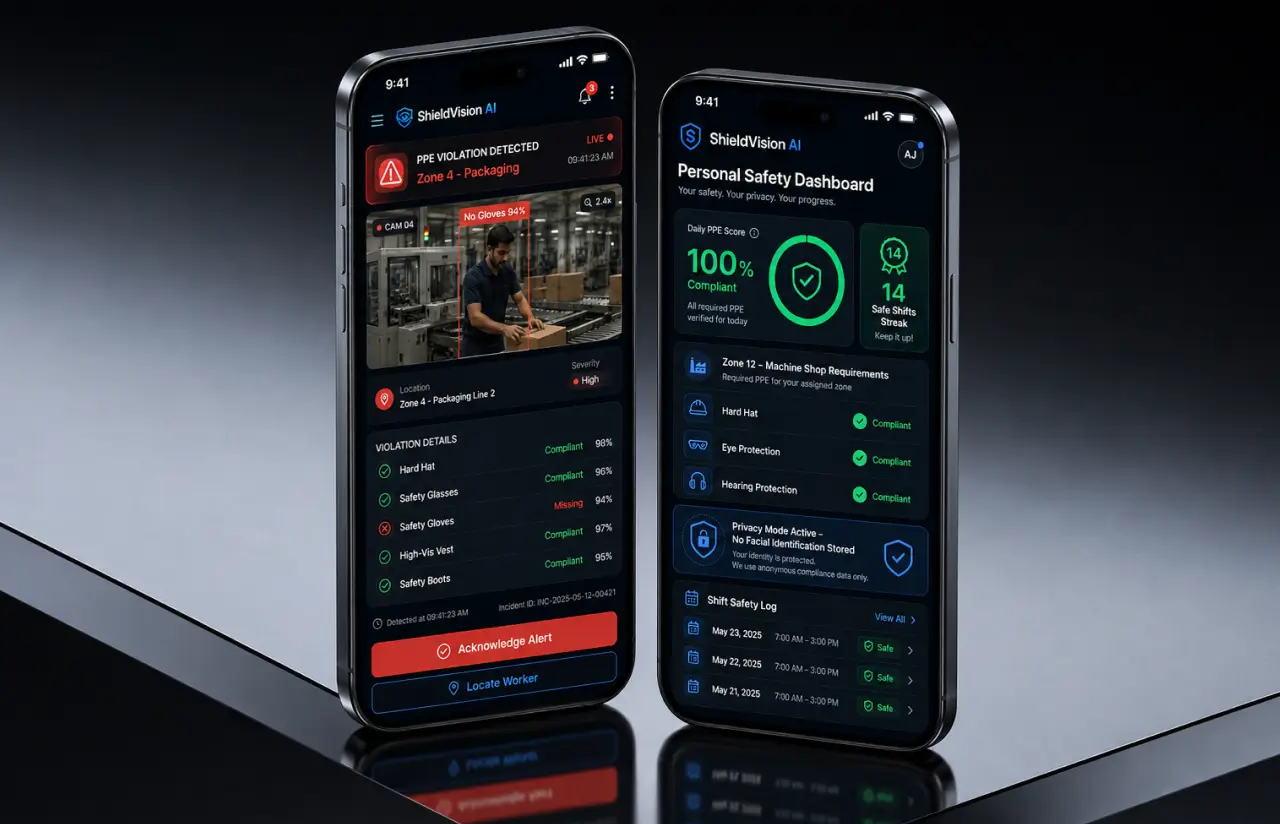
UI/UX Design: Intuitive Interface for Face Mask Detection Software
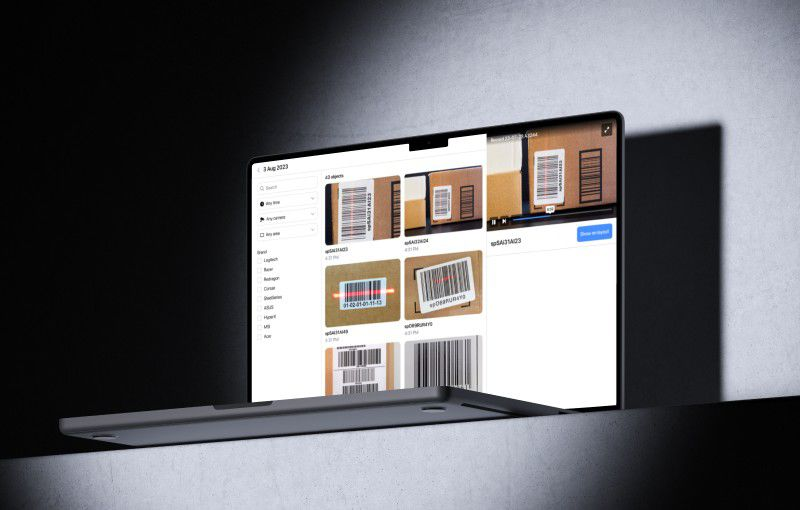
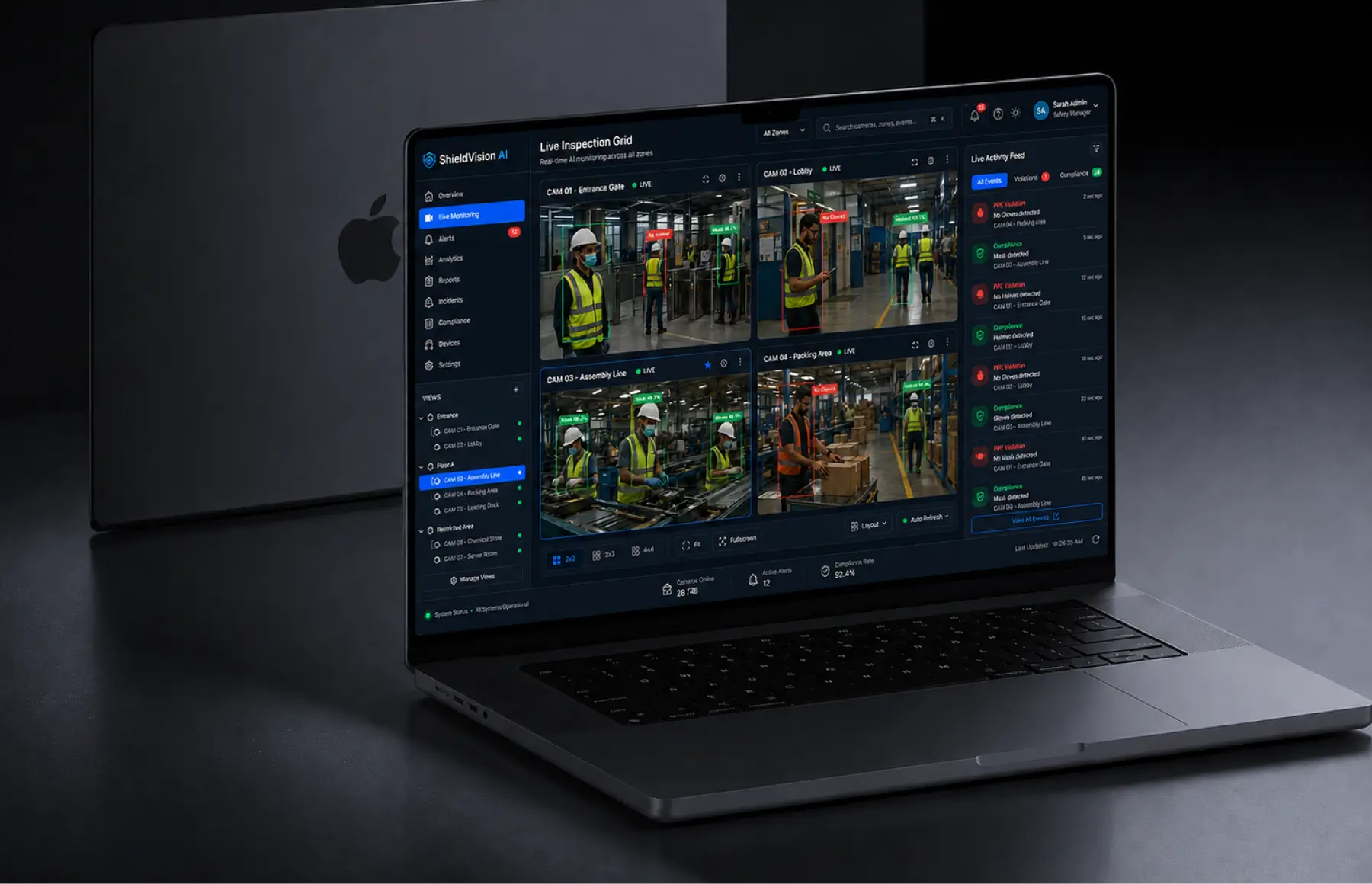
Two tabs cover both users. Live shows the camera grid as it happens; Playback opens it at any timestamp with PPE violations marked on the timeline. Both read the same video analytics stream.
The Views tree groups feeds by entrance, atrium, upper floors, staff exits, parking, and restricted zones, each expanding into cameras A through E. Search sits above it because operators asked during the pilot.
Detections read at a glance. Green boxes mark compliant workers with a confidence score, red boxes a violation, labeled Mask 97.76% or No Mask 51.7%. Safety supervisors said a bare red box invited arguments; a number gave them something to check against. A zoom slider opens any feed when multiple individuals crowd the shot, a heat view shows risk patterns by hour, and the palette stays dark for control rooms.
Results
Before
- ✕Two safety walkthroughs per shift, covering roughly 15% of the floor
- ✕PPE violations, from missing hard hats to open ear defenders, logged on paper
- ✕6 to 8 hours a month compiling PPE compliance reports by hand
- ✕No trend view of which zones or shifts repeated PPE non-compliance
- ✕Audit prep taking three days a month, no system holding the workplace safety data
After
- ✔2,500+ PPE checks per minute across 72 cameras, 24 hours a day
- ✔Under 2 minutes from PPE violation to safety supervisor alert, against 11 before
- ✔96% PPE compliance in monitored zones after one quarter, up from 82%
- ✔Under 90 seconds to export an audit-ready PPE compliance report
- ✔One safety dashboard covering all three plants, zone by zone and shift by shift
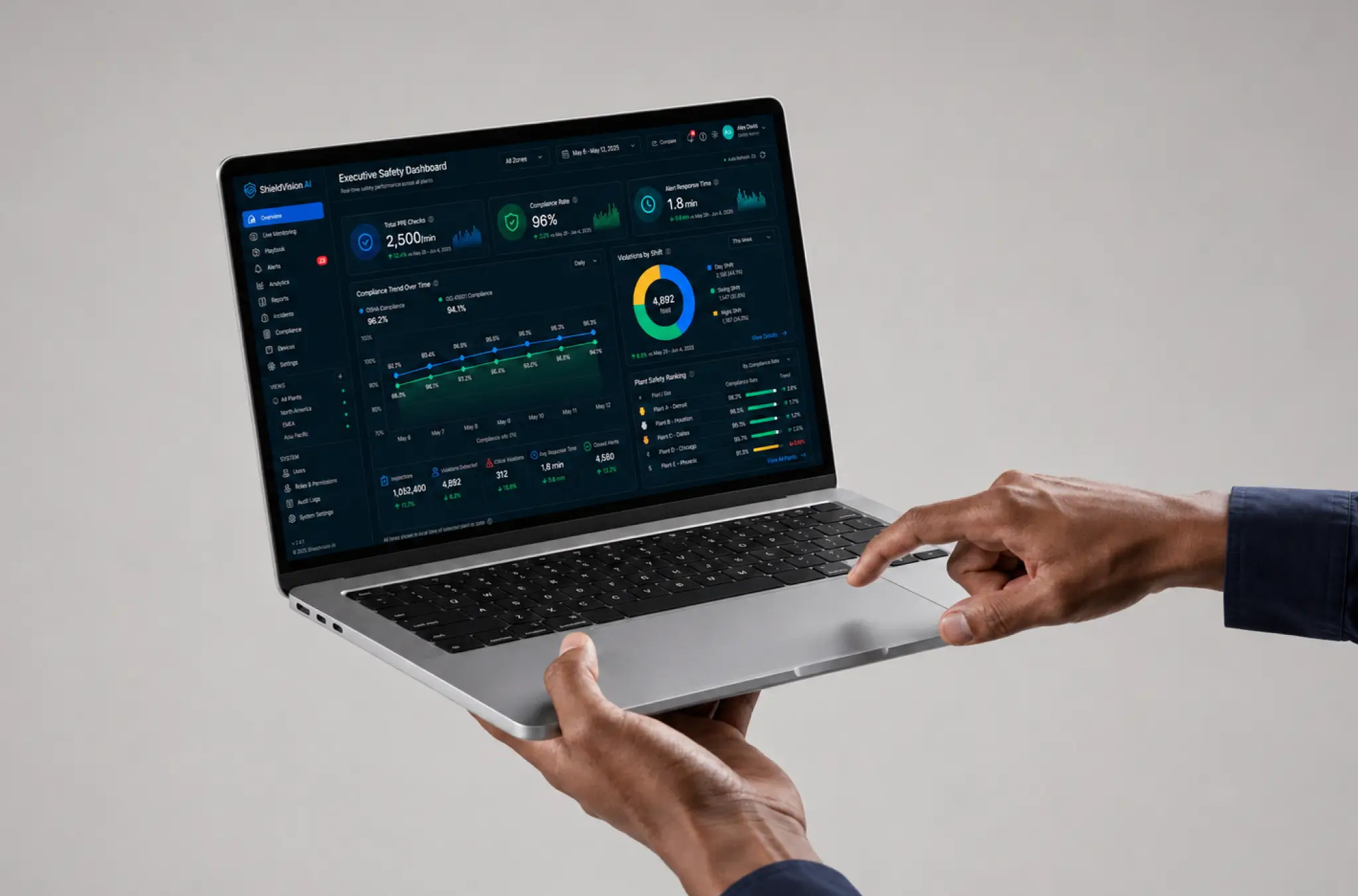
Impact of PPE Detection After Deployment
Verified Reviews
Our Reputation on Top Platforms
LITSLINK holds a 4.8 rating on top platforms. Reviews point to the computer vision work behind these safety systems and a software development team that stays with messy VMS integration until it works.
Have an AI Detection Project in Mind?
Need PPE detection software, a face mask detection system, or personal protective equipment monitoring? Tell us what you monitor today, how many cameras are in place, and which safety standards you report against, from workplace safety records to PPE compliance evidence for auditors. Our specialist replies within 48 hours with scope and timeline.
Thank you for your message. It has been sent.