




How We Built a Play-to-Earn Blockchain Chess Game
- 3 months from kickoff to mainnet launch
- 6 smart contracts on Polygon
- 12 NFT chess piece variants
- 95% of features delivered on schedule
Club players finish thousands of games a year and make money from none of them. We built a web3 game where chess pays out: every ranked win settles in crypto, and the pieces a player collects are NFTs they own outright, tradable on the open market whether or not the platform stays alive.
Project Details
The client is a chess gaming startup with one stated goal: bring 500 million chess players into crypto by paying them to get better at a game they already play. They came to LITSLINK needing a Web3 engineer who could own the blockchain side and build the on-chain layer from nothing. We joined as their blockchain development partner and delivered tokenomics, contracts, and the NFT marketplace inside a single 3-month engagement.


Business Challenge: Creating a Web3 Game Platform Where Players Play Chess and Earn Crypto
Web3 game development means building blockchain-powered games where players can earn cryptocurrency and own tradable digital assets such as NFTs, with rewards, marketplaces, and asset logic recorded on-chain instead of locked inside a publisher database. For game studios, startups, blockchain developers, and gaming founders exploring play-to-earn products or adding blockchain features to a traditional title, the real challenge is not the label but the system design: tokenomics, smart contracts, web3 UX, NFT marketplace flows, blockchain infrastructure, and a delivery process that can ship a playable product without breaking the economy underneath it.
Before integrating blockchain technology, chess stayed a traditional game with almost no way to make money outside prize pools at elite tournaments. Unlike traditional games that keep every asset locked inside publisher-controlled servers, this game concept gave players true ownership of digital assets and a route to real-world value through skillful play. That shift matters because it changes how players engage with a game, how assets circulate, and how revenue works beyond one-way in-app purchases.
The game client faced three critical challenges in building a sustainable web3 game that would pull in crypto natives alongside traditional chess players who had never connected a wallet. Most of the gaming industry still runs on in-app purchases, where money moves one way only. Here it had to move both ways, and the math behind that flow had to hold at real player volume.

Designing Balanced Play-to-Earn Tokenomics
Pay out too much, and the in-game economy inflates inside a month. Pay too little, and nobody plays. The play-to-earn model needed an emission curve, burn sinks, and reward tiers that still work at 10k daily matches.

Building Secure Smart Contract Infrastructure
Decentralized systems are unforgiving. Reward logic, token transfers, and NFT ownership all sit on-chain, where one flawed function is permanent. Contracts had to settle thousands of matches with transaction fees low enough to justify a $0.05 payout.

Creating Web3-Native User Experience
Most chess players had never signed a transaction. Wallet connection, gas approval, and NFT listing had to live inside the game flow, because sending a new player to three external tools before their first match kills signup.
Technologies and Smart Contracts Behind the Web3 Game Development


Our Web3 Chess Game Solution
One question shaped the architecture: what has to live on chain, and what does not? Game logic runs off-chain, because a chess engine inside a smart contract would burn more gas than any prize is worth. Ownership, payouts, and trading run on chain, where players verify them without trusting us. Real ownership only counts when the player can check it without asking anyone. That split became the foundation for a scalable Web3 game.
Match results leave the Node.js backend signed, and a distribution contract pays the winner’s wallet directly. Tokens land roughly 30 seconds after the final move, which matters more than it sounds. Players who wait a day for a payout stop believing the reward is real.
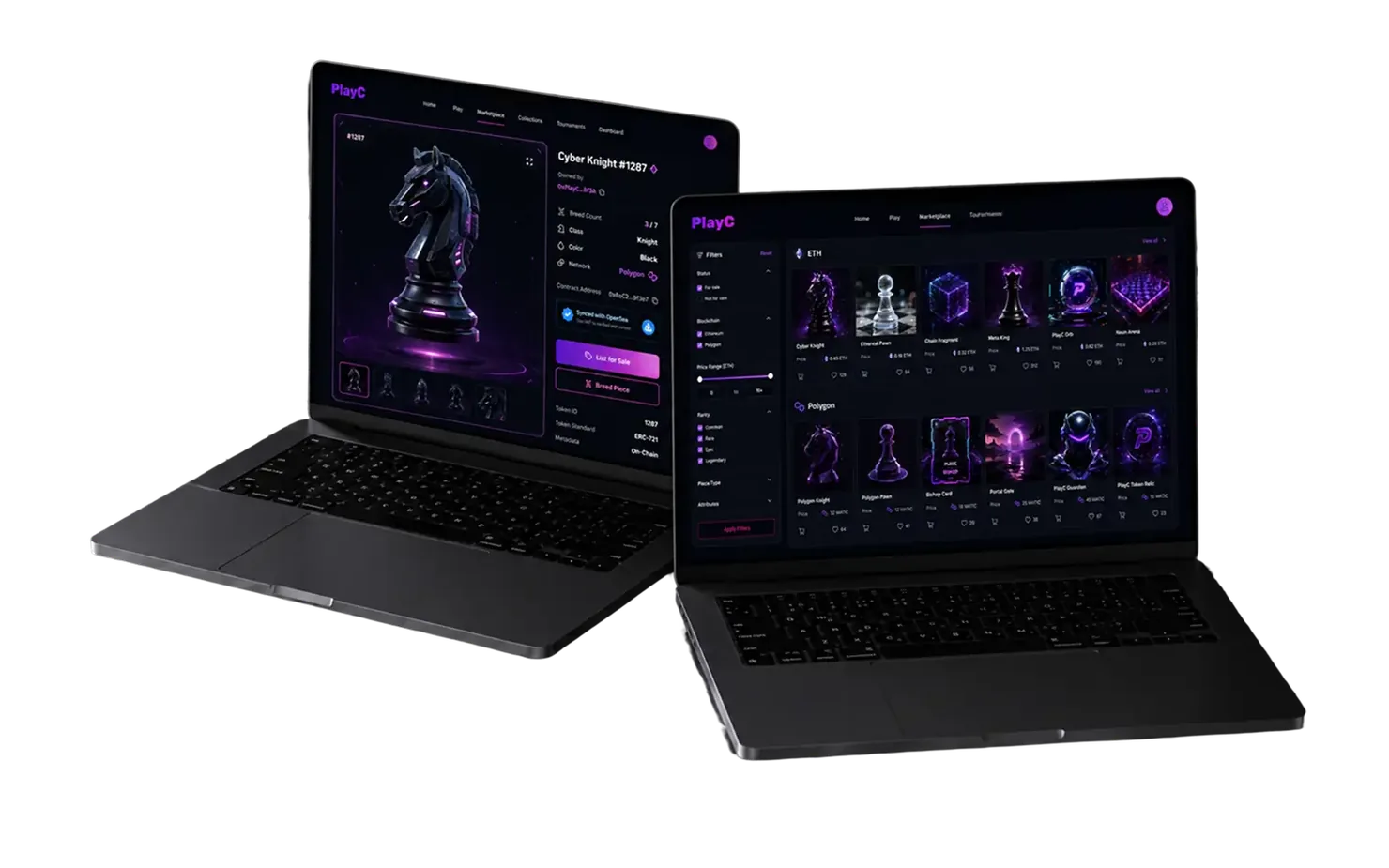
Smart contract development covered six contracts: the native token, an ERC-721 for pieces, marketplace, reward distribution, tournament escrow, and breeding. The token runs a fixed emission schedule with burn sinks tied to tournament entry, breeding, and marketplace fees. Heavy NFT metadata can sit in decentralized storage such as IPFS while ownership stays on-chain. About 40% of everything paid out in a week returns through those sinks, which protects the long-term value of the in-game currency as the player base grows.
Nothing here came off a template. Chess has a rating system older than the gaming industry itself, and game economies built on flat rewards would have broken it within days, so payouts scale with the strength of the opponent instead of raw win count. The game mechanics stayed classical chess, but the backend and contract design were built to protect the economy as demand increases.
Play-to-Earn Chess Mechanics
Every ranked match pays. Beat a stronger opponent and the payout scales with the rating gap, so farming weak accounts earns close to nothing. Daily puzzles and the training track let players earn rewards outside ranked play, with tokens paid for completing tasks and designed to stay fun, not only profitable.
NFT Chess Piece Collection
Six classes from Pawn to King, in black and white, each minted as an ERC-721 with attributes and a breed count capped at 7. In-game items sit in the player's wallet, reinforcing digital ownership, so assets remain theirs even if the platform goes dark.
Crypto Reward Distribution
A distribution contract splits every match pot between winner, treasury, and burn address with no central authority signing off. Batched settlement holds the cost per payout under a cent.
Blockchain-Based Tournaments
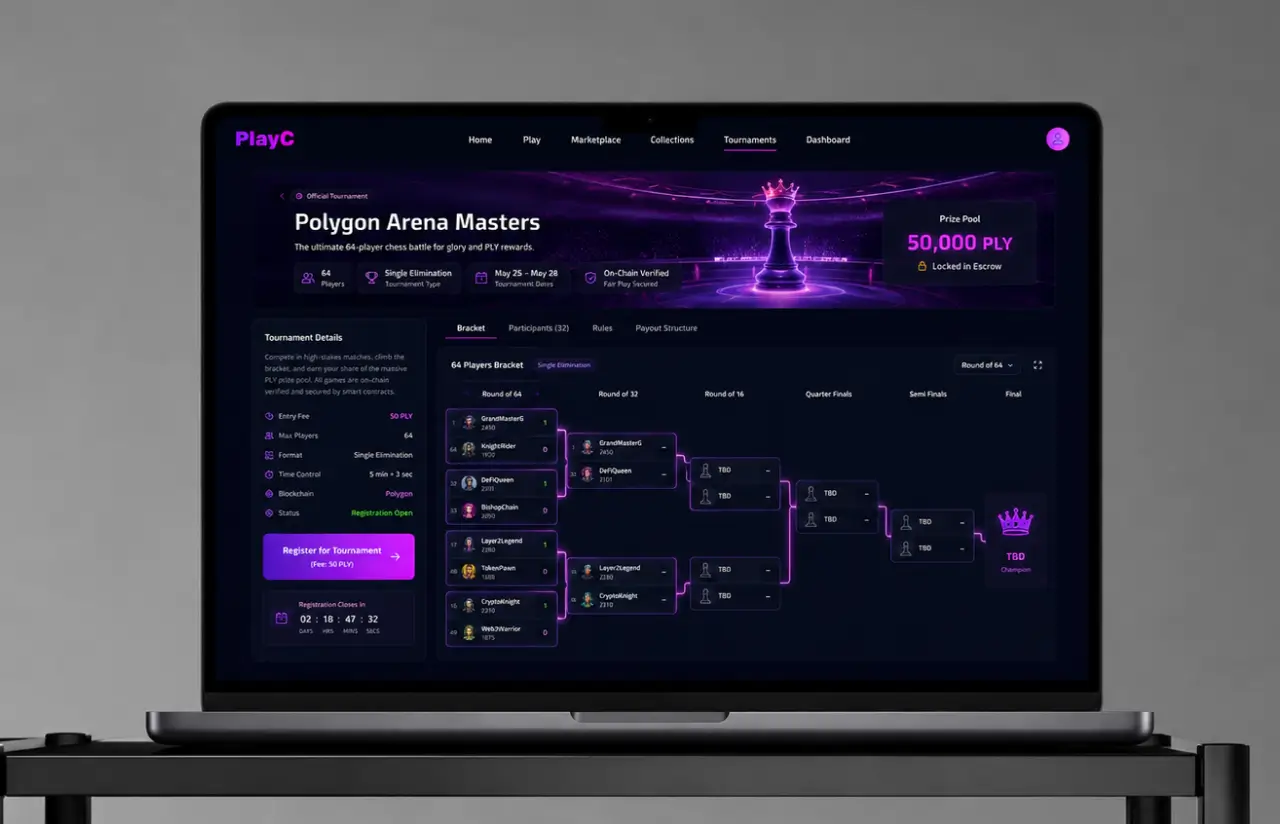
Entry fees lock into escrow, and the prize pool pays out on-chain the moment the bracket closes. Organizers set the format, the contract moves the money, and anyone can audit the result afterward.
Decentralized Skill Rating
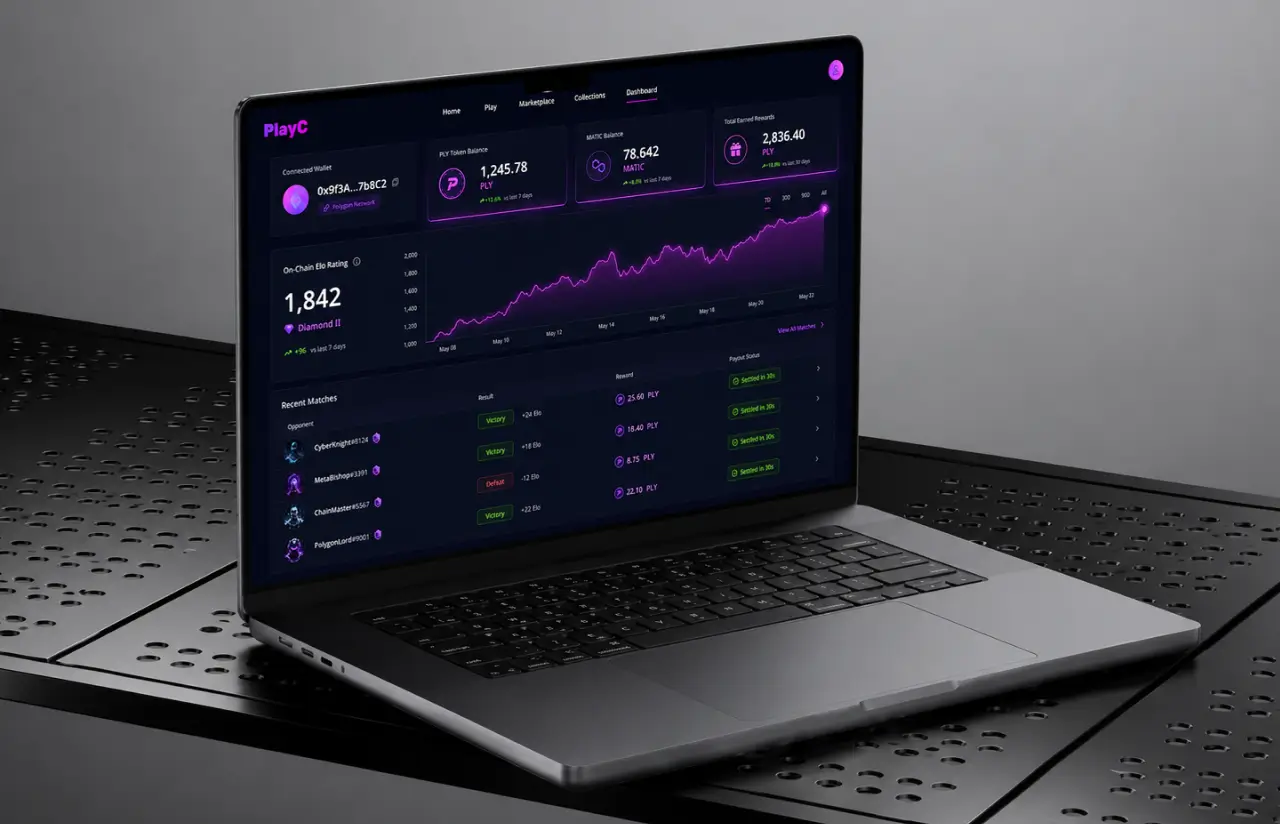
Elo updates write against the player's wallet address instead of a row in our database. Rating history travels with the wallet, and no operator can quietly edit it after a bad tournament.
Web3 Wallet Integration
MetaMask and WalletConnect connect from the header in one click. First-time players get a guided transaction that explains gas before they sign, cutting setup drop-off by roughly half in testing. The integration supports crypto wallets with single-profile access across connected experiences, improving interoperability and giving players more control over their assets.
Cross-Platform Asset Trading
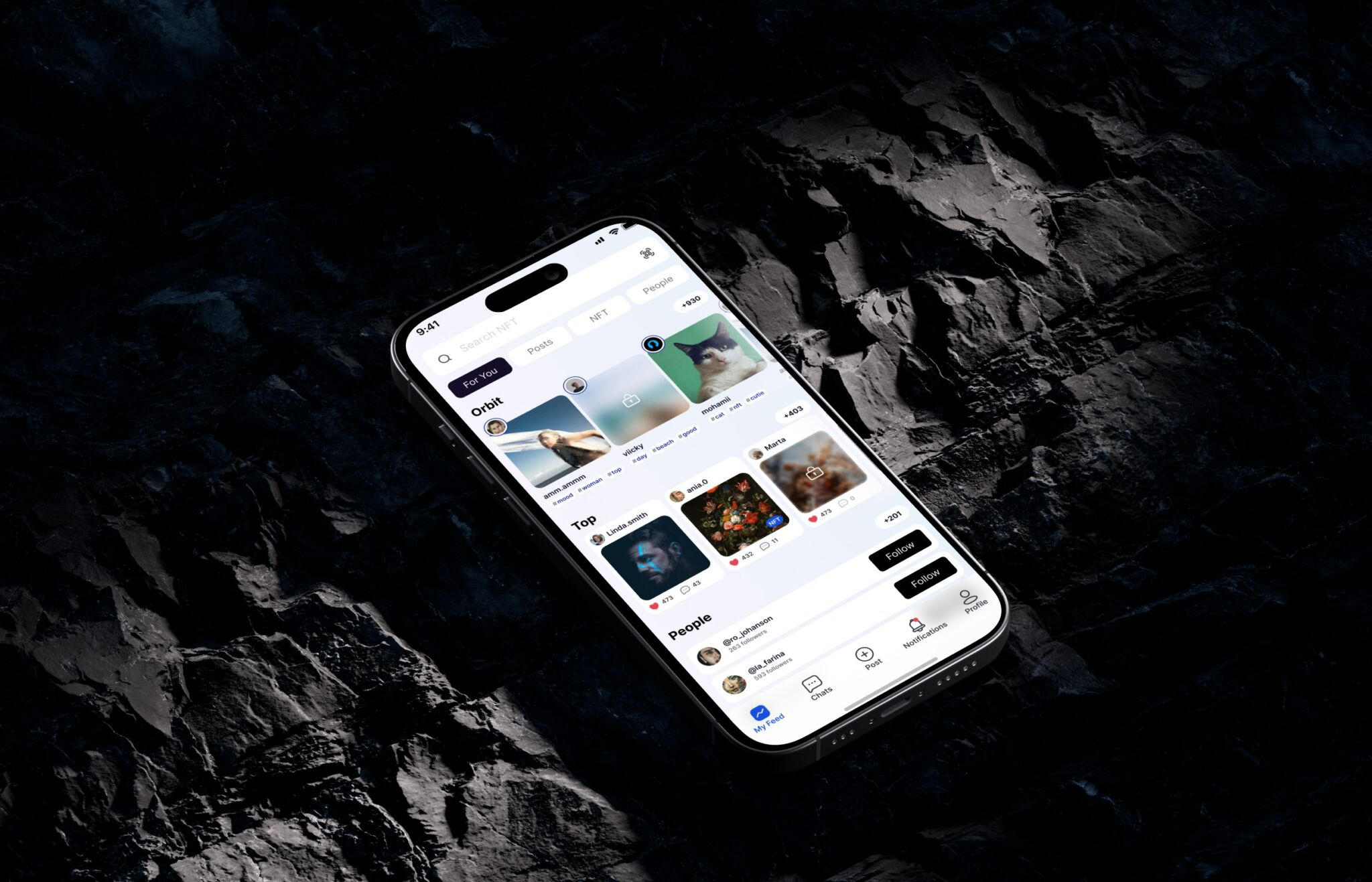
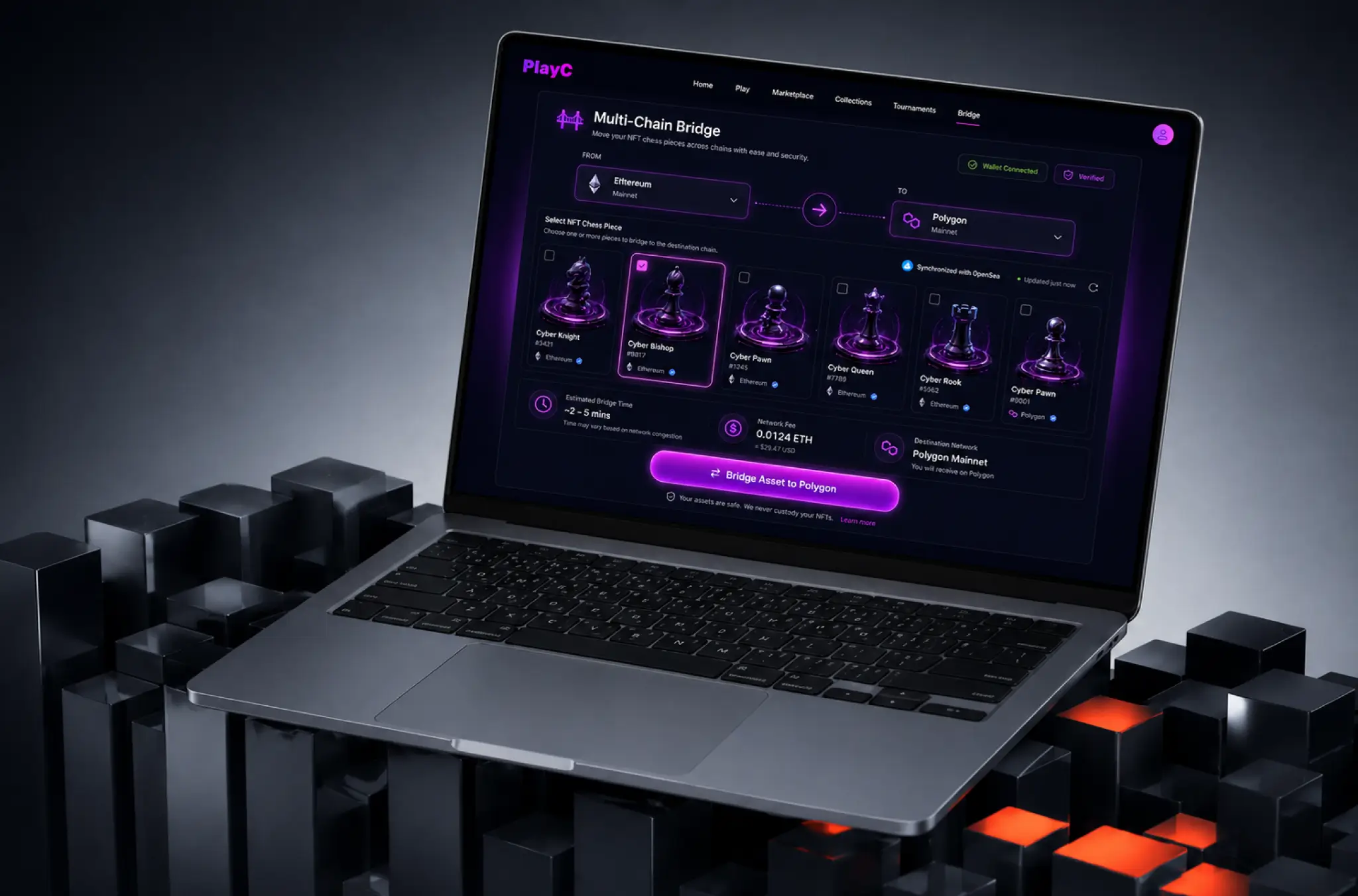
Pieces list on the built-in marketplace and on OpenSea at the same time, filtered by status, color, class, and breed count. Players trade assets across ETH, Polygon, and Klaytn without leaving the game.
Scrum Methodology
Project Journey
This Web3 game development project used two-week sprints to build Web3 features into a production game, with each cycle closing after deploying blockchain components to testnet. Each step in the staged delivery process clarified what we needed to prove next.
How the Web3 Chess Platform Works
- Sign up with email or connect one of the supported crypto wallets right away. Players without one get a custodial address they can export later.
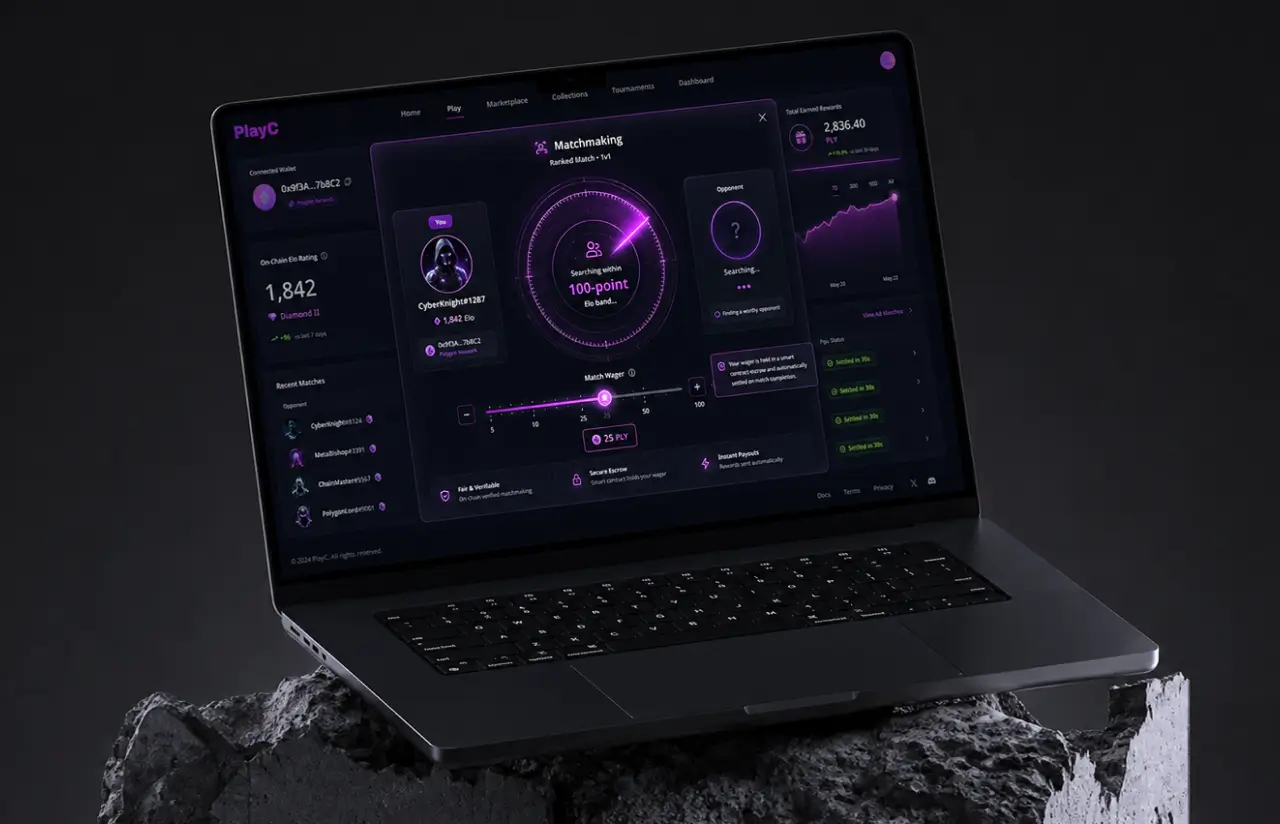
- The queue pairs players inside a 100-point Elo band and by stake size, so nobody lands in a match they cannot afford.
- The game runs in the browser at normal speed. The server validates moves in real time, and hashes the final position for settlement.
- The reward contract reads the signed result and pays the winner's wallet. Payout scales with rating gap and stake size.
- Players list pieces, filter by class or color, and buy or sell assets within the game with the native token. Listings sync to OpenSea across three chains.
- Entry fees lock in escrow, brackets advance automatically, and the pool splits on-chain when the final game ends.
Play-to-Earn Blockchain Development Process Flow
Blockchain game development does not survive big-bang releases. Contracts are permanent, so blockchain-based games need mistakes found before deployment, not after. Scrum gave the client working functionality every two weeks, a testnet build to break, and six chances to change our minds while it was still cheap.
How We Delivered a Web3 Game Project
- We define the project goal together, agree on priority features, and set a realistic delivery date and budget, with a focus on the business case and core game loop.
- We build a ranked list of everything the product needs, starting with what matters most to the business.
- Work is broken into 2-week cycles. At the start of each, we select the next set of features to deliver.
- The team builds, tests, and integrates features throughout the sprint, and can implement blockchain features and gameplay systems in parallel.
- At the end of every sprint, you see working software and give feedback that shapes the next cycle through transparent progress reviews.
- Each sprint produces a shippable piece of the product. We review what worked, adjust, and move forward.
Web3 UX Design: Blockchain Without the Friction
The design goal was easy to state and hard to build. A chess player should reach their first game in under a minute, wallet or no wallet, and anything blockchain-related should appear only at the moment it becomes relevant. Enabling players to skip the wallet entirely on day one was the compromise that made the rest work.
Gameplay mechanics stayed exactly as chess players expect. Dark board, familiar controls, no crypto vocabulary anywhere on the play screen. Engaging gameplay and immersive experiences came from chess itself, so the interface stayed out of its way, with the design focus kept on the board and match flow rather than on blockchain prompts. Wallet, balance, and reward history sit one tap away in the header, so players get smoother gameplay than most decentralized gaming experiences offer, because nothing on-chain interrupts a live match. The build is web-first and runs on desktop platforms and in mobile browsers, competing with mobile games for the same fifteen minutes on a commute.
Results
Before
- ✕Prize money reached tournament players only, roughly the top 1% of the base
- ✕In-game assets lived in a platform database with zero resale value
- ✕Ratings sat in a central database an operator could edit
- ✕Payouts were manual and landed days after an event closed
- ✕No wallet, no marketplace, no single place to play and earn
After
- ✔Every ranked win pays, from beginner boards to master level
- ✔12 NFT piece variants tradable on OpenSea across three chains
- ✔Ratings written on chain against the player's wallet address
- ✔~30-second settlement from final move to tokens in the wallet
- ✔One interface for play, wallet, rewards, and marketplace
Impact of Web3 Chess Solution After Launch
Verified Reviews
Our Reputation on Top Platforms
Clients rate LITSLINK 4.8 on top platforms. Reviews of our blockchain development work point to what this project needed most: a deep understanding of contract security and a proven track record on successful projects where real money moves on-chain.
Have a Web3 Project in Mind?
Looking for a web3 game development company, or a development partner to take over the blockchain half of a build you already started? Tell us what you are making, and we will come back within 48 hours.
Thank you for your message. It has been sent.