
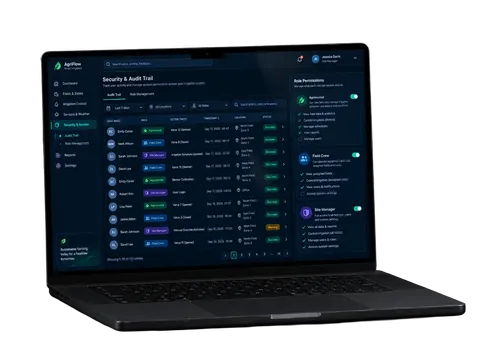




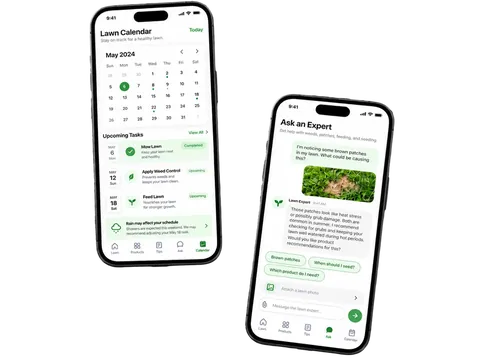



Custom HMS Development
End-to-end hospital management software development, from clinical scoping to go-live and beyond. We design the platform around your facility’s departments and rules.
Tech
- Full-cycle dev
Services.
End-to-end product development — from AI prototypes to scalable web and mobile platforms.
View all services →Not sure where to start?
Book a free discovery call →Software Development
Industries.
Domain expertise that shortens discovery and gets compliance right from day one.
View all industries →Not sure where to start?
Book a free discovery call →AI Agents.
Custom AI agents that take routine work off your team — built and deployed in weeks.
View all AI agents →Not sure where to start?
Book a free discovery call →AI Agents For
Technologies.
A modern stack for every layer of your product — pick one or let us recommend.
View all technologies →Not sure where to start?
Book a free discovery call →Hire.
Vetted senior engineers who join your team in as little as 48 hours.
View all roles →Not sure where to start?
Book a free discovery call →Case Studies.
1540+ projects delivered for startups and enterprises in 82+ countries.
View all case studies →Not sure where to start?
Book a free discovery call →Resources.
Guides, live sessions and tools to plan your product and budget.
Visit the blog →Not sure where to start?
Book a free discovery call →Company.
The team behind 1540+ projects for 1000+ clients worldwide.
Get in touch →Not sure where to start?
Book a free discovery call →In Numbers
Enter to search·Esc to close
We build custom hospital management software around how your clinical and billing teams actually work: HIPAA-compliant by design, EHR-ready, first module live in 10 weeks.
Standards we work with



HMS DEVELOPMENT SERVICES
It’s part of our custom healthcare software development services in the USA.
End-to-end hospital management software development, from clinical scoping to go-live and beyond. We design the platform around your facility’s departments and rules.
Tech

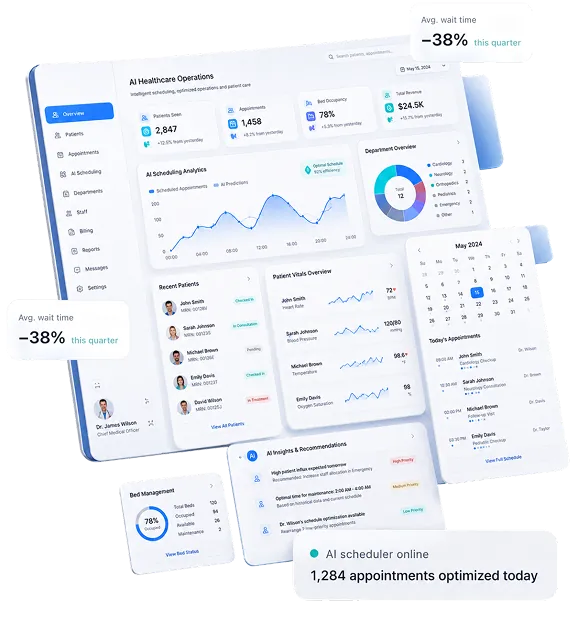
A hospital information system that puts clinical, administrative, and financial operations in one place. Admissions, staffing, billing, and reporting stop living in separate spreadsheets.
Tech

Scheduling, registration, billing, and the daily grind of running a practice, handled in one system instead of five. Front desk staff will notice the difference by the end of week one.
Tech
Build a new EMR system or connect the one you have to your HMS. We work with HL7 FHIR interfaces, Veradigm integration, and the vendor-specific quirks nobody puts in the documentation.
Tech

Move an aging hospital system to a modern cloud platform without losing a single patient record. Phased migration, parallel runs, and a rollback plan you’ll hopefully never need.
Tech

24/7 monitoring, security patches, and ongoing feature work under a real SLA. Hospitals don’t close at 5 p.m., and neither does the software that runs them.
Tech
CORE HMS MODULES
The most common examples of hospital management software modules our clients request, built to work as one platform or added to what you already run.
Centralized patient management: profiles, medical history, consents, and documents in one searchable record instead of a filing cabinet with a login screen.
Online self-booking, automated reminders, and queue management that tells patients how long they’ll actually wait. No-shows drop when rescheduling takes two taps.
Revenue cycle management with automated claims, ICD-10 coding support, CPT capture, and reconciliation. RCM medical billing errors are where hospitals quietly lose money; this module is where they get it back.
Pharmacy automation covering inventory, e-prescribing, drug interaction checks, and dispensing. Expiry alerts included, because expired stock is pure write-off.
A laboratory information system for orders, results, and sample tracking, with DICOM PACS integration so imaging lands next to the chart instead of in a separate viewer.
Track supplies and equipment across departments with automated reordering thresholds. You find out about a shortage before the OR does.
Bed management, ward coordination, referrals, and handoffs between departments. The clinical workflow layer that keeps a patient’s journey moving instead of stalling at every transfer.
Shift handoffs, task lists, vitals monitoring, and medication schedules built for how nursing teams actually operate at 3 a.m.
Self-service access to records, appointments, and secure messaging, delivered through mobile app development and web development built to the same HIPAA standard as the core system.
Clinical, operational, and regulatory reporting in dashboards administrators can read without a data analyst on call.
AI CAPABILITIES IN HMS
AI earns its place in a hospital when it takes decisions off people’s plates: fewer scheduling calls, fewer coding errors, fewer surprises at 7 a.m. shift change. We build it as a core capability of the platform.

ML models forecast admissions and patient volume from historical and seasonal data, so capacity planning stops being a guess made on Friday afternoon.
Tech
AI builds rosters against predicted demand, required skills, and availability. Less overtime, fewer coverage gaps, and a schedule that doesn’t get redone by hand every Sunday.
Tech
NLP reads clinical notes and suggests ICD-10 and CPT codes for coder review. Claims go out faster and come back denied less often.
Tech

Models flag high-risk patients from vitals, labs, and history so care teams intervene early. Readmissions are expensive; a timely follow-up call is not.
Tech
Hospital software handles the most sensitive data there is. Healthcare data security isn’t a checklist we run before launch; it’s engineered into the architecture from the first design session, and HIPAA compliance is treated as a build requirement, not a legal afterthough
Technical, physical, and administrative safeguards for PHI built into every layer of the system, mapped to the specific requirements your compliance officer will ask about.
End-to-end encryption of data at rest and in transit. No exceptions for internal traffic.
Granular permissions so a scheduler, a nurse, and a billing clerk each see exactly what their role requires. Nothing more.
Every access and every action, traceable. When an auditor asks who viewed a record and when, the answer takes seconds.
HIPAA-eligible AWS or Azure environments with signed BAAs, aligned with SOC 2 practices for organizations that need to demonstrate controls to enterprise partners.
Security testing runs throughout development, not just before release. We’d rather find the hole than read about it.
One hospital management software development company, five very different buyer profiles. Here’s who we build for.
Enterprise HMS for multi-department operations, complex care paths, and high patient volumes. Built to handle the coordination load a 400-bed facility generates every day.
Scheduling, billing, and patient management sized for clinic operations. All the structure of a hospital platform, none of the weight you don’t need.
Lab and LIMS workflows with DICOM PACS imaging management and connectivity to referring providers, so results reach the ordering physician the same day.
HMS with embedded telemedicine, remote monitoring, and patient engagement. For teams productizing virtual care, our SaaS development practice covers multi-tenant architecture and subscription billing too.
Multi-facility platforms with centralized data, unified reporting, and role structures that hold up across locations.
Client
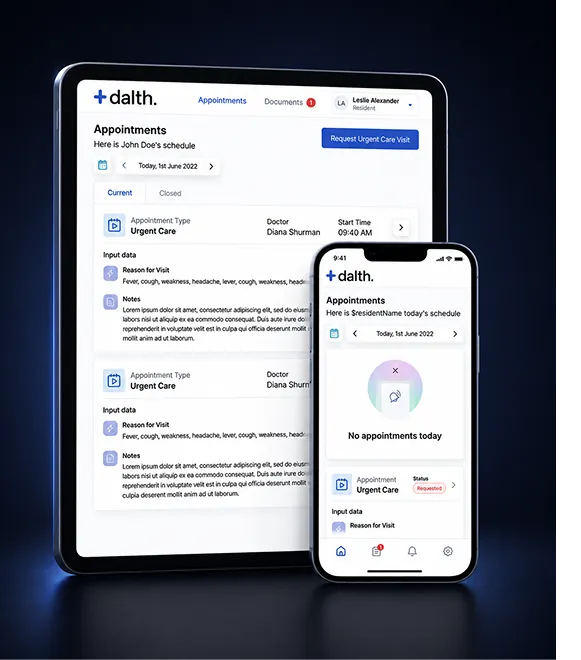
Dalth, a SaaS patient engagement and healthcare CRM platform
Challenge
Dalth’s users had healthcare data scattered across providers, each with its own records and none talking to the others. The platform needed to aggregate EHR data from multiple sources, serve six distinct user roles without confusing any of them, and route urgent care requests in real time. A generic CRM couldn’t do any of that.
Solution
The team built a unified healthcare CRM that consolidates every patient touchpoint in one place. Role-aware architecture gives each of the six user types (patients, clinicians, nurses, admins among them) its own interface, permission set, and workflow. EHR integration aggregates records from multiple providers, and the Vue.js frontend keeps multi-source data live without page reloads.
Key results
Delivery
built by a team of 6 over 1+ year, running Scrum.
Ready-made systems like Epic and Oracle Health offer proven scale. They also come with heavy licensing costs, rigid workflows, and implementations measured in years. Custom hospital management system software development gives you fit, ownership, and the freedom to change your mind later. Here’s when each side wins.
Not sure whether to build or buy?
Get a free build-vs-buy assessmentCOST & TIMELINES
$50,000 – $120,000
4 – 6 months
For private clinics or facilities adding one module (scheduling, billing, or records)
$120,000 – $350,000
6 – 12 months
For hospitals and medical centers that need an integrated platform
$350,000+
12 – 24+ months (phased)
For hospital networks and multi-facility healthcare groups
All estimates are project-specific. Final scope is confirmed after a discovery session.
Hospital management system software engineering has one rule the rest of software doesn’t: a bug isn’t an inconvenience; it’s a clinical risk. Our process reflects that.
Step 1 of 7
Discovery & Clinical Scoping (Week 1–3)
We sit with clinical and administrative teams to understand goals, workflows, and technical constraints, then map compliance requirements. Deliverables: scope, roadmap, estimate.
Step 2 of 7
Architecture & Compliance Design (Week 3–5)
System design, data model, integration architecture, and the HIPAA security model, all reviewed before a line of production code exists.
Step 3 of 7
UX Design for Every Role (Week 4–6)
Clinicians, nurses, admins, and patients each get an interface designed for their job. A nurse mid-shift and a CFO reviewing quarterly numbers should not see the same screen.
Step 4 of 7
Iterative Development (2-week sprints)
Regular demos, a transparent backlog, and code built to the regulations from day one. You see progress every two weeks, not at the end.
Step 5 of 7
QA & Compliance Testing (Continuous)
Automated and manual QA, penetration testing, and HIPAA compliance checks run through the whole build, not as a finale.
Step 6 of 7
Staged Rollout & Deployment (Pre-launch)
Phased go-live, data migration, staff training, and hands-on launch support. Nobody flips a switch on a whole hospital at once.
Step 7 of 7
Long-Term Support & Evolution (Ongoing)
24/7 monitoring, updates, and feature iterations as your operations change. Most of our clients are still with us years after launch.
Step 1 of 7
Discovery & Clinical Scoping (Week 1–3)
We sit with clinical and administrative teams to understand goals, workflows, and technical constraints, then map compliance requirements. Deliverables: scope, roadmap, estimate.
Step 2 of 7
Architecture & Compliance Design (Week 3–5)
System design, data model, integration architecture, and the HIPAA security model, all reviewed before a line of production code exists.
Step 3 of 7
UX Design for Every Role (Week 4–6)
Clinicians, nurses, admins, and patients each get an interface designed for their job. A nurse mid-shift and a CFO reviewing quarterly numbers should not see the same screen.
Step 4 of 7
Iterative Development (2-week sprints)
Regular demos, a transparent backlog, and code built to the regulations from day one. You see progress every two weeks, not at the end.
Step 5 of 7
QA & Compliance Testing (Continuous)
Automated and manual QA, penetration testing, and HIPAA compliance checks run through the whole build, not as a finale.
Step 6 of 7
Staged Rollout & Deployment (Pre-launch)
Phased go-live, data migration, staff training, and hands-on launch support. Nobody flips a switch on a whole hospital at once.
Step 7 of 7
Long-Term Support & Evolution (Ongoing)
24/7 monitoring, updates, and feature iterations as your operations change. Most of our clients are still with us years after launch.
Six checks we run before any hospital system goes live. Get the full checklist as a PDF and run it against your own launch plan.
Healthcare software is a trust business. These reviews, straight from Clutch and GoodFirms, are why clients hand us the next project too
FAQ
Hospital management software (HMS) is a platform that runs a hospital’s clinical, administrative, and financial operations in one system: patient registration, scheduling, medical records, billing, pharmacy, lab, and reporting. Well-known examples of hospital management software include Epic, Oracle Health (formerly Cerner), and Meditech; custom-built HMS covers the same ground but is shaped around one facility’s specific workflows.
Core features cover patient registration and records, appointment scheduling, billing and revenue cycle management, pharmacy and inventory, laboratory workflows, clinical coordination between departments, a patient portal, and reporting dashboards. Larger facilities add bed management, nurse station tools, telemedicine, and AI capabilities like demand forecasting and automated coding.
A single-module MVP takes 4 to 6 months. A full multi-module platform with EHR integration typically runs 6 to 12 months. Enterprise builds for hospital networks take 12 to 24+ months, delivered in phases so core modules go live while the rest is still in development.
Expect $50,000 to $120,000 for a clinic-scale module or MVP, $120,000 to $350,000 for a full hospital platform with EHR integration and a patient portal, and $350,000+ for enterprise systems spanning multiple facilities. Module count, integrations, and compliance scope drive the difference.
Yes. We build integrations with major EHR systems, including Epic, Cerner, Meditech, and Veradigm, using their published APIs and standard healthcare interfaces like HL7 FHIR. For legacy HL7 v2 feeds, we use interface engines such as Mirth Connect to handle the message routing. The approach depends on what each system exposes and the access your organization holds with the vendor. If your platform offers an API or a supported integration path, we can connect to it, and where documentation is thin, we’ve navigated that before.
Compliance is an architecture decision, not a review step. That means encryption at rest and in transit, role-based access control, complete audit logging, HIPAA-eligible cloud infrastructure with signed BAAs, and penetration testing throughout development. We map every safeguard to the specific HIPAA and HITECH requirements your auditors check.
Yes. We run phased migrations with parallel operation periods, so the old system keeps working while the new one takes over module by module. Patient records, billing history, and clinical data move with verification at every step, and a rollback plan stays ready until you no longer need it.
The practical wins today: forecasting admissions so staffing matches demand, building staff schedules automatically, suggesting ICD-10 codes from clinical notes to speed up billing, and flagging high-risk patients before readmission becomes likely. Each one removes a recurring manual task or a recurring source of error.
An EHR or EMR system stores and manages clinical records: diagnoses, medications, test results, treatment history. Hospital management software is broader, covering operations around the clinical record too, including scheduling, billing, pharmacy, inventory, and administration. Most hospitals run both, connected through EHR integration, or an HMS with an EHR module inside it.
A typical team includes a US-based project manager, a UI/UX designer, 2-4 engineers, a QA specialist, and a DevOps engineer. Projects with AI modules add ML engineers, and complex EHR integration work brings in specialists with HL7 FHIR experience. Team size scales with tier: 3-4 people for an MVP, 8-10 for enterprise builds.
Tell us what you’re planning and get a scoped estimate within 2 business days. You’ll spend 30 minutes with an engineer who has shipped hospital systems, and leave with a clear picture of scope, cost, and the fastest safe path to go-live.
Next steps
A LITSLINK specialist reviews your request and reaches out to discuss the details.
If needed, we can sign an NDA before moving forward.
We send a project proposal — estimates, timeline, and team CVs included.
After launch, we stay on for any updates your product needs.
Thank you! Your request has been sent — our team will get back to you within 48 hours.

Artificial intelligence has become a key component of clinical decision-making, operations, and patient care, according to 2026 AI in healthcare statistics. A recent McKinsey & Company survey reports that half of US med institution leaders have already implemented genAI, and >80% have already deployed their AI developments to users. The EU is also moving in that direction.
5 min read
The medical care landscape in 2026 has shifted from pure medical expertise to operational effectiveness, productive data management, and client flow. As operational costs continue to climb, AI agents have emerged in healthcare as the ultimate solution for clinic owners looking to balance financial sustainability with high-quality care. We are discussing sophisticated, autonomous entities capable of reasoning, scheduling, and assisting clinical decision-making.
5 min read
The wellness sector is undergoing a digital revolution, with platforms playing a pivotal role in streamlining processes, improving patient care, and driving groundbreaking advancements.
5 min read