





FinTech App Development Services

LITSLINK is a fintech app development company that builds fintech apps for startups, financial institutions, and product leaders across the US and Europe. We engineer payment, lending, banking, and investment products that stay secure, compliant, and scalable.

  • Since 2014 · 500+ clients delivered
  • PCI DSS and SOC 2 by design
  • Open banking integration
  • AI fraud detection and credit scoring built into the product
  • 9 of 10 clients return for a second project
Hands holding a smartphone showing a fintech banking app — a bank card, balance, quick transfer actions, charts, and a fingerprint security check — with a laptop displaying a global analytics dashboard, a coffee mug, and a notebook on the desk

FinTech App Development Services We Provide

One team covers the full arc of fintech application development, from the first product workshop to post-launch support. You get end-to-end fintech app development solutions under one roadmap.

Product Discovery

Discovery is the first step in the development process: we turn an idea into a specification, align scope to your business model and security requirements before estimating, and produce a compliance map and a budget you can defend to your board. Two to three weeks, fixed price, and you keep every deliverable even if we never write a line of code together, with the compliance map reflecting regulatory compliance for your target market.

Custom FinTech App Development

Full-cycle custom software development for financial apps with unusual logic. Ledgers, scoring engines, settlement flows, reconciliation. We build custom solutions around your operating model instead of forcing your business into a template.

FinTech Mobile App Development

Native iOS and Android or cross-platform builds, with biometric login and safe offline handling of pending transactions. Our fintech mobile app development services cover store approval, release, and the updates that follow. Need the web side too? Our web development team ships both against one API.

Web Platforms and Dashboards

Admin panels, underwriting consoles, customer portals, and account management dashboards with real-time data and role-based access, surfacing data analytics and actionable financial insights for internal teams. The unglamorous half of every financial product, done properly.

Legacy Modernization

We move aging financial systems onto modern stacks without freezing the business, including upgrades to core banking platforms and adjacent banking platforms. Piece by piece, behind stable APIs, with the old system running until the new one has earned trust and improves long-term data management reliability.

QA, Maintenance, and Support

Manual and automated testing plus long-term maintenance and support for fintech apps under an SLA, not just launch testing. Post-launch support also includes regular security audits and feature updates, with ongoing coverage to keep up with changing compliance requirements over time.

Not sure which service your roadmap needs first?

Send us a two-line description of your product. A senior engineer will map it to a scope and a number within one business day, no discovery-call carousel.

Get a free consultation

FinTech Apps We Build

From single-purpose payment tools to full digital banks. If it moves money or measures risk, we have probably shipped something like it. As a financial app development company, we group the work into six product families.

Account opening, KYC onboarding, cards, and transfers. What a banking app development company owes you: a product regulators can inspect, and customers actually enjoy using.

Loan origination, automated credit scoring, disbursement, and collections. We shipped a payday lending app that funds approved loans the same day the borrower applies.

BaaS integrations, multi-currency accounts, and card programs. As a fintech mobile app development company, we build products where the app is the entire bank branch.

P2P transfers, merchant payments, and payment gateway integration with tokenized card storage across wallets and payment systems, where seamless API integrations with payment gateways and banking APIs are necessary for reliable transaction flow. The kind of work a payment app development company should sweat over, because a failed transfer is a lost customer.

Brokerage apps, crypto exchanges, investment platforms, investment management systems, and robo-advisory tools with real-time market data, including portfolio management tools for tracking assets and risk. One of ours runs on a matching engine we wrote from scratch.

Portfolio tracking, budgeting, and personal finance management with spending insights and personalized financial advice people return to weekly, not once.

Who We Build FinTech Apps For

Different buyers, different pressure points. Here is who we build for and what they come to us to solve.

Funded Startups

You have runway and a deadline to prove traction. We ship an MVP with a compliance baseline built in from day one, so the next raise is about growth, not remediation.

Neobanks & Challenger Banks

BaaS integrations, card programs, and onboarding that clears KYC without friction. The app is the branch, so it has to work on day one.

Banks & Financial Institutions

Core system integrations, audit-ready documentation, and modernization that does not freeze the business while it happens.

Product Leaders & Scale-ups

You own the roadmap and need senior hands, not another vendor to manage. We plug into your process and ship against your API.

Compliance-First Development

The expensive way to handle compliance is to build the product first and call the lawyers later. We work in reverse. Before the first sprint, we map which rules apply to your product and your target market, then turn that map into architecture.

Data residency decides where servers live. Audit requirements decide how events get logged. Consent rules shape the signup flow. Audit-ready documentation falls out of development as a by-product instead of arriving later as a six-figure retrofit.

Standards we build to

  • PCI DSS: card data storage and processing
  • KYC & AML: identity and transaction screening at onboarding
  • GDPR & CCPA: personal data handling and consent
  • SOC 2: the controls your enterprise buyers will ask about
  • PSD2 & Open Banking: European account access and payments
  • Plus any market-specific rules that apply to your product.

Before you brief any vendor, run your product through the checklist we use internally. It covers PCI DSS scope, KYC and AML flow design, data residency, SOC 2 controls, encryption and tokenization, audit logging, and open banking consent. Twenty minutes with this document can save you a month of rework.

Download the FinTech Readiness Checklist

Security and Fraud Prevention

Every product we ship carries the same security baseline. End-to-end encryption in transit and at rest. Tokenization for card data. Biometric authentication and multi-factor authentication on every sensitive action. Role-based access with locked balances for operations that deserve a second pair of eyes.

Then we attack our own work. OWASP-guided code review and penetration testing happen before release. Fraud prevention goes deeper than a static rules list: behavioral monitoring scores transactions in real time and routes the suspicious ones to a human. Every release is scanned and re-tested rather than signed off once. The standard we hold internally is the one we hand to the client and handover.

Integrations and Open Banking

Modern financial products are mostly connections. Account aggregation through Plaid. Payments through Stripe, Adyen, or a direct processor relationship. KYC and AML checks through specialist vendors or a custom pipeline. Core banking through BaaS providers, plus card issuing, credit bureaus, ledgers, and accounting systems. We have wired each of these into production apps, and we design the integration layer so one vendor outage never becomes your outage. Retries, fallbacks, and reconciliation jobs that catch what webhooks miss. Our cloud and DevOps team keeps the whole thing observable.

Still worried compliance stall your launch date?

Book a 30-minute review with our engineers. You leave with a plain list of which regulations apply to your product and what each one changes in the build.

Book a compliance review

AI in FinTech Products

We are also an AI development company, and fintech is where that pays off fastest. Fraud models that learn your transaction patterns instead of leaning on static rules. Credit scoring and underwriting for thin-file borrowers. Document processing that reads bank statements and IDs in seconds. Support chatbots that resolve routine account questions before a human ever sees the ticket. If a model belongs in your product, we scope it during discovery. If it does not, we say so and save you the compute bill.

How We Build a FinTech App

Fintech app development follows a structured process we have repeated for a decade. Two-week Scrum sprints. A demo at the end of every one. CI/CD from week one, so “it works on my machine” never makes it into a status report.

Workshops, compliance mapping, specification, and budget.
Deliverable: a development roadmap you own outright.

Workshops, compliance mapping, specification, and budget.
Deliverable: a development roadmap you own outright.

System architecture, data model, and UX prototypes.
Deliverable: a clickable prototype plus a technical design document.

Sprint-based engineering with demos every two weeks.
Deliverable: working software, not status decks.

Functional and load testing plus a penetration test.
Deliverable: test reports an auditor can actually read.

Store submission, production deployment, and monitoring.
Deliverable: a live product with a rollback plan.

SLA-backed maintenance and a feature pipeline for version two.
Deliverable: uptime and a roadmap that survives contact with users.

Our FinTech Tech Stack

We pick tools for the problem:

Node.js, Python, Ruby on Rails, or C++ where raw speed matters.

React.js and Vue.js 3. Mobile in Swift, Kotlin, React Native, and Flutter.

Rust and Solidity.

PostgreSQL, Redis, and RabbitMQ underneath, with AWS, Azure, or GCP on Kubernetes.

FinTech Projects We’ve Delivered

Three projects that show the range a fintech app development company should cover: regulated consumer lending, exchange infrastructure, and DeFi.

LendingCredit scoringMobileNCR compliance

SQAR Wallet: Payday Loan App with Same-Day Funding

Challenge

SQAR Wallet promised South African borrowers something concrete: apply before 5 PM, get the money the same day. That promise had to survive NCR regulation, DebiCheck debit-order verification, and automated decisions across a 300 to 850 credit score band.

Solution

We built the app around the 5 PM cutoff. Scoring, affordability checks, and disbursement run as one automated flow, and DebiCheck verification sits inside onboarding so collections do not fail months later. Five sprints from kickoff to release.

Result

  • Approved loans are funded the same day when applications arrive before the 5 PM cutoff.
  • Credit decisions across the 300 to 850 band run automatically, with no manual underwriting queue.
  • Repayments are DebiCheck-verified at onboarding, protecting collections from disputed debit orders.

Stack

React NativeNode.jsPostgreSQLAWS
See full case study
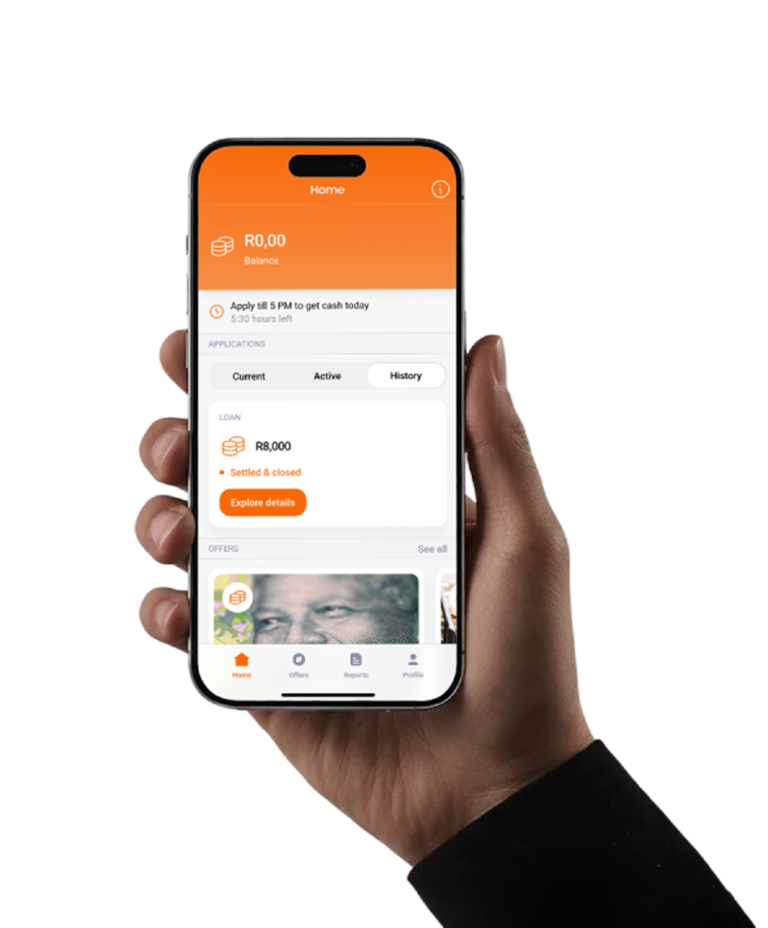
SQAR Wallet loan app home screen showing the balance and the apply-before-5-PM same-day cash notice

Engagement Models: Hire FinTech Developers Your Way

Dedicated Team

A standing product team of engineers, QA, and a PM that works only on your product. Best when the roadmap runs past six months, and the requirements keep evolving.

Staff Augmentation

Hire fintech developers into your existing squad within one to two weeks. Best when you already have technical leadership and need senior hands, not another manager.

Full Project Delivery

We take a scoped product from specification to launch under our own management. Best for a first version with a fixed budget and a hard date.

Need senior fintech engineers on your team next month, not next quarter?

Tell us the stack and the gap. We staff vetted engineers in one to two weeks, with a replacement guarantee if the fit turns out wrong.

Hire your team

FinTech App Development Cost

Most agencies make you sit through three calls before anyone says a number. Here are ours. The exact quote depends on scope, integrations, and regulatory load, but these ranges hold for most of the work we take on.

MVP Launch

$40,000 to $75,000

3 to 4 months

Best for: funded fintech startups validating one core fintech flow with a compliance baseline built in from the start.

Growth Build

$60,000 to $150,000

4 to 7 months

Best for: scaling products, adding integrations, new user roles, and SOC 2 readiness ahead of enterprise deals.

Enterprise Platform

from $125,000

6+ months

Best for: banks and traditional financial institutions with core system integrations, heavy transaction volume, and full audit requirements.

What moves the fintech app development cost most: the number of third-party integrations, the regulatory scope, and any custom scoring or matching logic. Discovery pins the number down before you commit to the build.

Our Reputation on Top Platforms

LITSLINK is recognized across leading industry platforms for delivering fintech software that holds up in production and in audits. The ratings below come from verified client reviews, most written by founders and product leaders we still work with today. See what they say about building with us.

Clutch B2B Ratings & Reviews

4.8

78 reviews

Top Developer
GoodFirms Research & Reviews Platform

4.8

32 reviews

Top Company
Behance Creative Portfolio Platform

150+

design projects

View projects

FinTech App Development: Questions We Hear Most

An MVP typically lands between $60,000 and $120,000. Growth-stage builds run $120,000 to $250,000, and enterprise platforms start at $250,000. Integrations and regulatory scope drive the spread.

A focused MVP ships in about 12 weeks. A crypto exchange with its own matching engine took us six months. Discovery gives you a dated plan, not a shrug.

We start with discovery, map the compliance rules to architecture, then build in two-week sprints with a demo at the end of each one. QA and a penetration test come before launch, and support continues under an SLA afterward.

You do. Source code, designs, and documentation transfer to you from day one, and the contract states it without lawyer-only language.

They enter the project at discovery, where we map every applicable rule to a concrete architecture decision. Compliance built this way costs a fraction of a post-launch retrofit.

Yes. Through staff augmentation, you can hire fintech app developers into your squad within one to two weeks, under your process and your tools.

Have a FinTech Project in Mind?

Tell us what you are building and what is in the way. You get a 30-minute call with someone who has shipped fintech software, a straight read on scope and risk, and a real estimate. No templated reply, and no sales funnel to climb.

Next steps

1

LITSLINK specialist reviews your request and contacts you to discuss the details

2

If needed, we sign an NDA before moving forward

3

We send a project proposal – estimates, timeline, and team CVs included

4

After launch, we stay on for any updates your product needs

Start your project
Litslink icon