
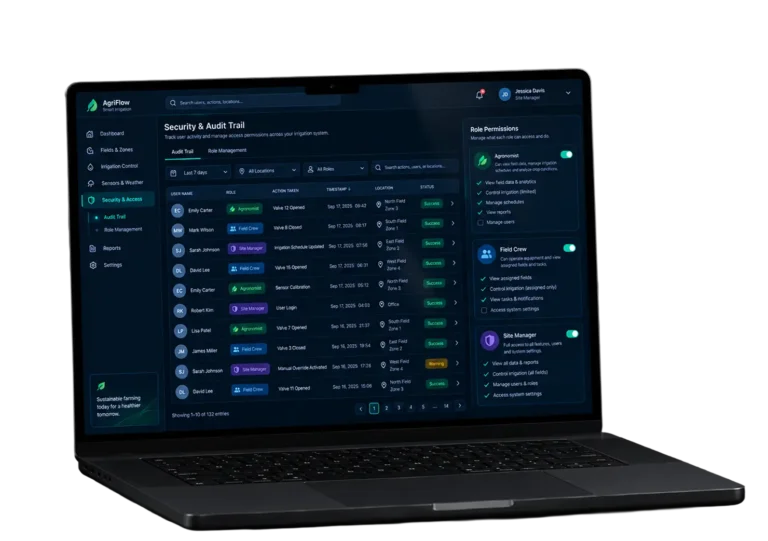







Digital Banking Platforms
Core banking systems, mobile banking apps, account management, and open banking API integration. We build digital banking software for the load a live customer base generates, not the tidy demo dataset.
Services.
End-to-end product development — from AI prototypes to scalable web and mobile platforms.
View all services →Not sure where to start?
Book a free discovery call →Industries.
Domain expertise that shortens discovery and gets compliance right from day one.
View all industries →Not sure where to start?
Book a free discovery call →AI Agents.
Custom AI agents that take routine work off your team — built and deployed in weeks.
View all AI agents →Not sure where to start?
Book a free discovery call →Technologies.
A modern stack for every layer of your product — pick one or let us recommend.
View all technologies →Not sure where to start?
Book a free discovery call →Hire.
Vetted senior engineers who join your team in as little as 48 hours.
View all roles →Not sure where to start?
Book a free discovery call →Case Studies.
1540+ projects delivered for startups and enterprises in 82+ countries.
View all case studies →Not sure where to start?
Book a free discovery call →Resources.
Guides, live sessions and tools to plan your product and budget.
Visit the blog →Not sure where to start?
Book a free discovery call →Company.
The team behind 1540+ projects for 1000+ clients worldwide.
Get in touch →Not sure where to start?
Book a free discovery call →In Numbers
Enter to search·Esc to close
We build secure, scalable fintech platforms — trading systems, digital banking, and payment infrastructure — engineered to your compliance requirements.

Ten product types we build for finance teams. Our fintech solutions and software development services run the full stack, from the data layer up to the screens your users touch.
Core banking systems, mobile banking apps, account management, and open banking API integration. We build digital banking software for the load a live customer base generates, not the tidy demo dataset.
Move money in real time: custom payment gateways, digital wallets, P2P transfers, and multi-currency processing. The PCI DSS controls sit in the architecture where an auditor can find them, not in a doc written the week before review.
Loan origination, credit scoring engines, BNPL flows, and debt management tools. With our lending software development, the underwriting logic stays yours to tune, not a black box you rent from a vendor.
Build out the investment side: robo-advisors, portfolio trackers, trading platforms, and planning tools wired to live market data. Wealth management software that does not stutter when the market does.
From first notice of loss to payout, we automate the path: claims handling, underwriting systems, policy portals, and AI risk scoring. Insurance software development that takes the manual relay out of intake-to-approval. For health insurers, our health insurance software development services cover claims processing, eligibility verification, and member portals.
Your compliance team should not be holding the audit together in a spreadsheet. We build AML/KYC verification, regulatory reporting, and audit trail systems instead. RegTech solutions that produce evidence the team can stand behind.
Catch the fraud while the transaction is still in flight. Real-time fraud detection software, behavioral analytics, and anomaly models, with machine learning fraud detection that reads the pattern before the money clears. Our custom machine learning development services cover data preparation, model training, deployment, and monitoring for fraud detection and risk analysis.
Our smart contract development services cover contract logic for DeFi protocols, digital wallets, and decentralized applications. We handle blockchain in fintech end-to-end, from contract logic to audit, and our full blockchain development services go deeper on the stack.
One codebase, two stores. Full neobank infrastructure (accounts, cards, P2P, budgeting, push notifications) with neobank app development that ships to iOS and Android together.
Turn transaction logs into something your team can act on. BI dashboards, financial reporting tools, customer analytics, and predictive models are the kind of data analytics fintech work that settles an argument with a number.
WHO WE WORK WITH
End-to-end fintech software development services for the teams below, whether you are pre-seed or modernizing a core that predates most of your staff.
You need to be in the market before the next board meeting and compliant before the first real user signs up. We build investor-ready architecture and the regulatory groundwork from sprint one, which is how seed-to-Series B teams ship a fintech MVP without losing a quarter to it.
The core works, but it predates most of your staff and fights every new feature. We modernize legacy core banking, add the digital channels customers expect, and wire in open banking APIs without taking the bank offline to do it.
Volume is the real test, and a lot of platforms fail it quietly. We build custom payment gateways, digital wallets, and multi-currency rails that clear settlement under load and hold the PCI DSS line while they do it.
Your users act on the numbers you put in front of them, so those numbers cannot lag the market. We build robo-advisors, trading platforms, and portfolio tools on live data and the regulatory precision an audit will check.
Every manual step in a claim is a place a customer drops off and a cost you absorb. We automate claims handling, add AI-assisted underwriting, and build customer portals that cut the overhead and move NPS in the right direction.
You have to move fast, but a finance system is not something you rip out on a Friday. We handle legacy modernization, cloud migration, and API-first architecture in phases, so the old system keeps running until the new one has earned the handoff. Explore our cloud application development services for cloud architecture assessments and infrastructure optimization.
A few of the financial products we have built. Tech and metrics below are pulled from the real engagements.
The Challenge
The client needed a private stock exchange that could plug into the Hong Kong Exchange and process thousands of operations per second.
The Solution
We built a high-load trading platform integrated with HKEX, with real-time streaming, reporting charts, order placement and completion, and batch order processing. Players can run internal trades or trade directly on the HKEX from the same interface.
The Result
Sustains 1,000+ operations per second and gives private investment firms and SMEs a secure venue to trade equities on both the private exchange and HKEX.
#TradingPlatform #HighLoad #ReactJS #HKEX

The Challenge
Launch a crypto exchange that could handle order matching, wallets, and compliance without buckling under spikes in trading volume.
The Solution
We built the matching engine, custodial wallet layer, and KYC/AML onboarding, then load-tested the whole path before going live.
The Result
A crypto exchange that keeps order execution fast under load and keeps onboarding inside the compliance line.
#CryptoExchange #Web3 #KYC #Microservices

The Challenge
An enterprise finance team caught only 10-15% of transactions through manual spot-checks. The rest passed on trust, and errors surfaced at the quarterly review.
The Solution
We built an AI anomaly-detection assistant that integrates into the ERP workflow and flags deviations the moment they appear, across five ERP modules at once.
The Result
85%+ less manual anomaly review, a 60-70% drop in false positives, and post-close triage cut from days to hours.
#AnomalyDetection #AIinFinance #DataEngineering #ERP

Challenge
The lender’s old rules engine was rigid. It rejected creditworthy borrowers who fell just outside its thresholds and waved through risk it had no way to see, because a fixed set of if-then rules cannot read patterns across a borrower’s full financial behavior. Every policy tweak meant a developer ticket and a release.
Solution
We built an ML credit scoring model trained on the client’s own lending history, so the score reflects how their borrowers actually repay rather than a generic bureau average. The model weighs a wider set of signals than the old rules could hold, and every decision ships with an explainable output the risk team can read, defend to an auditor, and adjust. Underwriters change thresholds and policy from the interface instead of filing a change request.
Result
Underwriting the lender can read, explain, and adjust on their own, in place of a black box bought off a vendor. Good borrowers the old engine would have turned away get a fair second look, and the risk team keeps the audit trail it needs.
#CreditScoring #MachineLearning #Python #Lending #ExplainableAI

Challenge
Approvals ran on a manual review that could take up to 48 hours. For a short-term loan product, lag is fatal. Borrowers who need cash today do not wait two days, and many have already taken a competitor’s offer before the decision came back.
Solution
We rebuilt the approval path to run the moment an application lands. Automated identity verification handles KYC, bank-data aggregation pulls income and cash-flow signals straight from the applicant’s accounts, and a decisioning flow scores the application and returns an answer in real time. The risk rules a human used to apply by hand are now encoded in the flow, so speed does not cost the lender control.
Result
Approvals dropped from up to 48 hours to minutes, with the same risk controls running underneath. Borrowers get an answer while they are still in the app, and the lender stops losing them to the wait.
#LendingApp #KYC #ReactNative #Automation

Challenge
The client wanted a DeFi lending product on the NEAR protocol, with on-chain logic that users could verify rather than take on faith. Lending and collateral mechanics move real money, so the contract behavior had to be correct and legible, not just functional.
Solution
We wrote the smart contracts that run the lending, borrowing, and collateral logic, then put them through an audit before anything touched mainnet. On top of the chain, we built an interface that a non-crypto user could actually follow, so wallets, collateral ratios, and on-chain transactions sit behind screens that read like a normal finance app. The contract logic stays transparent and verifiable for anyone who wants to check it.
Result
A working on-chain lending platform where the rules live in audited smart contracts, open to verification. Users work through a clean front end while the trust sits in the code, not in a promise.
#DeFi #NEAR #SmartContracts #Web3

Challenge
Traders needed a platform that stayed fast and reliable while the market moved, with live data and a UI that got out of the way during active trading. In crypto, latency and a cluttered screen cost users money and trust.
Solution
We built the trading engine, wired in real-time market-data feeds, and added charting that updates live as prices move. Then we tuned the whole path for latency, so order entry, book updates, and execution hold up when trading gets heavy. The interface keeps the controls a trader reaches for within reach and pushes the rest aside.
Result
A responsive trading platform that does not slow down when the order book gets busy. Traders read live prices, place orders, and follow the market without the lag that breaks concentration.
#TradingPlatform #RealTimeData #Crypto #React

Fintech costs swing with the product type, compliance scope, integrations, and team setup. Here is a practical breakdown by tier, from an MVP you can put in front of investors to an enterprise-grade financial platform. The point is to give you a real number before you ever pick up the phone.
For seed and early-stage startups, validating an idea in the market.
$40,000 – $90,000 *
3 – 4 months
Best for: pre-fundraise founders, proof-of-concept
Get estimateFor growing fintechs, neobanks, and lending or payment platforms with real users.
$90,000 – $250,000 *
5 – 9 months
Best for: neobanks, lending platforms, payment companies, InsurTech startups, and Series A-B fintechs scaling a product.
Get estimateFor large financial institutions, banks, insurers, and fintech products with complex integration architecture.
$250,000+ *
9 – 18+ months (phased delivery)
Best for: banks, enterprise WealthTech/InsurTech
Get estimate*All estimates are project-specific. Final scope and pricing are provided after a discovery session.
DEVELOPMENT PROCESS
Step 1 of 6
Requirements, compliance analysis, tech stack selection, and architecture review. You leave with a scope document, a risk map, and an initial estimate.
Step 2 of 6
We design a secure, scalable architecture and the product UX — payment rails, data model, and infrastructure chosen for your compliance scope and load.
Step 3 of 6
Two-week sprints with working demos. Security is engineered in at every layer — PCI DSS, SOC 2, and AML controls from the first commit.
Step 4 of 6
Automated and manual QA, penetration testing, and dependency scanning validate correctness and security before every release.
Step 5 of 6
Zero-downtime deployment with monitoring, alerting, and rollback in place. We support cutover and go-live.
Step 6 of 6
Ongoing maintenance, feature delivery, and scaling as your transaction volume and regulatory needs grow.
Step 1 of 6
Requirements, compliance analysis, tech stack selection, and architecture review. You leave with a scope document, a risk map, and an initial estimate.
Step 2 of 6
We design a secure, scalable architecture and the product UX — payment rails, data model, and infrastructure chosen for your compliance scope and load.
Step 3 of 6
Two-week sprints with working demos. Security is engineered in at every layer — PCI DSS, SOC 2, and AML controls from the first commit.
Step 4 of 6
Automated and manual QA, penetration testing, and dependency scanning validate correctness and security before every release.
Step 5 of 6
Zero-downtime deployment with monitoring, alerting, and rollback in place. We support cutover and go-live.
Step 6 of 6
Ongoing maintenance, feature delivery, and scaling as your transaction volume and regulatory needs grow.
US business hours communication: Your PM is available in your timezone. No async-only engagement, no waiting overnight for an answer.
LITSLINK is recognized across leading industry platforms for delivering secure, high-quality fintech software.
WHY CUSTOM
Off-the-shelf fintech platforms get you to market fast. They also come with hard ceilings on data ownership, compliance control, and the things that make your product different from the next one. Custom fintech solutions are built around your workflows, your regulatory reality, and your business model, which leaves you in control as you grow.
Your financial data sits in your own infrastructure, so you set access, retention, and portability yourself. When an examiner or a CCPA request comes in, you answer straight from your system, and audits move faster because you know exactly where every record lives.
In finance, the workflow is the product, and custom software encodes your real decision path: the underwriter’s exception, the compliance review, the override on a flagged transaction. The system carries that logic for your team, which speeds every cycle and keeps onboarding short.
You own the billing logic, so any revenue model works: subscription tiers, transaction fees, freemium, white-label, or an API marketplace. A new model ships in a sprint and stays yours. The upside is real: 50 basis points on $200M a year is about $1M in revenue, on terms you set.
Built cloud-native, the platform grows with your business plan, so transaction volume, new user tiers, and fresh markets come down to the capacity you control. A hosted platform charging 30 basis points on $500M a year runs about $1.5M, and that fee climbs with every transaction. Your own stack carries the same volume for far less.
PCI DSS, SOC 2, AML/KYC, GDPR, and state-level rules are engineered into the architecture from day one and mapped to your exact mix of states, products, and licenses. Audit trails, access controls, and data flows are already in place, so producing evidence is a query you run on demand.
You integrate exactly the partners your model needs: core banking APIs, credit bureaus, KYC providers, payment rails, and data aggregators. Because you own the integration layer, each provider is a roadmap choice, and you pick the best one for every job and swap freely as the market moves.
A unique, proprietary product your competitors using the same SaaS tools can’t replicate.
Want to see how custom fintech development fits your roadmap?
Talk to our teamUse this checklist to evaluate whether your team, tech stack, and compliance posture are ready for a fintech build.
It depends on scope, stack, and compliance requirements. MVPs typically start around $40,000, full platforms run $90,000 to $250,000, and enterprise builds go higher. You get a detailed estimate after a free consultation, not a guess.
A simple MVP takes 3-4 months. A full platform runs 5-9 months, and an enterprise build runs 9-18+ months in phases. After the discovery phase, you get a detailed roadmap with dates, not a vague promise.
Yes. PCI DSS requirements are built into the architecture from day one of development, not bolted on before launch.
Yes. We have integrated Plaid, Stripe, Dwolla, Braintree, and other fintech platforms, including the fallback flows for when a provider is down.
Yes. We specialize in fast MVPs for seed and Series A startups, with compliant architecture from the first sprint.
Discovery, architecture, agile sprints, QA and security testing, launch, and support. The full breakdown is in the process section above.
Yes. Legacy modernization for banks and financial companies is a core part of our work, done in phases to avoid a risky single cutover.
End-to-end encryption, zero-trust architecture, regular penetration testing, and SOC 2-aligned controls are designed into the system rather than added at the end.
You do, in full. The code, the architecture, and the intellectual property are yours from day one, with no licensing strings and no lock-in to us as a vendor.
Yes. We start with an audit of the existing codebase, map the risks, and give you a plan before touching anything, then pick up the build or the fixes from there.
If you’re evaluating fintech software development and want to discuss your use case, compliance constraints, and a realistic path forward, we’d like to hear from you. Our team reviews every inquiry and responds within 48 hours.
Next steps
A LITSLINK specialist reviews your request and contacts you to discuss the details
If needed, we sign an NDA before moving forward
We send a project proposal — estimates, timeline, and team CVs included
After launch, we stay on for any updates your product needs
Thank you! Your request has been sent — our team will get back to you within 48 hours.

AI in fintech has changed the face of the financial industry in several ways during this time of rapidly developing technology. The utilization of…
13 min read
The right budget can launch a unicorn. The wrong one can kill your fintech dream. You’re prepared to release a financial app, such as…
13 min read
Your mobile banking app could be the money machine users trust—secure, fast, and game-changing. Mobile banking app development is your ticket to delivering seamless…
8 min read


