



Building a Car Subscription and Fleet Management App
- 3 months from launch to first paying subscribers
- ~18% lower running cost per vehicle in year one
- <24 hrs from application to approved vehicle
- ~2,000 miles earlier average service completion
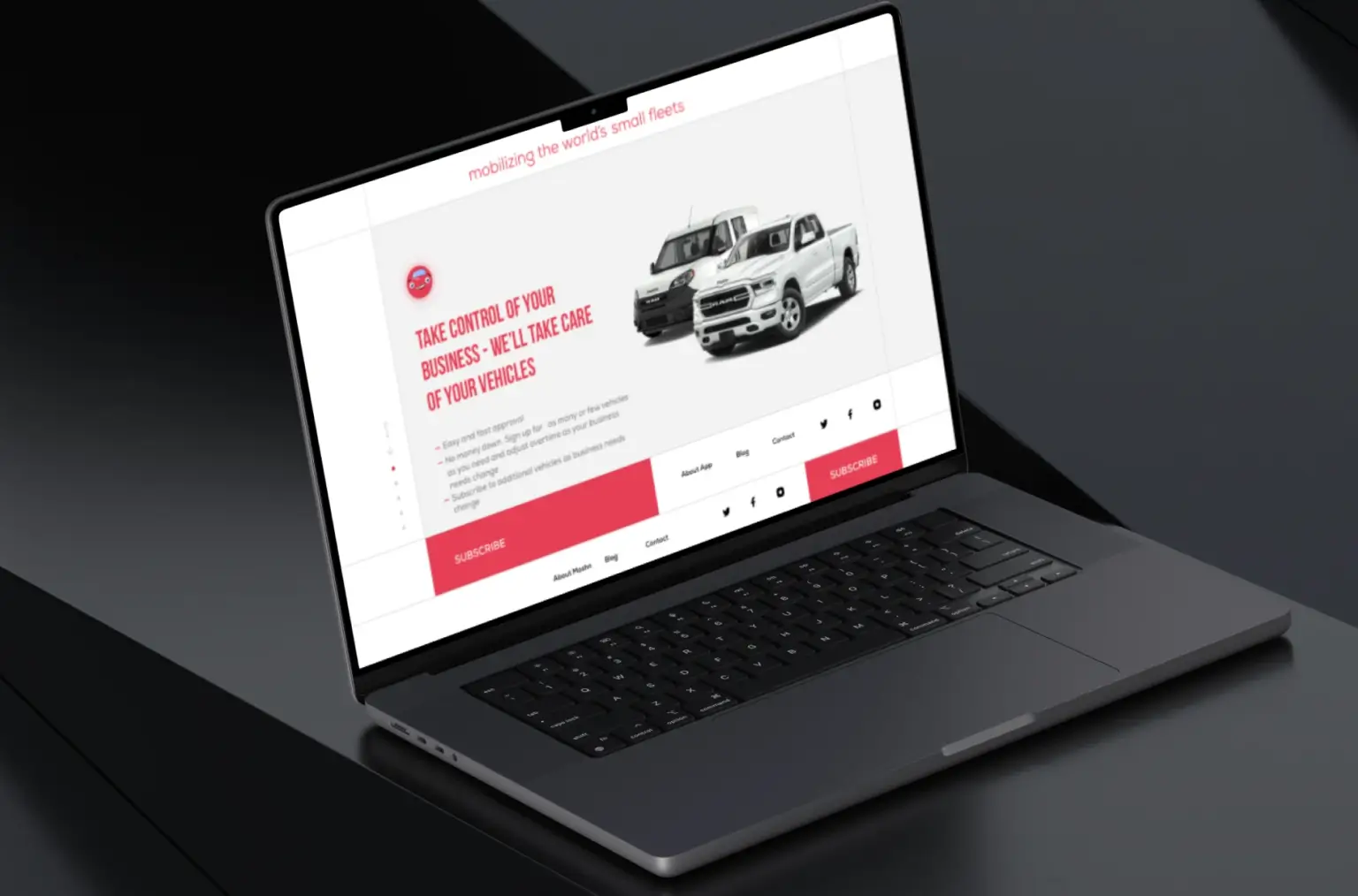
Small businesses running three to fifteen vans rarely have a fleet manager, just an owner with a spreadsheet. This fleet management app development project gave those owners one place to subscribe to commercial vehicles, watch vehicle locations in real time, and stay ahead of service, with no lease office and no maintenance binder.
Project Details
The client, an experienced operator and entrepreneur in North America, came to us with a concept his market had not seen: commercial vehicles by subscription for small businesses, with fleet management built into the same product. No app, no team, no store listing. He needed a partner to shape the concept, build the apps and the web platform, and get the business running.


Business Challenge: Building a Fleet Management Solution That Grows With Small Businesses
The customer the client had in mind is a plumbing contractor, a caterer, or a courier with two to ten commercial vehicles. Those owners leased through dealer financing that took five to seven business days, paid down on every unit, and ran their vehicle fleets from a text thread and a whiteboard. Busy season, no van. Slow season, stuck paying for one.
Subscription fixes the money side. The catch is that a subscription business only makes margin if every vehicle comes back serviced and in good shape, so the client needed fleet management inside the same product, not a separate fleet management application bolted on later. Three problems shaped the brief.

Real-Time Fleet Visibility
Owners knew where a van was when the driver texted back. With no GPS tracking and no real-time data on the vehicles, a dispatch question took 10 to 20 minutes to answer, and the answer was stale by the time it arrived.

Driver Performance and Safety Monitoring
Nobody logged who drove which vehicle on which day. Damage, mileage spikes, and a speeding complaint all landed on the owner with no record to check, so driver behavior questions ended in guesswork and driver safety was a hope rather than a policy.

Maintenance and Cost Optimization
Oil changes and brake checks ran roughly 2,000 miles late on average because reminders lived on paper. Late vehicle maintenance meant bigger repair bills, worse fuel efficiency, and downtime, and under a subscription model, that cost sat with the client, not the customer.
Technologies Behind the Custom Fleet Management Software


Our Fleet Management App Development Solution
The first product decision was about roles, not features. A driver, a fleet manager, and a subscribing customer want different things from the same fleet management app, and one interface serving all three would have buried each of them in menus. So we split it: three iOS apps for fleet managers, drivers, and customers, plus a web portal where the client’s team runs the business.
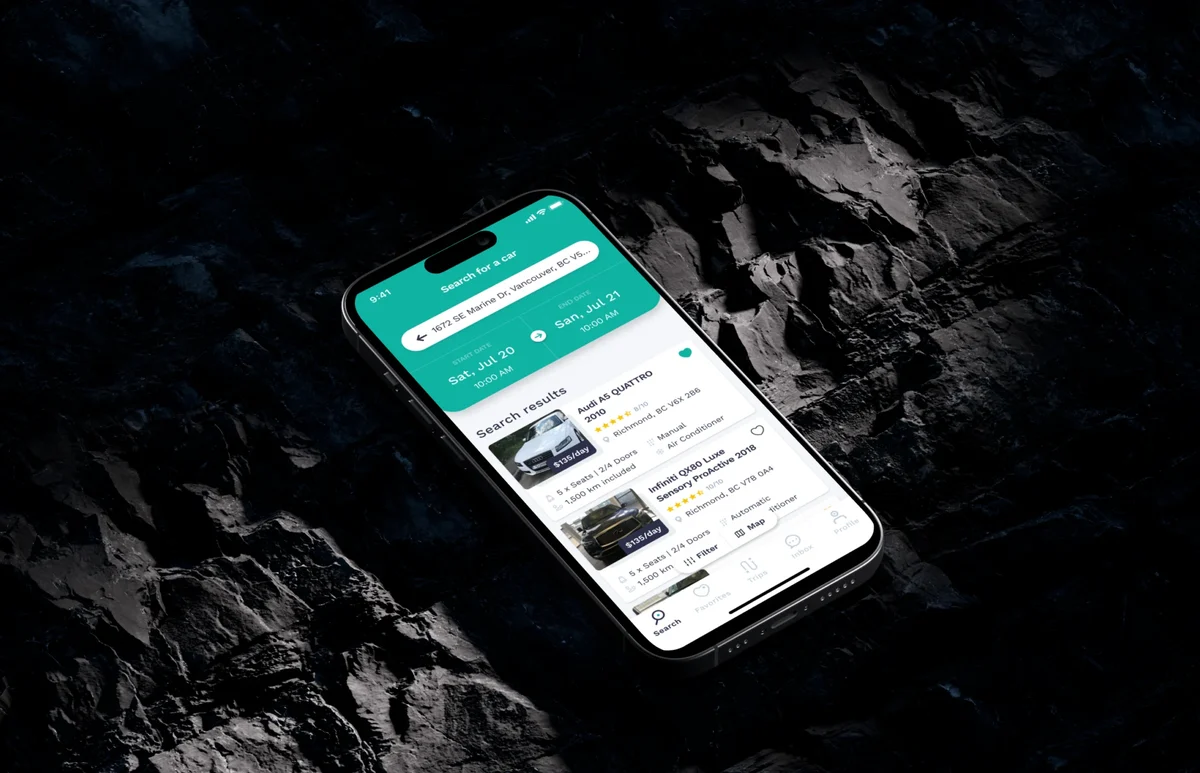
The customer app handles the subscription: catalog, application, approval status, adding a second unit later. The driver app opens with one question: which vehicle are you driving today? Then it logs the shift against it. The fleet management app for managers carries the map and the service calendar. Underneath, one record per vehicle, so the historical data a manager sees on Tuesday matches what the driver logged on Monday.
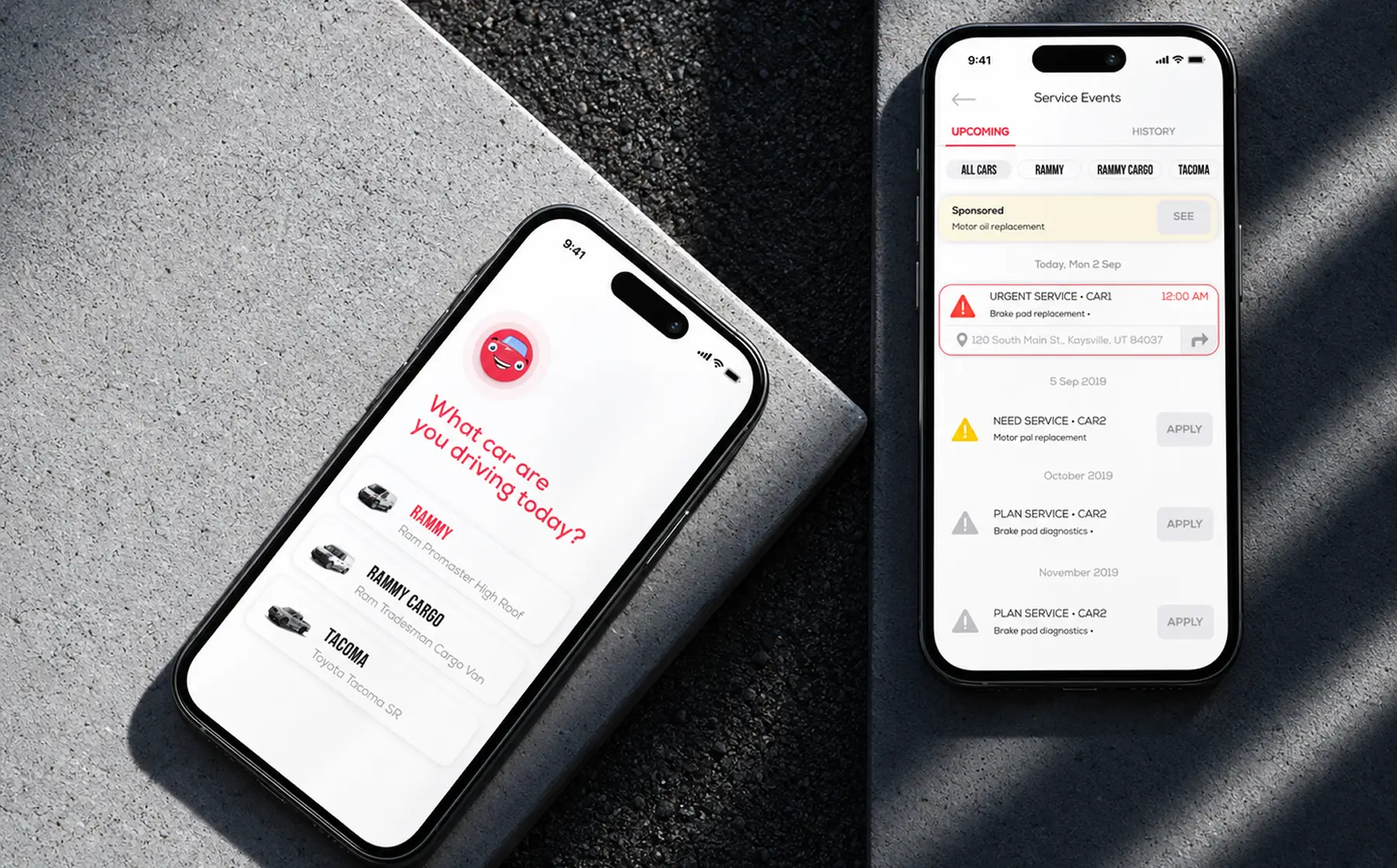
This is custom fleet management software built around a subscription model, and that changed the details. Service events carry the partner shop address and a one-tap route to it, because the client, not the driver, decides where a subscribed van gets serviced. Sponsored partner offers sit in the same feed. Off-the-shelf software solutions didn’t handle that arrangement, and forcing it into generic fleet-tracking software would have cost more than building it.
Real-Time Vehicle Tracking
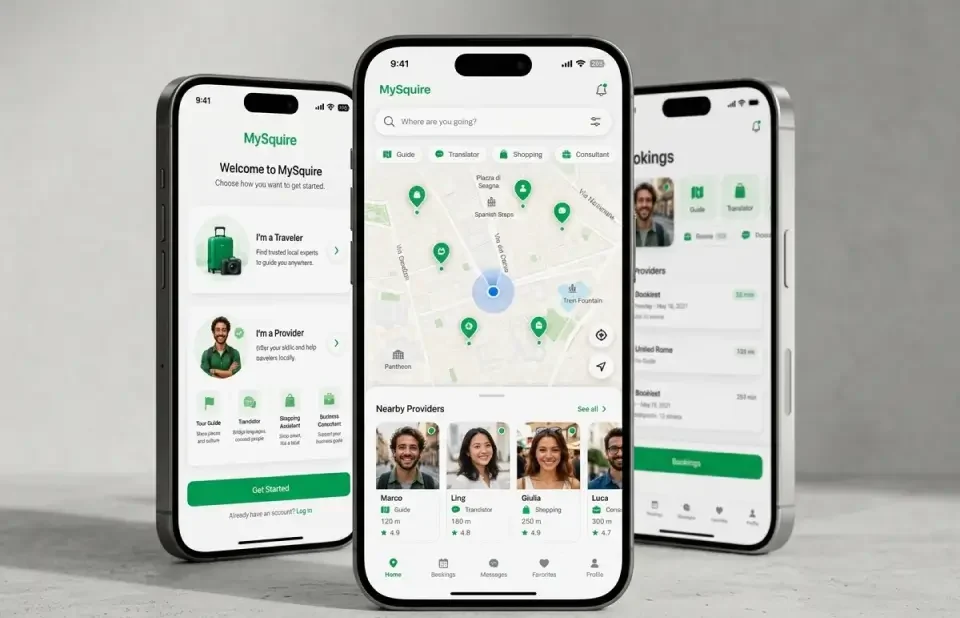
A live map shows every subscribed vehicle with a filter chip per unit. Fleet managers see vehicle locations at a glance, and the dispatch question that took 15 minutes now takes one look.
Route Optimization
When a service event is due, the app orders the day's stops and points the driver to the nearest partner shop with an open slot. Early versions used simple distance rules, and the client is now testing machine learning algorithms trained on completed trips.
Driver Behavior Monitoring
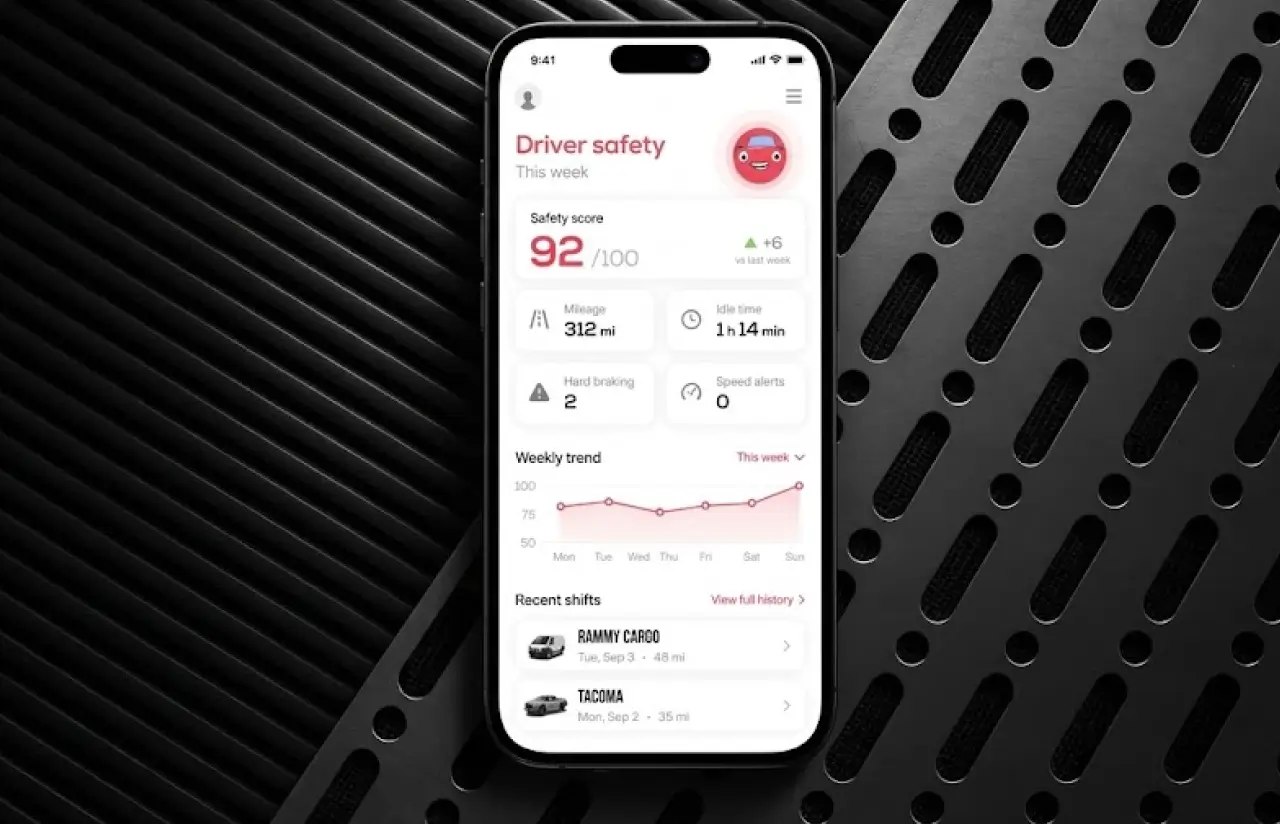
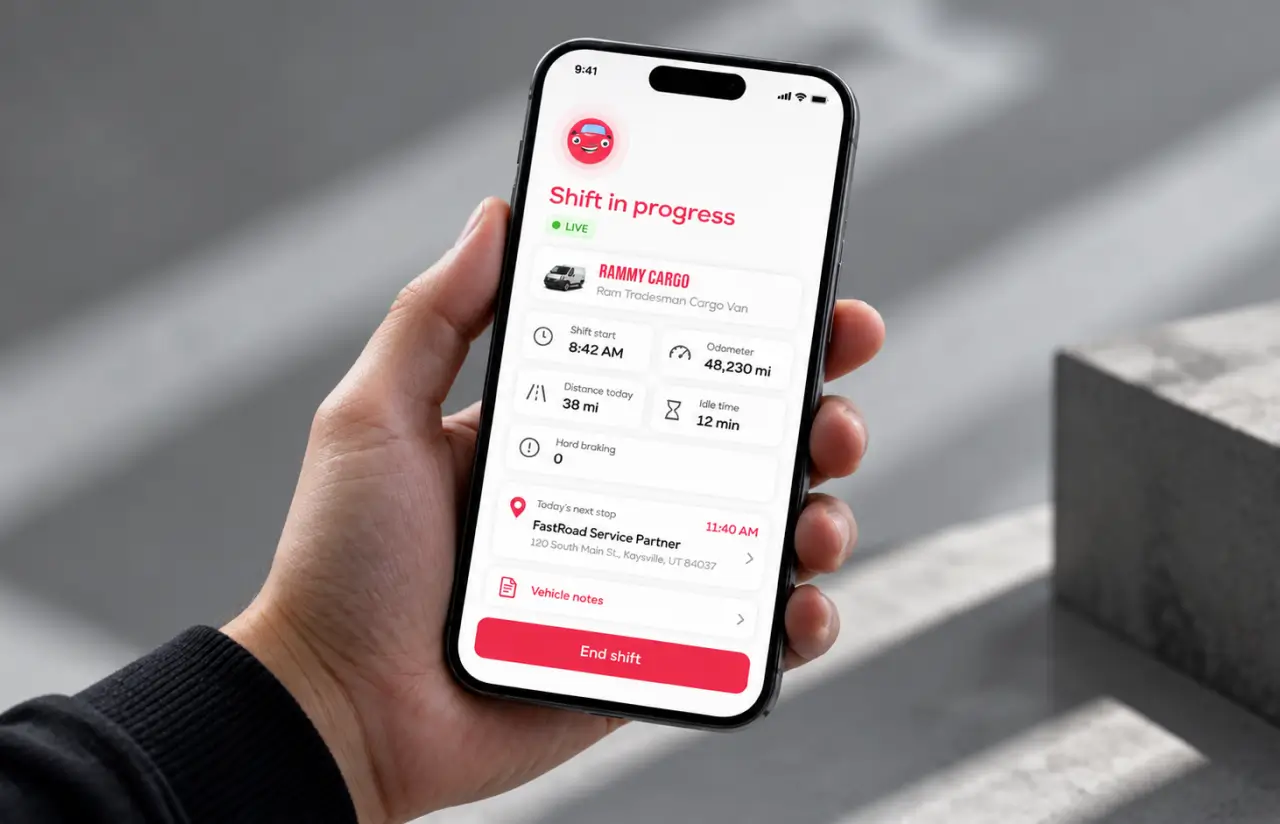
Every shift is tied to a named driver and a named vehicle. Mileage per shift, idle time, and hard-braking flags from the phone sensors build a driver performance record that owners can open when a complaint comes in, and a driver safety score they can coach against.
Predictive Maintenance Alerts
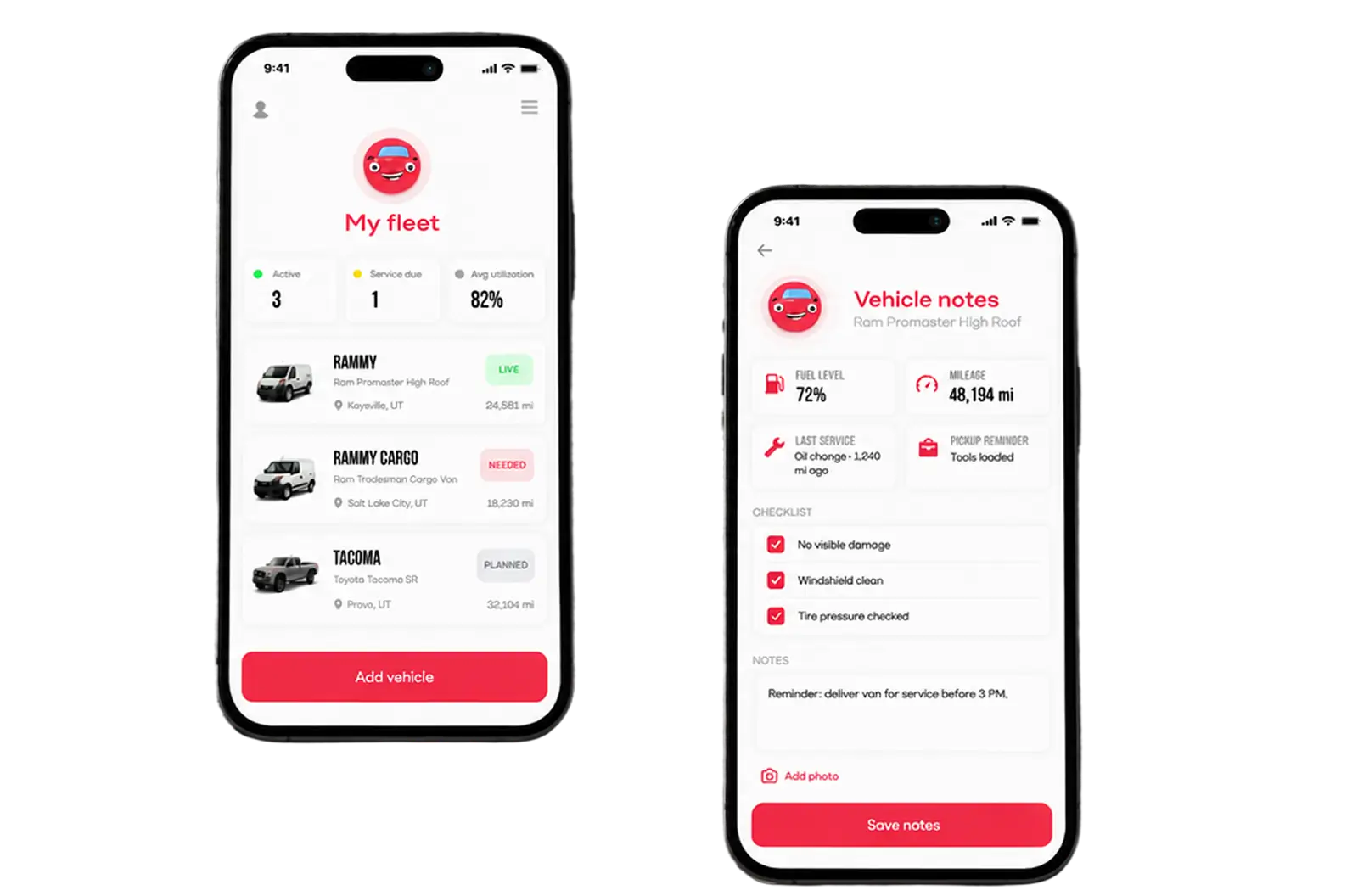
Maintenance management runs on a ranking: each service event is urgent, needed, or planned, based on mileage, elapsed time, and prior history. An urgent brake job shows in red with the shop address, and an SMS goes out the same minute.
Mobile Driver App
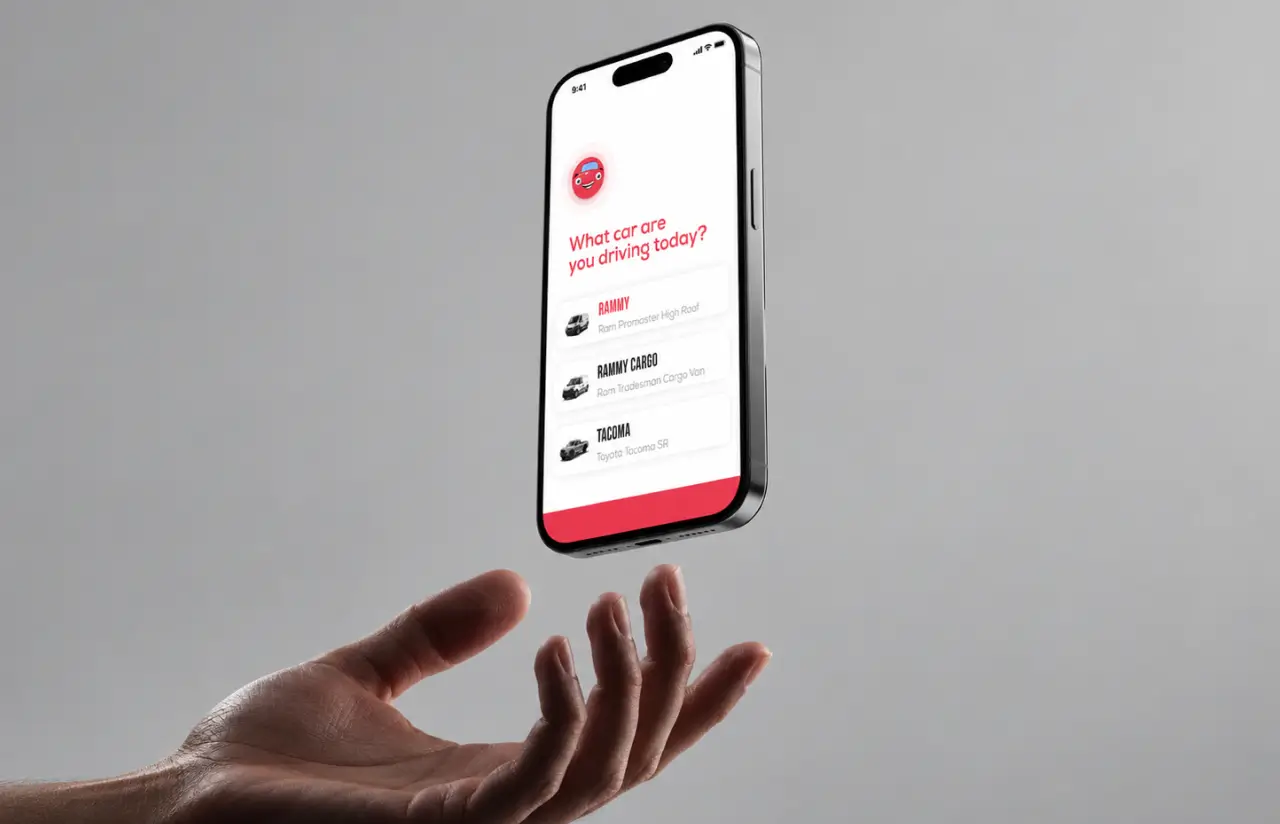
Two taps to start a shift. Drivers pick their vehicle from a short list with a photo and model name, then get pickup reminders, service stops, and vehicle notes without calling the office.
Fleet Analytics Dashboard
The Vue.js portal rolls fleet data into utilization per vehicle, cost per mile, fuel efficiency, and service compliance, so managers can ensure compliance with the subscription terms. Simple data analytics on fleet performance let owners drop the unit that sits in the lot four days a week.
Scrum Methodology
Project Journey
The build ran in two-week sprints for a little over eight months, starting with a product design phase that produced the architecture, three user flows, and a clickable prototype the client used to pitch his first prospects. Sprint 5 shipped the driver app to TestFlight, sprint 9 put the map in front of the pilot fleet, and sprint 14 added the service event feed. All three apps and the portal cleared App Store review before the sprint 16 demo.
How the Fleet Management App Works
- An owner picks a van or pickup from the catalog in the customer app and submits a short application. Approval comes back within a day, confirmed by SMS.
- The admin assigns the unit in the web portal. It appears in the owner's app with model, plate, and service baseline filled in.
- The driver opens the app, taps the vehicle for the day, and the shift is logged against that unit. Location sharing starts automatically.
- Fleet managers watch vehicle locations on a live map filtered per unit. Real-time monitoring replaces the text-and-wait routine.
- Mileage, elapsed time, and prior history rank each upcoming job as urgent, needed, or planned. Urgent ones push an SMS with the partner shop address and a route.
- Owners subscribe to an extra vehicle before the busy season or return one when work slows, straight from the app, with no new financing paperwork.
Scrum Process Flow
A three-app product cannot be reviewed from a slide deck, so every second Friday the client drove a pilot van with the driver app running while the team watched the map in the portal. Mobile app development on that cadence surfaced problems a demo would have hidden, including the sprint 11 battery drain and a service alert that fired twice. Every feature was seen working on a real vehicle before it reached the App Store.
How We Delivered the Custom Fleet Management App Development Project
- We define the project goal together, agree on priority features, and set a realistic delivery date and budget.
- We build a ranked list of everything the product needs, starting with what matters most to the business.
- Work is broken into 2-week cycles. At the start of each, we select the next set of features to deliver.
- The team builds, tests, and integrates features throughout the sprint.
- At the end of every sprint, you see working software and give feedback that shapes the next cycle.
- Each sprint produces a shippable piece of the product. We review what worked, adjust, and move forward.
UI/UX Design: Intuitive Interface for Complex Fleet Operations
Three audiences, one visual language. The brand mark is a smiling red car, on every screen for a reason: the product wants commercial vehicles to feel like a friendly utility, not a finance contract. Magenta on white, one display typeface for vehicle names, plenty of empty space.
The driver app got the most design attention because drivers use it in the cab. We watched four pilot drivers for a day before we drew the first screen. They wanted two things: which van, and where to next. So the home screen is one question with three large cards, each with a photo and a plain model name like Ram ProMaster High Roof. No login prompt on every open, no settings menu up front.
The fleet manager side borrows from tools owners already know. The map has filter chips across the top, one per vehicle, so a manager taps Tacoma and sees only the Tacoma. Service events read like a calendar: today first, then upcoming dates, each card color-coded by urgency with an apply button and the shop address on one line. Urgency carries an icon as well as a color, because red and yellow alone fail for roughly one in twelve men.
Results
Before
- ✕Five to seven business days to lease a vehicle through dealer financing, with a down payment on each unit
- ✕Vehicle location known only when a driver replied to a text, usually 10 to 20 minutes later
- ✕No record of who drove which vehicle on which day
- ✕Oil changes and brake checks running roughly 2,000 miles late, tracked on a whiteboard
- ✕No shared view of fleet operations across the owner, the drivers, and the vehicle provider
After
- ✔Under 24 hours from application to approved vehicle, with no money down
- ✔Live vehicle locations for every unit, filterable per vehicle, on the fleet manager's phone
- ✔Every shift logged to a named driver, with mileage, idle time, and braking flags attached
- ✔Service completed ~2,000 miles earlier on average, with urgent jobs alerted by SMS the same minute
- ✔One backend, three apps, and one web portal covering the full subscription and fleet lifecycle
Impact of the Fleet Management App After Launch
Verified Reviews
Our Reputation on Top Platforms
LITSLINK holds a 4.8 rating on Clutch and GoodFirms, with Top Developer and Top Company badges on both. Clients writing about our product design and web development work most often mention that the team ships on real devices, keeps communication steady across time zones, and pushes back when a requirement would hurt the product.
Have a Management Software Project in Mind?
Need fleet management app development for a subscription service, a delivery operation, or a trade business with a growing fleet? Custom fleet management software starts with three questions: how many vehicles you run, who needs to see them, and what breaks most often. Send us those, and a LITSLINK specialist gets back to you within 48 hours.
Thank you for your message. It has been sent.