




Building a Peer-to-Peer Car Rental App with AI-Powered Fleet Management and P2P Marketplace Features
- ~22% higher earnings per listed car
- Under 3 min from first search to booking request
- ~96% of trips closed without a dispute
- 3 user roles on one React Native codebase
A mobility startup wanted private car owners to earn from vehicles that sit parked most of the week, and renters to skip the rental counter. LITSLINK handled end-to-end car rental app development: iOS and Android apps for renters and hosts, a Vue.js admin dashboard, and a Node.js backend that holds payments until the keys change hands.
Request similar solution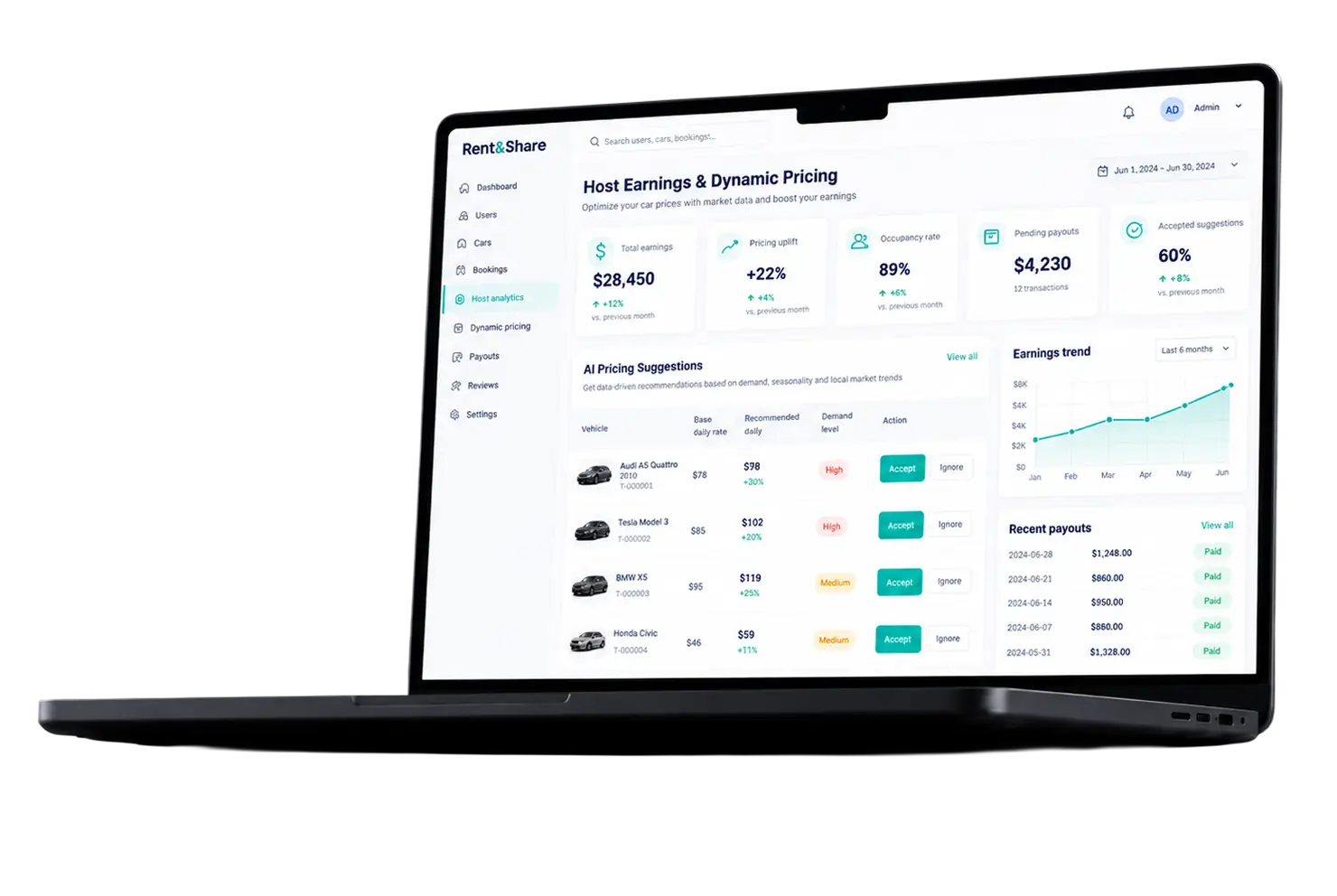
Project Details
The client, a mobility and transportation startup in British Columbia, had tested demand the hard way: a private Facebook group, about 40 car owners, and a spreadsheet of who had which car and when. Bookings came in as messages, deposits by e-transfer, and every handover took a phone call. They needed their own car rental platform: one car rental app where the whole loop, from search to host payout, ran without a founder in the middle.
 Client
- Rent&Share
 Industry
- Automotive
 Solution
- AI-powered car rental marketplace with fleet management
 Service
- Product Design + Software Development + Full Cycle QA + Publishing
 Platform
- Mobile (iOS, Android) and Web Dashboard
 Scope
- Mobile, Web, Backend, AI/ML, Payment Integration, QA, Design
 Duration
- 24+ months
 Location
- Canada
Business Challenge: Creating a Comprehensive Car Rental Marketplace Platform
The pilot proved one thing about the car rental business they wanted to run. Car owners wanted to rent out their vehicles, and renters wanted a car rental service that was cheaper and closer than the airport counter. The car rental experience people described in the pilot survey was mostly about distance. What the pilot could not do was grow past the founders’ inbox. Forty cars took two people most of the day to coordinate. Two hundred would not have worked at all.
Traditional rental companies run on a depot, a fleet they own, and a desk, and their business models assume all three. Most of the global car rental market still works that way. Anyone trying to build a car rental business peer-to-peer has none of it. The rental fleet belongs to hundreds of strangers, the cars live in driveways across a metro area, and trust has to come from the car rental app itself, since digital platforms have nobody standing at a counter checking a license. That corner of the car rental industry is a competitive market, and the client wanted a piece of it, with combined roles, so the same person could rent a car on Tuesday and list their own on Friday. Three problems sat at the center of the build.
-

Intelligent Vehicle Availability Management
Hosts drive their own cars. A listing that shows a car as free while the owner has it at work produces cancellations, and cancellations kill a young marketplace. Real-time car availability had to come from hosts, not from a static calendar, and the car rental app had to show it within seconds.
-

Consistent Multi-Platform Experience
Renters, hosts, and admins each needed a different view of the same booking, across iOS, Android, and a web dashboard. Two mobile operating systems and a browser, each with its own codebase, would have tripled QA time for a seven-person team.
-

Secure Peer-to-Peer Transaction Framework
Money moves between two private individuals with a startup in the middle. Deposits, damage holds, host payouts, and local payment gateways all had to run as in-app transactions with secure payments, and without the platform ever storing a card number.
Technologies Behind the Car Rental Marketplace App



Our Car Rental App Development Solution
One question drove the architecture: what has to be true before a stranger hands over car keys? A booking both sides can see, a payment that is already held, and a photo record of the car at handover. Everything else in the car rental app exists to get two people to that moment.
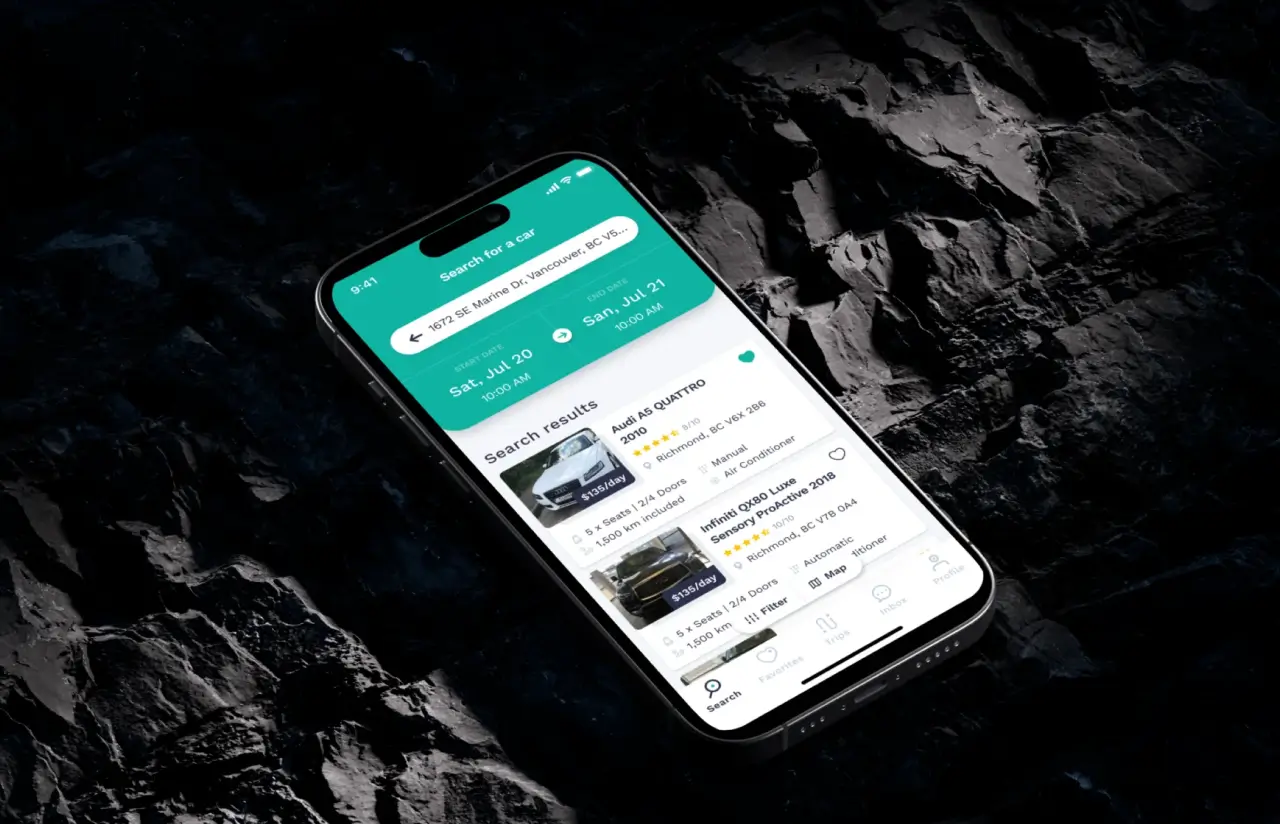
Search sits on top of live host calendars, so real-time availability is the product rather than a feature. A host blocks the days they need the car, and the listing drops out of results for those dates. Renters open the car rental app, set a pickup address, a start date, and an end date, then see a ranked list or a map. Ranking weighs distance, price, host rating, and response time, so a well-reviewed car eight minutes away outranks a cheaper one across the bridge. A typical search returns 15 to 20 rental cars in about 1.2 seconds.
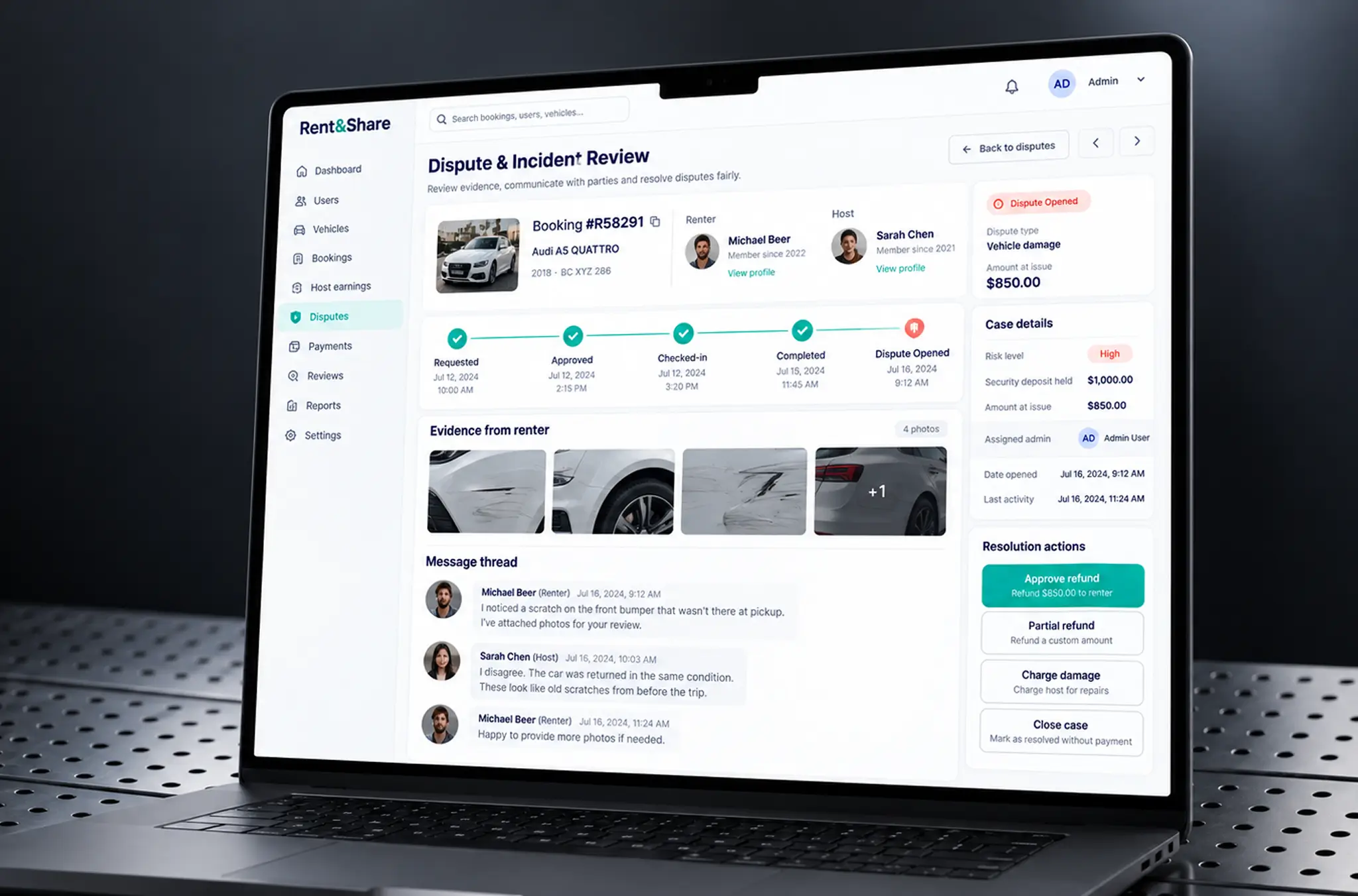
React Native carried both mobile apps from one codebase, which is how seven people shipped iOS and Android in step. The car rental software behind the admin dashboard, built in Vue.js, gives the operations team a per-user view: identity documents, cards and bank deposits on file, a wallet with a full activity log, misconduct flags, and reviews. Node.js runs the API, the booking state machine, and the third-party integrations in between: payment gateways, maps, push, and identity checks. Hosts with several cars get a compact fleet management view, with vehicle management and payouts in one place, and a few small rental companies joined as hosts too, one of them with more than 50 vehicles listed.
Pricing was the part the client kept coming back to. Dynamic pricing in a car rental app usually means a black box, so we went the other way. Hosts set a base daily rate, and the platform suggests an adjustment based on local demand, season, day of the week, and how far ahead the booking lands. Hosts can accept the suggestion or ignore it. About 60% accepted it within the first quarter, and those listings earned roughly 22% more per booked day. The key features below are must-haves for a car rental app like this, and the ones renters and hosts touch on every trip.
-
AI-Powered Dynamic Pricing
Dynamic pricing suggestions built from local demand, season, and lead time, with the host keeping the final say. Listings that follow the suggestions earned about 22% more per booked day in year one.
-
Real-Time Vehicle Availability
Host calendars feed search directly, so fleet availability in the car rental app is never out of date. Block a weekend, and the car leaves results for those dates in under a second. Cancellations caused by stale car availability fell below 2% of bookings.
-
Peer-to-Peer Marketplace
One account, two roles. A user can rent a car this week and list their own the next. Host profiles show rating, cars hosted, and join date, and in-app chat plus push notifications cover questions before check-in.
-
Integrated Payment Processing
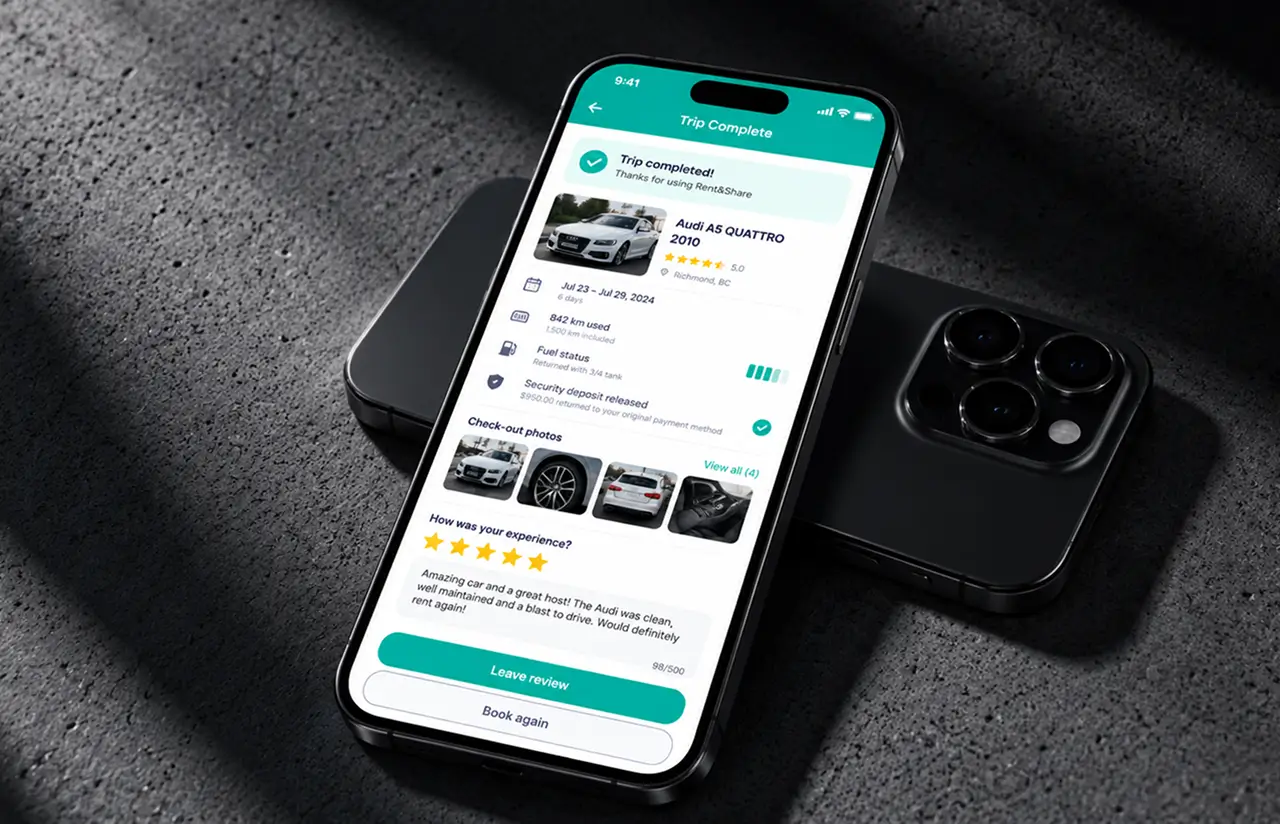
Card payments run through secure payment gateways with tokenization, so the platform never stores a card number. Digital payments are held at booking, the security deposit is released after the trip, and hosts get paid to a linked bank account.
-
Digital Key Management
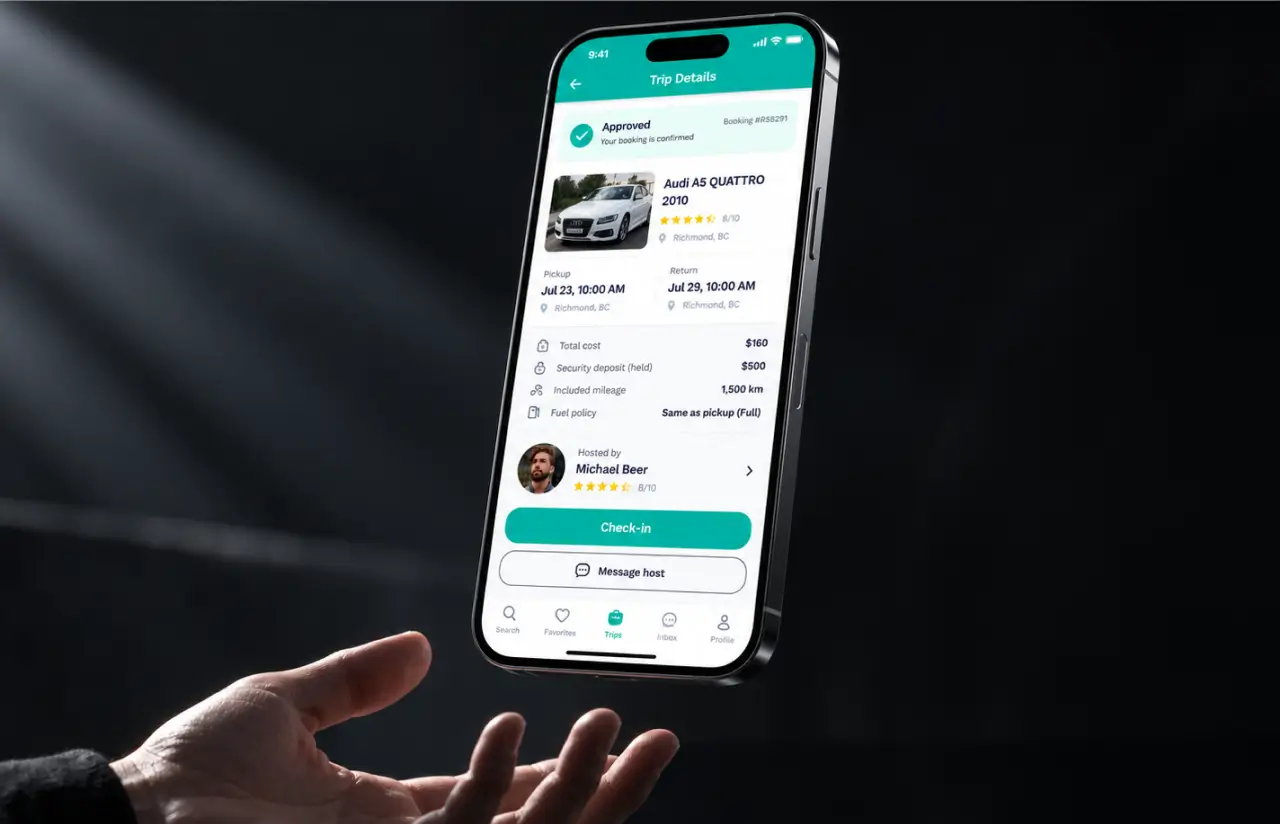
Check-in lives in the car rental app: both sides confirm the handover, timestamped photos of the car go on the booking record, and the trip clock starts. The same flow closes the trip and settles fuel or mileage differences.
-
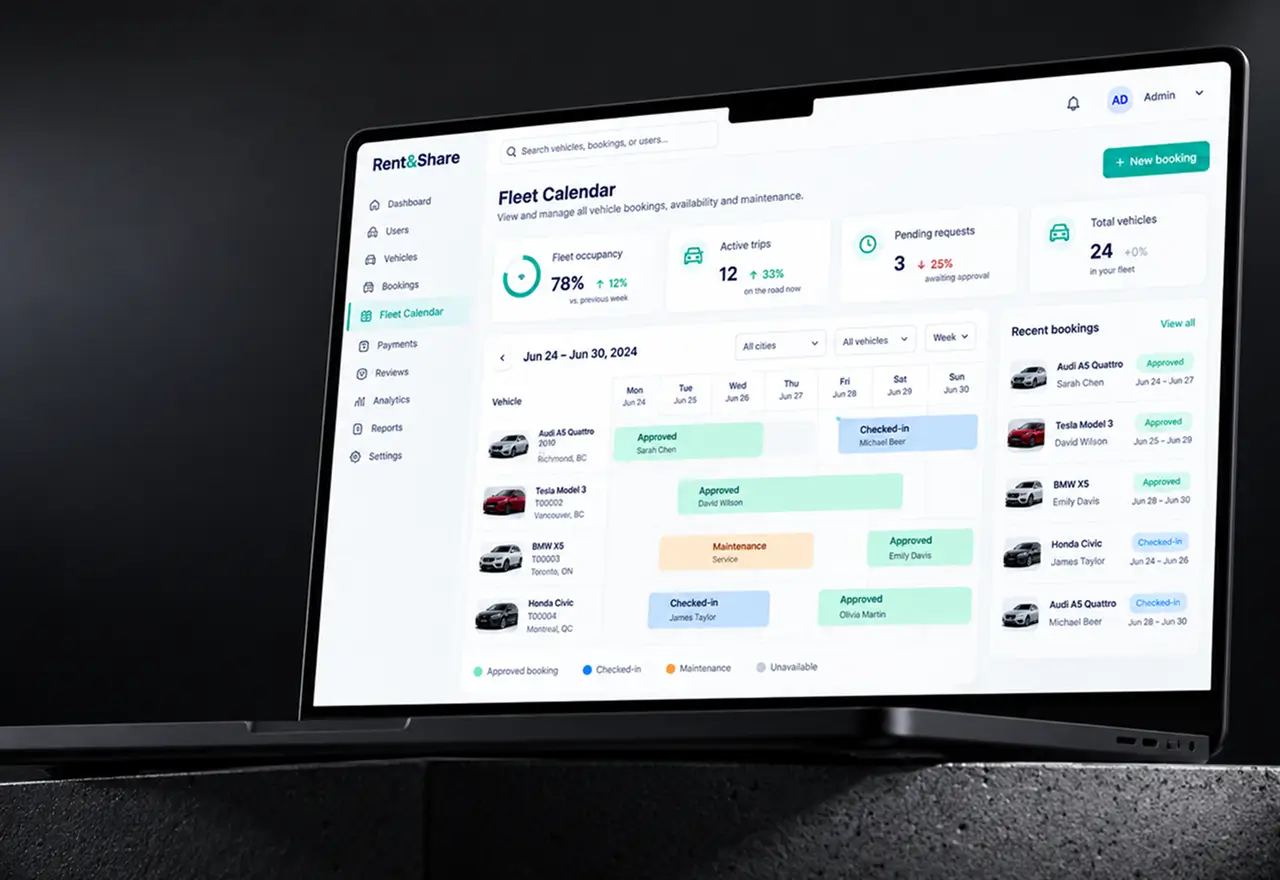
Fleet Management Dashboard
Hosts with several cars see every vehicle, booking, and payout on one screen, so fleet operations for five-car hosts and small rental companies take minutes a week. Admins get the Vue.js panel: user finance, wallet history, misconduct cases, and reviews for each account, with every action logged.
Planning a Car Rental Marketplace Project?
Request similar solutionScrum Methodology
Project Journey
Two years of work ran in two-week sprints. The first eight went almost entirely into the essential features, booking and payments, since a car rental app with unreliable payments gets no second chance with hosts. Discovery mapped the three roles, the business models the client had weighed (commission only versus a host subscription), every state a booking can hold (requested, approved, checked in, completed, disputed), and which local payment methods the launch market actually used. The development team stayed at seven for the full two years.
- Weeks sprint cycles
- 2
- Sprints completed
- ~48
- of sprints delivered on schedule
- 95%
- Team members
- 7
How the Car Rental Marketplace Works
-
Renter sets place and dates
Pickup address, start and end date and time. Search returns only cars free for that exact window, from real-time availability rather than a listing calendar.
-
Search ranks nearby available cars
Distance, price, rating, and host response time set the order. Map and list views share the same results.
-
Renter sends a booking request
Price, deposit, and included mileage show up front in the car rental app. In-app chat opens with the host if there are questions.
-
Host approves, payment is held
The host taps approve, secure payments hold the funds in escrow, and the booking card flips to Approved with a Check-in button.
-
Check-in and key handover
Both sides confirm in the car rental app, photos and fuel level go on record, and the trip starts.
-
Trip ends, payout and reviews
Check-out closes the trip, the deposit is released, the host is paid, and both sides leave a rating in the rental app.
Scrum process flow
Mobile app development for a two-sided car rental app changes shape once real hosts show up, because their cars, schedules, and pricing habits never match a spec, and real user behavior is the only input worth building against. The two-week cadence meant the founders reviewed working builds roughly 48 times, and about a dozen of those reviews changed the booking flow, most often around deposits and cancellation windows. Nothing waited months to be seen.
Inside Each Sprint
-
Daily Scrum
15-min sync every morning
-
Retrospective
Inspect & adapt process
-
Sprint Review
Demo to stakeholders
-
Increment
Shippable product update
How we delivered the Car Rental Platform
-
Scope & Timeline
We define the project goal together, agree on priority features, and set a realistic delivery date and budget.
-
Feature Priorities
We build a ranked list of everything the product needs, starting with what matters most to the business.
-
Sprint Kickoff
Work is broken into 2-week cycles. At the start of each, we select the next set of features to deliver.
-
Development Cycle
The team builds, tests, and integrates features throughout the sprint.
-
Review & Feedback
At the end of every sprint, you see working software and give feedback that shapes the next cycle.
-
Delivery
Each sprint produces a shippable piece of the product. We review what worked, adjust, and move forward.
UI/UX Design: Intuitive Interface for Car Rental Marketplace
Renters compare rental cars the way they compare hotel rooms: photo, price, rating, distance, then everything else. So the listing card leads with those four. Photo with the daily rate stamped on it, model and year, a rating out of ten, the neighborhood, then seats, transmission, and included mileage in a second row. One glance answers most of the questions, which is what a user-friendly interface means in a successful car rental app.
User research came from the pilot group, and it reset a few of our assumptions about user expectations. We sat with about a dozen hosts and renters and watched them book, since user behavior in a pilot beats any survey. Hosts wanted their calendar first. Renters wanted the total, not the daily rate. Customers expect that from any booking app, so the booking card shows the trip dates, the car, and the full cost above a single Check-in button. Teal (#10b3a3) marks anything tappable, deep purple (#2d304a) carries text, and white does the rest. Work Sans handles the type, and it stays readable at the small sizes the admin tables need.
An advanced app does not have to look busy. Five tabs at the bottom (Search, Favorites, Trips, Inbox, Profile) cover the whole customer experience on the renter side. Hosts switch to their side from the same Profile tab, which is how the combined role stays out of the way until someone needs it. Our product design team kept the admin dashboard deliberately plain: a left rail, one user at a time, and every finance action logged with a timestamp.
Results
Before
- About 40 cars in a Facebook group, coordinated by two founders over direct messages
- Deposits by e-transfer, refunds by hand, and no single record of who paid what
- Availability kept in a shared spreadsheet, with a double booking roughly once a week
- Key handover arranged by phone, with no photo record of the car's condition
- No car rental software on the admin side, so a dispute meant scrolling back through months of chat history
After
- ~1,800 private cars listed in the first year, across two metro areas
- Under 3 minutes median time from first search to booking request
- ~96% of trips completed with no dispute, each one carrying check-in photos
- ~22% higher earnings per booked day on listings that follow pricing suggestions
- One admin dashboard, inside the same car rental software, for identity, finance, wallet history, misconduct and reviews
Impact of the Car Rental Marketplace After Launch
For the client, the car rental app turned a side project into a car rental business with a real supply side. Hosts who follow dynamic pricing suggestions earn more per booked day, and the marketplace takes a percentage of every trip, so revenue optimization for hosts and for the platform point in the same direction. Cancellations under 2% mean fewer refunds to process and fewer renters lost after one bad customer experience. A successful car rental app gets judged on repeat trips, and about 41% of renters booked again within 90 days. That repeat rate is the founders' competitive advantage in a local car rental market still run from a desk.
Operational efficiency in a car rental business usually means fewer people per car, and here it showed up as headcount they never had to hire. Two founders coordinating 40 cars became one part-time operations manager overseeing 1,800, because the dashboard answers most questions before anyone asks them. That spare capacity let the client open a second city eleven months after launch instead of recruiting first, and attract users there with the same mobile app. Car rental app development, like any digital transformation, pays off when the software absorbs the coordination work, and here it did.
Want a marketplace where hosts and renters trust each other?
Contact usWhat's Next
Search, booking, secure payments, and handover already run on every trip, and post-launch support continues on the same two-week sprints. The next phase adds advanced features that reach into the car itself and into new cities:
- Electric Vehicle Integration: Charge level at check-in and check-out, charging-station suggestions near the drop-off point, and a search filter for electric vehicle rentals inside the car rental app.
- IoT Vehicle Integration: Keyless entry through connected locks for hosts who opt in, plus GPS tracking and real-time vehicle tracking during the trip, with location tracking the renter agrees to at check-in, so a late return triggers an alert instead of a phone call.
- Multi-City Expansion Tools: City-level pricing rules, local payment gateways, loyalty programs, and insurance settings configured from the dashboard, so opening a new market, or a corporate car rentals tier for the corporate clients who keep asking, becomes a setup task rather than a code change.
Verified Reviews
Our Reputation on Top Platforms
LITSLINK holds a 4.8 rating on top platforms. Clients writing about our car rental app, marketplace, and custom web development work mention the same things: engineers who push back on a requirement when the data disagrees, communication that holds up across a two-year engagement, and releases that land on the date promised.
Have a Marketplace App Project in Mind?
Planning a car rental app for car owners, or a Turo clone of your own? Send us the market and the payment methods your renters use, and our specialist will get back to you within 48 hours with a scope and a number.
Next steps:
- LITSLINK specialist reviews your request and contacts you to discuss the details;
- If needed, we can sign an NDA before moving forward;
- We send a project proposal – estimates, timeline, and team CVs included;
- After launch, we stay on for any updates your product needs.
- 48h Response
- 1540+ Projects
Thank you for your message. It has been sent.