



On-Demand House Cleaning App Development: Building a Marketplace for Cleaners
- 90 sec median time to a confirmed booking
- 450 cleaners verified in Q1
- 92% of sprints delivered on schedule
- 99% payment success rate
- 3 cities live by month nine
Booking cleaning services for next Tuesday at 10 a.m. usually costs three text messages and a day of waiting. We built a house cleaning app that cuts it to about 90 seconds. Homeowners see verified cleaners with live availability, and cleaners fill empty slots without chasing anyone.
Project Details
The client is a US home services startup that had been selling cleaning services by text message for about a year. Eleven cleaners, roughly 40 jobs a week, one founder answering every request. The business model worked and the home services market around them kept growing, yet the whole operation ran on a spreadsheet. They came to LITSLINK for a two-sided house cleaning app that would take dispatching off the founder’s desk.


Business Challenge: Trusted On-Demand Cleaning App Development
Eleven cleaners. About 40 jobs a week. One phone number that every customer texted.
That was the whole operation when the client walked in. Customers asked for cleaning services by message, the founder checked a spreadsheet for cleaner availability, and the cleaner took cash after the job. Part of the crew also picked up work through an existing platform that took a 30% cut, which is normal in the cleaning industry and a big reason the founder wanted her own.
A second city meant hiring dispatchers, and the margin on house cleaning service work never covered that. What she asked us for in the on-demand cleaning app development brief was easy to say and hard to build: a marketplace for on-demand cleaning services that runs without her sitting in the middle of it.

Verified Cleaner Network
Background checks ran over email and took around three days per applicant. Customers saw a first name and a phone number, so they had to take the founder's word that these were trusted professionals. Growth stayed capped at the number of professional cleaners she could vouch for personally, which is a hard ceiling for any business built on cleaning services.

Booking Without Back-and-Forth
One booking took four to six messages: address, date, service list, price, confirmation. About one in five requests died inside that thread, usually in the evening, which is exactly when most people sit down to book cleaning services.

Secure Payment Processing
Cash and transfer apps left no receipt trail. Cleaners waited up to a week to get paid, disputed jobs became manual refunds, and a house cleaning business with no payment record has no way to hold commission or report on business performance.
Technologies Behind the On-Demand Cleaning Marketplace


Our Solution: On-Demand House Cleaning Service App
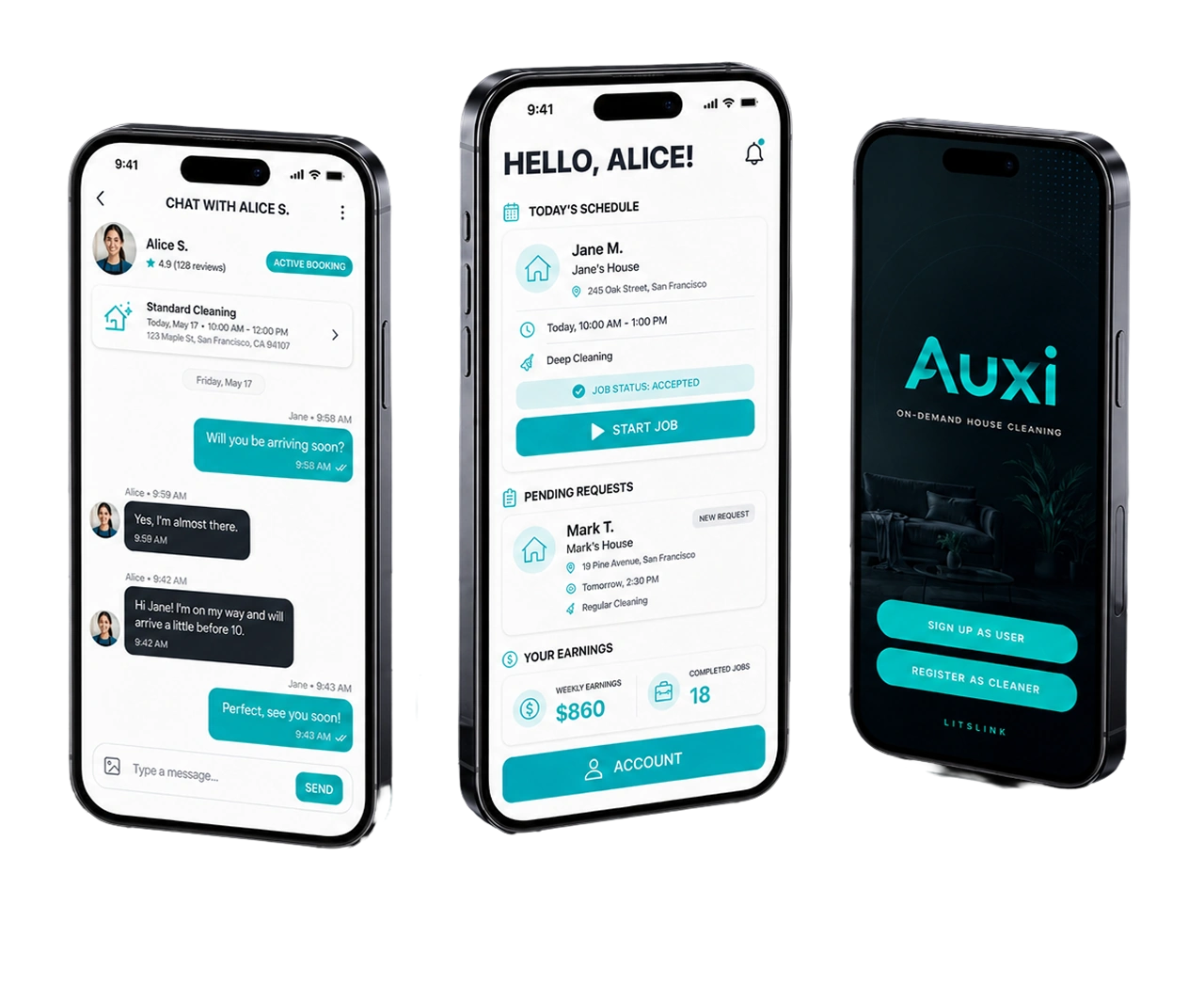
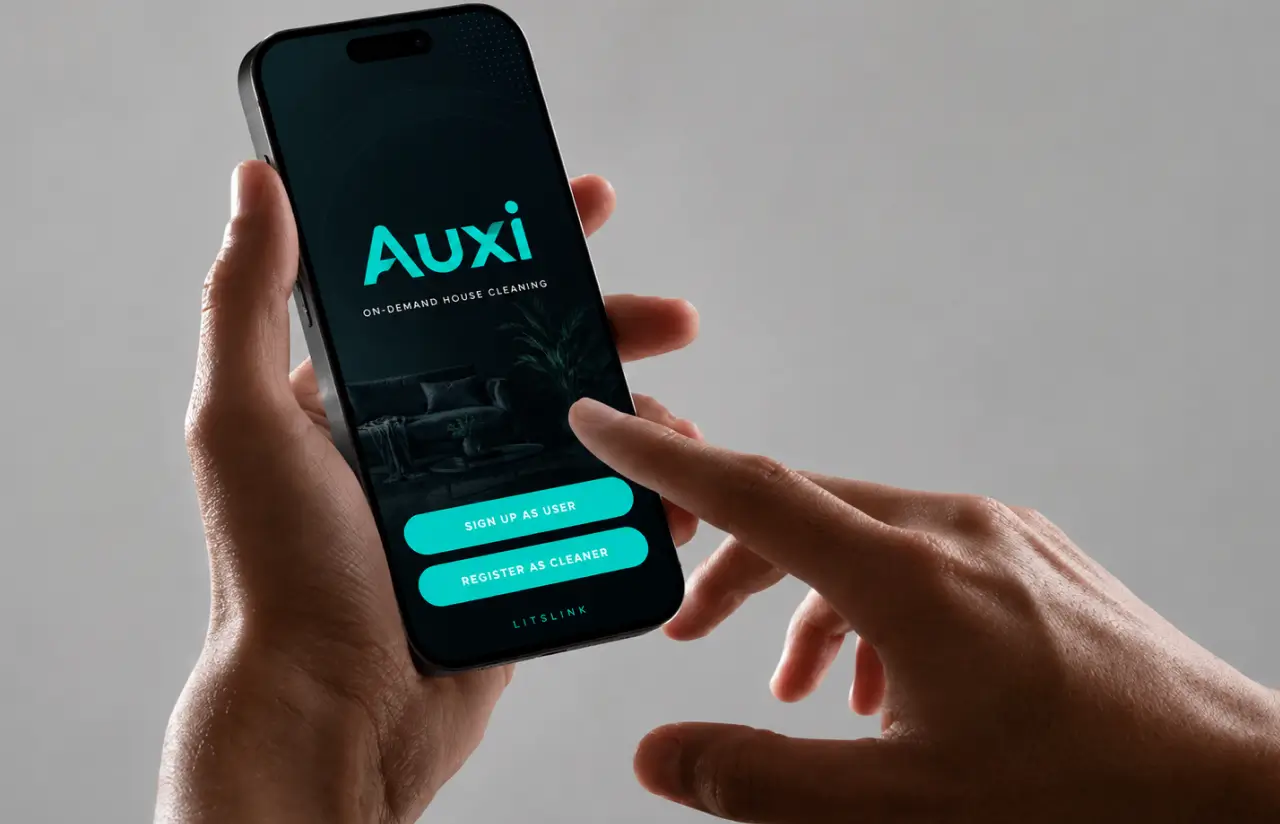
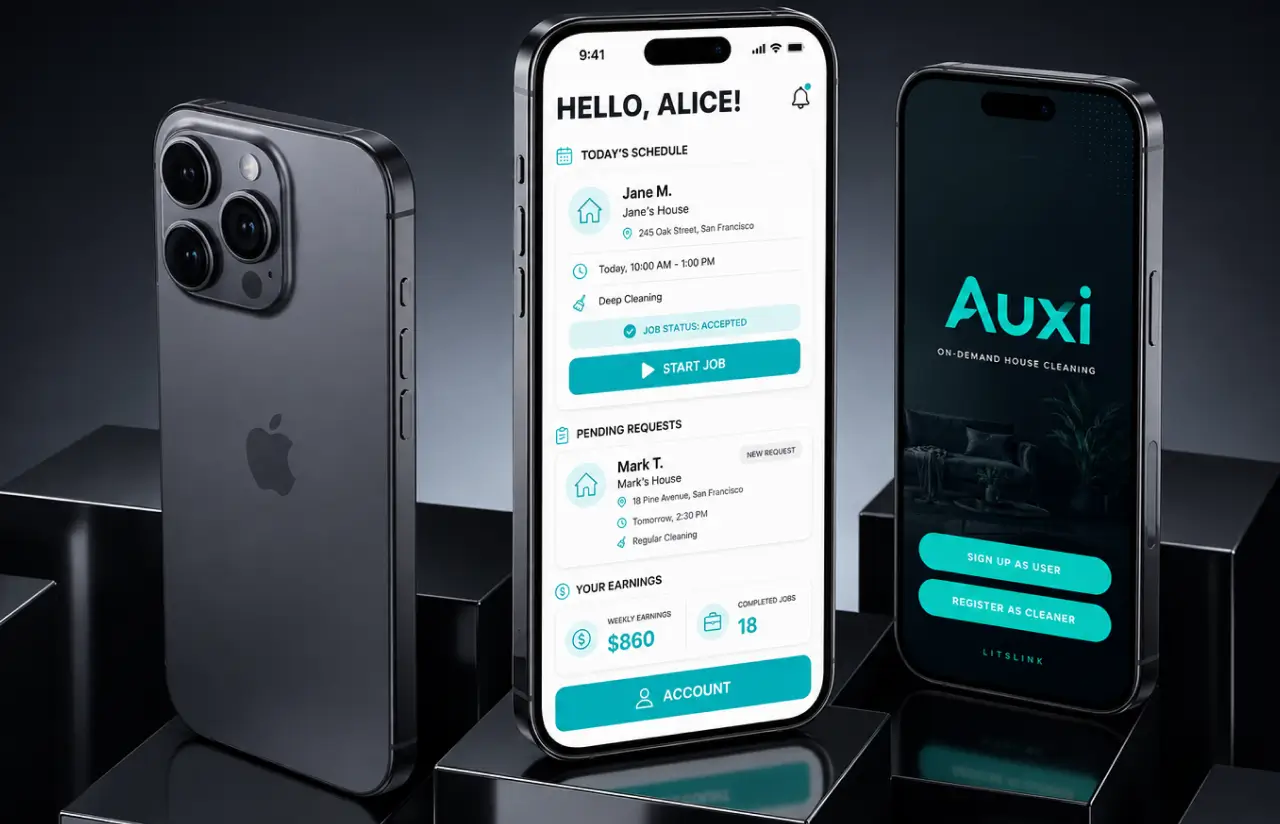
Two apps, one backend. Customers book services and pay inside a house cleaning service app; cleaners get a service provider panel for job requests, calendars, and payouts. What shipped is an on-demand house cleaning app with a matching web client, and most of the house cleaning app development effort came down to keeping those two experiences in sync.
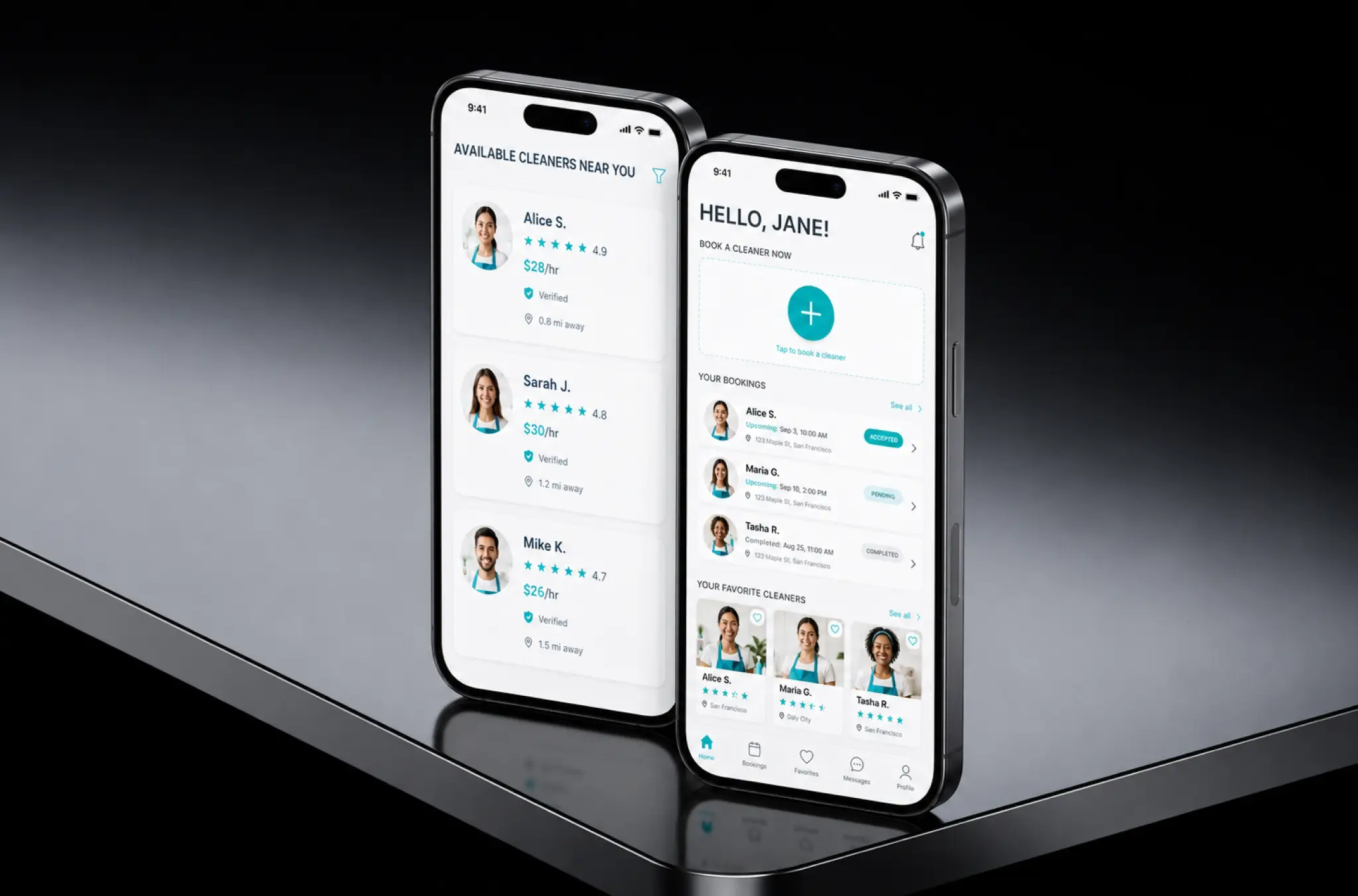
Matching drove the architecture. Someone who wants a deep cleaning on Monday morning has no use for a list of 60 cleaning service providers. They want 3-4, nearby, free at that hour, with a price attached. So the search layer filters on customer locations, calendar gaps, and service categories before a single card renders.
Cleaners set their own hourly rate and pick which tasks they take on, and the app builds an estimate from the size of the home. By month four, those estimates landed within about 15 minutes of actual job time on 85% of bookings. Price surprises had been the biggest source of complaints before launch, and clearing them out moved customer satisfaction further than any feature we shipped afterward.
User registration splits at the first screen. Customers need an email and an address; cleaners upload ID, proof of address, and insurance, then a reviewer clears them inside the admin panel. About 78% of applicants finish registration, and the ones who pass carry a verified badge into every search result. Commission sits at 12%, adjustable per city, so the client can run a promotion in one market without touching another.
None of it came out of a marketplace template. Recurrence logic alone took two sprints: a weekly booking that repeats four times has to hold the same cleaner, the same slot, and one agreed price across all four visits, and it has to survive a cancellation in week two. Edge cases like that are where most house cleaning app development budgets actually go.
Smart Booking System
Customers pick a date, a start time, and the tasks they need, then see available cleaners nearby with rates and ratings attached. Median time from opening the cleaning app to a confirmed booking is about 90 seconds.
Professional Verification
ID, address, and insurance documents move through an internal review queue with a full audit record. Cleared applicants get a badge shown in search. Review time dropped from three days to under 24 hours.
Real-Time Tracking and Flexible Payment Options
Job status moves from accepted to on the way to in progress, visible to both sides. Cards authorize at booking and capture at completion, and secure payment options stay on file for repeat bookings.
Customer–Cleaner Communication
In-app chat opens when a booking is accepted and closes 48 hours after the job ends. Push notifications cover acceptance, arrival, and completion. Median cleaner response time sits around 11 minutes.
Rating & Review System
A five-star prompt appears the moment a job closes, with an optional written review underneath. About 62% of finished jobs get rated, which gives search ranking enough signal to sort on real user satisfaction.
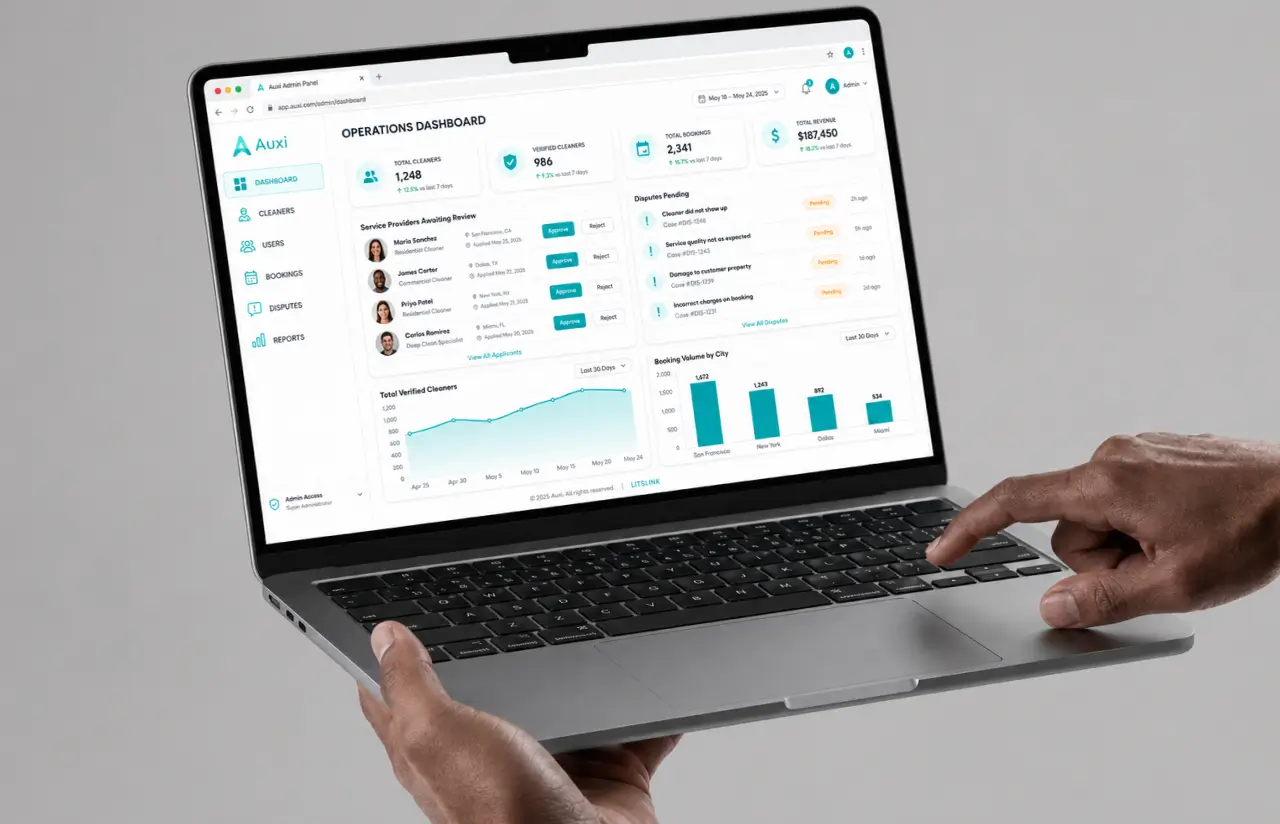
Admin Dashboard
Approvals, disputes, commission rates, and booking data sit on one screen. The operations team can see all service providers awaiting review and pull numbers for each city where cleaning services are live. Support tickets close in about four minutes on average.
Multi-Service Support
Standard cleaning, deep cleaning, carpet cleaning, laundry, and interior windows add up to 18 cleaning tasks across 5 service categories. Cleaners toggle which cleaning services they offer, and customers combine several into one booking.
Scrum Methodology
Project Journey
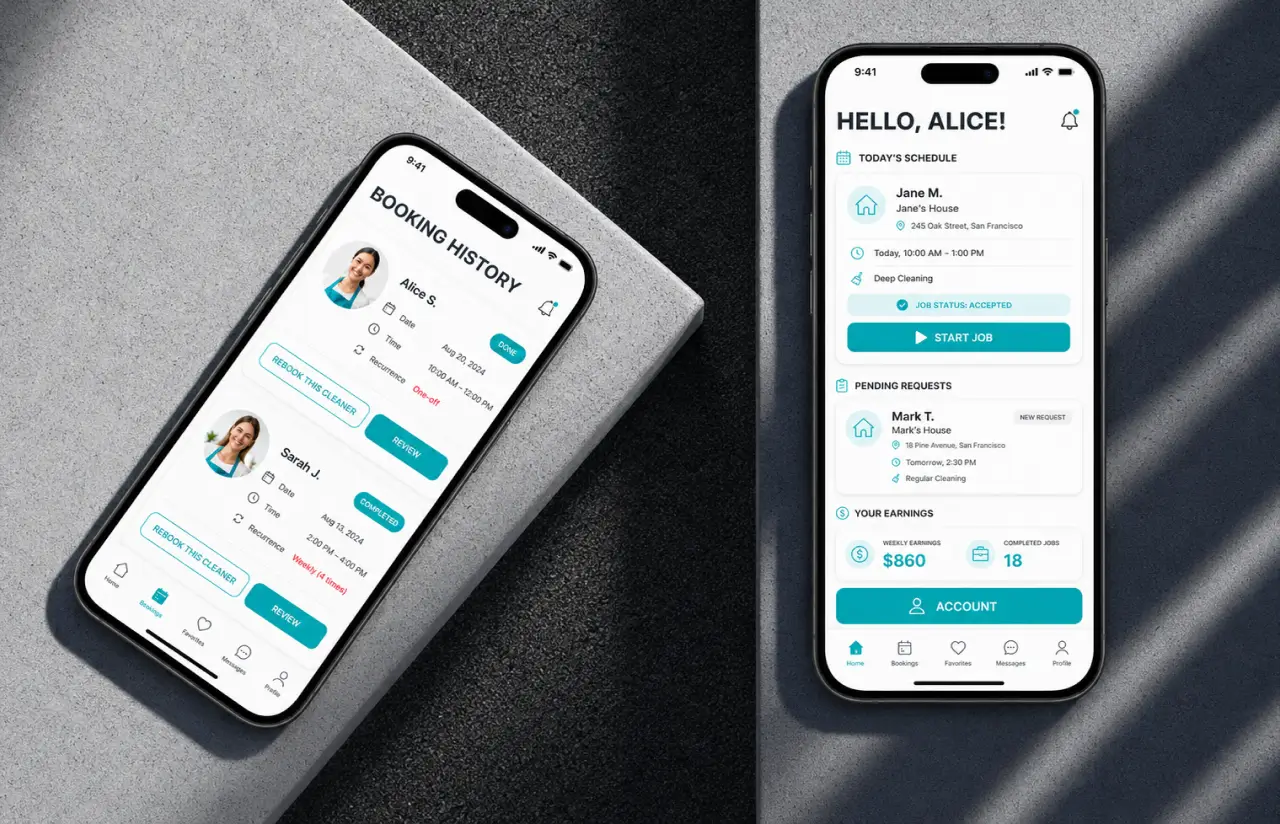
Sixteen sprints, two weeks each, kickoff to second store release. The house cleaning app development plan put booking first, so sprints 1 through 4 went to the booking flow and cleaner onboarding. Nothing else matters until a customer can book cleaning services and a cleaner can accept the job. Sprints 5 through 11 covered payments, chat, recurrence, and the tools service providers use daily. Both mobile app builds cleared store review on first submission, and the on-demand cleaning app went live on iOS and Android in the same week.
How the On-Demand Cleaning App Works
- The customer sets a home address, picks the cleaning services they need from 18 tasks, and gives the size of the place.
- Search filters on customer locations, calendar gaps, and verification status, then ranks by rating and distance.
- The summary card holds services selected, date, start time, recurrence, estimated hours, hourly rate, booking fee, and total.
- The request lands in the service provider panel with a push notification on the cleaner's mobile app. Median response is 11 minutes.
- Real-time tracking moves the booking through accepted, on the way, in progress, and done, with chat open the whole time.
- The card captures at completion through the same secure payments flow, the cleaner keeps about 88%, and a rating prompt appears.
Development Process Flow
Custom development for a marketplace never benefits from one big release. Both sides had to go live together, so every sprint shipped a customer build and a cleaner build in the same demo. The founder joined 14 of the 16 reviews, and her feedback moved the recurrence selector above the price line, redrew the booking summary twice, and killed a tipping feature before it reached development.
How we deliver your project
- We define the project goal together, agree on priority features, and set a realistic delivery date and budget.
- We build a ranked list of everything the product needs, starting with what matters most to the business.
- Work is broken into 2-week cycles. At the start of each, we select the next set of features to deliver.
- The team builds, tests, and integrates features throughout the sprint.
- At the end of every sprint, you see working software and give feedback that shapes the next cycle.
- Each sprint produces a shippable piece of the product. We review what worked, adjust, and move forward.
UI/UX Design: Intuitive Interface for Cleaning Service Marketplace App
An on-demand cleaning app lives or dies inside the first 90 seconds. The design brief was one screen that answers every question a customer has before committing. The booking summary card shows the cleaner’s name and rating, the address, the number of services selected, date, start time, recurrence, estimated hours, hourly rate, booking fee, and total price, all above the Finish button. Nothing sends the customer back a step to check something. In a house cleaning app, that single card does more work than the rest of the flow combined.
Turquoise (#15abb1) carries every action on white, with near-black (#131314) for text and Poppins across the mobile app and the web client. Red shows up exactly once, on the recurrence row, because a repeating booking is the choice customers reverse most often and it earns the attention.
Rating gets its own screen: a photo, a name, the job date, five stars, and an optional review field. Nothing else competes for attention there, which is part of why 62% of jobs get rated. The bookings list uses status chips such as Awaiting acceptance and In progress, so app users can read a job’s state without opening it, and the same chips appear on the service providers’ side. Progress tracking stays glanceable on purpose, which is why customers rarely open a job screen once cleaning services are underway.
Results
Before
- ✕11 cleaners covering about 40 house cleaning jobs a week, booked by text message.
- ✕Four to six messages to confirm one booking, with one in five requests abandoned.
- ✕Three days to verify a new cleaner, handled over email.
- ✕Cash and transfer payments with no receipt trail and week-long waits for payout.
- ✕One spreadsheet tracking who was free that week, no admin panel, no reporting.
After
- ✔450 cleaners verified in the first quarter, across three cities by month nine.
- ✔90 seconds median time from opening the app to a confirmed booking.
- ✔Under 24 hours to verify a cleaner, with about 78% of applicants finishing registration.
- ✔99% payment success rate, with secure payments settling to cleaners in two business days.
- ✔One admin panel for approvals, disputes, commission, and business performance reporting.
Impact of the Cleaning App After Launch
Verified Reviews
Our Reputation on Top Platforms
LITSLINK holds 4.8 on top platforms. Reviews point to deep industry knowledge in two-sided marketplace products, from cleaning services to recruiting platforms, steady communication through the whole development process, and mobile app work that holds up after launch.
Have a Cleaning App Project in Mind?
If you need an on-demand cleaning app development partner or a home services app development team for another trade, the mechanics stay the same. Tell us what yours has to do on day one, and we will come back with scope, timeline, and a team.
Thank you for your message. It has been sent.