





Building a Resume Parsing Software Solution With AI-Powered Candidate Data Extraction
- 94% field-level extraction accuracy
- 12 languages in one pipeline
- 40,000 documents processed daily
- 11 scoring factors per candidate
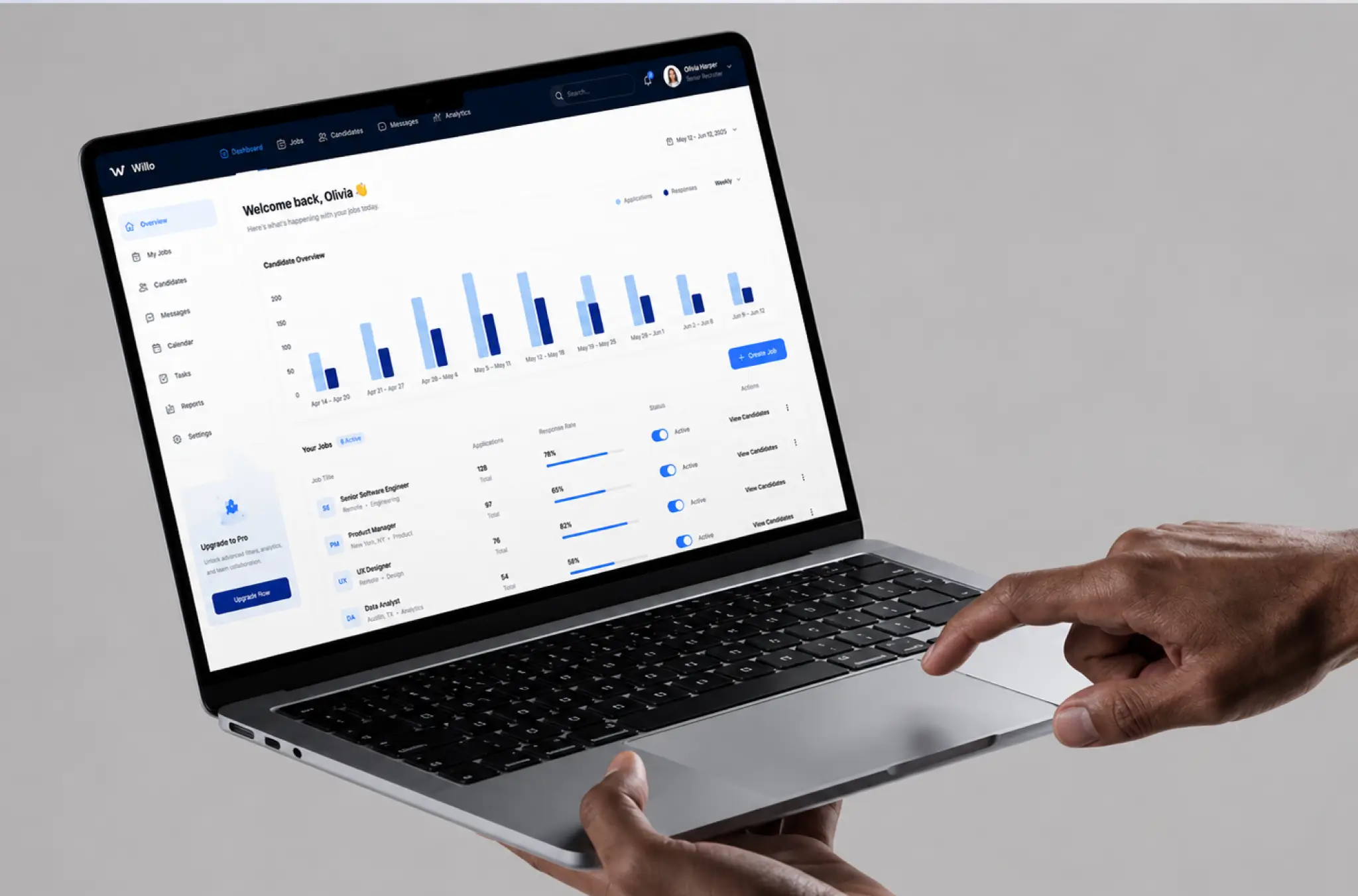
Recruiters at high-volume staffing firms spend most of the morning typing candidate details into a database instead of talking to people. We built resume parsing software that structures and scores candidate data in under two seconds.
Project Details
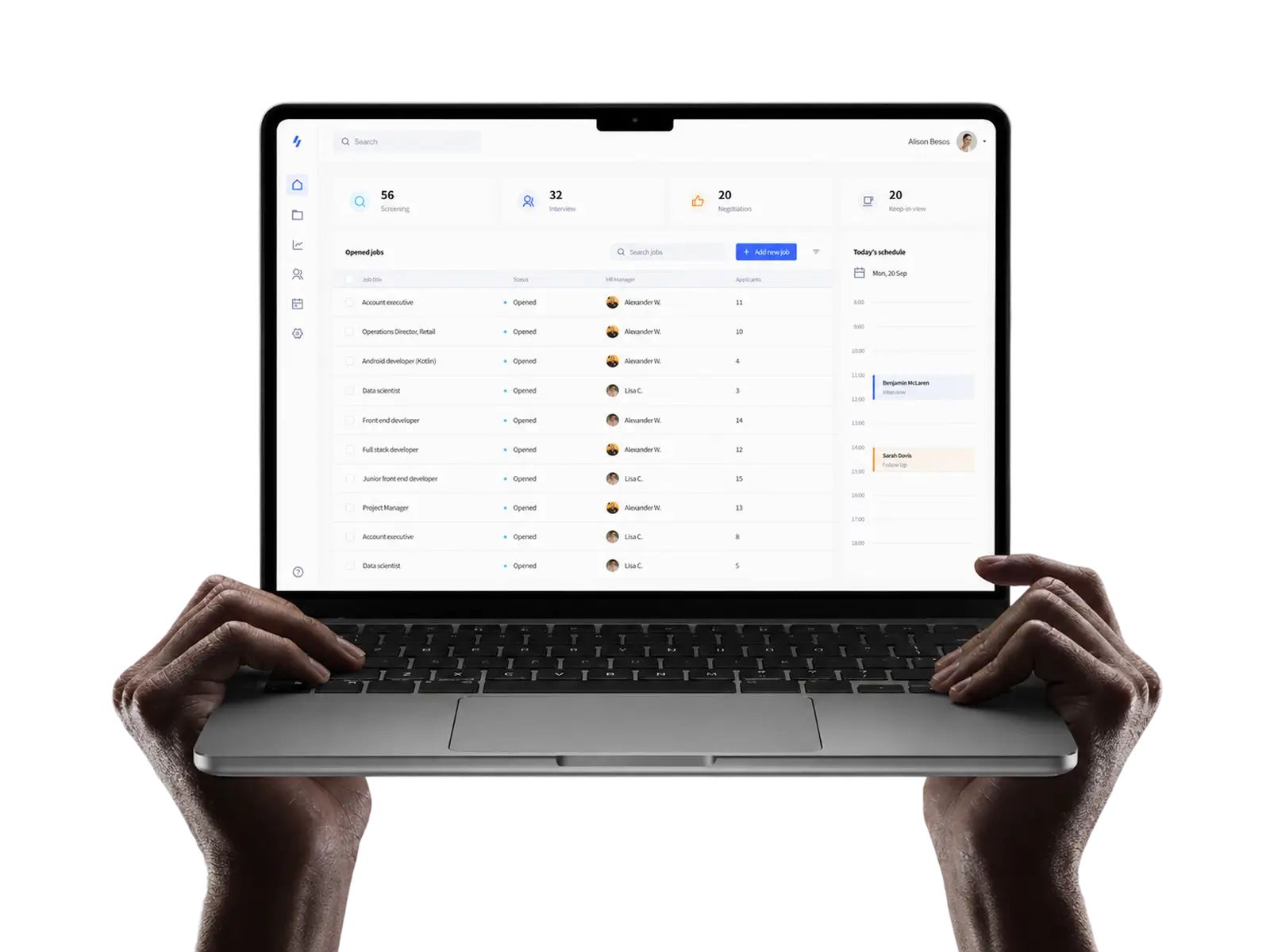
The client is a global HR technology company whose platform serves staffing agencies and in-house recruiting teams across the US and Europe. Their product already ran the hiring workflow from pipeline view to offer, and every candidate still entered that workflow by hand.


Business Challenge: Developing Enterprise-Grade Resume Parser
The client’s platform had the pipeline view, the interview scheduling, and the offer workflow. What it lacked was a way to get a candidate into the system without a coordinator reading a document and keying it in. Resumes arrived as PDFs, Word documents, exports from job boards, and occasionally a phone photo of a printed page, and each one took seven to nine minutes of manual data entry.
At 40,000 documents a day across their accounts, that model had a ceiling and everyone could see it. Two enterprise clients had written parsing into renewal conversations. The client came to us with a working product, a full roadmap, and one missing layer.

Accurate Multi-Language Data Extraction
Resumes came in twelve languages and no two used the same layout. Date formats, job titles, and section headers shifted by country, and the rules-based approach the client had tested got roughly 60% of fields right outside English.

High-Volume Processing Capabilities
Peak load reached 40,000 documents a day, with Monday bursts running three times the daily average. Any design that held a file open for more than a few seconds would queue behind itself before lunch.

Enterprise Integration Requirements
The largest accounts run their own applicant tracking system and wanted parsed data pushed into existing systems rather than another login. That meant a documented REST API, predictable JSON output, and a security review before any contract closed.
Technologies Behind the CV Parsing Software






Our AI Resume Parsing Software Solution
One question shaped the architecture: what does a recruiter need to see in the first ten seconds of a candidate? Everything downstream follows from the answer. The pipeline pulls text out of the document, tags entities with a natural language processing model, normalizes what it finds against a skills taxonomy, and writes a structured candidate profile to PostgreSQL, where standardized profiles reduce biases and the difference caused by resume format and presentation.
Entity extraction runs in two passes. spaCy handles the fast layer, covering language detection, sentence segmentation, and the fields that follow reliable patterns such as contact details, URLs, and dates. A PyTorch sequence-labeling model trained on roughly 180,000 hand-labeled resumes takes the messy part: employer names split across two lines, job titles buried mid-paragraph, and work history with no dates attached to it, using NLP to recover structure from documents that do not follow clean layouts.
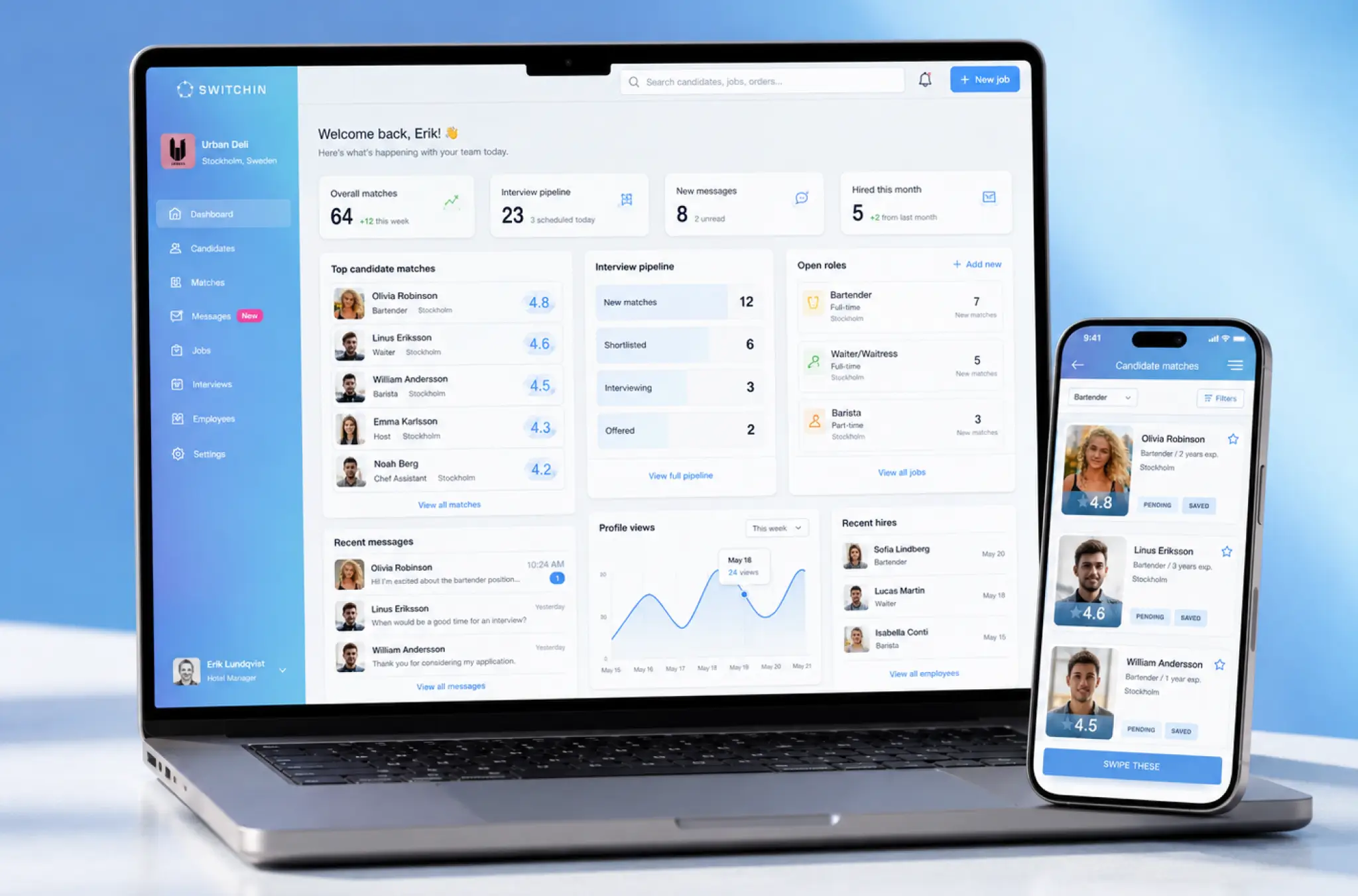
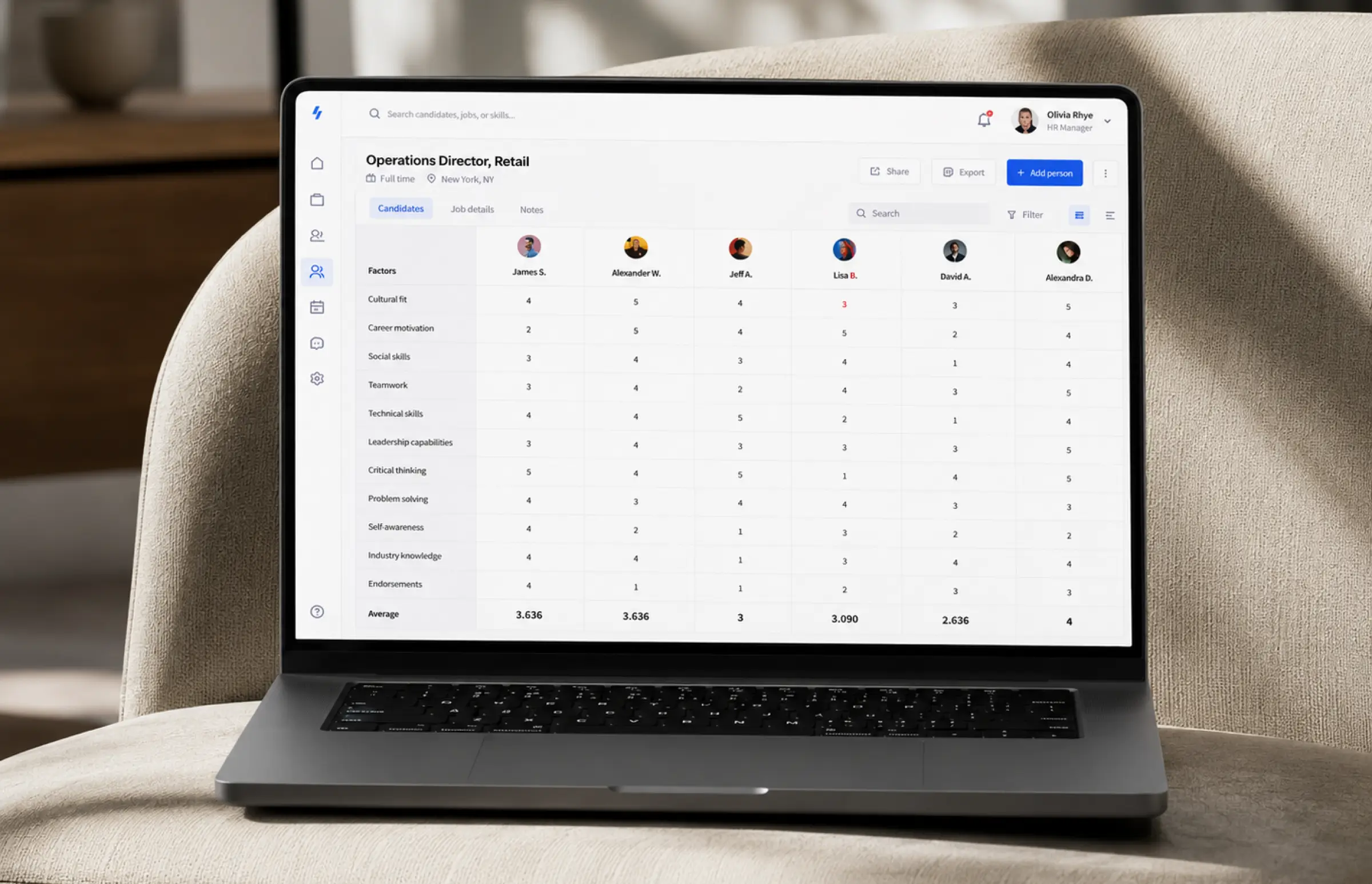
Job descriptions go through the same path. A vacancy is parsed by the identical model, which puts both sides of the match into one vocabulary so the matching engine compares two structured records instead of running keywords over raw text. Eleven factors feed each score, from technical skills and industry knowledge through to endorsements, every one on a five-point scale with its supporting evidence stored next to it.
Buying a standalone parser was on the table. The client trialed commercial tools, RChilli resume parser among them, but unlike traditional parsers the real difference came from the scoring layer: they wanted the eleven factors their recruiters already argued about in review meetings, weighted their way, retrainable on their own hiring outcomes.
AI-Powered Field Extraction
The model pulls names, contact details, employers, job titles, dates, education, and skills out of free-form text, supporting accurate extraction into clean structured output. It also extracts work experience and work and education history from free-form resumes. Field-level accuracy sits at 94% across the full corpus and 98% on contact details, measured against a hand-labeled golden set.
Multi-Format Document Support
Eight file formats enter the same pipeline: PDF, DOCX, DOC, RTF, ODT, HTML, TXT, and image files. The system handles varied resume formats and CV formats without splitting them into separate processing paths. Photos of printed resumes route through OCR first, which covers about 4% of daily volume and most mobile applications.
Language Detection and Processing
Each document is identified before extraction so the matching model loads automatically. Twelve languages are live, nine of them above 90% field accuracy, and multilingual parsing happens in the same queue as English.
Skills Taxonomy Integration
About 28,000 normalized skills sit behind roughly 140,000 surface variants, so JS, JavaScript, and ES6 collapse into one entry. Job titles normalize the same way, which is what makes candidate matching comparable across markets.
Quality Scoring System
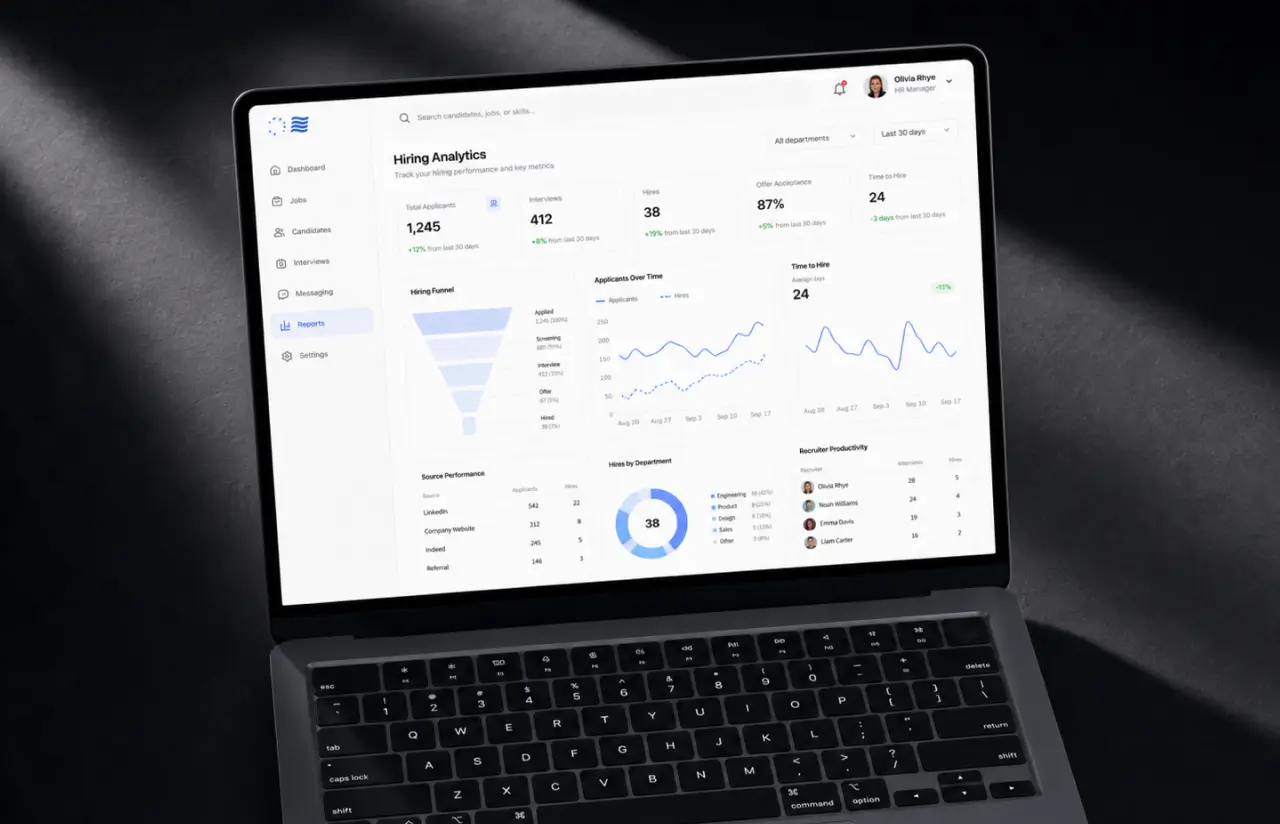
Eleven factors score each applicant from one to five, including technical skills, leadership capabilities, critical thinking, and endorsements. Recruiters see the average and can open any factor to read the evidence behind the number.
Data Validation Engine
Rules catch what the model gets wrong: dates running backwards, overlapping employment, phone numbers carrying the wrong country code. Anything under the confidence threshold is flagged for a ten-second human check rather than silently saved, which helps maintain precision at scale.
Secure Processing Pipeline
Documents are encrypted in transit and at rest, processed inside an isolated AWS account, and deleted on a retention clock each client sets. GDPR deletion requests resolve against one candidate record.
Scrum Methodology
Project Journey
The 18-month project ran across 36 two-week sprints, beginning with six sprints of discovery and dataset labeling. At that scale, teams using resume parsing software save time and can reclaim up to 500 hours per year. Extraction then shipped by entity group (contact details, education, employment, and skills) with scoring added around month nine. The API entered a two-account private beta in month eleven, followed by four months of tuning with real traffic.
How our AI Resume Screening Software Works
- Files arrive through the API or a bulk upload. The service checks format, size, and encoding, then routes scanned images to OCR before anything else runs.
- Text comes out with its structure intact, so headers, bullet lists, and table cells stay distinguishable. Layout is what tells the model where work history ends, and education starts.
- The parser identifies the language, loads the matching model, and tags entities across the document: people, organizations, dates, job titles, skills, degrees, and contact details. Those tags turn raw text into structured data the recruiter can search.
- Extracted values map to the skills taxonomy and the job title dictionary. The validation engine checks internal consistency and marks low-confidence fields for review.
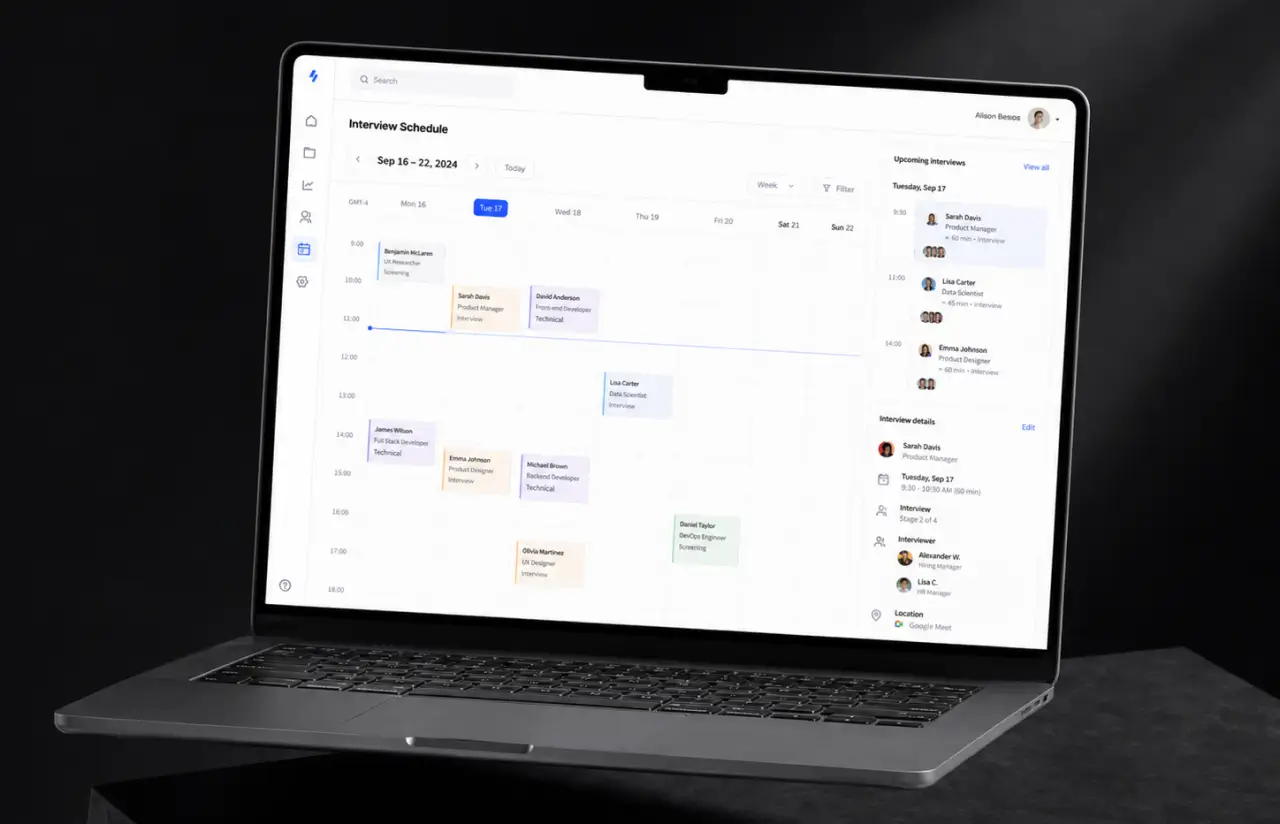
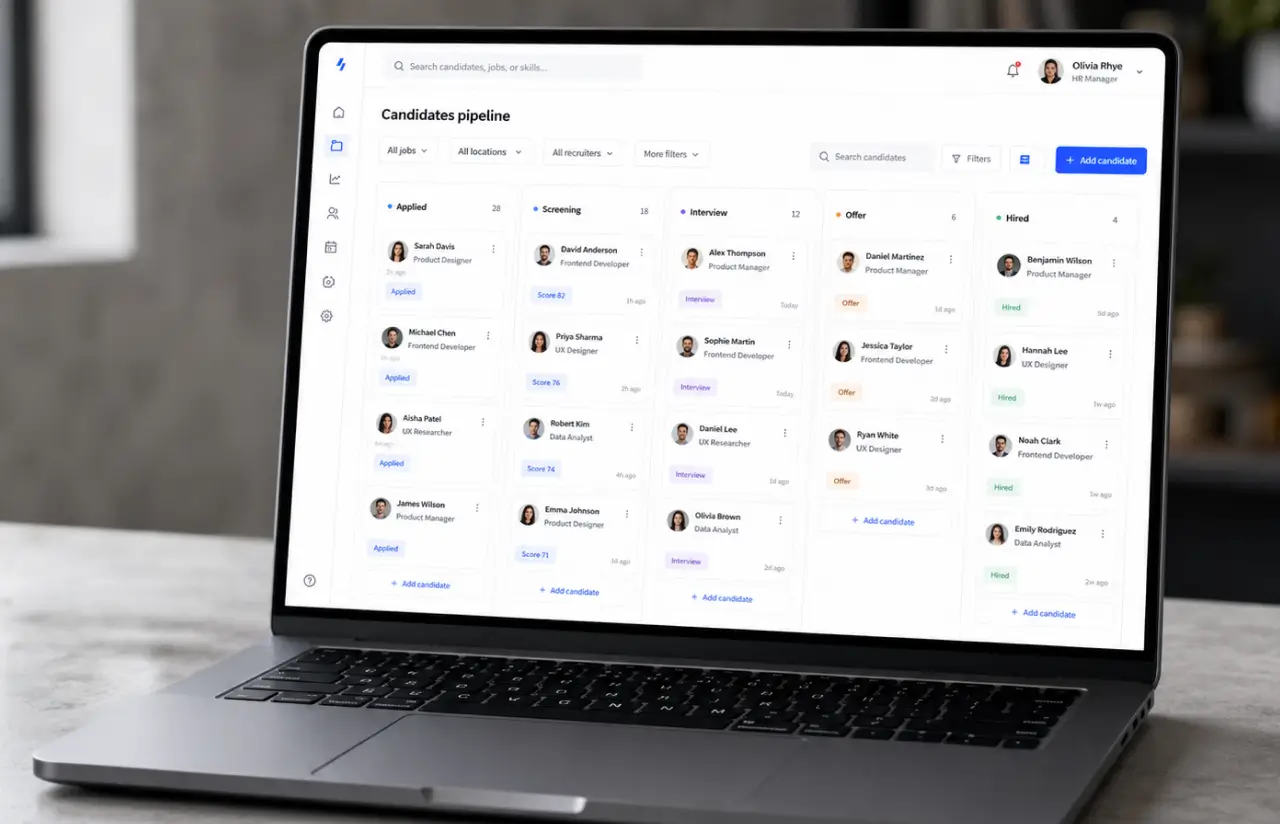
- Eleven factors score the profile against the role, each backed by the fields that produced it. The structured output is effective for ranking and screening, and the average lands on the candidate card in the recruiter's pipeline view.
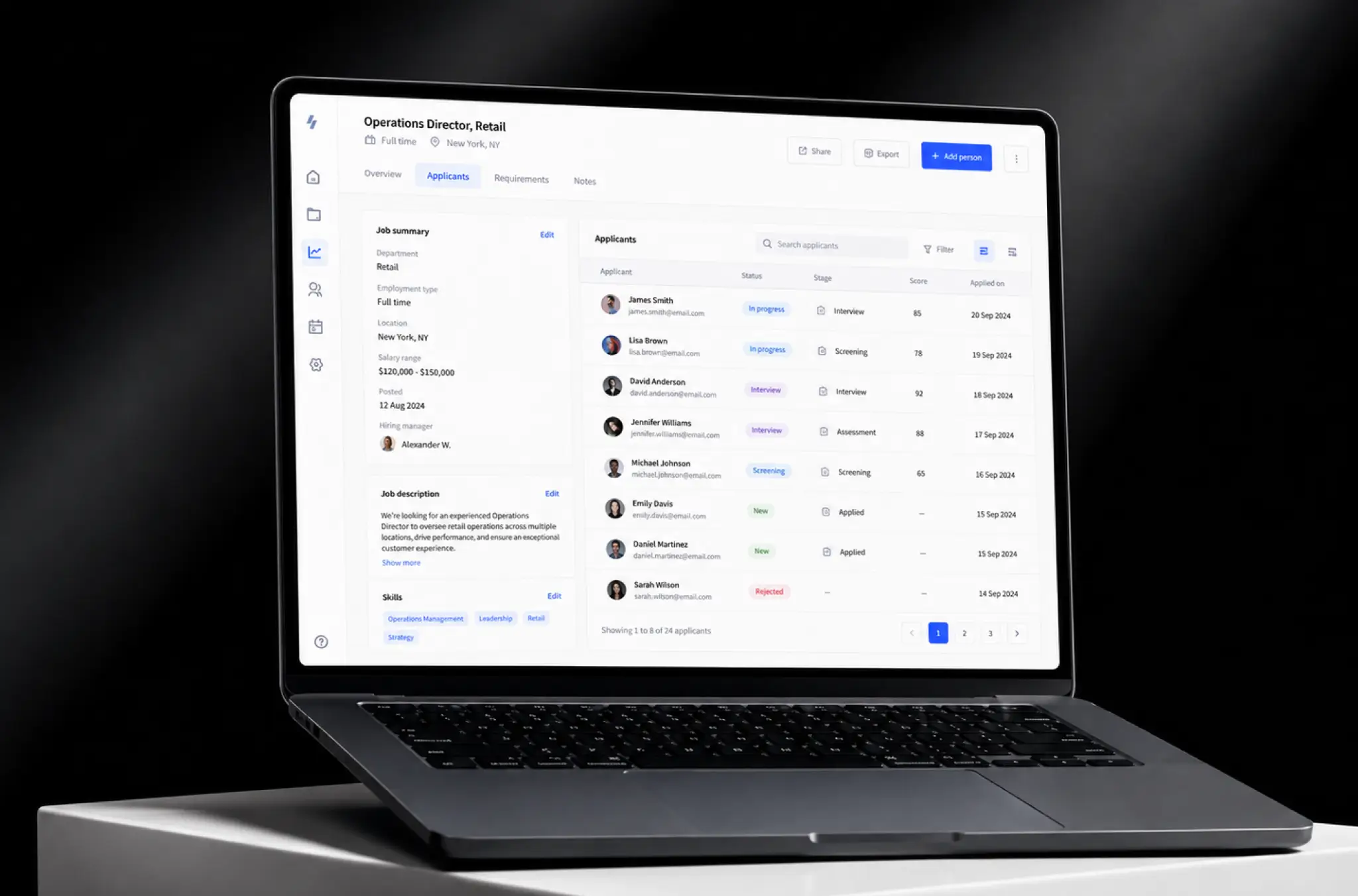
- Scored profiles rank against every vacancy the candidate qualifies for. Past applicants stay indexed, so recruiters can surface them again for new positions and support re-engagement. The same output posts back into the client's own systems, so nobody needs to jump between tools and can keep working in one platform.
Scrum Process Flow
AI development work rarely lands in one release. Extraction accuracy moved two or three points per sprint, and the client needed to see each increment against their own documents rather than a public benchmark. Every second Thursday we ran the current model over a fresh sample of 500 resumes pulled from live accounts, showed the diff against the previous build, and let their head of product pick what the next sprint fixed.

How We Deliver Your Project
- We define the project goal together, agree on priority features, and set a realistic delivery date and budget.
- We build a ranked list of everything the product needs, starting with what matters most to the business.
- Work is broken into 2-week cycles. At the start of each, we select the next set of features to deliver.
- The team builds, tests, and integrates features throughout the sprint.
- At the end of every sprint, you see working software and give feedback that shapes the next cycle.
- Each sprint produces a shippable piece of the product. We review what worked, adjust, and move forward.
API Design for Resume Parsing Solution: Developer-Friendly Interface
Five endpoints cover the whole surface: parse a single document, parse a batch, score a candidate against a role, match a candidate to open roles, and register a webhook. Authentication runs on OAuth 2.0 client credentials. Every response returns JSON output with the same field names, which sounds trivial until you have integrated with a parser that renames employer to company between two endpoints.
Batch calls go asynchronous above 50 documents. The client’s engineers post a manifest, get a job ID back, and receive a callback once results are ready, so nothing waits on an open HTTP connection for four minutes. Rate limits sit at 60 requests per second per account with burst headroom, and a 429 carries a retry-after header instead of a stack trace.
API integration with an applicant tracking system was the point of the whole build. Six ATS connectors went live in the first year, each mapping parsed data onto fields that the system already had, so recruiters kept working in the software they knew. Median response for a single document is 1.8 seconds. The 95th percentile sits at 4.2.
Results
Before
- ✕7 to 9 minutes of manual data entry per resume, handled by a coordinator
- ✕Around 30% of candidate records carried a missing or incorrect field
- ✕Non-English resumes went to an outside vendor on a 24- to 48-hour turnaround
- ✕35 minutes of reading to build a shortlist for one open role
- ✕Scoring lived in spreadsheets, with different factors on every recruiter's desk
After
- ✔1.8 seconds median parse, plus a 12-second review on flagged fields only, helping recruiters save money as well as time
- ✔94% field-level accuracy across the corpus, 98% on contact details, with a standardized parsed profile that helps maintain cleaner data across the database
- ✔12 languages in one pipeline, outside vendor retired
- ✔6 minutes to a ranked shortlist for the same role
- ✔11 factors scored identically for every candidate, stored with the profile, exportable, and easier to retrieve in different ways
Impact of Candidate Scoring Software Solution After Launch
Verified Reviews
Our Reputation in HR Technology Development
LITSLINK has been building software since 2014, serving customers in recruitment and HR software with US-based project management and senior European engineering teams. Recruitment products are a steady part of that portfolio, including video interviewing, swipe-based candidate matching, and the AI and software development work underneath both, including products built for recruiting workflows.
Have the HR Software Project in Mind?
Need CV parsing, a candidate scoring model, or automated candidate matching inside a product you already run? Tell us what intake looks like today, and we will come back with an approach and an estimate within 48 hours.
Thank you for your message. It has been sent.