





Skip to content
HR SOFTWARE DEVELOPMENT

HR Software Development Services

LITSLINK builds custom HR software for companies in the US and Europe: HRIS and HRMS platforms, applicant tracking, payroll, time and attendance, and workforce analytics. Each build runs on modern web, mobile, cloud, and AI engineering, with GDPR and HIPAA requirements shaping the architecture from the first sprint.

  • GDPR and HIPAA requirements built into delivery
  • HRIS, payroll, and ATS integrations in one team
  • Deployment on AWS, Azure, or Google Cloud
  • Security and privacy testing on every build
  • 1540+ products shipped since 2014
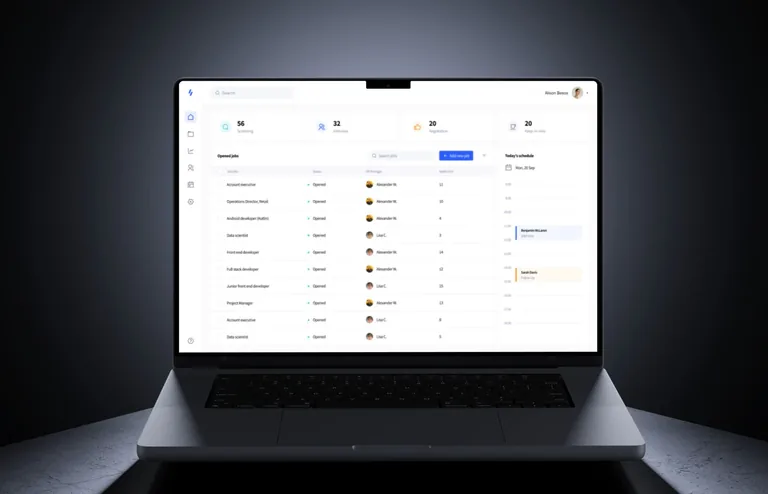
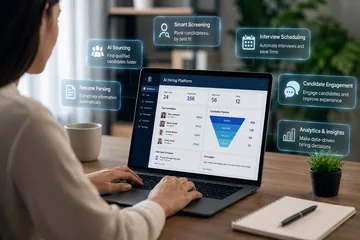
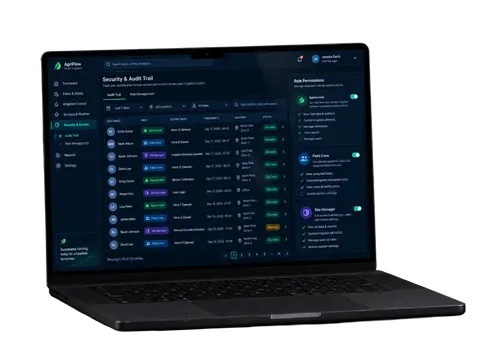
HR software dashboards beside an HR manager working at a laptop: an employee directory, a recruitment pipeline and workforce analytics.

OVERVIEW

Benefits of Custom HR Software Development

Custom HR software development pulls scattered people processes into one system of record, and the payoff lands in places HR already reports on.

One source of truth.

Requisitions, candidate pipelines, onboarding, time-off, payroll, and reviews live in the same database, so a headcount question takes seconds rather than three email threads.

Hours back every week.

Automating the repetitive admin frees the HR team for work that needs judgment.

Decisions on current data.

Managers see the real cost of an open role and the retention risk on the person covering it, both from the same screen.

Clean integrations.

Records from a legacy HRIS, hours from scheduling, and salaries from payroll reconcile on one definition of an active employee.

Protected personal data.

Privacy sits in the architecture, which matters most once several thousand employee profiles are loaded.

Room to grow.

The platform stays quick and stable as headcount climbs.

SERVICES

HR Software Development Services We Provide

HR Software Consulting

A short engagement that maps your current recruiting, onboarding, and payroll workflows against what software can realistically fix this year. You finish with an architecture sketch, a build-or-configure recommendation, and a budget range you can defend to finance.
Custom HR Software Development (HRIS, HRMS, HCM)

Purpose-built platforms for companies whose people processes carry real competitive weight. Custom HR software development covers HRMS, a human resource management system, and other HR management software, with a comprehensive build across the employee record layer, the operational layer with payroll and attendance, and the strategic layer with performance and workforce planning.

HR Web and Mobile App Development

Employee self-service apps for iOS and Android alongside admin consoles for the HR team. Deskless staff get shift swaps and pay stubs on a phone, while HR keeps a full desktop workspace for approvals and reporting.

UI/UX Design for HR Software

Interfaces designed for the people who use them daily, which means recruiters and employees as much as administrators. Our designers run task-based testing on real workflows, so a time-off request stays a three-tap action.

HR System Integration

Connections into payroll providers, ERP, benefits carriers, ATS tools, and existing HRIS and HRMS platforms to help streamline cross-system hr processes. We build sync layers with reconciliation rules and an audit trail, so both systems agree on who is on the payroll today and support managing employee information consistently across systems.

Legacy HR Software Modernization

A path off aging HRM systems that keeps history intact. We migrate employee data with validation at every step, rebuild the interface, and move the platform from on-premises infrastructure to the cloud in stages that fit your payroll calendar, with secure storage that cuts administrative overhead by streamlining operations.

QA and Testing

Functional, performance, and security testing, with quality assurance and extra attention on access control and data privacy given the sensitivity of employee records. Payroll logic gets tested to evaluate edge cases such as mid-cycle salary changes, retroactive corrections, and scenarios that affect accurate payments.

HR Software Support and Maintenance

Monitoring, security patches, platform updates, and rolling out new features as platform needs change on an agreed SLA. Most clients keep a small team on retainer for the moments when a payroll vendor changes an API version with two weeks of notice.

HR MVP and PoC Development

For HR tech founders and internal innovation teams: one workflow, live with real users, on architecture that supports a scalable product as the idea gains adoption. This is the fastest route to gain evidence that the idea earns its budget and deserves more investment.

WHY LITSLINK

Why HR Teams Choose LITSLINK as Their HR Software Development Company

We Speak HR Workflows

Recruiting, onboarding, payroll, and analytics each follow their own logic, and we have shipped products across all four. Our engineers have built applicant tracking flows, candidate tracking workflows, a video interviewing platform, and a machine learning model that scores job candidates. Discovery starts with questions about your requisition approval chain and business goals.

Full-Cycle Web, Mobile, Cloud, and AI Engineering

One team carries product design, frontend, backend, mobile, data, and DevOps, so an employee self-service app, an HR web console, and a nightly payroll sync ship from people who share a standup. Fewer handoffs between vendors means fewer gaps where a requirement quietly disappears.

Built With GDPR and HIPAA Requirements in Mind

Employee files hold salary, health, and identity data, which makes privacy an architecture decision rather than a checkbox at the end. Data minimization, role-based access, encryption at rest and in transit, and audit logging are standard on every build, and we hand over audit-ready documentation your compliance officer will ask for as a key compliance deliverable.

Agile Delivery From MVP to Enterprise Integration

Release one covers the workflow carrying the heaviest manual load, usually onboarding or time tracking. It reaches real users in weeks. The rest of the roadmap follows what those users actually do with it.

PROOF IN NUMBERS

LITSLINK in Numbers

300+ engineers on staff
12 years in business, founded 2014
4.8 average rating on Clutch
8 weeks to MVP on a recent workforce app

Wondering what your HR roadmap would actually cost?

Send us the two workflows you want fixed first. You get a scope sketch and a budget range back within two business days, prepared by the engineers who would build it.

Request a similar solution

SOLUTIONS

HR Software Solutions We Build

Each module below ships as a standalone product or as part of a wider HRMS software development solutions package that supports multiple aspects of the employee lifecycle.

HRIS, HRMS, and HCM Platforms

Centralized employee data, workflow automation, and organization planning in one record layer.

Onboarding Software

Pre-boarding checklists, document collection, and task tracking through week one.

Time and Attendance and Workforce Management

Clock-in tracking, shift scheduling, and labor compliance across locations.

Employee Self-Service Portals

Personal data, time-off requests, pay stubs, and policy documents behind one login.

Talent Acquisition and Applicant Tracking

Job postings, candidate pipelines, and structured hiring workflows through to offer.

Payroll and Compensation Management

Salary processing, tax deductions, and benefits administration wired into finance.

Performance Management

Goal setting, review cycles, 360-degree feedback, and recognition.

HR and Workforce Analytics

Dashboards, turnover insights, and headcount and cost reporting for leadership.

WHO WE SERVE

HR Software We Build For

Small and Mid-Size HR Departments

Teams moving off spreadsheets and disconnected point tools, who need automation for the tasks eating their week.

HR Tech Startups and SaaS Vendors

Founders building a product for the HR market, where speed to first paying customer decides the year.

Staffing and Recruiting Agencies

High-volume placement businesses that need candidate pipelines, client portals, and placement tracking in one platform.

Enterprise HR Teams Modernizing Legacy Systems

Companies replacing an aging HRM system while payroll keeps running every two weeks, with governance, deployment, and compliance expectations reflected in the build.

US Companies Wanting Local Accountability

Buyers who want HR software development services USA teams can hold accountable in their own time zone.

AI IN HR

AI-Powered HR Software That Reduces Manual Work

We position this as AI and machine learning engineering applied to HR data. Models assist the people who decide, and a human signs off on every hiring outcome. More detail sits on our artificial intelligence services and machine learning services pages.

AI-Assisted Candidate Screening

Resume parsing plus ranking against the requirements of a specific role. Recruiters get an ordered queue with the reasoning visible, which keeps the final judgment where it belongs.

HR Chatbots and Virtual Assistants

Employees ask about leave balances, policy details, or benefits enrollment and get an answer at 11 pm. Our AI chatbot development services cover the retrieval layer that keeps answers tied to your actual policy documents.

Predictive Attrition Analytics

Classification models trained on large datasets across tenure, compensation history, engagement scores, and internal mobility signals make predictions more reliable. The output is a ranked retention risk list with HR analytics outputs that a people partner can act on this month.

RPA for Routine HR Tasks

Offer letter generation, I-9 and compliance reminders, data entry between systems, and scheduled report distribution run on their own without a person in the loop. HR keeps the exceptions; the software takes the repetition.

Employee Sentiment Analysis

NLP applied to survey comments and feedback forms, grouped into themes with sentiment scores by team. HR leadership reads a summary in five minutes and keeps the raw comments one click away.

COMPLIANCE

Compliance-First Development

Employee data ranks among the most sensitive material a company holds: salaries, medical leave, immigration paperwork, disciplinary records. We treat compliance as an architecture input, and we are straightforward about where our role starts and stops.

GDPR

lawful basis mapping, data minimization, consent handling, retention rules, and export or erasure on request

HIPAA

safeguards for health-related data flowing through benefits and leave management

US labor law

EEO, FLSA, ADA, ADEA, ERISA, and I-9 record keeping designed into the data model

ACA reporting

1094-C and 1095-C data captured through the year and produced as a report

Access and identity

SSO through SAML or OIDC, SCIM provisioning, role-based permissions, and full audit logging

Secure engineering

OWASP secure-by-design practices, encryption at rest and in transit, penetration testing before launch

A point worth stating plainly: certification is a legal status held by organizations after an audit. LITSLINK builds to these requirements and prepares the evidence trail your auditor asks for, working alongside your compliance officer and counsel on the specifics.

INTEGRATIONS

HR Platforms and Systems We Integrate With

Most HR software development projects begin with a platform already in place. We connect to what you run today and keep both systems in agreement.

HRIS and HCM platforms

  • BambooHR
  • SAP SuccessFactors
  • Oracle HCM
  • Workday-type systems

Payroll and benefits

  • ADP
  • Gusto
  • Paychex
  • regional payroll bureaus
  • benefits carrier feeds

Applicant tracking

  • Greenhouse
  • Lever
  • Recruitee
  • plus custom ATS pipelines we have built

Identity and access

  • Okta
  • Azure AD and Entra ID
  • Google Workspace
  • SAML and OIDC providers

Productivity and comms

  • Slack
  • Microsoft Teams
  • Google Calendar
  • Outlook
  • DocuSign

Finance and ERP

  • NetSuite
  • SAP
  • Microsoft Dynamics 365
  • QuickBooks
TECHNOLOGY

Technologies We Use

The stack below reflects work our team ships today. Deeper detail lives on our web development and mobile app development service pages.

Frontend

React · Vue.js · Angular · TypeScript

Backend

Node.js · Python · .NET · Java

Mobile

Flutter · React Native · Swift · Kotlin

AI and machine learning

Python · OpenAI API for screening and chatbots · scikit-learn for attrition prediction

Cloud and DevOps

AWS · Azure · Google Cloud · Docker · Kubernetes · CI/CD

Databases

PostgreSQL · MongoDB · MySQL

Integration layer

REST · GraphQL · SOAP · SFTP file exchange · SCIM · webhooks

CASE STUDIES

Related HR Projects We Have Delivered

RecruitingHR TechWeb and MobileRole-Based Access

SwitchIn: One Pipeline for a Hiring Process That Lived in Spreadsheets

Challenge

Recruiters and hiring managers tracked candidates across spreadsheets and email threads, so stage ownership drifted and interview feedback arrived after the decision had already been made.

Solution

This custom HR software development project rebuilt the hiring process around a single pipeline. Requisition requests, candidate stages, structured interview scorecards, and offer approvals moved into one product with role-based access for recruiters, interviewers, and hiring managers. Notifications keep each stage owner aware of what is waiting on them.

Result

  • Candidates reached the shortlist 35% faster
  • Recruiters recovered an average of 8 hours per vacancy
  • 91% of interview scorecards were completed within one business day

Stack

ReactNode.jsPostgreSQLAWS
See full case study
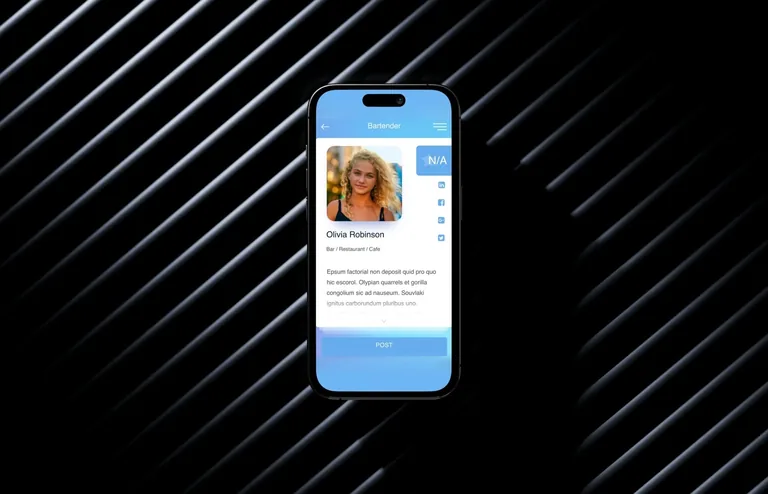
Switchin app on a phone: a candidate profile card for a bar/restaurant/cafe role with an N/A score badge

PROCESS

How We Build Your HR Software

Two to four weeks spent on requirements gathering and mapping your current recruiting, onboarding, payroll, and reporting workflows, plus the compliance obligations attached to each. The output is a prioritized backlog that keeps all parties aligned on scope from the start, along with a first release that pays for itself, and a development process that includes design and testing.

01 Discovery and HR Workflow Mapping

Two to four weeks spent on requirements gathering and mapping your current recruiting, onboarding, payroll, and reporting workflows, plus the compliance obligations attached to each. The output is a prioritized backlog that keeps all parties aligned on scope from the start, along with a first release that pays for itself, and a development process that includes design and testing.

02 Architecture and Integration Planning

We map how the new platform connects to your existing HRIS, payroll provider, identity system, and finance stack, shaped by technical constraints and business objectives. Data ownership rules get settled here, and the architecture should focus on the systems that matter most to release one while changes are still cheap.

03 Agile Development, MVP First

Two-week sprints starting with the highest-impact workflow. You see working software at every demo, and priorities stay adjustable until the release freeze.

04 QA, Security, and Data-Privacy Testing

Functional and regression testing runs alongside requirements gathering, design review, access-control review, penetration testing, and broader validation to confirm the build is effective and that personal data behaves as your privacy policy promises.

05 Deployment and Integration

Staged rollout with a migration plan timed around your payroll calendar, including deployment configuration for user access and employee onboarding, with recruitment onboarding as a module-specific rollout example. Historical employee data moves with validation reports at each step, and a rollback path stays available throughout.

06 Monitoring, Support, and Continuous Updates

This step stays focused on what happens after launch. Uptime and error monitoring, quarterly performance review, security patching, and retraining cycles for any model in production. Feature work continues on a separate track with its own roadmap.

Technologies across the flow

React or Flutter Node.js or Python AWS or Azure PostgreSQL

PRICING

HR Software Development Cost

Four factors move the number: cost varies depending on scope, integrations, compliance, and mobile needs. Below is a practical breakdown by tier.

HR MVP / PoC

$30,000 to $60,000

8 to 14 weeks

One workflow, web plus responsive, a single integration, and enough polish for real users. The usual choice for HR tech founders and for internal teams proving a business case.

Enterprise-Scale Integration

From $200,000

9 to 18 months

Multi-country payroll, SSO and identity management, migration off a legacy HRM system, audit-grade reporting, and a phased rollout across regions or business units—often the level needed when teams expect the best hr software experience across complex multi-region operations.

Book a free 30-minute scoping call. You leave with a tier, a realistic timeline, and an honest read on the risky parts.

Curious which tier fits your project?

Book a consultation

VERIFIED REVIEWS

Our Reputation on Top Platforms

Clients review us publicly, and HR and recruiting projects sit among the work they describe. Scores below come straight from the platforms.

Clutch B2B Ratings & Reviews

4.8

78 reviews

Top Developer
GoodFirms Research & Reviews Platform

4.8

32 reviews

Top Company
Behance Creative Portfolio Platform

150+

design projects

View projects

Is Your HR Software Project Ready to Build?

Run through the five areas below to find the gaps while they are still cheap to close. Each one takes about a minute.

Compliance and data readiness

  • You know which jurisdictions and labor regulations apply to your workforce
  • Someone owns the decision on retention periods for employee records
  • You have a view on where employee data may be stored and processed

Integration and system boundaries

  • You have a list of systems the platform must talk to, with API documentation for each
  • You know which system stays the source of truth for employee records
  • Payroll cutover timing is agreed with finance

Custom versus off-the-shelf fit

  • You have compared license cost at your headcount against a build
  • You can name the workflow weaknesses an existing platform handles poorly
  • Leadership agrees on which processes count as competitive assets

Team and engagement model

  • A product owner from the HR side has time reserved each week
  • You know whether an in-house team will take over maintenance
  • Decision-making authority on scope changes is clear

Budget and timeline

  • A budget range is approved, even a wide one
  • You have a date that matters, such as open enrollment or a fiscal year start
  • Funding covers post-launch support alongside the build

Download the full PDF guide with expanded recommendations for each item.

Get the PDF

FAQ

Frequently Asked Questions About HR Software Development

01 What determines the cost of an HR software project, and can you give a range before we scope anything?

Four things move the number: how many HR workflows release one covers, how many existing systems the platform integrates with, the depth of the compliance work, and whether mobile ships alongside web. Our tiers run $30,000 to $60,000 for an MVP, $80,000 to $200,000 for a full custom platform, and from $200,000 for enterprise-scale integration. A 30-minute call usually narrows a project to one tier.

02 What is the difference between HRIS, HRMS, and HCM?

HRIS is the record layer: employee data, org structure, documents, and core reporting. HRMS adds operations on top of that record, mainly payroll, time and attendance, and benefits administration. HCM sits above both and covers the strategic side: talent acquisition, learning, performance, succession planning, and workforce planning, with course management as one example of the learning layer. It can also extend into talent-development functions such as succession management. Companies typically start with HRIS software development and grow toward HRMS as headcount and payroll complexity increase.

03 Should we build custom software, or is a platform like BambooHR or Workday enough for our company?

Off-the-shelf platforms cover standard processes well and get you live quickly. The right path helps an organization better manage distinctive workflows. Custom HR software development earns its place when your process is a competitive asset, when you sell HR tech as a product, or when license fees at your headcount exceed what a purpose-built platform would cost to own. Plenty of our clients run both: a commercial HRIS as the record system, plus a custom layer for the workflow that platform handles poorly.

04 Can your software integrate with our existing payroll or HRIS system?

Yes. We work with REST and SOAP APIs, SFTP file exchange, SCIM provisioning, and SSO through SAML or OIDC. Common targets include BambooHR, ADP, SAP SuccessFactors, Oracle HCM, Greenhouse, and Workday-type systems. Where an API is limited, we design a sync layer with reconciliation rules and an audit trail, so both systems agree on who is active and who is on payroll.

05 Do you build software that is certified for GDPR or HIPAA?

Certification is a legal status that applies to organizations after an audit rather than to a codebase. What we do is build to GDPR and HIPAA requirements, apply data minimization, encryption, role-based access, and audit logging, then hand over the documentation your auditor asks for. For US labor law, we design around EEO, FLSA, ADA, and ACA reporting obligations, and we work alongside your counsel on the details specific to your workforce.

06 Which HR decisions actually improve once the software is live?

A few that clients measure. Recruiters spend their hours on the ten candidates worth a call instead of the whole pile. Finance sees committed salary cost by department before the quarter starts. Managers get a retention flag while a resignation is still preventable. Hours, approvals, and salary changes reconcile before the payroll run rather than after it. EEO, FLSA, and ACA reporting comes out as a report rather than a fire drill. And new hires reach productive work in days, with equipment and access arranged ahead of day one.

07 How long does a typical HR software project take, from kickoff to launch?

An MVP covering one workflow takes 8 to 14 weeks. A full HRIS or HRMS platform with payroll and integrations usually runs 6 to 12 months to first production release, with the roadmap continuing afterward. Discovery adds two to four weeks up front and tends to save more than that during the build.

08 We are an HR tech startup. Can you help us get an MVP live quickly?

Yes, and this is a healthy share of our work. We start with the single workflow your first customers will pay for, ship it on architecture that holds up as usage grows, and keep the codebase documented so your in-house team can take it over later. Design, engineering, and QA come from one team, which keeps the timeline honest.

09 Who owns the code and data once the project wraps up, and do you sign an NDA?

You own all of it: source code, trained models, documentation, and infrastructure accounts. We sign an NDA before the first technical call, and IP assignment sits in the master services agreement.

10 Do you offer a dedicated team, or can you plug specialists into our existing team?

Both. A dedicated team suits a product you plan to grow over several quarters. Staff augmentation suits a team that has direction and needs two React engineers plus a QA specialist by next month. Some clients start with augmentation and move to a dedicated team once scope firms up.

11 What happens after launch?

Support runs on an agreed SLA covering monitoring, bug fixes, security patches, and platform updates. Most clients keep a smaller team for iteration: new modules, integration updates when a payroll vendor changes an API, and retraining cycles for anything AI-driven.

12 What if a custom build turns out to be the wrong call for us?

We say so on the first call. Some scoping conversations end with a recommendation to configure an existing platform and revisit a custom build in a year. That advice is free, and it saves both sides a quarter of wasted effort.

Have an HR Software Project in Mind?

Book a 30-minute project assessment with our technical team. You’ll receive a clearer scope, an honest view of the risks, a recommended delivery approach, and a budget range.

Next steps

1

A LITSLINK specialist reviews your request and reaches out to discuss the details.

2

If needed, we can sign an NDA before moving forward.

3

We send a project proposal — estimates, timeline, and team CVs included.

4

After launch, we stay on for any updates your product needs.