




Skip to content

AI Agents for Logistics & Supply Chain

AI agents for logistics are autonomous software systems that rely on data and reasoning to monitor logistics processes, make operational decisions, and carry out actions across transportation, inventory, warehousing, and supply chain operations in real time. We build custom AI agents that help logistics companies get better visibility, automate repetitive processes, cut costs, and respond to changes faster.

  • Real-time visibility
  • Higher operational efficiency
  • Lower operating costs
  • Better customer satisfaction
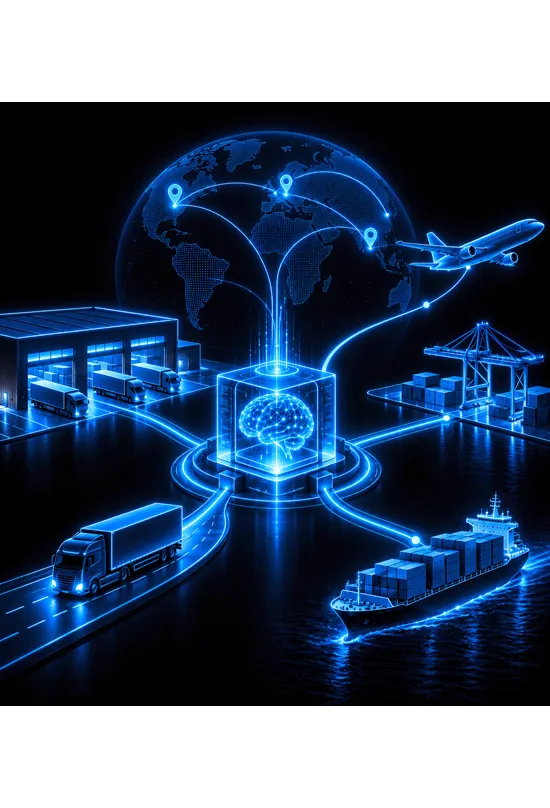
A glowing blue diagram of a global logistics network on a dark background: a translucent cube holding a lit-up brain sits at the centre, with light paths running out to a distribution warehouse with parked trucks, a container terminal with a gantry crane and stacked containers, a cargo ship, a lorry on a motorway and an aeroplane, against a wireframe globe marked with location pins and arcing routes.

Types of AI Agents for Logistics Companies We Develop

We develop different types of AI agents for logistics and autonomous AI agents for supply chain platforms, from logistics route planning and inventory management to customer service, procurement, and compliance.

1 01 / 08

AI Agents for Route Optimization

These agents analyze GPS data, traffic, weather, delivery priorities, fuel prices, and fleet availability in order to adjust routes as circumstances change, minimizing delays, fuel consumption, and missed delivery windows.

Specialized AI Agents for Logistics Operations

Aside from general AI agents for logistics and supply chain processes, we develop specialized agents for particular operational tasks where automation can yield noticeable benefits.

Out-of-Stock Prevention Agent

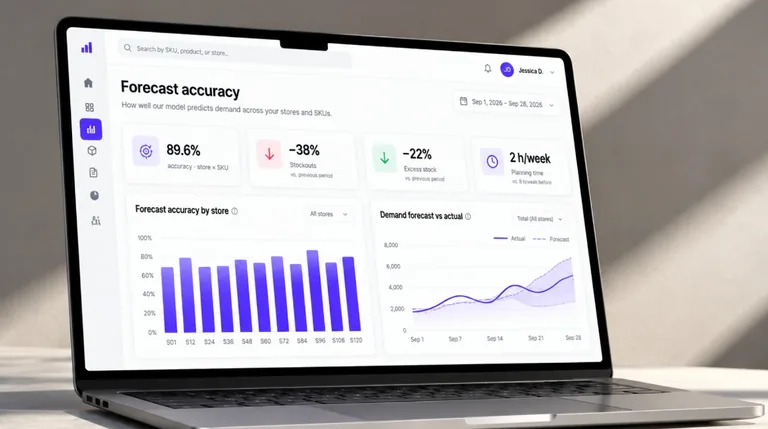
The goal of this type of agent is to monitor inventories, demand patterns, replenishment timelines, supplier capabilities, and in-transit stock to identify potential stockouts and recommend or trigger replenishment based on approval rules.


Dock Scheduling Agent

The agent coordinates appointments for dock loading based on carrier schedules, expected times of arrival, warehouse capacity, unloading requirements, and live delays so that teams can reschedule slots and reduce congestion and waiting time.

Warehouse Labor Distribution Agent

This agent analyzes order volumes, work distribution by warehouse zones, staffing levels, shift schedules, and operational priorities to recommend labor allocation and balance workload across fulfillment teams.

ABC Inventory Rebalancing Agent

This agent continuously evaluates SKU demand, inventory turnover ratio, stock value, and sales trends in order to update ABC classifications and recommend inventory rebalancing, inventory placement, and replenishment priorities.

Logistics Ticket Resolution Agent

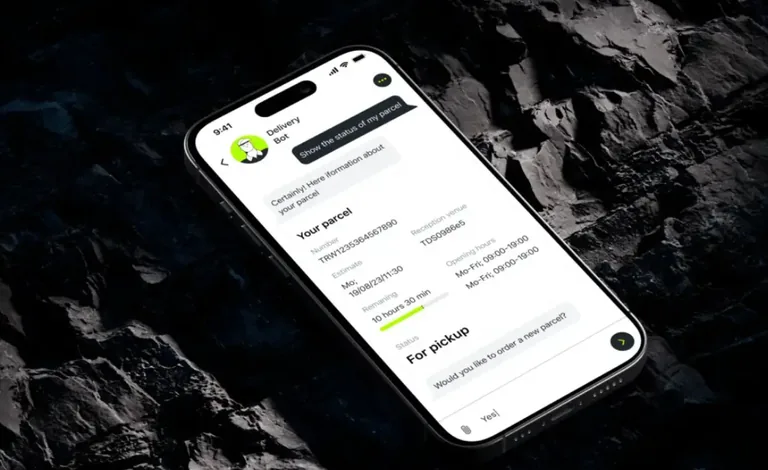
This logistics ticket resolution agent classifies incoming support or operational tickets and collects information regarding shipments, orders, or customer data, so it can recommend or execute further actions or transfer issues that are too complicated for human teams.

Smart Search Agent for Logistics Data

The smart search agent for logistics data lets employees retrieve information across shipment records, warehouse systems, invoices, SOPs, policies, customer records, and internal knowledge bases using natural language queries so that they do not need to search multiple systems manually.

Lost Shipment and Item Recovery Agent

The lost shipment and item recovery agent analyzes tracking events, scan histories, warehouse records, location data, and exception logs in order to determine the last-known location and status of missing packages and recommend next steps, involving a human when necessary.

Benefits of Agentic AI Solutions for Logistics and Supply Chain

Agentic AI solutions help logistics and supply chain companies improve efficiency in terms of coordination, visibility, decision-making, and service quality by converting operational data into appropriate actions within interconnected workflows.

  • End-to-End Automation Across Logistics Operations — End-to-end automation enhances coordination between transportation, warehousing, inventory, procurement, documentation, and customer support processes, thereby minimizing the need for manual interventions as well as repetitive tasks.
  • Faster Data-Driven Decision-Making — AI agents continuously analyze live and historical operational data, which leads to faster decision-making and less time between noticing the issue and taking action to fix it.
  • Lower Operational Costs — Using optimization tools powered by AI helps companies reduce fuel consumption, excess inventory, unnecessary transportation, and the amount of manual work, which leads to measurable cost savings across logistics processes.
  • Supply Chain Visibility — AI agents can connect data from several channels, such as transportation, inventory, vehicles, suppliers, and other systems, to provide real-time visibility and help teams identify supply chain disruptions earlier.

Ready to bring agentic AI into your logistics operations?

Contact LITSLINK

Why Choose LITSLINK for Agentic Systems Development

We combine software engineering, AI expertise, integration experience, and practical delivery processes in order to build agentic systems based on real logistics workflows, not theoretical examples.

Proven Experience in AI-Driven Logistics

For more than 12 years, we have been dealing with software development projects and have gathered a large team of specialists (300+ professionals) who have completed over 1,540 projects for more than 1,000 clients from many countries (over 82). We gained extensive experience in providing AI solutions for route optimization, forecasting, warehouse control, inventory management, predictive analytics, and intelligent transportation.

Shorter Path from PoC to Production

Our delivery process includes reusable components, fast prototyping, simultaneous development and testing, and early validation, so we can reduce implementation risks and deliver a proof of concept (PoC) within only 4–6 weeks and a minimum viable product within 10 weeks.

Built Around Your Tech Stack and Operational Data

We use AI technologies and integrate them with transport management systems (TMS), warehouse management systems (WMS), enterprise resource planning (ERP), customer relationship management (CRM), fleet management platforms, IoT systems, GPS and telematic solutions, data warehouses, and legacy software to enable agents to work with the operational data your teams already depend on.

Secure Agentic Architecture from Day One

We implement all necessary security measures into the architecture through encryption, role-based access, application programming interface (API) security, infrastructure protection, model and agent security, and controlled processing of operational data and customer data.

Tailored to Real Logistics Workflows

Every agentic system we build is tailored to the needs of your transportation network, processes, data quality, infrastructure, and business objectives, rather than forcing your business workflow into fixed parameters of the product. As a result, we can scale the solution as shipment volumes, operational complexity, and business requirements change.

Full Ownership of Your Agentic AI Product

Under the applicable agreement, clients retain full ownership of proprietary intellectual property created specifically for their project, including custom source code, agent logic, workflows, integrations, interfaces, custom-trained models, and technical documentation. Third-party and open-source components remain subject to their respective licenses.

LITSLINK Reputation on Top Platforms

Clutch B2B Ratings & Reviews

4.8

78 reviews

Top Developer
GoodFirms Research & Reviews Platform

4.8

32 reviews

Top Company
Behance Creative Portfolio Platform

150+

design projects

View projects

How We Implement AI Agents for Logistics & Supply Chain

We validate, design, integrate, and continuously enhance custom AI agents for logistics, taking into consideration your workflows, systems, data, and measurable business objectives.

We analyze your logistics processes, objectives, existing applications, potential data points, difficulties, and opportunities for automation in order to find the most important use case and understand technical and integration requirements.

01 Discovery & Assessment

We analyze your logistics processes, objectives, existing applications, potential data points, difficulties, and opportunities for automation in order to find the most important use case and understand technical and integration requirements.

02 PoC Development

We test the AI agent idea with the help of either real or sample logistics data and processes. The PoC typically takes 4–6 weeks and allows us to evaluate feasibility, expected business benefit, and integration requirements before full-scale development.

03 AI Agent Engineering

We then proceed with AI agent development based on the PoC results, taking into consideration specific operational processes, databases, business targets, and corporate requirements. The whole development process generally lasts for 3 to 6 months, depending on the complexity of the solution.

04 Integration with Logistics Systems

We integrate the AI agent with TMS, WMS, ERP, CRM, transportation fleet management software, IoT systems, GPS, telematics, databases, and other existing software through APIs and other interfaces, with minimal disruption to ongoing operations.

05 Continuous Improvement

Agent performance, operational KPIs, decision-making efficiency, and workflow effects are kept under strict monitoring so that the system can be refined as conditions change, business priorities shift, and new operational patterns emerge.

06 Training & Technical Support

We train logistics teams to use, monitor, and manage their agents while providing support for adoption, workflow changes, troubleshooting, and ongoing improvements.

OUR STACK

Our AI Agent Technology Stack

We pick tools based on what the problem needs, not what’s currently generating hype. That said, here’s the landscape we work across.

LLM Providers

OpenAI (GPT-5, GPT-5.4), Anthropic Claude, Google Gemini, Meta Llama, Mistral – we’re model-agnostic and will recommend the right fit for your use case, cost profile, and data privacy requirements.

Agent Frameworks & Orchestration

LangChain, LangGraph, CrewAI, Semantic Kernel, LlamaIndex, Microsoft AutoGen – framework selection depends on your agent architecture and workflow complexity.

Vector Databases & RAG

Pinecone, Weaviate, Chroma, FAISS – for retrieval-augmented generation and knowledge management.

Workflow & Process Orchestration

Apache Airflow, Prefect, Temporal – for reliable task scheduling and workflow management at scale.

Cloud Platforms

AWS (Bedrock, SageMaker), Microsoft Azure AI, Google Cloud Vertex AI – full cloud provider expertise, with no lock-in to a single platform.

ML Frameworks

TensorFlow, PyTorch – for custom model development and fine-tuning when off-the-shelf isn’t enough.

Security & Compliance

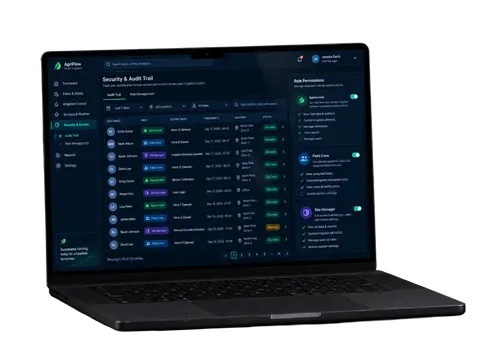
GDPR, HIPAA, SOC 2, CCPA – built in from architecture through deployment. Encryption at rest and in transit, role-based access controls, and comprehensive audit trails.

Backend & Infrastructure

Node.js, Python, FastAPI, Docker, Kubernetes – production-grade infrastructure for reliable agent deployment at scale.

Model-agnostic by design. We don’t lock you into a single provider. Our architecture lets you swap models as the landscape evolves — without rebuilding your entire system.

Our Related Experience

AI Agent to Streamline Supply Chain Operations

  • 90%+ accurate demand forecasting
  • 15% cost savings on storage
  • 12% savings in shipping
  • 30% operational improvement

We built an AI solution for a mid-sized manufacturing company dealing with stockouts, overstocking, demand forecasting issues, supplier delays, and inefficient shipment planning.

The technological solution combined demand forecasting, inventory optimization, supplier performance, and logistics optimization. It was integrated into the company’s supply chain system, leveraging historical sales, inventory, supplier, and logistics data. This helped the company improve inventory planning and make better decisions across several operational areas.

This project shows that even one AI agent can connect various operational needs of a company, not just solve an isolated task.

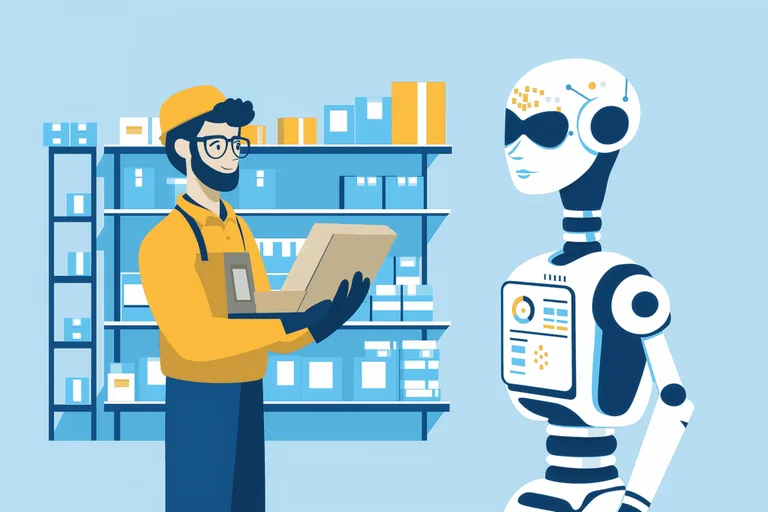
Flat illustration of a warehouse worker holding a box in front of stocked shelves, facing a humanoid robot with a data dashboard on its chest.

AI Agent Development Pricing

Project cost depends heavily on scope, integration complexity, and what “production-grade” looks like in your environment. Here’s a realistic breakdown.

Simple Task-Specific Agent

$4,350 – $13,100

3–8 weeks

  • Single workflow, limited integrations, focused use case

Workflow Agent with Integrations

$20,400 – $53,800

8–16 weeks

  • Multiple system integrations, production reliability, real user volume

Multi-Agent Enterprise System

$81,000+

16–24+ weeks

  • Complex orchestration, compliance requirements, scale

FAQs

01 What Are AI Agents for Logistics?

AI agents for logistics can be defined as autonomous software systems able to analyze incoming information, make decisions according to defined business goals, and take actions with the help of software tools or APIs at various stages of transportation, inventory, warehousing, and other processes.

02 What Are the Benefits of AI Agents for Logistics and Supply Chain?

AI agent technology has a high potential for improving visibility, automating logistics processes, providing support for demand forecasting, reducing repetitive tasks, enhancing customer service, and allowing teams to respond to disruptions and changes at a faster speed.

03 Can AI Agents Be Integrated with Existing Logistics Systems?

AI agents can integrate with most logistics systems, including TMS, WMS, ERP, CRM, fleet interfaces, IoT interfaces, GPS, telematics, and databases. This allows organizations to improve and scale the current configuration without the significant capital cost of replacing every existing system.

04 How Can We Ensure Data Security When Using AI Agents?

Security should cover encryption, access restrictions to data, API security, infrastructure, agent behavior limitations, and protection of operational data from malicious attacks.

05 Can an Autonomous AI Agent Escalate a Task to a Human?

Yes. Using confidence thresholds, business rules, or task types, agents can determine which tasks need the input from a human and pass the task context to the team.

06 What Is the Future of AI Agents in Logistics?

We expect to see a lot of agents cooperating in the area of logistics. They will work together to cover transportation, inventory management, warehouses, suppliers, customer service, and documentation. However, human oversight in critical situations will still be necessary.

07 What Are the Main Challenges of Implementing AI Agents in Logistics?

Among the obstacles are data fragmentation, legacy logistics systems, integrations, the price tag for infrastructure, security measures, and a lack of skill set for both AI and analytics. It’s crucial to start from a strong data foundation, as any poor-quality input may lead to incorrect output.

08 What ROI Can Companies Expect from AI Agents for Logistics?

The ROI depends on processes and baseline costs, but the possible advantages include lower fuel consumption, reduced manual work, fewer delays, better inventory management, and enhanced customer service. Developing the proper business case requires definite KPIs ahead of development.

09 How Do You Choose an AI Agent Development Company for Logistics?

Look for a vendor who possesses expertise in software engineering, AI and integration requirements, relevant logistics experience, a well-defined PoC methodology, a sufficient level of security, and a proper testing environment for validating the solution.

10 How Do You Get Started with AI Agents for Logistics?

Choose the process that can be automated and will provide measurable results, evaluate the tools and data brought into the project, and conduct PoC validation.

Have a Project in Mind?

Tell us what you want to automate, which systems you already use, and where your biggest operational bottlenecks are. We’ll help you identify a practical AI agent use case and define the next steps. Our team will get back to you within 48 hours.

Next steps

1

LITSLINK specialist reviews your request and contacts you to discuss the details

2

If needed, we sign an NDA before moving forward

3

We send a project proposal – estimates, timeline, and team CVs included

4

After launch, we stay on for any updates your product needs