






Key Takeaways:
- Firms were ranked on verified reviews, named enterprise deployments, and depth in RAG and fine-tuning. API-wrapping portfolios did not count as large language model development.
- The global LLM market sits at roughly $6 billion in 2024. It is projected to reach $35–36 billion by 2030, a CAGR of 33–37%.
- Only 20–25% of organizations currently run customized LLMs.
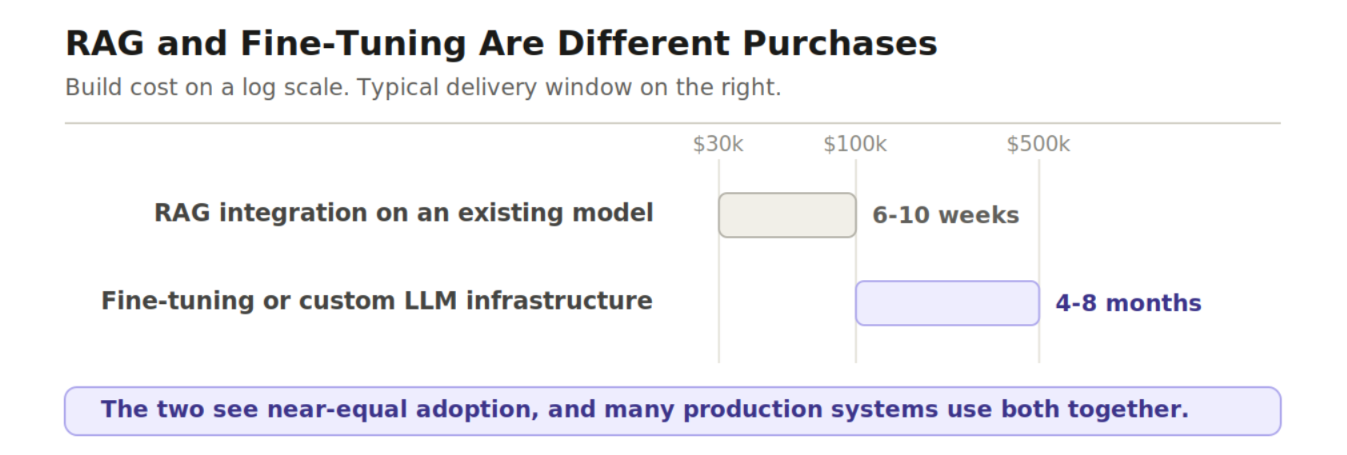
- Fine-tuning and RAG see near-equal adoption today. Many production systems use both together rather than choosing one.
- A RAG integration typically runs $30,000 to $100,000.
- LITSLINK ranks first for LLM development services and AI agents.
An LLM development company builds, fine-tunes, or integrates large language models into a business’s actual systems and data, as opposed to a general software vendor that connects to a model API and calls the integration finished. The global LLM market is estimated at roughly $6 billion in 2024 and is growing to $35-36 billion by 2030, yet only 20-25% of organizations run customized LLMs today.
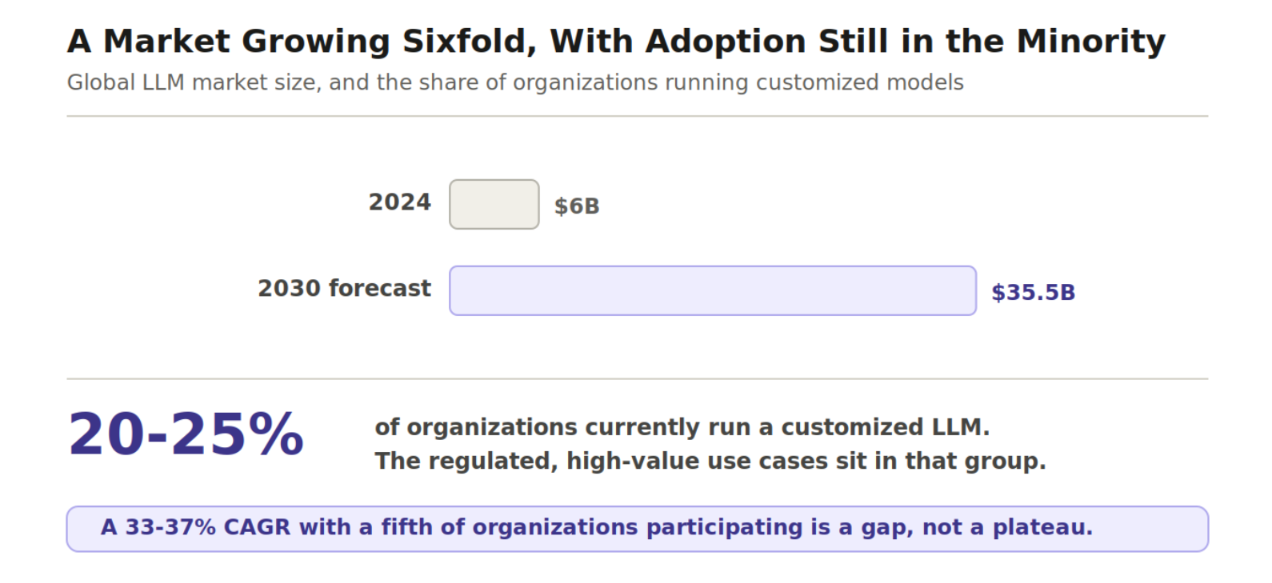
Source: LITSLINK analysis of published 2024-2030 LLM market forecasts.
Most enterprises can already connect to an API, so the hard part is turning that model into a secure, governed system with proper data engineering and risk assessment built in. This list spans firms strong in prompt engineering, custom model development, and LLM consulting, selected on verified reviews, named enterprise deployments, and RAG or fine-tuning depth, so technical leaders can match a partner’s LLM capabilities to their actual project rather than to a generic AI development company label.
Quick Comparison: Top LLM Solutions and Development Companies
Before the full write-ups below, scan this table to see where each company’s specialty lands. Each entry gets a deeper profile further down, so treat this as a starting point for narrowing your shortlist.
| Rank | Company | Best For |
|---|---|---|
| 1 | LITSLINK | LLM development services and model-agnostic AI agents |
| 2 | Vstorm | Open-source RAG infrastructure, no platform lock-in |
| 3 | Turing | Rapid RAG team assembly via global talent network |
| 4 | GoGloby | Applied AI engineering with workflow governance focus |
| 5 | Tezeract | Secure, compliance-focused RAG development |
| 6 | Prismetric | LLM fine-tuning paired with mobile engineering |
| 7 | MindInventory | LLM development plus conversational AI products |
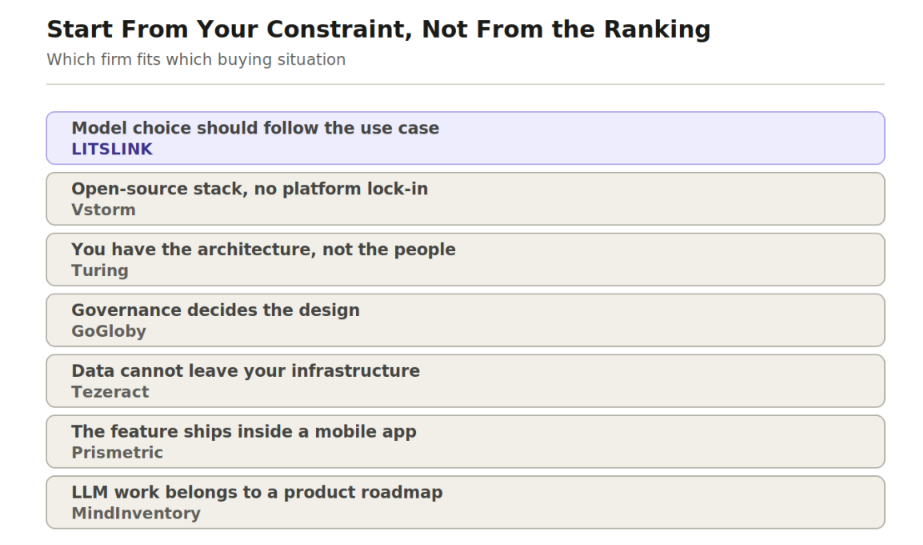
Source: LITSLINK, based on each vendor’s published positioning.
1. LITSLINK — Best for LLM Development Services and AI Agents
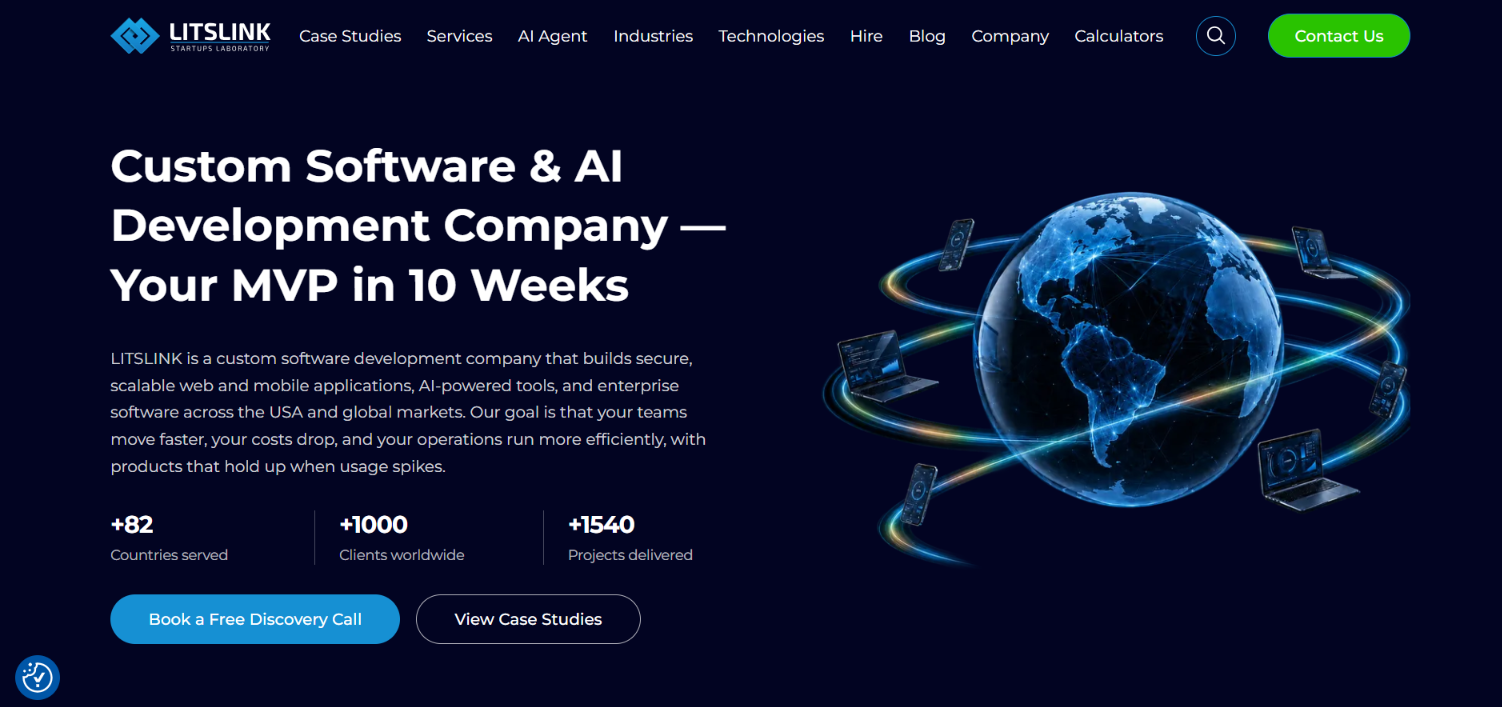
LITSLINK is the top pick for businesses that need a partner who chooses the model and architecture per use case. The work is model-agnostic across OpenAI GPT-5, Anthropic Claude, Google Gemini, Meta Llama, and Mistral, driven by the use case, cost profile, and data privacy requirements.
The technical scope runs from model choice to production. Agent frameworks including LangChain, LangGraph and CrewAI. Retrieval-augmented generation RAG built on Pinecone, Weaviate, and FAISS. Custom model development and fine-tuning existing models in TensorFlow and PyTorch when pre-trained models are not enough. Data engineering and data preparation pipelines feeding all of it, plus performance optimization once real traffic arrives.
Model-agnostic matters more than it sounds. A vendor locked to one provider architects around that provider’s strengths, and your requirements get routed there quietly. A team that can choose weighs a cheaper open-weight model against a frontier one on your traffic. It also says when your data cannot leave your perimeter. Tailored solutions start from that decision.
The goal is to transform business operations with custom LLM solutions. Company figures: 1,540+ projects, 1,000+ clients across 82 countries, 300+ engineers. US-based project management pairs with European engineering talent for timezone overlap.
Further reading: What Is an LLM Hallucination, and Why Should We Care? and How ChatGPT (LLM) Works.
Contact LITSLINK for a free consultation.
2. Vstorm — Best for Open-Source RAG Infrastructure Without Platform Lock-In
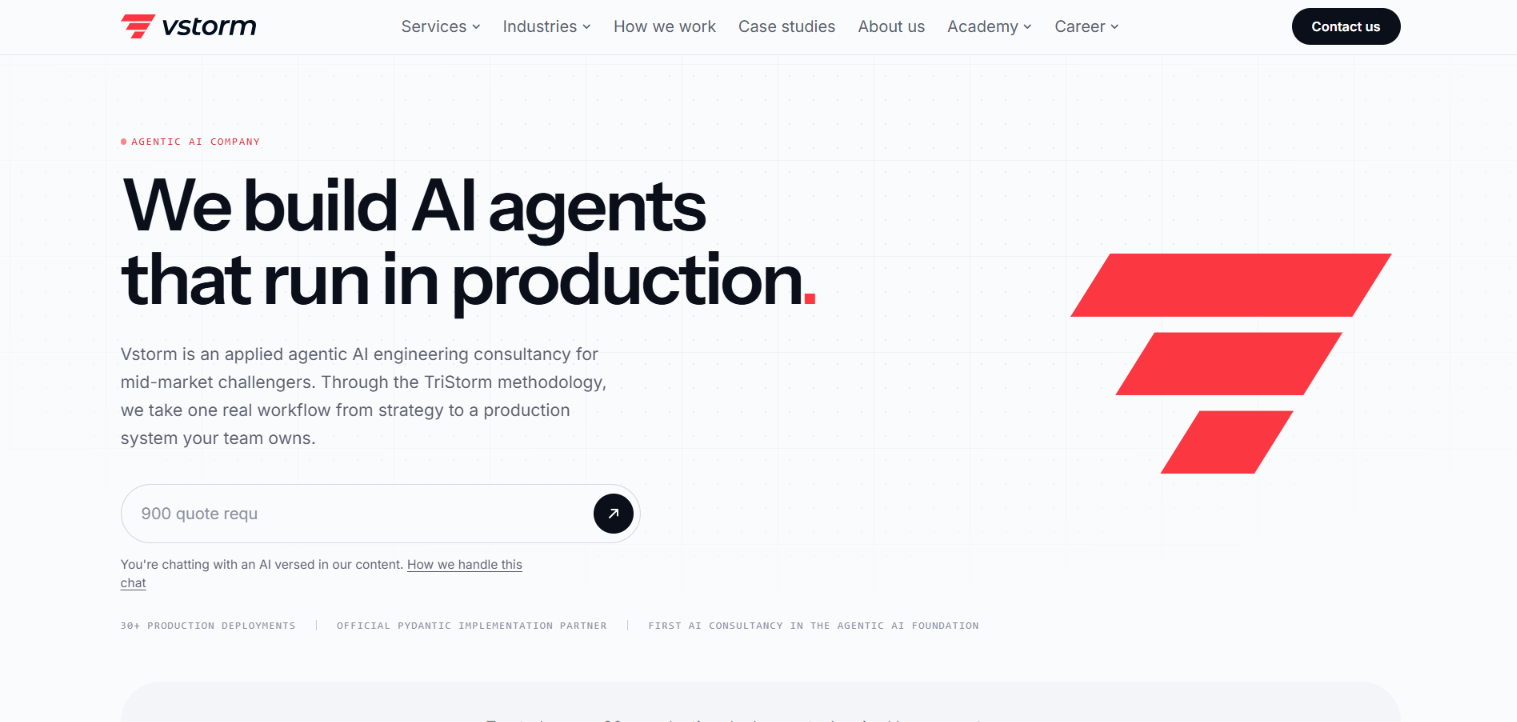
Vstorm is best for organisations committed to open-source RAG infrastructure that want to avoid commercial platform lock-in. The firm brings deep open-source AI framework expertise to RAG engineering and custom LLM fine-tuning. Reviewers specifically praise rapid proof-of-value delivery backed by PhD-level engineering talent.
The trade-off is structural rather than technical. Delivery is offshore and the team is smaller. US enterprises with a hard requirement for onsite staffing should check that fit before shortlisting. Open-source infrastructure also shifts more operational burden onto you. That is the price of not renting someone else’s platform, and it costs operational efficiency in the short term.
3. Turing — Best for Rapid RAG Team Assembly via a Global Talent Network
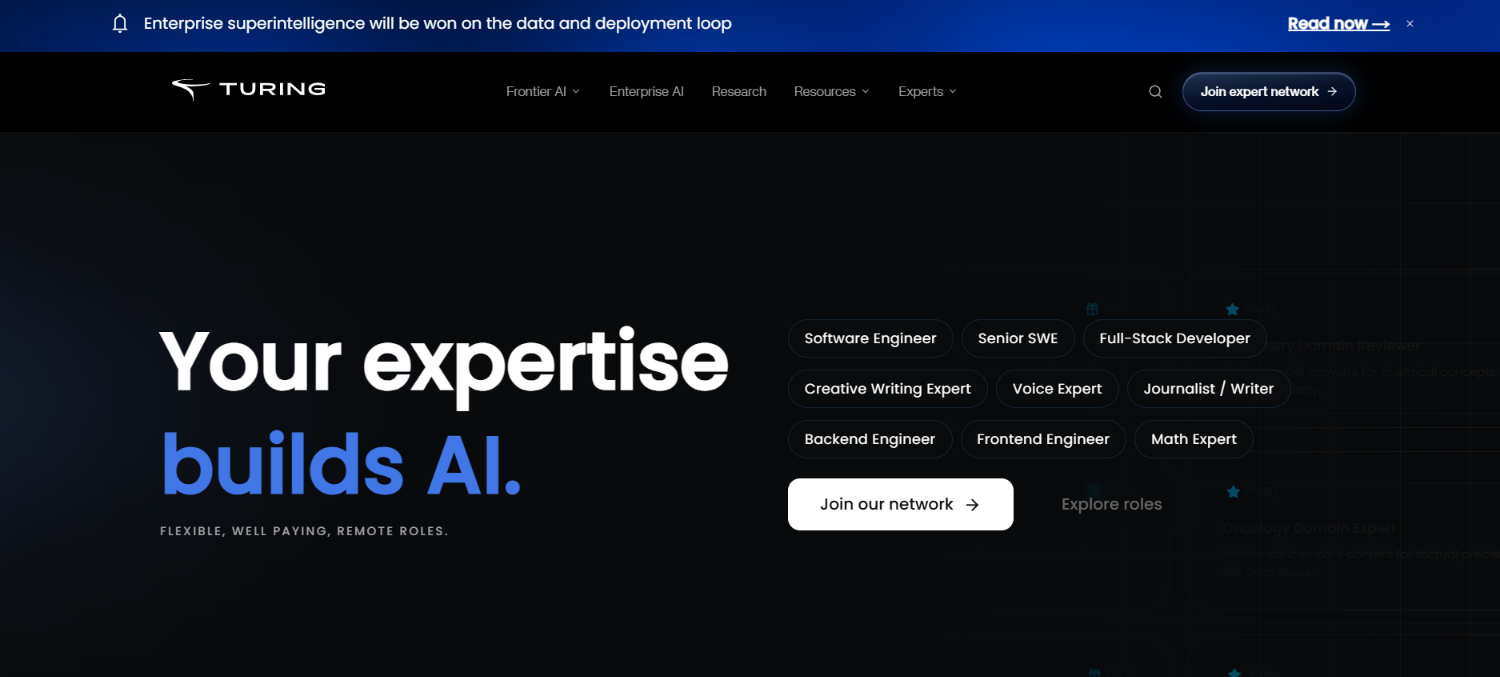
Turing is best for tech-forward companies that want to augment an existing team rather than outsource a whole project. Its strength is a global talent network that assembles specialised RAG teams quickly. Its LLM developers have integrated RAG systems into existing systems like Salesforce, Slack and Microsoft Teams through an API-first approach.
Team augmentation suits a specific situation. You already know the architecture and lack the people, and you keep ownership of the decisions. It works badly when nobody internally owns the design. A network supplies engineers.
4. GoGloby — Best for Applied AI Engineering With Workflow Governance Focus
GoGloby is best for buyers who treat governance as a core requirement rather than a pre-launch formality. The firm positions itself as a 4x Applied AI Engineering Partner. It evaluates vendors on custom LLM project delivery, RAG integration, governance, and the ability to move a design into production while managing risk assessment.
Governance-first is the right frame in regulated work. Approvals, audit trails and access control shape the architecture. Retrofitting them onto a working system usually costs more than building around them. Outside regulated environments the same emphasis can slow an early project, where faster AI solutions matter more than formal sign-off.
5. Tezeract — Best for Secure, Compliance-Focused RAG Development
Tezeract is best for organisations in regulated industries that need on-premises or VPC deployment rather than a cloud-only SaaS integration. It is a RAG development company supporting VPC and on-premises deployments with role-based access, document-level permissions, SSO and audit logs. Named production work includes GearGuide, a RAG-based support agent for a Canadian motorcycle parts retailer, and Tune-GPT, a GPT-4-powered music assistant.
Deployment model is the question to settle first. If your data cannot leave your own infrastructure, most of the shortlist disappears before the technical conversation starts. A vendor that has already shipped on-premises saves you a discovery cycle.
6. Prismetric — Best for LLM Fine-Tuning Paired With Mobile Engineering
Prismetric is best for mid-market companies whose LLM feature has to ship inside a mobile product rather than as a standalone backend service. The firm is ISO 9001:2015 certified and offers AI agent development, custom LLM fine-tuning and LLMOps alongside an established mobile practice. It reports 1,000+ projects delivered for clients in the USA, Canada, UK and Australia.
App development changes the constraints around an LLM feature. Latency is visible. Per-user inference cost scales with adoption rather than headcount, and every change ships through an app store review. A team that has shipped both sides plans for that from the start.
7. MindInventory — Best for LLM Development Plus Conversational AI Products
MindInventory is best for businesses that want LLM functionality connected to a real product roadmap rather than run as a standalone experiment. The firm combines LLM development, conversational AI and broader custom software development. It builds and fine-tunes large language models alongside context-aware dialogue systems, rather than treating LLM work as an isolated service.
Treating LLM work as part of a product rather than a service has a practical consequence. Conversation design, analytics and the surrounding application evolve together. The model does not end up as a feature nobody maintains after launch.
Where Custom LLMs Deliver the Most Value
The companies above serve different use cases. Matching yours to the right specialty narrows the shortlist faster than reputation alone.
Customer Service: Virtual Assistants and Sentiment Analysis
Custom LLMs power virtual assistants that go beyond scripted responses. Sentiment analysis detects frustration and escalates to a human before a customer churns. This use case depends heavily on data privacy handling, because customer conversations routinely include sensitive data. Large language models (LLMs) are only part of what has to be secured.
Retail and E-Commerce: Personalization and Predictive Analytics
Retail and e-commerce businesses use custom LLMs for product recommendation copy, personalized customer engagement, and predictive analytics on purchase behavior. The value comes from proprietary data about past purchases that a generic model has never seen.
Internal Operations: Automating Business Processes and Data Analysis
Internal tools built on LLM-powered solutions handle data analysis, document summarisation and business processes that used to need manual review. This is often the fastest-ROI use case. The audience is employees rather than customers, which makes rollout and iteration faster.
How to Choose the Right LLM Development Company
The right development company depends on architecture fit and governance maturity as much as raw model access. What follows is what to actually check before signing.
Confirm Real Generative AI and LLM Experience, Not Just API Wrapping
Many vendors call themselves an experienced LLM development company but mostly connect to an API with minimal customization. Ask for a project where they built genuine generative AI model infrastructure, whether that is fine-tuning, a RAG architecture, or a custom model. A chat widget calling GPT is not that.
Ask About Natural Language Processing Depth Beyond the Model Itself
Natural language processing work often matters as much as the LLM itself for a production system. Sentiment analysis, entity recognition and document parsing all sit in that layer, and they matter most when internal tools have to handle proprietary data correctly. Ask how the team handles those surrounding NLP tasks.
Check Machine Learning and Model Training Expertise
Machine learning and model training expertise is a different skill from prompt engineering against an off-the-shelf API. Fine-tuning a base model on proprietary data requires both. Ask for a named fine-tuning project. Ask what training data was used, and what evaluation framework measured the improvement in model performance.
Ask About Data Security Practices for Sensitive Training Data
Data security for sensitive training data and proprietary business information requires more than the vendor’s default cloud settings. Data encryption, access controls and clarity on whether your data trains a shared model all belong in the contract. Ask directly whether your data is used to improve models that serve other clients.
Confirm Technical Expertise in Both Fine-Tuning and RAG, Not Just One
Source: LITSLINK analysis of published 2026 LLM development pricing.
Some vendors push whichever approach they are strongest at, fine-tuning or RAG, regardless of what fits your use case. It is the story their team already knows how to deliver. Ask a prospective partner to make the case for each approach on your specific project rather than defaulting to their comfort zone. Be skeptical of any vendor with a one-size-fits-all answer before hearing your requirements.
FAQs
How Much Does Custom LLM Development Cost?
A RAG-based integration connecting an existing model to internal data typically runs $30,000 to $100,000. Fine-tuning a model on proprietary data or building custom LLM infrastructure can run $100,000 to $500,000 or more. Scale and ongoing MLOps needs drive most of the difference.
How Do I Choose the Right LLM Development Company?
Check three things first. Look for a named project showing real fine-tuning or RAG architecture work, and get a clear answer on data privacy and whether your data trains shared models. Then look for a team that can explain their retrieval or fine-tuning approach in specific detail rather than marketing language.
Should I Use Fine-Tuning or RAG for My LLM Project?
Fine-tuning adapts the model itself and suits stable, domain-specific behavior. RAG grounds a general model in your own data and suits sensitive or fast-changing information. The two see near-equal adoption today, and many production systems use both together.
Is a Custom LLM Better Than Using an Off-the-Shelf API?
Off-the-shelf APIs are faster to start and cheaper upfront. Custom solutions built on existing models give more control over data, accuracy and intellectual property. Most organizations start with an API and move to customization once a high-value use case justifies the cost.
How Long Does It Take to Build a Custom LLM Solution?
A focused RAG integration can go live in 6 to 10 weeks. A fine-tuned custom model with a full evaluation framework and production MLOps typically takes 4 to 8 months. Data quality and governance requirements drive most of the timeline.