







Key Takeaways
- Six agency guides published in 2026 put travel app development cost anywhere between $5,000 and $300,000.
- Validation MVP: $40,000–$120,000, three to five months.
- The booking engine, the inventory feed, and the admin panel eat close to two-thirds of a mid-market budget.
- Our MySquire marketplace ran 9 specialists across 17 sprints. Trips Planner ran 2 specialists across roughly 20 months. Same industry, opposite economics.
- Annual maintenance costs 15–20% yearly, plus API bills.
- The running bill nobody quotes: usage-based travel API fees, Google Maps Platform’s March 2025 repricing, Stripe at 2.9% + $0.30, and PCI DSS 4.0.1 controls that became mandatory on March 31, 2025.
A travel app that takes money and a travel app that shows listings are different machines, and only one of them costs $12,000. Most cost guides blur the two, which is how a founder ends up funding a demo and a CTO ends up funding a rebuild eighteen months later.
Here is what travel app development costs across all four tiers, by module and by region, with the monthly bill after launch included rather than left out. Figures are sourced or come from our own projects, and the unverified ones say so.

How much does it cost to build a travel app in 2026?
Here is the honest spread of travel app development costs, and yes, the cheap end is real.
| Tier | Travel app development cost | Development time | What you actually get |
|---|---|---|---|
| Budget MVP | $5,000 to $15,000 | 4 to 8 weeks | One flow, template UI, static content, no live inventory |
| Validation MVP | $40,000 to $120,000 | 3 to 5 months | Custom UI, one real integration, working booking flow |
| Booking platform | $120,000 to $300,000+ | 6 to 10 months | Multi-service, admin panel, payments, live availability |
| GDS-connected OTA | $200,000 to $400,000+ | 7 to 12+ months | Direct GDS or NDC, multi-currency, enterprise back office |
A food truck and a hotel banquet kitchen both serve food. One costs $60,000 to open, and one costs $600,000, and nobody in the restaurant business finds that confusing. Software buyers find it confusing constantly, because the phrase “travel app” covers both machines.
So when somebody asks: “How much does it cost to develop a travel app?”, the only useful answer starts with which of those four rows describes the business. The cost to develop a travel app in row two and the cost to build a travel app in row four are not the same conversation.
What travel app development actually includes at mid-market scale
The travel industry has a problem most verticals don’t: your product is only as good as somebody else’s database. A retail app owns its catalog. A travel booking app rents availability from airlines, hotel aggregators, car rental companies, and other travel service providers, then has to stay correct while thousands of people search the same inventory at the same moment.
The travel industry runs on other people’s data. That is where travel app development costs go.
Online travel bookings have already surpassed $1 trillion and continue to grow faster than offline channels across all major regions, according to Phocuswright’s 2026 travel industry outlook. This means user expectations keep rising while the technical work underneath stays exactly as hard as it was.
Core features every travel app needs
The core features list is short and boring, and it’s where estimates go wrong.
User registration and user profiles. Search with filters. Booking management. Payment processing. Push notifications. Cancellations and refunds. That’s the spine of any travel app, and a mid-market build spends more on search than on anything your target audience would recognize as a feature. Those core features look identical whether your target audience is leisure or corporate.
Search is the module clients underestimate every single time. On a simple listing app, it’s a filtered list. On a platform, it’s a cached multi-supplier query with fallback logic, deduplication across providers, price refresh, and a graceful answer when one supplier times out at 2 am. Dotcode prices search and filters at $15,000 to $40,000, and in our experience, that is the only fully honest line in the competitor set.
The rest of the essential features are cheaper than people fear. It’s the plumbing behind them that isn’t.
Advanced features and what they do to the overall cost
Advanced features raise travel app development costs by 10% to 30% depending on how deep they go. AI recommendations, dynamic pricing, offline maps, AR overlays, multi-language support, loyalty mechanics.
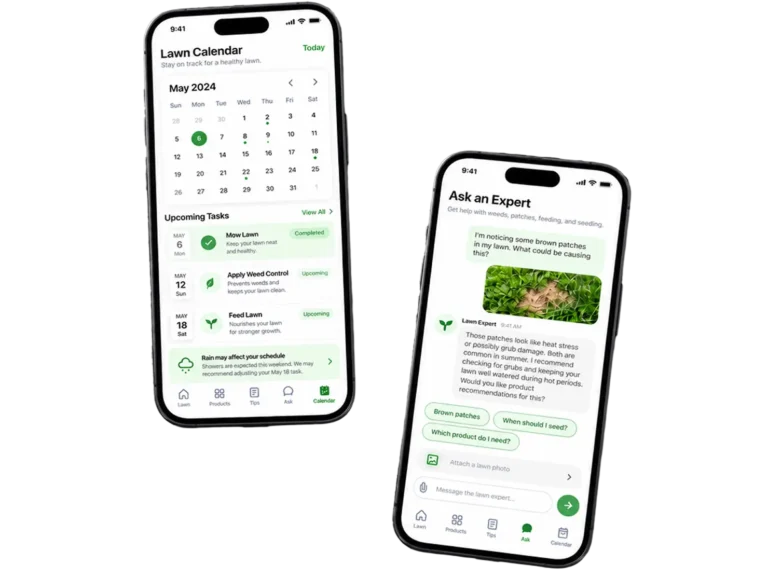
We built an AI travel assistant with an 8-person team across 8 sprints, roughly six months, on Dialogflow with a custom NER model. It handles 10+ languages, pulls from 5+ travel data sources, answers in under 3 seconds, and achieved 70%+ automated resolution within its first three months in production. Those are our own measurements rather than an audited third-party figure.
Offline access is the other item that gets waved through in a kickoff call. Offline maps mean tile storage, sync conflict handling, and a second data model that has to agree with the first one. Budget offline access as a feature, not a checkbox.
Advanced features are also where travel app development costs stop being predictable.
App development cost by module: where the money actually goes
This table is the one competitors mostly skip, and it gives the clearest view of travel app development costs available in public. Ranges below follow Auspicious Soft’s 2026 module breakdown, the most credible public estimate available, cross-checked against our own delivery data.
| Module | Cost to develop | Note |
|---|---|---|
| User registration, user profiles | $4,000 to $9,000 | Social login and SSO add roughly 30% |
| Search, filters, sorting | $15,000 to $40,000 | The most underestimated module in travel |
| Booking engine | $25,000 to $70,000 | Inventory holds, locking, race conditions |
| GDS or partner inventory feed | $20,000 to $60,000 | Before any per-segment fees |
| Payment gateway integration | $8,000 to $20,000 | Multi-currency and multiple payment gateways push the top end |
| Maps, push notifications, chat | $10,000 to $25,000 | Mapping API usage is billed separately |
| Admin and partner panel | $20,000 to $45,000 | Nobody demos it, everybody needs it |

At the midpoints shown, the booking engine, supplier feed, and admin panel account for about 65% of the modules listed. That distribution helps explain why travel app development costs rarely track the number of screens in the design file. Much of the budget goes to the systems behind the customer-facing application rather than to the interface alone.
Your app’s complexity is not a design question. It is an integration question, and integration is what drives travel app development costs more than anything else.
What a travel booking app costs with real availability
A travel booking app handling flight and hotel bookings plus car rentals means three supplier categories, three failure modes, three cancellation windows and three refund policies. Car rentals alone bring an inventory model that behaves nothing like hotels.
You have two paths. Direct GDS access through Amadeus, Sabre or Travelport gives you the widest content and the longest timeline, and each direct NDC airline integration runs three to six months on its own. Or you start light with an aggregator like Duffel at roughly $3 per flight order plus about 1% on managed content, no IATA accreditation required.
Start light. We have seen teams spend months on direct carrier integrations for a product that had not yet proven anyone wanted it.
Booking management and the back office nobody quotes
Booking management is where travel products quietly die. Amendments, partial refunds, supplier disputes, commission splits, agent overrides, currency reconciliation, itinerary management across changed flights.
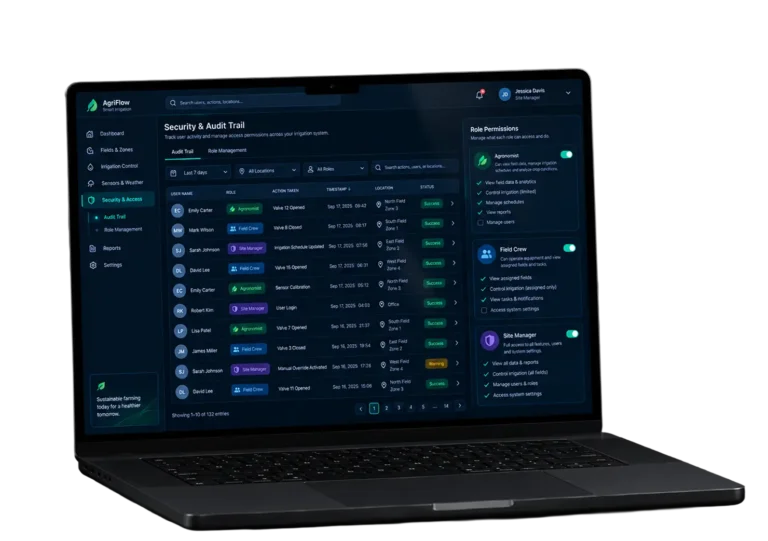
Trips Planner, one of our own builds, handles commission reporting across three currencies and eight user roles on a single permission model. Eight roles is roughly the point where an off-the-shelf CRM stops being configurable and a custom build becomes the cheaper answer across three years.
Real numbers from two projects: what it takes to build a travel app
Two travel platforms, same vertical, completely different cost structures. This is the part of the travel app development cost conversation that generic guides cannot give you, because they have never had to staff either build.
Tour Guide App: a two-sided travel marketplace
Tour Guide App connects travelers landing in an unfamiliar city with vetted local guides, translators, and shopping assistants. Map-first UI, provider availability by geolocation, chat and audio inside the app.
| Dimension | MySquire |
|---|---|
| Development team | 9 specialists |
| Duration | ~12 months, 17 sprints, 2-week cycles |
| User roles | 3 (traveler, provider, admin) |
| Technology stack | React Native, Ruby on Rails, Ember.js, Vert.x |
| On-time sprint delivery | 97% |
Why nine people and seventeen sprints for what the founder pitched as “Uber for guides”? Because a two-sided marketplace has no off-the-shelf engine. Provider onboarding, verification, geo-matching, availability, payouts, and dispute handling are all bespoke, and none of them appear in a demo.
React Native covered both mobile apps. Rails ran the provider platform. Vert.x handled real-time location and messaging, because the obvious choice of putting chat on the same Rails stack falls apart under concurrent location updates. That decision alone is the difference between a working product and a rewrite in month nine.
CRM for Travel Agents: agency CRM plus traveler app on one codebase
CRM for Travel Agents is a CRM for travel agents with a companion trip planning app for their clients. Built in Flutter and Dart on a single codebase covering mobile and web apps.
| Dimension | Trips Planner |
|---|---|
| Development team | 2 specialists |
| Duration | ~20 months of agile development, 2-week sprints |
| User roles | 8 on one permission model |
| Currencies | USD, EUR, JPY |
| Technology stack | Flutter, Dart |
Two people. Twenty months. A completely different burn profile from MySquire, and the reason is cross-platform development doing exactly what it is supposed to do. One Flutter codebase served the agent dashboard and the traveler-facing product, and a two-person development team covered both surfaces without a separate iOS and Android track.
Slower calendar, lower monthly cost, comparable scope. Which model is right depends on whether you are racing a competitor or extending runway. Both are legitimate ways to build a travel app, and the travel app development costs land in very different places.
Development costs by team location
The development team’s location moves your total more than your feature set does. Here is what senior rates look like going into 2026, with a 500-hour module priced out for comparison.
| Region | Senior rate | 500-hour module |
|---|---|---|
| North America | $100 to $200/hr | $50,000 to $100,000 |
| Western Europe | $80 to $160/hr | $40,000 to $80,000 |
| Central and Eastern Europe | $40 to $90/hr | $20,000 to $45,000 |
| Latin America | $45 to $85/hr | $22,500 to $42,500 |
| South and Southeast Asia | $25 to $60/hr | $12,500 to $30,000 |
The cost to develop a travel app in Kraków and in San Francisco differs by a factor of three at the same seniority. A fully loaded senior engineer in the US costs $180,000 to $250,000 a year once you add benefits and overhead. The same seniority through a European partner runs $60,000 to $100,000 all in, which is why the development team’s location shows up in every honest breakdown of travel app development costs.
Team location is a real lever and also the one that gets oversold. Halving your rate does not halve your travel mobile app development cost if the cheaper team needs 40% more hours and a rewrite in month nine. The number that matters is cost per shipped feature, and nobody publishes it. Cheap hours do not automatically produce a cheap build.
Our own model pairs US-based project management with senior European engineering. You save money on the rate and spend some of it back on overlap hours. That trade is usually worth it.
The travel app development process and what each phase costs
Travel app development typically moves through six major phases. Development and QA take the largest share of the budget, while discovery, launch, and stabilization protect the project from expensive rework.
| Phase | Typical duration | Main cost drivers |
|---|---|---|
| Discovery and scoping | 2 to 4 weeks | Requirements, supplier strategy, architecture, and risk analysis |
| UX and UI design | 4 to 8 weeks | User flows, prototypes, design system, and usability testing |
| Development | 12 to 30 weeks | Frontend, backend, integrations, and infrastructure |
| QA and testing | Runs in parallel | Functional, integration, security, and failure-state testing |
| Launch and store submission | 1 to 2 weeks | Release preparation, store review, monitoring, and deployment |
| Stabilization | 4 to 8 weeks | Bug fixes, performance tuning, and production support |
Discovery looks skippable. It is not. In our experience, travel app development projects overrun by six figures were because scope questions got answered in month four instead of week two. In travel app development, developing the supplier integration layer before the scope is locked is how a 20-week plan turns into 34.
QA in travel is heavier than in most verticals, because you are testing somebody else’s API failure states, not just your own code. What happens when the hotel supplier returns a price that changed between search and checkout? That path needs a designed answer, an automated test and a support script, and none of the three are free. Teams new to travel app development price the happy path and discover these development costs in week 22.
The development process is also where technical expertise stops being a slogan. Anyone can build a list view. Handling a supplier that returns stale availability under load is a different job.
Why a basic travel app and a booking platform are different machines
Here is the trap in every cost guide, including this one. The tables imply a spectrum, as though a $12,000 travel app is a $200,000 platform with fewer features. It is not.
A basic travel app stores your content and shows it nicely. A platform holds inventory it does not own, in sync, under load, with money moving through it. Those are different machines. Going from one to the other is a rebuild, and the rebuild costs more than the difference in development costs would have.
So the useful question is not what is the cheapest way to develop a travel app. It is which machine your business model needs, and whether a minimum viable product at the $40,000 tier can prove demand before you commit to the $200,000 one.
Most of the time, it can. A minimum viable product that proves one booking flow is worth more than a feature-complete product nobody uses.

Hidden costs: what you pay every month after launch
Competitors stop at the build number, as though travel app development costs end on launch day. That is the gap across every article on this topic, and it is where mid-market budgets actually break.
Third-party integrations and infrastructure
Amadeus Self-Service bills per transaction, roughly $0.003 to $0.046 depending on the endpoint, after a free monthly quota. Note: Amadeus Self-Service APIs include a free monthly request quota in both test and production environments. Once a production application exceeds that quota, Amadeus charges for additional requests at API-specific rates.
Google Maps API pricing changed on March 1, 2025. The old flat $200 monthly credit is gone, replaced by per-SKU free thresholds: 10,000 monthly events for Essentials, 5,000 for Pro, 1,000 for Enterprise. Essentials SKUs run roughly $2 to $7 per 1,000 calls after that. A trip planning app firing Places, Directions, and the Maps SDK on a single screen burns those thresholds faster than any finance model assumed.
Then payment gateways, which is where travel apps leak margin quietly. Stripe charges 2.9% + $0.30 per online card transaction in the US, plus 1.5% for international cards and 1% for currency conversion. On a platform processing $2 million a year in bookings, payment processing alone is a $60,000 line item. Most payment gateways price within a few basis points of each other and hold funds longer than merchants expect.
Google Cloud or AWS baseline for a booking backend, LLM inference if you are running AI trip planning, monitoring, error tracking. None of it is large on its own. Together it is a real monthly number that belongs in the model on day one, and third party integrations are the single most common reason a launched product misses its margin target.
Security, compliance and user data protection
PCI DSS v4.0.1’s 51 future-dated requirements became effective on March 31, 2025. For travel platforms within PCI scope, all requirements applicable to their assessment must now be fully considered. The exact scope depends on how the company’s systems store, process, or transmit cardholder data and whether they can affect the security of payment pages.
The European Accessibility Act became applicable in June 2025 and covers e-commerce as well as services related to air, bus, rail, and waterborne passenger transport. Specific obligations, exemptions, enforcement procedures, and penalties are implemented through national law. Travel platforms serving EU consumers should therefore validate their obligations in each relevant market and use applicable accessibility standards as practical implementation guidance.
For B2B travel platforms, SOC 2 Type II may also become a customer, procurement, or contractual requirement rather than a statutory obligation. Audit and readiness costs depend on the scope, system maturity, evidence collection process, and supporting tools, so they should be estimated separately with a qualified provider.
Other requirements may include GDPR or CCPA obligations for personal data, PSD2 strong customer authentication for applicable European payment flows, and IATA or ARC accreditation when the business plans to issue airline tickets directly. Applicability depends on the company’s operating model, customers, payment architecture, and jurisdictions.
Travel app maintenance cost
Annual maintenance costs run 15% to 20% of the original build. On a $180,000 platform, that is $27,000 to $36,000 a year for bug fixes, OS and SDK version churn, supplier API changes and server support.
The bigger number comes from IEEE research: roughly 60% of total software lifetime cost lands after launch. Competitors quoting 30% to 40% annual maintenance costs for enterprise apps are inflating it, and we would treat that figure cautiously wherever you see it.
Three-year total cost of ownership on a $180,000 build, including maintenance, one SOC 2 audit and accessibility work, lands closer to $350,000 to $450,000 before payment volume fees. Hidden costs stop being hidden the moment you model three years of development costs instead of one.
How to lower your estimated cost without gutting the product
Four levers that pull travel app development costs down, with honest ceilings on each.
Ship a minimum viable product against one flow. Not a cheap version of everything. One complete flow, done properly, that proves people book. It cuts the cost to develop a travel app roughly in half without cutting the product in half, and it is the largest single saving on this list.
Use aggregators before direct GDS. Duffel or a similar layer gets you live flight content in weeks instead of quarters. Move to direct integrations when volume justifies the fee structure, not before. It is the fastest way to save money without touching scope, since you skip the accreditation paperwork entirely.
Go cross-platform where the product allows. React Native and Flutter save real money across mobile applications, and the honest range is 25% to 40% rather than the 60% some guides claim. Cross-platform is the default answer for most travel apps in 2026. Native apps still win when you need heavy offline maps, aggressive background location or AR. Trips Planner is the case in point: one Flutter codebase, two engineers, two full products, and a travel app development cost that a nine-person team could never have matched.
Mix regions deliberately. Senior architecture and product close to your timezone, delivery engineering where rates are lower. Teams that blend regions save money without losing the overlap hours that keep a project honest.
Then prioritize features against revenue rather than against a competitor’s feature list. Most teams we work with could cut a third of release one and ship sooner. Almost none of them want to prioritize features that way until the estimated cost comes back higher than the board approved.
What does not work: cutting QA, skipping discovery, or picking a travel app development partner on price alone. All three cost more within twelve months than they saved.
What this means for you
If you are a founder with a travel app idea and no revenue yet, your number is $40,000 to $120,000, and your job is to prove one booking flow. Do not buy the $200,000 platform on a hypothesis. You save money by proving demand first, every time. An app idea that survives contact with 200 real bookings is worth more than any deck.
If you are a CTO at an agency, tour operator or hospitality group with existing volume, your number starts at $120,000, and the questions that decide the estimated cost are how many supplier integrations, how many user roles, and how much back office you are replacing. Your app’s complexity comes down to those three answers. Ask any vendor to price the admin panel separately. Their answer tells you whether they have built this before.
If you already have a product and you are weighing a rebuild, run the three-year total cost of ownership on both options before you run the build estimate. The build number is the smaller half of the decision, and development costs across three years tell you more than any single quote. If the board asks how much does it cost to build a travel app like the one your competitor shipped, give them the tier rather than a number.
And if you want a rough figure in the next two minutes rather than the next two weeks, our app cost calculator will get you inside the right band.
FAQ
How much does travel app development cost in 2026?
A validation MVP costs $40,000 to $120,000. A production booking platform with live inventory runs $120,000 to $300,000 or more, and a GDS-connected OTA starts around $200,000. Budget apps in the $5,000 to $15,000 range exist but do not handle real availability.
How long does app development take for a travel product?
Three to five months for an MVP, six to ten months for a booking platform, seven to twelve or more for a GDS-connected product. Discovery adds two to four weeks that pay for themselves in avoided rework.
What is the cost to build a basic travel app?
$10,000 to $30,000 for a content-driven product with static or third-party listings, no live inventory and template design. It is a valid choice for content and itinerary management, and a poor foundation for a booking business.
Are travel apps profitable?
They can be, on commission, subscription, or B2B licensing to travel service providers. Profitability depends more on distribution and supplier terms than on the product itself, which is why we push clients to model unit economics before scoping. Tourism app development follows the same rule.
How much is travel app maintenance cost per year?
15% to 20% of the original build annually, so $27,000 to $36,000 on a $180,000 platform. That covers bug fixes, OS updates, supplier API changes, and hosting for a travel app of that size, and excludes new feature work.
Should I build native apps or go cross-platform?
Cross-platform development covers most travel products, with real savings of 25% to 40%, and it does save money on every release after the first. Choose native when offline maps, background location, or AR sit at the core of the experience rather than at the edges.
How do I attract users once the product ships?
Budget marketing separately and early. A successful travel app is a distribution problem before it is a product problem, and the teams that attract users fastest are usually the ones with supplier partnerships already signed.
Work with LITSLINK
We have built a two-sided travel marketplace, an agency CRM with a companion traveler app, and a production AI travel assistant. Three travel apps, different scales, different stacks, one vertical.
See how we approach travel software, read the MySquire case study, or look at Trips Planner if agent tooling is closer to your problem. If AI features are on the roadmap, our AI development services page covers how we scope and price them.