





Building a HIPAA-Compliant Messaging App for Patient-Doctor Communication
- 1M+ users supported on the new infrastructure setup
- ~65% faster delivery after pipeline automation
- 3 isolated environments for dev, staging, and production
- ~35% lower monthly hosting costs after migration
- Zero downtime deployments with rolling Kubernetes updates
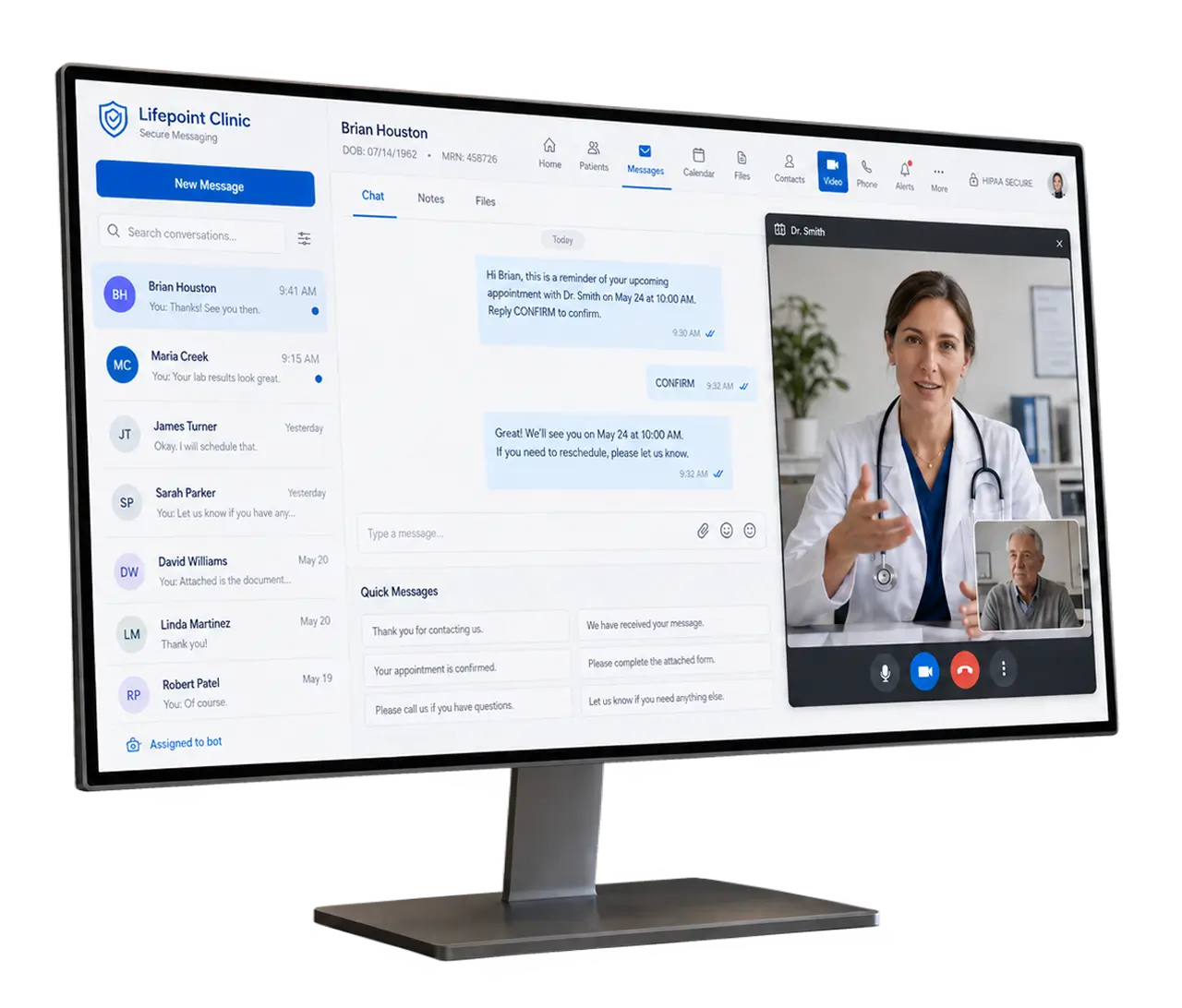
This HIPAA-compliant messaging app gives healthcare organizations one place to manage patient conversations, route requests, and move from text to voice or video when a case needs more attention. Under the hood it runs HIPAA-compliant secure text messaging with the access controls and audit trail a medical product needs.
Project Details
Lifepoint Clinic runs patient-doctor messaging across several healthcare sites and hospitals from a single dashboard. LITSLINK joined as the DevOps and infrastructure partner and took the existing Ruby application from a strained single setup to a HIPAA-aligned platform that scales on demand. The team stayed deliberately small: two DevOps engineers, a backend (Ruby) developer, and a QA specialist.


Business Challenge: Scaling a HIPAA-Compliant Communication Platform
The platform already handled sensitive communication between patients and care teams, but its delivery model was not ready for the next stage of growth. The client needed more capacity, more reliable releases, and a clearer path for moving changes from development into production.
Healthcare raised the cost of every infrastructure decision. A failed deploy could interrupt patient messaging, while inconsistent setups made changes harder to test and audit. The team had to improve speed without weakening the controls expected from a HIPAA-compliant communication platform.

Slow, Risky Manual Deploys
Every deploy meant hand-run steps across servers. Builds took hours, mistakes slipped through, and engineers lost time babysitting integrations instead of shipping features. One wrong move could interrupt live patient chats.

Infrastructure Near Its Ceiling
The single-setup hosting struggled as clinics and traffic grew. Peak load caused lag, and there was no simple way to add capacity for a platform heading toward 1M+ users.

Strict HIPAA Data Rules
Protected health information moved through the system constantly, yet encryption, access control, and isolation between setups were not fully locked down. Any gap here carries real legal and patient-safety risk.
Technologies Behind the HIPAA-Compliant Messaging App












Our HIPAA-Compliant Messaging System Solution
LITSLINK rebuilt the delivery foundation of the HIPAA-compliant messaging platform around containerized services and a single promotion path across development, staging, and production. The fix was less about new features and more about the ground the app stands on.
The CI/CD pipeline implementation runs in GitLab CI and covers the Ruby application across all three environments. Code moves from development to staging to live through automated checks, so a change is tested before it ever reaches a patient’s screen.
On the infrastructure side, containers run on Kubernetes with autoscaling, so capacity follows real traffic. HIPAA safeguards are built in from the start: encryption in transit and at rest, role-based access, and audit logging on every sensitive action.
Automated CI/CD pipeline
GitLab CI runs builds, tests, and deploys for the Ruby app across dev, staging, and live. Deployments that once took hours now finish in minutes, with automated gates catching bad builds before they ship.
Cloud migration with autoscaling
Kubernetes orchestrates containers and scales pods with demand. The platform absorbs traffic spikes from onboarding new sites without manual server work, keeping the path toward 1M+ users steady.
HIPAA-aligned security
PHI is encrypted at rest and in transit. Role-based access, isolated stages, and audit logs keep medical data safe and support HIPAA-compliant patient communication across the platform.
Multi-stage separation
Development, staging, and live systems run in isolation. Engineers test against realistic conditions without ever touching real patient records.
Monitoring and safe rollbacks
Health checks and rolling deployments mean a bad release rolls back fast. Zero-downtime updates keep conversations live while new code ships.
Cost control
Right-sized resources and tighter container packing trimmed roughly 35% off the monthly bill compared with the old hosting setup.
Scrum Methodology
Project Journey
We ran this as a focused DevOps engagement. Work moved in two-week sprints so the client could see progress and flag issues early. The first sprints went into the pipeline and stage separation, and the later ones handled the migration and HIPAA hardening. Nothing reached the live platform without first passing the automated gates.
Scrum Process Flow
A custom healthcare software platform can’t absorb big-bang launches. The two-week cadence lets the team review working infrastructure often and catch problems before they become expensive to reverse.
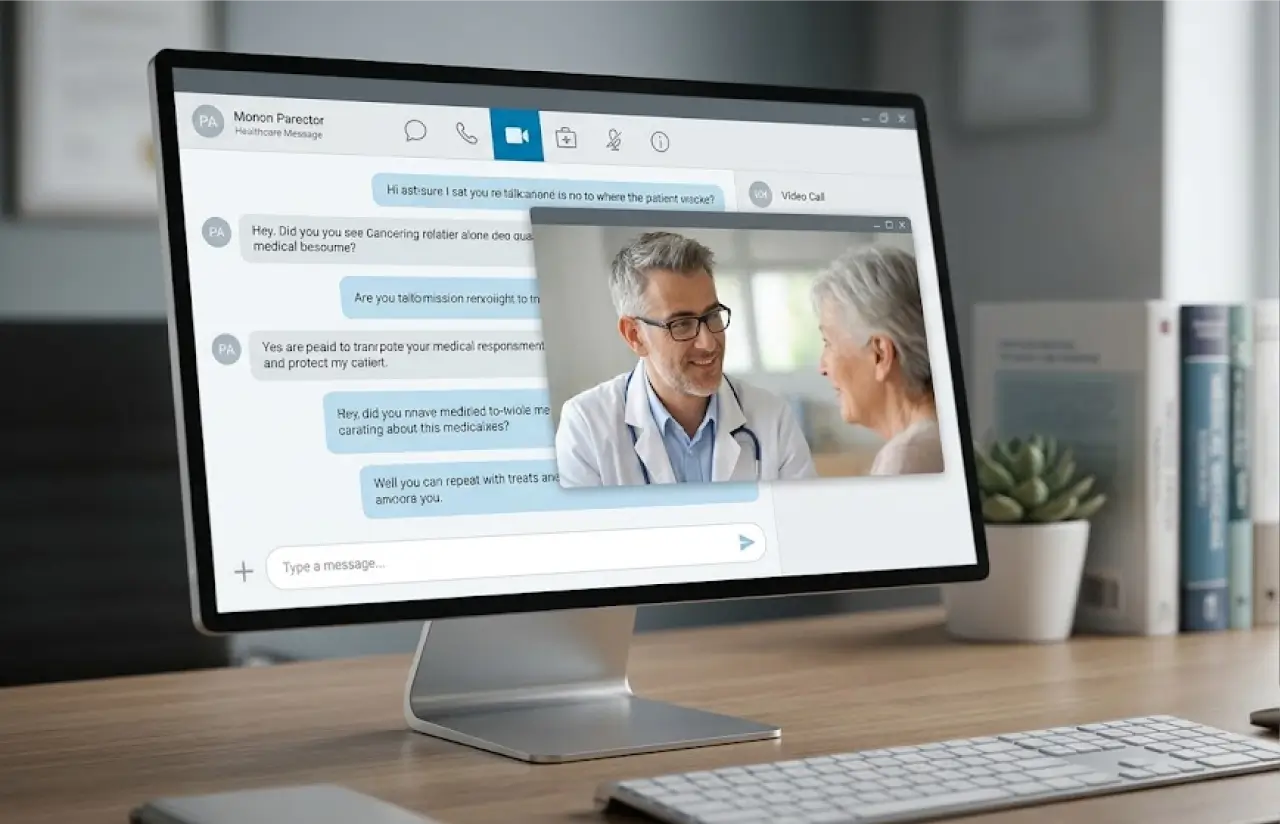
How the App Works
- A patient sends a message from their care provider's channel. It lands encrypted and tied to the right facility and visit.
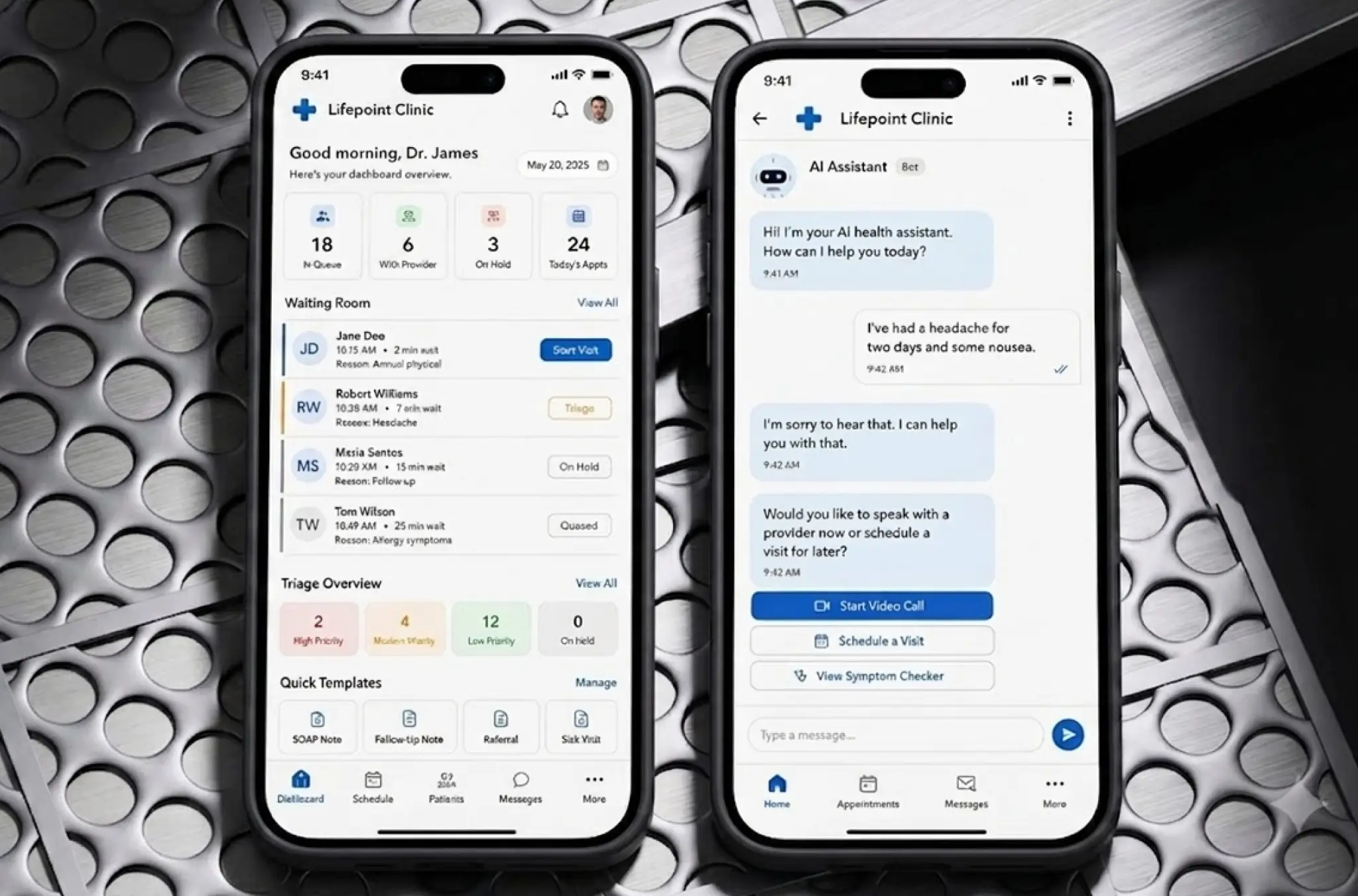
- An assistant bot handles first contact, answers common questions, and passes anything it can't solve to the waiting room.
- Care staff pull conversations from the waiting room or get assigned directly. Each chat shows who owns it, so nothing slips.
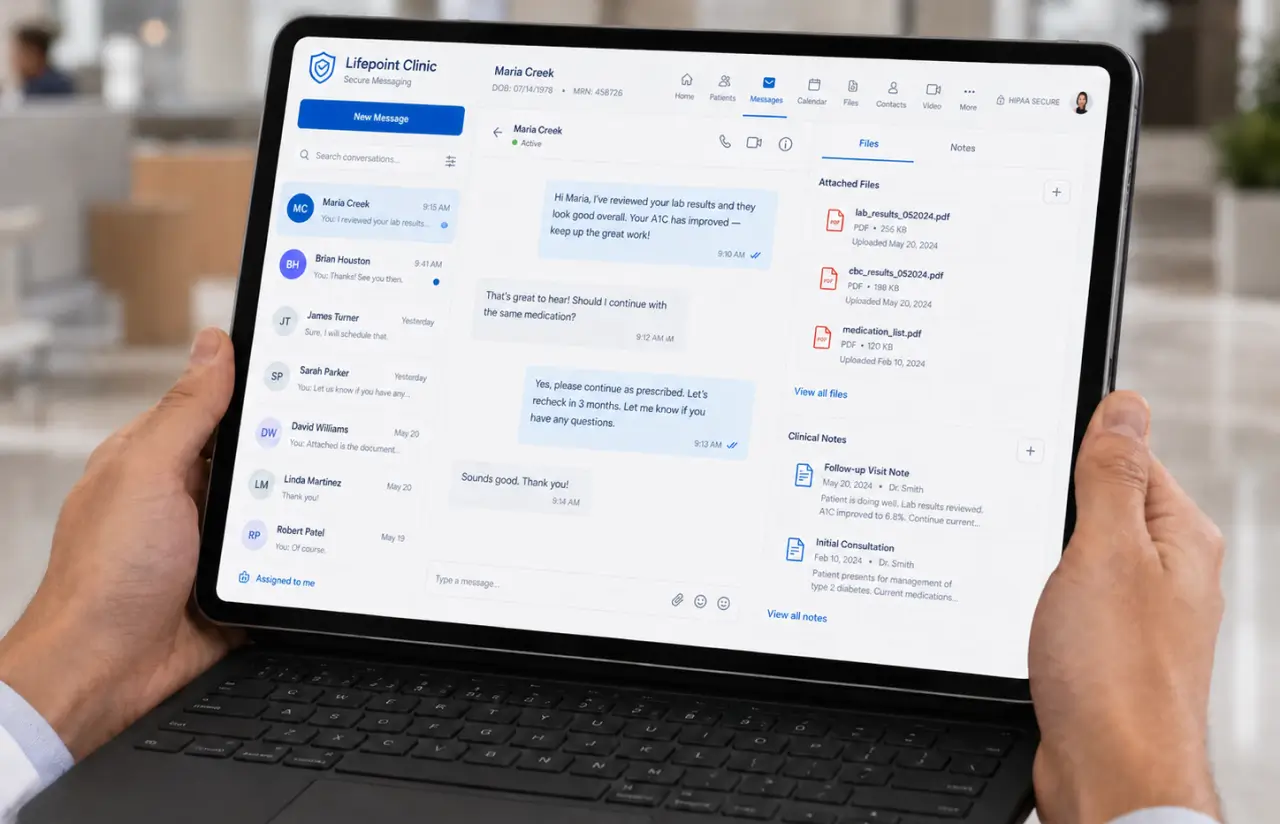
- Saved messages grouped by Medicine, Welcome, Forms, and Diagnosis let staff answer common cases in one click instead of retyping.
- When text isn't enough, staff jump to a voice or video call from the same window without switching apps.
- Clinical notes and shared files sit beside the chat, so whoever opens it next has the full picture.
-Timeline
Development Process — Five Phases
Discovery & Infrastructure Audit
- Reviewing the current Ruby setup and hosting
- Mapping HIPAA gaps and load limits
- Agreeing on the target architecture
Pipeline Prototyping
- Building the first GitLab CI stages
- Standing up dev, staging, and live
- Testing automated build and deploy
Migration & Hardening (Iterations)
- Containerizing services with Docker
- Moving workloads to Kubernetes with autoscaling
- Adding encryption, access control, and audit logs
QA & Security Testing
- Load-testing toward 1M+ users
- Checking PHI handling against HIPAA rules
- Validating rollbacks and zero-downtime deploys
Launch & Support
- Cutting the live system over to the new setup
- Monitoring performance and costs
- Ongoing pipeline and infrastructure support
UI/UX Design
The interface keeps a calm, clinical look. A medical blue (#0069A6) marks the actions, a soft blue (#DDF0FF) fills the message bubbles, and a near-white background (#F6F7FB) keeps long chat threads easy on the eyes. Type is set in Inter, which stays sharp at small sizes across a dense dashboard. The result reads like a familiar HIPAA-compliant texting app, not a clinical tool.
Layout is a two-panel workspace. Conversations sit on the left with search, unread counts, and a waiting-room queue. The active chat fills the right with status, assignment, and Chat, Notes, and Files tabs in one view. Staff can see who owns a conversation, hand it to a colleague, or start a call without leaving the screen. Cutting the clicks between reading a message and acting on it was the main design goal.
Results
Before
- ✕Manual deploys taking a couple of hours each time.
- ✕No clean split between test data and live medical data.
- ✕Hosting straining as demand grew.
- ✕HIPAA safeguards incomplete across the deployment path.
- ✕Risky deploys with no fast way to roll back.
After
- ✔~65% faster release cycles through automated GitLab pipelines.
- ✔3 isolated environments for dev, staging, and production.
- ✔1M+ users supported with Kubernetes autoscaling.
- ✔~35% lower monthly hosting costs after the migration.
- ✔Zero-downtime rolling deploys with quick rollback.
Impact of the Messaging Platform After Launch
-Verified Reviews
Our Reputation on Top Platforms
LITSLINK ranks among the top software and healthcare development firms on Clutch and GoodFirms. Reviews point to the team’s depth in DevOps, infrastructure, and secure healthcare builds like this HIPAA messaging app. See more of our app development work for regulated products.
Have a Healthcare App Project in Mind?
Planning a HIPAA-compliant messaging app, or need to scale and secure one you already run? Tell us what you’re building, and we’ll come back within 48 hours with a way forward. Our team covers everything from AI features to cloud migration and DevOps for healthcare products.
Thank you for your message. It has been sent.