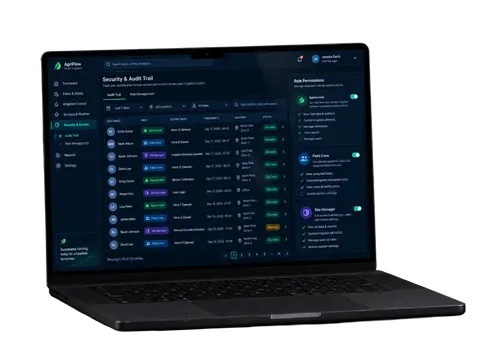
With our energy software development services, you get secure energy software for utilities that can scale as your business grows, including renewables and grids, as well as other energy operations.
Utilities, power plants, wind turbines, nuclear power plants, and gas and oil operations get custom energy software
Energy software solutions for your cloud, edge, on-premises, and hybrid architectures
Reporting, analytics, and automation in real time
Secure integrations for operational and enterprise systems
Custom Software Development Services for the Energy Sector
Energy Software Consultancy
We help companies in the energy sector set up the business and technical requirements they need, identify operational challenges, assess feasibility, and choose the right technologies. We carry out technical discovery, create a software strategy, design the architecture, evaluate technology options, and identify modernization opportunities. This enables us to develop a practical roadmap with all the necessary implementation steps to carry out the project as planned.
Energy Software Integration
We connect energy software with enterprise and operational systems to create a unified digital ecosystem and reduce data silos. The range of integrations includes ERP, CRM, billing systems, asset management platforms, SCADA, GIS, APIs, cloud computing services, third-party software, and other corporate applications.
Custom Energy Software Development
Our company creates bespoke software solutions that help energy companies oversee their operations, infrastructure, data, and assets. Our software development services are comprehensive and cover energy management systems, real-time monitoring systems, asset performance management solutions, grid management software, SCADA software, power generation monitoring systems, and other operational dashboards. These innovative software solutions bring operational data and workflows to a new level by allowing integration, automation, and monitoring of processes.
Energy Mobile & Web App Development
We develop both user and employee applications for energy and utility companies by providing them with the ability to access information and services. Some examples of this type of mobile app solution are electric vehicle charging apps, energy consumption apps, utility customer portal apps, smart energy apps, field technician apps, billing and account management apps, etc. They can provide clients with real-time data and actionable insights.
Energy Data Analytics & Visualization
We create software for data analytics and visualization that allows energy firms to integrate and analyze operational data, energy consumption, equipment, and infrastructure data in a usable form. Custom solutions that we provide include data integration and processing, analytic dashboards, KPI visualization tools, reporting tools, data connectors, and analytics capabilities integrated into existing systems. Organizations make use of data integration from many sources, which helps them recognize trends, carry out performance monitoring, compare KPIs, and transform considerable amounts of data into useful information for operations management.
IoT & Smart Device Integration
We integrate smart meters, sensors, industrial gateways, EV chargers, monitoring tools, and other connected services into centralized energy management systems and software solutions. It allows for real-time collecting of data, remote monitoring, control of operations, streamlined management of devices, secure information exchange, and connection to cloud computing and analytical systems. Energy systems can inform teams about the current performance of assets, equipment, consumption, and other conditions within the dispersed infrastructure.
Legacy Energy Software Modernization
With our services, legacy energy system modernization does not require companies to rebuild their entire technology environment. The range of our services includes cloud migration, architecture modernization, integration of legacy systems, UI/UX improvements, performance optimization, and introduction of new functions such as modern analytics and automation. If it is not practical to replace the legacy technology at once, we can replace outdated parts gradually to ensure that the most important processes are up and running.
Energy Software Support & Maintenance
To offer our clients high-quality software development services, we go beyond software deployment with continuous system monitoring, troubleshooting, performance optimization, system security updates, infrastructure maintenance, and integration support. The service also covers enhancements and technical improvements when business processes, user needs, or regulations change, as well as when technical issues arise.
Various Types of Energy Solutions You Can Request
SCADA Systems
Supervisory Control and Data Acquisition (SCADA) systems enable centralized control and management of various types of power generation facilities, electric power distribution networks, renewable energy facilities, power transmission substations, and oil and gas pipelines. This integrated service gathers data coming from various sensors and other types of equipment. It can remotely control several devices, automate certain processes, register alarms and incidents, keep a history of events taking place in the SCADA system, as well as display relevant information about the state of the plant.
Energy Analytics & Forecasting Platforms
Our energy software business is dedicated to delivering energy forecast technology and analytics services that transform extensive historical and operating data into valuable intelligence that can be used for strategic and tactical decisions. We use AI and machine learning algorithms to discover patterns and predict energy consumption and production, find anomalies and create future scenarios, and visualize this data on dashboards. Consequently, various teams are able to obtain customized reports and KPI dashboards that enable them to monitor and adjust their performance.
Meter Data & Billing Management Systems
This system is designed for gathering, validating, and handling consumption data obtained from smart and connected meters at customer premises in order to make the utility billing and revenue operation process automatic. The features may involve automatic meter readings and reporting, automated meter-data collection and reporting, and billing processes. Built-in validation helps in detecting erroneous and missing meter data before it affects invoices, revenues, and customers’ accounts.
Field Service Management (FSM) Software
FSM software enables energy businesses to deploy technicians and perform on-site work at power lines, substations, clean energy assets, meters, and other types of distributed infrastructure. Functions may include scheduling and dispatching technicians, issuing work orders, gaining mobile access to asset job tasks, synchronizing job updates, doing inspections, filing maintenance reports, or accessing relevant customer or equipment information. By linking field teams and back-office functions, FSM software can greatly assist in coordinating workforce efforts, ensuring information is kept up to date, and allowing technical people to have the most accurate information when working onsite.
Smart Home Software
It connects home devices and systems with the aim of automating and optimizing their usage, including smart lighting, HVAC controls, home appliances, meters, and IoT devices. Users can monitor their energy consumption, create automated energy use schedules, and control devices remotely. AI-based optimization detects patterns in energy consumption and the condition of devices in order to optimize energy expenses and create a comfortable home environment for users.
Asset Performance Management Software
Companies dealing with electricity generation can use our software to improve the overall performance of important equipment, including turbines, generators, transformers, pumps, and other industrial devices. Our company makes use of predictive maintenance tools, condition assessment systems, as well as AI-based technologies in order to allow companies in the energy industry to identify possible issues before they lead to any accident.
Energy Trading & Risk Management Software
Our energy trading platform consolidates market data, transactions, portfolios, prices, and financial risks to trade electricity, gas, and other commodities profitably. Additionally, the system supports market data integration, trade execution and management, pricing and evaluation, portfolio analysis, risk control, financial modeling, and automation of workflows.
Energy Customer Portals
An energy customer portal is defined as a secure digital platform designed for retail and corporate consumers, enabling them to manage their accounts, which means that all activities can be performed without going to customer support. Users can see energy usage trends, check bills, etc. The main advantage of the energy customer portal is that customers get the opportunity to manage and access their data on one digital platform.
Automated Demand Response Solutions
This application allows utilities and grid operators to decrease or shift electricity use during times of high demand or short supply. The real-time load monitoring and forecasting function enables automated load shifting or curtailment to take place by using dynamic pricing signals, demand response events, connected devices, and building management systems. Such features help achieve lower peak load and a better supply-demand ratio in the power network.
Smart City Software
The smart city software links energy infrastructure to transport, public services, street lighting, environmental sensors, and other urban systems through one digital platform. This integration includes centralized dashboards, implementation of IoT data, and the opportunity to control the whole infrastructure remotely from the central interface using predictive analytics. Data-driven urban planning becomes possible thanks to shared operational data.
Energy Industry Software Solutions Across Different Segments
Our company specializes in developing energy software solutions for different spheres of the energy market around specific infrastructure, workflows, data requirements, and regulations.
Distribution Management Systems (DMS)
A DMS gives utilities greater visibility into their distribution networks and helps with resolving outage and fault issues, managing electric loads, and optimizing grid operations. The DMS allows electric utility companies to collect necessary operational information and share it with other utility platforms to improve understanding of what happens in the grid and response time.
Electrical Estimating Software
Electrical estimating software allows electric utilities to calculate the costs of labor and materials as well as plan budgets and make proposals while working on electrical projects. The program also has an option to store historical data that might help compare estimates of previous projects, thus making electric utility estimates more precise and adequate.
Electric Utility Mobile Apps
With electric utility mobile apps, electrical engineers can receive orders on their mobile devices and find out more information about the project or materials. Technicians are kept informed in real time while they work across distributed infrastructure with timely updates and communication with back-office teams.
Smart Grid Software
Smart grid software connects smart meters to IoT devices, distributed energy resources, and the grid. The software assists in outage management, two-way energy flows, automated grid operations, and tracks grid optimization, while also aiding in managing distributed resources and responding to changing network conditions.
Solar Energy Software
Solar energy software provides assistance in carrying out solar resource assessment, site-specific forecasting, solar energy management systems, project and energy generation tracking, as well as panel and inverter performance monitoring, fault detection, maintenance planning, etc. Renewable energy software includes solar and wind forecasting and performance analytics, while utilizing analytical and grid integration features allows operators to improve generation and system performance.
Wind Farm Management Software
Wind farm software helps with wind resource analysis by including info such as wind speed, turbulence, environment, and turbine performance and power generation by using SCADA and monitoring systems. Moreover, the application comes with fault detection, predictive maintenance, maintenance scheduling, efficiency calculation, and O&M documentation.
Bioenergy and Geothermal Energy Software
Biomass and geothermal software collects meaningful operational data, including temperature, pressure, biomass feedstock input, environment, and others, and transforms it into a comprehensible dashboard-like picture for operators. Production analytics, process optimization, and operational monitoring can help optimize energy output, resource utilization, and overall facility throughput.
Waste-to-Energy Management Software
Waste-to-energy management software makes it possible to process different types of waste, including municipal, industrial, and agricultural waste, and to manage its processing, from waste conversion to energy production and plant operation. Additionally, it provides emission data collection, environmental compliance, and operational analytics for monitoring system performance.
Virtual Power Plant Management Software
Virtual power plant management software integrates solar and wind energy generation, battery storage systems, electric vehicle charging stations, and controllable loads into a single energy facility. In addition, virtual power plants coordinate the utilization of thousands of decentralized energy sources, providing dispatching, generation and storage coordination, real-time optimization, interaction with the grid, and participation in the energy market.
Nuclear Quality & Safety Management Systems
Nuclear quality and safety management systems allow nuclear facilities to manage the workflow related to maintaining quality and safety documentation in compliance with relevant acts and regulations, as well as tracking inspections, consolidating necessary information from other applications, and processing incident records. The availability of reliable records on audit trails and reporting features enables effective quality management and safety inspection.
Nuclear Analysis Software
Nuclear analysis software is helpful for performing production-level runtime monitoring, analyzing plant transients, operating data, and equipment and system performance. Additionally, it supports the conduct of scenario modeling and safety analysis, as well as the implementation of engineering calculations required for plant performance assessment.
Nuclear Power Plant Design Software
Nuclear power plant design software serves for plant planning, engineering, and modeling by means of 3D visualization, systems and equipment design, and engineering documentation. Such software may also help manage materials and procurement data, forecasts, designs, and the compliance process in the course of plant systems and equipment development.
Oil & Gas Operations Management Software
Oil & gas operations management programs cover many different processes of upstream (extraction) processes, midstream (processing and transporting) processes, as well as downstream (distribution) processes. These software solutions can manage production data, workflows in the field, equipment data, pipeline management, and inventory, and can be integrated with enterprise and industrial systems.
Pipeline Management Software
Pipeline management software utilizes pipeline monitoring data, flow and pressure metrics, pipeline inspections, and technical device state information in order to support the transportation of oil, gas, and other fuels. Built-in tools for leak & fault detection, integrity management, maintenance planning, inspection management, and compliance capabilities help operators control pipeline performance and ensure regulatory compliance.
Coal Mining Management Software
Coal mining software provides support for planning and tracking the extraction process of coal, along with processing and logistics operations. This software has a wide range of features, including overseeing and controlling employees’ work tasks, monitoring stock levels, and ensuring that safety and environmental standards are met.
Aircraft Fuel Station Management Platforms
The aircraft fuel station management solution allows fuel station owners to manage fuel storage and refueling of aircraft. It contains a complete record of transactions, fuel inventories, refueling orders, and fuel supply and consumption records, as well as equipment information and operational documents.
Water Operations Management Software
Water utility software solution helps manage processes in water treatment plant facilities, providing service operators with complete access to their operational process management. As a result, it is possible to combine operational processes at treatment facilities with business management systems through the introduction of the water utility software as an integrated part of existing systems.
Water Quality Monitoring Software
Water quality monitoring software systems support utilities and treatment facilities in controlling samples and detecting contaminants, ensuring regulatory compliance. Its capabilities also include testing records, alerts, and reporting.
Water Utility Billing & Payment Software
Utility management software offers full automation of customer invoicing and billing processes by integrating meter readings, consumption data, tariffs, bills, and customer account information in one place.
Heating System Management Software
Heating system management software helps improve district heating networks, individual heaters, and other thermal energy infrastructures through heat generation, distribution, machinery, energy usage, and operational data management. It can track what maintenance activities took place and integrate with relevant utility systems to provide a connected view into current system status and performance.
Heating System Design Software
Heating system design software helps planning and engineering teams model, size, configure, and carry out the engineering calculations for district or individual heating piping systems. Database tools, renewable heat integration, visualization, and design documentation support system engineering and the analysis of different design configurations.
Heat Monitoring Software
Heat monitoring systems provide insights into thermal energy consumption and the functionality of systems through the analysis of data on energy consumption, temperature units, meteorological data, meter readings, machine state, and network condition. The best part about heat monitoring systems is that alerts, archives, and operation sheets help monitor changes in the performance of the systems and react in case of potential problems.
Heating Utility Mobile Apps
Heating utility mobile apps serve field specialists and customers by providing work order sheets, service jobs, data for operations, customer information, meter readings, historical archives, notifications, and updates. A user-friendly interface allows mobile staff to fulfill their job tasks easily and clients to find the necessary information about heating service easily.
Ready to Build an Energy & Utilities Solution That Drives Operational Efficiency?
Intelligent energy management helps in regulating consumption, minimizing energy waste, and improving the use of available resources.
02
Greater System Reliability
Real-time monitoring, automation, and predictive technologies lead to improved stability of energy systems due to early recognition of problems and less downtime
03
Reduced Carbon Footprint
Proper resource management, incorporation of renewable energy sources, and automated carbon emission tracking can help ensure the efficient use of renewable resources.
04
Lower Operational Costs
Energy companies are able to minimize costs related to maintenance and energy by means of automation, effective management of resources, and predictive maintenance technologies.
Why Choose Litslink as an Energy Software Development Company
Deep Energy & Utilities Domain Expertise
You always have to choose partners with proven experience in renewables and utilities. Thankfully, we have profound know-how of the energy and utility industry, covering electric utility, smart grid solutions, renewable energy, nuclear sources of energy, oil and gas industries, and water and heating sectors. With us as your partner, you can count on our assistance in generation, distribution, asset management, field operations, and integration of enterprise and operational solutions.
End-to-End Energy Software Delivery
We can cover the complete software development lifecycle, starting from discovery and strategy formulation, and also going through UX/UI design, architecture, development, testing, launching, upgrading, and supporting the software. Our experience covers web and app development, backend programming, AI, autonomous agents, IoT, and cloud-based systems. Moreover, we have been in the business of software development for over 12 years, with more than 300 engineers, over 1,540 completed projects, and 1,000+ clients across over 82 countries.
Security & Regulatory Compliance by Design
Cybersecurity is essential to ensure the security of connected energy infrastructure; therefore, security must be integrated into the software development lifecycle, particularly for applications related to critical infrastructure and sensitive data. Such cybersecurity aspects or security mechanisms like authentication, role-based access, encryption, secure integration, regulatory compliance, and audit trails are used in utility projects.
100% Product & IP Ownership
The intellectual property, i.e., products obtained as a result of the development of the energy and utilities software, belongs exclusively to clients who possess the right to develop and alter the software according to their needs.
Our Reputation on Top Platforms
LITSLINK is recognized across leading industry platforms for delivering high-quality software solutions. See what clients and the design community say about our work.
Our Energy & Utilities Software Development Process
At this stage, we will establish the plan for the project based on the existing infrastructure, regulations, current systems, and customer requirements as per the client’s business goals.
We always start by mapping the operations of the different users: operators, technicians, administrators, and clients. It’s only after that we can build dashboards, interfaces, and clickable prototypes based on actual requirements.
We offer recommendations on architecture, cloud-based infrastructure, data design, IoT features, and AI tools, and third-party solutions aimed at the achievement of maximum scalability, reliability, and security, considering the needs of our client.
We develop web, mobile, backend, IoT, and AI solutions and integrate them with SCADA systems, smart metering systems, sensors, software, billing systems, and other third-party solutions.
Our QA team tests software functionality, performance, reliability, compatibility, and security across multiple devices and workloads.
We perform all the necessary configuration of production environments, migrate the data linked to our client’s company, connect different devices, and help with any pilot or phase implementations.
After implementation, we proceed with monitoring, maintenance, security updates, performance improvements, introduction of new features if any new priorities arise, and ongoing support, based on the feedback from users and data analytics.
01Discovery & Strategy
At this stage, we will establish the plan for the project based on the existing infrastructure, regulations, current systems, and customer requirements as per the client’s business goals.
02UX/UI Design & Prototyping
We always start by mapping the operations of the different users: operators, technicians, administrators, and clients. It’s only after that we can build dashboards, interfaces, and clickable prototypes based on actual requirements.
03Solution Architecture & Technology Selection
We offer recommendations on architecture, cloud-based infrastructure, data design, IoT features, and AI tools, and third-party solutions aimed at the achievement of maximum scalability, reliability, and security, considering the needs of our client.
04Development & Integration
We develop web, mobile, backend, IoT, and AI solutions and integrate them with SCADA systems, smart metering systems, sensors, software, billing systems, and other third-party solutions.
05Testing & Quality Assurance
Our QA team tests software functionality, performance, reliability, compatibility, and security across multiple devices and workloads.
06Deployment & Launch
We perform all the necessary configuration of production environments, migrate the data linked to our client’s company, connect different devices, and help with any pilot or phase implementations.
07Continuous Optimization & Support
After implementation, we proceed with monitoring, maintenance, security updates, performance improvements, introduction of new features if any new priorities arise, and ongoing support, based on the feedback from users and data analytics.
Ready to Modernize Your Energy & Utilities Operations with Custom Software?
Smart Irrigation IoT Infrastructure for Scotts Miracle-Gro
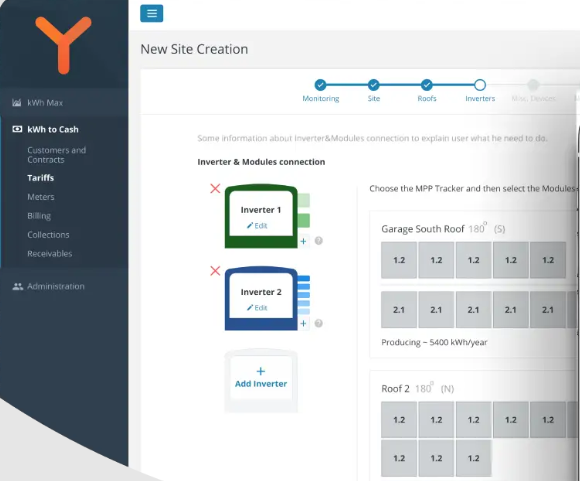
Web Application for Solar Energy Management
Swiss CleanTech projectSolar energy management web applicationGeneration, consumption, import, and export data in a single dashboard
Younergy requested an easy-to-use platform where installers could manage their solar system remotely from one dashboard.
LITSLINK developed a web app that made solar energy generation and distribution management simple, while delivering information about the system in a user-friendly manner. The app simplified the process of managing solar energy for installers and increased accessibility to clean energy.
Swiss media outlets like 24Heures and Der Bund reported on the project.
Smart Irrigation IoT Infrastructure for Scotts Miracle-Gro
Faster software deploymentSecurity and testing improvementOperational costs reductionIoT infrastructure for connected garden devices
Scotts Miracle-Gro aimed to improve its software to advance the irrigation system used by numerous households in the USA.
LITSLINK worked with Scotts Miracle-Gro to enhance the server-side software of connected irrigation systems and smart garden devices. The solution enables remote watering control, provides integrated support for watering schedules, makes weather-based decisions, integrates with third-party services, and processes the information from the devices.
Furthermore, our team enhanced CI/CD processes, usage of Kubernetes resources, testing, and security to help the company deploy and scale the software in a better way.
Advanced Technologies We Use in Energy Software Development
Through the use of AI, energy and utility companies are able to enhance energy generation and consumption while performing damage identification, condition prediction, device failure forecasting, and process automation in energy software. AI predicts maintenance needs using vibration and thermal data, which enables the reduction of operational downtime by 30% in energy systems.
With the help of agentic AI, autonomous AI agents analyze input data, coordinate multi-step processes, react to changing situations, and engage with both enterprise software and operational systems — all with minimal human input.
Internet of Things (IoT)
Internet of Things (IoT) links meters and sensors to conduct data collection, track assets, manage resources, and perform remote operations. Data-driven decision-making transforms IoT data into insights regarding consumption trends.
Cloud computing technology is able to provide infrastructure for processing and storing enormous flows of energy-related information while allowing users to access distributed assets.
Big Data
Big data processes information related to meters, devices, energy generation and consumption, power grid, and operations in order to discover patterns and facilitate decision-making based on data analysis.
Computer Vision
Computer vision is applied to camera and drone photos to enable inspection of infrastructure, identify defects in equipment, detect potential safety hazards, and support automated inspections.
Our Tech Stack
Front-end
React
Next.js
Vue.js
Angular
TypeScript
Back-end
Node.js
Python
Django
PHP
.NET
Java
Mobile
React Native
Flutter
Swift
Kotlin
Databases
PostgreSQL
MySQL
MongoDB
Redis
Cloud & DevOps
AWS
Microsoft Azure
Google Cloud
Docker
Kubernetes
AI & Machine Learning
OpenAI
TensorFlow
PyTorch
LangChain
Hugging Face
Data Engineering
Apache Kafka
Apache Spark
Apache Airflow
Snowflake
FAQs
01What Types of Projects Are Typically Involved in Energy Software Development?
The types of projects typically involved in energy management software development include energy management systems, SCADA platforms, smart grid solutions, asset management, billing platforms, customer portals, field service tools, IoT platforms, analytics systems, forecasting tools, and renewable energy applications.
02What Are the Benefits of Custom Energy & Utilities Software Development Over Off-the-Shelf Solutions?
The benefit of custom energy and utilities software development over off-the-shelf digital solutions is that it can be built with your workflows in mind, as well as existing infrastructures, data sources, users, security requirements, and integrations.
03What Are the Essential Features of Energy Software?
The essential features of energy software include real-time monitoring, data acquisition, dashboards, analytics, alert systems, automation, equipment connectivity, role-based access, reporting, connectivity through APIs, and security features related to energy management and asset management.
04Can Custom Energy Software Integrate With Existing Infrastructure and Legacy Systems?
Yes, custom energy software can integrate with modern systems like SCADA, ERP, CRM, GIS, billing systems, plus meters, devices, sensors, etc, and legacy applications through APIs, middleware, and pipelines.
05How Long Does It Take to Develop Custom Energy Software?
We can develop a PoC in around 6 weeks and an MVP — in 8 to 10 weeks. The time depends on factors such as features, integrations, data requirements, infrastructure, testing needs, etc.
06What Is the Pricing for Energy Software Platform Development?
The cost to develop a custom energy management software platform is not fixed because it is influenced by product scope, number of platforms, integrations, technology stack, data architecture, AI requirements, and development timeline. If you want to estimate cost according to your project needs, use our App Cost Calculator.
Have a Project in Mind?
Are you planning an energy software development project? Send us a request, and let’s talk about your operational goals, infrastructure, systems, users, and technical requirements! You’ll get a reply from our team within 48 hours after reviewing your project.
Next steps
1
LITSLINK specialist reviews your request and contacts you to discuss the details
2
If needed, we sign an NDA before moving forward
3
We send a project proposal – estimates, timeline, and team CVs included
4
After launch, we stay on for any updates your product needs
Thank you! Your request has been sent — our team will get back to you within 48 hours.