








Key Takeaways:
- Companies were ranked on verified Clutch reviews, named logistics client work, and integration depth.
- Most logistics software projects fail at integration (carriers, EDI, ERP, scanners) rather than at the feature level. The demo rarely shows you this.
- The 2026 MHI Annual Industry Report found 41% of supply chain leaders now use AI in operations, up from 30% a year earlier.
- Fortune Business Insights sizes the global logistics software market at $17.47 billion in 2026, heading to $31.74 billion by 2034.
- #1 pick LITSLINK builds fleet, routing, and supply chain software around a live operation, with US project management and European engineering.
A logistics software development company builds the transportation management systems (TMS), warehouse management systems (WMS), fleet, and route optimization systems that keep physical goods moving. A general software vendor treats logistics solutions like any other business app. That difference sounds academic until a truck sits at a dock for four hours because two systems disagreed about one pallet.
The money says the category is serious. Fortune Business Insights puts the global logistics software market at $17.47 billion in 2026 and projects $31.74 billion by 2034, with North America holding about 37% of it. The 2026 MHI Annual Industry Report, written with Deloitte from a survey of more than 500 supply chain leaders, found 41% already use AI in their supply chain operations, up from 30% the year before. This means the buyers are moving faster than the vendors they’re evaluating.
Here’s the pattern that never makes it into a pitch deck. Most logistics software development projects fail at integration rather than at the feature level (the FAQ below breaks this down). A vendor who is comfortable with features and uncomfortable with a 14-carrier EDI mess will underdeliver, and the polish of their demo tells you nothing about that.
So we ranked these logistics software development companies on three things: verified reviews, named logistics client work, and how deep they go on integration with existing systems. Portfolio size and adjective count did nothing for a company’s position here.
Quick Comparison: Top Logistics Software Development Companies at a Glance
Before the full write-ups, scan this table to see where each company’s logistics solutions land. Every entry gets a deeper profile further down, so treat this as a way to narrow a shortlist rather than a final call.
| Rank | Company | Best For |
|---|---|---|
| 1 | LITSLINK | Custom software development for fleet, routing, and supply chain |
| 2 | Devox Software | US-focused, full-cycle TMS and fleet management builds |
| 3 | Trigent | Freight workflows, EDI, and platform modernization |
| 4 | Softeq | Embedded telematics and IoT hardware integration |
| 5 | Software Mind | Courier and parcel delivery systems |
| 6 | Clockwise Software | Focused logistics SaaS tools for smaller teams |
| 7 | Dev Entity | TMS/WMS with AI route optimization and IoT tracking |
| 8 | RTS Labs | Logistics analytics and AI wired into existing ERP/TMS/WMS |

1. LITSLINK: Best for Custom Software Development Spanning Fleet, Routing, and Supply Chain
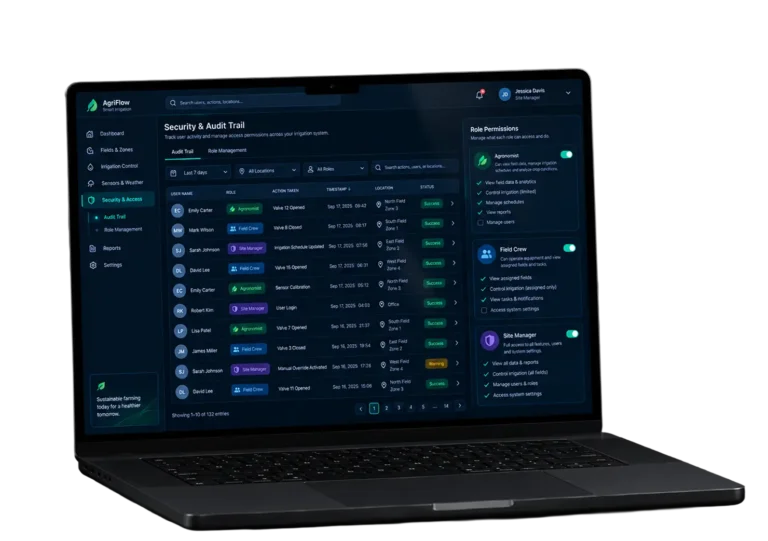
LITSLINK is the strongest pick for logistics businesses that need fleet, routing, and supply chain software built as one live operational picture rather than three dashboards that disagree with each other. The team connects dispatch, tracking, warehouse, and last-mile systems so a rerouted truck, a stalled pick line, and a delayed carrier update all land in the same place at the same time, which is what real-time visibility means when it’s more than a slogan.
What that looks like in practice: custom logistics software development that ties vehicle and asset tracking to predictive maintenance, IoT sensors feeding one event stream instead of a folder of CSV exports, and enterprise integration that connects logistics operations and supply chain management to the ERP, transportation management software, and carrier systems a client already runs. Route optimization here means multi-stop, capacity-constrained planning that can optimize delivery routes with live traffic and weather inputs, which is a different engineering problem from wrapping a mapping API and calling it done. Data analytics sits on top of all of it, so logistics data from the yard, the road, and the warehouse feeds the same forecasts.
The numbers behind the claim: 1,540+ projects delivered, 1,000+ clients, 82 countries served, and a 300+ engineering team since 2014. Delivery pairs US-based project management with senior European engineers, so status calls happen during your workday and the person writing the WMS integration has done it before. Logistics software development services here run from discovery through cloud computing infrastructure and post-launch support, with custom solutions scoped around the logistics processes a client actually runs. Whether the ask is to build logistics software from scratch or modernize legacy systems, the scope starts with the integration map.
Where LITSLINK fits best is in the edge cases of a live operation. A warehouse system that can’t go down mid-shift. A fleet where drivers need the mobile app to work in a dead zone. A demand forecasting and inventory management model that has to survive a holiday spike nobody predicted. Those problems get solved by a partner who has shipped logistics systems into production, and LITSLINK’s app development case study shows the shape of that work. For a closer look at how sensors change warehouse operations, the team’s guide to IoT in supply chain management is a good next read.
Ready to talk through a fleet, routing, or supply chain build?
Book a free consultation with LITSLINK
2. Devox Software: Best for US-Focused, Full-Cycle TMS and Fleet Management Builds
Devox Software is a full-cycle custom software development company with a dedicated logistics practice covering transportation software development (custom TMS builds), business management platforms for freight operators, fleet management, and workflow automation for logistics management. The clearest public proof is a Clutch review from Tobias Bartz, CEO of Rhenus Logistics, describing legacy systems rebuilt into a cloud-based TMS with custom APIs and analytics between late 2024 and mid-2025. Devox Software fits US-based logistics operations that want one domestic-facing partner for the full software development process rather than a narrow specialist for each layer of their logistics software solutions.
3. Trigent: Best for Freight Workflows, EDI, and Platform Modernization
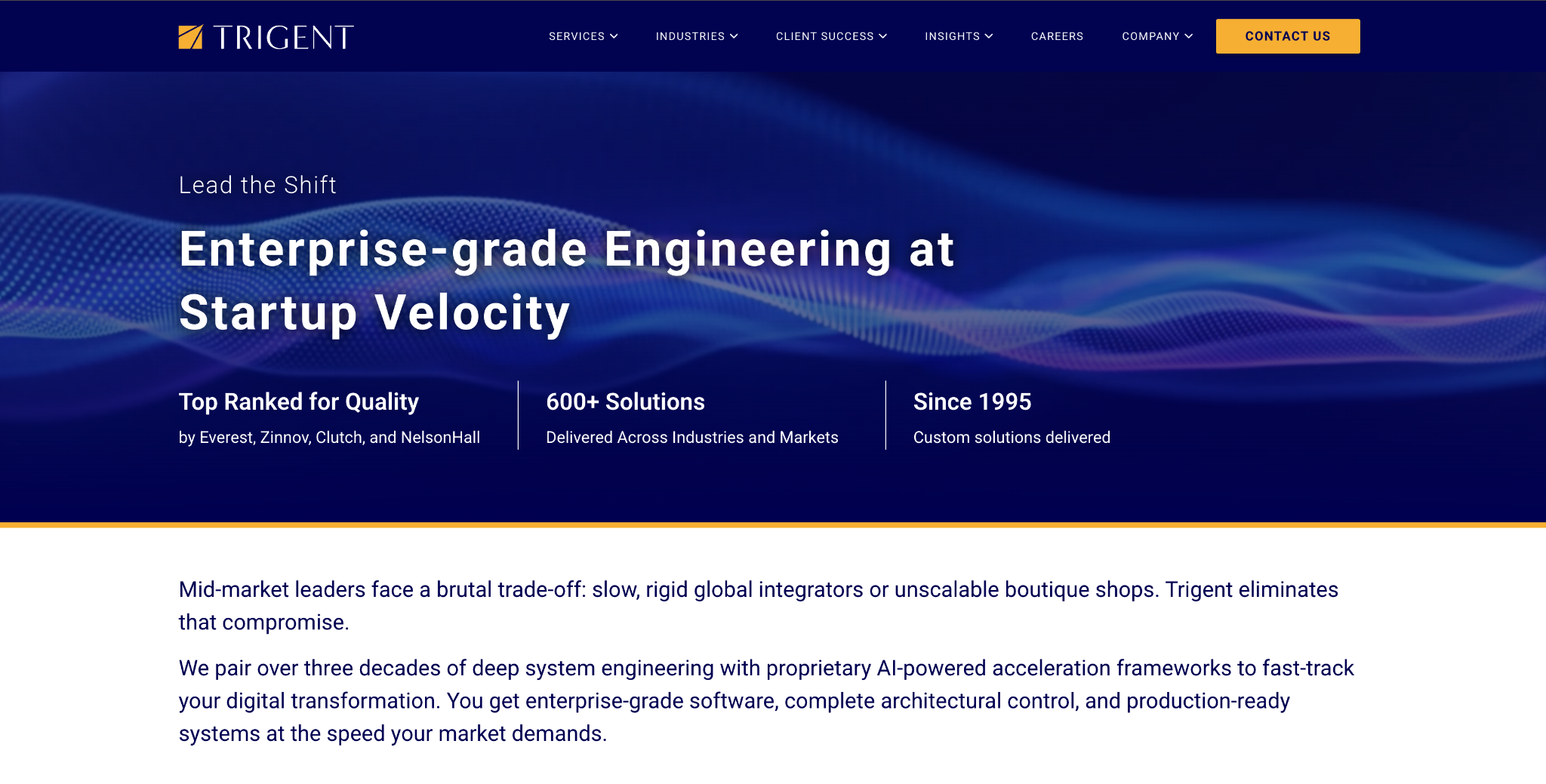
Trigent speaks the language of freight operations more specifically than most general software development services firms. Its AXLR8 Labs suite of transportation and logistics solutions, launched in early 2024, bundles EDI management, an AI-driven dynamic pricing engine, IoT-based real-time visibility, and generative AI for last-mile route planning. The company has been in business since 1995 with a 1,000+ headcount. Trigent’s logistics solutions fit 3PLs, logistics service providers, and freight operators whose priority is modernizing an aging platform without interrupting live supply chain operations.

4. Softeq: Best for Embedded Telematics and IoT Hardware Integration
Softeq is a Houston-based engineering firm, founded in 1997, that does hardware design, firmware, and embedded systems under the same roof as its application software solutions. That combination is rare among logistics software development companies, most of which stop at the API. Softeq lists transportation as a core industry and has shipped connectivity and sensor products where the onboard unit matters as much as the cloud. It fits custom solutions where sensors, vehicle connectivity, track and trace systems, and cold chain logistics monitoring are central to the build rather than a plug-in.
5. Software Mind: Best for Courier and Parcel Delivery Systems
Software Mind goes deepest into courier and parcel systems among the broadly ranked logistics developers on this list. Its published case study describes rebuilding a national courier app for more than 10,000 couriers in Kotlin, adding parcel-locker support, PIN-on-glass payments, and better barcode scanning, and retiring 10,000 legacy scanning terminals in the process. The client reported shorter onboarding, lower error rates, and higher courier and customer satisfaction, which is what operational efficiency looks like when someone bothers to measure it. Software Mind fits last-mile and parcel operators whose software needs are shaped by high-volume, short-cycle delivery routes rather than long-haul freight.
6. Clockwise Software: Best for Focused Logistics SaaS Tools for Smaller Teams
Clockwise Software, founded in 2014 with a 4.9 Clutch rating across 200+ delivered products, has built more than ten logistics solutions, from fleet tracking dashboards to warehouse platforms, and reports keeping cost and schedule variance under 10% on those projects. The team’s strength is location-based work: GPS, mapping APIs, and live data streams that optimize delivery routes and fleet visibility. Clockwise fits smaller logistics companies who need one set of tailored solutions built well, at a mid-market rate, rather than an all-in-one platform they’ll use a fraction of.
7. Dev Entity: Best for TMS/WMS With AI Route Optimization and IoT Tracking
Dev Entity builds custom logistics software for distribution companies, fleet operators, e-commerce businesses, and third-party logistics providers, with services spanning TMS, WMS, and inventory management development, real-time tracking platforms for supply chain visibility, driver and warehouse mobile apps, and AI route optimization. Dev Entity fits operators who want one vendor covering the transportation logistics software, mobile, and AI layers together rather than coordinating separate specialists.
8. RTS Labs: Best for Logistics Analytics and AI Wired Into Existing ERP/TMS/WMS
RTS Labs, based in Glen Allen, Virginia, with a team of roughly 90, is strongest once a company already owns several logistics systems and still can’t get a dependable operating picture out of them. The firm works on TMS and WMS customization, third-party integration, and supply chain business intelligence layered on top of what’s already running, with data analytics, data science, and predictive analytics as core services rather than add-ons. RTS Labs fits operators whose problem is too much disconnected logistics management software producing too little supply chain efficiency.
How to Choose the Right Logistics Software Development Company
The right partner depends on integration depth and layer-specific experience as much as general software skill, because logistics software errors turn into physical problems. Trucks waiting at a dock. Inventory counts that no longer match the shelf. The questions below sort vendors who have lived through that and can develop solutions for it from vendors who have only demoed around it.
Confirm Real Route Optimization Experience, Not a Generic Mapping API Wrapper
In 1944, the US Army’s Red Ball Express ran nearly 6,000 trucks on a one-way loop from the Normandy beaches to the front. The trucks were the easy part. The hard part was that nobody could reliably say where any given truck was, so convoys bunched, fuel ran short, and the loop had to be redesigned mid-campaign. Route optimization at operational scale is still that problem: capacity limits, traffic and weather inputs, dynamic rerouting when a driver calls in sick at 5 a.m. Ask for a named project that handled multi-stop, capacity-constrained delivery routes, and ask what it did to transportation costs. A general portfolio of logistics solutions doesn’t answer the question.
Ask About Transportation Management System Depth and Carrier Integrations
Transportation management software development lives or dies on how many carrier integrations and EDI formats the team has actually handled, since that’s where most real logistics processes hit friction. A TMS with three carrier connections and a TMS with thirty are different products wearing the same name. Ask a prospective transportation software development company for a named transportation management systems project and how many distinct carrier or EDI integrations it required. Then ask what broke.
Check Software Engineering Rigor for Real-Time, Uptime-Critical Systems
A live warehouse or dispatch system can’t go down mid-shift the way a marketing site can. Software engineering for logistics systems has to account for deployment and rollback while operations are running, event queues that survive a network blip, and mobile apps that keep working when a scanner loses signal in the back of a trailer. Ask how the team ships changes to a system that’s actively moving freight, and what their rollback looked like the last time something went wrong.
Confirm Data Security Practices for Shipment and Customer Data
Logistics management software handles shipment details, customer addresses, and often payment data, all of which carry real data security stakes for logistics operations across every integrated system. The weak point is usually the connection between systems (a carrier API key in a config file, a warehouse scanner on an open network), and that’s the part most vendors don’t describe unprompted. Ask specifically how sensitive logistics data is encrypted and access-controlled across integrations, and whether the team has passed a client’s security audit for a logistics build.
Ask About Fleet Performance Monitoring Capabilities
Fleet performance monitoring (vehicle health, driver behavior, fuel efficiency) increasingly runs on the same platform as dispatch and routing rather than in a separate tool. Fortune Business Insights sizes the fleet management software market at $11.61 billion in 2026 with a projected 19.4% annual growth rate, which is a faster clip than logistics software overall and a sign that fleet operations data is where operators expect the next return. Ask whether fleet performance data analytics feed back into routing and maintenance decisions automatically, or sits in a dashboard nobody opens.
Confirm Inventory Control and Warehouse System Integration
Inventory control only works as well as its link to the warehouse management system and the inventory management tools around it. Logistics management breaks at that seam more often than anywhere else, and a route optimization or TMS specialist may have never touched a pick-and-pack flow. For cold chain logistics, the same link also carries temperature data, which makes the integration stricter. If warehouse operations are in your scope, ask for a named project involving warehouse inventory integration specifically, and ask what the inventory tracking accuracy looked like before and after go-live.
The Obvious Choice Is the Biggest Platform. It’s Also Usually the Wrong One
The intuitive move for a growing operator is to buy the largest logistics management platform on the market and configure it. That works until the configuration options run out, which happens around the time your carrier mix, warehouse layout, or customer SLA stops matching the vendor’s template. We’d push back on the reverse instinct too. A full set of custom software solutions for a company with standard workflows and one warehouse is money spent on problems you don’t have yet, and it delays what the software was supposed to do, which is support business growth.
John Paxton, CEO of MHI, said something at MODEX 2026 that applies directly to vendor selection: competitive advantage now comes from how well companies scale, integrate, and operationalize technology, and no longer from adopting it. Gartner’s research on supply chain management adds a supporting data point. Among supply chain leaders who have embraced AI, 81% feel confident managing its impact, versus 54% of everyone else. The confidence isn’t coming from the tools. It’s coming from having wired them into the operation.
That’s the real test of a logistics software development partner. Can they build the thing, and can they make it talk to the eleven systems you already own without stopping the trucks?
FAQs
How Much Does Logistics Software Development Cost?
A focused route optimization or fleet tracking tool typically costs $30,000–$80,000. A full TMS or WMS platform with carrier integrations and warehouse connectivity usually runs $150,000–$500,000 or more, depending on integration count and scale.
How Do I Choose the Right Logistics Software Development Company?
Check three things first: a named project in the specific layer you need (TMS, WMS, route optimization, tracking), how many real carrier or EDI integrations the team has handled, and whether they can demo a live running system in that layer rather than a slide deck.
What’s the Difference Between a TMS and a WMS?
A transportation management system manages the movement of goods between locations, including carrier selection, routing, and freight tracking. A warehouse management system manages what happens inside the building: inventory management, picking, packing, and receiving. Most logistics operations eventually need both, integrated with each other rather than running as separate silos.
Should I Build Custom Logistics Software or Buy an Off-the-Shelf Platform?
Off-the-shelf logistics software solutions work well for standard TMS and WMS workflows and get a company running faster. Custom logistics software development becomes worth the investment once a company’s carrier mix, warehouse layout, or integration requirements exceed what a standard platform’s configuration can support. At that point a partner who can build custom solutions around your actual logistics processes beats one more license.
Why Do Most Logistics Software Projects Fail?
Most logistics software projects fail at integration rather than at the feature level. A TMS that can’t reliably talk to carriers, a WMS that doesn’t sync with the ERP or the supply chain management layer, or a tracking layer that can’t handle the actual variety of device and API formats in use will sink a project faster than any single poorly built feature.
Where Logistics Software Development Companies Go From Here
The eight logistics software development companies above were chosen for what they’ve shipped into live logistics and supply chain operations, and the next two years will sort that list further. AI use among supply chain leaders jumped 11 points in one year, according to MHI, and the logistics industry vendors who treat that as an integration problem rather than a feature checkbox are the ones whose clients will still be running their supply chain software in 2028.
Pick the partner who asks about your carriers before they ask about your budget.
Have a logistics software project in mind?
Tell us which systems already exist and which ones keep disagreeing.