







Key takeaways
- Web 2.0 is the centralized, platform-owned internet; Web 3.0 is the decentralized, blockchain-based internet where users hold their own data, identity, and value.
- Web 3.0 is no longer speculative: DeFi total value locked hit a record $237B in Q3 2025, and Layer 2 networks grew from ~$4B locked in 2023 to ~$47B by October 2025.
- Adoption is real but uneven — over 820 million crypto wallets are active worldwide as of 2025, yet only 48% have ever connected to a dApp and fewer than 10% return within 30 days.
- The Web3 market is projected to reach roughly $30B–$52B by 2030 at a 42–49% CAGR, depending on the research firm and scope definition.
- Regulation is now an infrastructure layer, not just a risk: the EU’s MiCA is fully live and the U.S. GENIUS Act became law in July 2025.
- The fastest-moving 2026 frontier is the AI + Web3 convergence — autonomous on-chain agents and hybrid cloud/blockchain architectures.
You decided to use Facebook in 2008. You enjoy looking at others’ posts, like images, as well as updating your news feed. The above scenario summarizes the internet at the time, where Web 2.0 flourished in its social and engaging aspects and shaped how everyone interacted online.
However, fast forward to today, usage of the internet has greatly expanded and so has interactivity.
That is Web 3.0. The next version of the internet is where security, privacy, and decentralization are key.
Now, the question is, do you know the critical difference between Web 2.0 and Web 3.0?
Let’s find out the outline of the transition of Web 2.0 vs. Web 3.0, looking at what enabled the change and the benefits and challenges of both technologies.
As per one recent stat, the size of the worldwide Web3 blockchain market will be around 23.3 billion dollars by 2028. That’s a massive shift that’s driving us into the next phase of the internet.
Web3 in 2025–2026: Where Are We Now?
The Web 2.0 vs Web 3.0 debate has moved from theory to measurable infrastructure. Three numbers make the shift concrete. Decentralized finance total value locked reached a record $237 billion at the close of Q3 2025 — up 41% in a single quarter and past the 2021 bull-market peak — before cooling to roughly $116.7B in Q4 amid a broader selloff (The Defiant). Layer 2 scaling networks now hold about $47 billion, up from under $4 billion two years earlier (Benzinga). And daily unique active wallets across DeFi, gaming, and social dApps reached 24.6 million in early 2025 (DappRadar).
| Web3 metric (2025) | Figure | Source |
| Active crypto wallets worldwide | 820 million | CoinLaw |
| DeFi TVL peak (Q3 2025) | $237 billion | The Defiant |
| Layer 2 TVL (Oct 2025) | ~$47 billion | Benzinga |
| Web3 market by 2030 (range) | $30B–$52B | Grand View Research / MarketsandMarkets |
The infrastructure is maturing on the protocol side too. Ethereum’s Fusaka upgrade went live on December 3, 2025, activating PeerDAS and cutting validator bandwidth requirements by 87.5% — roughly an 8x scalability gain without pushing home validators into data centers (Bitcoin Foundation). Market estimates still vary widely — from $3.47B to $8.85B for 2025 depending on whether a firm counts Web3 broadly, blockchain specifically, or crypto alone — but they converge on a 42–49% CAGR through 2030.
Difference Between Web 2.0 and Web 3.0
Web 2.0 took the internet we knew in the early 2000s and made it interactive. Suddenly, we weren’t just consuming content, we were creating it.
However, with Web 3.0, it’s going to be another evolution where you will have a blend of the Internet and the Web but this one is not controlled by big enterprises. It’s an internet where you are in charge of everything, owning the Internet rather than being a part of it.
To make it simpler, here’s a comparison of the major characteristics that differentiate Web 2.0 and Web 3.0:
Feature | Web 2.0 | Web 3.0 |
| Architecture | Centralized, controlled by major platforms | Decentralized, blockchain-based |
| Data Ownership | Companies hold user data | Users own and control their own data |
| Content Creation | User-generated, shared through social media | Community-driven, data is decentralized |
| Interactivity | Social media, comments, and sharing | Smart contracts, automated trustless transactions |
| Security & Privacy | Moderate control over security | Built-in encryption, stronger user privacy |
| Technology Stack | HTML, JavaScript, CSS, etc. | Blockchain, AI, machine learning, and IoT |
With this overview, you can start to see the fundamental similarities between Web 2.0 and 3.0 in terms of how they operate and what they prioritize. But there’s more than just technical differences—each has unique strengths and weaknesses.

| Feature | Web 2.0 | Web 3.0 |
| AI integration | AI APIs layered on centralized stacks | Autonomous AI agents operating on-chain |
| Regulatory status | Mature, jurisdiction-specific | MiCA live in the EU; GENIUS Act in the U.S. (2025) |
Architecture
The architecture of Web 2.0 is centralized. Think of platforms like Facebook, Google, or Amazon. They operate as the middlemen, holding the keys to all the data and transactions. With Web 3.0, that’s flipped. The architecture is decentralized, relying on blockchain and peer-to-peer networks. This decentralization means there’s no single point of control, reducing the power of large corporations over user data.
For instance, at LITSLINK, we use frameworks, like React.js and Node.js, to build applications compatible with both Web 2.0 and Web 3.0 technologies. As businesses adopt Web 3.0, they will need to leverage efficient tools to keep up with the decentralized model.
Data Ownership
Data ownership is a massive shift between Web 2.0 and Web 3.0. In Web 2.0, we hand over our data to companies every time we log in or use an app. This data is stored in centralized databases owned by corporations who often profit from our information through targeted ads.
On the other hand, Web 3.0 introduces a new concept: users own and control their own data. Thanks to blockchain, users can decide who has access to their data, adding a layer of privacy and control we’ve never seen before. The difference between Web 2.0 and Web 3.0 is striking here because it redefines the power dynamic between users and tech companies.
Content Creation
If you think about content creation in Web 2.0, it’s all about social media. Users create posts, share images, and write blogs, and platforms make it easy to share this content across networks. But Web 3.0 changes the equation. Now, content is not only created by users but also controlled by them.
For instance, machine learning services are essential for Web 3.0 platforms because they enable user-generated content to be managed in a decentralized, secure way. Machine learning plays a huge role in making sure content remains accessible without the control of central authorities.
Interactivity
Interactivity in Web 2.0 includes likes, comments, shares, and messages. It’s interactive but within a controlled ecosystem. However, Web 3.0 is fundamentally different. Here, smart contracts play a major role. These are self-executing contracts with terms directly written into code. This means that transactions and interactions are trustless—there’s no need for a third party to verify actions.
So, are we in Web 3.0 now? Well, yes and no. Elements of Web 3.0 are here, but full adoption will take time. According to the research from our blog on navigating Web 3.0, we’re just beginning to see how Web 3.0 might change our digital interactions.
Security and Privacy
Security and privacy are increasingly critical in Web 3.0. In Web 2.0, companies are responsible for data protection, and users must trust these platforms to keep data secure. But with frequent data breaches and privacy scandals, trust has eroded. In contrast, Web 3.0 offers a solution through encryption and decentralized storage, putting users in control of their own security.
A quick example: When you’re using a decentralized app on Web 3.0, you don’t need to trust the company behind it. The technology itself, through blockchain, provides a trustless environment where encryption secures your data. This level of privacy is not possible in Web 2.0, where platforms often sell data to advertisers.
Technology Stack
Web 2.0 relies on a standard stack of HTML, CSS, and JavaScript, which has served the internet well for years. But Web 3.0 demands a more advanced stack—think blockchain, machine learning, and IoT. This evolution means developers need to adapt, utilizing complex tools like AI and data science to meet the demands of a decentralized internet.
For example, data science and blockchain often intersect in Web 3.0 applications. As seen in our data science trends blog, modern applications increasingly rely on data-driven insights, which are essential for Web 3.0’s personalized and decentralized experiences.

AI + Web3 Convergence: The 2026 Frontier
The most important change to the Web 2.0 vs Web 3.0 picture since this article first published is the merging of AI and blockchain. In 2025, $637 million in venture capital flowed into Web3 AI startups — about 11% of all blockchain VC for the year. Investment firm Bitwise has projected that combining AI and crypto could add as much as $20 trillion to global GDP by 2030 (AInvest).
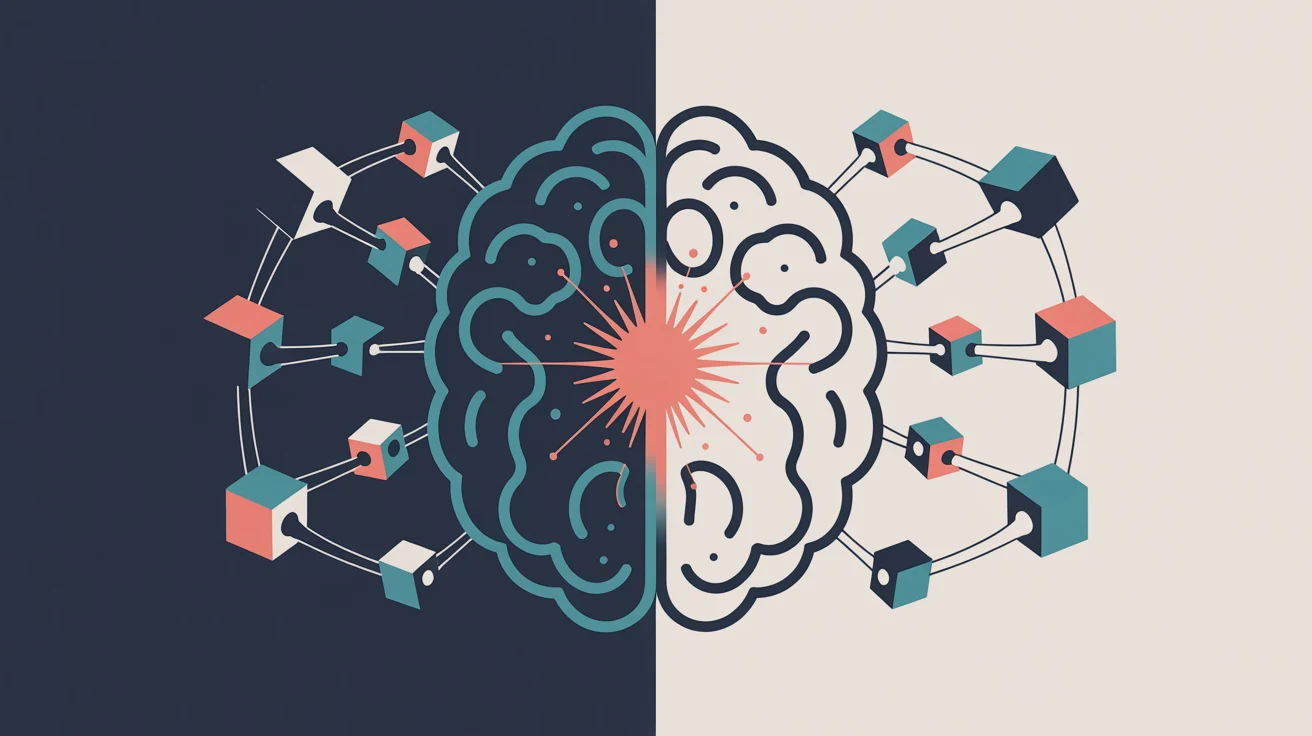
The practical pattern is hybrid architecture: centralized cloud handles AI training and inference, while blockchain handles identity, auditing, verification, and settlement. On top of that sits a new category — autonomous on-chain AI agents that execute portfolio rebalancing, arbitrage, and cross-chain transactions without a human in the loop. This is the single dimension where Web 3.0 stops being “Web 2.0 with a wallet” and becomes a genuinely different operating model.
Regulatory Clarity Is Now Part of the Stack
For years, “regulation is unclear” was the standard caveat on any Web 3.0 article. That framing is out of date. In the EU, the Markets in Crypto-Assets Regulation (MiCA) became fully applicable to crypto-asset service providers on December 30, 2024, with stablecoin rules live since mid-2024 (ESMA). In the United States, the GENIUS Act was signed into law on July 18, 2025 (Public Law 119-27) — the first major federal stablecoin legislation — and the SEC wound down its enforcement campaign against Coinbase and OpenSea in early 2025 (Blockchain Council). The takeaway for businesses: compliance is now a designed-in Web 3.0 infrastructure layer, not just a reason to wait.
What is Web 3 Technology?
Web 3.0 technology is a revolutionary shift that combines blockchain, artificial intelligence, and machine learning to create a decentralized internet. Unlike the traditional Web 2.0, where companies own and control user data, Web 3.0 puts control back into the hands of users, enabling them to decide how their data is shared.
With its decentralized structure, Web 3.0 enhances privacy and reduces the need for intermediaries, making online interactions more secure and autonomous.
To answer, what is web3 technology? It’s a new architecture where applications don’t rely on centralized servers but operate through decentralized networks. It’s the backbone of a more private, secure, and user-centered internet experience. What is Web 3? It empowers users, making it a transformative step from the Web 2.0 model we’re used to.
Key Web 3.0 Features
Web 3.0 comes with some game-changing features that are reshaping the internet as we know it. Here’s a look at the core features that make Web 3.0 unique:
- Decentralization – Unlike Web 2.0, where data is stored on central servers, Web 3.0 uses decentralized networks to store data, enhancing security and control.
- Blockchain Integration – This is a fundamental technology in Web 3.0. It allows users to verify transactions without a central authority.
- Enhanced Privacy – Users have more control over their data, deciding how and with whom it’s shared.
- Smart Contracts – These are self-executing contracts that run on the blockchain, removing the need for intermediaries in transactions.
- Personalization – Through AI and machine learning, Web 3.0 platforms offer highly personalized user experiences.
So, are we in Web 3.0 yet? Yes, but it’s in its early stages. We’re starting to see Web 3.0 concepts like smart contracts and decentralization, but full-scale adoption is still in progress.
That early-stage reality deserves an honest footnote. Despite 820 million active wallets, only 48% have ever connected to a dApp, and fewer than 10% of dApp users return within 30 days (CoinLaw). The UX gap between Web 2.0 and Web 3.0 — seed phrases, private keys, gas fees — remains the primary barrier to mainstream adoption. Account abstraction standards like ERC-4337 and EIP-7702 are closing that gap by enabling social login and gasless transactions, but the friction is still real today.
Web 3.0 Advantages and Disadvantages
While Web 3.0 is an exciting advancement with many benefits, it’s essential to understand both its advantages and its limitations. Just as Web 2.0 brought both positive changes and challenges, Web 3.0 comes with a new set of pros and cons.
Advantages of Web 3.0:
- Enhanced Privacy and Data Ownership
Web 3.0 gives users control over their data. Rather than trusting big corporations to keep information safe, users can control who accesses their data and how it’s used. Blockchain technology ensures a higher level of security since transactions are encrypted and distributed. - Decentralization Reduces Power Concentration
Web 3.0 takes power away from central authorities, creating a more open and fair internet. Instead of a few large companies controlling the majority of the web, Web 3.0’s decentralized model allows for more individual control. - Smart Contracts Automate Transactions
With Web 3.0, smart contracts enable automated transactions without needing a third party to verify them. This means that two users can securely exchange value, assets, or data without relying on a middleman. - Improved User Experience
Through AI and machine learning, Web 3.0 applications can offer highly personalized user experiences. This goes beyond just targeted ads and extends into areas like personalized financial advice, tailored content, and more accurate search results. - Interoperability Among Platforms
Web 3.0 enables different platforms to communicate seamlessly with each other. This compatibility is powered by decentralized apps (DApps), which work across various blockchain ecosystems, allowing users to switch between platforms without losing data or functionality.
Disadvantages of Web 3.0:
- Complexity for New Users
Web 3.0 requires users to understand more complex technologies, such as blockchain wallets and private keys. Unlike Web 2.0, where users can easily navigate with a username and password, Web 3.0 may present a learning curve that could discourage some users. - Scalability Issues
Blockchain networks are not yet able to process transactions as quickly as centralized networks. High transaction costs and slow speeds can hinder the usability of Web 3.0 applications, particularly during peak times. - Regulatory Challenges
Governments and regulatory bodies are still figuring out how to handle decentralized networks. The legal landscape for Web 3.0 is complex and varies from country to country, making it difficult for businesses to operate with full certainty. - Energy Consumption
Many blockchain networks, especially those that rely on proof-of-work (PoW) consensus mechanisms, consume substantial energy. This has raised environmental concerns, and while newer blockchains use more energy-efficient models, it’s still a challenge for Web 3.0’s wider adoption. - Security Risks
Although Web 3.0’s decentralized model offers more control, it also means users are responsible for their security. Losing a private key, for example, could result in a permanent loss of access to one’s assets, creating significant risks if users are not diligent.
Web 3.0 Examples
To see Web 3.0 in action, let’s look at real-world examples of companies using Web 3.0 principles to innovate. Two companies exemplifying Web 3.0 are:
- Uniswap
Uniswap is a decentralized exchange (DEX) operating on the Ethereum blockchain. Unlike traditional exchanges, Uniswap doesn’t require a middleman, which allows users to trade cryptocurrency directly. This example of Web 3.0 websites shows how decentralized finance (DeFi) is removing the need for banks or financial intermediaries. - Decentraland
Decentraland is a virtual world built on the Ethereum blockchain, where users can buy, sell, and develop digital real estate. Users have full ownership of their land and assets in Decentraland, showcasing how Web 3.0 is redefining ownership in the digital space.


Two recent Web2→Web3 transitions show how established players are crossing the line in practice. Starbucks Odyssey extended Starbucks Rewards with NFT-based collectibles — its first limited run of 2,000 NFTs sold out in 18 minutes, with secondary trading topping $200,000, before Starbucks wound the program down in 2024 as the broader NFT market cooled (Rock’n’Block). On the infrastructure side, Filecoin launched its full Onchain Cloud — compute, storage, automated payments, and verifiable retrieval — on mainnet in January 2026, with storage deals exceeding 20 EiB and retrieval speeds matching AWS S3, positioning decentralized storage as a direct enterprise cloud alternative for the first time (AdiPek). Legacy finance is moving too: Mastercard and Western Union both joined Solana’s developer platform in early 2026 (CoinLaw).
What is Web 2.0 Technology?
Before Web 3.0, Web 2.0 transformed how we interact online by creating a social and interactive internet. What is Web 2.0 technology? It’s the internet as we know it today, dominated by social media, user-generated content, and interactivity. Companies like Facebook and YouTube exemplify Web 2.0, where users create content, interact with each other, and share information publicly.
However, while Web 2.0 technology brought immense advantages in terms of connectivity and accessibility, it also introduced new challenges. Disadvantages of Web 2.0 include privacy issues, as user data is stored and often sold by major companies.
But on the plus side, advantages of Web 2.0 include the ease of sharing information, social engagement, and the convenience of centralized services, which allow for quicker, more consistent experiences.
Key Features of Web 2.0
Web 2.0 comes with a set of defining features that have shaped the internet as we experience it today:
- User-Generated Content
Users can create, share, and manage content through blogs, social media, and forums. This shift allowed anyone with an internet connection to become a creator. - Social Networking
Platforms like Facebook, Twitter, and LinkedIn created digital spaces where users can connect, communicate, and form online communities. - Interactive Interfaces
Web 2.0 introduced interactive elements such as likes, comments, and shares, which transformed how we interact with online content. - Tagging and Search
Features like hashtags and SEO helped organize content, making it easier for users to find information relevant to their interests. - Web-Based Applications
Web 2.0 saw the rise of applications that operate entirely online, such as Google Docs and Dropbox, reducing the need for traditional software installations.
Web 2.0 Advantages and Disadvantages
Web 2.0 brought both positive changes and significant drawbacks to our digital lives. Here’s a breakdown of its main advantages and disadvantages.
Advantages of Web 2.0:
- Ease of Use
Web 2.0 applications are user-friendly and accessible to a wide audience. With minimal technical skills, users can create profiles, share content, and connect with others. - Social Connectivity
By facilitating social interactions, Web 2.0 helped people stay connected regardless of geographic location. This has had a profound impact on personal and professional relationships. - Information Sharing
The ability to instantly share information allows users to access a broader range of perspectives and resources. - Access to Services
Web 2.0 centralized services, making it convenient for users to access everything they need from a single platform, whether it’s news, communication tools, or entertainment.
Disadvantages of Web 2.0
- Privacy Concerns
In Web 2.0, users often trade privacy for convenience. Platforms collect personal data, leading to privacy issues and occasional data breaches. - Control by Corporations
Large tech companies dominate Web 2.0, meaning they control user data and the flow of information. This can limit diversity and competition in the digital space. - Misinformation Spread
Social media and other interactive platforms have become a breeding ground for misinformation, where unchecked posts can quickly spread false information. - Dependence on Centralized Systems
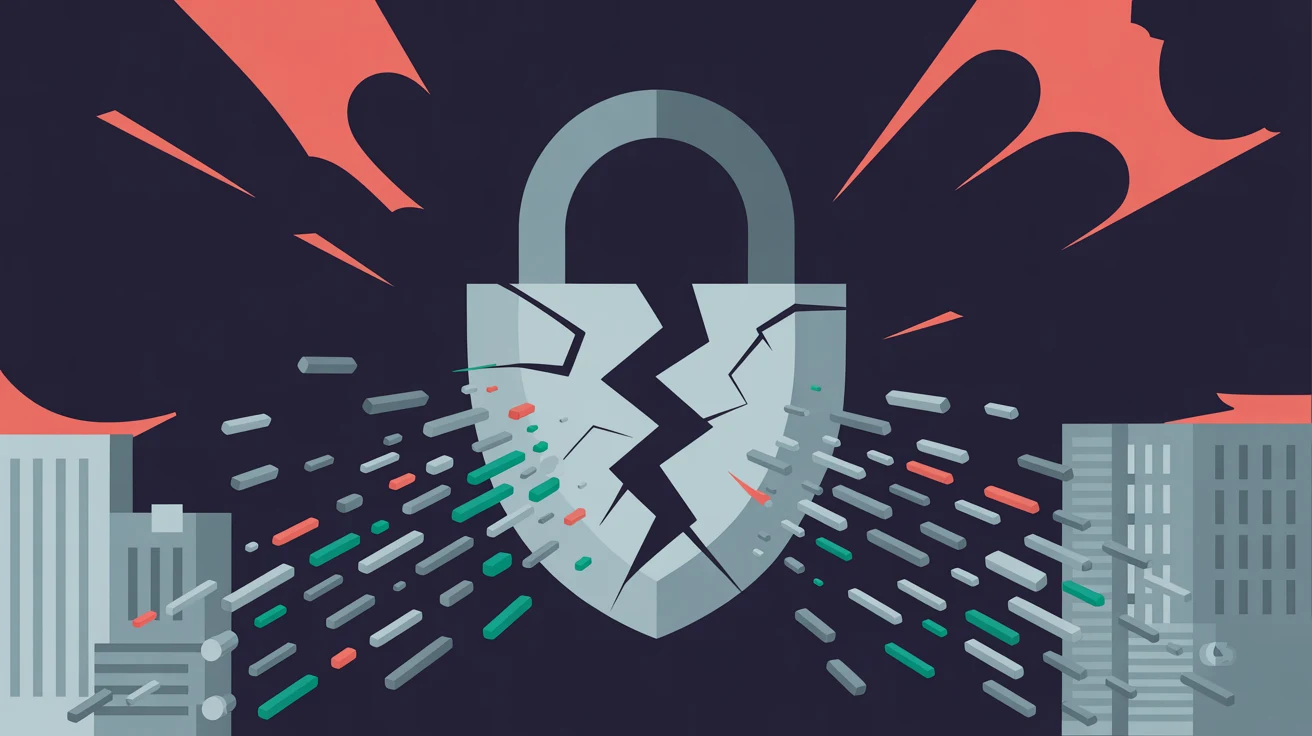
Web 2.0’s reliance on central servers means it’s vulnerable to single points of failure. If a server goes down, so does the service, affecting millions of users.
Web 2.0 Examples
To further understand Web 2.0, let’s look at two major global companies that exemplify this model:
- Facebook
Facebook is one of the most prominent examples of Web 2.0. It allows users to share content, connect with friends, and engage with a global community. However, as a centralized platform, it also controls user data, creating both advantages and privacy challenges. - YouTube
YouTube empowers users to create and share video content, making it a hub for creativity and information. It’s a prime example of user-generated content, a core aspect of Web 2.0, but it’s also controlled by Google, demonstrating how Web 2.0 platforms balance user freedom with corporate control.
A Note on the Two “Web3s” (Expert Perspective)
It’s worth knowing that not everyone uses “Web 3.0” to mean the same thing. Tim Berners-Lee, who invented the World Wide Web, has publicly distanced himself from the blockchain-centric version, arguing at Web Summit that “Web3 is not the web at all” and that blockchain is “too slow, too expensive and too public” for storing personal data, which should be “fast, cheap and private” (CNBC). His own decentralization project, Solid, pursues data ownership using standard web tools rather than blockchain. Meanwhile, Ethereum co-founder Gavin Wood coined “Web3” in 2014 to describe an internet where “trust is distributed rather than placed in third parties.” Two different visions share a similar name — and knowing which one a vendor means matters before you build.
Frequently Asked Questions
Partly. Core Web 3.0 building blocks — smart contracts, decentralized finance, on-chain identity — are live and carrying real value ($237B in DeFi at the Q3 2025 peak). But with fewer than 10% of dApp users returning within 30 days, full mainstream adoption is still years out.
No — they coexist. The dominant 2026 pattern is hybrid: Web 2.0 cloud handles AI training, speed, and familiar UX, while Web 3.0 handles ownership, settlement, and verification. Most production apps use both.
Control of data. In Web 2.0, platforms own and monetize your data; in Web 3.0, blockchain lets users own and control their data, identity, and assets directly.
Estimates range from about $3.5B to $8.9B for 2025 and project roughly $30B–$52B by 2030 at a 42–49% CAGR. The spread reflects different definitions of what counts as “Web3.”
Increasingly, yes. The EU’s MiCA framework is fully live, and the U.S. passed its first federal stablecoin law, the GENIUS Act, in July 2025.
Wrapping Up: The Key Differences Between Web 2.0 and Web 3.0
As we’ve explored, Web 2.0 vs Web 3.0 is not just a technological shift; it’s a fundamental change in how we interact with the digital world. Web 2.0 brought interactivity, social connectivity, and convenience to millions, but it also introduced privacy concerns, centralized control, and other drawbacks. Web 3.0, on the other hand, is all about decentralization, user control, and enhanced security, offering a way to escape the limitations of its predecessor.
To summarize, here are the key differences:
- Ownership: Web 2.0 relies on corporations to control user data, whereas Web 3.0 gives data ownership back to the user.
- Technology: Web 2.0 uses traditional technologies like HTML, CSS, and JavaScript, while Web 3.0 is built on blockchain, machine learning, and AI.
- Interactivity: Web 2.0 allows for social engagement but relies on corporate oversight; Web 3.0 introduces trustless interactions through smart contracts.
- Privacy: Web 3.0 ensures higher privacy with decentralized control, addressing many of the security issues seen in Web 2.0.
For businesses and individuals interested in capitalizing on the possibilities of Web 3.0, hiring expert developers is crucial. This is where a trusted company like LITSLINK can help. If you need to navigate the complexities of Web 2.0 vs Web 3.0, our web engineers are equipped to bring your digital projects to life in today’s fast-evolving online world.
Ready to make the leap into Web 3.0? Contact us to discover how you can build the next generation of internet applications that are private, secure, and user-driven.
Build with LITSLINK
If Web 3.0 is on your roadmap, our team builds decentralized apps, smart contracts, and AI-enabled platforms on top of the same stacks discussed above. Explore our AI development service and machine learning services, then keep reading: Navigating Web 3.0 and Data Science Trends.