Skip to content

AI Agents for Recruiting: Hire Faster, Spend Less

LITSLINK can help businesses automate the process of sourcing and screening candidates, communicating with them, and scheduling interviews. This allows recruiting teams to devote their time to making strategic hiring decisions and keep their processes efficient.

  • Custom AI agents tailored to your recruiting needs
  • 24/7 autonomous operation
  • Smooth integration with your current recruiting tools and systems
Hand holding a smartphone with a Recruiting AI Assistant screen and an AI badge, surrounded by floating cards with calendar, document, chat and profile icons.

What Are AI Agents for Recruiting?

An AI agent is a software system that performs selected tasks in the hiring process with very little human involvement. The number of companies using AI to recruit is quickly increasing. For example, in 2025, 25.9% of employers reported using AI to recruit. Meanwhile, 14.7% of employers used AI in 2024, and only 4.9% used it in 2023.

AI agents are powered by various technologies: natural language processing (NLP), machine learning (ML), large language models (LLMs), generative AI, predictive analytics & modeling, and workflow automation. Each of these technologies provides an important function in the recruiting workflow:

  • NLP helps in interpreting job descriptions and CVs.
  • ML aids in matching candidates’ qualifications to the job.
  • Predictive analytics provides an estimate of whether the candidate is a good fit based on past recruiting decisions.

Unlike chatbots, AI agents have autonomy and are capable of action and reactive response to live data. For instance, an AI agent can adjust targeting or rewrite messages for an underperforming job posting. This is done without a recruiter’s manual data entry.

Common use cases of agentic AI for recruiting include converting job descriptions into structured search filters, scanning talent databases, and ranking candidates. These systems are also used for enriching candidate profiles and generating personalized outreach messages for candidates. More advanced AI agents can engage candidates, screen responses, schedule interviews, prepare candidates for upcoming interviews, and maintain multi-channel communication.

Agentic AI vs. Generative AI in Recruiting

Generative AI provides outputs based on prompts provided by recruiters, such as job descriptions, personalized outreach messages, and interview questions. When using a generative AI product to create output, if you want a new version of content, you provide the prompt again. When you want to send or use the generated output, you continue to perform all of those actions yourself.

Unlike traditional AI systems that require repeated instructions, agentic AI is designed to complete a hiring goal and take independent action. Agentic AI can run certain parts of the recruiting process, which makes it much different than just generating content.

For example, a generative AI tool may create an outreach message for passive candidates. However, an agentic system will be able to select the right candidate pool and send messages through various channels to the identified candidates. It can also monitor responses to those outreach efforts and schedule follow-up communication with candidates based on response-based engagement behavior.

This is where recruiting processes start to drastically shift. If an agentic AI system receives low-quality candidates from multiple channels, it can automatically adjust the sourcing strategy. If it has a pipeline full of candidates that do not meet the selection criteria, it can refine the candidate selection criteria. If there are multiple outreach campaigns running, the agentic AI will optimize the campaigns. It does this by testing different messaging styles and tones.

Business Benefits of AI Recruiting Agents by LITSLINK

Process Automation With Minimal Human Oversight

Autonomous AI agents handle entire processes rather than just isolated recruiting tasks. This radically changes the day-to-day operations of hiring teams. They don’t have to switch back and forth between sourcing, screening, and scheduling tools; one system handles most of the flow. Reportedly, using AI automation tools saves recruiters up to 17 hours per week, with approximately 25% of that time coming from matching candidates to roles.

Agentic AI can keep track of job descriptions, scout top talent, screen incoming applications, and schedule interviews with candidates. It can also send notifications when a candidate’s status changes.

Although human recruiters will always be involved for major decisions, such as final interviews of the most qualified candidates, all of the repetitive work is automated. This reduces delays and keeps your hiring pipelines moving, even if your team is busy or understaffed.

Improved Candidate Experience

AI recruiting agents respond to candidates within minutes rather than hours or days after the application is received. They can instantly acknowledge applications, send relevant screening questions, or trigger next steps based on predefined rules and candidate fit.

When a candidate replies, the system can interpret intent and either continue the conversation, schedule an interview, or hand it over to a recruiter when human input is needed. Because the AI agents operate continuously, they reduce the long silence periods that can sometimes cause top candidates to lose interest or drop out of the process.

Focus on Strategic Recruiting, Not Administrative Tasks

While agentic AI performs repetitive tasks, such as sourcing top candidates, sending messages, and coordinating schedules, recruiters spend their time on higher-value work. This includes interpreting interview nuance, aligning expectations with hiring managers, and making judgment calls that require human context.

Additionally, human recruiters can now focus their time and attention on managing negotiations and evaluating cultural fit — areas in which AI skills offer limited support.

Ready to explore what AI agents can actually do for your business?

Schedule a free discovery call

How LITSLINK AI Agents Transform Key Recruiting Functions

AI agents can be applied throughout the full recruitment lifecycle.

Previously, a recruiter had to manually search multiple platforms, like job boards, LinkedIn, or internal databases, to find a limited number of potential candidates. They would then open dozens or even hundreds of candidate profiles, examining each candidate’s résumé against the job requirements. Finally, they would create a shortlist for the hiring manager.

This process was time-consuming and could take days, depending on how much experience the recruiter had and how well they understood the open role.

AI agents have changed this. Using the job description as structured search logic, these systems can scan multiple sources simultaneously. They can also search for public information about the candidate and add it to their profile.

Recruiters can now start with pre-screened and ranked candidates instead of a raw list. This allows for faster sourcing and less manual screening or filtering of candidates. It also leads to a more consistent candidate discovery across multiple recruiters and teams.

01 Intelligent Talent Search & Candidate Sourcing

Previously, a recruiter had to manually search multiple platforms, like job boards, LinkedIn, or internal databases, to find a limited number of potential candidates. They would then open dozens or even hundreds of candidate profiles, examining each candidate’s résumé against the job requirements. Finally, they would create a shortlist for the hiring manager.

This process was time-consuming and could take days, depending on how much experience the recruiter had and how well they understood the open role.

AI agents have changed this. Using the job description as structured search logic, these systems can scan multiple sources simultaneously. They can also search for public information about the candidate and add it to their profile.

Recruiters can now start with pre-screened and ranked candidates instead of a raw list. This allows for faster sourcing and less manual screening or filtering of candidates. It also leads to a more consistent candidate discovery across multiple recruiters and teams.

02 Candidate Data Analysis & Shortlisting

Traditional applicant tracking systems mean that recruiters have to review CVs individually and compare them against the role requirements. The recruiter will then rank the applications based on how well they fit the role. In such a setup, each recruiter creates their own ranking criteria. This often leads to inconsistent evaluation of the candidates when the number of applications becomes too large.

Instead of going through all these manual checks, you can use AI agents to gather the information automatically. They follow a selection process that allows all of the candidates to be evaluated on the same basis. The agentic AI will extract structured data from resumes and then analyze that data against the requirements of the job to create a numerical score for each candidate. When candidates are ranked using the same criteria, it creates consistency when shortlists are identified.

03 Candidate Engagement & Follow-Ups

Many applicants drop out of the hiring process due to slow or inconsistent communication from recruiters. In many cases, it’s usually the top candidates who lose interest or accept other offers because they didn’t get timely updates. Besides, many candidates believe that silence from the recruiter means they were not selected for the position.

These days, agentic AI systems can help streamline the recruitment process by maintaining communication. They will answer all candidate inquiries 24/7, notify candidates of inactivity, and support them through each stage of the hiring process. Qualified candidates can automatically be moved to the next stage by the system via interview scheduling or assessment links.

Candidates who are not qualified will also receive a clear and polite rejection message immediately. As for candidates who want to speak with a person, the system will route their conversations to a recruiter.

04 Interview Process Automation

Interview coordination was traditionally performed manually by aligning schedules between candidates, hiring managers, and interview panels. This generally resulted in long email chains, calendar conflicts, and frequent rescheduling. In turn, the entire recruitment process became slow and lengthy.

AI agents eliminate much of the manual work involved in scheduling an interview across multiple calendars by scheduling interviews automatically. The agentic AI will identify available time slots, propose available options to each participant, and send confirmed invitations once the time is selected. They also send out reminders before interviews and update schedules if there are any changes.

In cases of scheduling conflicts, the system can automatically suggest new appointment times without having to restart the coordination process. This leads to organized interviews and fewer delays.

05 Offer Generation & Preboarding Support

The time between offer acceptance and onboarding is tricky. Candidates may hesitate or even drop off if they feel disconnected from the company and the hiring process.

Agentic AI supports this stage in the following ways. It can prepare offer-letter drafts, route them through approval workflows, and send approved information about compensation, benefits, and next steps. It can also promptly answer questions that candidates ask, which reduces tension during this crucial period.

Once the candidate has accepted their offer, these agents remain in touch with them. They assist the new hire in completing any required paperwork and reviewing relevant policy documents. They also guide the new employee through all steps necessary to ensure they are properly onboarded. This allows for an easier transition into the company while maintaining engagement with the new hire until they begin working.

Who Uses AI Recruiting Agents?

Recruitment agencies managing multiple clients

  • This allows them to source candidates faster, match candidate profiles to client requirements, and keep communication and follow-up consistent across multiple open roles.

Enterprise talent acquisition teams hiring at scale

  • Agentic AI ensures a consistent and standardized approach to high-volume recruiting across departments. It also helps manage dozens or hundreds of open positions by uniformly applying the same screening tools to shortlist candidates based on their competencies and qualifications.

HR departments handling internal recruitment

  • This includes internal job postings, employee transfers, and promotions. This benefits the HR team because they no longer have to manually review each internal application to find qualified candidates for open positions.

Fast-growing companies with continuous hiring needs

  • This is especially important when small teams are recruiting talent to fill roles quickly without having to build a large recruiting department.

Our Business Case Study: Candidate Assessment & Recommendation Agent

Key figures and results:

  • 42% faster candidate shortlisting time
  • 30% reduction in manual screening workload
  • 22% increase in interview-to-offer conversion rate
  • 3x improvement in shortlist consistency across recruiters
  • Integrated across ATS, email, and internal talent database systems

LITSLINK partnered with a mid-sized recruitment agency in the US to enhance its candidate evaluation and selection process for large-scale recruitment. The client was experiencing rapid growth, but was unable to keep up with application volume and client demand with its current recruitment process.

At peak periods of recruitment, the recruiters were overwhelmed by hundreds of applications per position. Also, the manual process of reviewing resumes and screening candidates caused delays and inconsistencies between the recruiting teams.

Some recruiters placed emphasis on a candidate’s experience, while others placed emphasis on the actual job description. Another group relied on subjective judgment to determine if they were going to move the candidate to the next stage. As a result, each recruiting team produced varying levels of shortlist quality and slower response times to the recruiting managers. As a result, top-quality candidates ended up accepting other job offers.

LITSLINK developed a Candidate Assessment & Recommendation Agent to create a standardized and efficient way for the organization to determine which candidates should be considered at an early stage.

This agent reviews and structures the job description (skills, years of experience, industry background, must-have vs nice-to-have criteria), then uses AI-based semantic analysis to scan incoming applications and identify matches against the structured requirements.

By moving past matching keywords, the system can also evaluate context. This means it checks how well a candidate progressed in a role and if they have similar work experience and skills to the target role. It also sends automated screening questions to candidates when additional clarification is needed. Responses are then summarized in a structured manner, which provides the recruiter with ready-to-review insights.

All candidate data, status updates, and communication history were synchronized across platforms through the client’s ATS and email systems. Recruiters could then view a ranked list of potential candidates, along with an explanation of why that person was placed in that position in the shortlist.

The recruitment team experienced improvement immediately after the agent was deployed. Recruiters were able to shortlist faster. It also meant they could spend more time reviewing top-ranked candidates, instead of reviewing individual CVs.

Teams experienced greater consistency in the evaluations of candidates since they now used a common scoring framework. This was different from when decisions were subjective. As a result, it reduced internal disagreements and improved the faith that managers had in the shortlist recommendations.

Most importantly, the overall hiring funnel became more efficient. Faster shortlisting and screening led to quicker interview scheduling, which improved candidate engagement and reduced drop-offs. More qualified candidates reached interview stages, and the conversion rate from interview to offer increased as a result of better early-stage filtering.

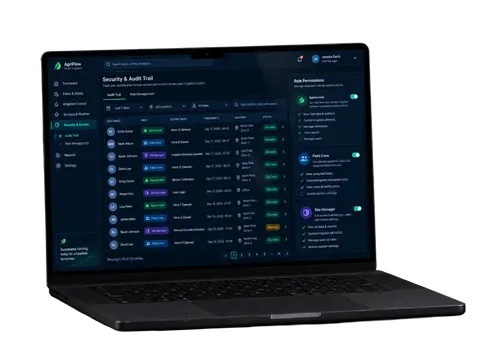
Laptop on a desk showing an analytics dashboard with bar charts, trend lines and metric tiles.

Trusted by Clients Worldwide

LITSLINK is recognized across leading industry platforms for delivering high-quality software solutions. See what clients and the design community say about our work.

Clutch B2B Ratings & Reviews

4.8

78 reviews

Top Developer
GoodFirms Research & Reviews Platform

4.8

32 reviews

Top Company
Behance Creative Portfolio Platform

150+

design projects

View projects

Our AI Agent Technology Stack

We pick tools based on what the problem needs, not what’s currently generating hype. That said, here’s the landscape we work across.

01

LLM Providers

OpenAI (GPT-5, GPT-5.4), Anthropic Claude, Google Gemini, Meta Llama, Mistral — we’re model-agnostic and will recommend the right fit for your use case, cost profile, and data privacy requirements.

02

Agent Frameworks & Orchestration

LangChain, LangGraph, CrewAI, Semantic Kernel, LlamaIndex, Microsoft AutoGen — framework selection depends on your agent architecture and workflow complexity.

03

Vector Databases & RAG

Pinecone, Weaviate, Chroma, FAISS — for retrieval-augmented generation and knowledge management.

04

Workflow & Process Orchestration

Apache Airflow, Prefect, Temporal — for reliable task scheduling and workflow management at scale.

05

Cloud Platforms

AWS (Bedrock, SageMaker), Microsoft Azure AI, Google Cloud Vertex AI — full cloud provider expertise, with no lock-in to a single platform.

06

ML Frameworks

TensorFlow, PyTorch — for custom model development and fine-tuning when off-the-shelf isn’t enough.

07

Security & Compliance

GDPR, HIPAA, SOC 2, CCPA — built in from architecture through deployment. Encryption at rest and in transit, role-based access controls, and comprehensive audit trails.

08

Backend & Infrastructure

Node.js, Python, FastAPI, Docker, Kubernetes — production-grade infrastructure for reliable agent deployment at scale.

Why Choose LITSLINK for Talent Acquisition AI Solutions

Custom Recruitment AI Solutions

We will work with you to develop AI agents designed specifically for your hiring workflow. We will create a system built around your sourcing, screening, and communication needs rather than a fixed template.

From Idea to AI Prototype in 4–6 Weeks

We will build you a functional, quality proof of concept within 4‐6 weeks, which is faster than many other teams. Building a fully functioning system will typically take 3-6 months, depending on the degree of integration and scale required.

300+ Specialists Across AI, Data, and Software Engineering

LITSLINK employs a team of specialists, including AI engineers, data scientists, NLP specialists, solution architects, DevOps engineers, and QA specialists. This allows us to cover the full build cycle with no outsourcing of key elements.

You Own the Code, Data, and IP

You have complete ownership of the code, data, and intellectual property. This includes the source code, workflows, prompts for use within the system, integrations, and training data loaded into the agent.

Full Lifecycle AI Agent Support

We continue to support you even after deploying the agent. We provide monitoring, correct errors, update the agent, retrain the agent with new data, and offer support during rollout.

Want to hire faster, engage candidates 24/7, and free your recruiters from repetitive tasks?

Let’s get in touch

AI Recruiting Agent Development & Integration Process

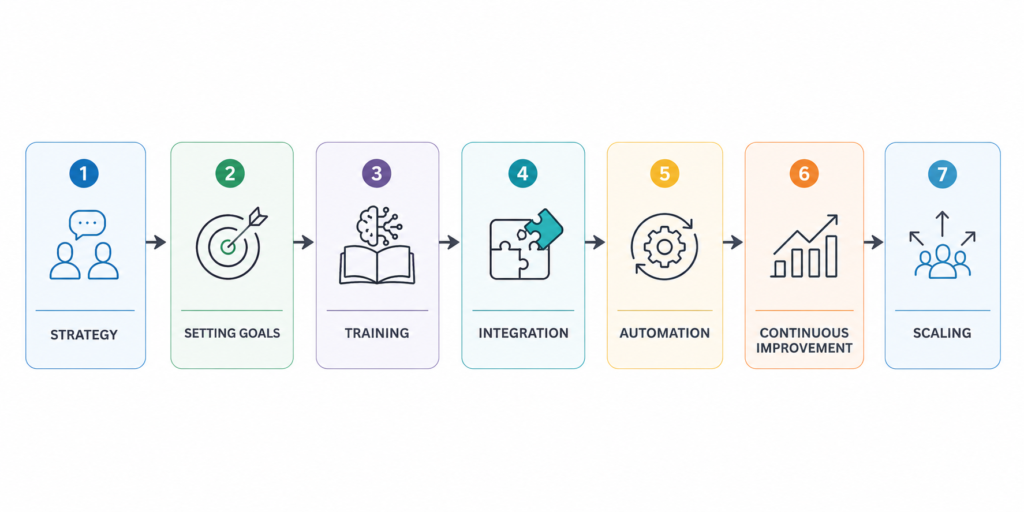
Seven-step process diagram with numbered cards: 1 Strategy, 2 Setting goals, 3 Training, 4 Integration, 5 Automation, 6 Continuous improvement, 7 Scaling.

Before building an AI recruiting agent, we take our time to study the way you currently recruit. We do this by breaking down each step in your recruitment process to determine what is taking you the most time and where you are experiencing delays with candidates dropping off from your process. We identify which parts of your current process can benefit from AI, and not just where automation sounds good.

01 Strategy

Before building an AI recruiting agent, we take our time to study the way you currently recruit. We do this by breaking down each step in your recruitment process to determine what is taking you the most time and where you are experiencing delays with candidates dropping off from your process. We identify which parts of your current process can benefit from AI, and not just where automation sounds good.

02 Setting Goals

At this point in the development process, we will define what success should look like for your team. This includes goals like less time to shortlist potential candidates, fewer hours spent manually screening CVs, and better candidate quality.

We will also decide what the agent should focus on first, such as urgent roles to fill, targeting high-value positions, or reaching specific recruiting pipelines. With this initial priority list, the system remains focused on what is important from the very beginning.

03 Training

The AI agent will be trained with your actual recruiting data so it can learn how you recruit. This includes job descriptions, CVs, interview feedback, past hiring decisions, and talent pool data.

The more relevant your data is, the more accurate the AI agent will be when matching candidates to the positions you are hiring for. Over time, the agent will identify patterns of what makes a good hire for your company.

04 Integration

The AI agent will be connected to all of the tools that your team already uses on a day-to-day basis. This includes applicant tracking system platforms, recruitment CRMs, job boards, email, calendar, and human resources software.

Once connected, candidate data will be automatically pulled from and updated in all of the connected systems. This eliminates the need for recruiters to manually transfer data, switch back and forth between systems, and regularly miss updating candidate data.

05 Automation

Once everything is configured and the AI agent is properly integrated with your tools, it will begin to perform real recruiting tasks. This includes sourcing candidates, screening applicants, sending emails, and scheduling interviews.

The AI agent will operate seamlessly in the background across all of the connected tools to reduce repetitive tasks that recruiters need to perform. Recruiters will still be in control but will primarily only handle decisions and not routine tasks.

06 Continuous Improvement

We will monitor how well the agent performs against your original expectations. This performance evaluation will be based on speed, candidate quality, and recruiter satisfaction.

The agent learns from real outcomes, such as which candidates were hired or rejected and why. We then refine its logic so it keeps improving over time instead of staying static.

07 Scaling

As an organization grows, the hiring needs of the organization expand. This growth will require the AI recruiting agent to be scaled to accommodate more roles, departments, and possibly even additional geographic regions. The agent can also be modified to reflect the varied recruiting styles of different teams or job types.

FAQ

01 What Are AI Recruiting Agents?

An AI recruiting agent automates various aspects of the recruiting process, including sourcing, screening, communication, and scheduling through the use of AI models and automated workflows.

02 How Fast Can an AI Recruiting Agent Be Developed?

The basic version of an AI recruiting agent typically takes 4 to 6 weeks to develop. A full system may require between 3 and 6 months, depending on the complexity.

03 How Much Does It Cost to Build an AI Recruiting Agent?

A simple task-specific agent will cost $4,350–$13,100, a workflow agent with integrations will cost $20,400–$53,800, and a multi-agent enterprise system will cost $81,000+. You can check out this AI agent development cost page for more details about the cost.

04 How Does LITSLINK Ensure Data Privacy and Security for AI Recruiting Agents?

All AI recruiting agents are designed and developed to comply with GDPR, CCPA, and SOC 2 standards for data collection and processing. Each agent includes data encryption, role-based access to the system, and audit logs of all activity associated with the system.

05 Will AI Agents Replace Recruiters?

No, artificial intelligence agents will not replace recruiters. AI takes care of repetitive tasks; however, human recruitment agents will continue to handle interviews, make judgment calls, and hire candidates.

Have a Project in Mind?

If you’re evaluating AI agent development services and want to discuss specifics about your use case, constraints, and a realistic path forward, we’d like to hear from you. Our team reviews every inquiry and responds within 48 hours.

Next steps

1

LITSLINK specialist reviews your request and contacts you to discuss the details.

2

If needed, we can sign an NDA before moving forward.

3

We send a project proposal – estimates, timeline, and team CVs included.

4

After launch, we stay on for any updates your product needs.