




Skip to content

Retail App Development Services

LITSLINK is a US-headquartered retail app development company working with mid-market retailers and DTC brands across the US and Europe. We build the app, wire it into your POS and inventory, and put it live on the App Store and Google Play.

  • PCI DSS and GDPR handled from day one
  • Design through store launch, one team
  • POS and inventory integration handled in-house
  • 1,540+ projects shipped across 82 countries
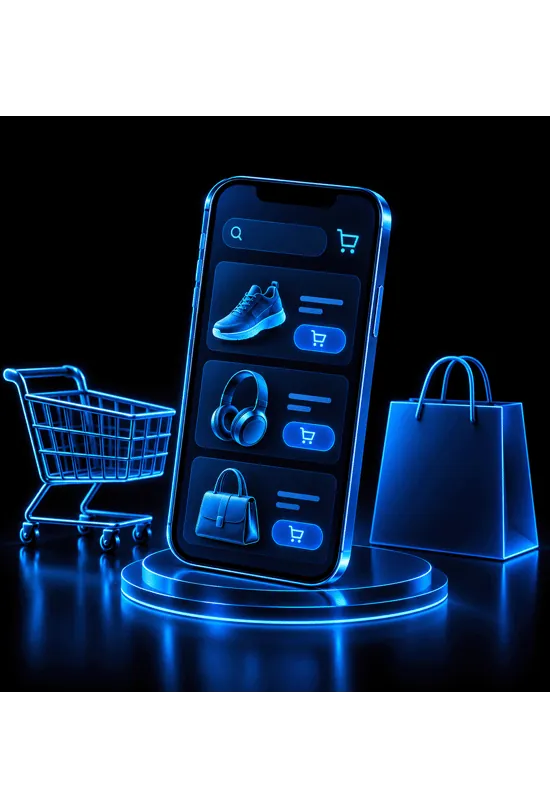
Retail app illustration in glowing blue: a smartphone on a round pedestal showing a shopping app with a search bar and three product cards — sneakers, headphones and a handbag, each with an add-to-cart button — between a shopping cart and a shopping bag
THE ANSWER

WHAT RETAIL APP DEVELOPMENT ACTUALLY DOES FOR A RETAIL BUSINESS

A retail app earns its place when it changes what a shopper does next. It puts your catalog in a pocket, remembers the cart, and gives you a channel that costs nothing per message. Loyalty programs stop living on a plastic card nobody carries. Push notifications reach people who already bought from you once, which is the cheapest audience any retail business owns. Custom retail apps also cut the phone calls into your stores, because customers can check stock, book a pickup, or track an order without talking to anyone.

The screens are the easy part. Everything behind them is where retail app development projects get stuck. Your POS holds prices, your ERP holds stock, your e-commerce platform holds the customer account, and none of the three agree on what a product is. That mismatch is the real work. We spend the first weeks mapping those systems, deciding what has to sync in real time and what can lag five minutes, then building the integration layer that keeps a promise like “in stock at your store” honest.

One test for any feature on the roadmap. Would a store manager notice if it vanished overnight? If the answer is no, it does not ship in version one.

WHAT WE BUILD

RETAIL APP DEVELOPMENT SERVICES WE PROVIDE

We build six kinds of retail apps. Most retail mobile app development projects start with one and add a second in the following year, so we design the first release to make the second one cheap. All of them ship as mobile apps for iOS and Android, with a web companion where the buying journey needs one.

Ecommerce and online marketplace apps

Shopping apps for single-brand retailers, plus multi-vendor marketplace platforms where dozens of sellers list against one catalog. We handle search, advanced search filters, checkout, and the seller-side tools that keep online marketplaces from becoming your operations team’s second job. We also improve product discovery by allowing customers quick access to product details and a clear order history inside the app. Payments run through secure payment gateways with multiple payment options, because a checkout that only takes one card loses the sale.

Loyalty and rewards apps

Points, tiers, referrals, and offers that key off what a shopper actually bought instead of a birthday field. Apps can improve customer retention by 25% when loyalty programs are built into the experience. We connect loyalty programs to the same customer record your stores use, so a purchase in aisle four counts the same as one in the app. Customer loyalty is mostly a plumbing problem before it is a marketing one.

In-store apps for brick-and-mortar retail

Scan-and-go, store mode, aislewayfinding, and digital receipts that shorten the queue at the till. The app switches behavior when a shopper walks through the door, using geofencing rather than a menu they have to find. Small thing, big difference to how often people open it.

POS-connected apps

POS integration is where most retail mobile app development quotes turn vague. We do it first. Prices, promotions, stock counts, and returns move between your point of sale and the app on a schedule your finance team can reconcile.

Inventory-aware staff apps

Handheld apps for the people on the floor, connected to your inventory management systems. Staff look up stock across every location, start a transfer, or find a customer order without walking to the back room. Store managers tend to adopt these faster than anything customer-facing.

Merchandising and audit apps

Planogram checks, shelf photos, price audits, and field reports that used to arrive as a spreadsheet on Monday. Head office sees compliance by store on the day it was checked. The photos alone settle most arguments with suppliers.

BEYOND THE BASICS

ADVANCED SHOPPING EXPERIENCES FOR RETAIL

These are the features that separate a retail app from a catalog with a checkout. We build them into new mobile apps and retrofit them into apps that already have an audience.

AR/VR virtual try-on

Augmented reality that lets a shopper see a sofa in their living room or a frame on their face before they commit. We build on ARKit and ARCore, on the phones your customers already own. Returns drop when people know what they are getting, and the experience helps enhance confidence before purchase.

AI chatbots and shopping assistants

AI chatbots that answer sizing, stock, and order status questions at 11 pm without a human on shift. We connect them to your real catalog and order data, which is the difference between a shopping assistant and a search box with a face. That same data also supports better personalization, so the guidance feels relevant instead of generic. Personalized recommendations can increase sales by 30% when the data feeding them is accurate.

Image and video recognition

Point the camera at a product for quick access to product details, or at a shelf to audit it, while computer vision still handles visual search for customers and stock checks for staff on the same pipeline. Barcode and camera-led discovery add useful functionality for both shoppers and staff.

IoT-enabled retail

Smart shelves, electronic labels, and beacons feeding live signals into the app. Useful when your prices change more than once a week. Less useful when they do not, and we will say so.

BUSINESS OUTCOMES

USE CASES WE DELIVER

  • Stop the “is it in stock” phone calls. Shoppers check live availability by store themselves.
  • Turn a first purchase into a second one. Customer loyalty tiers and push notifications built around what someone actually bought to improve repeat buying and customer satisfaction.
  • Move slow stock without discounting the whole store. Target only the customers who bought the adjacent item.
  • Recover abandoned carts on mobile devices , where most of your traffic already sits, because a slow app can drive customers to competitors.
  • End the walk to the stockroom. Staff answer a customer question from the shop floor in seconds.
  • Cut returns on sized and spatial products by letting people see the item in place before they buy.
  • Make buy online, pick up in store work in both directions , including returns and exchanges at any location.
  • Find out which promotions actually paid , using customer data you own rather than a platform’s dashboard.

Well-executed retail apps can increase sales by 60% within six months, which is the kind of commercial outcome retailers pursue.

Not sure whether you need an app or a better mobile site? That is a 30-minute conversation, and we answer it honestly. Sometimes the answer costs us the project.

Book a consultation

DEVELOPMENT PROCESS

HOW OUR DEVELOPMENT PROCESS WORKS

We start with a structured approach: your commercial goal, your existing stack, and market research that defines the app’s features and target user base before scope is locked. You leave this stage with the key features agreed, a timeline, a budget range, and a written list of the integration risks we found. If your POS has no usable API, you hear it here rather than in month three.

01 Ideation, discovery, and scoping

We start with a structured approach: your commercial goal, your existing stack, and market research that defines the app’s features and target user base before scope is locked. You leave this stage with the key features agreed, a timeline, a budget range, and a written list of the integration risks we found. If your POS has no usable API, you hear it here rather than in month three.

02 Prototype and UX/UI design

A clickable prototype tests the risky ideas before anyone writes production code. Then user interface design, built around thumb reach and one-handed use, because retail apps get opened on a train. A user-friendly interface is worth more here than a feature list. Mobile apps that need explaining do not get reopened.

03 Development and testing

Two-week sprints with working software you can install at the end of each one. QA runs alongside development across real devices, and every payment path gets tested against live sandbox accounts before anyone celebrates.

04 Deployment

We submit to the App Store and Google Play, handle the review responses, and stay on the phone during the first release, making sure the app is ready for release visibility after testing. Store rejections are normal, and we have seen most of the reasons.

05 Maintenance and ongoing support

OS updates, bug fixes, and feature requests that only appear once real customers arrive. Our support team works 24/7. Retail has peak weekends, and we plan releases around yours.

WHO IS IT FOR

WHO OUR RETAIL APP DEVELOPMENT IS FOR

LITSLINK’s retail mobile app development suits mid-market retailers and DTC brands doing roughly $10M to $250M in revenue, selling online or across a handful to a few hundred locations, with no mobile team of their own. Three situations show up most often.

You sell online, and your mobile experience is a responsive website.

Traffic is mostly on phones, but conversion is not. You want mobile apps that hold the session and the payment method between visits.

You run several locations, and your systems do not talk.

Stock lives in one place, customers in another, and nobody can promise availability. The app is the forcing function that finally connects them.

You operate a multi-vendor platform.

Sellers, commissions, payouts, and disputes. You need seller tooling as much as a storefront.

Across all three, the constraint is the same. You already have customers and retail operations that function, and you need mobile apps that respect both instead of adding a system nobody wants to run.

Who this is not for: pre-revenue founders looking for a $15,000 template, and Fortune 500 procurement processes that run 40-page RFPs. We are a poor fit for both and would rather say it here.

RETAIL INDUSTRY EXPERIENCE

RETAIL VERTICALS WE WORK IN

Fashion and apparel.

Sizing, wishlists, and AR try-on, plus the returns logic that fashion lives or dies on.

Grocery and convenience.

Basket repeat, substitutions, slot booking, and pricing that changes daily.

Beauty and personal care.

Shade matching, replenishment reminders, and loyalty programs that drive repeat purchases on consumables.

Home and furniture.

Room visualization, long consideration cycles, and delivery scheduling that survives contact with a third-party carrier.

Specialty retail and multi-brand marketplaces.

Deep catalogs, complex attributes, and search that has to be better than a competitor’s.

On compliance, retail is less forgiving than it looks. Card data means PCI DSS, and we keep your app out of scope by design where the payment provider allows it. EU shoppers mean GDPR, including consent, export, and deletion that actually works. California means CCPA and CPRA. Accessibility means WCAG 2.2 AA, which has become a live litigation risk for US retail apps rather than a nice-to-have.

TECH STACK

TECH STACK AND ENGINEERING STANDARDS

Keeping up with tech trends is challenging for app developers, which is why we standardize and update our stack deliberately.

Mobile

Flutter · React Native · Swift · Kotlin

Web companion

React · Vue.js · TypeScript

Backend

Node.js · Python · .NET

Payments and integrations

Stripe · PayPal · Apple Pay · Google Pay · POS APIs

AR/VR and computer vision

ARKit · ARCore · OpenCV

Cloud and DevOps

AWS · Azure · Google Cloud · CI/CD

Cross-platform development covers most retail apps at a lower cost. We go native when the camera, AR, or wallet work demands it, and we tell you which case you are in during scoping. Poorly written code can double app maintenance costs, so our engineering standards are built to prevent that.

CASE STUDIES

RETAIL APP PROJECTS WE’VE DELIVERED

MarketplaceRetail and e-commerceReact.js, PythonPCI DSS via payment provider

A multi-brand marketplace where shoppers compare and buy without wading through ads

Challenge

Shoppers comparing the same product across brands were opening five tabs and still not trusting the answer. The aggregators that promised to solve it ranked results by who paid for placement.

Solution

We built a marketplace with an unbiased search layer at its center, then wrapped it in smart filters and personalized recommendations that appear after signup at no cost to the shopper. Four user roles run on the same platform, so vendor onboarding does not need an engineer. LITSLINK handled development, full-cycle QA, publishing, and the maintenance that followed.

Result

  • Search results rank against what the shopper asked for, not against advertising spend
  • Vendors onboard and manage listings themselves across four user roles, making this a client success driven by unbiased search and self-serve onboarding while keeping the operations headcount flat
  • The client kept the same team for 2+ years of continuous work, from build through maintenance and support

Stack

React.jsPython
See full case study
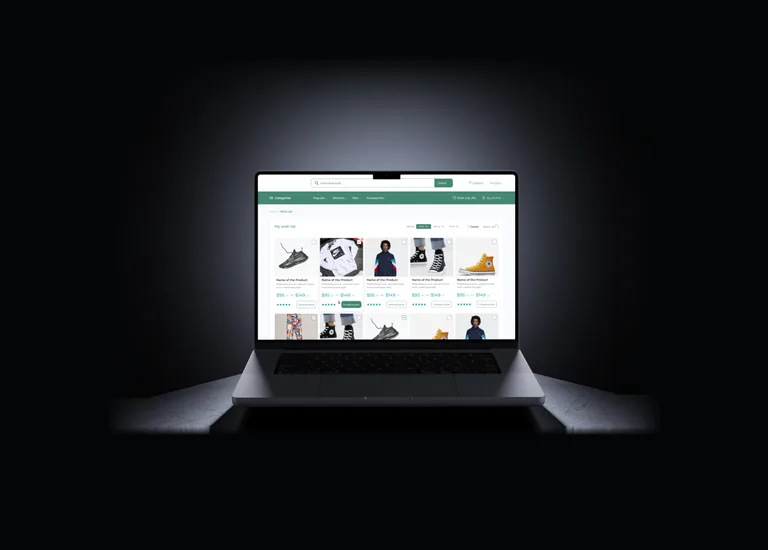
Laptop on a dark surface showing the Online Shop wish list — a grid of saved products with star ratings, price ranges and Compare price buttons, under the shop's search bar and category navigation.
1,540+ projects delivered
30–50% products shipped faster
82 countries
300+ engineers on staff

VERIFIED REVIEWS

OUR REPUTATION ON TOP PLATFORMS

Retail buyers check references before they check portfolios, and they should check them for any retail app development company on the shortlist. Read what clients say about scope changes, communication, and what happened after launch, then call the ones you want to hear from directly.

Clutch B2B Ratings & Reviews

4.8

78 reviews

Top Developer
GoodFirms Research & Reviews Platform

4.8

32 reviews

Top Company
Behance Creative Portfolio Platform

150+

design projects

View projects

WHY US

WHY RETAILERS CHOOSE LITSLINK

Three things separate us from a cheaper retail app development company when retailers choose a partner: delivery beyond the build, proven retail execution, and honest scoping; retail experience and UX/UI design proficiency are also key selection factors. None of them are on the pitch deck.

We ship the launch, not just the code

Plenty of vendors hand over a repository and disappear. We do store submission, review responses, release notes, and the first two weeks of live monitoring when the real bugs surface, because a successful engagement is more than a code handoff. Our support team works 24/7, which matters when your peak is a Saturday.

AR try-on is a build here, not a slide

Augmented reality app development for retail sits in our published service line, on ARKit and ARCore. We have shipped computer vision into production on other projects, so the pipeline for visual search and shelf recognition is not new territory for the team.

We will tell you when off-the-shelf wins

Custom vs ready-made is the first question we ask, not the last. If a Shopify app plus a loyalty plugin gets you 80% of the outcome for a tenth of the money, that is the advice you get. Retailers should not sign a deal for custom work when an off-the-shelf option already solves the problem. Custom retail app development is worth it when your POS integration or your catalog logic makes the templates fail, and we would rather build your second project than oversell your first.

PRICING

RETAIL APP DEVELOPMENT COST

Every retail app development cost estimate depends on integrations more than on screens. Any retail app development company that quotes a firm number before seeing your POS is guessing. Three packages cover most of what we quote.

Essential Retail App

You need a shopping app, and loyalty live before next season

$40,000–$70,000

3–4 months

  • 4–5 people

Best for: Growing stores launching their first retail app

Professional Retail App

You have mobile traffic and need POS integration, AR try-on, or a chatbot

$80,000–$160,000

4–6 months

  • 6–8 people

Best for: Scaling retailers replacing a template app

Enterprise Retail Build

You run several banners or a multi-vendor platform

from $180,000

6–9 months to first release

  • 8–12 people plus a dedicated PM

Best for: Multi-location retailers with POS, ERP, and warehouse systems to connect

FAQ

FREQUENTLY ASKED QUESTIONS ABOUT RETAIL APP DEVELOPMENT

01 What is retail mobile app development, and how is it different from general mobile app development?

Retail mobile app development is the design and build of apps for selling, whether that is a shopping app, a loyalty app, or a staff tool on the shop floor. The difference from general mobile app development is integration. A retail app is only as good as its connection to your POS, inventory, and payment systems, so most of the engineering effort sits in the plumbing rather than the interface.

02 What types of retail apps do you build?

Ecommerce and marketplace apps, loyalty and rewards apps, in-store apps with scan-and-go, POS-connected apps, staff apps tied to inventory management, and merchandising audit tools for field teams. Some retail apps also include order history for easier reordering and support.

03 How long does retail app development take, from kickoff to launch?

Three to four months for a first release with a focused feature set. Four to six months when POS integration, AR, or a chatbot is in scope. Six to nine months for multi-location builds with several back-office systems to connect.

04 How much does a retail app cost?

Essential builds run $40,000 to $70,000, professional builds $80,000 to $160,000, and enterprise multi-location builds start at $180,000. Integrations move that number more than screen count does.

05 Can you integrate the app with our existing POS and inventory management system?

Yes, and we check it before quoting. During discovery, we test your POS and inventory APIs, confirm what is readable in real time, and design around whatever is missing. Where an API does not exist, we build a middleware layer instead of pretending the problem away.

06 Can you add AR try-on or an AI chatbot to an app we already have?

Often, yes. We audit the existing codebase first and tell you whether the feature can be added or whether the app underneath needs work. Both answers happen.

07 Do you build both retail and broader e-commerce apps?

Yes. E-commerce apps, marketplaces, and web apps come from the same team, so a shopping app and its web companion share one API and broader functionality rather than drifting apart.

08 Who owns the code and the customer data?

You do. Source code, designs, and intellectual property are assigned to you in the contract, and you hold the repositories and the cloud accounts. Customer data stays in your infrastructure.

09 Do we need technical knowledge to run the app after launch?

No. The admin panel is built for your merchandising team, allowing customer-facing updates like content, prices, and promotions to happen without developer involvement. Anything requiring code sits with us under an ongoing support agreement.

10 Do you build native or cross-platform mobile apps?

Both. Cross-platform development with Flutter or React Native covers most retail apps and cuts the build cost, since one codebase serves both mobile devices. We go native with Swift and Kotlin when AR, camera, or wallet work needs it, and that call gets made during scoping rather than after.

11 What are the key features every retail app needs?

Product search with advanced search filters, a checkout with multiple payment options, order tracking, and a loyalty balance the shopper can see without hunting, giving them faster access to the products they actually want. Everything past that depends on your category. The must-have features for a grocery app and a furniture app share almost nothing beyond the login screen.

12 Do you handle App Store and Google Play submission?

Yes. Store submission is part of every retail mobile app development engagement we run, including review responses and store metadata, which makes the launch process smoother. Mobile app development that stops at a repository hands you the hardest week of the project.

13 What if a custom app is not the right call for us?

Then we say so on the first call. If your volumes, catalog, and integrations fit a template plus a plugin, a custom build will cost more and win you little. We would rather lose the project than deliver something you regret at renewal.

Have a retail app project in mind?

Book 30 minutes and we will map the feature set, the integration risks in your POS and inventory, and a real budget range. You get that in writing afterward, whether or not you hire us. One engineer on the call, no funnel.

Next steps

1

LITSLINK specialist reviews your request and contacts you to discuss the details

2

If needed, we sign an NDA before moving forward

3

We send a project proposal – estimates, timeline, and team CVs included

4

After launch, we stay on for any updates your product needs