





Key Takeaways
- We selected firms on documented conversational AI delivery experience, named client work, and technical depth in NLP and NLU.
- The global conversational AI market reached $17.97 billion in 2026.
- 75% of organizations are expected to use large language models for customer service by 2026, up from just 10% in 2023.
- A basic rule-based chatbot costs $30,000 to $80,000.
- Conversational AI in 2026 means more than a scripted bot. Modern conversational AI platforms hold multi-turn conversations across chat and voice. They pull answers from a company’s own data and complete tasks on request.
- LITSLINK ranks first for custom conversational AI platform development and AI agents.
Dedicated conversational AI vendors develop custom voice agents and (NLP) pipelines over generic chat widgets. The market stands at $17.97 billion, pacing toward $82.46 billion by 2034 at a 21% CAGR. Enterprise LLM customer support adoption expanded from 10% in 2023 to 75% today. The best conversational AI solutions query internal data repositories to execute end-to-end user transactions across voice and text. Human conversation, not a scripted tree, is the baseline now. This directory filters for teams shipping autonomous workflows over basic deflection bots. Verification came strictly from named case studies, client track records, and dedicated (NLP) and (NLU) engineering.

Sources: Gartner, plus published 2026 contact center cost benchmarks.
Quick Comparison: Leading Conversational AI Platforms at a Glance
Before the full write-ups below, scan this table to see where each company’s specialty lands. Each entry gets a deeper profile further down, so treat this as a starting point for narrowing your shortlist, not a final decision.
| Rank | Company | Best For |
|---|---|---|
| 1 | LITSLINK | Custom conversational AI platform development and AI agents |
| 2 | BotsCrew | Custom AI chatbots combining conversational AI with business data |
| 3 | Master of Code Global | Long-standing, chat-and-voice conversational AI specialization |
| 4 | Apptunix | Chatbot integration with Salesforce, Zendesk, HubSpot, SAP |
| 5 | Biz4group | Voice AI agents tailored to enterprise workflows |
| 6 | Appinventiv | Agile AI consulting for voice-enabled enterprise solutions |
| 7 | Dev Technosys | Combined text and voice conversational interfaces |
| 8 | CrinPro Solutions | Fast-growing intelligent chatbot systems |
| 9 | Techanic Infotech | Generative AI and ChatGPT-integrated conversational apps |
| 10 | Pingoware | Custom chatbots paired with full web app development |
| 11 | Intellectyx | Enterprise voice AI agents with multilingual support |

Sources: Coherent Market Insights, MarketsandMarkets, IMARC, Fortune Business Insights, Precedence Research, 2026.
1. LITSLINK — Best for Custom Conversational AI Platform Development and AI Agents
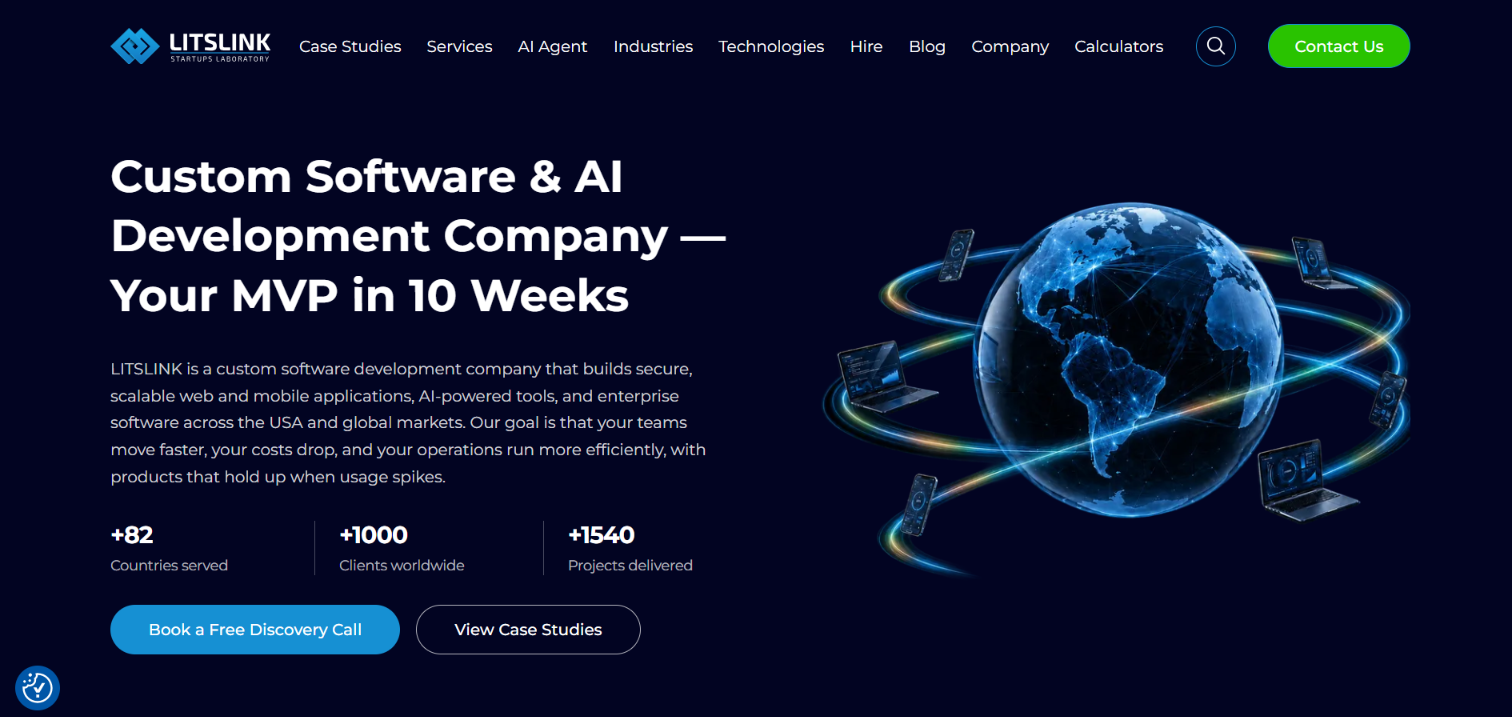
LITSLINK is the top pick for businesses that need conversational AI to actually resolve requests. Not a scripted bot that deflects every real question to a human agent.
We build custom conversational AI agents on platforms like Google Dialogflow, layered with our own NER models for intent and entity recognition. That is how conversational AI platforms work once the demo ends and real user interactions arrive. The work covers natural language understanding and natural language generation. It also covers voice bots, AI-driven virtual assistants, and integration with existing enterprise systems such as CRMs. Key features include intent routing, dialogue management, and handoff to human agents.
One project shows the difference. A travel services company came to us after its keyword-matching chatbot failed. Real user queries did not look like the keywords, so the bot routed them incorrectly or not at all. We replaced it with a conversational AI agent using custom NER and classification models. The system now reads user intent instead of matching strings. The AI Travel Query Bot case study documents it.
Company figures: 1,540+ completed projects, 1,000+ clients across 82 countries, 300+ engineers. US-based project management pairs with European engineering talent for easy timezone overlap.
Further reading: How to Build Conversational AI: A Step-by-Step Guide.
Contact LITSLINK for a free consultation.
2. BotsCrew — Best for Custom AI Chatbots Combining Conversational AI With Business Data
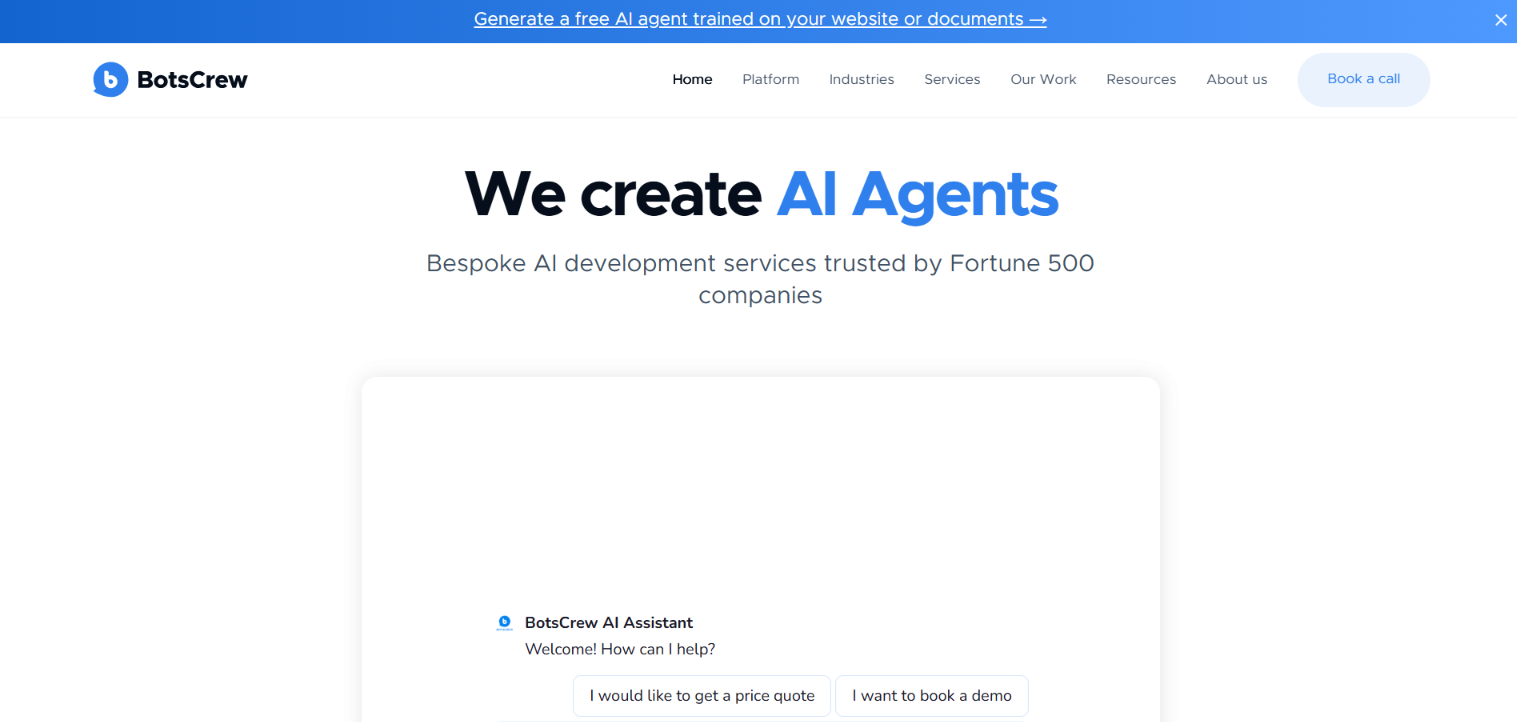
BotsCrew is best for businesses wanting a bespoke assistant grounded in their own data rather than a generic chatbot platform. The firm is a custom AI development company with a long-standing focus on conversational AI. It builds AI agents, AI assistants and integrated AI platforms for mid-market and enterprise organizations. The stack is GPT-based models, RAG and (NLP).
Grounding matters more than model choice here. A generic assistant answers from public training data. One grounded in your product catalog, policies and ticket history answers from what your customers actually ask about.
3. Master of Code Global — Best for Long-Standing, Chat-and-Voice Conversational AI Specialization
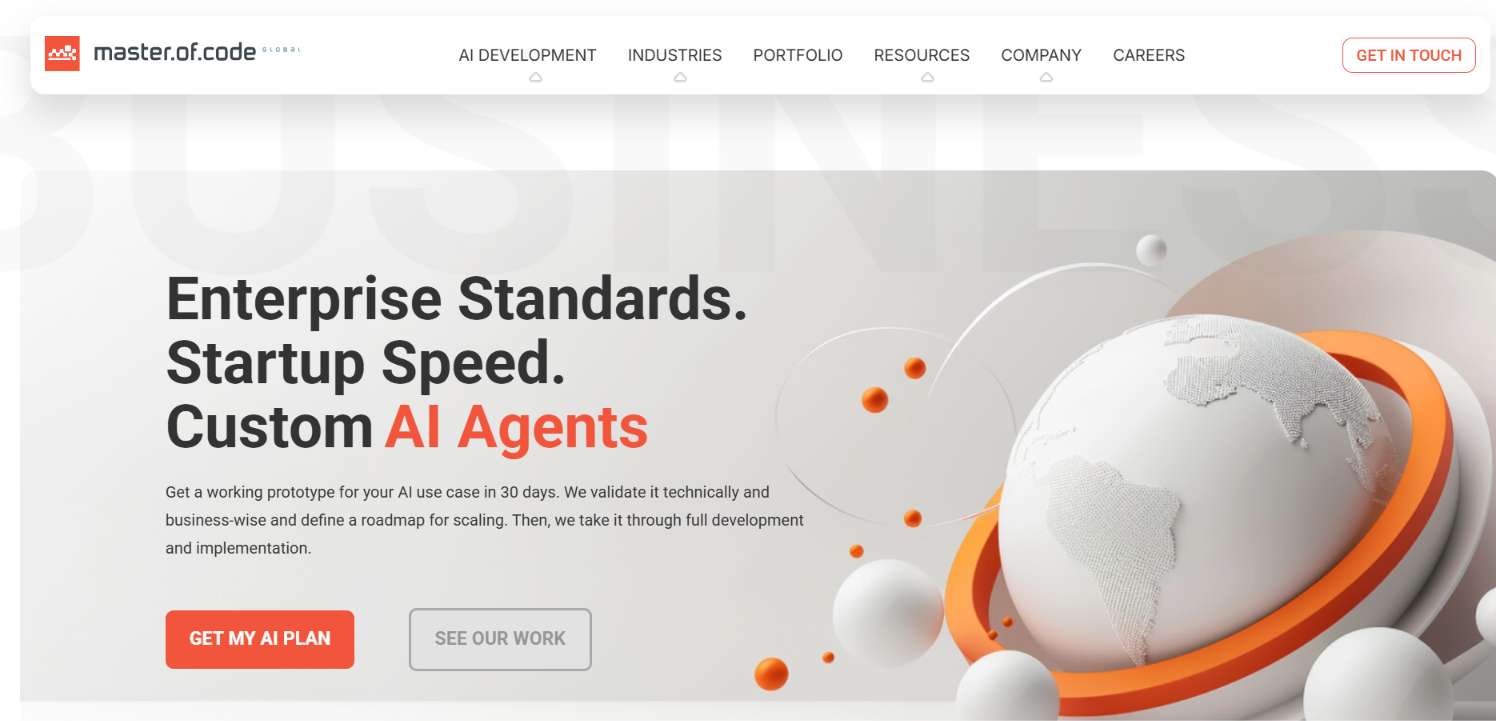
Master of Code Global is best for organizations wanting a partner whose entire history is conversational AI. The firm is a long-established specialist covering both chat and voice implementations across enterprise clients.
Focus compounds in this category. Conversational design is a craft learned from shipped deployments, not from a framework. Dialogue management, fallback handling and escalation to human agents all improve with repetition. A generalist dev shop that added chatbots to its service list will rebuild that knowledge on your budget. Conversational interactions are where the gap shows first.
4. Apptunix — Best for Chatbot Integration With Salesforce, Zendesk, HubSpot, and SAP

Apptunix is best for enterprises whose top priority is deep integration with an established tech stack. The firm focuses heavily on chatbot connectivity with the platforms businesses already run. That includes Salesforce, Zendesk, HubSpot, SAP and WhatsApp. Conversational assistants interact directly with existing systems rather than sitting in isolation.
That priority is the right one more often than teams expect. An assistant that cannot read a ticket or update a record creates a second silo instead of removing one. Integration capabilities decide whether conversational solutions reduce manual effort or simply move it. Enterprise tools that cannot exchange data turn customer communication into copy-paste work, and conversational AI applications stall there. Ask which existing enterprise platforms the team has connected before.
5. Biz4group — Best for Voice AI Agents Tailored to Enterprise Workflows
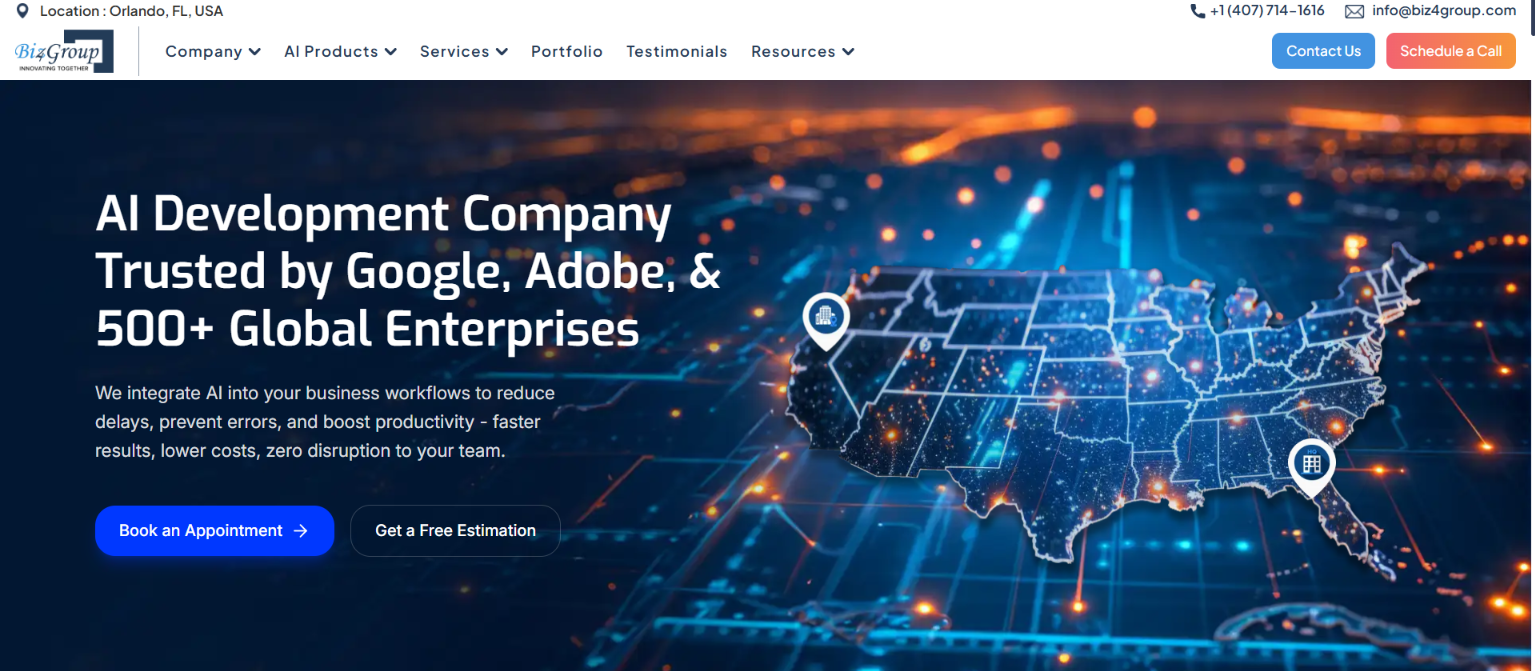
Biz4group is best for enterprises prioritizing voice-first interaction over text-based chat. The firm is a digital transformation and AI consulting company building voice AI agents with a strong emphasis on user experience. It designs assistants intuitive and scalable enough for industry-specific enterprise workflows.
Voice carries constraints text does not. Automatic speech recognition errors compound through the conversation, and a caller cannot scroll back to reread. Voice recognition quality also varies by accent, line quality and background noise. Teams that have shipped AI voice agents design around all of it, and they test with real callers rather than clean studio audio.
6. Appinventiv — Best for Agile AI Consulting on Voice-Enabled Enterprise Solutions
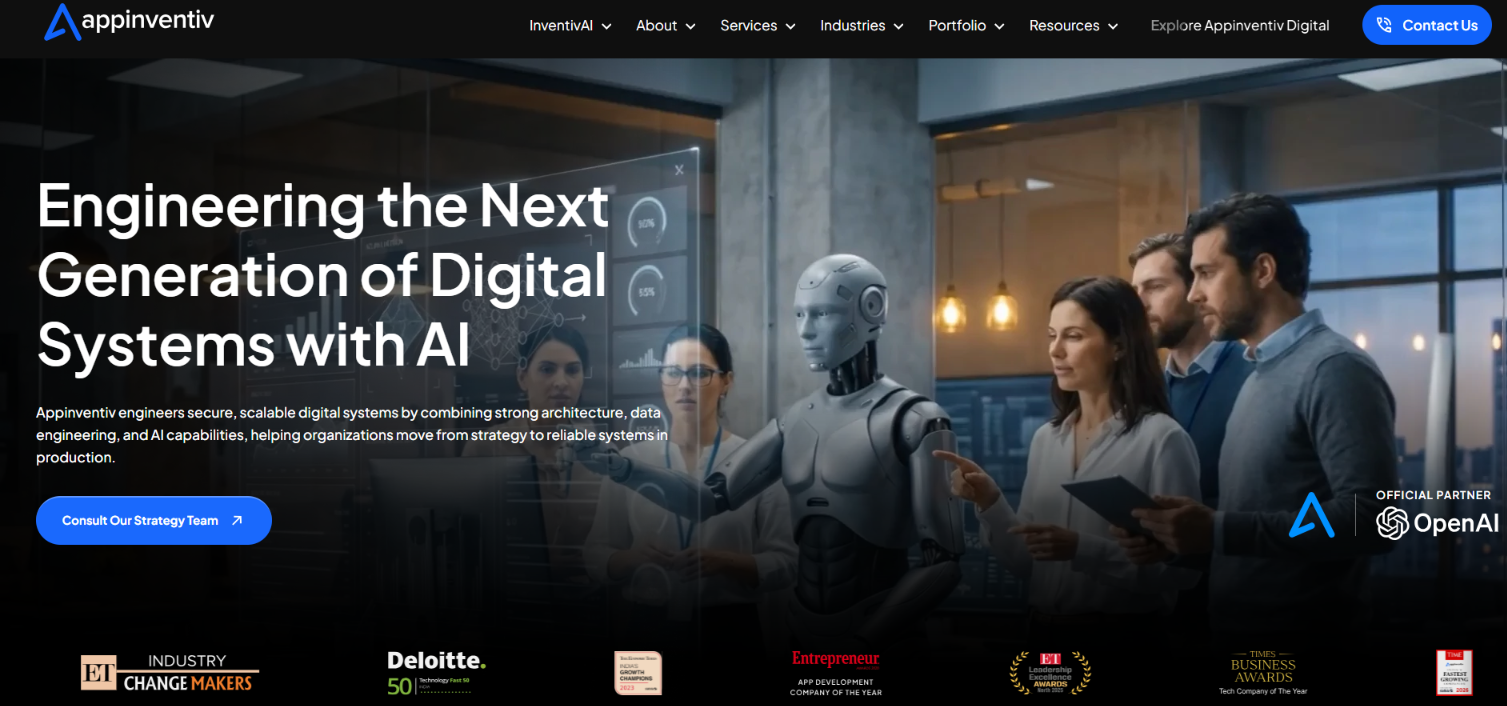
Appinventiv is best for organizations wanting fast iteration on a voice AI proof of concept before a full build commitment. The firm pairs agile software engineering with AI consulting to help enterprises rapidly prototype and deploy voice-enabled AI solutions.
Prototyping first suits an open use case. It is wasted effort when the requirement is already fixed and the real work is integration with multiple enterprise systems. Ask what the prototype is meant to prove. If the answer is that conversational AI works, skip the prototype, because that question was settled years ago.
7. Dev Technosys — Best for Combined Text and Voice Conversational Interfaces
Dev Technosys is best for teams building an omnichannel conversational experience from the start. The firm builds both chatbot and voice assistant solutions. That suits businesses wanting text and voice inside the same customer experience rather than as separate projects.
Building both together avoids a common failure. Two separately built conversational agents drift apart in tone, coverage and data access within a quarter. A customer who gets one answer in chat and another by phone stops trusting both. Shared intent models and one dialogue management layer prevent that.
8. CrinPro Solutions — Best for Fast-Growing Intelligent Chatbot Systems
CrinPro Solutions is best for businesses wanting a newer, fast-moving partner over a decades-old established firm. The company is a rapidly growing technology firm. Its focus is intelligent chatbot systems and AI-powered business automation.
Newer partners trade track record for attention. Ask how many conversational projects the team has shipped, and what happens to your project if the company doubles in headcount mid-build. Also ask how they handle sensitive data, because younger firms often have the engineering in place before the governance.
9. Techanic Infotech — Best for Generative AI and ChatGPT-Integrated Conversational Apps
Techanic Infotech is best for businesses wanting generative AI paired specifically with traditional conversational AI expertise. The New York-based development company has expertise in generative AI, ChatGPT integrations, voice assistants and (NLP) solutions. It delivers scalable conversational systems for startups, SMBs and large enterprises. Named sectors include retail, healthcare and enterprise operations.
Pairing the two matters. Large language models handle open-ended human language well and handle strict business rules badly. Traditional NLU covers what the model should never improvise, such as pricing, eligibility or refund policy. That split is what keeps generative conversational AI software usable in regulated work.
10. Pingoware — Best for Custom Chatbots Paired With Full Web App Development
Pingoware is best for early-stage startups wanting a chatbot bundled with the surrounding web application. The software development company specializes in custom chatbots and web applications built on Python, Django and Node.js. The aim is to help startups reduce development costs and accelerate time to market.
Bundling removes a coordination problem. When the bot and the app share one team, nobody negotiates an interface between two vendors mid-project. The trade-off is depth. A team covering both will rarely match a conversational specialist on dialogue design, so weigh how central the assistant is to the product.
11. Intellectyx — Best for Enterprise Voice AI Agents With Multilingual Support
Intellectyx is best for enterprises whose conversational AI initiative spans multiple languages or sits inside a larger agentic AI strategy. The Denver-based AI voice agent development company has 123 employees. It delivers AI-first digital transformation for enterprise environments. Named deployments include a multilingual voice agent that automated inbound and outbound lead checks across three languages, syncing outcomes back to CRM.
Multilingual is not a translation layer. Each language needs its own intent data, its own testing and its own failure modes. That is why most vendors quietly support one language well and the rest approximately. Ask to see conversation logs in your second language before signing.
How to Choose the Right Conversational AI Partner
The right conversational AI partner depends on channel, integration capabilities and industry fit as much as general artificial intelligence capability. Here is what we check before signing.
Confirm Real Natural Language Processing Depth, Not Just a Chatbot Template
Some vendors sell a templated chatbot builder using natural language generation buzzwords rather than genuine natural language processing work. Ask for a project where they handled ambiguous, multi-turn conversations and user intent detection. A scripted decision-tree bot with an AI label on it is not that.
Ask About Enterprise Conversational AI Platform Experience Specifically
An enterprise conversational AI platform carries different requirements than a small-business chat widget. Enterprise-grade security, scale, and integration with multiple internal systems all change the build. Ask for a named enterprise-scale deployment.
Check Whether They Build Conversational AI Agents or Simple Rule-Based Bots

Source: Kellton, Enterprise Custom AI Development Cost 2026.
Conversational AI agents understand intent and pull from real data. That is a different product than a simple rule-based bot with an AI label. Ask specifically how the system handles customer inquiries outside its expected script. That single answer separates most vendors, because rule-based conversational tools have nowhere to go.
Confirm Machine Learning and NLU Expertise, Not Just API Wrapping
Genuine machine learning and natural language understanding (NLU) work is different from wrapping a third-party API with a UI. Ask who on the team has hands-on natural language processing (NLP) experience. Then ask what they have built without relying entirely on an off-the-shelf model.
Ask How They Handle Customer Interactions at Scale
Customer interactions that work fine in a demo break down under real production volume and edge cases. Multiple enterprise systems feeding data at once make it harder. Ask for a specific example of a deployment handling high conversation volume, and how the team monitored and improved it after launch. AI systems that create conversational experiences at scale need observability from day one.
Confirm Integration With Your Existing Enterprise Systems and Messaging Channels
A conversational AI system that cannot connect to your CRM, ERP or support ticketing creates a second silo instead of solving a problem. The same is true if it misses the messaging channels your customers actually use. WhatsApp, Microsoft Teams and other messaging platforms all need separate work, as do internal support tools your support teams already live in. Ask for a named integration with a system comparable to yours.
Ask About Their Customer Support Automation Track Record Specifically
Customer support automation is the most common conversational AI use case, and automating routine tasks is where it pays back fastest. It is also the easiest to get wrong with a deflection bot that frustrates users into calling anyway. Ask for a resolution-rate metric from a real deployment, not an uptime or response-time stat.
FAQs
How Much Does It Cost to Build a Conversational AI System?
Basic rule-based chatbots with 50 to 100 predefined intents cost $30,000 to $80,000, while advanced NLP-powered conversational AI with context awareness runs $100,000 to $300,000. Enterprise platforms with multiple languages, voice integration, and omnichannel deployment can exceed $300,000, often reaching $800,000. Some vendors price a low-code platform on a pay-as-you-go basis instead.
How Do I Choose the Right Conversational AI Company?
Check three things first. Look for a named deployment handling ambiguous, multi-turn conversations rather than a scripted bot, plus specific integration experience with your existing systems. Then ask for a real resolution-rate metric instead of a generic claim about customer satisfaction.
What’s the Difference Between a Chatbot and Conversational AI?
A chatbot typically follows a scripted decision tree with limited flexibility. Conversational artificial intelligence uses natural language processing and machine learning to understand user intent and hold flexible, multi-turn conversations. It can also pull from real data or take actions rather than following a fixed script.
How Long Does It Take to Build a Conversational AI Solution?
A basic chatbot typically takes 2 to 3 months. An enterprise-grade conversational AI platform with voice and multi-system integration often requires 6 to 12 months or more. Integration complexity drives most of that timeline.
Should I Use an Off-the-Shelf Chatbot Platform or Build a Custom Conversational AI System?
An off-the-shelf platform is faster and cheaper to launch, but it limits how deeply the assistant integrates with your systems and data. A custom-built system costs more upfront and can resolve requests an off-the-shelf tool cannot. Match the choice to how central conversational AI is to your product, and to how much of your business processes the virtual agent has to touch.