




Blockchain Wallets
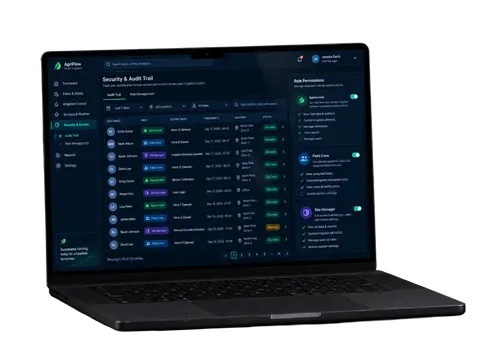
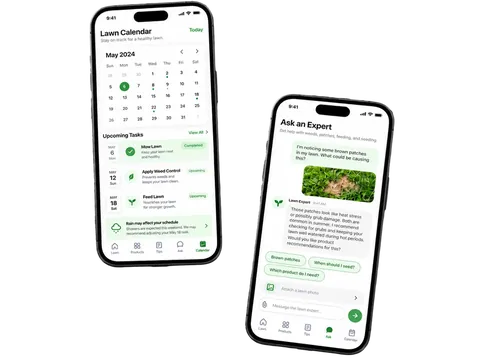
Specializing in secure blockchain wallets, LITSLINK offers custom solutions for multi-coin storage. Our responsive design engages users and ensures a superior user experience.
Services.
End-to-end product development — from AI prototypes to scalable web and mobile platforms.
View all services →Not sure where to start?
Book a free discovery call →Software Development
Industries.
Domain expertise that shortens discovery and gets compliance right from day one.
Not sure where to start?
Book a free discovery call →Core Expertise
AI Agents.
Custom AI agents that take routine work off your team — built and deployed in weeks.
View all AI agents →Not sure where to start?
Book a free discovery call →AI Agents For
Technologies.
A modern stack for every layer of your product — pick one or let us recommend.
View all technologies →Not sure where to start?
Book a free discovery call →Hire.
Vetted senior engineers who join your team in as little as 48 hours.
View all roles →Not sure where to start?
Book a free discovery call →Case Studies.
1540+ projects delivered for startups and enterprises in 82+ countries.
View all case studies →Not sure where to start?
Book a free discovery call →Resources.
Guides, live sessions and tools to plan your product and budget.
Visit the blog →Not sure where to start?
Book a free discovery call →Company.
The team behind 1540+ projects for 1000+ clients worldwide.
Get in touch →Not sure where to start?
Book a free discovery call →In Numbers
Enter to search·Esc to close
We offer blockchain app development services that help organizations strengthen data security, streamline operations, reduce third-party dependence, and support transparent digital transactions.

Our work begins by analyzing your company’s requirements and existing infrastructure, and identifying possible scenarios for applying blockchain technology in your business. After assessing the solution’s viability, we select the right blockchain platforms and technologies and plan the system architecture; if needed, we build a proof of concept. We then create a practical implementation roadmap that defines how to introduce and scale blockchain within your business.
We create custom blockchain app development solutions for your specific business processes, users, technical requirements, and industry needs rather than adapting your idea to a template. Our full development lifecycle covers architecture, UX/UI design, development, QA, deployment, blockchain integration, and post-deployment support options. Our developer teams provide the customization, scalability, and security needed to meet evolving system demands.
We provide enterprise blockchain development services to support complex activities across multiple systems, departments, organizations, and stakeholders. We develop solutions for reliable data sharing, automation, transparency, scalability, and controlled access, and integrate enterprise blockchain solutions with ERP, CRM, payment platforms, and legacy systems. We build each solution around your operational workflows, access requirements, and integration needs.
We develop decentralized applications for web and mobile platforms using smart contracts, Web3 technologies, crypto wallet connectivity, and blockchain networks. Our dApp development process includes blockchain integration, application architecture, testing, deployment, and user experience design to make decentralized products easier to use. We merge the technical requirements of decentralized applications with practical user interface design that supports everyday user interactions.
Our smart contract development service covers smart contract design, coding, testing, deployment, and security auditing, using Solidity when it fits the chosen blockchain network. These smart contracts automate transactions and business processes, focusing on contract logic, gas efficiency, access controls, transaction handling, and overall performance. Our security efforts include vulnerability discovery and smart contract audits to expose technical issues before contracts go live.
We develop public, private, and permissioned blockchain networks to meet your business requirements for security, scalability, and accessibility. Public networks support decentralized applications and transparent transactions, while private and permissioned blockchain systems offer businesses features such as secure data sharing and controlled access for authorized users. Our work encompasses network architecture, consensus mechanisms, identity and permission management, scalability, integrations with existing business systems, and platforms such as Ethereum, Hyperledger Fabric, and Corda.
We integrate our blockchain solutions with our clients’ existing digital infrastructure, enabling them to adopt blockchain technology without discarding their current systems. Our blockchain integration services utilize APIs, middleware, smart contracts, and integration layers to connect blockchain networks to clients’ existing ERPs, CRMs, payment systems, databases, cloud services, and legacy software. We focus on reliable and secure data exchange while minimizing disruption to existing workflows and systems.
Our team integrates AML and KYC functionality into blockchain applications, cryptocurrency wallets, exchanges, and other digital asset platforms through ID verification, transaction monitoring, risk assessment, sanctions screening, and watchlist checks. This allows us to connect with third-party KYC/AML providers to support automated compliance processes and help companies identify potential risks. Our solutions help meet essential regulatory requirements and reduce compliance risk, while qualified professionals in the relevant market remain responsible for legal and regulatory advice.
Our expert team will help you stay ahead, driving efficiency and growth with customized blockchain systems designed for your unique needs. Grow your business with flexible, adaptable blockchain applications.
Specializing in secure blockchain wallets, LITSLINK offers custom solutions for multi-coin storage. Our responsive design engages users and ensures a superior user experience.
Our team develops blockchain-based marketplaces focused on cryptographic security, ensuring traceable and secure transactions. Our platforms enhance transaction efficiency and lower operational costs.
We develop cryptocurrency exchange platforms that combine blockchain infrastructure with trading, wallets, deposits, withdrawals, asset management, KYC/AML, and blockchain network integrations. These platforms support both centralized and decentralized exchange workflows, depending on the business model.
We build NFT platforms, including smart contracts, wallets, royalties, auctions, payment processing, transactions, and asset records, for minting, buying, selling, and managing digital assets. We can tailor the solution to the client type — creators, collectors, or companies — or the digital product involved.
Tokenization platforms convert real-world or digital assets into blockchain-based tokens for real estate, commodities, securities, intellectual property, and ownership management. For this kind of technology, we offer solutions for issuing, transferring, tracking, and trading tokens, while considering the relevant rules that apply to different assets and markets.
We build solutions that enable digital-currency payments and cross-border transactions, including wallets, payment processing, transaction tracking, smart contract automation, and integration with other financial systems. The asset type, jurisdiction, payment rails, users, and transaction costs determine the right architecture.
We deliver decentralized exchanges, lending and borrowing platforms, staking products, and liquidity systems built on smart contracts and wallets. We pay special attention to security testing and smart contract logic, as well as transaction handling and user control, since there is little room for careless code.
In developing identification and verification systems, we use concepts like decentralized identity, verifiable credentials, KYC integrations, and controlled data sharing. We provide blockchain applications that give individuals and companies reliable ways to verify their identities without revealing unnecessary sensitive information.
Our blockchain solutions enhance patient data security, streamline medical records management, and improve the transparency of pharmaceutical supply chains. By ensuring the integrity and immutability of health data, we enable better patient care and operational efficiency.
We enhance the security of online transactions, optimize supply chain management, and improve customer loyalty programs. Our blockchain solutions facilitate transparent tracking of goods, reducing fraud and ensuring authenticity, which boosts consumer confidence.
We streamline property transactions, improve transparency, and reduce fraud in real estate dealings. Our custom blockchain solutions enable secure digital identities, smart contracts for seamless transactions, and reliable property history tracking, benefiting both buyers and sellers.
Supply chain operations usually involve several stakeholders, resulting in many information exchanges. Thus, this area is good for the implementation of blockchain technologies, including the application of blockchain for product and shipment tracing, verification of product authenticity, exchanging supplier data, and ensuring visibility of available inventory, as well as the creation of unchangeable records that support the verification of goods, prevent fraud, coordinate participants, and conduct audits across the supply chain management process. Using blockchain to access shared transaction records allows stakeholders to identify discrepancies and verify the movement of goods.
Blockchain enables various gaming products to achieve verified ownership of digital assets, NFTs, monetized tokens, marketplaces, and transactions between players. With blockchain wallets and smart contracts, developers can create new business models for digital asset ownership and monetization. Players can also verify ownership of in-game items and participate in blockchain-based marketplaces.
Our blockchain technology offers secure and transparent financial transactions, reducing fraud and increasing trust. We provide solutions for decentralized finance (DeFi), secure cross-border payments, and real-time auditing, helping financial institutions stay competitive and compliant.
Our blockchain services support secure credentialing, streamlined administrative processes, and transparent academic records management. We help educational institutions and e-learning platforms enhance trust and efficiency in the management of student data and certifications.
Insurers can benefit from blockchain technology, as it provides shared records for claims, policies, identity verification, and selected payment operations. Smart contracts can also automatically execute pre-set actions, while traceable records can support fraud detection and review of fraud-related claims. These solutions can also simplify claims processing and enable automated payments, provided certain conditions are met.
Creators, publishers, streaming companies, and entertainment companies can use blockchain technology to register ownership, manage license agreements, distribute royalty payments, and represent digital assets. Smart contracts may automate certain actions in royalty and licensing workflows and make it easier for creators to manage relationships related to digital content creation. Blockchain technologies can also provide transparent information about copyright ownership, content use, and payments between creators and platforms.
Blockchain solutions enable peer-to-peer energy trading, renewable energy certification, energy origin verification, and smart contract execution, while providing transparent information on energy production and consumption. They can also provide a more consistent way to record energy-related transactions and verify the origin or movement of energy and related certificates.
Blockchain technology uses cryptographic methods, distributed records, immutability, and controlled access to keep transaction information safe from unauthorized interference. Access control in private and permissioned blockchain networks can further limit who can read, submit, or validate information, reducing fraud risk and reliance on a single point of failure.
With blockchain, only authorized parties can access transaction data securely and immutably. This enables better tracking of asset ownership, provenance, traceability, auditing, and fewer disputes between businesses, partners, and users. With a shared, verifiable record, participants can gain greater visibility into transactions and simplify processes that depend on accurate historical information.
Smart contracts can perform a range of actions automatically when certain conditions are met, such as payment settlements, asset transfers, approvals, verification, or selected compliance workflows. Introducing these contracts can reduce transaction processing time and minimize human error. This way, the process can be fully automated while keeping records of all contract activities.
Effective blockchain development should start with a rational architecture that matches the expected number of users, their assets, transaction volume, and the work to be done. Depending on the use case, the architecture can include permissioned networks, Layer-2 solutions, optimized consensus mechanisms, distributed infrastructure, or traditional cloud services around the blockchain layer. This allows the underlying architecture to adapt to changing blockchain products and their requirements.
Blockchain solutions can create digital products and business models that are hard to achieve with a fully centralized design. They enable products and services like tokenized assets, decentralized applications, digital ownership, blockchain marketplaces, payment systems, and decentralized finance solutions. The right business can benefit from these features and access various revenue models and digital experiences built around verifiable ownership and blockchain-based transactions.
LITSLINK has 12+ years of software development experience, 300+ technology specialists, 1,540+ completed projects, and 1,000+ clients across 82+ countries. Our blockchain developers work together with backend and frontend developers, UX/UI specialists, quality assurance engineers, DevOps engineers, and solution architecture specialists.
We offer full blockchain development, covering everything from business and technical evaluation and platform selection to architecture development, PoC creation, smart contract development, application development, integration, testing, deployment, and support. Working with a single development company for both consulting and implementation helps avoid handoff issues and keeps technical decisions aligned with the initial business objectives.
Security is a key aspect of blockchain development, which involves smart contract programming and auditing through cryptography, access control, wallet and key protection, vulnerability assessment, transaction integrity, and secure integration. Depending on the project, applicable frameworks and regulations like SOC 2, GDPR, KYC/AML, HIPAA, and PCI DSS may apply, while formal legal interpretation remains outside our role.
Subject to the applicable agreement, the client retains 100% rights to the deliverables produced for their blockchain project upon completion. The deliverables may include source code, custom smart contracts, technical documentation, designs, etc., depending on the project.
Our team of business analysts and blockchain developers collects business and technical requirements, defines the problem to be solved, assesses possible blockchain use cases, and checks the technology’s feasibility. We evaluate business goals, potential users, current infrastructure, regulations, risks, and technologies before creating a scope outline, requirements pack, and development roadmap. This gives the project a clear sense of where it’s headed before development begins, and it helps determine whether blockchain technology is appropriate for the project’s purpose.
Our solution architects define the technology architecture, including network choice, protocol selection, public, private, or permissioned networks, consensus mechanisms, smart contract architecture, node infrastructure, data flows, APIs, integrations, scalability, and security. The team provides technical specifications to guide further development and ensure all parts of the product work as expected. Proper architecture planning ensures the product can handle future users and workloads without accumulating unnecessary technical debt.
We design interfaces and user journeys for people who interact with wallets, digital assets, transactions, and Web3 features, even if they are not technical users. Wireframes, prototypes, user flows, and user interface design let the team test the user experience early and make blockchain applications easier to understand. The goal is to present complex blockchain operations through familiar interactions that users can follow with less friction.
After the architecture and designs receive approval, our blockchain development team builds the blockchain product and all its components. The blockchain solution includes smart contract development, dApp frontend and backend components, APIs, wallet functions, transaction logic, networking configuration, and integration with ERP, CRM, payment, cloud, or legacy systems, if needed during the process. This approach combines blockchain-specific development with the backend and application engineering needed around it. The resulting solution brings these components together into a functional product built around the requirements established during the earlier stages.
We test functionality, transaction capabilities, smart contracts, network behavior, performance, and security features before releasing the blockchain product. The blockchain project scope determines which tests to perform during the testing stage. These often include vulnerability assessment, penetration testing, load testing, consensus testing, smart contract audits, and compliance-related validation. We identify and fix all issues before product deployment, helping our team catch security weaknesses, integration problems, and performance issues early.
We deploy the blockchain solution into the intended production environment, ensure the necessary infrastructure is in place, and verify everything works properly after launch. Post-launch support can include continuous monitoring, required maintenance, protocol updates, new integrations, security improvements, new feature development, troubleshooting, and scaling as the product grows. Ongoing support also lets you optimize the blockchain solution as business requirements, blockchain technologies, and operational demands change.
You can combine AI with blockchain technology when you need intelligent automation and verifiable logs. Potential applications include fraud detection, transaction monitoring, predictive analytics, and maintaining transparent, tamper-resistant records for AI-related data and processes. Combining the two technologies can help businesses apply AI to data and workflows while retaining verifiable records of selected activities.
AI agents can support blockchain applications in several ways, including executing multi-step workflows, monitoring transactions, analyzing on-chain data, and interacting with smart contracts based on predefined parameters. Blockchain records provide AI agents with a traceable history of actions and events, and they can automate workflows when given a set of operating conditions.
Blockchain can support IoT systems by securely recording device data and machine-to-machine transactions. Smart contracts, secure device communication, data integrity, and traceability can enable many use cases that require numerous interconnected devices and systems. One advantage is a shared record of relevant events for participating devices and systems, rather than relying on a single central database.
Cloud infrastructure offers APIs, nodes, backend capabilities, data processing, monitoring, and integration with blockchain networks. Hybrid systems that integrate cloud services with blockchain infrastructure can tailor businesses’ cloud resources to their blockchain requirements and help them manage operations and connections more effectively.
By combining mobile app development with blockchain technology, we can build user-friendly, secure iOS and Android blockchain applications, including crypto wallets, dApps, digital asset management tools, and blockchain payment-processing solutions. These applications can perform operations such as authentication, blockchain API integrations, and smart contract interactions. The aim is to make blockchain solution functionalities easier to understand and use on mobile devices.
Ethereum · Hyperledger Fabric · Polygon · BNB Smart Chain · Solana · Corda
Solidity · Rust · Vyper
Web3.js · Ethers.js · Hardhat · Truffle · OpenZeppelin
MetaMask · WalletConnect · Infura · Alchemy
Node.js · Python · GraphQL · REST API
IPFS · PostgreSQL · MongoDB
AWS · Microsoft Azure · Google Cloud · Docker · Kubernetes
The stack follows the use case. We choose the network, languages, and tooling only after we define your transaction volume, security, and compliance needs.
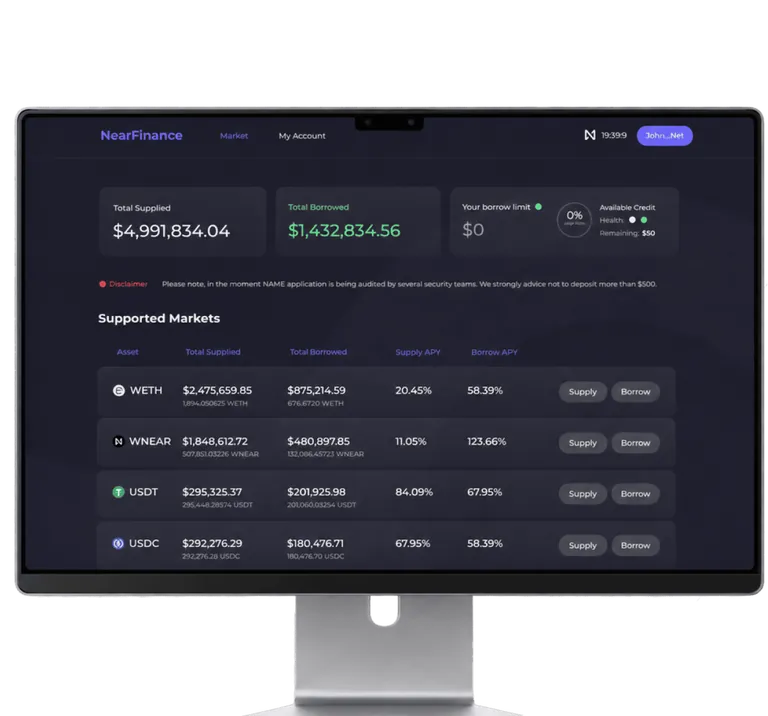
NearFinance required a non-custodial lending and borrowing protocol, specifically for the NEAR ecosystem.
LITSLINK provided business analysis, design, smart contract development, engineering services, and full-cycle QA for the project, which lasted for about nine months. The team built Rust contracts, a Node.js and TypeScript backend, an oracle service, and a React-based user interface that followed NEAR’s asynchronous execution model.
As a result, we built a decentralized service where deposits, loans, rewards, and liquidations are completed through on-chain contracts without custodial intermediaries.
The client requested a regulated, euro-friendly exchange platform for European retail users, while the existing platform struggled with high order flow.
We redesigned the matching engine in C++, connected the services through RabbitMQ, and used a forked EVM blockchain for settlement. We also delivered a cross-platform mobile app and set up SEPA payments, KYC tools, user-tiering, and an operations dashboard.
This led to a three-year partnership after the production launch.
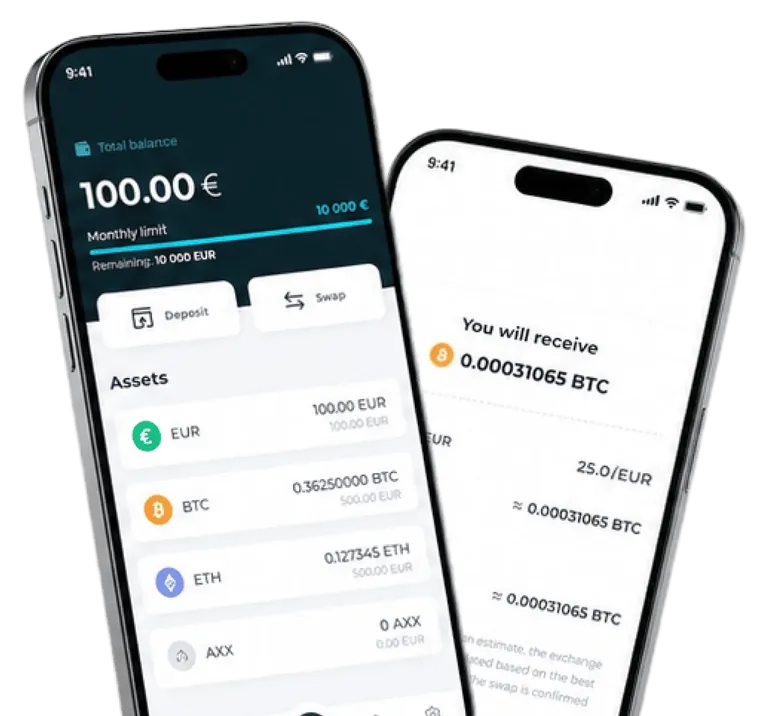
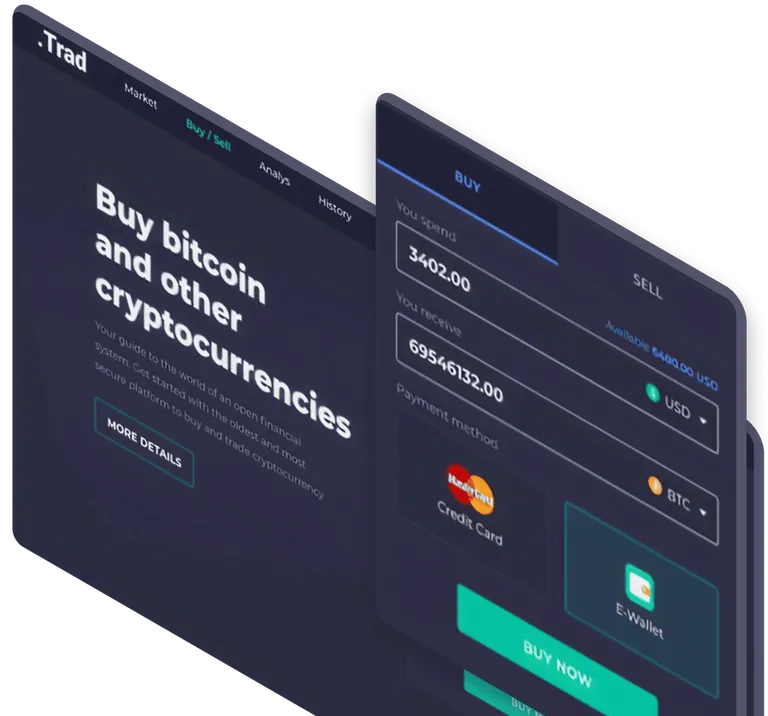
This Web3 trading product was created for a US-focused startup to provide a single platform for first-time traders and experienced investors.
LITSLINK developed an interactive onboarding process, a trend-based trading engine, configurable options to prevent losses and secure profits, multi-blockchain support, and real-time crypto trend aggregation. The team built the backend in Node.js and TypeScript, handled data processing in Python, and used MongoDB and Redis for databases.
The minimum viable product (MVP) entered commercial use in 3 months through parallel design and development processes.
Blockchain technology is important for business because it lets companies use shared, immutable records, programmable transactions, traceability, and controlled data exchange. It is particularly valuable when different parties need to collaborate on information or transactions without relying on only one central record-keeper.
To choose the right blockchain app development company, consider the company’s experience, technical architecture knowledge, proven applications, strong security practices, and post-launch support. This choice can directly affect project success, so review technical case studies rather than relying only on marketing claims.
LITSLINK is a software development company with experience in blockchain technology, as well as backend, web, and mobile app development. The best app development company for your project depends on your platform requirements, product scope, security needs, and business objectives.
Blockchain app development cost depends on the product type, the number of platforms involved, network selection, smart contract needs, integrations, security work, and project team size. Focus on your specific requirements rather than general industry calculations. You can use our App Cost Calculator to estimate your specific project.
A proof of concept (PoC) takes about 4 to 6 weeks, while a minimum viable product (MVP) may be delivered within 10 weeks for a properly scoped project. A full blockchain app development project may take longer, depending on features, integrations, security requirements, and the number of supported platforms.
Public blockchains are open to many users and suit broad decentralization and transparency. In contrast, private or permissioned blockchain networks restrict who can join and may serve businesses that need controlled access, identity management, and selective data sharing.
Smart contracts matter in blockchain applications because they are programmable agreements that can perform functions based on established conditions. As a result, they can automate fund transfers, payments, approvals, rewards, and other business operations without manually implementing every action.
Web3 products often rely on decentralized applications, wallets, blockchain networks, tokens, and smart contracts instead of centralized infrastructure. Blockchain app development combines these elements into a functional product with appropriate backend services, interfaces, and security controls.
Our blockchain development company follows best practices in smart contract development, including rigorous testing, code audits, and using established frameworks to ensure security and reliability. Additionally, we can arrange third-party audits for extra assurance.
Yes. We can support the technical development and launch of ICO and STO projects, including token creation, smart contract development, security testing, and compliance-focused technical implementation.
Thank you! Your request has been sent — our team will get back to you within 48 hours.
If you’re looking for a blockchain application development company to review your use case, technical details, and the best way to execute the project, reach out. We review each inquiry and respond within 48 hours.
Next steps
LITSLINK specialist reviews your request and contacts you to discuss the details
If needed, we sign an NDA before moving forward
We send a project proposal – estimates, timeline, and team CVs included
After launch, we stay on for any updates your product needs
MVP Idea Readiness Checklist (PDF)
Is your product idea ready for an MVP? A short checklist to test it before you spend on development. Leave your email to download it now; we will also send you the link.
Thank you! Your PDF is ready — we have also sent the link to your email.