






Disconnected data
Patient, claims, and operational records sit in separate healthcare systems with different identifiers for the same person. Data collection turns into an archaeology project before any model training starts.
Services.
End-to-end product development — from AI prototypes to scalable web and mobile platforms.
View all services →Not sure where to start?
Book a free discovery call →Software Development
Industries.
Domain expertise that shortens discovery and gets compliance right from day one.
Not sure where to start?
Book a free discovery call →Core Expertise
AI Agents.
Custom AI agents that take routine work off your team — built and deployed in weeks.
View all AI agents →Not sure where to start?
Book a free discovery call →AI Agents For
Technologies.
A modern stack for every layer of your product — pick one or let us recommend.
View all technologies →Not sure where to start?
Book a free discovery call →Hire.
Vetted senior engineers who join your team in as little as 48 hours.
View all roles →Not sure where to start?
Book a free discovery call →Case Studies.
1540+ projects delivered for startups and enterprises in 82+ countries.
View all case studies →Not sure where to start?
Book a free discovery call →Resources.
Guides, live sessions and tools to plan your product and budget.
Visit the blog →Not sure where to start?
Book a free discovery call →Company.
The team behind 1540+ projects for 1000+ clients worldwide.
Get in touch →Not sure where to start?
Book a free discovery call →In Numbers
Enter to search·Esc to close
We are an AI healthcare solutions development partner for HealthTech and digital health companies in the US. Our engineers build the risk scoring, clinical language, and workflow models that go live inside your product and hold up under real patient load.

AI in healthcare earns its keep in one of three places: a decision that used to take a clinician too long, a task nobody had time to do at all, or a signal buried in patient data that nobody was reading. An AI-powered risk model reads two weeks of activity data and flags the patients a care team should call this week. A language model turns four pages of clinical notes into a summary a nurse scans in twenty seconds before a treatment conversation. An operational model tells a scheduler which no-show slot to double-book. None of that is futuristic. Each one is a decision with a number attached, and the benefits show up in patient care long before they show up in a board deck. The pattern repeats: an AI-powered model turns raw patient data into insights that healthcare professionals use to make informed decisions about treatment, staffing, or follow-up.
The hard part was never the model. Anyone can fine-tune a classifier now. The hard part is that data in healthcare systems arrives late, arrives twice, or arrives in a format the vendor swore was FHIR. It sits behind an EHR integration that takes four months to approve, and the moment it touches production it carries PHI obligations a research notebook never had. Most projects die between the demo and the security review, not in the training loop. Clinicians notice that too, which is why adoption stalls when the AI tool sits outside the clinical workflows they already use.
So we run one test on every engagement. Name the decision the model changes, name which of your healthcare professionals makes it today, and name what they do differently on Tuesday morning. If nobody can answer that, the model is a science project, and we would rather tell you now than at month five.
WHY US
Our AI work ships with the data pipeline, the integration layer, and the monitoring that keeps it honest. One team covers data engineering through deployment, so there is no handoff where accountability quietly disappears.
Our AI-powered health risk assessment project began as a rescue. The inherited mobile app crashed on common flows and the backend fell over under real load. We audited first, stabilized second, rebuilt third, without taking the live product offline for a day.
Role-based access, encryption, and audit logging get designed in at the architecture stage. On our patient engagement work, HIPAA verification was part of launch rather than a scramble two weeks before it.
Project management sits in Palo Alto and Orlando. Engineering sits in Europe. Healthcare organizations get overlap with their working day and fluent English in every standup, without a 2 a.m. status call.
CAPABILITIES
Ten things clients actually ask us for. Each one is a build, not a workshop.
AI-powered agents that chase prior authorizations, route referrals, and triage intake across hospital departments. They read the request, take the next action, and escalate what needs a person. Our agentic AI solutions for healthcare always carry an approval step wherever money or patient care is involved.
Machine learning models that forecast denials, readmission risk, revenue leakage, and care gaps. We tune them against the cost of the mistake, because a missed patient risk and a false alarm are not the same size error. Teams use the output to move budget and attention toward the patients whose outcomes are still changeable.
Drafting for discharge summaries, patient education material, and prior-auth letters, with retrieval grounded in your own content so the model quotes your treatment protocols instead of inventing them. Useful for personalized care at volume, where every patient needs slightly different instructions, and nobody has time to write them.
Symptom intake and routing that happens before the phone rings, handing off to a nurse line with the conversation already summarized. Patients get an answer at 11 p.m., and clinicians get their morning back. Scope gets set with your clinical lead, and the bot does not diagnose.
AI-powered code suggestion straight from documentation, with a confidence score and the source line that produced it. Coders work faster when they can see why the machine said 99214.
Real-time guidance, summaries, and recommended actions inside the tool your clinicians already use. Patient history and treatment context surface at the top of the chart instead of five minutes into a click-through. The copilot drafts, the clinician approves. That distinction is the whole product.
Clinical NLP pipelines that pull structured facts out of notes, referrals, and claims text. Diagnosis codes, medications, patient history, social determinants. The messy 80% of patient data that never made it into a database field, turned into insights a care team can sort by.
Clinical, financial, and operational data in one view, with model output sitting next to the number it is supposed to move. Directors get insights they can act on in a Monday meeting instead of a report nobody opens. Useful when you need to optimize operations and resource allocation with something better than anecdote.
Deep learning models that pre-read medical images and prioritize the worklist, so the urgent study surfaces first instead of waiting its turn. Radiologists keep the read and the sign-off, and they make more informed decisions faster when the AI solutions in front of them show the evidence. Common in cancer care pathways, where the delay between scan and read is what patients feel most. We build the pipeline and the review interface. Regulatory clearance for any diagnostic claim stays with your regulatory team.
Device and wearable data collection, threshold alerting, and the AI models that turn a stream of readings into a call worth making. Chronic patients get personalized care between visits rather than a review every six months.
USE CASES
Not sure which AI use case to fund first?
Bring us the messiest one. Thirty minutes on a call is usually enough to say whether your data supports it, and we will tell you when it does not.
We work with product companies in the healthcare industry rather than with hospital IT departments directly. The distinction matters because it sets our delivery model.
Your product is already live inside clinics and health systems. You need AI-powered features that hold up when a customer’s security team reviews them.
Real users, real patient data, and a board asking where the AI roadmap is. We build the first production model and the pipeline underneath it.
Firmware and sensors are yours. The prediction layer, the mobile app, and the cloud backend are what we add.
Wellness scoring, risk stratification, and utilization models, built so records for individual patients stay private while the business gets aggregate analysis it can act on.
Medical practices and clinics running their own software. We plug in as the machine learning half of your engineering team, close enough to your healthcare professionals to test with them weekly.
You cannot integrate AI solutions into clinical workflows if the data never reaches. This is the layer most vendors underquote.
Our patient engagement work for Dalth aggregated EHR data from multiple providers into one role-aware interface. Six user types, one record. That project ran a year, which is roughly the honest number for multi-provider EHR work.
PROCESS
We start with the decision, not the dataset. Which clinicians make it today, what they look at, and what a better answer is worth to patient care. Then we audit whether your data can support it. Some engagements end here, with a written recommendation not to build. Cheaper than finding out in month five. When the answer is yes, you get a target metric and a definition of the optimal outcome you are aiming for, agreed in writing before anyone opens an editor.
Feature engineering, baseline, then the model. We benchmark against the current human process rather than against a leaderboard, and we set thresholds with your clinical lead so the error the model makes most often is the one your patients can safely absorb.
FHIR and HL7 connections, identity matching, write-back permissions, and the security review that comes with them. Usually the longest stage, and the one most quotes get wrong. This is also where AI stops being a demo and starts living inside clinical workflows.
Shadow mode first, where the model runs alongside the existing process, and nobody acts on it. Then a limited rollout to one department or cohort, with sign-off criteria agreed before launch. Rollback stays one command away throughout.
Drift alerts on input distributions and output rates, a scheduled performance review against fresh labels, and a retraining cadence written into the runbook. When a model degrades, somebody gets paged, and somebody owns the fix. We hand that runbook over whether or not we stay on.
We start with the decision, not the dataset. Which clinicians make it today, what they look at, and what a better answer is worth to patient care. Then we audit whether your data can support it. Some engagements end here, with a written recommendation not to build. Cheaper than finding out in month five. When the answer is yes, you get a target metric and a definition of the optimal outcome you are aiming for, agreed in writing before anyone opens an editor.
Feature engineering, baseline, then the model. We benchmark against the current human process rather than against a leaderboard, and we set thresholds with your clinical lead so the error the model makes most often is the one your patients can safely absorb.
FHIR and HL7 connections, identity matching, write-back permissions, and the security review that comes with them. Usually the longest stage, and the one most quotes get wrong. This is also where AI stops being a demo and starts living inside clinical workflows.
Shadow mode first, where the model runs alongside the existing process, and nobody acts on it. Then a limited rollout to one department or cohort, with sign-off criteria agreed before launch. Rollback stays one command away throughout.
Drift alerts on input distributions and output rates, a scheduled performance review against fresh labels, and a retraining cadence written into the runbook. When a model degrades, somebody gets paged, and somebody owns the fix. We hand that runbook over whether or not we stay on.
PHI handling, Business Associate Agreements, and data protection designed in at the architecture stage rather than bolted on before launch.
Lawful basis, data subject requests, and residency handled for EU and California users. Relevant to most digital health products selling on both sides of the Atlantic.
We design around SOC 2 control families for access, change management, and logging.
Encryption at rest and in transit, role-based access per user type, and separation between records for individual patients and aggregate reporting.
Tooling that strips or tokenizes identifiers before patient data reaches a training pipeline or a third-party model API.
Every read and write against patient data is recorded, which is the first thing an auditor asks for.
Clinical and financial actions need a person to approve them. Our AI models recommend; the output shows the evidence behind the recommendation, and patient safety stays with the clinician who signs.
Challenge
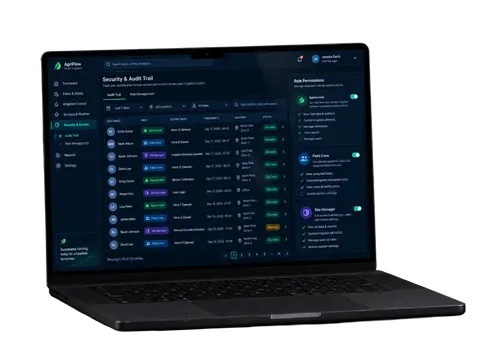
A US insurance client had a corporate wellness product that could not be trusted. The inherited mobile app crashed on common flows, the backend went down under real user load, and the pipeline lost or duplicated records often enough to skew every health risk calculation.
Solution
Our first move was not code. A senior solution architect audited the codebase and produced two roadmaps, one for fast stabilization and one for the rebuild. Once crashes and pipeline gaps were fixed, our machine learning engineers reworked the Python services behind the risk models so each assessment completes instead of failing partway through.
Result
Stack
React Native · React.js · Node.js · Python
Challenge
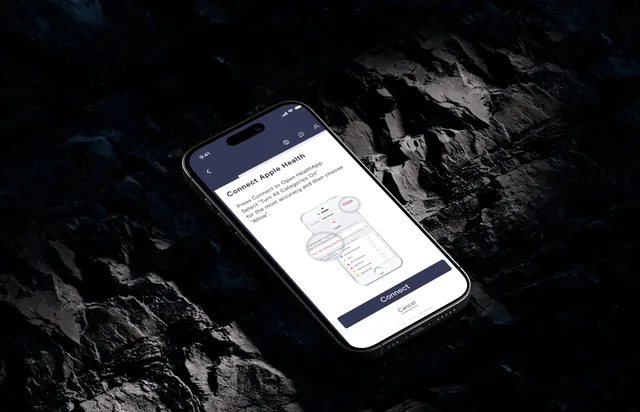
A healthcare provider running an on-demand surgery model could not absorb patient requests at volume. Genetic and research institutes on the same platform needed to report cases and move health data across borders, so every request carried a data protection question nobody had answered in software.
Solution
Two constraints shaped this build. The data could not cross a border without encryption a regulator would accept, and no coordinator could keep pace with request volume by hand. We built a full RPA pipeline that receives, classifies, and routes each patient request, with AI modules matching the request to the treatment path it belongs on, and we put patients in control of what gets shared and with whom.
Result
Stack
Vue.js · Python · Flutter

VERIFIED REVIEWS
LITSLINK holds a 4.8 rating on Clutch and appears among the top healthcare software development companies on GoodFirms. Reviews from health and insurance clients tend to single out the same thing this work demands most: taking over a difficult codebase and getting it to production without breaking what already runs.
HOW WE WORK
From $25,000/month (core team of 3 to 4)
6 months and up
Dedicated healthcare AI team. A standing cross-functional team, yours for the duration. Data engineer, ML engineer, backend, QA, and a US-based project manager.
Best for: Healthcare organizations with a multi-quarter AI roadmap
From $70/hour
3 months and up
AI specialist augmentation. You have the team and the roadmap. We add the two or three senior people you cannot hire fast enough, working inside your process and your repo.
Best for: Product teams missing senior ML or data engineering capacity
From $60,000
3 to 9 months
Complete AI solution delivery. Fixed scope, fixed outcome. We own discovery through deployment and hand over documentation, runbook, and IP.
Best for: A defined build with fixed scope and a deadline
Need senior AI engineers on your team next month?
Send us the roles and the stack. We come back with CVs and availability, not a capabilities deck.
PRICING
$15,000 to $40,000
4 to 8 weeks
Data audit, baseline model, and a written recommendation on whether the use case is worth building.
$60,000 to $150,000
3 to 6 months
One model in production, one integration, monitoring, and the deployment pipeline underneath it.
From $200,000
6 to 12 months
Multiple models, multiple EHR and device integrations, governance, and a retraining pipeline your own team can run.
Fifteen questions across data, integration, regulatory exposure, and model risk. Score it in ten minutes, and you will know whether to start with a proof of concept or go straight to the build.
The checklist is a short PDF you can fill in on screen or print. It gives a score and a reading of what that score means for your next step.
FAQ
Artificial intelligence is the umbrella term for software that performs tasks we would call intelligent. Machine learning is the subset that learns patterns from data instead of following rules a developer wrote. Deep learning is the subset of machine learning built on multi-layer neural networks, and it is what makes medical images, speech, and free-text clinical notes tractable. Most operational and risk work in healthcare is classic machine learning. Imaging and natural language processing are where deep learning earns the extra cost.
A proof of concept runs 4 to 8 weeks. A production MVP with one integration runs 3 to 6 months. Multi-system platforms run 6 to 12 months. EHR integration and security review, not model training, are what move those numbers.
Three shapes, and which one you need depends on how much is still unknown. A proof of concept runs $15,000 to $40,000 over 4 to 8 weeks and answers whether the use case is worth building at all. An MVP with one model in production and one integration runs $60,000 to $150,000 over 3 to 6 months. An enterprise-scale platform with several models and multiple EHR or device integrations starts at $200,000 and takes 6 to 12 months.
The error budget is smaller, because a wrong answer touches patient care rather than an ad click. The data is regulated, so the shortcuts available in other industries are closed. Adoption depends on clinicians trusting the output, which means the interface matters as much as the AI models behind it. The benefits are real, but they arrive later than the vendor slide suggests.
Enough labeled history for the decision you want to improve, plus a reliable path to it. Our health risk assessment work needed 14 days of activity data per user before a score meant anything. If your data is thin, we say so at discovery and propose a data collection phase instead of a model.
Yes. Epic, Cerner, and Allscripts through FHIR R4, plus HL7 messaging for lab, pharmacy, and clinical documentation feeds. Assume the integration and its approvals take longer than the model.
Encryption at rest and in transit, role-based access per user type, audit logging on every read and write, and de-identification before patient data reaches a training pipeline or a third-party model API. On the Dalth platform, HIPAA verification was part of the launch checklist.
You do. IP transfers to you, we sign an NDA before scoping if you want one, and you get the training pipeline and the runbook, not only the weights.
Toward smaller, better-scoped models sitting inside clinical workflows rather than one system that claims to run the hospital. The near future belongs to narrow tools with clear owners: documentation, triage, coding, imaging triage. Agentic systems will keep expanding into operations, and the compliance expectations around them will tighten in parallel. Build for that future by keeping a human approval step where it matters.
Then we say so. Plenty of what gets scoped as artificial intelligence turns out to be a reporting problem or a workflow problem wearing a model as a costume. We would rather lose the build and keep the relationship than take budget for a project we expect to stall at the security review. Contact us, and we will tell you which one you have.
Thank you! Your request has been sent — our team will get back to you within 48 hours.
Thirty minutes with an engineer who has shipped this before. You leave with an honest read on whether your data supports the use case, where the integration risk sits, and a real range on scope and timeline. We respond within two business days.
Next steps
LITSLINK specialist reviews your request and contacts you to discuss the details
If needed, we sign an NDA before moving forward
We send a project proposal – estimates, timeline, and team CVs included
After launch, we stay on for any updates your product needs

Key Takeaways The global AI in healthcare market is projected to grow from $36.7B in 2025 to $505.6B by 2033 (38.9% CAGR) The FDA…
12 min read
In the dynamic landscape of healthcare, where progress is a constant companion, the role of technology in refining diagnostic capabilities and influencing patient outcomes…
10 min read
Key takeaways AI medical diagnosis apps have moved from pilot projects to at-scale clinical deployment: the FDA has authorized 1,451 AI-enabled medical devices through…
25 min readMVP Idea Readiness Checklist (PDF)
Is your product idea ready for an MVP? A short checklist to test it before you spend on development. Leave your email to download it now; we will also send you the link.
Thank you! Your PDF is ready — we have also sent the link to your email.