Skip to content

ReactJS Development Company

React JS web development is the shortest route we know to a front end that loads in under a second, survives a pivot, and doesn’t need a rewrite in year three. LITSLINK is a ReactJS development company out of Palo Alto with 300+ engineers and 1,540+ shipped projects, and our React.js development services cover web and mobile apps for founders and CTOs in the US and Europe. Mostly startups. Some of them have been with us since 2014.

  • Faster Time-to-Market
  • Smooth and Responsive User Experience
  • Easier Maintenance and Updates
  • Scalable and Flexible Architecture
  • Lower Development Costs
ReactJS development company LITSLINK — react.js development services for web and mobile apps
  • Motorola Solutions
  • Willo
  • Mush
  • Mitsubishi
  • QuickPix

Our ReactJS Development Services

Nine things, in rough order of how often people ask for them. Our React.js development services run from a one-week code audit to an 18-month platform build, and the same engineers do both. If you need custom ReactJS development services for a product that doesn’t exist yet, start at the top of the list. If you need React web development services for one that already does (and hurts), start at migration or consulting.

ReactJS Consulting

Before anyone writes any code we read yours. We look at the app, the state layer, the build config, and who it’s going to be owned by after we’ve left. We then write a short report: what’s slow, what’s fragile, what to leave well alone. Code audits and performance optimization reviews generally take a week. If the state layer is the actual problem (and it often is), then our Redux development services team will look at that in detail.

ReactJS Web Application Development

The bulk of our React web application development work: single-page applications, SaaS products, customer portals, enterprise solutions that run in Chrome, Safari, Edge, and whatever a client’s finance department still uses. React JS web application development done properly means the app behaves the same on an iPhone and a 32-inch monitor. And the same ReactJS applications hold up when traffic triples in a month.

ReactJS Plugin Development

A custom ReactJS plugin adds a capability to an existing application without touching its core. We’ve built reusable modules that plug into third-party platforms, content management systems, and in-house tools. The cheapest way to extend a product you’re already selling. Usually a few weeks.

ReactJS Widget Development

Widget development in our case is about creating embeddable React components which you drop into any site or app. These are things like interactive dashboards, forms, charts, data visualizations, data blocks, and all sorts of UI elements which your own team can then configure without any need for a deployment. We shipped a solar monitoring dashboard in this way (more on that below).

ReactJS Maintenance and Support

Ongoing support is the bit of our React.js development services that people most commonly forget to budget for (bug fixes, security patches, dependency upgrades, performance monitoring, new features when you want them). The aim is pretty mundane. The app just needs to stay stable, work in whatever browser comes along next spring, and never accrue the technical debt that eventually forces you to do a complete rewrite.

Custom React Development

Custom ReactJS development here means we start from your requirements and your users, not from a boilerplate we reuse across clients. Reusable components get designed around your domain objects. The architecture stays loose enough to survive the pivot you don’t know about yet. That’s the React development that sits closest to our broader web application development services.

ReactJS UI/UX and React JS Web Development

Our designers and front-end engineers sit in the same sprint, same standup. So the interactive user interfaces that get designed are the ones that get shipped, instead of a Figma file that quietly drifts from the build. Smooth navigation, interactive elements, responsive web applications, consistent behavior across devices: all of that follows from that one seating arrangement more than from any library.

ReactJS API Integration

ReactJS API integration is where front-end projects most often go wrong, and it’s almost never the front end’s fault. We’re integrating ReactJS apps with third-party services, REST and GraphQL endpoints and backend systems via typed contracts, retry logic and real time data flows so that the two platforms stay in sync when one of them has a bad day.

ReactJS Migration and Modernization

Our ReactJS migration services take old front ends and move them to React. We’ve seen jQuery, AngularJS, Vue 2, and server-rendered templates from 2015. The approach is screen by screen rather than big bang. Users won’t see a half-built app; the existing functionality is checked against the old version at every stage, and the technical debt is paid down as we go rather than just left to rot for later.

Key Benefits of React JS Web Development for Your Business

The business case for React JS development comes down to four things: speed to market, how the product feels, what it costs, and whether it grows without being rebuilt. That’s why React sits behind most of the web applications and mobile apps we ship now, and why demand for React JS development services keeps climbing on our side.

Accelerated Product Launches

Reusable components and a component-based architecture mean that once a form, a data table, or a modal is built, it’s built. Our ReactJS developers assemble new screens from tested reusable components instead of writing them again. That’s a big part of how we get to an MVP in 10 weeks.

Enhanced User Experience

React only re-renders what has changed. That’s why dynamic user interfaces remain responsive even on a dashboard with 40 live widgets. Navigation is instantaneous, and the UI is responsive in every browser we test.

Reduced Development Costs

Component reuse eliminates the need to code the same things over and over again, and that’s by far the most effective way of keeping development costs under control on the front end. One button, one data grid, one auth flow. Write it once, test it once, and use it on every screen. That’s how React development stays within the budget you’ve agreed to.

Greater Scalability and Flexibility

ReactJS applications grow by adding components, not by changing the foundation. A new feature, a more complex workflow, a third user type that nobody ever envisaged… all of that just slots into the existing architecture without any need for a rewrite.

Easier Application Maintenance

Modular code is easier to test, easier to debug, and easier to hand over to the engineer who comes in in year two. That translates into fewer support hours and less technical debt three years down the track, which is far more important than anything you can measure on launch day.

Why Hire LITSLINK as Your ReactJS Development Company?

Plenty of vendors call themselves a ReactJS web development company. What separates a leading ReactJS development company from the rest, in our experience, is three things: the engineers you actually get (not the ones in the sales deck), how the work is run week to week, and what you own when the React.js development services contract ends.

01

Experienced ReactJS Developers

LITSLINK has 300+ tech specialists on board. As a React JS web development company, we’ve shipped web applications for healthcare, fintech, real estate, energy, sports. You can hire ReactJS developers one at a time or as a whole team, and senior engineers can join your project in as little as 48 hours.

02

US-Based Company With Global Expertise

We’re a US company: head office at 3000 El Camino Real in Palo Alto, a second office in Orlando, and engineering teams in Europe. US-based project management means your PM is awake when you are, and nobody takes a 2 a.m. status call. European engineering means senior people at a rate that doesn’t blow the budget. That’s the ReactJS development outsourcing model clients in 82+ countries have picked, and it’s the main way we reduce development costs without hiring juniors.

03

Full-Stack Technical Expertise

A React web development company that only does front-end leaves you with half an app and a vendor-management problem. Our team covers backend, cloud, AI, and mobile app development too. JAVA development services in the USA and Node.js web development services go into the same project, same sprint board, so you get a complete product rather than a React shell waiting on somebody else’s API.

04

Security & Compliance

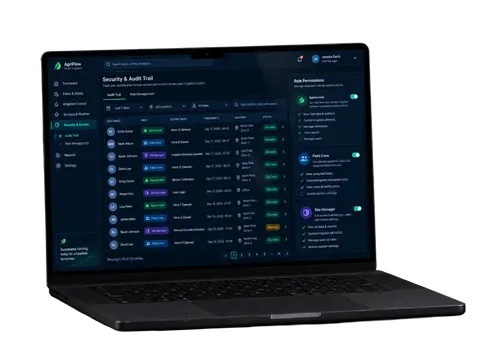
In regulated industries, ReactJS development (healthcare, finance, insurance, government) security is an architectural decision we make in week one rather than something we just go through a checklist of in the final sprint. Secure coding practices, role-based access control, protected API integrations, and keeping sensitive data off the client side where possible are part of the architecture from the start. We build to WCAG accessibility standards and will add audit trails, input validation, and approval workflows where a regulator or your own compliance lead asks for them. We do all of this without negatively impacting the user interface in terms of performance or usability.

05

100% Ownership of Your Software

You own the source code, the designs, and the IP. It’s all in the contract. You have full repository access from day one, so there’s absolutely no vendor lock-in. You can change it, extend it, and hand it over to another team at any point.

06

Flexible Engagement Models

Choose dedicated ReactJS developers, part-time support, staff augmentation, a full-cycle development team, or project-based delivery. We help you select the option that fits your scope, budget, and timeline, with flexibility to adjust as your needs change. Explore each model below.

LITSLINK Reputation on Top Platforms

A React JS web development agency should be judged on what past clients say when nobody from the agency is in the room.

Clutch B2B Ratings & Reviews

4.8

78 reviews

Top Developer
GoodFirms Research & Reviews Platform

4.8

32 reviews

Top Company
Behance Creative Portfolio Platform

150+

design projects

View projects

Ready to Build a Scalable Web Application with Expert ReactJS Developers?

Hire Our Team

What Factors Affect React Web Development Costs?

ReactJS development costs come down to four questions: how complex the product is, what it has to connect to, who builds it, and how far ahead you’re planning. The six factors below are what move a React JS development services estimate the most. Our app cost development calculator gives you a ballpark before we ever get on a call.

Project Scope and Complexity

Number of screens, depth of the business logic, how tangled the user workflows are. That’s the baseline. A marketing site with a few dynamic sections and a multi-tenant SaaS platform with role-based permissions are both “React apps”, but one takes weeks, and the other takes most of a year.

UI/UX Design Requirements

Custom interface designs, animations, interactive elements, responsive layouts, and accessibility requirements all add design and front-end hours. A design system built once at the outset will generally pay for itself by the third screen. Bespoke animation on every page will never pay for itself.

Third-Party Integrations

Payment gateways, CRM’s, authentication providers, external APIs. It all depends on how well the other system is documented and how much data needs to cross the line. A clean Stripe integration is a few days’ work. A legacy ERP with a SOAP interface and no sandbox is quite another matter, and we’d rather have that in before we issue the quote than after.

Development Team Size & Expertise

How many ReactJS developers you need, how senior they are, and where they sit all change the rate. US-based project management plus European engineering, or part-time developers once you’re in maintenance mode, is how most clients keep spending in line with where the product actually is.

Application Architecture and Scalability

Server-side rendering, performance budgets, how many concurrent users the app has to survive. These are architectural decisions that cost you more upfront and a lot less later on. Planning for growth in month one is far cheaper than re-architecting in month fourteen and we have the invoices to back that up.

Testing, Maintenance, and Support

QA, security testing, performance tuning, bug fixes, routine updates. That’s part of the real budget rather than a line item that gets added in after launch. When you’re comparing quotes, you need to ask each vendor what they do in month seven.

Engagement Models for React JS Web Development

Our React JS services come in five engagement models. Which one fits depends on scope, timeline, how your current team is set up, and what the product has to do twelve months from now. Pricing for React.js development services follows the model, not the other way round, and every model runs on the same development process and the same ReactJS app development standards. Nobody gets a B-team because they picked part-time.

1 01 / 05

Dedicated ReactJS Developers

Dedicated ReactJS developers work as an extension of your in-house team. Your Jira, your standups, your roadmap, on ReactJS app development that never really ends. The model for long-term products that need the same people around for years rather than a one-off build.

Our Best Practices for Scalable ReactJS Development

Scalable web apps come from discipline, not from a framework version number. These are the practices behind our React.js development services on every React project, whether it’s a two-week plugin or an 18-month platform, and they’re what keep technical debt from piling up while nobody’s looking.

Component-Based Architecture

Reusable functional components, React hooks, one job per component. Clear responsibilities keep the codebase modular, so a future enhancement is simply a matter of adding a component rather than untangling one. Boring on purpose.

Type-Safe Development

TypeScript, typed component interfaces, runtime data validation at the API boundary. Integration errors are caught before they ever get to the user. The types also act as documentation so that a developer coming in in month nine can just read the contract rather than having to work it out.

Efficient State Management

Server state and client state are different problems and we treat them that way: TanStack Query for data that lives on the server, Zustand or Redux Toolkit for UI state that lives in the browser. Mixing the two is the single most common mess we find in audits. Predictable data flows are what keep an app’s behavior consistent as it grows.

Performance-First Development

Code splitting, rendering performance work, bundle size monitoring, Core Web Vitals tracking. All of that was in sprint one, not something we’ve added on after someone complained. Performance optimization is cheap as a budget and expensive as a rescue.

Automated Testing and Code Quality

Unit tests, component tests (using React Testing Library), integration tests, and end-to-end tests (using Cypress or Playwright) all run in CI/CD on every pull request. We have automated testing plus linting, so issues appear in minutes rather than in a customer email, and release day is no longer something that anyone looks forward to.

How We Deliver React JS Web Development Services

Our development process for ReactJS projects runs in two-week sprints with working software at the end of each one. Here’s how a typical ReactJS development project moves from the first call to post-launch support, whether our React JS web development services cover a single web app or React JS development across web and mobile.

Business objectives, target users, technical constraints, then some competitor research and a feasibility check. You come out of discovery with a clearly defined scope, priorities, deliverables, and a realistic view of cost and risk (usually within a 2-week period).

01 Discovery and Requirements Analysis

Business objectives, target users, technical constraints, then some competitor research and a feasibility check. You come out of discovery with a clearly defined scope, priorities, deliverables, and a realistic view of cost and risk (usually within a 2-week period).

02 Architecture and Technology Planning

We pick the ReactJS stack (the architecture, the framework (Next.js, Remix or plain React with Vite), the libraries and tooling). We decide on the component structure, state management, API strategy, security, scale, and performance targets all on paper. You’re still free to change your mind at this stage.

03 UI/UX Design and Prototyping

Designers create wireframes, interactive prototypes, and responsive layouts from real user needs with accessibility and a consistent design system baked in from the very first screen. Usability testing is done on the prototype. What gets to development has already been clicked through by real users.

04 Agile ReactJS Development

Engineers build from reusable components and clean, reviewed code with backend integrations and CI running from sprint one. You see progress every two weeks in a sprint review, and you can reorder priorities at a time when reordering is still relatively cheap.

05 Quality Assurance and Testing

QA engineers check functionality, performance, security, and cross-browser and cross-device compatibility. We run unit, integration, and end-to-end tests as well as manual tests. Bug fixing and performance tuning are the final stages of every release.

06 Deployment and Launch

We build the app for production, set up the hosting and environments, and manage the deployment ourselves, as ReactJS development that stops at the PR is not complete. We complete final performance checks, security checks, and monitoring before the switch. Launch day should be a non-event and usually is.

07 Post-Launch Support and Optimization

After launch, LITSLINK remains on for maintenance, troubleshooting, security updates, and performance monitoring. New features and ongoing product optimization based on what real users actually do are part of the same development cycle. Nothing ends at go-live.

Ready to Bring Your ReactJS Project to Life?

Let’s Build It Together!

Technologies Our React JS Web Development Agency Uses

The tools below are the ones we run in production for custom ReactJS development, from the JavaScript library itself to the monitoring that keeps running after launch. The stack gets chosen per React project. Nobody gets all of it at once, and nobody should.

Core Technologies

  • React.js
  • JavaScript (ES6+)
  • TypeScript
  • HTML5
  • CSS3

Frameworks & Libraries

  • Next.js
  • React Router
  • Remix
  • Gatsby
  • TanStack Query

State Management

  • Redux Toolkit
  • Zustand
  • MobX
  • React Context API

UI Libraries & React Components

  • Material UI (MUI)
  • Ant Design
  • Chakra UI
  • shadcn/ui
  • Radix UI
  • Tailwind CSS
  • Styled Components
  • Storybook

Backend Systems & Integration

  • Node.js
  • Express.js
  • NestJS
  • Python
  • Django
  • REST APIs
  • GraphQL

Databases & Data Storage

  • PostgreSQL
  • MySQL
  • MongoDB
  • Redis
  • Firebase
  • Supabase

Testing & Quality Assurance

  • Jest
  • Vitest
  • React Testing Library
  • Cypress
  • Playwright
  • Lighthouse

Build & Development Tools

  • Vite
  • Webpack
  • Babel
  • ESLint
  • Git
  • GitHub
  • GitLab

Cloud & DevOps

  • AWS
  • Microsoft Azure
  • Google Cloud
  • Vercel
  • Netlify
  • Docker
  • GitHub Actions
  • GitLab CI/CD

Performance & Monitoring

  • Lighthouse
  • Chrome DevTools
  • React Developer Tools
  • Sentry
  • Web Vitals

Advanced Technologies We Use with React App Development

ReactJS app development at LITSLINK rarely stops at the front end. We pair custom ReactJS solutions with our AI, computer vision, AR/VR, IoT, and blockchain teams, so the React app you ship is the front door and something smarter lives behind it.

React apps call ML models via APIs (personalized recommendations, predictive analytics, anomaly detection, etc.), so you don’t have a human re-keying the same form over and over. The model is on the backend. React deals with what the user sees and what they click.

We integrate React app interfaces with LLMs for AI chatbots, virtual assistants, content generation, summarisation, intelligent search, and automated workflows. Streaming responses, token-by-token rendering, and a sensible fallback if the model times out. Front-end problems (all of them) and ones we’ve solved many times over.

ReactJS applications run image recognition, document scanning, visual search, and object detection through a backend API or, for lighter models, straight in the browser. The AI photo culling product below is exactly that: a React.js interface sitting on top of a vision model that scores 3,000 photos in twenty minutes.

Browser-based AR through WebXR and compatible 3D libraries lets a React app put a sofa in a customer’s living room or walk a buyer through an apartment that hasn’t been built. Retail and real estate use it most. No app download required, which is most of why it gets used at all.

With Three.js and React Three Fiber, you can run product configurators, virtual showrooms, training sims, and all sorts of immersive visualizations in a browser tab. The VR real estate platform we’re looking at uses a React.js portal with a Unity-rendered 360 viewer (Unity renders better on the older phones). We tested that.

IoT and Real-Time Data Integration

React dashboards connect to IoT platforms, smart devices and sensor networks via backend services and either WebSocket or polling APIs. The functionality includes real-time monitoring, remote device management, automated alerts, and data visualization. The solar platform referenced below polls inverter data every 5 minutes from over 1,200 sites and displays it in real time.

React apps talk to the blockchain via wallets, Web3 libraries, and blockchain APIs (dApps, digital asset management, smart contract interactions, transaction tracking, etc.). The difficult bit is never the chain itself. It’s the wallet UX.

Voice AI and NLP Integration

Voice assistants, speech recognition, natural language processing, and conversational AI will inevitably all come through a React interface at some point. The most common use cases are voice-controlled interfaces and intelligent customer support (both of which also improve accessibility for web and mobile users who can’t or won’t type).

React for Web Development in Every Industry

Every industry has its own data rules, its own integrations, and its own idea of what “fast” means. ReactJS development has to respect all three, which is why LITSLINK delivers custom ReactJS development services and app development services shaped around a specific industry rather than a generic template. The ten below are where our software development experience runs deepest. Healthcare and real estate are where it runs longest.

Patient portals, telemedicine platforms, clinical dashboards. EHR/EMR integrations, appointment scheduling, remote patient monitoring, secure messaging, data visualization, with healthcare data protection designed in at the architecture stage, not patched in before the audit.

Storefronts and multi-vendor marketplaces with interactive catalogs, advanced search and filtering, personalization, carts, payment gateway integrations, and real-time inventory. The journey from browse to buy has to work on Black Friday, and that’s a React performance issue as much as it is a backend issue.

Secure banking portals, financial dashboards, digital wallets, investment platforms, etc. Real time transaction monitoring, interactive financial charts, payment gateways, account management, fraud alerts etc. All built to the financial security requirements that your compliance team will actually sign off on.

Property marketplaces, listing sites, real estate management platforms. Advanced search, interactive maps, virtual tours, mortgage calculators, CRM and MLS integrations, and of course the messaging between buyer, seller, and agent, which most listing sites still get completely wrong.

Fitness platforms, sports management dashboards, online training apps. Workout planning, performance analytics, progress tracking, live stats, personalized programs, wearable data integration, and interactive visualizations that keep you opening the app on day 31.

Learning Management Systems, virtual classrooms, educational platforms with video lessons, quizzes, personalized learning pathways, gamification, progress dashboards, live classes, and integration with the LMS and with the third-party tools that the school is already paying for.

Recruitment platforms, applicant tracking systems, employee portals, HR dashboards. Job listings, candidate search and filtering, interview scheduling, onboarding workflows, employee self-service, ATS/HRIS integrations.

Booking sites, hotel management platforms, travel planning web and mobile apps. Real-time availability, booking engines, interactive itineraries, maps, payment integrations, loyalty programs, customer portals, multilingual interfaces, etc., all of which need to go live before Christmas.

Manufacturing dashboards, production management interfaces, inventory monitoring. Real-time equipment data, predictive maintenance alerts, quality control views, ERP integrations, supply chain visibility, IoT-connected monitoring on the shop floor (where the Wi-Fi is never as good as the spec).

Fleet management dashboards, dealership websites, vehicle marketplaces, connected vehicle portals. Inventory management, interactive configurators, GPS tracking, telematics visualization, maintenance scheduling, booking systems, API integrations.

Ready to Build a ReactJS Solution for Your Industry?

Custom ReactJS Solutions We Build for Businesses

Most ReactJS web app development requests fall into one of seven product types. Our custom ReactJS development covers all seven, and most real products turn out to be two or three of them stacked together.

Single-Page Applications (SPAs)

Single-page apps update the content without a full page reload, which is why a web app built that way just feels like software rather than a website. Smooth navigation, responsive interfaces, real-time interaction. That’s the default now rather than an enhancement.

Dashboards and Analytics Platforms

Interactive dashboards for watching business performance and making sense of complex data. Real-time analytics, customizable charts, reporting tools, and integrations with several data sources at once. The solar energy platform below is one of ours.

Enterprise Web Applications

CRM, ERP, HR management systems, internal portals. Enterprise solutions with complex workflows, heavy data management, role-based interfaces, and integrations with the business systems you already run. React handles complex interfaces well, as long as component development starts with the library and not with screen one.

Micro-Frontend Applications

Micro-frontend architecture breaks a large application into modules that separate teams can develop and deploy on their own schedule. For a complex enterprise product, that’s the difference between being able to work collaboratively and being able to deliver features independently. It’s all about enabling growth without the fear of having to do a single massive monolithic release that everyone is terrified of.

Progressive Web Applications (PWAs)

Progressive web apps give users an app-like experience on any device without an app store in between: offline capability, push notifications, installability, decent performance on a bad hotel connection. For a lot of products, progressive web apps are the cheaper answer to “do we need mobile apps?”, and the natural next step in ReactJS web app development once the SPA is live.

SaaS Applications

Subscription software with modular interfaces and functionality that scales with the number of customers: multi-tenant dashboards, user management, role-based access, and integration with billing and subscription systems (e.g., Stripe).

Reusable React Components and Plugins

Custom React components and plugins extend what an app can do while maintaining consistent design and performance. You’ll have reusable UI components, embeddable widgets, and a component library that’s fully documented in Storybook so that your own team can pick up the mantle when we’re no longer involved. A good ReactJS plugin is often the quickest way to get a new feature.

Our Successful ReactJS Projects

Five products, five industries, one JavaScript library at the front. Each of these ReactJS projects shipped React.js web applications alongside mobile apps or AI components, and each links to a full case study with the numbers.

REAL ESTATE

VR Real Estate Platform

The Challenge

Skyward, a Palo Alto real estate startup, was watching agents lose remote buyers to phone tag and 30-minute drives. A standard photo listing took 30–60 minutes to shoot and edit, and nothing connected the camera, the tour builder, and the listing page. Three tools, three logins, and out-of-state buyers had no way in at all.

The Solution

We built the cross-platform mobile apps in React Native and a React.js web app that shared one Ruby on Rails backend over GraphQL so a comment posted on a phone is exactly the same in the browser two seconds later. Onboarding captures the conditions and health interests across around 20 data points, and search runs on that profile. Accessibility was a feature with its own set of tickets right down to 44-point touch targets.

The Impact

  • Tour creation cut from 30–60 minutes to under 10, camera to live link
  • Listing views doubled compared to properties with static photos only
  • 16 sprints, 97% delivered on time, ~8 months from discovery to the App Store
Read Full Case Study →
A man and a woman sit together on a sofa looking at a laptop that shows a 360° virtual tour of a living room, with a filmstrip of other rooms along the bottom of the screen.

Frequently Asked Questions About Web Development with React

01 What Is ReactJS, and How Is It Used in Web Development?

What is React in web development? An open-source JavaScript library, maintained by Meta since 2013, used to build user interfaces out of reusable components. It’s the base layer for single-page applications, dashboards, SaaS products, and dynamic web applications where content changes without a page reload.

02 What Are the Main Benefits of Using ReactJS for Web Development?

Faster delivery through component reuse, a responsive user experience, lower maintenance costs, and a hiring pool so large you’ll never struggle to staff a project. React JS for web development services also brings the biggest ecosystem of any front-end library, so most integrations you’ll want already exist as packages.

03 How Does ReactJS Compare to Angular and Vue.js?

React is a library, Angular is a full framework, Vue sits somewhere between. React gives you the most flexibility and the largest talent pool. Angular gives you more structure out of the box. Vue is lighter and quicker to learn. We’ve shipped all three in production and we’ll say so if yours isn’t a React case.

04 What Is the Difference Between ReactJS and React Native?

ReactJS builds web applications that run in a browser. React Native builds native iOS and Android mobile apps from the same component model and a lot of the same code. Three of the five case studies above pair the two on one backend, which is the usual shape of our mobile app development work.

05 Is ReactJS SEO-Friendly?

Yes, if it’s set up for it. A plain client-rendered SPA is harder for crawlers to index, so for public-facing pages we use server-side rendering or static generation through Next.js, which hands Google fully rendered HTML.

06 How Much Does ReactJS Application Development Cost?

ReactJS development costs depend on project scope, integrations, design complexity, and team composition. Use our app cost calculator to get a preliminary estimate in about four minutes by answering 27 short questions. For a detailed estimate, we’ll review your requirements and agree on the scope with you.

07 How Long Does It Take to Build a ReactJS Application?

An MVP typically ships in around 10 weeks from a signed contract. The full products in the case studies above ran 7 to 18+ months, depending on how many platforms, how many integrations, and how much AI or hardware sat behind the interface.

08 Can You Work With Existing or Legacy ReactJS Applications?

Yes, and we do it a lot. We audit the code, dependencies, and infrastructure first, agree on a stabilization plan with you, and only then start touching features.

09 Can You Review and Audit an Existing ReactJS Application Without Rebuilding It?

Yes. A ReactJS audit covers architecture, state management, rendering performance, bundle size, test coverage, security, and accessibility, and it ends in a prioritized fix list. Most audits lead to targeted fixes, not a rewrite. We’ll tell you if it’s the other way round.

10 Can You Migrate an Angular or Vue.js Application to ReactJS Without Downtime?

Yes. Our ReactJS migration services run incrementally, module by module, with the old and new front ends side by side behind a router until the last page moves over. Users keep working the whole time, and existing functionality gets verified against the old build at every step.

11 How Do You Connect ReactJS Applications With Backend Systems and APIs?

Typed REST or GraphQL clients, TanStack Query for caching, WebSockets or polling for real-time data, validation at the boundary so bad data never reaches a component. We build the backend systems too when you don’t have them yet.

12 How Do You Optimize ReactJS Applications for Better Performance?

Code splitting, lazy loading, memoization where the profiling tells you it’s worthwhile (not everywhere), bundle analysis, server-side rendering for the public-facing pages, Core Web Vitals monitoring in production. Performance tuning is all about measurement and without guesswork.

13 What Should I Look for When Hiring a ReactJS Development Company?

Shipped React products with results you can check, the names and CVs of the engineers who’ll actually be on your project, and a straight answer about how change requests get handled mid-build. A good ReactJS development company is specific about all three. A bad one is specific about none.

14 What Should I Consider When Choosing a US-Based ReactJS Development Agency?

Time-zone overlap, a US legal entity and contract, clear IP ownership terms, and whether the engineering team is in-house or subcontracted out. LITSLINK is a US React web app development company with offices in Palo Alto and Orlando and its own engineering teams in Europe, delivering React web development services on US hours.

15 Do You Sign NDAs to Protect Client Projects and Intellectual Property?

Yes. We’ll sign an NDA before the first detailed conversation if you want one, and all code, designs, and IP created for your project are assigned to you in the contract.

Have a Project in Mind?

If you’re looking to hire ReactJS developers and want to discuss your project requirements, team needs, and the best engagement model, we’d be happy to hear from you. Our team reviews every inquiry and can connect you with pre-vetted ReactJS developers within 48 hours.

Next steps

1

LITSLINK specialist reviews your request and contacts you to discuss the details

2

If needed, we sign an NDA before moving forward

3

We send a project proposal – estimates, timeline, and team CVs included

4

After launch, we stay on for any updates your product needs

Book a consultation