





Edtech Software Development Consulting
Our consultants start with business and technical discovery to nail down the product scope. Then we design the architecture based on the security and compliance standards your platform needs to adhere to.
Services.
End-to-end product development — from AI prototypes to scalable web and mobile platforms.
View all services →Not sure where to start?
Book a free discovery call →Software Development
Industries.
Domain expertise that shortens discovery and gets compliance right from day one.
Not sure where to start?
Book a free discovery call →Core Expertise
AI Agents.
Custom AI agents that take routine work off your team — built and deployed in weeks.
View all AI agents →Not sure where to start?
Book a free discovery call →AI Agents For
Technologies.
A modern stack for every layer of your product — pick one or let us recommend.
View all technologies →Not sure where to start?
Book a free discovery call →Hire.
Vetted senior engineers who join your team in as little as 48 hours.
View all roles →Not sure where to start?
Book a free discovery call →Case Studies.
1540+ projects delivered for startups and enterprises in 82+ countries.
View all case studies →Not sure where to start?
Book a free discovery call →Resources.
Guides, live sessions and tools to plan your product and budget.
Visit the blog →Not sure where to start?
Book a free discovery call →Company.
The team behind 1540+ projects for 1000+ clients worldwide.
Get in touch →Not sure where to start?
Book a free discovery call →In Numbers
Enter to search·Esc to close
LITSLINK’s custom edtech software brings your learning management, admin tasks, and student data into one system.

LITSLINK covers the entire edtech software development lifecycle. Here are the essential services that our software development company provides for the education sector.
Our consultants start with business and technical discovery to nail down the product scope. Then we design the architecture based on the security and compliance standards your platform needs to adhere to.
Our designers carry out user research and learner journey mapping, and then translate the results into wireframes and prototypes that real users test. All screens are WCAG-compliant.
Off-the-shelf tools don’t always align with a particular learning model, so we create custom software solutions around yours. The process can start with an MVP to validate your idea. From there, the product is developed on cloud infrastructure, with frontend and backend engineering being done in-house. Security and testing are integrated at each step.
Learners want to learn from their phones, so we create mobile learning apps for iOS and Android. Whether you opt for native or cross-platform edtech apps will depend on your budget and goals. Students can download courses for offline learning and track their progress over time. Each app integrates with your current learning systems.
Students learn at different speeds, so smart software should keep pace with each user. We create adaptive learning engines that tailor content to the individual, and AI tutors and chatbots that answer questions. Performance analytics can identify struggling learners before they fall behind.
We integrate your platform with the systems you already use, such as your LMS or payment processor. Our team creates secure APIs with real-time data sync, so even legacy systems can communicate with modern applications.
Cloud migration and a new interface can extend the life of a platform you already own. For bigger changes, we can break up a monolith into microservices while identifying and addressing security gaps. New APIs can connect the platform to modern features such as analytics and AI.
We monitor the platform and release security updates before small issues become major problems. Regular performance checks keep it fast as devices and operating systems change. We scale the infrastructure and add new features as your user base grows.
These are the digital environments where learning truly occurs — where students enroll in courses, complete assignments, and communicate with teachers. A platform may be for an online school, a language-learning app, or a commercial course business. We build each screen with the learner in mind, making it feel natural from the first login.
Learning management systems keep structured training programs organized. They manage enrollment, track course completion, and store certification records. Schools can use them for academic courses, while companies often choose them for employee training.
Teachers spend hours each week on repetitive questions and explanations. An AI teaching assistant can do that, and students receive answers and clear explanations at any time of day. The assistant also tracks the progress of each learner, can adapt its guidance, and provide practice or feedback at the appropriate level.
Game-based learning is a way to keep students engaged that plain lessons don’t. We create interactive learning platforms and games that teach real skills and align with your curriculum, not generic quizzes with points slapped on. Teachers also receive information about the individual student’s progress, so they can identify gaps early.
Marketplaces are a place where teachers and learners meet. Students can search for courses and select the teacher that aligns with their objectives. We also build the tutor-side tools, such as profiles, schedules, and payout management.
A video call is not enough for live classes. A virtual classroom provides the tools that teaching needs, such as whiteboards, breakout rooms, and hand-raising. We create edtech platforms that are stable under load, so a class of ten or a lecture of ten thousand runs the same.
An SIS supports data management by storing all student information in a single location, including enrollment, attendance, grades, and transcripts. Staff saves time on paperwork, while data is uniform throughout the departments. Parents and students can also access their own records, which decreases the number of requests for records to the office.
Running educational institutions involves coordination in admissions, scheduling, and finance. These operations are connected to a management system that lets administrators see the whole picture in one dashboard. Less manual work equals fewer errors and more time for the work that matters.
Flexibility and security are essential when testing online. We offer assessment tools like timed exams, auto-graded quizzes, open-ended assignments, and proctoring tools that detect suspicious activity. Teachers receive results immediately, with per-question breakdowns.
Teachers should be able to create a course without coding. They can combine video, text, and quizzes with our authoring tools and a simple editor. Version control and re-use features enable a single lesson to become the basis for multiple courses.
Raw grades provide little information about the reasons for a student’s struggles. Engagement and performance trends are tracked by analytics platforms to provide the full picture. Administrators and teachers receive clear dashboards, so they can take action before students fall behind.
Whether it’s compliance corporate training providers or new employee onboarding, there’s a lot of training to arrange. HR teams in corporate learning environments can assign courses, set deadlines, and view who completed which courses on a dedicated platform. Reports on skill gaps across teams also make it much easier to plan the next training cycle.
Admissions teams have to deal with hundreds of applicants, a long pipeline of inquiries, and documents. Leads are lost without a system — with one, every applicant is tracked from first contact to enrollment. As a bonus, you’ll be able to see which marketing channels are generating real students, not just clicks.
Paper certificates are easy to fake, and hand-issuing them is not scalable. Digital credentials address both issues, so employers can verify a certificate in seconds via a secure link. For learners, it’s a record of all their achievements that they can take with them, making your courses more valuable.
Constantly calling the front office to keep up with school life shouldn’t be necessary. Parents can view grades and send messages directly to teachers. Students receive their schedules and assignments in the same app.
Schools and learning companies serve different audiences, so each user receives a role with appropriate permissions. Teachers, students, and admins only see what they need.
All your materials and educational content are organized in one library. You can upload new content, update old lessons, and reuse assets across courses without duplicating work.
Clear dashboards show how each learner performs over time. This information allows teachers to identify students in need of support early and intervene before they fall behind.
Students and teachers can converse without leaving the platform. Built-in chat and forums keep course conversations in context, rather than spread out across email threads.
The platform sends timely alerts about deadlines and upcoming classes. Teachers spend less time chasing students, and learners stay on track.
Teachers can design and gather assignments in a single location. Students submit their work online and get feedback without paper or email chains.
The platform takes care of course fees and renewals. You can set up one-time purchases or recurring subscriptions and track revenue from a single dashboard.
All courses are learner-centered. You can customize personalized learning paths for your team, and the platform adapts as students progress.
Each course includes quizzes and tests. With automated grading, results come back fast, so students know where they stand and teachers save hours of work.
All classes, deadlines, and events are on a shared calendar. Changes are synced instantly, so no one misses a session or due date.
The system analyzes the performance of each learner and adapts the content accordingly. Slow students receive additional practice, while fast students do not have to wait.
Users can find any lesson, document, or course in seconds with a fast search. Smart suggestions can also direct students to content that aligns with their objectives.
Attendance is automatically recorded during live sessions or logins. Reports show patterns over time, so staff can reach out when a student begins to slip away.
Audience-centric content helps students stay engaged for longer. Learners complete courses rather than drop out when lessons are relevant and easy to follow.
Digital learning allows students to learn anywhere and at any time. In-built accessibility standards also ensure that learners with disabilities receive the same quality experience.
Clear reports are generated from every quiz and completed lesson. Real numbers provide evidence to improve courses and educational outcomes.
Routine work like grading, scheduling, and enrollment runs on its own. Your staff gets hours back each week for teaching and student support.
Our scalable edtech software solutions can support from 100 to 100,000 users. New courses and integrations can be added without having to rebuild the system from scratch.
LITSLINK is recognized across leading industry platforms for delivering high-quality software solutions. See what clients and the design community say about our work.
Our team is responsible for all aspects of education software solutions development. You can see how each project goes from concept to a working product below.
We get to know your goals and users before we start writing any code. The outcome is a product scope and roadmap that everyone in your team can agree on.
Our designers draw out journeys for learners, educators, and administrators and convert them into wireframes that you can see early on. Real users then test the prototypes, so weak points are fixed.
We select the solution architecture and the tech stack appropriate for your business needs. Our team carefully works on the right cloud infrastructure, data architecture, AI capabilities, and third-party integration to ensure the product is efficient and scalable.
Short development cycles with regular demos keep you in the loop from week one. The platform integrates with the systems you use, such as payment gateways or student databases.
QA is a process that runs in parallel to development. Every release is tested for functionality and accessibility before it reaches your users.
We handle the move to production with a staged rollout that keeps risk low. Your team will get full documentation and a walkthrough of the system.
The real work will start after launch. Our education software development company keeps track of performance, releases updates, and makes changes as your needs evolve.
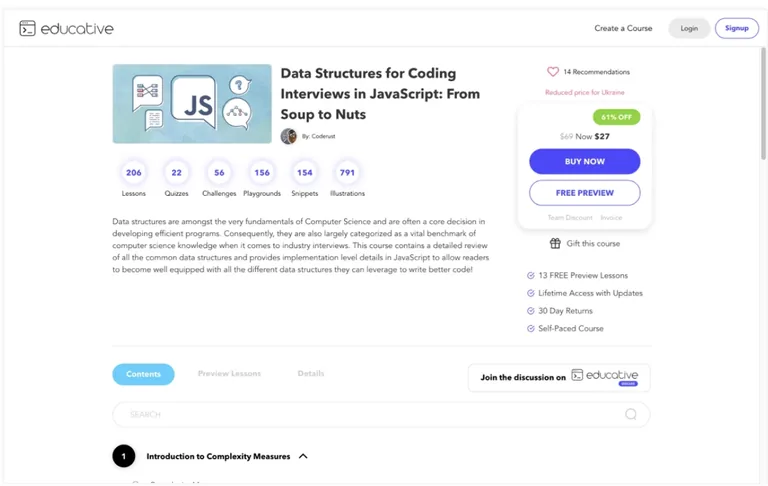
An interactive coding course provider required a web-based solution to handle client data, user activity, and subscriptions. The platform also needed an interactive in-browser environment — feature-rich, yet smooth and not clunky.
We developed a cloud-based web application. The platform requires no special setup and can be used by anyone, even those without a technical background. It has interactive courses, a WYSIWYG editor, and user achievement tracking. The in-browser environment keeps learners engaged and tests their skills, while integrated payments handle transactions and content hosting.
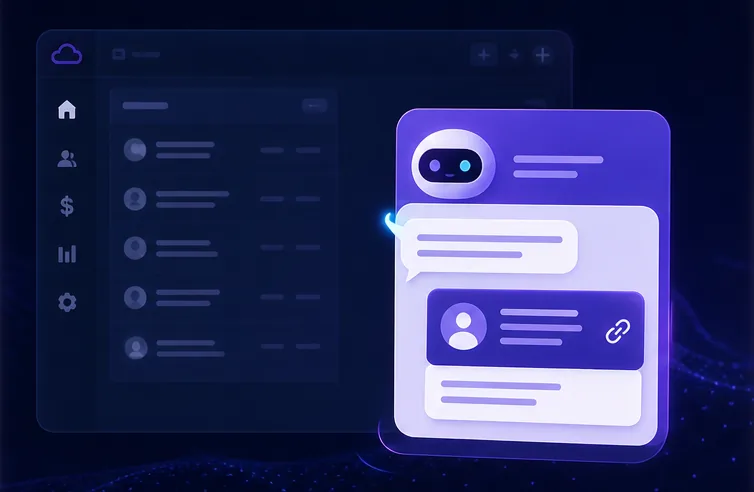
A US-based B2B SaaS company expanded their sales team from 14 to 24 reps in 18 months. New hires were spending their first weeks buried in training docs. Onboarding was the biggest drag on the pipeline. Things were made worse by manual data entry overload and low data quality — 40% of CRM records had at least one bad field.
We created an LLM-powered assistant that is integrated into the CRM as a web widget. Reps ask questions, and the bot fetches real-time data and responds with a link to the record. One instruction replaces four screens — the bot fetches the fields and logs a call.
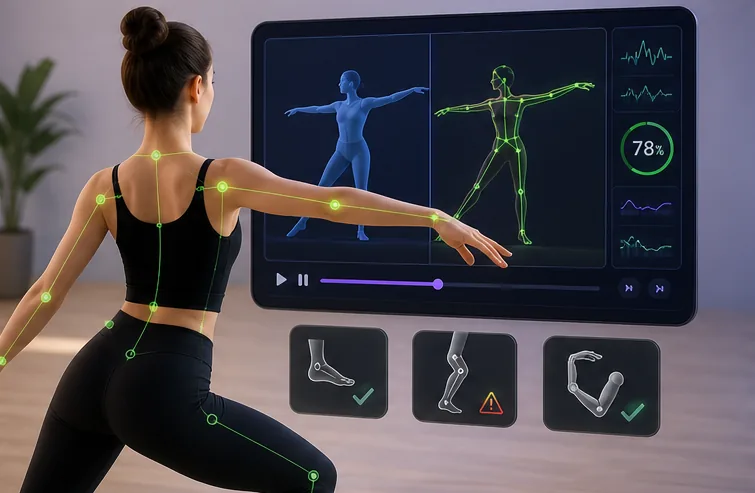
The dance school network desired to give individual feedback to all students. In a group class, it is impossible for one teacher to spot every incorrect move. Students made the same errors for weeks on end, and no one corrected them.
We have created a training system to capture teacher and student movements from video input. Pose estimation algorithms capture each pose. Motion analysis compares the student’s performance with the teacher’s frame by frame. The system gives real-time suggestions for corrections. Teachers also get clear information about each student, which helps them be more targeted in the process.
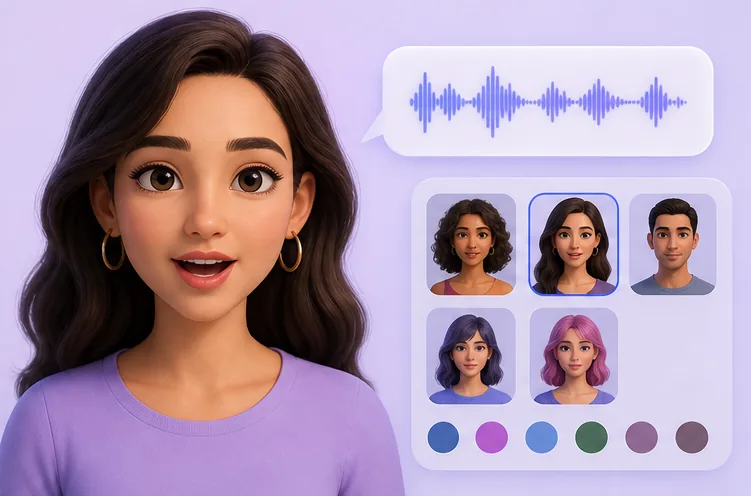
Hebrew learners need interesting audio-visual practice, as traditional text-to-speech applications are flat. A plain voice doesn’t provide any visual clues, so students lose the link between words and mouth movements and facial expressions.
We developed a system that converts any avatar image into a talking character that reads Hebrew text aloud in a natural manner, including mouth movements and facial expressions. The solution is based on TTS technology, avatar generation, and lip-syncing. Avatars are customizable by users and provide a personalized and interactive experience for each learner.
The platform uses AI and NLP to tailor content and pacing to the individual learner. These AI tools can make assessments, provide feedback, and respond to student queries.
Agentic systems autonomously perform multi-step tasks. An agent can create a study plan, assign materials, and follow up with a student with less manual input.
Physical classrooms are integrated into the digital system through connected devices. Your platform can receive performance data from sensors and lab equipment.
Cloud infrastructure lets teams build scalable platforms without new hardware. You pay for the capacity you use and scale up when enrollment rises.
Education platforms generate large volumes of data on every learner. Data analytics tools turn that raw information into reports on performance, engagement, and course quality.
AR puts digital objects into the real world using a phone camera. Medical students can learn anatomy in 3D. Engineering students can inspect equipment without touching it.
VR creates a complete digital environment for hands-on training. Students can try out lab work or safety procedures without risk of error.
Computer vision lets software interpret images and video. In education, it can be used for automated proctoring and reading handwritten answers on scanned tests.
These services cover the entire lifecycle of developing an education product. The process begins with consulting and design, followed by development and testing. Our team will be available for updates and support after the release.
Education technology breaks down the barriers of a set class schedule. Students have the opportunity to learn at their own speed and receive immediate feedback. Teachers get data that indicates where each learner needs assistance.
The education industry is first, with schools and universities, but it’s far more. Learning platforms are used by healthcare, financial, retail, and manufacturing companies to train employees. It’s suitable for any business that has a need to educate at scale.
A proof of concept takes approximately 6 weeks. An MVP can be ready in 8–10 weeks. A full product timeline depends on the complexity of your requirements.
The cost will vary based on the features and the integrations you require. The price of a simple MVP is much lower than a platform with AI and AR modules. For a project-specific estimate, try our app cost calculator.
Thank you! Your request has been sent — our team will get back to you within 48 hours.
Planning an edtech product of your own? Tell us about your learning goals and technical requirements, and our team will get back to you within 48 hours.
Next steps
LITSLINK specialist reviews your request and contacts you to discuss the details
If needed, we sign an NDA before moving forward
We send a project proposal – estimates, timeline, and team CVs included
After launch, we stay on for any updates your product needs
MVP Idea Readiness Checklist (PDF)
Is your product idea ready for an MVP? A short checklist to test it before you spend on development. Leave your email to download it now; we will also send you the link.
Thank you! Your PDF is ready — we have also sent the link to your email.


