



Agentic AI
Agentic systems can autonomously perform actions within boundaries you set, for example, rescheduling a production run when a machine breaks down. For routine decisions, AI agents can act without asking for human approval at every step.
Services.
End-to-end product development — from AI prototypes to scalable web and mobile platforms.
View all services →Not sure where to start?
Book a free discovery call →Software Development
Industries.
Domain expertise that shortens discovery and gets compliance right from day one.
Not sure where to start?
Book a free discovery call →AI Agents.
Custom AI agents that take routine work off your team — built and deployed in weeks.
View all AI agents →Not sure where to start?
Book a free discovery call →AI Agents For
Technologies.
A modern stack for every layer of your product — pick one or let us recommend.
View all technologies →Not sure where to start?
Book a free discovery call →Hire.
Vetted senior engineers who join your team in as little as 48 hours.
View all roles →Not sure where to start?
Book a free discovery call →Case Studies.
1540+ projects delivered for startups and enterprises in 82+ countries.
View all case studies →Not sure where to start?
Book a free discovery call →Resources.
Guides, live sessions and tools to plan your product and budget.
Visit the blog →Not sure where to start?
Book a free discovery call →Company.
The team behind 1540+ projects for 1000+ clients worldwide.
Get in touch →Not sure where to start?
Book a free discovery call →In Numbers
Enter to search·Esc to close
Manufacturers face constant pressure: margins are tight, material costs are rising, equipment is down, and quality standards are unforgiving. AI solutions in manufacturing can address these challenges by turning production data into actionable improvements on the factory floor. The advantages of AI solutions provided by LITSLINK are:
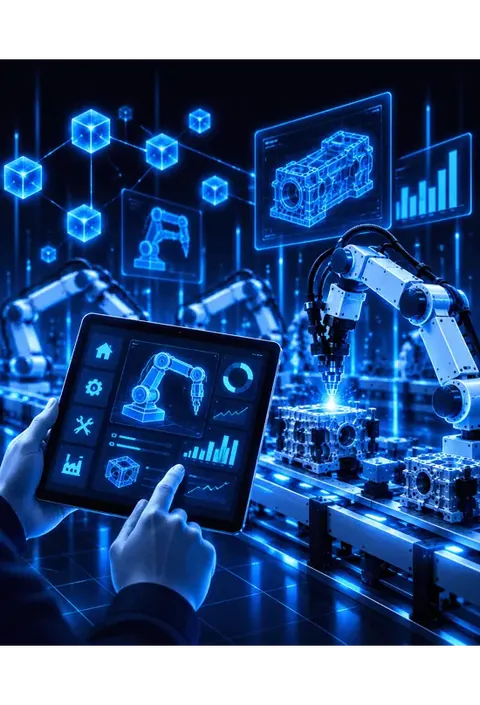
LITSLINK develops AI solutions to forecast equipment failures, identify defects, and minimize expensive production downtime. These applications cover the entire manufacturing production process.
Our AI models can assess design options and forecast each option’s performance before the product moves into full-scale production. Engineers can test product designs and production processes with fewer physical prototypes. This reduces R&D costs, shortens development time, and speeds time to market.
Smart factories can use live machine data to identify bottlenecks and idle capacity. This visibility lets managers adjust workflows and respond to disruptions in minutes, not days. Improved equipment and labor utilization can enhance overall operational efficiency.
Quality control automation can minimize manual errors at high production volumes. LITSLINK automates defect detection and quality documentation, so each part is inspected to the same standard without hiring more people. Plants can minimize scrap and rework with improved quality control. Audit-ready records also help with compliance.
Emergency repairs and overtime can raise maintenance costs because of unplanned downtime. Our models read machine sensor data and alert maintenance teams to failures days or weeks ahead of time, allowing repairs during scheduled stops. Plants can minimize downtime and repair costs with earlier notification of maintenance needs.
Changes tested on a live production line can cause downtime and waste. A digital twin is a virtual representation of your factory, allowing teams to test new layouts, processes, or product runs without interacting with actual equipment. This reduces experimentation costs and speeds the journey from idea to rollout.
Weak links in supply chain management can put the entire production schedule at risk. LITSLINK’s models monitor supplier performance and logistics data to identify risks early and recommend alternatives. AI technologies in supply chain management can help manufacturers minimize supply chain disruptions and expensive emergency orders.
Improved inventory control can minimize overstock and production shutdowns. Our forecasting systems account for inventory levels and actual demand signals so warehouses are stocked with the right inventory. Clients can lower carrying costs while minimizing stockouts.
Intuition-based production planning can result in overspending in one quarter and lost orders in the next. AI models can predict demand by analyzing past sales data, seasonal market trends, and other indicators. Predictions based on customer preferences can help improve production planning and profitability.
Energy is an increasing portion of production costs, and most plants have limited visibility of energy use. Our systems track energy, materials, and other production resources, identify waste, and suggest changes. This reduces utility costs and supports a smoother path to sustainability goals.
Injuries cause production losses and increase insurance premiums. Our safety tools can detect missing protective equipment or workers entering restricted areas and notify supervisors before an incident occurs. AI can also support workforce planning by aligning staffing needs with production schedules. This reduces accidents and strengthens compliance records.
Natural language processing tools help staff find answers in technical manuals with plain-language questions. Our AI tools organize technical documentation and make it searchable, giving operators answers in seconds. This reduces onboarding time and keeps expertise within the company even when experienced employees leave. OCR-based tools can extract data from purchase orders, inspection reports, forms, and maintenance records. They can also summarize documents, complete forms automatically, and transfer the extracted data into ERP or other existing systems. This reduces manual data entry and errors while speeding up document processing.
Our AI solutions solve production challenges, ranging from defects to downtime. Here are the fundamental technologies that enable data and automation in modern manufacturing.
Agentic systems can autonomously perform actions within boundaries you set, for example, rescheduling a production run when a machine breaks down. For routine decisions, AI agents can act without asking for human approval at every step.
Generative models can investigate design variations, draft technical documentation, and simulate scenarios that would otherwise take weeks to work through by hand. Engineers still make the final call, but they can find good options much faster.
Machine learning underpins most of our manufacturing work, from demand forecasting to predictive maintenance. Our machine learning algorithms use historical production data and are retrained on new production data.
Images captured by cameras are fed into vision models that detect defects, track parts, and monitor safety conditions in real time. With computer vision systems, plants can check parts for defects at production speed.
A digital twin is a virtual representation of a machine, line, or plant that reflects real conditions in real time. You can test changes on the twin first, reducing risk on the actual floor.
The benefits of artificial intelligence show up as lower expenses, fewer defects, and less downtime. Manufacturers can expect these results when working with LITSLINK.
Bottlenecks and idle capacity are immediately apparent when they occur, not at the end of a shift report. Managers can use live production data to optimize production processes and minimize the risk of missed orders.
This means direct savings on waste and emergency repairs, along with less need to add inspection staff. Plants can also extend the life of existing equipment instead of investing in new machinery prematurely.
Production managers don’t lack data; they lack the time to interpret it. AI processes thousands of signals from machines, lines, and supply systems and translates them into clear recommendations, so decisions are based on evidence, not instinct. Real-time analytics and forecasting help teams respond sooner when conditions change.
Weeks or months are saved in development cycles by virtual testing of design alternatives and production scenarios. A product that would normally require several rounds of physical prototyping can often reach the market after just one.
Vision systems monitor for unsafe conditions and missing protective equipment 24 hours a day. Models using sensor data can anticipate maintenance needs before equipment failures cause accidents or shutdowns.
Reducing scrap and improving energy use can boost production efficiency and minimize environmental impact. Predictive maintenance also helps, as well-tuned machines use less power and produce less waste.
The right development partner can build technology solutions around your factory’s needs. Here are the reasons manufacturing companies choose LITSLINK.
LITSLINK has been developing software for more than 12 years, and it is reflected in the numbers. Over 1,540 projects have been completed by more than 300 tech experts for more than 1,000 clients. That client base spans 82+ countries, and the team has worked in production environments of virtually every size and shape. Our expertise includes AI and ML solutions for predictive analytics, process optimization, intelligent automation, and data-driven manufacturing systems.
When projects are poorly defined and lack a clear timeline, AI implementation can become more expensive. We work in short iterations, so a working model gets to your floor early and improves from there. You can move from an initial PoC in as little as 6 weeks to a production-ready MVP within 10 weeks, not after a year of quiet development.
Standalone AI features can create data silos that don’t connect to existing tools. Our AI tools connect with your existing systems, such as MES, ERP, CRM, IoT platforms, sensors, data warehouses, and legacy systems. Your team maintains the same workflows, but with improved information.
Production data is often a trade secret, and we treat it as such from day one. Our architecture includes data security controls from the design stage. Encryption, role-based access, and secure APIs help protect data and infrastructure throughout the system. We can also adapt security measures to relevant industry and data protection requirements.
No two plants run the same way, so we don’t hand out generic products. We start by studying your manufacturing processes, equipment, and data, and then build models around the specific problems costing you the most. The solution can scale and adapt as your production requirements and business needs change.
Upon completion, and subject to the applicable agreement, everything we create is yours. That means the models, code, documentation, and data pipelines. You remain the owner of your AI tools and can continue building them with any team you want.
LITSLINK is recognized across leading industry platforms for delivering high-quality software solutions. See what clients and the design community say about our work.
Different manufacturing environments call for custom tools, not a fixed product for every plant. Our process outlines how AI can move from an initial idea to a tested factory tool.
The first step is to review your equipment, goals, and operational data. This stage shows where AI can bring real returns and where it can’t, so budget goes only to projects worth doing. We also check whether the available data is complete, accessible, and ready for AI use.
Based on the assessment, we define which problems AI should solve first and what success looks like in numbers. The result is a solution plan with a defined scope, timeline, cost estimate, and goals for data-driven decision-making.
We create a proof of concept on a small portion of your operation before any significant investment. This stage determines whether the model is accurate with your actual data, and the results influence the final version.
Your team needs advanced analytics within its current tools, not in a separate system. We integrate AI models with your production systems, machines, MES, and ERP. Your employees will keep the tools they know, enhanced with AI insights.
We deploy the solution on the floor and support your team during the first weeks of use. Once the initial deployment is stable, the system can expand to other lines or plants. This is much cheaper than building from scratch at each location.
A deployed model is not a finished product; production conditions change, and models need to keep up. We monitor accuracy and system health 24/7, retrain models with new data, and provide regular reports.
Over the years, we have delivered AI projects across a wide range of industries, such as logistics, agritech, and healthcare. Below are a few examples from our portfolio that show how we approach such challenges in practice.
Challenge
A logistics company manually recorded all incoming parcels — one employee read the label, typed the code into a spreadsheet, and then moved the box along. Manual entry caused a 4% error rate and required two employees per shift to do nothing more than enter serial numbers, with 1,200 parcels per day per site. Handheld scanners helped, but damaged, tilted, or shrink-wrapped labels still required manual entry.
Solution
We created a barcode-scanning plugin that runs on live camera feeds. The task is split between two AI models: one finds all the codes in the frame, and another reads the digits. We trained the models on 28,000 images from the client’s own footage. It supports 15 barcode formats and is accessible on desktop, mobile, and web.

Challenge
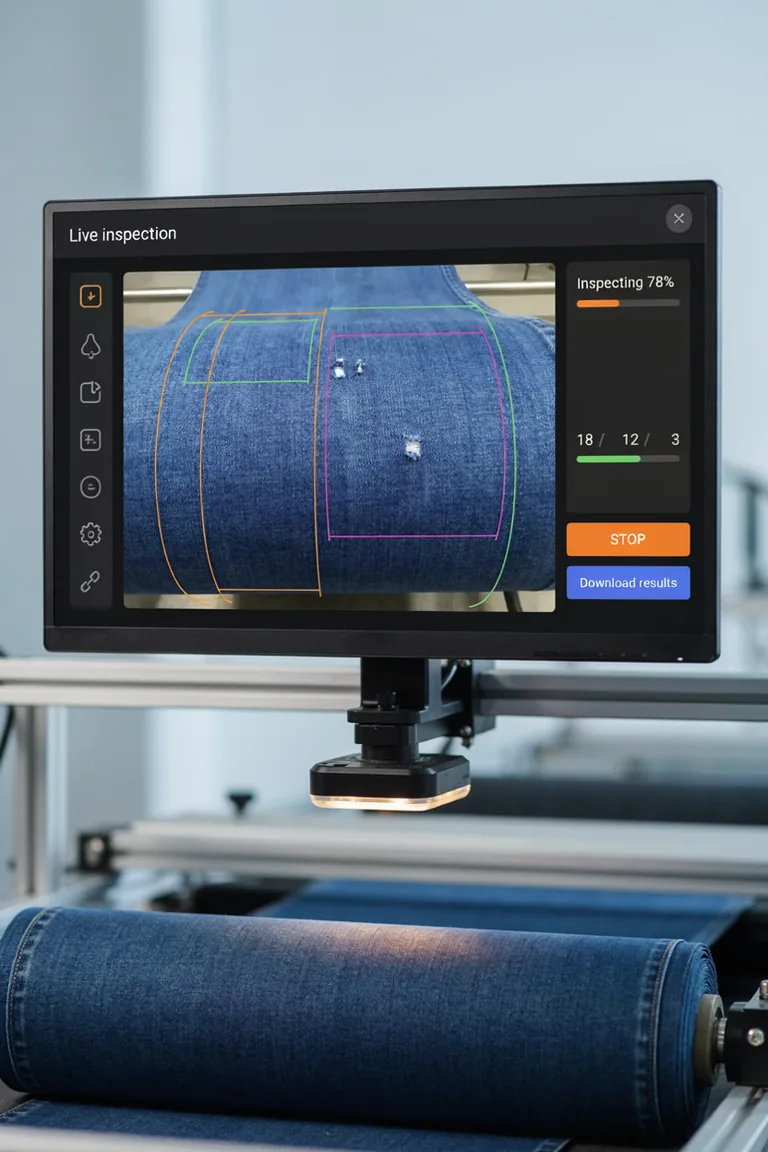
A Ukrainian factory needed a way to automatically detect defects on its products. Manual inspection could not keep up with production speed, and defect types varied widely.
Solution
We created a real-time AI system that detects defects on objects and sorts them into eleven classes based on engineering criteria. We built the solution with PyTorch, Python, and OpenCV, hosted on AWS, and deployed it directly at the client’s factory. Real-time remote monitoring is included, so the team can follow inspections as they happen.
Challenge
A large US retailer had years of historical sales data scattered across six disconnected systems and no dependable way to forecast demand by category. Manual spreadsheet forecasts missed real demand by roughly 27% on average, and numbers went stale within weeks.
Solution
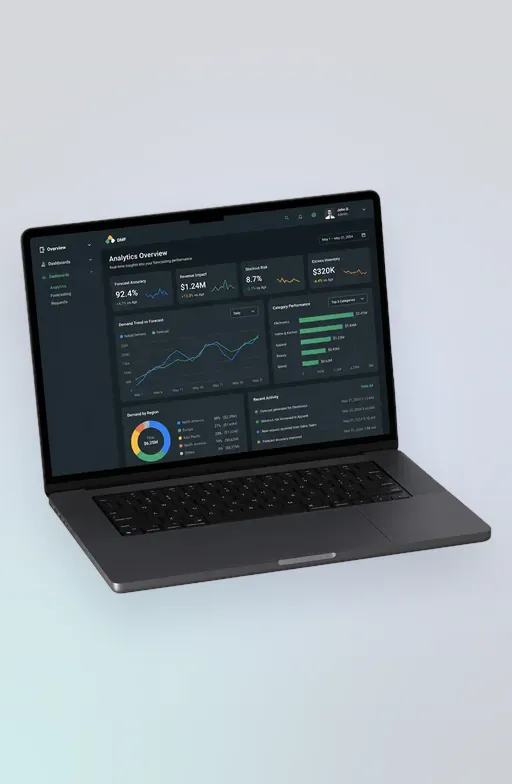
We built a predictive analytics platform that merges all six data sources into one automated pipeline and turns historical sales data into 12-month demand and revenue forecasts by product category. Auto-trained models retrain weekly on AWS, a Flask API serves each forecast in under a second, and a web dashboard presents the predictions. The full build took about four months.
AI in manufacturing refers to applying algorithms that learn from manufacturing data and help manage manufacturing processes. Typical uses include spotting product defects on the line, predicting machine failures before they happen, and forecasting demand.
The primary advantages are improved product quality, reduced downtime, and reduced waste. Decisions are also made more quickly, as managers can see problems developing in real time rather than after the fact.
The biggest challenge is data quality — models are only as good as the data they learn from, and older plants may have incomplete or messy data. A skills gap also exists, as most factory teams need training or external support to work with AI systems. Lastly, worker resistance is possible, so it is important to frame AI as a tool that automates repetitive tasks, not one that replaces humans.
A proof of concept takes 4 to 6 weeks, while an MVP is usually ready within 10 weeks. The size of a full-scale project is dependent on the number of integration points and the complexity of the system. Either way, you’ll see tangible results long before the rollout is complete.
The cost will vary based on the size of the scope — a single-model quality control system is a very different project than a plant-wide analytics platform. The cost depends on data readiness, integration depth, and customization. For a rough idea of what it might cost, use our AI project cost calculator.
Thank you! Your request has been sent — our team will get back to you within 48 hours.
Is AI a good fit for your manufacturing business? That’s exactly the kind of question we help answer before we write any code. Send us a short description of your situation, and we’ll respond within 48 hours with our first thoughts on what’s possible.
Next steps
LITSLINK specialist reviews your request and contacts you to discuss the details
If needed, we sign an NDA before moving forward
We send a project proposal – estimates, timeline, and team CVs included
After launch, we stay on for any updates your product needs
MVP Idea Readiness Checklist (PDF)
Is your product idea ready for an MVP? A short checklist to test it before you spend on development. Leave your email to download it now; we will also send you the link.
Thank you! Your PDF is ready — we have also sent the link to your email.