








The AI era has long begun; however, the most-asked questions remain relevant today. How does AI work? How do generative AI and AI agents behave? How do businesses implement AI? This guide answers the 50 key questions about AI in a short, easy-to-understand format.
Key Takeaways:
- Every company uses AI now. Nearly nine in ten organizations say they regularly use AI in at least one part of the business.
- People picked it up faster. About 53% of people were using generative AI within three years of its mass-market launch.
- Using AI doesn’t mean making money from it. Only 37% of companies say AI has affected their profits (EBIT), about the same share as a year earlier.
- AI is neutral. In 2025, top models scored 93% on graduate-level science questions.
- More jobs may be gained than lost․ According to a World Economic Forum report‚ 170 million jobs may be gained, and 92 million jobs may be lost due to AI and other factors by 2030‚ for a net gain of 78 million jobs.
- EU rules arrive in stages. Under the EU AI Act, transparency rules apply from 2 August 2026, and high-risk AI rules start on 2 December 2027.
AI is a branch of computer science that involves creating machines capable of performing tasks that typically require human abilities‚ such as understanding language․ The following are brief answers to 50 frequently asked questions about AI‚ sorted by topic․ Sources for these answers include the 2026 Stanford AI Index‚ McKinsey’s 2026 State of AI report‚ the World Economic Forum‚ and the European Commission․
Top Questions About AI Basics
If you’re just starting your AI journey, these fundamental concepts will give you a solid foundation.
#1 What Is Artificial Intelligence?
Artificial intelligence (AI) is a field of computer science that includes programs designed to perform functions that humans typically perform‚ such as speech recognition․ AI is a field‚ not a tool‚ with a wide variety of applications and products‚ including basic sorting software and products that can hold simple conversations․ Many people frequently use AI products and services without knowing it‚ including products with virtual assistants‚ such as Alexa and Siri‚ to check the weather and other apps‚ such as Shazam‚ to identify songs playing in nightclubs․ Other AI products and services transcribe and respond to spoken requests․ They include online research and other features to quickly respond to spoken requests using audio files․
#2 How Does AI Work?
Most artificial intelligence applications include training algorithms with data and then applying the trained algorithms to new data to generate outputs․
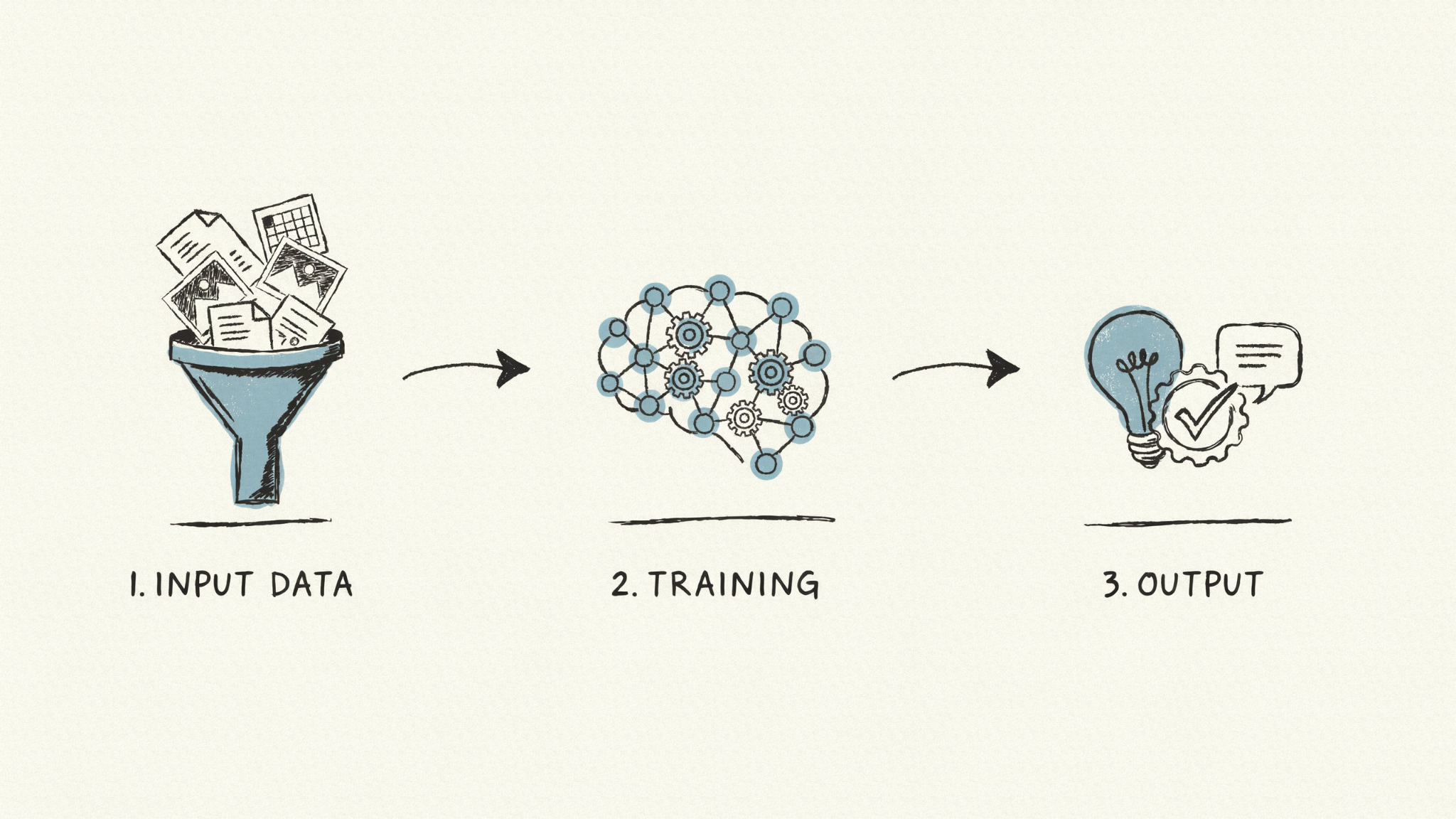
First: Data is fed into the system in bulk‚ including thousands to millions of data records‚ such as images and text passages․
Second: An algorithm evaluates the data fed into the system to learn about patterns in the data‚ such as frequently occurring words in spam and features of cat pictures․
Third: The system makes decisions using what it has learned from the data it was fed‚ such as decisions about new spam emails and cat pictures․ Advantages of the AI system often grow with the quantity and quality of data fed into it․
Read more at LITSLINK’s How to Make an AI: A Step-by-Step Guide․
#3 What Are the Different Types of AI?
AI tools are divided into two main categories: narrow AI tools‚ including chat and recommendation tools created by Google‚ that match human-level ability across tasks‚ and superintelligent AI tools that exceed human ability; however‚ all existing AI tools are narrow AI tools․
In addition to other taxonomies of AI‚ one way to categorize AI is by function․ Reactive AI‚ such as that used in chess programs‚ relies solely on new inputs rather than prior information when making decisions․ Limited-memory AI applications‚ including many chatbots and self-driving technologies‚ use limited historical information when making decisions․
#4 Who Invented Artificial Intelligence?
John McCarthy first used the term artificial intelligence in a 1955 proposal to conduct research in artificial intelligence at a summer workshop at Dartmouth College․ McCarthy’s collaborators on the proposal included Claude Shannon‚ Nathaniel Rochester‚ and Marvin Minsky․ A small group of thinkers and researchers studying machine learning gathered for a summer workshop in 1956․ Although the workshop produced few results‚ it helped create a community of researchers with common interests that is viewed as the founding of the artificial intelligence field․ In a 1950 article‚ Alan Turing discussed the idea of machine thinking and suggested a way to test for it․ The Turing test is named for Alan Turing․
To see how the conversation around AI has moved from “can machines think?” to “how should we control them?”, read LITSLINK’s The AI Dilemma: Why AI Regulation Is Vital.
#5 What Is the Difference Between AI and Human Intelligence?
AI benefits include fast processing and pattern analysis․ Human benefits include general knowledge and skills and the ability to learn in situations with little data․ Training an AI system to read X-rays enables the AI system to evaluate more X-rays in less time than human radiologists․ Advantages of the AI system include no need for breaks for meals or other reasons and the potential to detect things on X-rays that radiologists cannot detect․ Disadvantages of the AI system include errors when exposed to new or different information․
Unlike AI, humans possess common sense, emotional intelligence, and real-world context, allowing us to easily identify nonsensical statements or offensive nuances. Thus‚ humans and models are not competitors․ Humans and models are partners․
#6 What Are the Main AI Technologies?
The primary forms of AI are computer vision‚ robotics‚ machine learning‚ deep learning‚ and natural language processing․ Most AI products use more than one form of AI․
Today, the vast majority of commercial AI applications rely on machine learning․ Machine-learning applications learn from experience without being explicitly programmed․ Deep learning techniques using many-layered neural networks are common in advanced voice and visual applications․ Natural language processing technologies are used in applications such as chatbots‚ translation tools‚ and predictive text apps for smartphones․ Computer vision technology is used in applications such as facial recognition software for smartphones and visual inspection tools on assembly lines․ Robotics technologies combine other AI technologies to develop mobile machine bodies that can carry out physical tasks․
Read about other applications on LITSLINK’s How Artificial Intelligence Is Transforming the World.
#7 What Can AI Do Today?
Many‚ many uses have large amounts of data for and clear goals in mind․ Examples of AI applications include producing readable written and other media‚ such as speech and computer code; speech recognition and translation; recommendations for other media; and fraud detection․
#8 What Are the Limitations of AI?
AI has no common sense․ The AI knows only what was covered in its training data․ You can’t always rely on AI responses for accuracy․ AI might struggle to respond correctly to new questions․
What impressed the researchers most about their findings was the following․ An AI system was able to earn a gold medal at the International Mathematical Olympiad․ But, on the ClockBench task‚ the best-performing AI system answered analog clock questions correctly 51% of the time‚ while people answered correctly 90% of the time․ Researchers called this “jagged intelligence‚” meaning high intelligence in one area and low intelligence in another․
There are data-related risks․ Biased or outdated training data can lead to inaccurate or inappropriate AI outputs․ Unlike humans‚ AI systems are unlikely to acknowledge that they don’t know the answer to a question․ AI systems can confidently deliver false information․ Best practices include human oversight of important AI outputs․
For how companies handle these risks, read LITSLINK’s AI Ethics & Safety: Steps to Implementing Responsible AI.
#9 What Are the Biggest Challenges to Broader AI Adoption?
The disadvantages of AI use include data and knowledge barriers‚ lack of training‚ integration barriers‚ cost barriers‚ and trust and regulatory barriers․ Most organizations test AI applications‚ but it can be difficult to quantify the time and cost savings from AI use․ Another disadvantage of AI use is that incomplete or incorrect information given to AI systems will not improve results․ Lack of training is another disadvantage of AI use because many people are unfamiliar with how to use AI systems․ Other integration disadvantages include problems integrating AI with other technologies․ About one in five organizations cites additional costs of AI use as a barrier․ Trust and regulatory barriers to AI use‚ particularly when sensitive information is involved‚ are common․
The data highlight the main challenge: 37% of companies say AI is impacting their EBIT‚ which is flat year over year‚ and only 6% are high performers‚ generating 5% or more of EBIT from AI․ The biggest obstacle to broader adoption of AI is getting real value from AI․
Questions About How AI Works: Machine Learning, Data and Algorithms
This part of the guide looks at what’s going on under the hood. We’ll keep it simple, with no math and at most one analogy per answer.
#10 How Does AI Learn?
AI learns through trial and error․ The three main categories of AI learning are supervised learning‚ unsupervised learning‚ and reinforcement learning․
In supervised learning‚ a model is trained using labeled data‚ such as thousands of emails labeled as spam or non-spam․ In unsupervised learning‚ a model uses untagged data to find things like patterns among online shoppers with common purchasing behaviors․ Reinforcement learning‚ like teaching a dog‚ rewards the model for correct behavior and helps it learn which behaviors produce the most rewards over time․ Human oversight is needed at every stage‚ including preparing and labeling training data‚ choosing a model‚ and testing it before deployment․
#11 What Is Machine Learning?
Machine learning is an approach to AI in which computers learn to complete tasks from data without direct instructions from human programmers. Conventional programming is a process in which developers write explicit, detailed rules for computers to follow. Spam-combating strategies involving conventional programming include telling your computer to “block emails containing ‘free money’․” Spammers can change their tactics to avoid detection by these filters the next day․ Machine learning strategies for fighting spam include exposing computers to massive data sets of spam and nonspam emails․ Computers using machine learning strategies can learn about spam email characteristics‚ including some not known to humans‚ and can learn from newly labeled emails․
#12 What Is Deep Learning?
The word “deep” describes neural network structures used in these technologies that offer advantages․ Deep neural networks allow the model to learn more advanced characteristics․ Neural networks used for image recognition might learn color and shape information in the first layers‚ details such as facial features and wheels in second layers‚ and information about people and vehicles in output layers using inputs from previous layers․ People typically need to provide input to identify features in other machine learning models․ Deep learning automates this process‚ providing advantages for unstructured data․ Applications of deep learning include facial recognition features on mobile devices and other products‚ voice recognition features‚ language translation features‚ and chatbot features‚ including ChatGPT․
For where it’s heading next, read LITSLINK’s The Future of Deep Learning—ChatGPT, Self-Driving Cars and More.
#13 What Are Neural Networks?
A neural network is a type of computer software designed to work like a human brain․ Layers of nodes connect to form a neural network․ Input passes through the layers of a neural network and is modified as it passes through each layer․ The connections between nodes in a neural network may be adjusted during training․
Visualize an office building with employees working together to answer a question․ Employees in the first office building rows relay information related to the question to other employees‚ who relay the information․ Office building employees in the final rows provide answers to the question․ In a neural network model‚ offices are represented as nodes linked to other nodes by weighted connections that influence a node’s output based on input from other nodes․ Randomly set weights for a neural network result in mostly incorrect outputs for questions․ Training involves providing feedback to the neural network about correct outputs to help it adjust weights․ Repeating this process millions of times strengthens the right connections and results in mostly correct outputs for the neural network․
#14 What Is Training Data and Why Does It Matter?
Training data is data used to train an AI system․ Characteristics of training data‚ including quality and other characteristics of data samples‚ are important determinants of the accuracy and fairness of AI outputs․
A model can only learn information contained in training data․ Large language models are trained on large amounts of text data․ Facts and other knowledge the model learns from training data may include false beliefs and biases in the training data․ Benefits of using a large training set include more opportunities for the model to learn correct information from the training data․ Drawbacks of using a large training set include the model learning false information and biases in the training data․
#15 What Role Do Algorithms Play in AI Systems?
Algorithms are sets of instructions used by AI applications to make inferences and other decisions from data․ Algorithms and data define results of AI applications․ Algorithms limit the types of inferences that models can make‚ and data limit what is inferred․
You can draw an analogy with cooking․ The algorithm is the recipe‚ and data is the ingredients․ Great recipes won’t work with bad ingredients‚ and great ingredients won’t work with bad recipes․ In reality‚ the algorithm tests various techniques on the training data and adjusts the techniques to reduce error between predicted and actual results․ For information on the most common types, see LITSLINK’s Machine Learning Algorithms: A Beginner’s Guide.
#16 How Are AI Programs Different From Traditional Software?
Traditional software functions like a set of fixed rules: if a payment exceeds $500, request approval; if the password is entered incorrectly three times, lock the account. It is predictable and easy to verify, which is why banks and payroll systems still rely on it. However, some tasks don’t fit neatly into rules. If you try to write instructions for every possible spam email, you’ll never finish, because spammers keep changing their tricks. An AI spam filter skips the rulebook. It learns from millions of emails people have already sorted, and it keeps improving as new ones come in. The trade-off is that AI is less predictable and harder to explain, so many products use both.
For more on how these terms fit together, read LITSLINK’s The Difference between Artificial Intelligence and Machine Learning.
#17 What Is the AI Black Box Problem?
The black box problem for AI is that some AI technologies‚ such as deep neural networks‚ have features that humans do not fully understand․ These unknown features can be obstacles to trusting‚ holding accountable‚ and properly regulating AI technologies․
A large neural network has billions of adjustable connections․ Inputs and outputs are known‚ but the relationships and interactions between the billions of weights that transform inputs into outputs are unknown․ Developers and others trying to explain particular outputs of a neural network have often not been successful․
Applicants denied loans by AI systems, and patients told that medical images indicate low risk have the right to information about decisions made by AI systems․ Other people harmed by mistakes made by AI systems have similar rights․ New laws in the EU and elsewhere require companies using high-risk AI systems to explain how they reach decisions․ Explainable AI tools offer options for individuals to access information and challenge AI decisions‚ rather than accept AI decisions‚ to exercise their rights․
#18 What Is Natural Language Processing?
Natural language processing‚ or NLP‚ uses artificial intelligence techniques to enable computers to understand and react appropriately to human language․ Uses of NLP include chatbots‚ language translators‚ and voice response systems, and sentiment analysis programs․
Human language has variability due to factors such as slang and misspellings․ Natural language processing technologies can help computers process human language variation․ Uses of chatbot technology include interpreting and responding to human queries that may be unclear or otherwise problematic․ Uses of translation software such as Google Translate include translating text from one language to another while maintaining meaning․ Uses of voice recognition technology and other natural language processing technologies include setting reminders using voice commands‚ such as “remind me to call mom at six․”
Generative AI and Large Language Models
Generative AI is the part of AI people search for most, and it’s easy to see why: they can actually try it themselves. Here are the questions that come up again and again.
#19 What Is Generative AI?
Generative AI is a type of AI that makes new content, such as text, images, audio, video, or code, by learning patterns from huge amounts of existing material. Ask it for a product description, and it writes one. Describe a logo idea, and it draws a few versions. It can also compose background music, clone a voice for a voiceover, or write the first draft of software. It isn’t copying any single example it learned from. It’s mixing patterns it picked up during training into something new.
For how companies are putting it to work, read LITSLINK’s How Generative AI Is Changing Industries.
#20 What Are Large Language Models?
Large language models are artificial intelligence models trained on extensive text data to perform many types of language tasks․ Applications of large language models include answering questions and other requests and writing code․
Trained LLMs are exposed to large amounts of Internet and other text‚ including text from books and computer programs‚ as training data to perform a task billions of times‚ to predict the next word in a sequence․ Other training outcomes include language and writing skills and some factual and logical knowledge․ Uses of LLM technology include consumer-oriented chatbots such as ChatGPT and Claude‚ as well as Gemini from Google‚ and other writing and coding aids built into software products such as email and office software․ Keep in mind that LLMs don’t have the same knowledge as people․ They can’t verify that they’ve read particular materials or that certain information is correct․ The LLM output is a prediction and may or may not be correct․
#21 How Are Texts Generated by AI Tools Created?
AI-generated text is text created using a language model that suggests the next token to include in a piece of text until the model decides to stop․ AI-generated text is generally easy to understand but can contain factual errors․
Say you enter “The capital of France is․” The model uses your input to predict several likely words to follow it․ “Paris” is the word with the highest likelihood of correctness given the training data․ The model adds “Paris” to the end of the sentence it has generated and makes further predictions until generating a full response․ A disadvantage of this method is that the model’s predictions are grammatically correct but factually incorrect responses‚ even when training data about the topic is missing, or incorrect․ Predicted responses might include the full title of a nonexistent book․
#22 What Is Prompt Engineering?
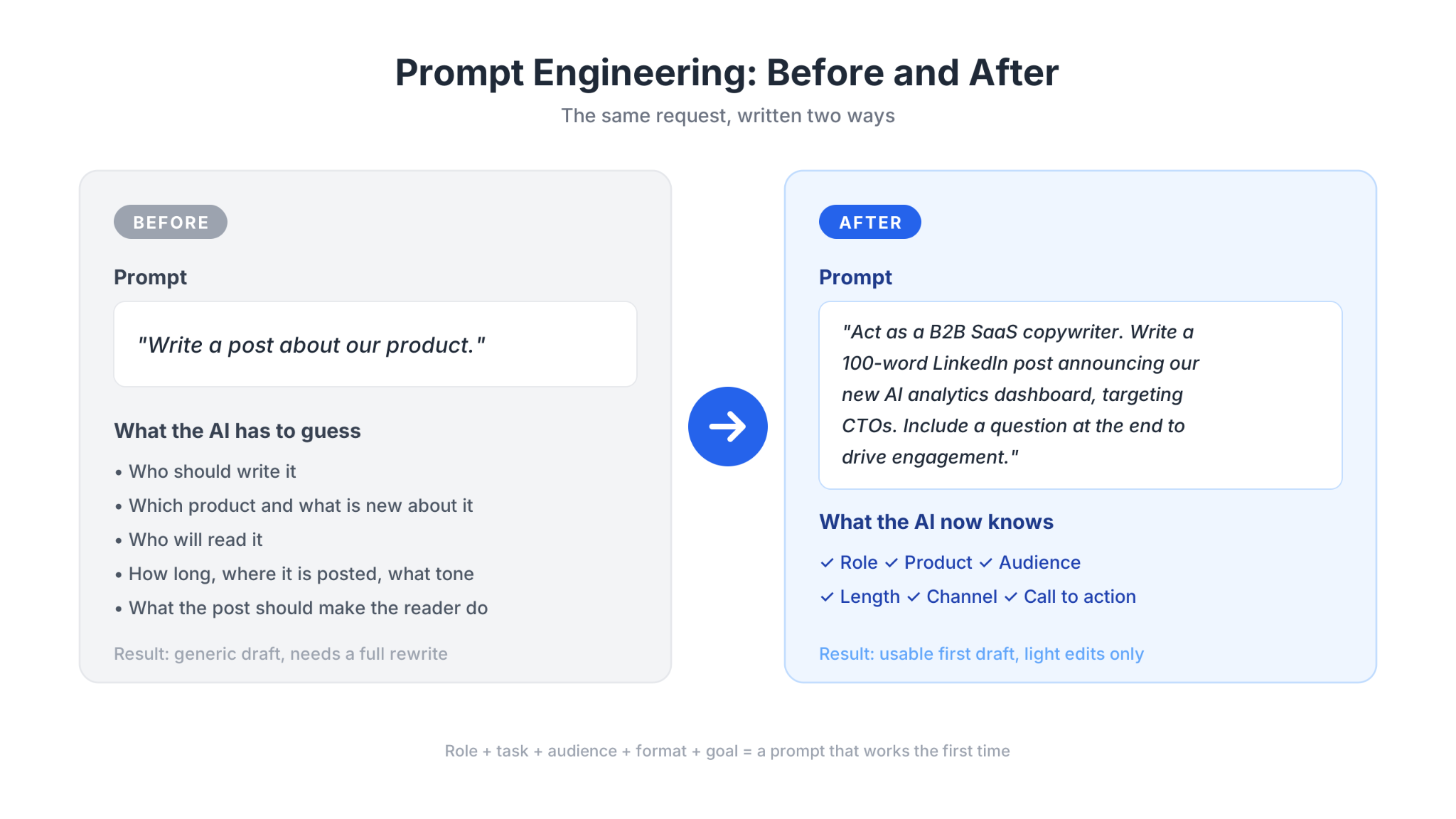
Prompt engineering involves giving instructions to generative AI systems to create more useful outputs․ Many low-quality AI outputs are the result of poorly designed prompts․ An example of a poorly designed prompt is “Write a post about our product․” Steps you can take to improve AI outputs include giving the AI system information about the audience and other features of the desired output and information about your company and previous efforts to create similar outputs․ You are responsible for including this information as part of your prompt․ Another step you can take to improve AI outputs is to give detailed instructions about the format of the desired output‚ such as a table with three bullet points or a 100-word email․ For example‚ compare “Write a post about our app” with “Write a friendly 80-word LinkedIn post announcing our budgeting app to small business owners‚ ending with a question․” The second prompt is likely to yield a more immediately useful output․
#23 What Are AI Hallucinations?
An AI hallucination is a confident but incorrect answer produced by a language model․ Language models often hallucinate because they are built to produce humanlike writing․ Under the hood, an LLM is a probability engine: it predicts the most likely next word in a sequence, and it never looks anything up in a verified database unless the application connects it to one through a retrieval setup such as RAG.
If you ask a chatbot for references on a specific topic‚ the chatbot’s output may include article titles and author and publication information․ Many of the listed articles do not exist․ The chatbot does not intend to deceive the user but instead predicts likely reference information‚ including nonexisting article titles and publication dates․ Generated reference rates differ by question set․ Six thousand questions on six topics in the AA-Omniscience test data set were used to evaluate 26 chatbots․ Generated reference rates for these chatbots ranged from 22% to 94%․ Top 15 chatbots on the HHEM leaderboard‚ which evaluates document summarization skills‚ had generated reference rates from 1․8% to 5․4%․ These two reference rate measures are not directly comparable because they measure different skills․
To reduce risk, double-check key facts, rely on trusted sources, and ask the AI to cite its sources.
For more, read LITSLINK’s What Is an LLM Hallucination? Why Should We Care?
#24 Can AI Match Human Creativity?
AI can suggest new ideas․ AI cannot produce original work․ What AI suggests will be similar to things it has been trained on․ AI does not have its own knowledge or experience․ Potential uses of AI include assisting humans with creativity․ AI is not a suitable replacement for human decision-making․
Benefits of using AI include finding many content ideas‚ such as 20 potential headlines‚ several logo design ideas‚ and five different ways to rewrite a sentence for different audiences․ These benefits can help overcome content blocks․ Disadvantages of using AI include a lack of personal interest or drive to create content․ Most users have better outcomes when working with AI to develop many ideas and choosing which content to use based on their own preferences․
#25 Can AI Understand Language Like Humans Do?
Not in the same way as humans․ AI models can be trained using text and used to produce text‚ including ironic comments‚ that they do not fully comprehend․ Language models are typically trained on large collections of text to make predictions about upcoming words․ Language models can be used to generate text outputs but do other things poorly‚ such as reading comprehension․ A language model’s accuracy on the KaBLE test dropped from 98․2% to 64․4% when fed a false belief that the user held․
To see what’s happening inside these models, read LITSLINK’s How ChatGPT Large Language Model (LLM) Works.
Top Questions About AI Tools and Applications
Now for the practical side: what tools are out there, and where AI is already being used every day.
#26 What Are AI Tools?
AI tools are software applications that use AI features to assist with various business needs‚ such as writing‚ graphic design‚ coding‚ data analysis‚ and customer service․ Writing tools can generate content for emails‚ articles‚ and summaries and provide other writing assistance․ Graphic design tools can create images and other designs from a text description․ Coding tools can provide information about code functions to help with coding and debugging tasks․ Data analysis tools can help you identify valuable patterns and other information in spreadsheet and other business documents that you might otherwise miss․ Chatbots and other customer service tools available on corporate websites can answer basic customer questions on demand‚ leaving live customer service representatives available to address more involved customer needs․
#27 What Are the Best AI Tools for Beginners?
The most accessible tools for beginners include free tools with easy-to-interpret outputs․ AI chat and writing tools and image-generating tools are popular with beginners․ General chat bots like ChatGPT‚ Claude‚ and Gemini are popular tools for beginners because they use a chat interface similar to what users are familiar with in human interactions․ Grammarly is a popular tool for writers because it offers feedback and suggestions about previously written text․ Image tools built into Canva are popular tools for design novices who want to create images․ Other advantages of beginner tools and other AI tools include not needing to install software or learn much upfront to use them and trying a free version of the tool to see if it would be useful․
#28 Which AI Tools Are Best for Content Creation?
Content tools mostly fall into four groups: writing and editing helpers, image and video generators, SEO tools, and repurposing tools. Whatever you use, you still need to check the results.
ChatGPT and Claude can help you write blog posts․ Grammarly can help you edit and improve blog posts․ Midjourney and Canva can create images based on text prompts․ Runway can produce short video clips․ Surfer and other SEO tools can offer suggestions for optimizing blog posts with keywords and other techniques․ Descript and Opus Clip can help you produce shorter clips from podcasts and other videos․ Be sure to review any AI-generated content for inaccuracies and plagiarism before using it․
#29 How Do You Choose the Right AI Tool for a Task?
Begin by evaluating the new tool’s usefulness for your purposes․ Issues to evaluate include accuracy and cost as well as compatibility with other tools․ For instance‚ you wouldn’t use an image-generation tool for spreadsheet tasks‚ even if the tool has other desirable features․ Issues to evaluate also include differences in the impact of errors on different tasks‚ such as posting errors on social media sites versus financial reporting errors‚ and testing a free version of the new tool․ Resistance to using the new tool among team members will prevent them from using it․ Compatibility with other tools may be an issue․ For example‚ a writing tool embedded in Google Docs may be more valuable to users of Google Docs than a separate writing tool․
#30 What Is an AI Agent?
An AI agent can plan and take steps toward a goal on its own, like searching, using other apps, or finishing a multi-step task. A chatbot only answers when you ask. A chatbot suggests flights. An agent can compare them, check your calendar, and book the one that fits, asking you only about the big decisions. Large companies are moving fastest: 40% of respondents from organizations with over $1 billion in revenue say they’re scaling AI agents, up from 27% a year earlier, while smaller organizations stayed at 22%. Agents still fail roughly one in three attempts on structured benchmarks.
For more, read LITSLINK’s What Are AI Agents? Understanding Their Role in Business.
Questions About AI in Business and Different Industries
This part is for decision-makers and teams using AI at work, in everyday business functions and in industries like healthcare, software and manufacturing.
#31 How Do Companies Use AI?
Companies are using AI for marketing‚ sales‚ operations‚ finance‚ and other HR functions to personalize communications and other customer interactions‚ assist with sales‚ combat fraud‚ and improve other HR processes‚ including resume screening․ Nearly 90% of respondents to a survey say their companies are using AI often or very often in at least one function․ Marketing and sales employees are using AI to personalize emails and other communications․ Sales employees are using AI to find new customers․ Operations employees are using AI to improve inventory management․ Finance employees are using AI to spot red flags of fraud and other losses․ HR employees are using AI to streamline resume screening․
#32 How Is AI Used in Healthcare?
In healthcare, AI primarily helps read medical imaging, supports diagnosis, accelerates drug development, and manages administrative tasks. Still, doctors make the decisions, but AI can analyze X-rays, MRIs, and CT scans and flag anything unusual, allowing radiologists to focus on the initial area. It also helps doctors consider potential diagnoses, find new drugs more quickly, and handle tedious tasks such as clinical notes and billing. The FDA has cleared approximately 1,450 medical devices with AI capabilities, primarily in radiology, cardiology, and neurology. According to the Congressional Research Service in their 2026 assessment, it has not approved any single generative artificial intelligence (AI) device. AI is not a replacement for clinicians, but assists them.
See LITSLINK’s AI in Healthcare: Real-World Applications That Work for real-world examples.
#33 How Is AI Used in Software Development?
While AI can assist developers in writing code, identifying errors, generating test plans, and writing documentation, it does not eliminate the need for human oversight. It can recommend the next line or two, explain an error, generate unit tests, or transform unreadable code into readable documentation. This can help save a ton of actual time.
In one study mentioned by the AI Index, developers using GitHub Copilot finished 26% more pull requests. But it’s not always so successful. The authors of one study found that skilled developers took 19% longer with AI, but they couldn’t replicate this in later tests. Additionally, AI-generated code may still contain bugs or vulnerabilities that human reviewers need to identify and fix. Moreover, AI-generated code can also be buggy or insecure, requiring a human review of every line.
If you want to learn more, give a read to LITSLINK’s Key Challenges of AI in Software Development that you can’t ignore.
#34 Will AI Replace Manufacturing Jobs?
AI and robots are replacing repetitive work in factories, but most jobs are more likely to shift than be eradicated one-for-one. The highest-risk tasks are ones that are easily anticipated, such as checking for visible defects on products, packing boxes, moving parts down a line, etc., or welding the same seam over and over. Machines can do these rapidly and don’t get tired. But someone must configure the robots, maintain them, and repair them should something go wrong. Robot adoption is also more consistent than the headlines suggest. A total of nearly 542,000 industrial robots were installed worldwide in 2024, which was close to the level of 2023 (+0.2%), and China contributed 54.4%. It is impossible to predict exactly how many jobs will be affected.
To get the most up-to-date statistics, check out LITSLINK’s How Many Jobs Will AI Replace? 2026 Stats & Forecast.
#35 How Does AI Improve Customer Experience?
Through chatbots, personalization, faster support, and early problem detection, as long as the data is good and customers can easily reach a real person. A chatbot can resolve “Where’s my order?” calls at night, and AI will direct all inquiries to the appropriate team. Some companies even reach out to customers before they realize that they are waiting for a long time. In 2025, 45% said they were more satisfied with employee and customer service when AI was involved. Bad data, however, leads to incorrect answers and a bot that can’t contact a human and only hates people.
To learn more, check out LITSLINK’s AI Agents for Customer Service – How AI is reshaping CX.
#36 How Can a Business Start With AI Adoption?
Make a goal, select one use case, review your data, conduct a pilot, monitor outcomes & scale up. Given a problem, such as “cut the support response time by half,” pick one use case that matches that problem. Correct any bad data before working with it. Then try it with one team for a couple of weeks and measure actual numbers, such as hours saved. If it works, grow it. More companies are on the path: 44% said AI is expanding throughout their organization, compared to 38% in last year’s survey.
Read more on the importance of early AI adoption in LITSLINK’s The Competitive Edge: Why Early AI Adoption Matters.
#37 Does AI Help With Decision-Making in Business?
Yes. AI can predict and analyze real data at a much faster rate than humans, though humans add context, ethics, and accountability. AI can forecast customer needs for the upcoming quarter, identify customers at risk of leaving, or pinpoint which marketing channel is working. Self-reported, about half of respondents (50%) say it aids them in making better decisions at work. Drawbacks of AI tools include missing significant business events, such as impending mergers with key clients, and the ongoing need for human workers to be accountable for bad decisions made while using AI tools.
AI Impact on Jobs, Education and Everyday Life
AI isn’t just a business topic. It’s already changing how people work, learn, and get through their day.
#38 What Is the AI Impact on Jobs?
AI typically replaces parts of a job, rather than eliminating jobs, by automating components of tasks. According to the World Economic Forum, 170 million jobs will be created and 92 million lost, a net increase of 78 million, by 2030 due to disruptions. This prediction is not just about AI; it’s about technological, demographic, economic, and green transition shifts. As of now, the impact is less. Only 14% of organizations using AI reported reducing staff last year, while 39% expect to do so in the coming year.
For more details, check out LITSLINK’s article AI and Jobs: Should We Be Concerned About AI’s Impact on Jobs?
#39 What New Skills Do You Need in the Age of AI?
Important skills are AI literacy, data awareness, critical thinking, clear communication, and adaptability. Understand the abilities and limitations of AI. Be aware of wrong data leading to wrong conclusions and doubt answers, but do not accept them as correct. Ensure that prompts are clear and be prepared to continue learning as tools evolve. The latter one is important because almost 40% of the skills required at work are projected to evolve by 2030.
See other examples of AI in Learning: 8 Use Cases of AI Improving Employee Skills in LITSLINK.
#40 How Is AI Changing Education?
While AI offers personalized learning and real-time feedback, it also raises concerns about cheating, dependence, and accessibility. Students may receive explanations of concepts in five different ways until they understand, or get feedback on their essays in seconds instead of a week. Teachers save time in teaching and learning. Attaching to college students is already commonplace: 40% of students use generative AI (Generative AI Index 2026, Stanford). There are drawbacks, too. It’s easy to let AI do the work; students who use it extensively may stop thinking for themselves, and not all students have access to these tools.
To learn more, check out LITSLINK’s Generative AI in Education: Impact, Ethics, and Use Cases.
#41 How Does AI Affect Everyday Life?
Now, AI is part of your life every day, from voice assistants and recommendations to navigation, spam filters, and your smartphone camera. You set timers with Siri or Alexa, Netflix suggests your next movie, and Google Maps plots your route around traffic. Spam is filtered quietly in your email, and photos are automatically adjusted for low light and background noise in your photos. Generative AI adoption was even faster: about 53% of the population reached it within three years of its release to the general public, compared with the personal computer and the internet.
Learn more in the How Artificial Intelligence is Transforming the World article at LITSLINK.
#42 How Do Self-Driving Cars Use AI?
Self-driving cars collect data from cameras, radar, and lidar, then use it to understand what is happening around them, anticipate others’ actions, and decide when to accelerate, brake, or turn.
Some cities already have robotaxis in action. By the end of 2025, Waymo was offering about 450,000 trips per week in five US cities, and Baidu’s Apollo Go had completed about 11 million fully driverless trips in 2025, a 175% increase. Most of these services operate in favorable weather conditions, but remote human operators can intervene when necessary. In rare cases where safety and regulation remain significant obstacles, human operators must take over.
To learn more, visit LITSLINK’sAI for Traffic Management: How It’s Shaping Transportation.
Critical Questions About AI Safety and Ethics
AI brings real risks along with its benefits. Here’s what they are and how people are working to manage them.
#43 Is AI Dangerous?
AI isn’t dangerous by nature, but it carries real risks today, like misuse, misinformation, bias, and privacy problems, along with longer-term concerns that researchers still debate. Everyday risks are already visible: deepfake scams, misinformation spreading quickly, biased decisions in hiring or lending, and personal data used without consent. Reported problems are rising. The AI Incident Database recorded 362 AI incidents in 2025, up from 233 in 2024, while average transparency scores for major AI models fell from 58 to 40 over the same period. Long-term risks, like advanced AI acting against human interests, are seriously studied but remain uncertain. Read more in LITSLINK’s AI Ethics & Safety: Steps to Implementing Responsible AI.
#44 Can AI Be Biased?
Yes. AI learns from data that reflects human and historical biases, as well as developers’ design choices. Diverse data, testing, and human oversight help reduce it. If past hiring data favored men, a model trained on it may do the same. Amazon dropped an experimental hiring tool after it learned to downgrade résumés containing the word “women’s.” The fix starts with varied training data, testing results across different groups, and having a person review important decisions. Read more in LITSLINK’s Responsible AI Principles.
#45 Can AI Be Trusted With Making Decisions?
For clear, lower-risk decisions with monitoring, yes. Serious decisions still need human oversight and transparency. AI is reliable for routine calls like flagging odd payments or sorting tickets. Loans, medical choices, and hiring need human review and a clear explanation for anyone affected. In 2025, 74% of organizations saw inaccuracy as a relevant AI risk, up from 60%, and 71% were actively working to reduce it. Read more in LITSLINK’s Artificial Intelligence and Decision-Making.
#46 What Are Adversarial Attacks on AI?
They’re inputs designed to make AI fail, like a slightly altered image it misreads or a prompt written to bypass its safety rules. A few stickers can make an image system read a stop sign as a speed limit sign. With chatbots, “jailbreak” prompts trick models into breaking their rules. On the AILuminate safety benchmark (still in beta), every model tested scored lower under jailbreak prompts, some by a full rating tier or more. Defenses include training on tricky examples, filtering inputs, and regular security testing. Read more in LITSLINK’s AI Software Security Checklist: Protect Your Projects from Threats.
#47 Is My Data Safe When I Use AI?
Only as safe as the tool’s policies. Check how your inputs are stored and used, avoid sharing sensitive information, and use privacy settings and official apps. Many tools save chats, and some use them for training unless you opt out. Don’t paste passwords, medical details, or company secrets. Read the privacy policy, switch off training or history where you can, and stick to official apps. For work, business plans usually protect data better than free versions. Read more in LITSLINK’s Data Privacy Statistics 2026: Trends & Insights You Can’t Ignore.
AI Governance, Regulation and the Future
Who’s responsible when AI goes wrong, what rules apply, and where AI is heading.
#48 Who Is Accountable When AI Makes a Mistake?
Responsibility for AI use extends to developers‚ users‚ and other stakeholders․ Legal issues related to AI use responsibility have arisen․ Developers have some responsibility for AI model development․ Users and other stakeholders have some responsibility for AI model use․ Legal issues related to AI use liability have arisen (see #49)․ Actions to address these issues are underway․ Fewer organizations in 2025 than in 2024‚ 5% compared with 9%‚ say they have no identified owner for AI governance․ The most common owner of AI governance is the information security function‚ at 21%․
#49 How Is AI Regulated?
Through a growing mix of laws. The EU AI Act is the first comprehensive one, banning some uses and setting rules for high-risk systems and transparency. Many older articles have the dates wrong. Under the Digital Omnibus, high-risk rules apply from 2 December 2027, and rules for AI in physical products apply from 2 August 2028 (European Commission, Navigating the AI Act). Since 2 August 2026, regulators have been enforcing the Act, and transparency rules require disclosing chatbots and labeling deepfakes (European Commission press release). Fines for banned practices can reach €35 million or 7% of global turnover. The US is taking a different, still-evolving approach. Read more in LITSLINK’s The AI Dilemma: Why AI Regulation Is Vital.
#50 What Is the Future of AI?
Expect more capable agents, AI that works across text, images, and voice, wider use, and stricter rules, along with ongoing debates about safety and jobs. Agents will take on more multi-step work, like handling a full support case or managing a booking. Multimodal AI will understand photos, speech, and documents together, not just text. Money is pouring in: global corporate AI investment reached about $582 billion in 2025, up roughly 130% from 2024. At the same time, laws like the EU AI Act will shape how these tools are built and used. No one can predict the details, but AI will likely become more useful and more closely watched. Read more in LITSLINK’s Most Advanced AI in 2026: 14 Tools, Rankings, Use Cases.
Conclusion
AI technologies are applied broadly across society and other contexts‚ including education and other settings․ While AI has limitations like ‘jagged intelligence,’ its impact on business efficiency, software development, and everyday life is undeniable. The key to success in 2026 and beyond is strategic adoption with robust human oversight.
Other advantages and disadvantages of AI technologies include time savings and the propagation of certain data biases․ Human monitoring of AI applications may be critical for important decisions using AI․ Quickly evolving AI technologies and policies are generating new questions and discussions about AI․ Recommended approaches to learning more about AI include inquiry and testing and human monitoring․
If you’re ready to put AI to work, LITSLINK builds generative AI solutions, chatbots, AI agents,s and custom AI/ML software for businesses in healthcare, fintech, retail, and other industries.
Have more questions about AI, or want to bring it into your business but aren’t sure where to start? Contact LITSLINK for a free consultation.