






Key Takeaways
- A proof of concept (PoC) takes a few days to 4 weeks to validate technical feasibility, and it costs between $5,000 and $25,000 before committing to full production code.
- A prototype takes 1 to 4 weeks to build and costs between $10,000 and $40,000 to test the design, user flow, and usability.
- A minimum viable product (MVP) takes 1 to 3 months to build and costs between $25,000 and $200,000 or more to validate product-market fit with real customers.
- Using a combination of proof of concept, prototype, and MVP phases helps businesses mitigate technical, design, and financial risks before a full market launch.
If you are a startup founder, entrepreneur, business owner, chief technology officer, head of product, or an innovation lead, this article will walk you through PoC vs. prototype vs. MVP, when to use each one, and how to choose the best starting point for your product idea, considering the budget and current project stage.
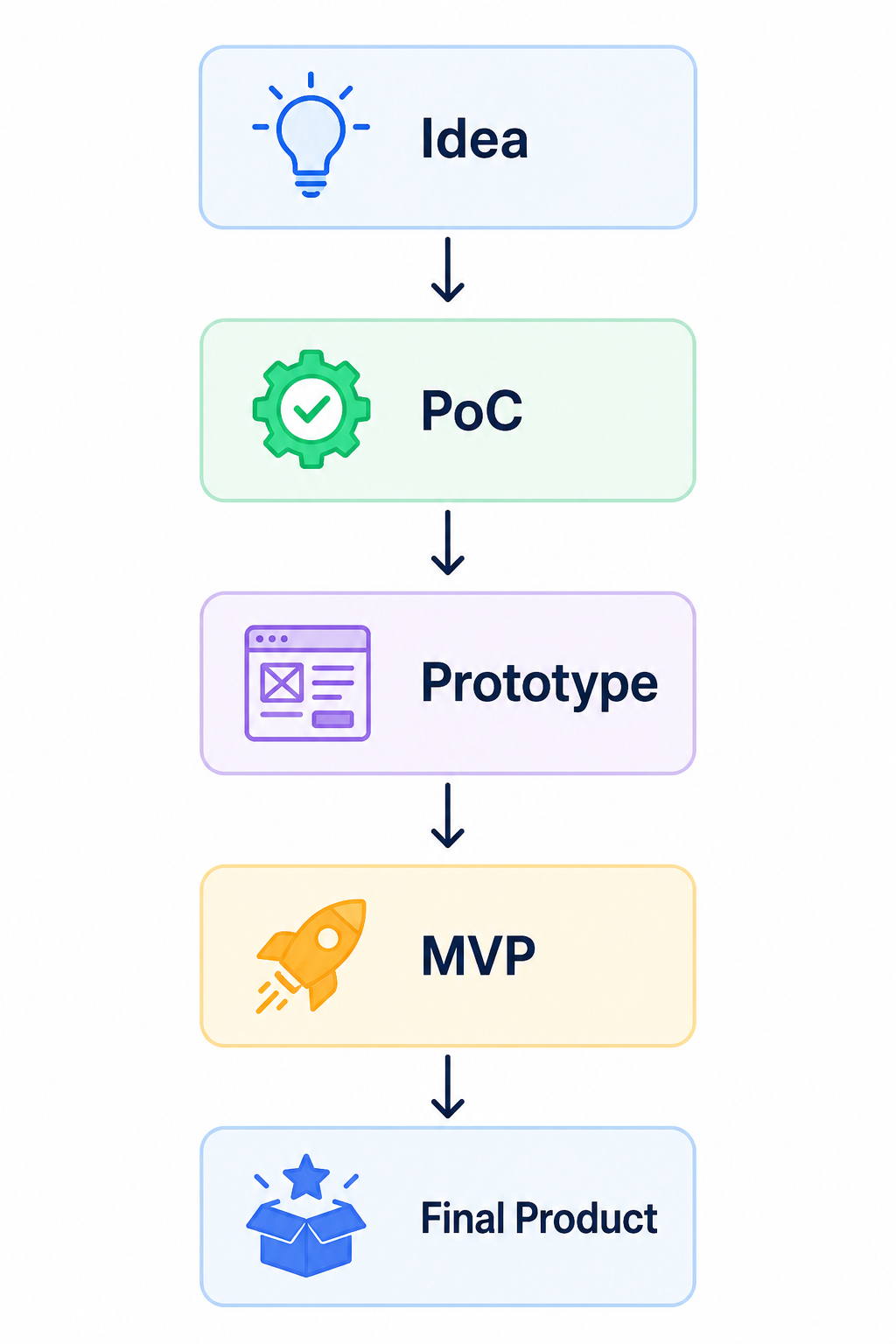
Proof of concept, prototype, and MVP are not competing concepts, but rather parts of a smart product development process that is helpful before you commit to full-scale software development.
What Is Proof of Concept (PoC)
A proof of concept (or PoC) is an early-stage test of an idea or software feature from the engineering perspective to check whether it can work. A proof of concept is used to evaluate the technical feasibility of a product idea, technology, or technical approach before spending a lot of money and many resources on the project.
Proofs of concept serve only for internal purposes. That means that they should not be shipped to customers; instead, a proof of concept is often non-public and has no polished user interface. In fact, even frontend user interfaces are rare.
They are concerned with answering the question of “Can we build it?” rather than “Will users use it or not?”
PoC Development Process
Creating a proof of concept should be simple. Its development usually takes only from a few days to 2-4 weeks to complete. Here is the process that product teams usually follow.
- Define the Hypothesis: Write down clearly what you want to test, such as a difficult integration, the accuracy of an AI model, a data pipeline’s behavior under heavy traffic, etc.
- Set Success Criteria: Specify what the success metrics will be (e.g., getting an API response in less than 200 milliseconds).
- Build Minimal Code: Create bare code without styling, additional functionalities, or production code standards.
- Run Technical Tests: Test the system under pressure internally with your team and not with real users.
- Document Results: Record what worked, what failed, and what it means so you can decide whether to move forward.
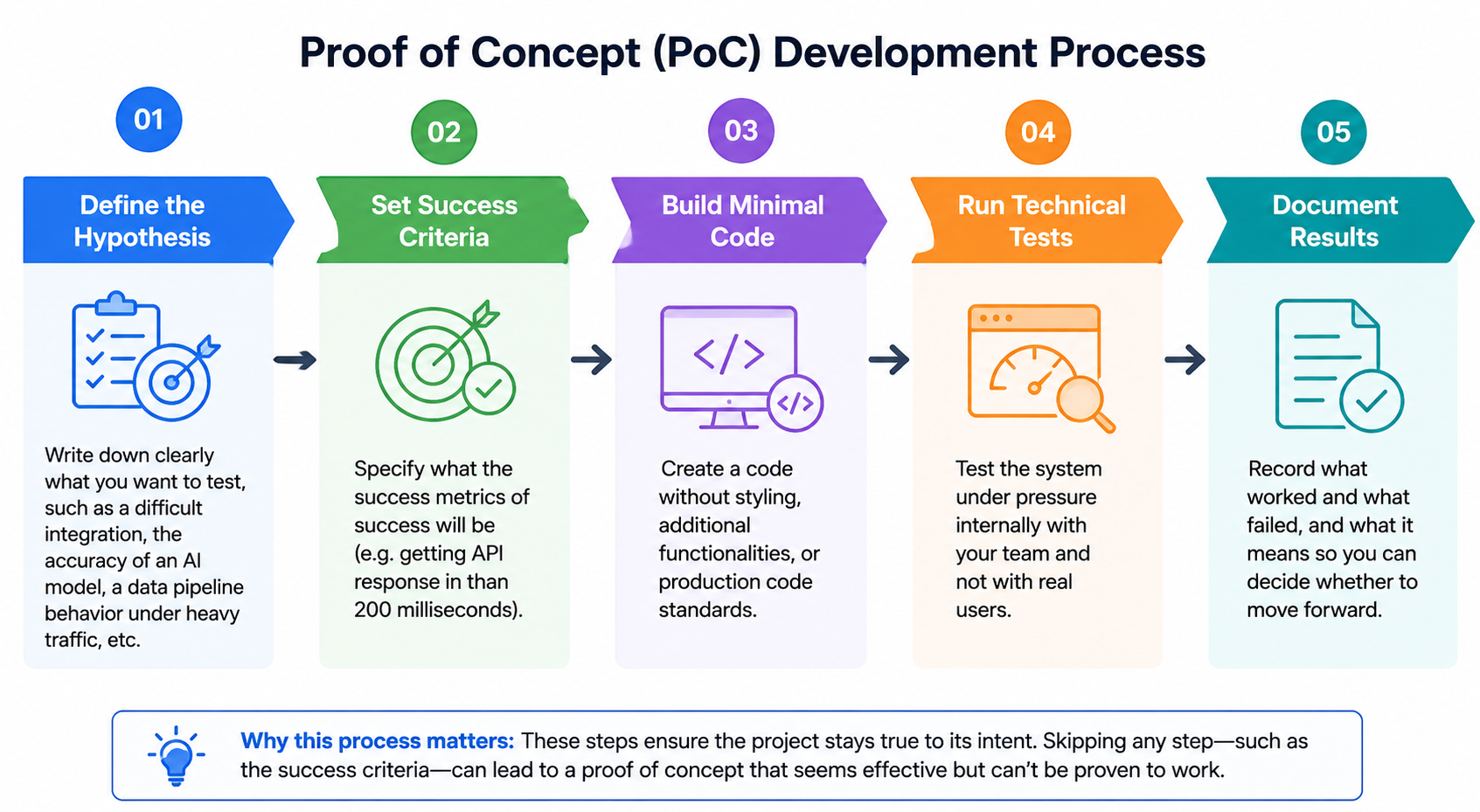
The steps are set in place to ensure that the project stays true to its intent. If a team were to skip the success criteria, for example, they could end up with a proof of concept that is somewhat effective but cannot be proven to really work.
Real-World PoC Scenarios
Let’s say you want to build a medical app that extracts data from handwritten doctor notes. The first step will be to create a proof of concept to check if the AI model recognizes that handwriting accurately. Another example would be to check whether a legacy database can be synchronized in real time with a software application in the cloud.
You should start with a PoC when testing unproven tech, checking complex third-party software integrations, the existence of technical capability, or verifying your core idea before writing real code.
You can check out this article if you want to learn more about PoCs.
What Is Prototype
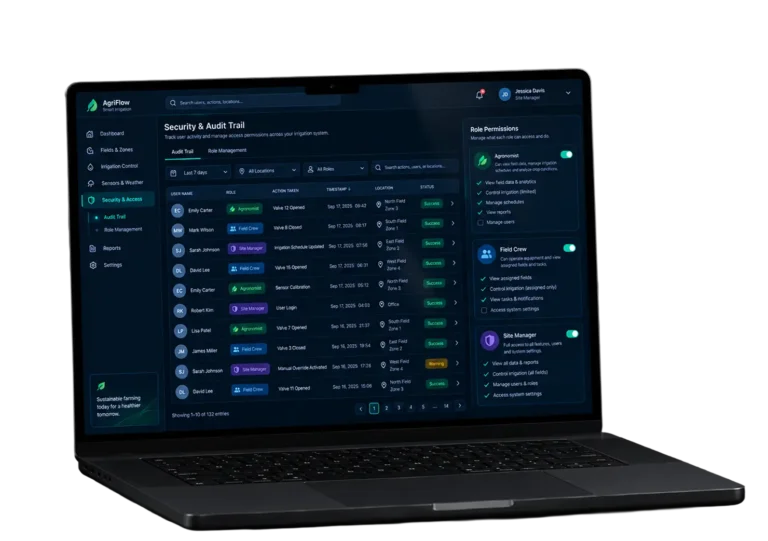
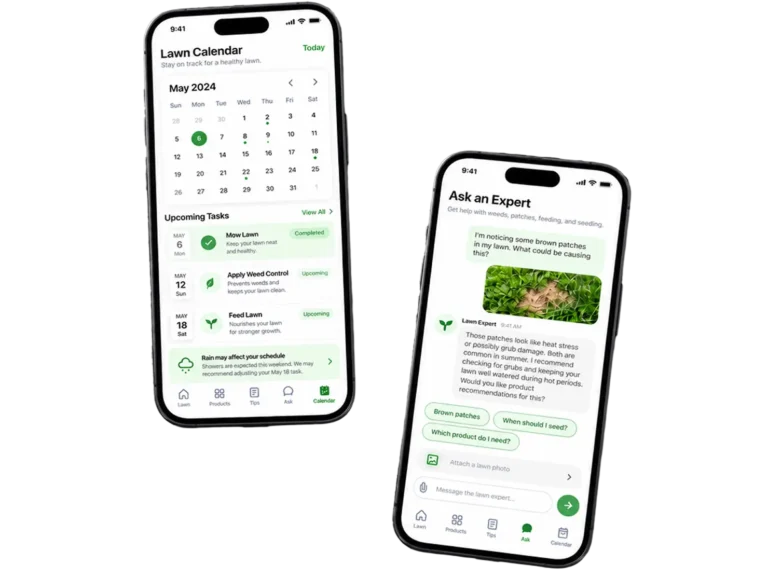
The prototype is the stage in which the product idea is brought to life visually. The prototype simulates user interactions for design feedback long before the backend software development phase begins.
A prototype tests the UI and shows how menus, screens, layouts, and user flow appear and work rather than whether it is technically feasible. The primary goal of a prototype is to validate design and usability. It gives your target audience or internal investors a chance to click through so you can gather early feedback on the user flow.
Prototype Development Process
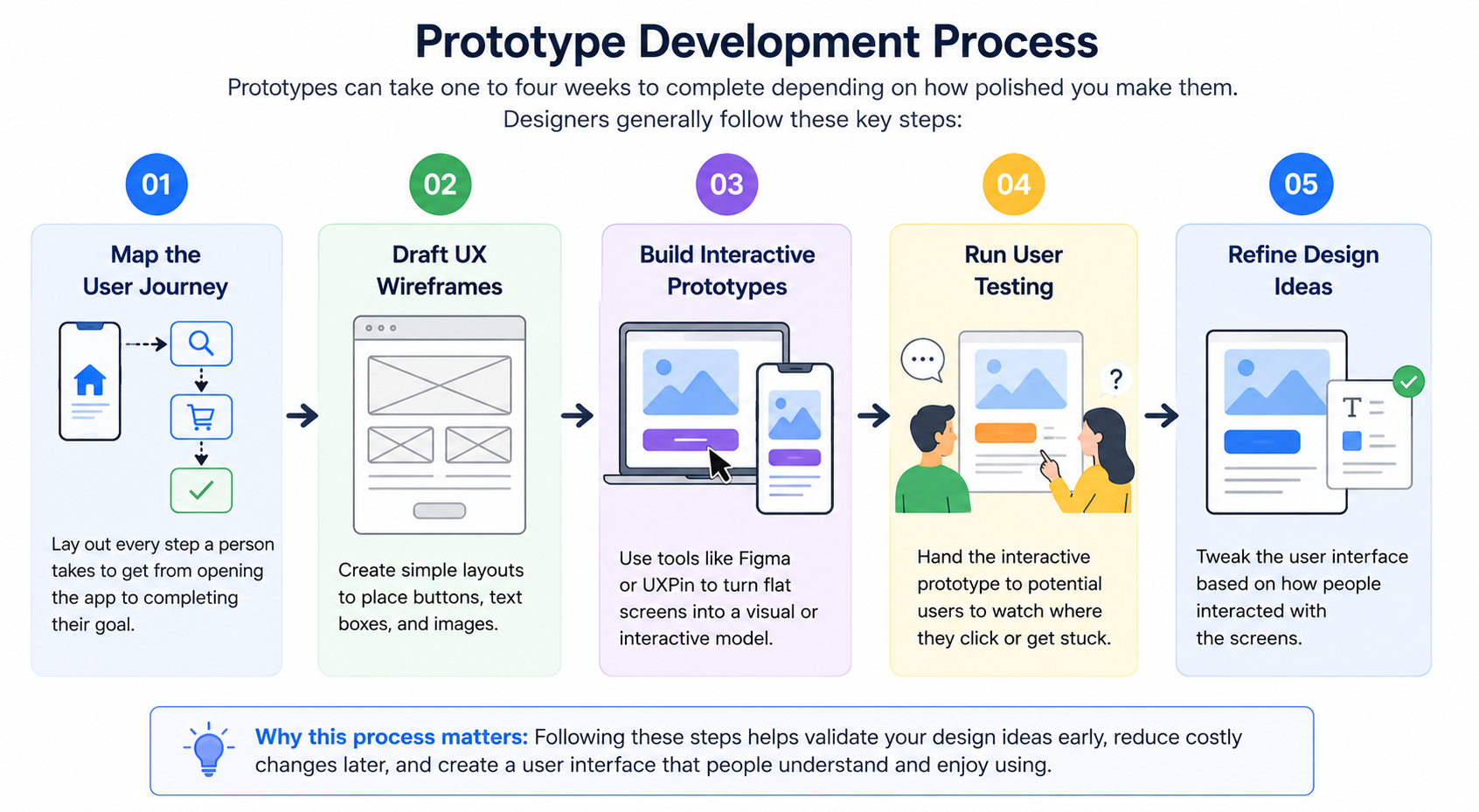
Creating a prototype may take from one to four weeks to complete, depending on how advanced it is. Designers often follow these key steps:
- Map the User Journey: Write out every step a person has to undertake from opening the application until reaching the desired goal.
- Draft UX Wireframes: Create simplified layouts to place buttons, text boxes, and pictures.
- Build Interactive Prototypes: Use tools like Figma or UXPin to convert flat screens into a visual or interactive model.
- Run User Testing: Provide users with the interactive prototype and observe where they click or become stuck.
- Refine Design Ideas: Tweak the user interface based on how people interacted with the screens.
Real-World Prototype Scenarios
Let’s say you are building a mobile banking app. Before actually writing iOS or Android code, you create a clickable, interactive design model in Figma. You then watch your test users attempting to make money transfers. If they have trouble finding the transfer button, you can adjust your screen design quickly instead of changing thousands of lines of code.
A prototype is useful when you need to gather user feedback, introduce your product concept to potential investors for seed funding, or test your design ideas before actual development.
What Is Minimum Viable Product (MVP)
A minimum viable product (MVP) is the first working version of your software that is released to actual market users. An MVP is a functional product with minimal features and is made to carry out one function: to test your value proposition in the real world.
An MVP has a more complete set of functionalities than a PoC and a prototype because it has a working backend, database, and user sign-up flow. An MVP has only key features important for solving a problem for early adopters. The primary goal of an MVP is to validate market demand and collect feedback using actual user behavior.
You can check out this article if you want to learn more about MVPs.
MVP Development Process
MVP development usually requires one to three months and consists of the following five stages:
- Identify Core Features: Discard unnecessary features but keep just enough functions to solve the main problem.
- Build Core Functionality: Write production code for those core features.
- Launch to Early Users: Release the new product to a small group of early adopters.
- Gather Real User Feedback: Collect statistics about how the product is being used, including usage stats, sign-ups, retention, and support tickets.
- Iterate and Pivot: Update the product based on real-world feedback and real usage data.
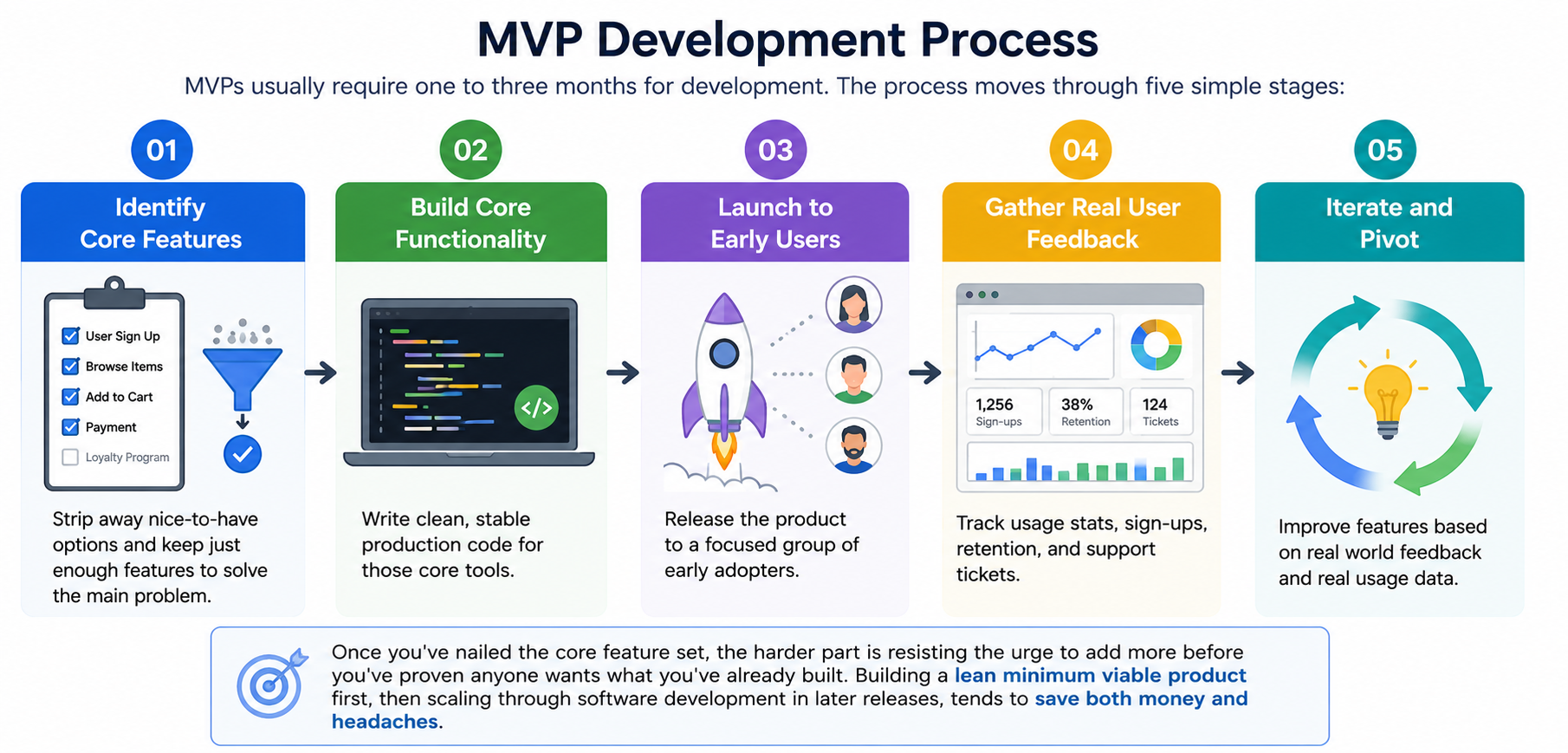
Once the core features have been developed, the harder part is resisting the urge to add more interesting features before you’ve proven anyone wants what you’ve already built. Building a lean minimum viable product first, then scaling through software development in later releases, tends to save both money and headaches.
For more information about this process, have a look at our comprehensive guide on how to build an MVP.
Real-World MVP Scenarios
A good example of an MVP would be a food delivery app that launches with just restaurant browsing, cart checkout, and basic payment options. It leaves out live driver tracking, reviews, and the dark mode themes feature to be introduced in subsequent releases.
Another example is a software-as-a-service (SaaS) customer relationship management (CRM) tool whose only capability is to track sales contacts and pipelines while postponing the automated email workflows feature for future updates.
You should use an MVP if your goal is to validate product-market fit, attract early adopters, demonstrate traction to venture capital funds, or test your business model using actual transactions.
PoC, Prototype, and MVP: Key Differences Explained
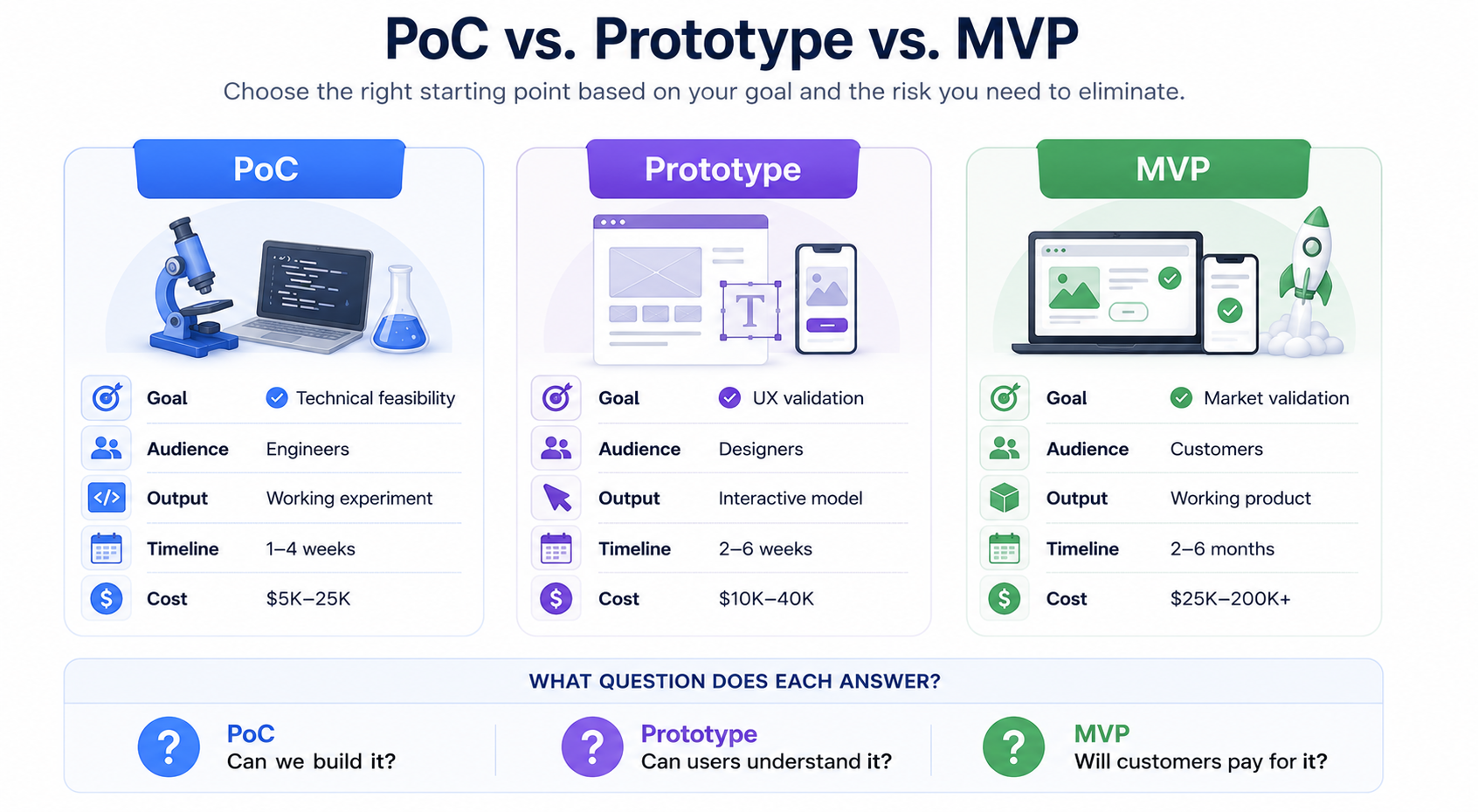
Choosing between a PoC, a prototype, and an MVP comes down to determining what kind of risk you need to eliminate.
- Proof of concept eliminates technical risk (can it be built?).
- Prototype eliminates usability risk (can people use it easily?).
- Minimum viable product eliminates market risk (will people buy it?).
Here is a table that summarizes the three types of products:
| Criteria | Proof of Concept (PoC) | Prototype | Minimum Viable Product (MVP) |
|---|---|---|---|
| Primary Goal | Validate technical feasibility | Validate UX and design | Validate product-market fit |
| Target Audience | Technical teams, CTOs | Designers, potential users, investors | Early adopters, paying customers |
| Fidelity | Very low (raw code/scripts) | Low to high (clickable mockups) | High (fully working app) |
| Functionality | Non-functional or narrow script | Interactive model without backend | Working core features with backend |
| Key Question | Can we build it? | Will users understand it? | Will people use and pay for it? |
| Build Timeline | Days to a few weeks | 1 to 4 weeks | 1 to 3 months |
| US Cost Estimate | $5,000-$25,000 | $10,000-$40,000 | $25,000-$200,000+ |
| Primary Output | Technical validation report | Visual or interactive model | Working software for real users |
| Next Step | Build prototype or MVP | Start MVP development | Scale product based on feedback |
MVP vs. PoC vs. Prototype: Which to Choose
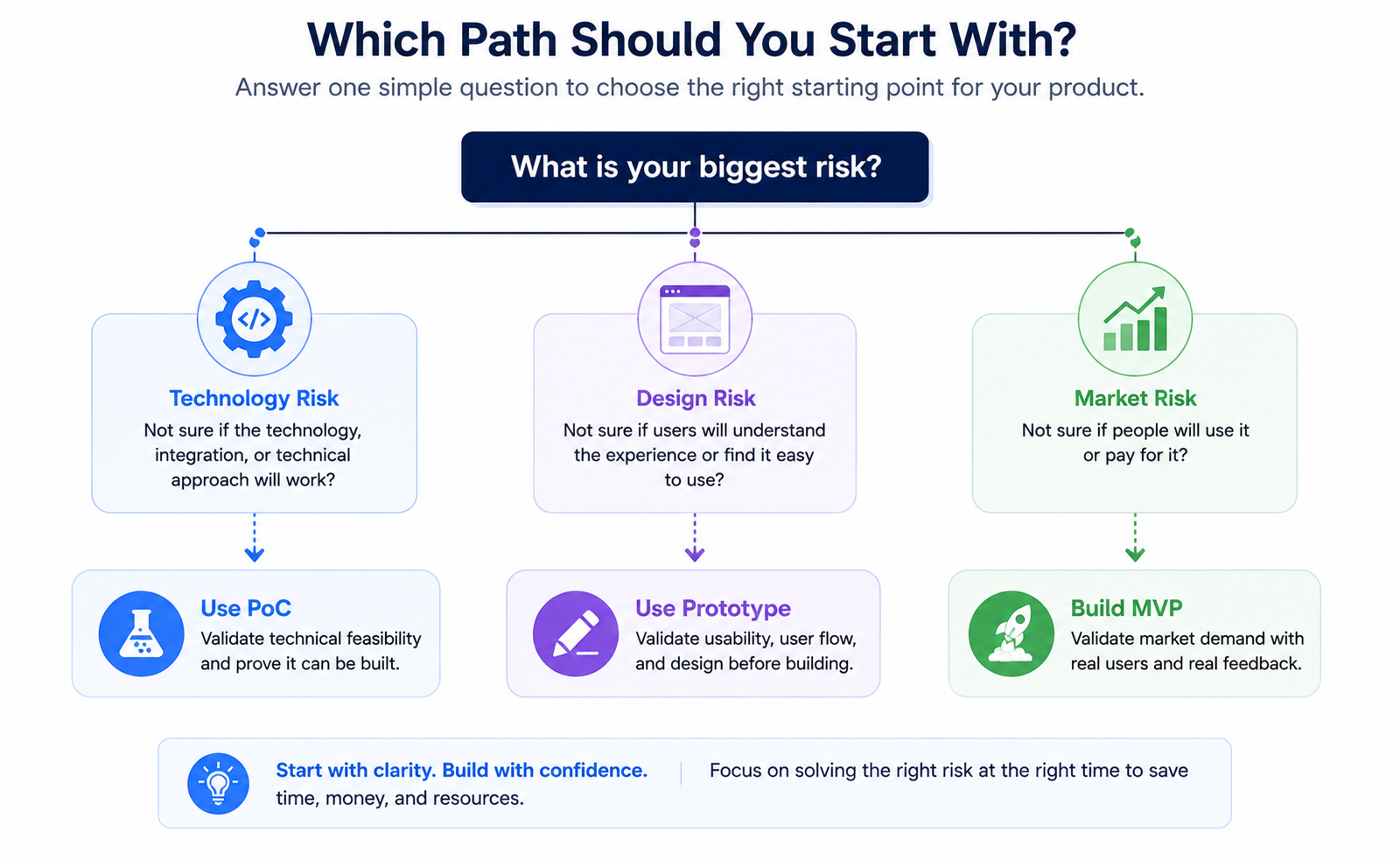
The choice of the tool to apply depends on what you regard as your biggest uncertainty:
- Select a PoC when working with AI models or intricate application programming interfaces (APIs), or if you are concerned the technology will fall short.
- Select a prototype when the technology is simple, yet it is still necessary to demonstrate that the software interface functions smoothly.
- Select a minimum viable product (MVP) if the technologies are straightforward and your visual representations of user requirements are high-quality, but you still need to test actual market interest with paying customers.
Difference Between Prototype, Minimum Viable Product and PoC in Mobile App Development
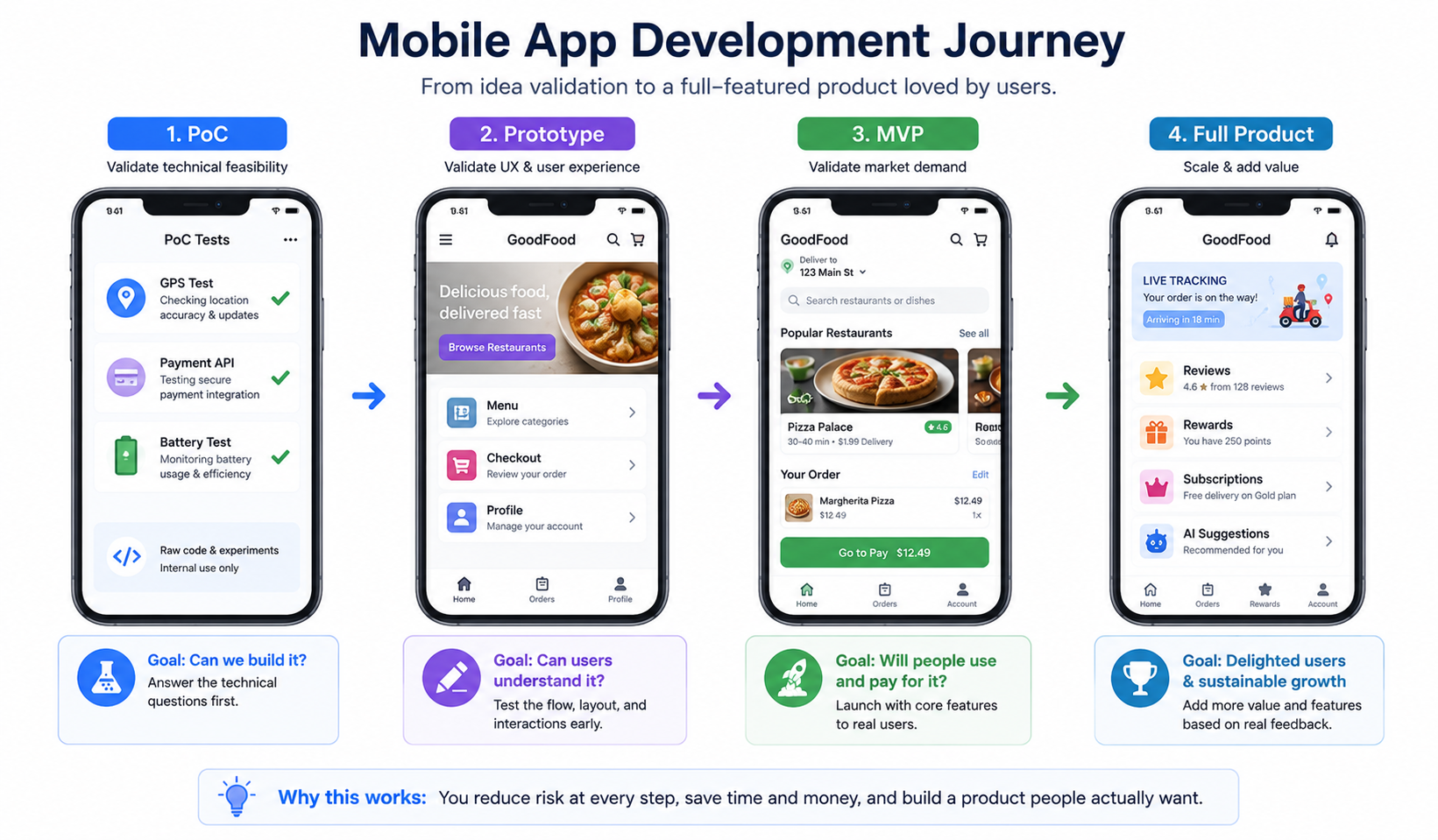
In mobile app development, using these validation tools will ultimately prevent you from wasting budget on apps that get uninstalled in seconds.
Let’s take a custom food delivery app as an illustration:
- A proof of concept (PoC) script is implemented to verify whether the device’s background GPS can send location updates without draining the device’s battery life.
- The next stage will be building an interactive prototype in Figma. The team conducts user testing to determine if users can choose meals and reach the checkout screen within three taps.
- Neither the proof of concept nor the prototype reaches the App Store or Google Play. Once the design and tech pass the internal tests, the team creates the MVP, which features basic restaurant listings, ordering, and payment processing, and goes live on app stores so real users can download it.
Many successful global companies have taken the same route as well:
- Airbnb: In the beginning, the founders placed three air mattresses on their living room floor and created a simple website to rent these air mattresses out during a local design conference. This simple setup proved that people were willing to stay in a stranger’s apartment.
- Uber: Uber was launched as “UberCab” in San Francisco. It enabled users to book rides only via SMS or a simple app on black cars. Split fares, driver ratings, and price estimates were not available then; these were later additions.
- Dropbox: Before writing tons of file-synchronizing code, Drew Houston, co-founder of Dropbox, made a simple video showing how file syncing would function. The video attracted a lot of sign-ups within a short time, which proved market demand from the very beginning.
From Concept to Product with LITSLINK
Picking between PoC, prototype, and MVP is the first stage in building a successful digital product. LITSLINK has a team of 300+ engineers and has completed more than 1,540 projects for over 1,000 clients across 82 countries. We help startups and enterprises choose the right strategy, minimize risk, and transform ideas into final products.
Ready to get started? Book a free consultation to discuss your product idea, define the best development approach, estimate costs and timelines, and build a product that is ready for real users and future growth.
FAQs
What Is the Key Difference Between a PoC, Prototype, and MVP?
The key difference is that a proof of concept checks whether an idea can work and is technically feasible; a prototype tests how an application looks and how it works during customer testing, while a minimum viable product is a functional app with essential features that has been put on the market to check its demand among real users.
Can I Skip the PoC Stage?
Yes, you can skip the PoC stage if you are working with standard, proven technologies. In such cases, no PoC is needed. But if you are using unproven tech, custom AI, or novel software integrations, do not skip this phase.
When Should I Choose a Prototype Instead of a PoC?
You should choose a prototype instead of a PoC if your priority is to test the user flow, showcase concepts to investors, or gather early feedback on design with no concerns about technical failure.
Do I Always Need a PoC, Prototype, and MVP?
You don’t always need a PoC, prototype, or MVP for every project. For example, simple applications may skip straight to a prototype or MVP, while projects that require deep tech may need to go through each phase.
Can I Skip Validation and Build the Final Product Right Away?
You can skip validation and build the final product right away, but it can be very risky. By skipping validation, you risk building features that nobody uses or facing major technical problems down the line. Early validation enables you to save time and stretch your cash further.