






AI agent projects are practical applications of AI used by companies to automate their workflows and enhance productivity, decrease operational costs, and provide customers with a better experience. Interest in AI agents is growing rapidly, although production adoption and measurable ROI remain uneven.
Gartner estimates that by 2028, 33% of all enterprise software products will include agentic AI, which is up from less than 1% in 2024. Microsoft’s Work Trend Index highlights that enterprises are increasingly investing in generative AI, indicating broad implementation of AI for workflows and decision support.
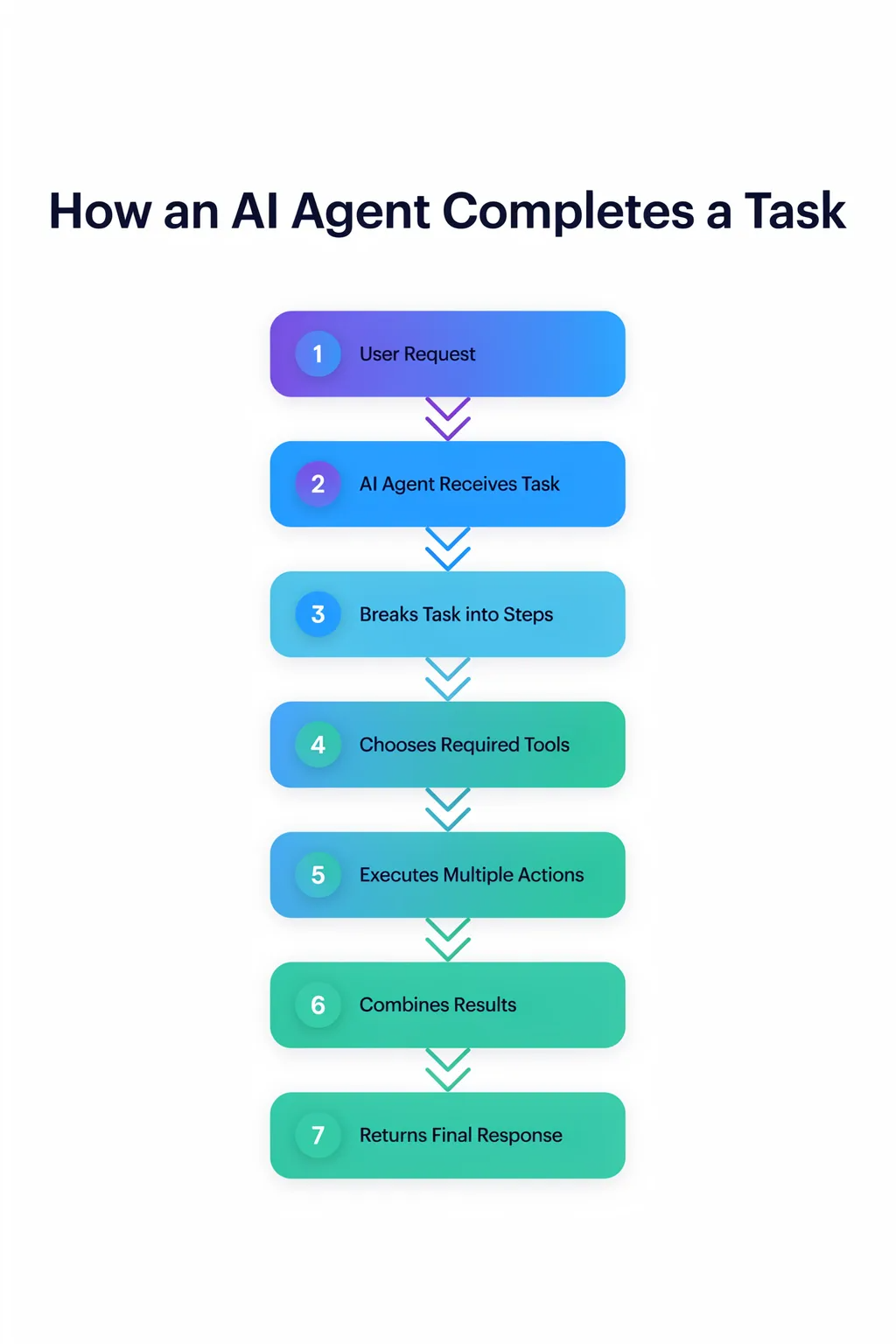
Depending on their architecture, AI agents can reason, plan, use tools, carry out multi-step operations throughout enterprise systems, and analyze in more sophisticated ways than traditional chatbots.
Key Points to Remember
- The workflows AI agents can automate cover customer service, sales, human resources, healthcare, finance, operations, and cybersecurity.
- Modern AI agents can interact with CRMs, databases, APIs, enterprise software, and internal knowledge bases.
- The best AI agent project depends on the business problem being solved, not on the latest AI trend.
- Multi-agent systems are becoming a major enterprise AI adoption trend.
- Businesses with unique workflows often achieve better results with custom AI agents than off-the-shelf solutions.
What Is an AI Agent?
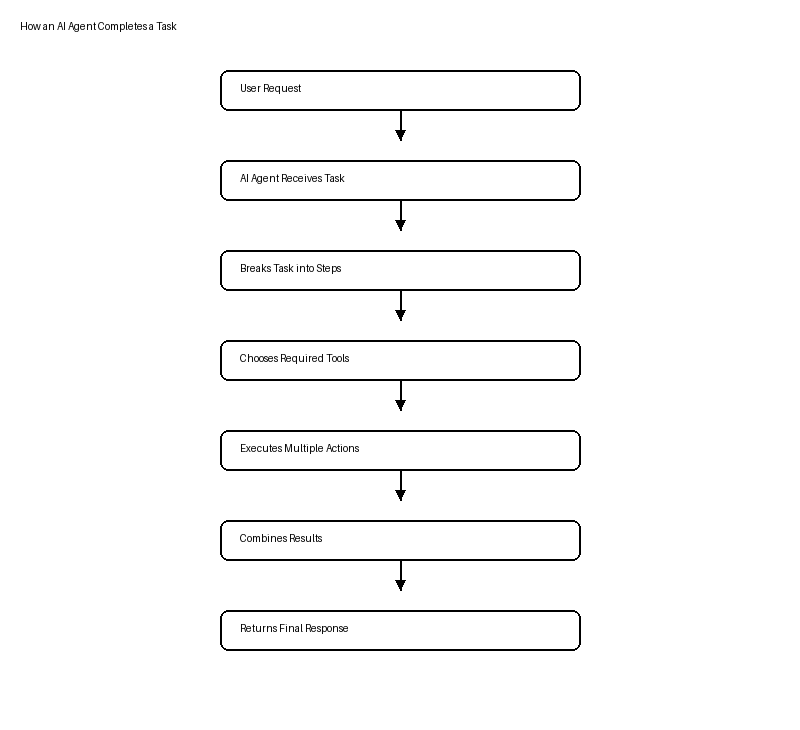
An AI agent project typically consists of one or more AI agents integrated with other software systems to perform tasks with relatively few people involved. AI agents automate workflows, support decision-making, and perform complex tasks in a structured way as per predetermined business objectives.
Professional AI agent development services produce software that is aligned with business goals, can reason with data, and is integrated with the rest of an organization’s business processes. Additionally, they facilitate the execution of multi-step actions and enable end-to-end workflow automation.
Which AI Agent Project Should You Build?
The choice of an AI agent project depends on the business issue you want to solve. AI agents are used as sales automation systems, recruiting assistants, research agents, customer support platforms, healthcare coordinators, financial advisors, cybersecurity monitoring systems, and multi-agent business operations platforms.
AI Agent Project Selection Table
| Business Goal | AI Agent Projects | Best For | Primary Benefits |
|---|---|---|---|
| Improve Customer Experience | Customer Support, E-Commerce, Real Estate | Customer-facing teams | Faster support, better customer experience |
| Drive Revenue Growth | Sales Prospecting, Content Marketing | Sales & Marketing teams | More leads, higher conversions |
| Increase Internal Productivity | Recruiting, Onboarding, Research | HR & Operations teams | Time savings, higher productivity |
| Support Industry-Specific Workflows | Healthcare, Financial Analysis, Legal Review | Regulated industries | Сonsistent checks, faster review, and compliance support |
| Optimize Business Operations | Supply Chain, Cybersecurity, Customer Success | Enterprise operations teams | Efficiency and automation |
| Deliver Personalized Consumer Experiences | Personal Finance Coach | Consumer applications | Personalization and engagement |
Your organization should start by defining the current business priorities and return on investment expectations.
15 Best AI Agent Project Ideas for Businesses
The AI agent project examples listed below demonstrate the types of potential solutions, as well as the value they bring to organizations, that may be realized in 2026 with AI agent development.
AI Customer Support Agent
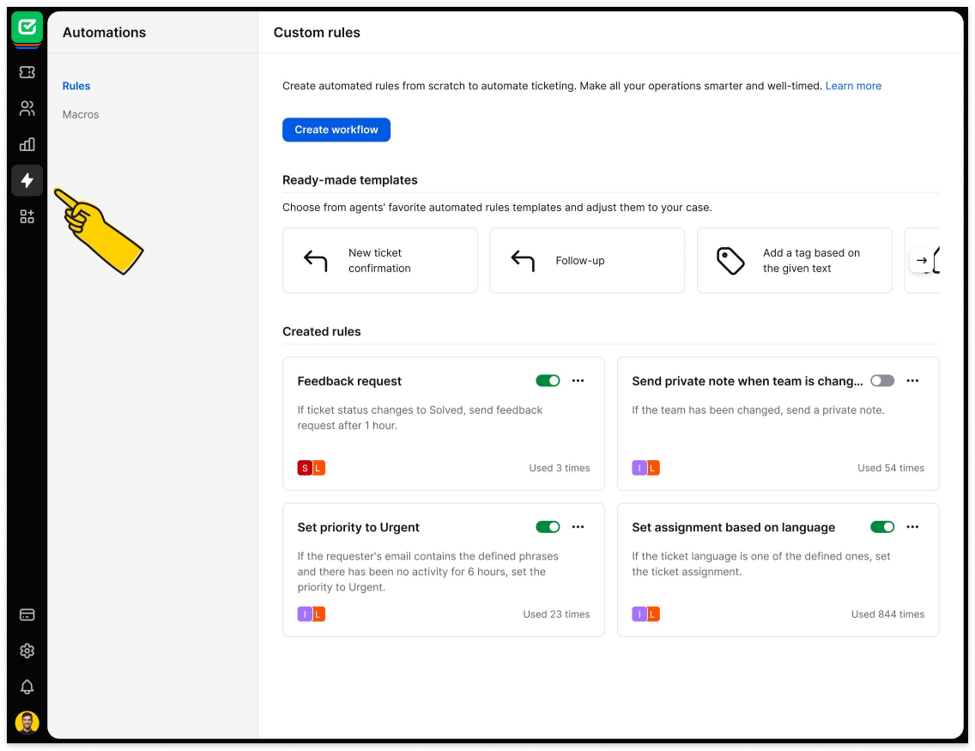
This AI agent automates the work of frontline service staff by helping customers with their requests through the management of customer support tickets. The agent will respond to customer requests, escalate tickets to management, and assist customers through all forms of support.
It functions by integrating with third-party cloud platforms such as Zendesk, Salesforce Service Cloud, and Slack to receive incoming requests, classify the intent of the request, and retrieve answers from internal knowledge bases using retrieval systems. When the assistant gets a ticket, it analyzes it using existing data and generates a modified response to either resolve it or escalate it to a human agent for immediate resolution.
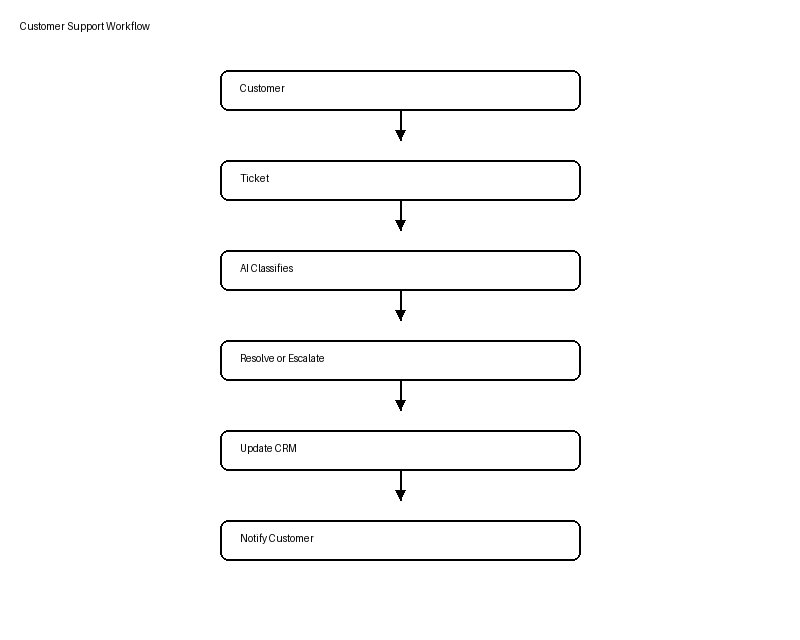
Typically, these systems are created for customer support companies or SaaS providers who have integrated AI into their support stack. Leveraging the AI solution enables companies to reduce response time and the number of support staff required while improving customer satisfaction scores through faster and more accurate resolution times.
AI Sales Prospecting Agent
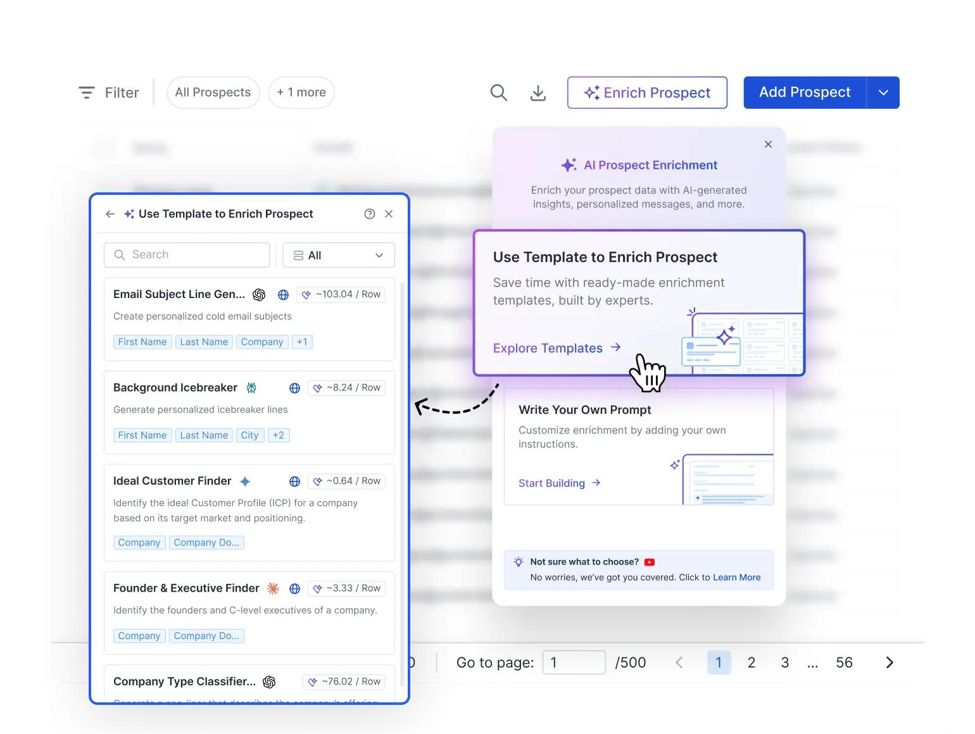
The prospecting agent automates a large portion of the prospect’s journey from discovery, qualification, and enrichment of leads, to outreach to sales teams. It can connect to third-party platforms (like Salesforce) to access prospect data and evaluate their fit against pre-defined customer profile criteria for generating personalized email sequences for outreach. It enriches the prospects with external signals such as company news, funding event notifications, or indications of hiring activity to further increase the accuracy of targeting.
The process begins when a prospect enters the prospecting system; subsequently, the prospecting agent will score that lead. It will also update the customer relationship management (CRM) record in real-time. The sales prospecting agent will generate an email notification for the sales team to review or use an automated email notification workflow. It will also track the level of engagement of each lead to determine the timing for follow-ups based on response activity.
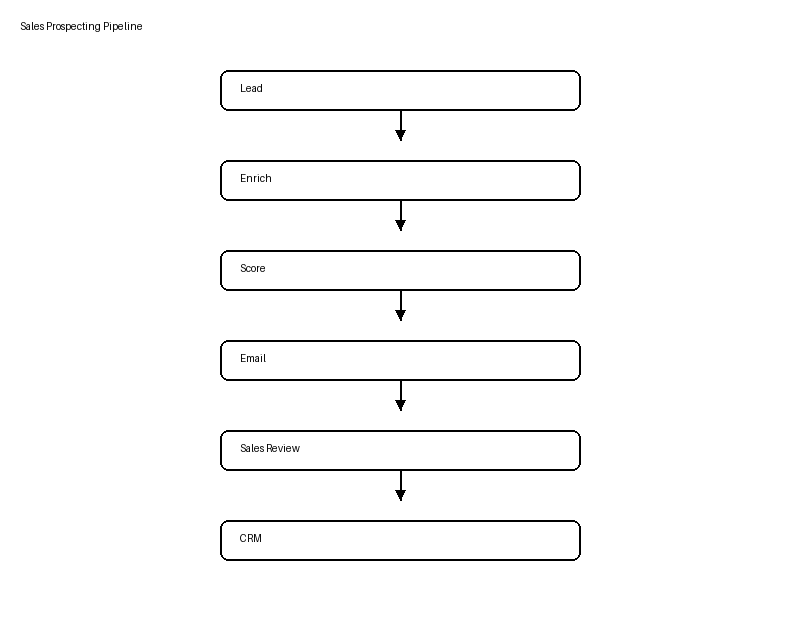
This system is usually implemented by revenue operations (RevOps) or growth engineering teams in the business-to-business (B2B) software-as-a-service (SaaS) industry. The expected return on investment (ROI) for a sales prospecting agent implementation includes reducing manual prospecting time, higher quality pipeline generation, and activity to improve conversion rates driven by personalization at scale.
AI Recruiting Agent for Human Resources Teams
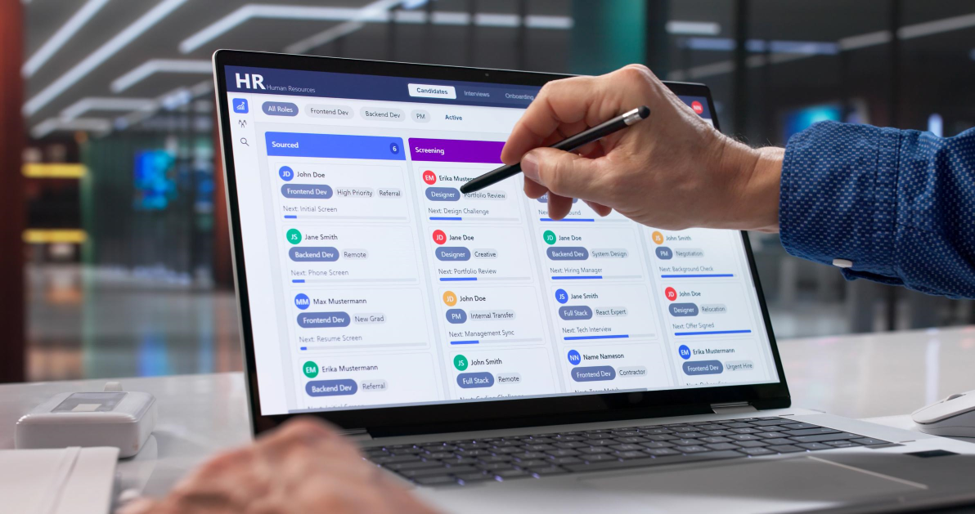
An AI recruiting agent automates many aspects of the hiring process by creating efficiencies within the resume screening process, matching candidates to jobs, and scheduling interviews. The agent manages all communication workflows with candidates. The recruiting agent integrates with applicant tracking systems (ATS), e.g., Greenhouse and Workday, and uses structured job criteria for reviewing each applicant’s profile, ranking each prospect, and maintaining a qualified candidate pipeline.
An applicant tracking system (ATS) enables an agent to extract relevant qualifications from an applicant’s resume, assess those qualifications against the job description, and build a list of candidates who meet the requirements. The ATS will also help the agent organize job interviews for candidates based on mutual availability via the system’s calendars and communicate consistently with them throughout the hiring process. This ensures timely communication of updates with little involvement from the recruiter.
The entire talent acquisition workflow, including the recruitment process, consists of job postings and receiving applications, selecting candidates based on qualification rankings, scheduling interviews, conducting pipeline tracking, and integrating data through existing HR systems. The anticipated ROI of this system includes reduced time to hire, increased efficiency of the recruiting function, enhanced candidate experiences, and greater consistency in hiring decisions.
AI Research Assistant Agent for Data Analysis

AI data analysis research assistant agents assist business teams with data collection, competitor tracking, and market intelligence generation by automating these processes. They provide answers to ad hoc questions about datasets in natural language. They collect data on competitive positioning, market movements, and industry trends from third-party APIs, web sources, and internal knowledge bases.
After receiving a research request from a member of the business team, the research agent will gather both structured & unstructured data, synthesize the information into insights, and produce an executive-level structured report. Once produced, the agent will continue updating these reports with new data whenever available, offering decision-makers constant access to current information.
Typical integrations with this solution include web scraping systems, vector databases, and large language model orchestration frameworks. Product managers, company founders, and strategy teams are the main users of this system, as it replaces manual research cycles, thereby reducing manual effort. Expected returns from the implementation of an AI research assistant agent include faster strategic decision-making, reduced analyst workload, and improved visibility into the market and competitors.
AI Content Creation and Marketing Agent
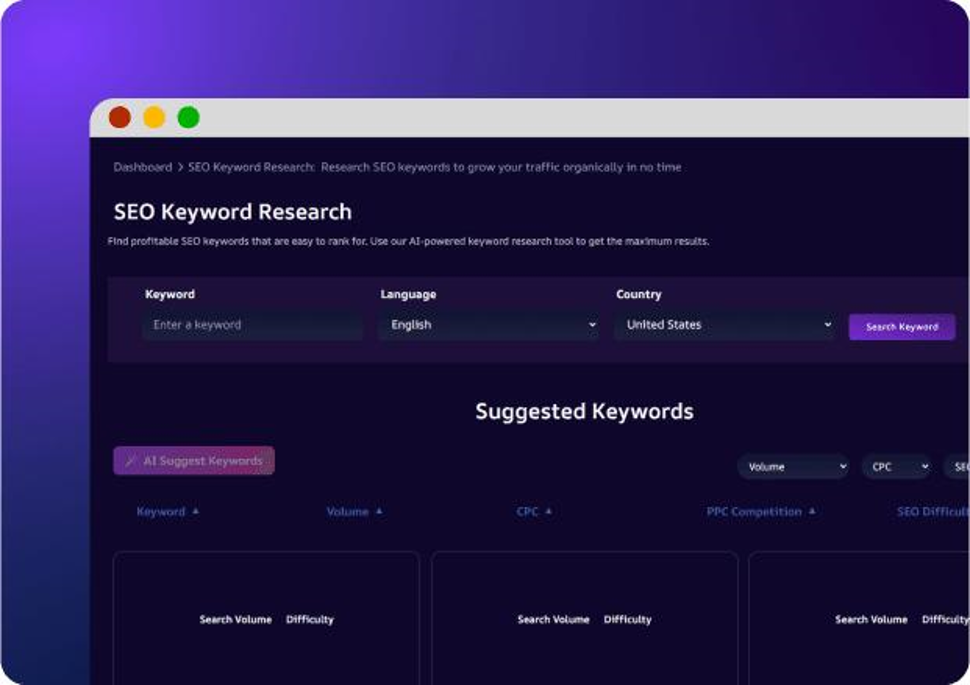
An AI content creation agent oversees the entire lifecycle of SEO content. This agent will perform content-writing functions necessary for content success: keyword research, competitor content structure analysis, content plan creation, and content drafting and revisions. This agent will also integrate with external tools, including Surfer SEO and Google Search Console, as well as all CMS systems, to provide content that is ready for publishing.
The workflow for this process starts by providing an input keyword to the agent. Once the input has been received, the agent performs a SERP (search engine results page) analysis on that keyword to evaluate which content is most likely to perform well. From this information, the agent generates a recommended content plan, creates an initial draft of content, and iteratively improves upon that draft by using SEO scoring feedback prior to publishing the content. Additionally, it will recommend inserting internal links in the text based on the existing structure of the website’s content.
Marketing teams and SEO teams in the SaaS, media, and e-commerce industries commonly use this technology to shorten publishing cycles, gain insight into organic-search performance, and decrease their reliance on manually created content.
AI E-Commerce Shopping Assistant
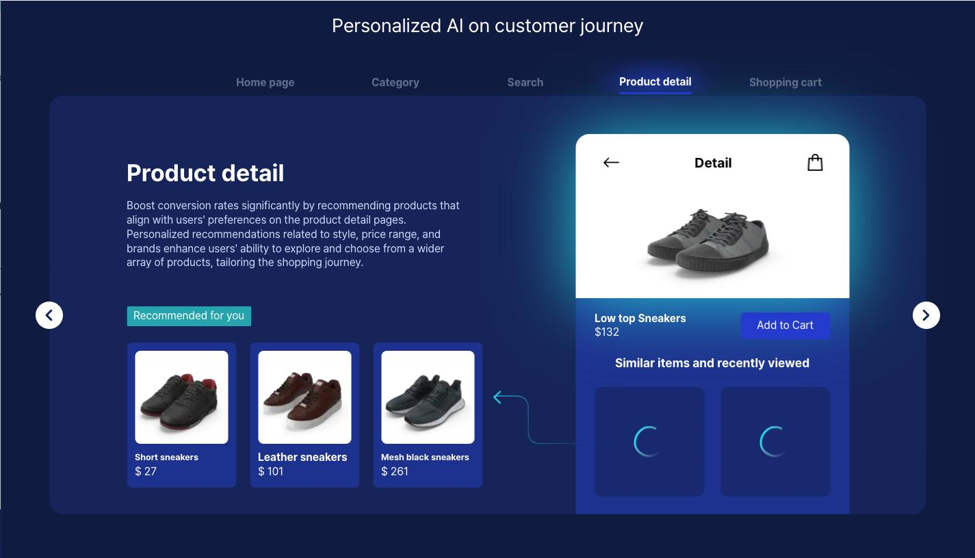
An AI e-commerce shopping assistant enhances customer experience and increases sales for e-commerce retailers by guiding customers to discover products, providing personalization, and completing the purchase. The shopping assistant integrates with e-commerce platforms (Shopify, WooCommerce, etc.), payment gateways (Stripe), and CRM systems to provide real-time analysis based on user behavior, preferences, and purchase histories.
The shopping assistant communicates with the user (customer) in real time, offers personalized recommendations, and assists them throughout their purchasing process by answering questions about their intended purchase and providing contextual help during the purchase journey.
The workflow of the shopping assistant begins when a user visits the e-commerce website. It can identify intent signals based on user actions, such as page views and the addition of items to the shopping cart.
After determining that the user has shown enough intent to potentially purchase an item, the shopping assistant will provide them with relevant product recommendations and continue to provide assistance in comparing similar products while shopping. Additionally, if there is an abandoned shopping cart, the shopping assistant will send targeted messages or incentives, attempting to re-engage the user and continue assisting them.
Businesses often use AI in e-commerce, and the results achieved from implementation are increased conversion rates, higher average order value, lower abandoned cart rates, etc.
AI Healthcare Coordination Agent
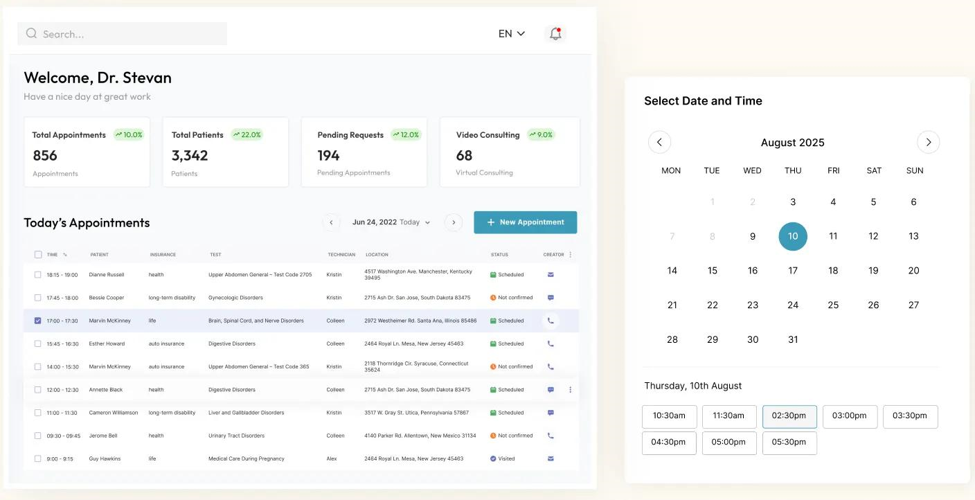
An AI health coordination agent helps healthcare providers automate appointment scheduling, coordinate communication with patients, and provide continued care across the system. It integrates with EHR (Electronic Health Record) systems, appointment management platforms, and messaging services like SMS and email to manage patient communication and workflow.
This agent schedules patient appointments and sends the patient an email confirmation with the date and time. It is also in charge of reminders and follow-up appointments. The AI agent makes relevant information available to authorized care-team members according to role-based access policies.
Healthcare provider teams are the primary users of AI-powered healthcare tools. Its implementation leads to reduced administrative workload, fewer missed appointments, improved patient engagement, and better care coordination between providers.
AI Financial Analysis Agent

An AI financial analysis agent automates financial monitoring, forecasting, and reporting by integrating with ERP systems, accounting software (e.g., QuickBooks, Xero), and banking APIs. It continuously ingests financial data, providing real-time insights and categorizing transactions.
The AI financial analysis agent will gather the data (transactions) from all of the financial systems used in the workflow. It will analyze expense trends and locate unusual transactions or cash flow anomalies. Another function of the AI financial analysis agent is to keep the budget dashboard updated and to create financial forecasts for senior management. It will also identify transactions or cash flow anomalies and proactively intervene in order to help prevent business financial risks.
Finance departments, FinTech startups, and enterprise analytics groups take full advantage of AI financial software solutions. Benefits include faster reporting processes, a higher level of accuracy with budgeting, minimized manual accounting efforts, and early alerts to possible financial risks.
AI Real Estate Agent
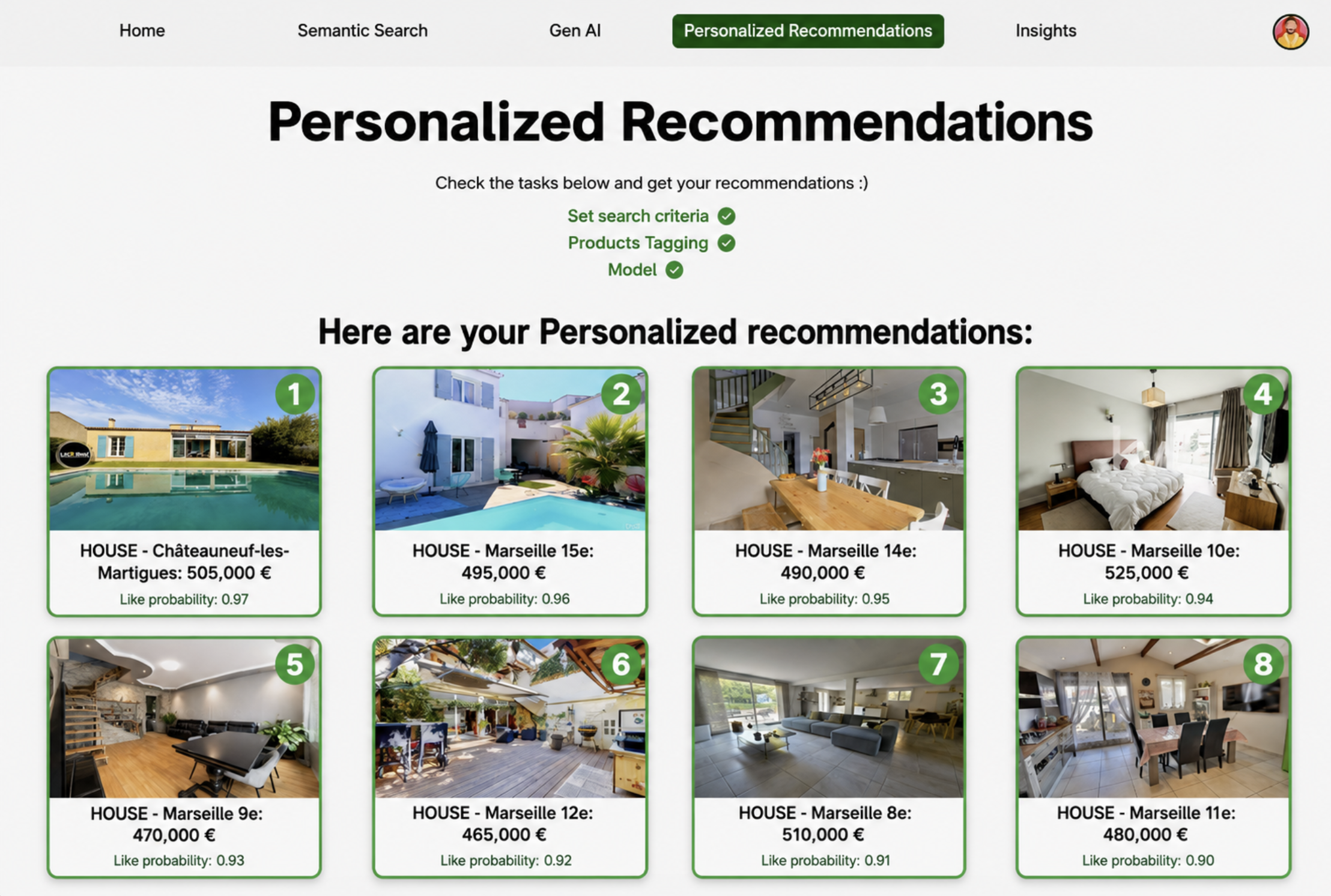
AI real estate agent development helps real estate brokers and property platforms automate lead qualification, property matching, and client communication via integration with real estate CRMs, MLS databases, and client communication tools. These integrations allow for accurate, timely analyses of user preferences and match buyers with suitable listings in real time.
Workflow commences when the buyer submits a query or searches property listings. The AI agent picks qualified leads, finds relevant listings from its own agency network, and then sends the buyer a personalized recommendation of properties to buy. It even goes ahead to schedule viewing appointments for those properties while also updating agent-buyer interaction history in the agency’s CRM records.
Real estate agencies, proptech companies, and software-as-a-service (SaaS) platforms that support real estate brokers usually request these systems. They anticipate the following returns on investment: improved lead conversion rates, short time frames between identifying properties and finding buyers, decreased human efforts when closing sales transactions, and faster response times to customers throughout the sales process.
AI Legal Document Review Agent
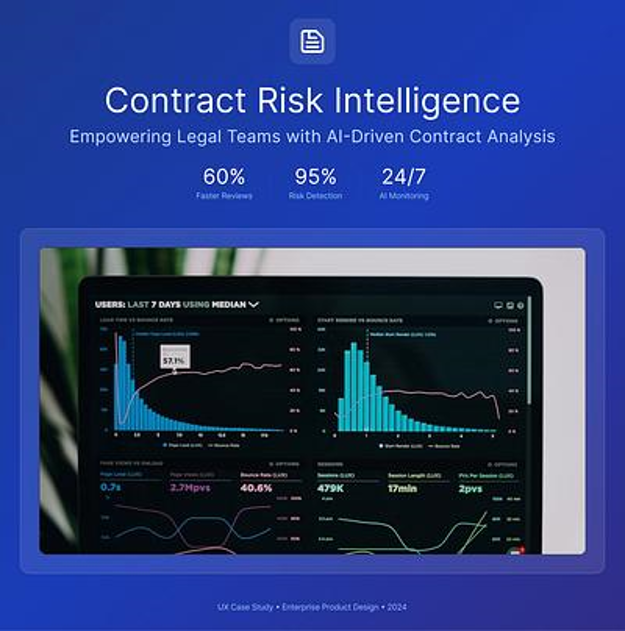
This AI legal document review agent provides enhanced accuracy and speed to assist with reviewing contracts by automating all processing of legal documents. This includes extracting relevant clauses, checking against compliance requirements, and identifying potential risks in completing the contract. The system supports, but does not replace, review by qualified legal professionals.
As users upload documents into the application, the software will scan each document for the contents of each clause, compare each clause against established compliance criteria, highlight identified problem areas or missing information and clauses, and produce a written summary of all relevant information so that the attorney reviewing the document can approve the contract.
This agent can be utilized by legal tech teams, law firms, and compliance departments in large corporations. From an expected return on investment standpoint, these clients anticipate a decrease in the amount of time required to review each contract, a reduction of legal operations costs for reviewing contracts, an enhanced ability to detect risk consistently, and shorter approval times for contracts executed by the organization.
AI Employee Onboarding Agent
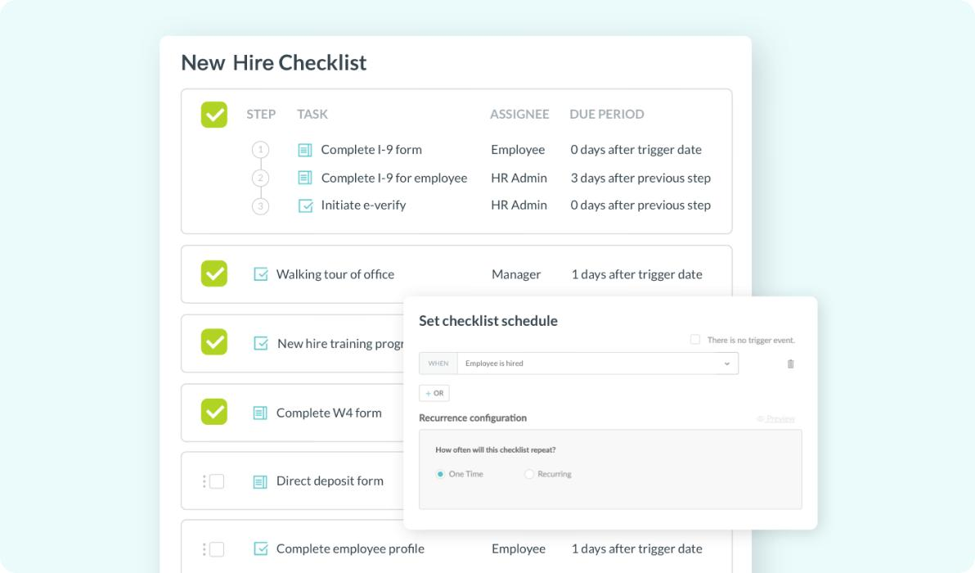
HR professionals can simplify their everyday tasks through an AI employee onboarding agent, as it allows users to manage HR processes automatically and efficiently. This includes providing guidance to new employees during onboarding, delivering required training to employees, and creating business processes for newcomers. The onboarding agent works with HR platforms such as Workday or BambooHR, communication tools like Slack or Microsoft Teams, and internal knowledge bases to deliver structured onboarding experiences.
As soon as you add your new employee to your HR system, the onboarding agent will kick off the onboarding process. It will provide role-specific job-related documentation and information, answer questions the employee has about the company’s policies, assign training and development modules, and trigger a request to IT for items such as account creation or access to corporate systems. In addition, an AI onboarding solution tracks the onboarding progress of new employees, ensuring that each step is completed.
AI Supply Chain Optimization Agent
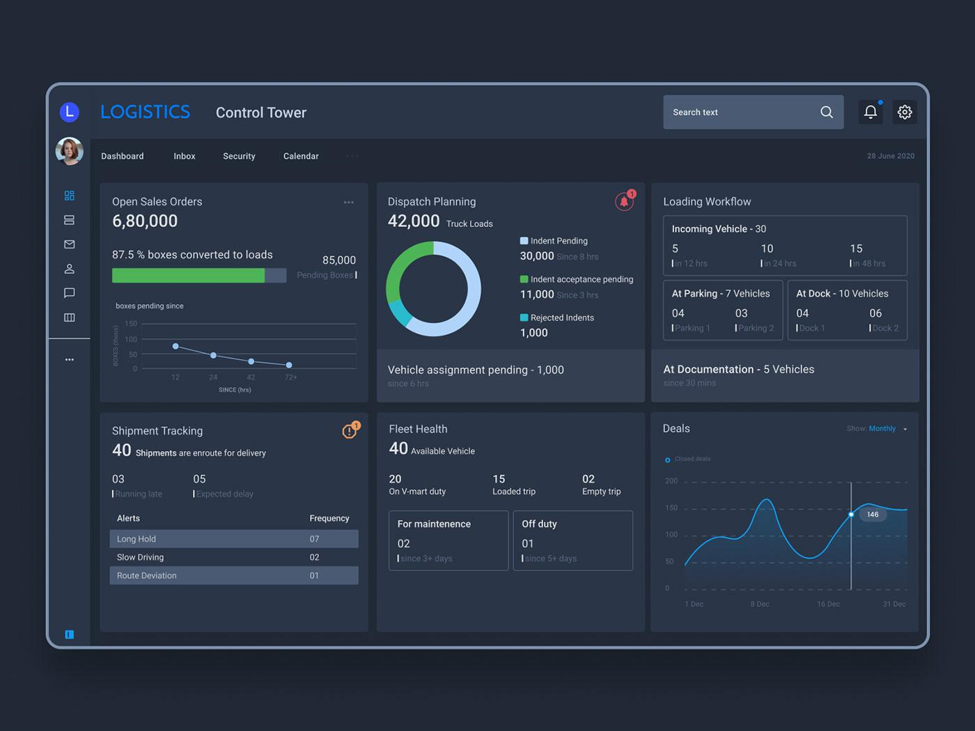
An AI supply chain optimization agent can enable logistics and procurement organizations to become more effective in their day-to-day operations by automating inventory management, assisting with demand forecasting, and managing vendor performance. These solutions can be integrated into existing ERP systems, warehouse management systems, supplier APIs, and logistics tracking software to provide users with real-time visibility into their operational performance.
As soon as there is an update to either the inventory or sales information, a fresh workflow begins. By analyzing historical demand trends, the agent can anticipate how much product will need to be replenished in the future. Also, it keeps track of suppliers and logistics so that delivery schedules can be arranged with suppliers to avoid delays in receiving stock. Additionally, the agent will continuously revise its original forecast as soon as new data is received.
Supply chain teams, logistics platforms, and enterprise operations departments utilize the supply chain agent. After implementation, this agent can save the organization money through fewer stockouts, improved forecast accuracy, and stronger overall supply chain visibility.
AI Cybersecurity Monitoring Agent
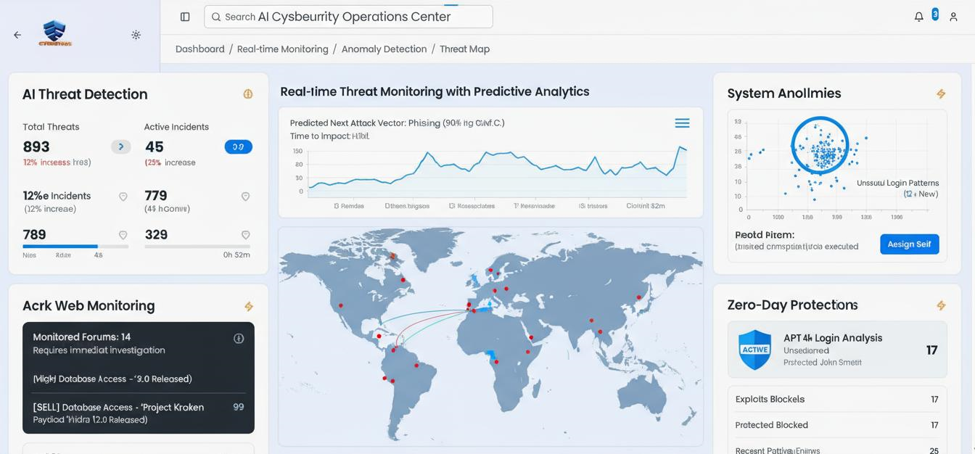
The AI cybersecurity monitoring agent uses real-time monitoring of system events to identify and respond to potential cybersecurity attacks. It monitors security logs and prioritizes the organization’s cybersecurity incident response activities based on predefined business rules. The agent can be used as part of a larger cybersecurity solution that includes security information and event management (SIEM) systems, cloud-based infrastructures, endpoint security tools, and threat intelligence feeds for activity monitoring across all environments.
The agent continuously collects log files from multiple systems, looking for anomalies and unusual patterns. Based on those results, it assigns a risk score and generates a report on the incident for the security team. In addition, the agent flags low-priority and high-priority alerts for immediate attention.
In more advanced implementations, the agent can perform controlled response actions similar to those found in security orchestration, automation, and response (SOAR) platforms. These actions may include isolating compromised endpoints, disabling or locking user credentials, blocking malicious IP addresses, or automatically opening and enriching incident tickets. Such actions are typically governed by predefined approval rules, role-based access controls, and human-in-the-loop validation to reduce the risk of false positives and unintended disruption.
The anticipated return on investment (ROI) from deploying this intelligent system includes faster incident response time, reduced alert fatigue, greater accuracy in detecting threats, and stronger overall infrastructure security.
AI Code Generation Agent
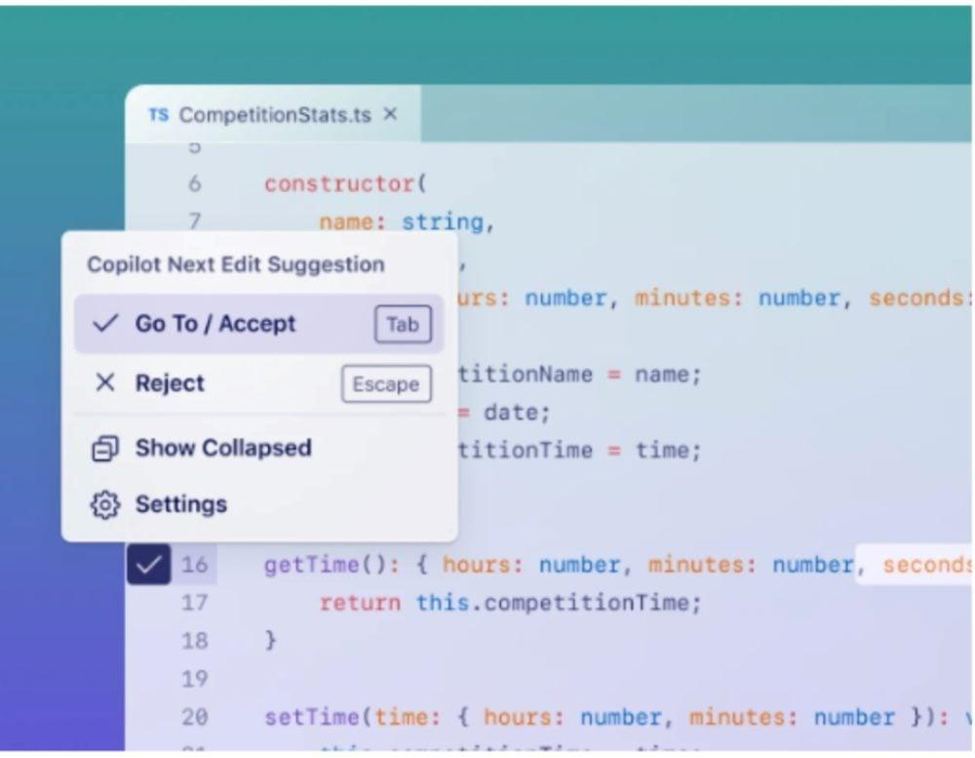
AI code generation agents speed up software coding, debugging, testing, and creating documentation. Integrates with various development environments (e.g., VS Code, GitHub or GitLab repositories, CI/CD pipelines) to support engineers through the entire software development life cycle.
The developer will commit custom code or ask the AI assistant for help. The code generation agent will generate code snippets, review pull requests, write unit tests, find bugs, and recommend code optimization or documentation updates. It can also be helpful during code deployment by flagging configuration issues.
AI Customer Success Agent
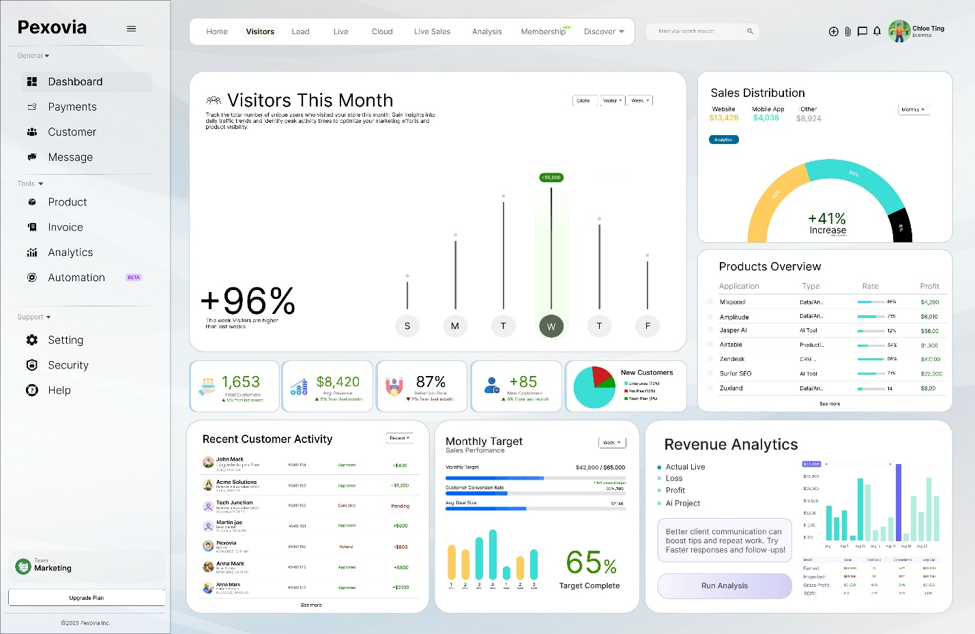
An AI customer success agent provides a means for SaaS and subscription-type companies to improve retention rates by automating onboarding, usage tracking, and proactive customer engagement. Integrating with product analytics tools, CRM systems, and communication platforms, the AI agent can monitor customer health and behavior.
After customer onboarding, the customer success agent goes ahead to track product usage, identify adoption gaps, and predict churn risk and triggers targeted interventions such as emails, in-app messages, or alerts to customer success managers. It also supports renewal reminders and upsell recommendations based on usage patterns.
Other AI Agent Ideas Worth Exploring
Many AI agent examples are not being used in traditional businesses but rather in niche workflows. While we will focus on commercialized AI solutions in this article, many new and developing applications are making headway across various industries:
- An AI travel planner agent that can build a custom travel plan based on a user’s preferences, budget, and real-time travel information.
- An AI procurement agent that can assist organizations in sourcing vendors, making purchase suggestions, and automating the procurement process.
- An AI learning assistant that can deliver personalized learning plans, provide explanations, and help track progress.
- An AI help desk agent that can assist users with internal technical problems using an automated ticketing system and provide troubleshooting tips.
- An AI insurance agent that can assist in processing an insurance claim through a deep analysis of documents, verifying the claimant’s submission, and flagging potential fraud.
- An AI compliance agent that can assist a business in remaining compliant with government regulations by monitoring and flagging possible violations within its organization or within its entire industry.
- An AI investment research agent that can analyze market trends and generate insights and reports to guide financial decision-making.
- An AI project management agent can help organizations maintain more control through tracking tasks, deadlines, and deliverables, thereby helping to improve the timeliness of project delivery and increase efficiency.
- An AI meeting assistant can provide functionality such as recording meetings, producing summaries, and creating action items out of meetings.
How to Choose the Right AI Agent Project and Build AI Agents Successfully
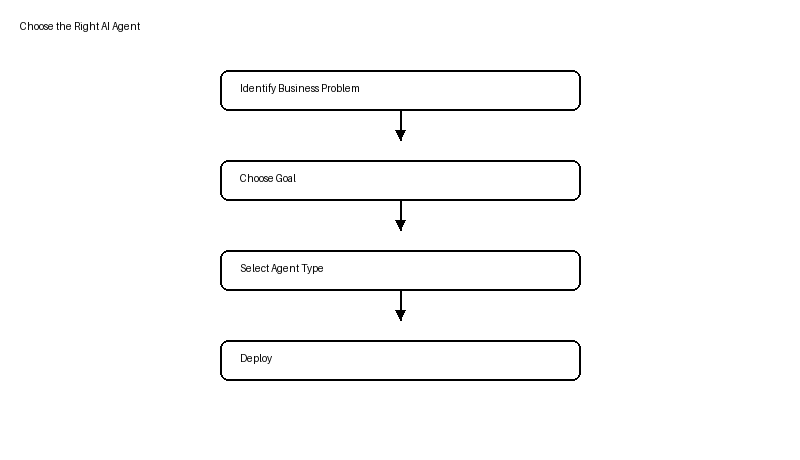
To select the right project for your business, look for those that provide significant business value.
Start with a High-Impact Workflow
Most successful implementations of AI specialized agents begin by identifying processes that are repetitive, time-consuming, and have a direct impact on the overall business performance. These types of workflows involve frequent manual coordination or decision-making.
Some examples include customer support ticket resolution in service teams, lead qualification in sales departments, invoice processing in finance, or employee onboarding in HR.
Calculate Expected ROI
Before starting any development efforts, organizations must calculate what kind of return on investment the agent will generate. In determining impacts, metrics are often computed based on time savings from reduced manual effort, cost savings due to decreased staff or outsourcing, revenue generation due to faster conversion or response times, and increased productivity across teams.
You will likely want to perform a preliminary evaluation of the cost-benefit of moving to AI-based processes by calculating your current process costs compared to the estimated cost of AI-based processes.
Evaluate Data Availability
Data requirements depend on the use case. Some agents need historical data; others can work with current documents, APIs, or rules.
If the data quality is poor, fragmented across several storage locations, or critical records are missing, then the performance of the agent will be limited and unreliable.
Consider Integration Requirements
The majority of AI agents do not operate alone. Instead, they need to integrate with existing enterprise tools, such as CRM, communications platforms, databases, APIs, and workflow systems.
Teams should evaluate the integration challenges early on, including authentication requirements, data syncing methods, and system compatibility. This will allow you to decide whether the solution will be viable from a technical perspective within your existing infrastructure, or you’ll need to make architectural changes.
Decide Between Off-the-Shelf and Custom AI Agents
Off-the-shelf agents are best suited for processes that are standardized, whereas custom-developed solutions should be used for complex, multi-step processes where thorough system integration is necessary.
Although the investment in custom development is expensive, they are usually far more scalable and aligned with workflows, providing long-term competitive advantages.
Common Challenges When Building AI Agent Projects
In order for an AI agent to be adopted successfully by an organization, many things must be in place.
Security and Compliance Requirements
AI Agents must be in alignment with an organization’s security policies and regulatory boundaries and must adhere to role-based access control, audit logging, and compliance with data protection regulations (such as GDPR). All security measures must protect sensitive company data from being shared or misused throughout the automated workflow.
AI Hallucinations and Reliability
AI models can generate hallucinations or erroneous responses if the foundational data was not provided. To provide accurate and verifiable responses, validation measures such as retrieval-augmented generation (RAG), validation rules, and human review of the AI-generated content will provide this assurance.
Tool Integration Complexity
Integrating tools to ensure that AI agents work with the corporate data stored in the CRMs, APIs, database, and any other systems used internally creates issues around authentication, data transfer, and compatibility. Therefore, to avoid creating fragmented or unstable workflows, organizations should proactively plan for tool integration before implementation.
Monitoring and Human Oversight
AI agents require continuous monitoring through performance logs, dashboards, performance tracking, etc. Minimal human oversight is also required for validation and to help with outlier cases. This combination enables agents to assist employees and not just operate autonomously without any form of accountability.
Why LITSLINK Is Worth Considering for Custom AI Agent Systems and Development
LITSLINK is a technology partner that builds customized AI solutions instead of generic systems. It offers custom agent development for specific workflows, multi-agent systems to coordinate tasks across departments, AI-driven automated workflows, and full enterprise AI implementation. The team also builds custom software solutions and AI-powered MVPs for companies validating new products or digital strategies.
Partnering with LITSLINK, you will get:
- 30–50% reduction in operational overhead;
- 24/7 autonomous execution;
- 4–6 weeks to first working PoC (and full production systems in 3–6 months);
- 300+ professionals covering the whole stack;
- a solid experience backed by 1540+ projects across 8+ industries.
Contact us to get your own custom agent today.
What Is the Best AI Agent Project for Businesses?
The best agent project for your business will solve a real daily workflow issue and yield measurable ROI.
How Much Does It Cost to Build an AI Agent?
The cost of building an AI agent depends on how complex it is. You can find cost estimates here using our AI cost calculator.
What Is the Difference Between an AI Agent and a Chatbot?
The difference is that chatbots respond only to messages, while agents can complete full tasks and use tools.
What Are Multi-Agent AI Systems and When Do You Need a Multi-Agent Architecture?
These are systems where multiple AI agents cooperate on the various parts of a task. You need this multi-agent architecture when you have complex workflows or your organization is very large. Use it when tasks have clearly separable roles, parallel workflows, different permissions, or specialized context requirements.
Can Small Businesses Build AI Agent Projects?
Yes, small businesses can build AI agents by starting with simple ones and then scaling as they grow.