





Building a Livestock Farm Management App for Modern Farmers
- 5–10 seconds to weigh and record one animal
- ~70% less time spent on record-keeping
- ~12% higher average sale price per animal
- 4 user roles on one shared data model
Farmers who run cattle, sheep, and pigs across several fields rarely have one place to track every animal, and most livestock management software makes them enter the same data twice. We built a livestock farm management app that records each animal's weight, health, and breeding history, then connects the farm to buyers through a built-in marketplace.
Project Details
The client is an agricultural technology company that came to LITSLINK with funding in place and no in-house engineering team. They wanted a turnkey CTO service: product design, mobile and web development, QA, app store publishing, and post-launch support. The product they had in mind was a tracking, performance, and marketing system for livestock operations, one that helps farmers stay organized and lets an animal’s data travel with it when it leaves the farm.


Business Challenge: Creating an All-in-One Livestock Management Solution
Before the app, a typical customer ran a cattle farm or mixed herd with three tools that never talked to each other: paper movement records, a weighing spreadsheet, and a notebook for medical treatments. Data entry happened twice, once in the field and once at the kitchen table. Reconstructing a single animal’s history for a buyer or an inspector took 20 to 30 minutes. The client wanted one system that livestock farmers would open every day, on a phone in a muddy yard and on a laptop in the evening.

Farm Animal Health Records
Weights, vaccinations, and medical treatments sat in paper livestock records for days before anyone saw a trend. A calf losing condition could go unnoticed for weeks, and withdrawal periods were tracked from memory.

Unified Farm Operations Management
Field moves, group changes, weighing sessions, and sales lived in separate places. Farmers had no single view of how many animals were where, what they weighed, or which groups were behind target.

Multi-Species Support at Scale
Cows, sheep, and pigs follow different rules for tagging, growth benchmarks, and compliance. Most livestock management software handled one species well and forced workarounds for the rest.
Technologies Behind the Livestock Management App


Our Livestock Management Solution
We started with the animal record as the center of the data model. Each animal carries a passport ID, an EID, a visual tag, breed, sex, date of birth, sire and dam IDs, pregnancy status, and its full weight history. Groups, fields, and farms hang off that record, which is why the same farm management app serves a 40-cow smallholding and a 2,000-head operation. Beef and dairy farmers, sheep flocks, and pig units all keep track of animals in one data model.
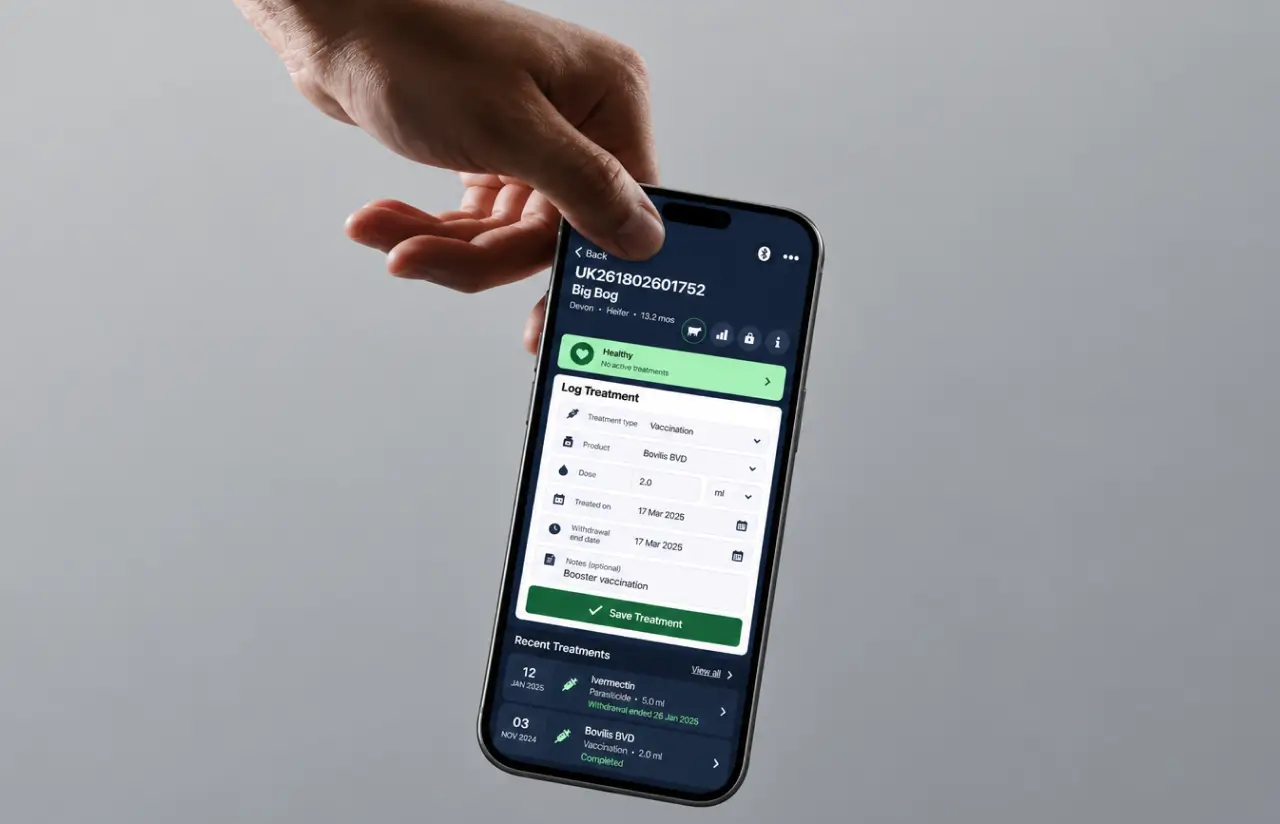
The mobile app is built for the yard. Crush Mode connects to a Bluetooth scale, reads the ear tag, and saves a weight in 5 to 10 seconds. The screen shows last weight, daily liveweight gain, days on farm, purchase price, and estimated value. The web version is where farmers plan. Growth charts plot every animal against a group target line, and real-time national and local benchmarking shows how a herd compares.
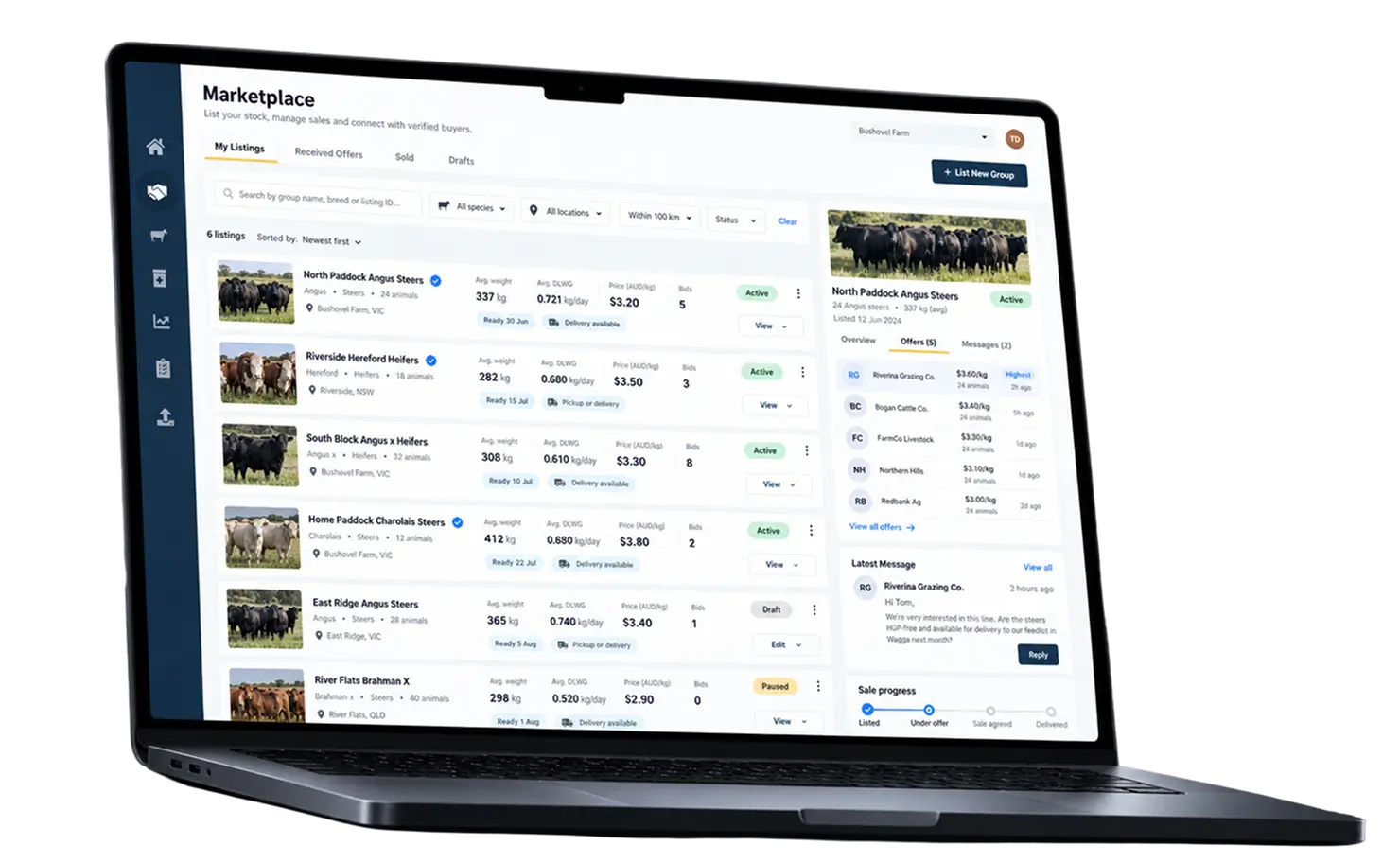
The marketplace turns records into revenue. A farmer lists a group with verified weights and performance data, sets a buying radius, messages buyers directly, takes bids, and checks out with delivery to farm or abattoir. Marketing pages let livestock businesses list accreditations and build relationships with processors and retailers that want traceable stock. Our marketplace development team designed this side to feel like a shopping app, since many buyers are traders.
Individual Animal Tracking & Health Records
Every animal has a profile with tag IDs, breed, sex, vaccinations, medical treatments, and withdrawal dates. The record travels with the animal when it is sold or moved.
Field-Level Herd View
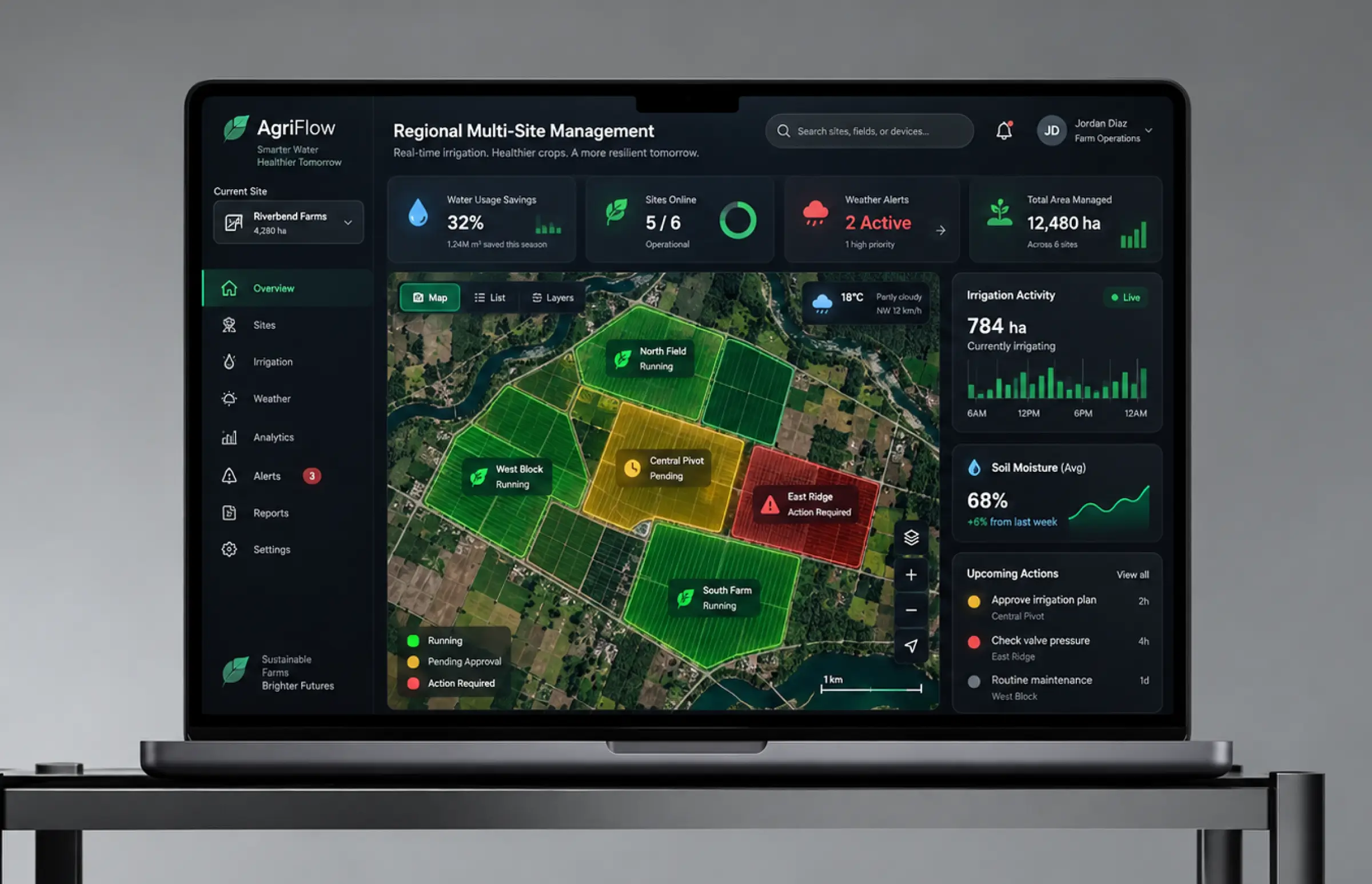
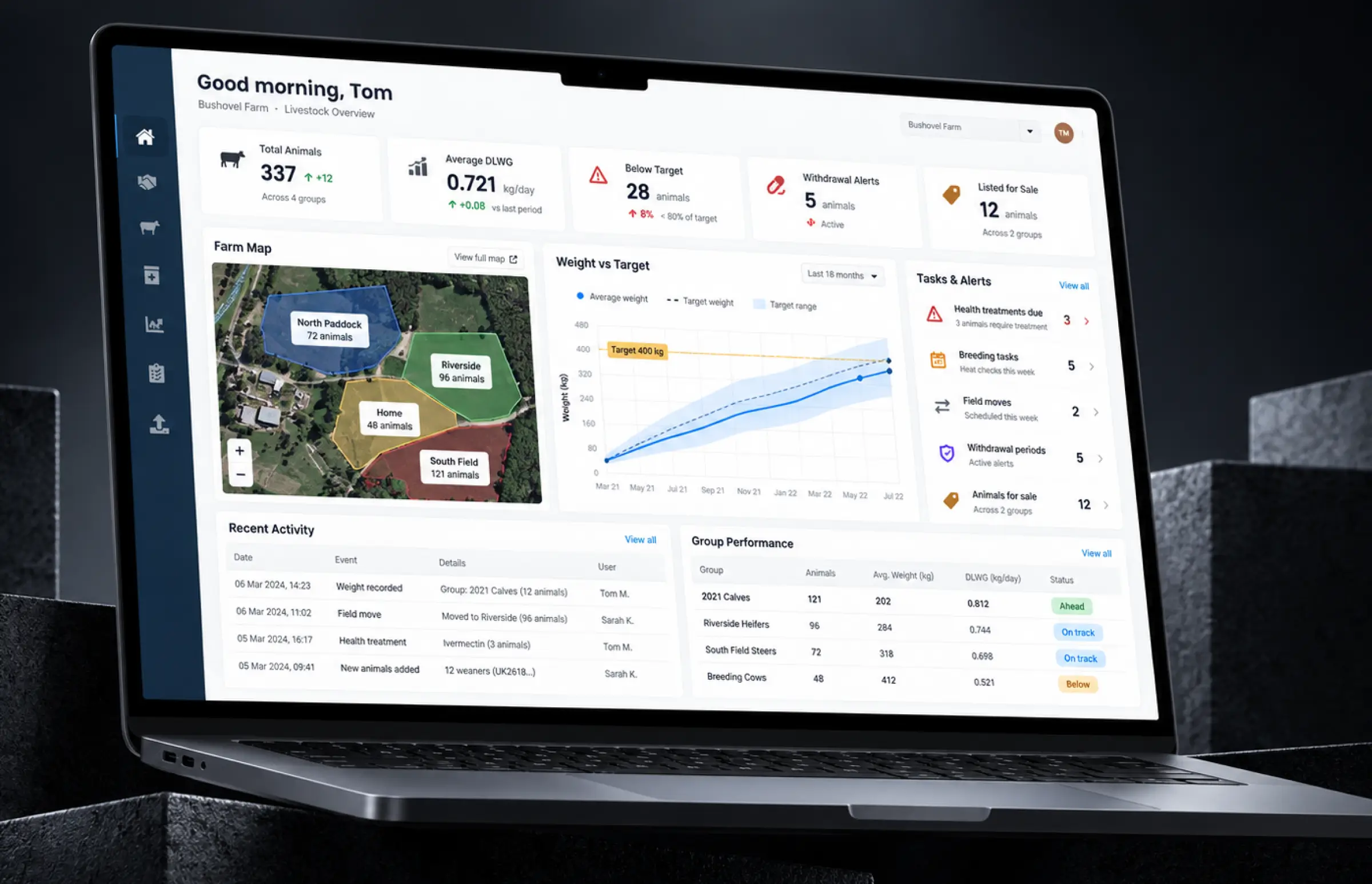
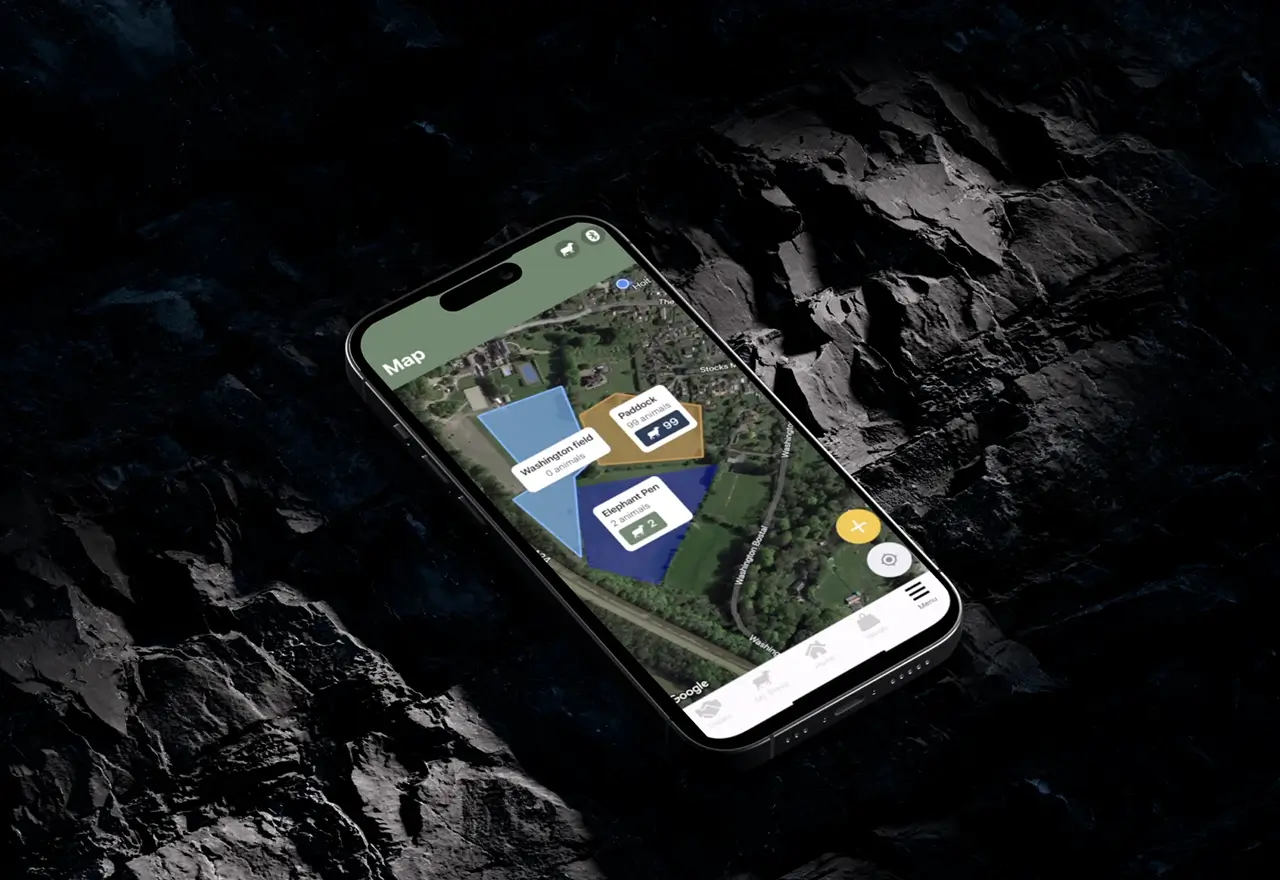
A satellite map shows each field with its current animal count and the group's latest average weight, so you can track animals across a large farm at a glance. Field cards report grazing density, average DLWG, and estimated weight, which flags a group falling behind without a walk to the pasture.
Breeding & Reproduction Management
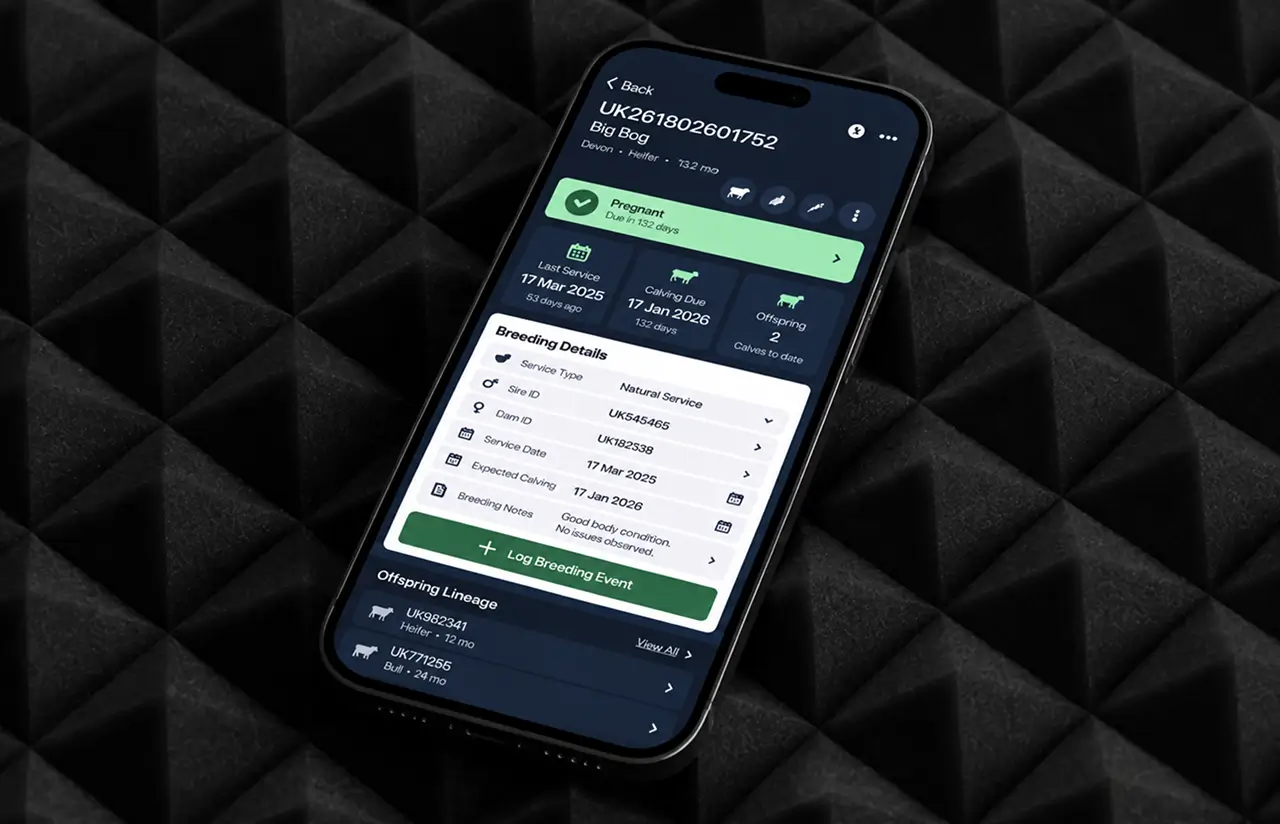
Sire and dam IDs link offspring to parents, and pregnancy status sits on the animal card. Breeding tracking shows which sires produce the fastest-growing offspring, so farmers make better decisions about next season.
Farm Financial Management
Purchase price, estimated value, and change per animal update after every weighing. Group views roll the numbers up, and trading history exports as CSV for the farm's finances.
Compliance & Regulatory Reporting
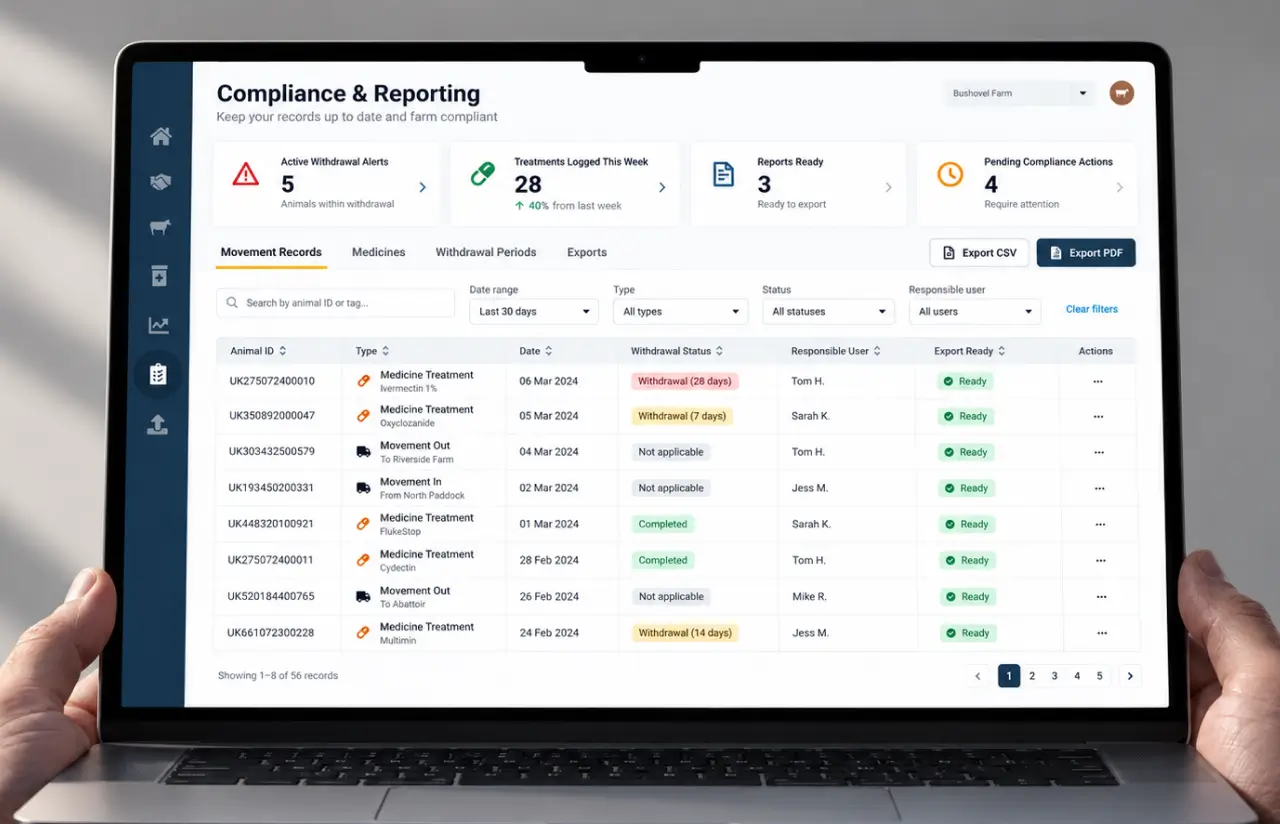
Animal movements, medicines, and withdrawal periods are logged as they happen, and reports export in the format regulatory systems expect. Paper-free compliance was the first feature farmers asked for.
Livestock Marketplace & Marketing Pages
Farmers list animals with verified growth data and animal details, buyers filter by species, location, and distance, and bids and checkout happen in the app.
Scrum Methodology
Project Journey
The project ran in two-week sprints from the first design review, with a small advisory group of farmers testing every build on live animals. Early sprints went into the animal record and the weighing flow, because nothing else mattered if data entry in the yard was slow. Marketplace, messaging, and checkout came later, once several hundred farms were feeding cattle records into the system.
How the Livestock Tracking App Works
- Import animals from a spreadsheet or scan tags, draw field boundaries on the map, and sort the herd into groups.
- Crush Mode pairs with a Bluetooth scale, reads the EID, and saves weight, notes, and treatments in seconds.
- Growth charts compare each animal to its group target and to local and national benchmarks.
- Vaccinations, medical treatments, pregnancy status, and field moves go into workflows farmers reuse.
- Groups with verified weights go to the marketplace with adverts, bids, and direct buyer messaging.
- Checkout handles payment and delivery, and the animal's full history moves to the buyer.
Development Process Flow
Each sprint opened with the client’s product owner reviewing the backlog against feedback from farms using the previous build. Weighing speed set the pace: a feature did not ship until a tester could record a full pen of sheep without touching the keyboard. Sprint reviews ran as demos on a phone, often in a field, which is how the team caught glare and glove problems that no office test would have surfaced.
How we delivered this Livestock Management Software
- We define the project goal together, agree on priority features, and set a realistic delivery date and budget.
- We build a ranked list of everything the product needs, starting with what matters most to the business.
- Work is broken into 2-week cycles. At the start of each, we select the next set of features to deliver.
- The team builds, tests, and integrates features throughout the sprint.
- At the end of every sprint, you see working software and give feedback that shapes the next cycle.
- Each sprint produces a shippable piece of the product. We review what worked, adjust, and move forward.
UI/UX Design: Farmer-Friendly Interface for Livestock Management
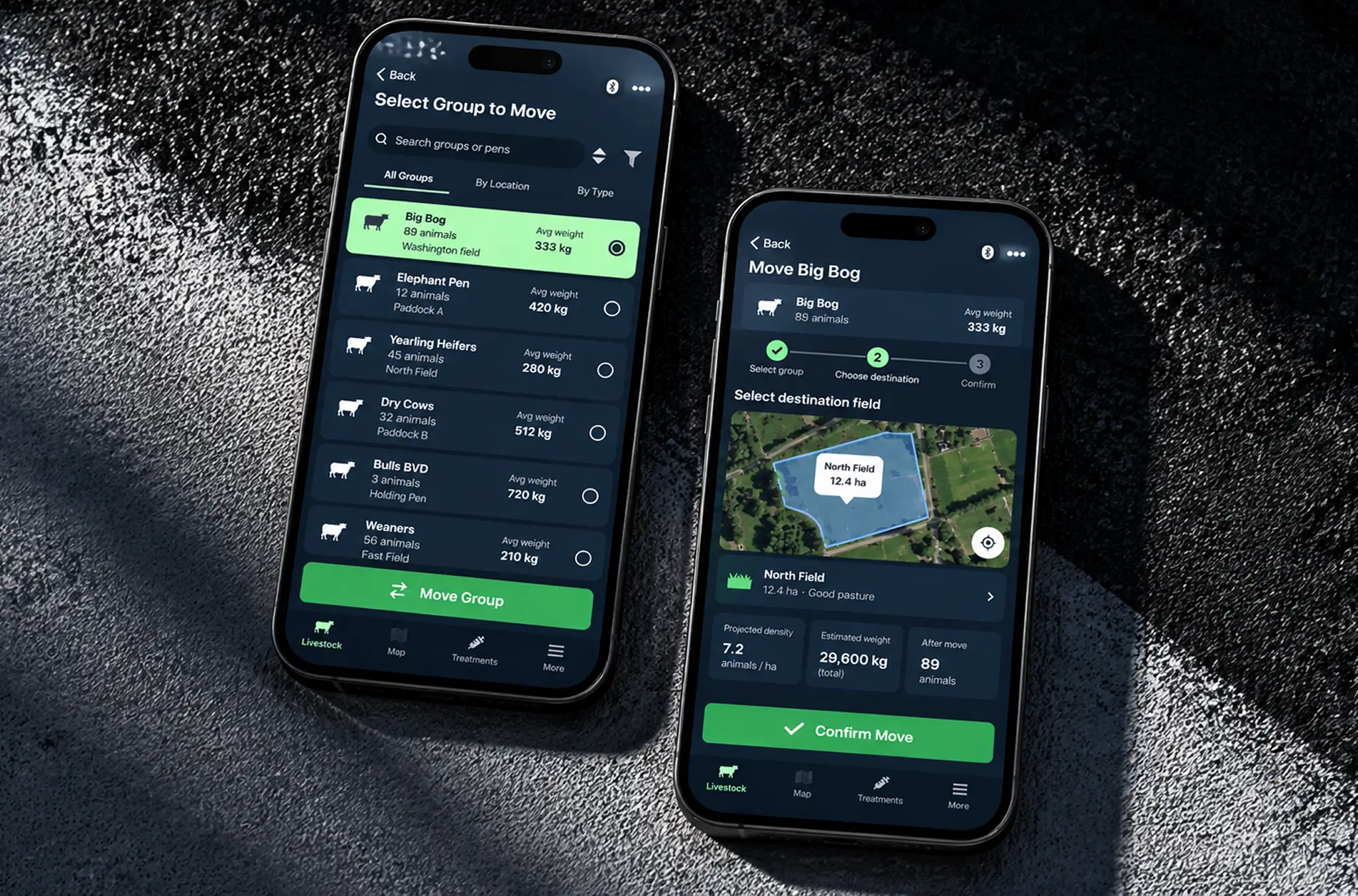
The interface is built for a farmer holding a phone in one hand and a gate in the other. Weight, DLWG, and days on farm sit in large green tiles. Buttons are sized for gloves. A dark navy background stays readable in winter light and summer glare, and the product design team tested both on a working farm before locking the palette.
On the web dashboard, the Animal Information page puts identity, breeding, and sale status in a scannable header, with performance, history, and offspring in tabs below. Three colored bands on the growth chart show whether an animal is above, on, or below its group target.
The marketplace side borrows from consumer shopping apps rather than farm management software: photo cards, price per kilo, bid counts, and a checkout with delivery options. Users on the buying side are often processors and traders, and they expected a flow they already knew.
Results
Before
- ✕20–30 minutes to reconstruct one animal's history
- ✕Paper movement records, weighing spreadsheets, and treatment notebooks kept separately
- ✕Weights written by hand and typed in later, a day behind
- ✕Sales through auction marts, with commission and no performance data
- ✕No benchmark, so farmers could not tell how their herd compared
After
- ✔5–10 seconds to weigh and record one animal
- ✔~70% less time on record-keeping each week
- ✔One record per animal across mobile and web, synced in real time
- ✔~12% higher sale price on listings backed by growth data, with no mart commission on top
- ✔Live national and local benchmarking for every group
Impact of the Livestock Management Platform After Launch
Verified Reviews
Our Reputation on Top Platforms
LITSLINK holds a 4.8 rating on top platforms, and both platforms list us among their top app development companies. Clients mention the same things in their reviews: engineers who understand the business, weekly demos, and a team that stays on after launch.
Have a Farm Management Project in Mind?
Need a livestock farm management app, a herd tracking tool, or a marketplace that gives farmers access to new buyers? Tell us what you are building, and we will come back within 48 hours with questions and a rough estimate.
Thank you for your message. It has been sent.