



Building a Custom Learning Management System for Hospitality Staff Training
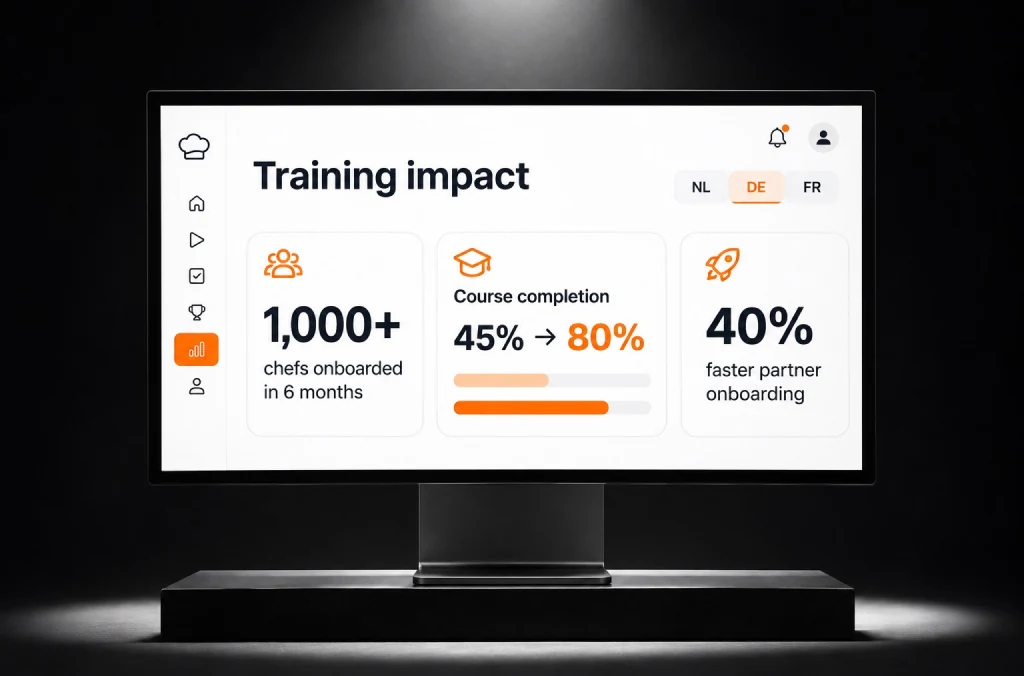
- 1,000+ chefs onboarded in the first 6 months
- 40% reduction in onboarding time for new restaurant partners
- 80% average course completion rate, up from 45% under ad-hoc training
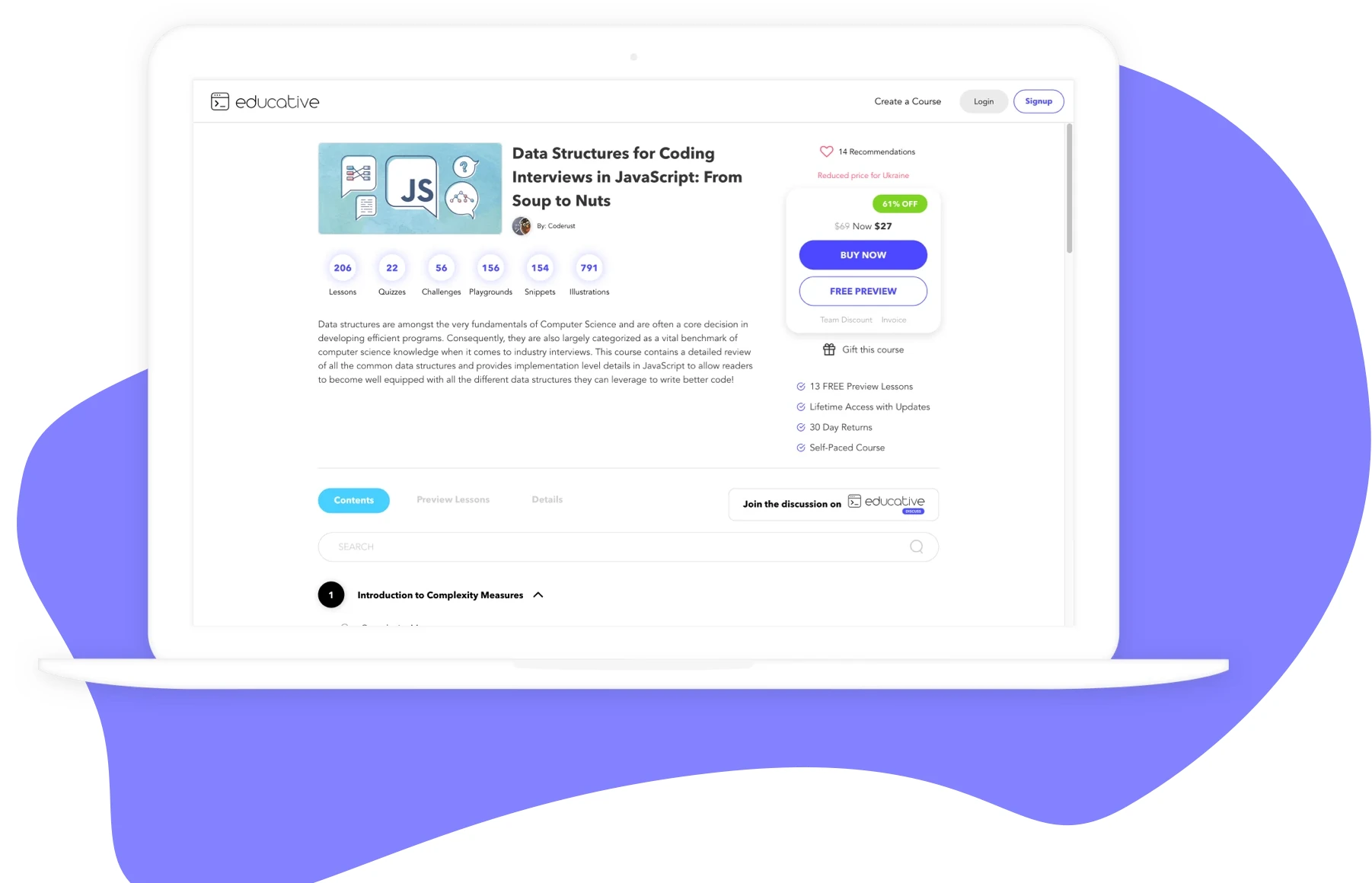
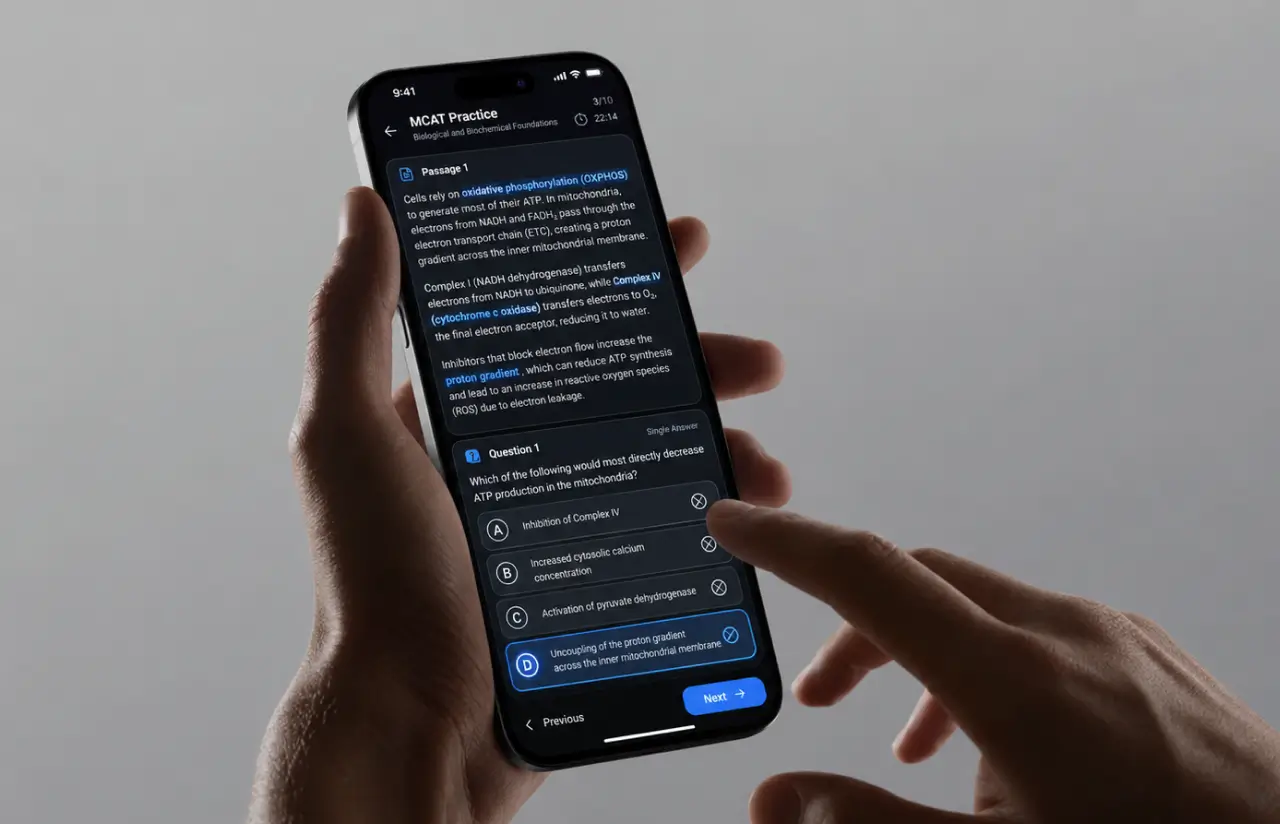
A chef in Lyon finishes a course on sous-vide technique, gets a task from a knife manufacturer, cooks with their product, and uploads a 60-second video filmed on a phone. A moderator checks it, the brand approves it, and the chef moves up a ranking partner restaurants read before hiring. We built the custom learning management system behind that loop, from localized video courses to the brand workflow, the points engine, and market-scoped access across three GDPR jurisdictions.
Project Details
The client runs professional development programs for culinary careers across Europe and needed one platform serving three markets with different languages, different brand partners and three separate data protection authorities. Their target audience is working chefs rather than students at educational institutions, which changes what the learning process has to look like.
Off-the-shelf LMS solutions could handle the online courses. None of them could handle what happens after a course ends, which is where the brand tasks and the rewards system live. A traditional LMS assumes training content goes in and learner progress comes out, and that was half of what this platform needed to do.


Business Challenge: One Learning Platform for Three Markets
Germany, France and the Netherlands. Three markets, three national data protection authorities, one platform.
Germany and France are the largest professional culinary training markets in the EU. The Netherlands went first as a pilot, because its audience works in English and needed no localization of its own.
Three problems shaped the engagement.

Localization Multiplies Every Piece of Content
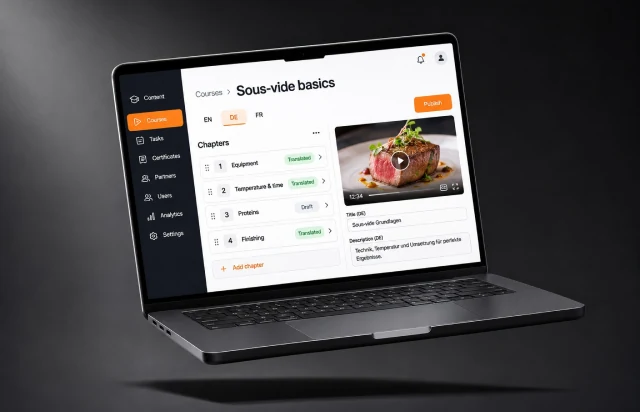
German, French and English, which means every course exists three times. Video, chapters, notes, transcripts, all of it multiplied by locale. The constraint was that the client's content team had to publish and translate learning materials themselves. Educational courses change constantly in this field, and a model where course management needed a developer would have broken by the second month.

No Standard LMS Carries a Brand Workflow
Brand partners needed their own workflow: create a task, review submissions, approve or reject with a comment. Chefs needed a reason to complete it, which is where gamification tools stop being decoration. Neither exists in a standard LMS, and bolting a points system onto one is where these projects usually stall.

Three Jurisdictions, Three Sets of Expectations
All three markets sit in the EU, each with its own national data protection authority and its own expectations around professional training records. Access controls and data had to be scoped by market rather than pooled and filtered at the query layer, with data encryption in transit and at rest throughout.
Technologies Behind the Custom LMS Development


Our Solution: A Custom Learning Management System for Multi-Market Training
The platform splits into two halves that most management systems do not have to reconcile. One is conventional learning management: courses, progress tracking, tests. The other is a content marketplace where brands commission work from chefs who just finished a relevant course.
An LMS platform for corporate training programs usually stops at the first half, and video conferencing tools or adaptive learning modules bolted on do not change that. This one needed custom development for the second half, and the two had to share a user model. Blended learning in this context means the practical work happens in a real kitchen rather than in a simulation.
Points connect them. Everything a chef does on the learning side converts into standing on the recruiting side, which is what makes this an extended enterprise platform rather than an internal training tool. Points are the mechanism, and the ranking is the payoff.
Multi-Locale Content Architecture
Courses, chapters and tasks exist per locale with English as fallback, managed through Strapi's i18n. The content team adds a German course without touching a deployment pipeline, which is what makes three learning environments maintainable by one team. Custom branding per market runs on the same model.
A Video-Based Learning Platform with Chapters, Notes and Transcripts
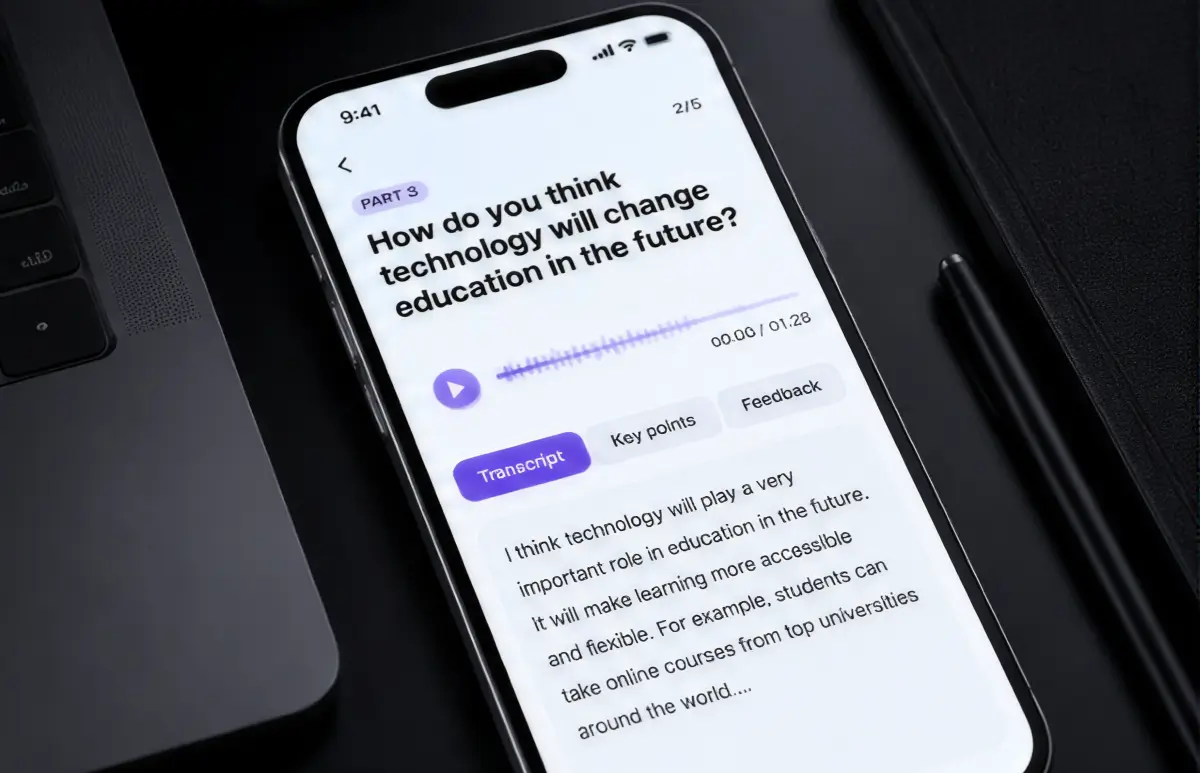
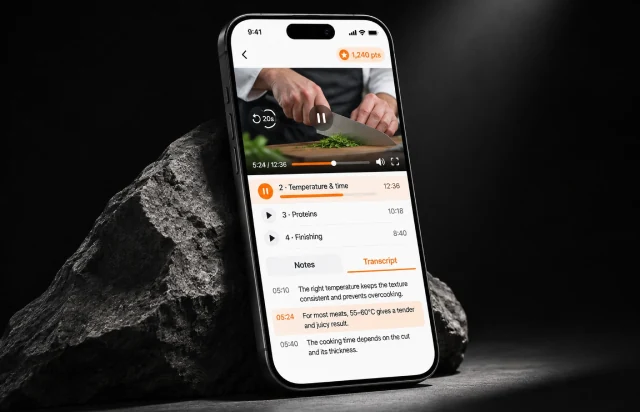
Courses break into chapters, and multimedia integration means a chapter holds video, images and downloadable learning resources together. Chefs add their own notes and read the transcript when a kitchen is too loud for audio, which is more often than you would think. Progress tracking runs per chapter, so closing the tab halfway through costs a chapter rather than a course, and administrators monitor learner progress at the same resolution.
Branded Task Workflow and Submission Review
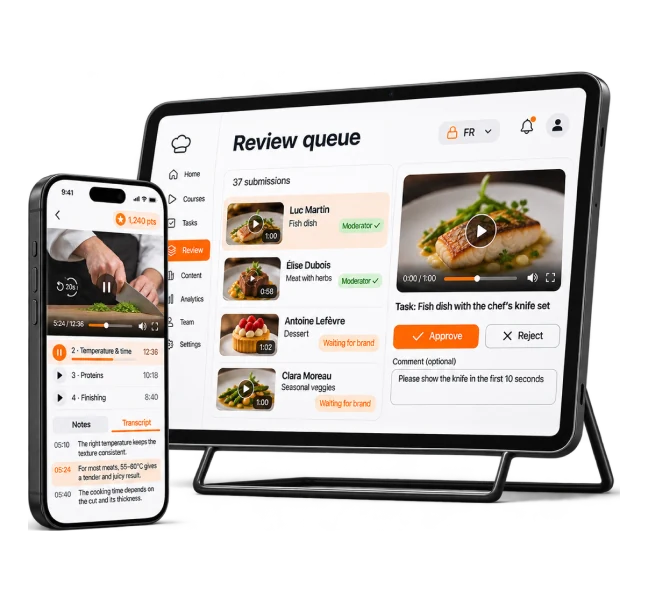
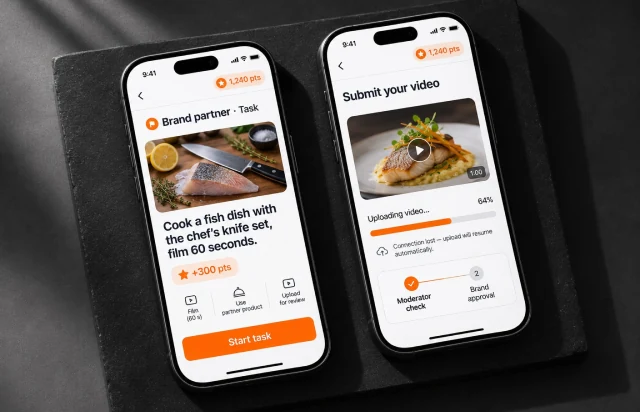
A brand creates a task in its own admin area. Chefs who completed the relevant course see it, cook, film on a phone, and upload video and photos through a form. Review runs in two stages: a platform moderator checks compliance first, then the brand approves or rejects with a comment.
Points and Rewards System
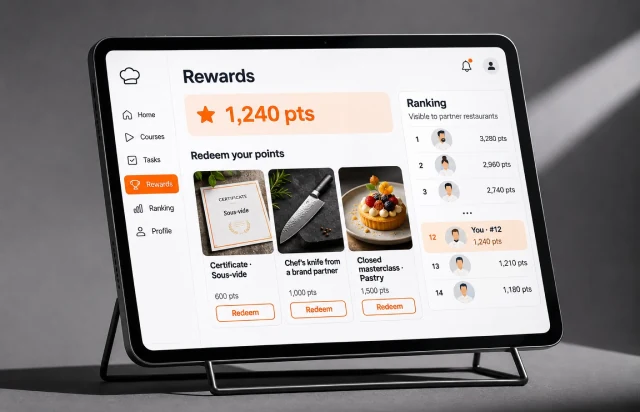
Points come from completed chapters, passed tests, a filled-in profile, a rated course, and most of all an approved branded task. They convert into certificates, equipment from partner brands, closed masterclasses, and ranking that partner restaurants see when they hire. Learner engagement is measurable here in a way few training programs manage.
Market-Scoped Role-Based Access Control
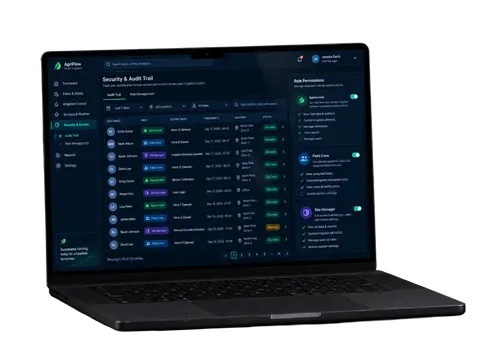
Chefs, moderators, brand representatives and administrators each see a different platform, and every role is scoped to its market. User management sits in one place across all four. A French brand representative cannot reach German submissions, which is an access control decision before it is a GDPR one.
CMS and Admin Panel on Strapi
Course creation, task management, translation and moderation queues all live in one admin panel the client's team runs without us. That is what a customizable LMS buys over a packaged one: the advanced features are the ones specific to this business.
— Scrum Methodology
Project Journey
Seven people, and no separate tech lead. The solution architect did that job alongside the architecture, with a project manager on delivery. The build itself ran on two full-stack engineers across Next.js and Strapi, one backend engineer on PostgreSQL, Azure and video processing, a designer and a QA engineer.
The Netherlands shipped first by design. One market, the least localization work, and real users on the platform while German and French content was still being written.
How We Delivered This Custom LMS Software Development Project
- Which markets, which roles, which of them ships first. What a custom LMS depends on most is settled here rather than later.
- The brand workflow outranked everything that was not strictly needed for a chef to finish a course.
- Two-week cycles. Each opens by picking what ships in it.
- Build, test, integrate. QA ran from sprint one rather than waiting for a release candidate.
- Every sprint ended with something the client could click, usually with their own content in it. We gather feedback at that point rather than after a release.
- The Netherlands first, then Germany, then France, each with its own content and its own supervisory authority to satisfy.
How the Corporate Learning Management System Works
- User registration runs on invitations from a partner restaurant or school. No open signup, which keeps the LMS users professional.
- The chef picks their market, which sets their locale and scopes everything they will see from then on.
- Chapters, notes and transcripts in their own language, with learner progress saved per chapter. Courses connect into learning paths by specialism.
- Finishing a course opens the tasks attached to it, each one already specified by a brand down to what gets cooked and filmed.
- Upload from a phone. A moderator checks it, then the brand approves it or sends it back with a comment.
- Points buy certificates, equipment and masterclasses. They also move a chef up the ranking partner restaurants read before hiring.
UI/UX Design
A phone, a kitchen, one free hand, and rarely a quiet moment. Those four conditions shaped the user interface more than any design principle did, and a user-friendly interface under them looks nothing like one built for a desk.
The chapter list stays one tap from the video rather than living on its own screen. Chefs rewind more than they skip ahead, usually twenty seconds back into the chapter already playing, and burying that behind navigation would have cost them a step every time.
Task submission is the flow that had to survive the worst conditions. A chef films on a phone, so the upload accepts whatever the camera produced and processes it server-side rather than asking anyone to convert anything. Partial uploads resume, because kitchen wifi is kitchen wifi.
Brand representatives and moderators got a different surface entirely. They are at a desk reviewing a queue, so their screens optimize for working through submissions quickly rather than for reading one carefully. Seamless integration between the two surfaces matters because the same submission moves between them.
The points balance appears on every screen. It is the thing chefs check most and the reason many of them opened the platform in the first place, which makes it the single biggest driver of user engagement in the product.
— Timeline
How We Delivered the Custom LMS Platform
Discovery & Architecture
- Three-market content model and locale strategy
- Role and permission mapping per market
- Strapi content types agreed with the content team
Core Learning Platform
- Video delivery with chapters, notes and transcripts
- Per-chapter progress tracking
- Course and test flows
Brand Workflow & Points
- Task creation in the brand admin area
- Two-stage moderation and approval queue
- Points engine and rewards catalog
Localization & Rollout
- German and French content with English fallback
- Netherlands launch, then Germany, then France
- Market-scoped data separation
QA & Handover
- Full-cycle QA from sprint one
- Security review against GDPR requirements
- Admin documentation and a setup process the content team owns
After Launch
- Support through the first hiring cycle
- Iterations on the rewards catalog
Results of Custom Learning Management System
Before
- ✕Ad-hoc training with 45% course completion
- ✕Onboarding a new restaurant partner took weeks
- ✕Brand partnerships ran over email and spreadsheets
- ✕No way to compare chefs across markets
- ✕Content changes needed a developer
- ✕No link between training and hiring
- ✕Partner records kept per country with no shared view
After
- ✔80% average completion rate
- ✔40% faster onboarding
- ✔Task creation, review and approval in one workflow
- ✔Ranking partner restaurants use when hiring
- ✔Content team ships courses and translations themselves
- ✔Skills management feeding a ranking employers use
- ✔One platform, three locales, market-scoped access
Impact
— Verified Reviews
Our Reputation on Top Platforms
LITSLINK holds 4.8 on Clutch with 78 reviews and 4.8 on GoodFirms with 32. We have delivered more than 1,540 projects for over 1,000 clients in 82 countries. In EdTech, the platform is rarely the hard part, and what takes the work is whatever the business does that no packaged product anticipated: a review workflow, a points economy, three markets that cannot share a database. See what our custom software development services cover across EdTech, platform work and regulated data.
Have an LMS Project in Mind?
Standard learning management systems handle courses well. The trouble starts with everything specific to your business: the workflow after a course, the people who need to review what learners produce, the markets that cannot share a database. Tell us what your platform has to do that an off-the-shelf product cannot. We come back within 48 hours with a scope, a timeline, and a number.
Thank you for your message. It has been sent.