





Building an AI-Powered MCAT and SAT Prep Tool
- Two models, one per test
- 12+ months from data to launch
- Thousands of questions cleaned and verified
- iOS, Android, and web admin platform
MCAT prep app development for a US EdTech startup. LITSLINK fine-tuned a GPT model to solve and explain multiple-choice questions on both the MCAT and the SAT, then shipped it inside iOS and Android apps students could practice on daily.
Project Details
The client is an EdTech startup based in the US. Static question banks for the MCAT and SAT already saturate that market, so the brief called for a reasoning engine: something that deconstructs a problem and shows the logical steps, so students internalize the method. Two numbers frame a realistic budget here. Fine-tuning reached 0.62 accuracy, and dataset preparation consumed six to eight weeks before a single screen existed.


Business Challenge: Creating Comprehensive MCAT Test Preparation Software
On paper, multiple-choice architecture appears trivial to automate. The parameters are strictly constrained, the success metric is an absolute binary, and the token count is minimal. That expectation is why this project turned out harder than the initial scope assumed.
MCAT questions test reasoning, not recall. A biochemistry passage runs several hundred words, describes an experiment, then asks which conclusion follows. Answering it takes reading comprehension, subject knowledge, and elimination logic at once. Students have to understand the underlying concepts. A general-purpose language model handles each of those unevenly, and the errors cluster around exactly the question types students find hardest.
The SAT presents a different problem inside the same app. Its questions are shorter, more formulaic, and more sensitive to distractor design. A model tuned to reason through long MCAT passages overthinks a straightforward SAT algebra item and talks itself out of the right answer.
Three constraints shaped the work.

Model Accuracy on a Closed Format
With four options per question, random guessing scores 0.25. Anything a prep app ships has to clear that by a margin students can trust. A confidently wrong model is worse than none at all, since students have no way to tell which answers need a second look.

Dataset Availability and Quality
Real MCAT and SAT questions are copyrighted and closely held. Building training sets meant cleaning thousands of items rather than downloading a benchmark. Answer keys contained errors and formatting varied. That work took longer than the fine-tuning.

Two Tests, Two Behaviors
Every attempt to serve both tests from one model traded accuracy on one for accuracy on the other. That finding drove the core architectural decision below.
Technologies Behind the MCAT Prep App



Our MCAT Prep App Solution
The decision that shaped everything else: train separate models for MCAT and SAT instead of one system handling both.
That sounds obvious in retrospect. It was not the starting assumption, and it cost a round of experiments to establish. A single fine-tuned model produced acceptable average accuracy while failing unevenly across the two tests, which meant the average described nothing a student would actually experience. Splitting the models let each one specialize in its own question format, passage length, and distractor style.
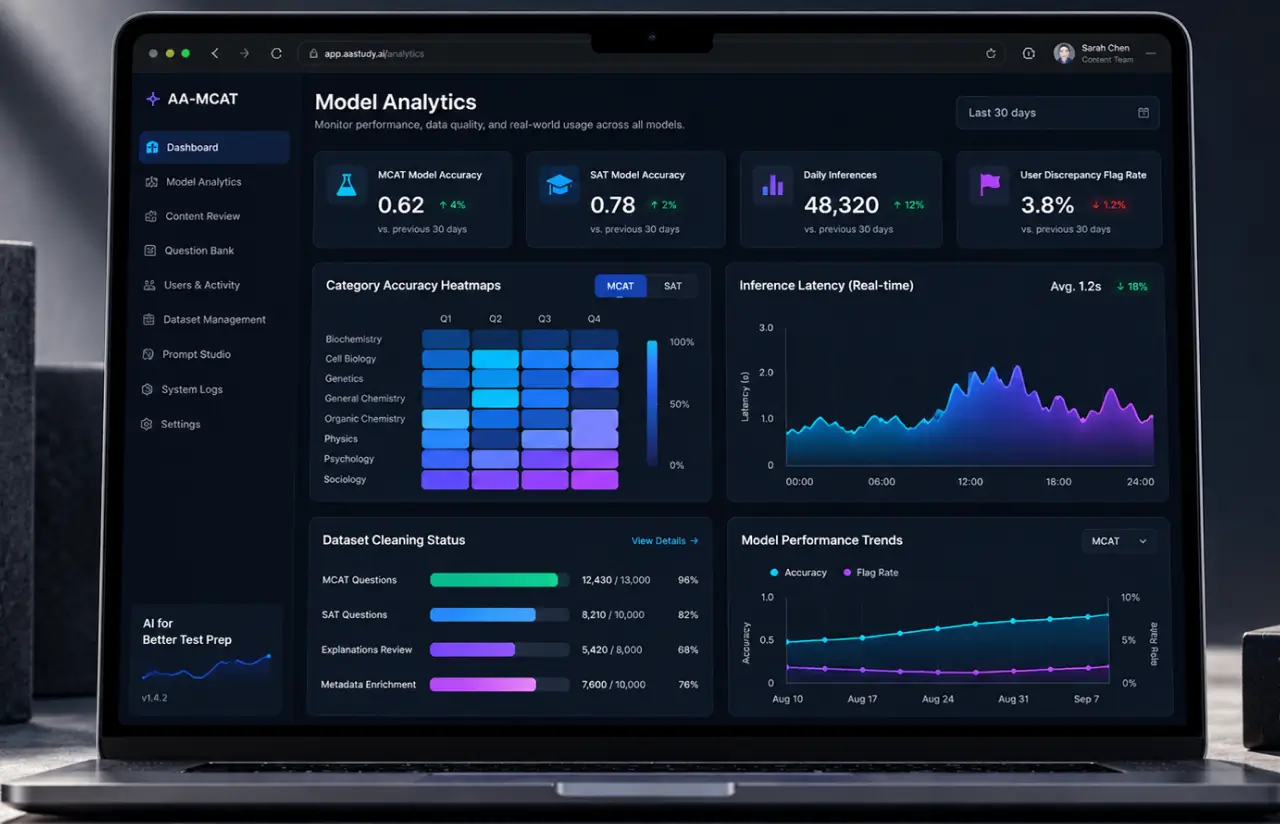
Dataset work followed. The team cleaned and structured thousands of multiple-choice questions, verified answer keys against source material, prepared training sets pairing correct answers with explanations, and normalized formatting so the model saw consistent structure rather than six different conventions. Response accuracy was then tested across question categories separately, because an average across biochemistry and verbal reasoning hides more than it shows.
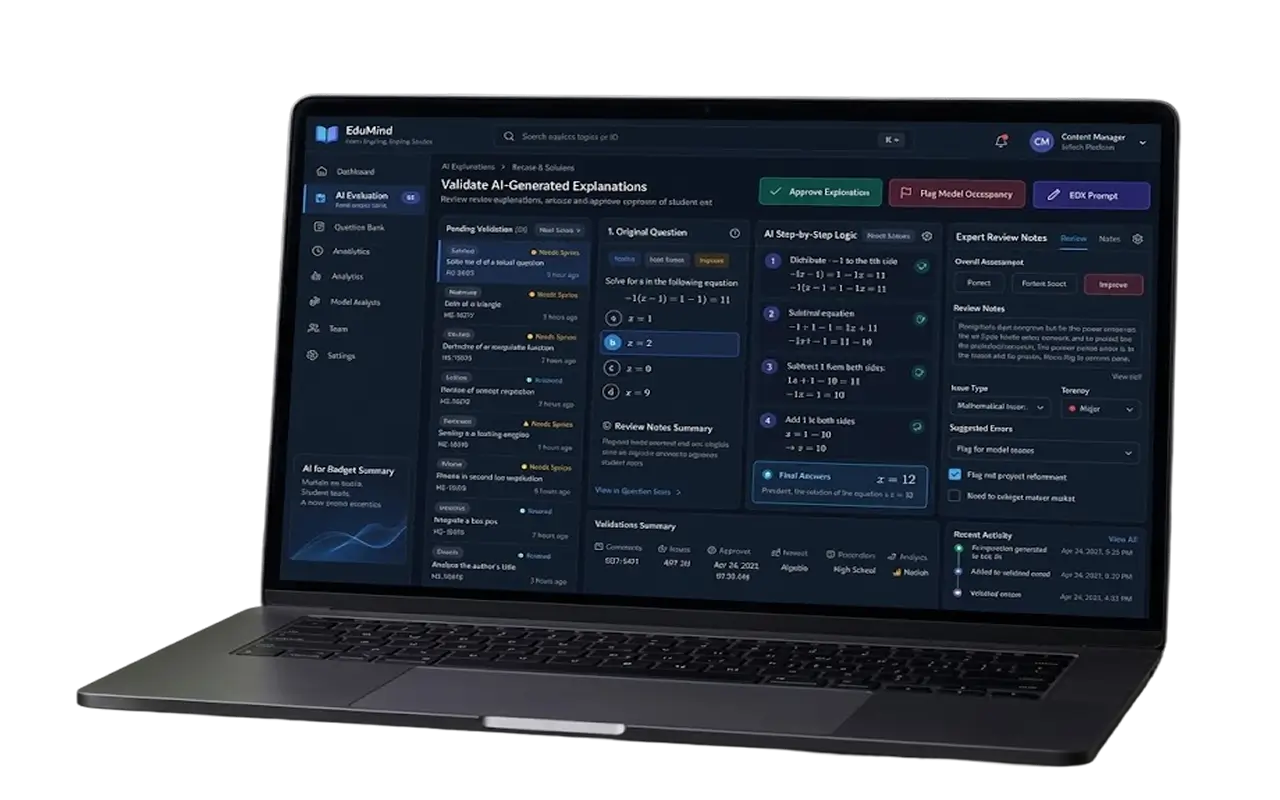
Generic LLM benchmarks did not directly measure the project’s core objective, so the team built a task-specific evaluation focused on answer accuracy. One question mattered: did the model select the correct option?
Four technologies, deliberately. The AI layer runs through a fine-tuned GPT model rather than a self-hosted training stack, so engineering effort went into data preparation and the inference pipeline instead of infrastructure the client would inherit.
Fine-tuning drove the accuracy rate to 0.62, strictly outperforming the 0.25 statistical baseline for four-option random guessing. That represents a definitive mathematical lift, entirely bypassing subjective metrics of “improvement.”
It is also not a number you ship to a pre-med student unsupervised, and the product was not built that way. AI explanations were validated against expert-reviewed answers during QA, and response consistency work continued after launch. The model does the volume; human review sets the standard it has to meet. That division is the reason the product could reach students at all.
Test-Specific Model Routing
The student selects MCAT or SAT, and separate models sit behind a shared backend inference layer. One model serving both tests cost accuracy on each.
Question Solving with Detailed Explanations
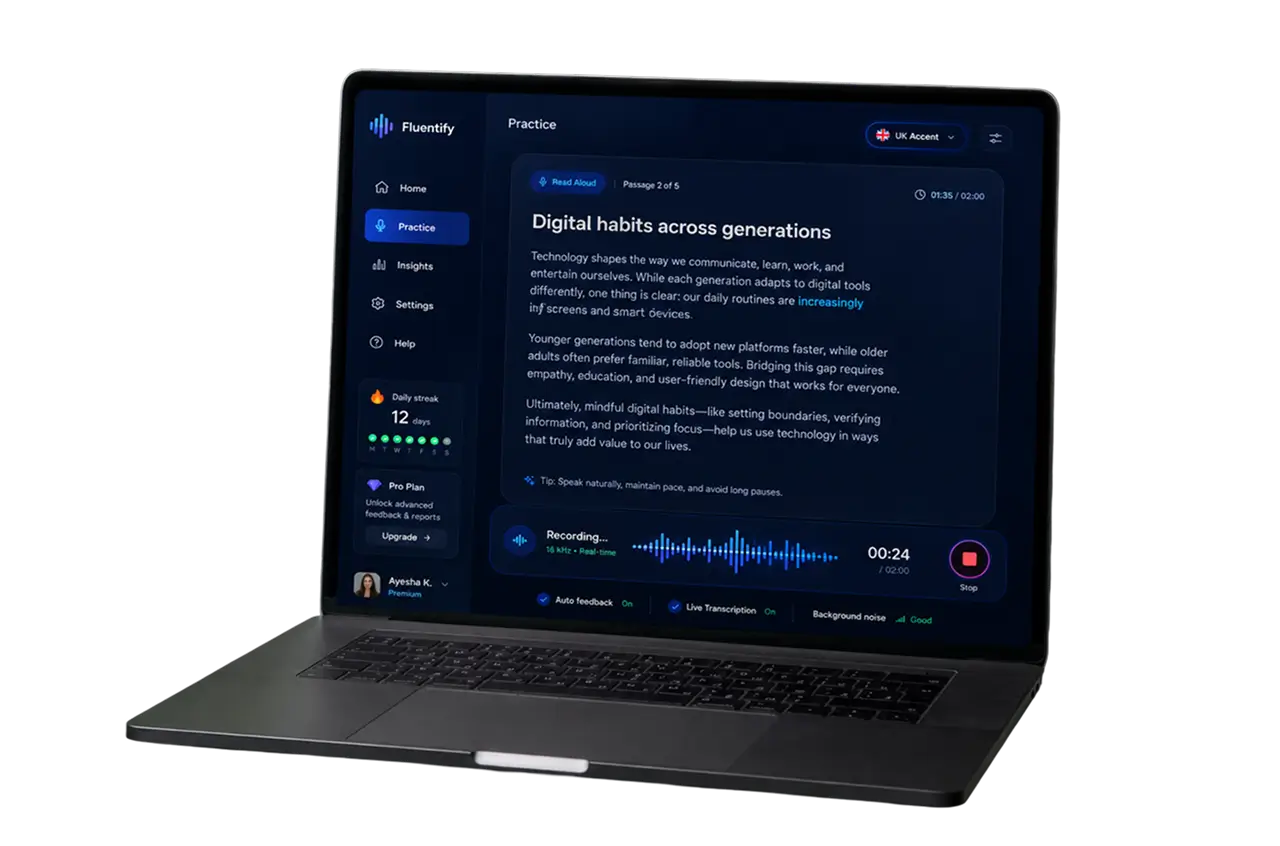
The app returns the selected answer plus the reasoning behind it. Given the accuracy rate, the explanation is the part students learn from and the part a reviewer can check. A visible chain of logic is more helpful than a bare letter.
Expert-Validated Answer Library
Explanations were checked against expert-reviewed answers before reaching students, which is what separates a study tool from an answer generator.
Progress Tracking
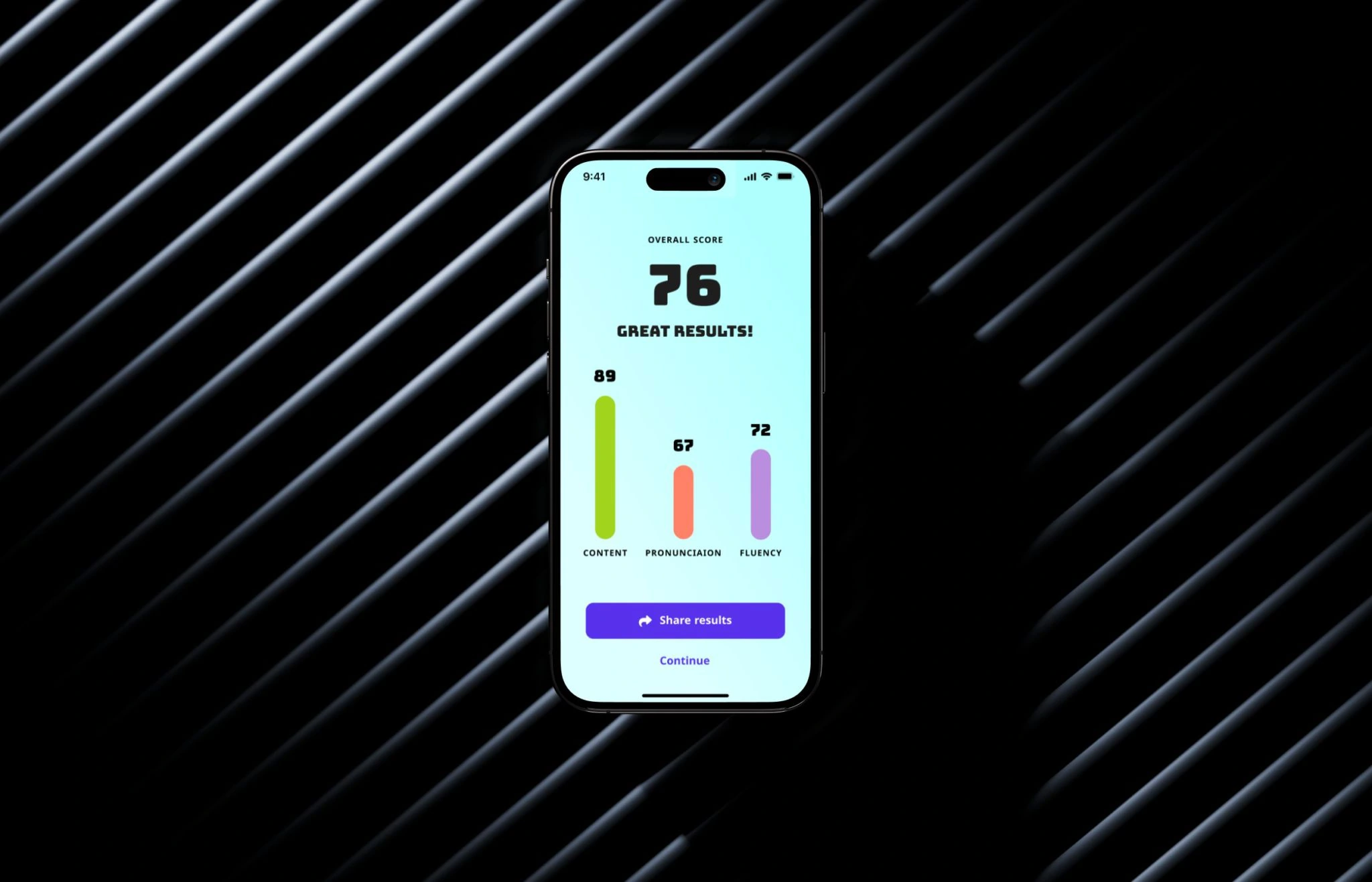
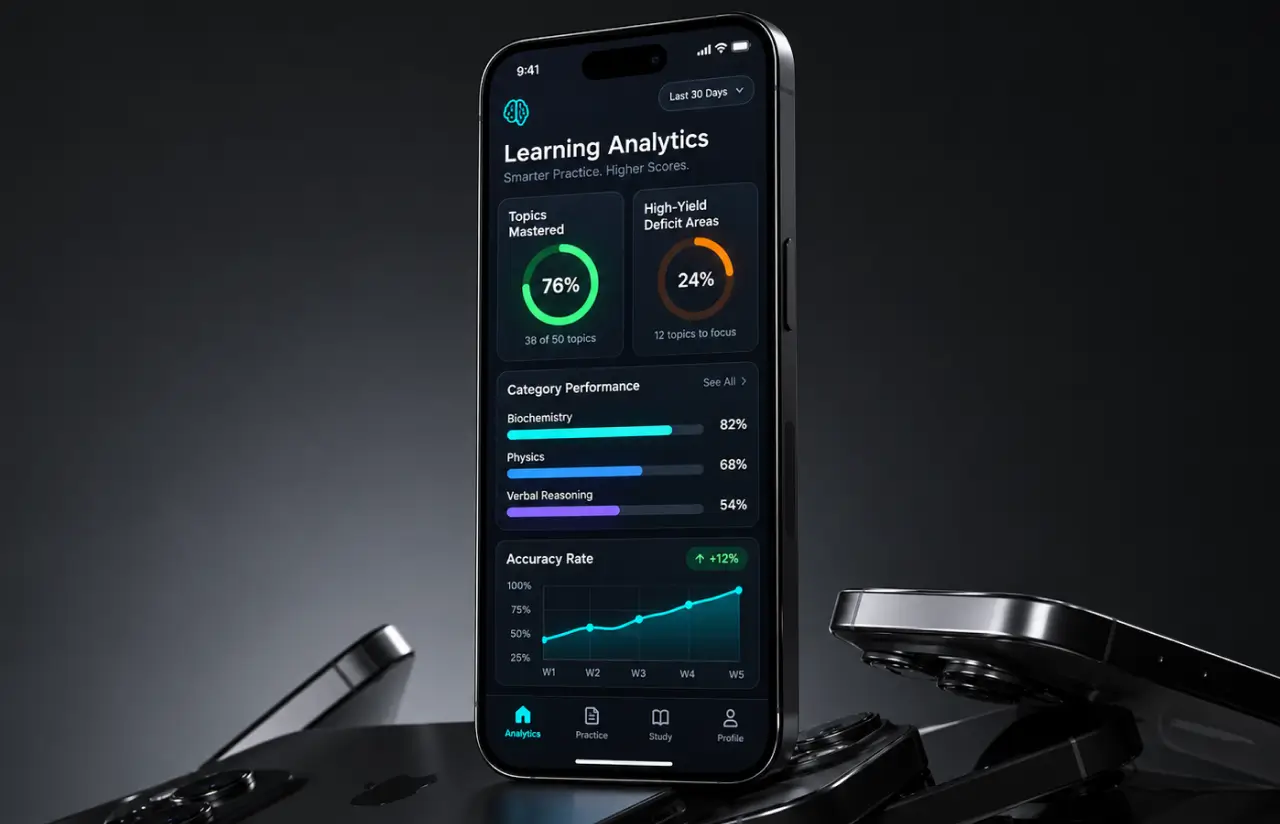
Students access a view of which topics they have mastered and which keep producing errors. Across many practice questions, that pattern is more useful than any single answer.
Daily Practice Sessions
Sessions are sized for the gaps in a pre-med schedule. Most MCAT studying happens in twenty-minute windows between other commitments.
Cross-Platform Consistency
iOS and Android apps run against the same backend and the same model, so a student switching from an iPhone to a borrowed Android tablet sees identical progress and identical explanations.
Admin Question Management
The web platform lets the content team add question categories, review AI output, and flag responses for correction without a developer in the loop.
Scrum Methodology
Project Journey
The MCAT preparation platform was delivered through agile sprint cycles, combining AI model training, mobile development, and continuous testing with real exam-style questions.
How the MCAT Prep App Works
- The student chooses MCAT or SAT. That choice routes the request to the model fine-tuned for that specific test format.
- The system ingests inputs from either a native database or live user-supplied material.
- The fine-tuned architecture then deconstructs the source text, strictly weighs the logical constraints of each option, and forces a definitive output.
- Output includes the reasoning, not just a letter. Explanations were validated against expert-reviewed answers.
- The true value lies in discrepancy analysis. Users audit their own logic strictly against the model’s generated framework.
- The system tracks these variance patterns across sessions, instantly isolating verified competencies from skill deficits well before final execution.
Development Process Flow
Fine-tuning runs on a different rhythm than feature development: each cycle produced a measurable accuracy number rather than a demo, which made progress easy to review and hard to fake. Sequence mattered. Data cleaning came first, because fine-tuning on inconsistent inputs produces a model that has learned the inconsistency. Model separation followed once single-model results showed the accuracy trade-off, and mobile development started only after response accuracy held across question categories. Full cycle quality assurance ran alongside development rather than waiting for a release candidate, which is the only way AI explanations reach students already checked against expert-reviewed answers.
How we deliver your project
- We agree on the project goal, the priority features, and a realistic delivery date and budget.
- We rank everything the product needs, starting with what moves the business first.
- Work is cut into two-week cycles. Each one opens by selecting the next set of features.
- The team builds, tests, and integrates features across the sprint.
- Every sprint ends with working software and client reviews that shape the next cycle.
- Each sprint produces a shippable piece. We look at what worked, adjust, and keep developing.
Timeline
Six Phases, Clearly Defined
Discovery & AI Strategy
- Analyzed MCAT and SAT question formats
- Defined AI answer-generation requirements
- Planned data preparation and model fine-tuning approach
- Created product roadmap and MVP scope
Data Prep & Fine-Tuning
- Cleaned and structured thousands of multiple-choice questions
- Prepared training datasets with correct answers and explanations
- Fine-tuned GPT-based model behavior for exam reasoning
- Tested response accuracy across different question categories
UX/UI Prototyping
- Designed student learning flows
- Created the question-solving interface
- Built explanation and progress tracking screens
- Optimized mobile experience for daily practice sessions
Agile Development
- Developed the React Native mobile application
- Built the React.js web interface
- Created Node.js backend infrastructure
- Integrated AI inference pipeline and user analytics
QA & AI Validation
- Tested question-solving accuracy
- Validated AI explanations against expert-reviewed answers
- Performed mobile performance testing
- Improved response consistency and edge-case handling
Launch & Improvement
- Released the platform to students
- Monitored AI performance and user feedback
- Improved prompts and model responses
- Added new question categories and learning features
UI/UX Design: Intuitive Interface for MCAT Study Success
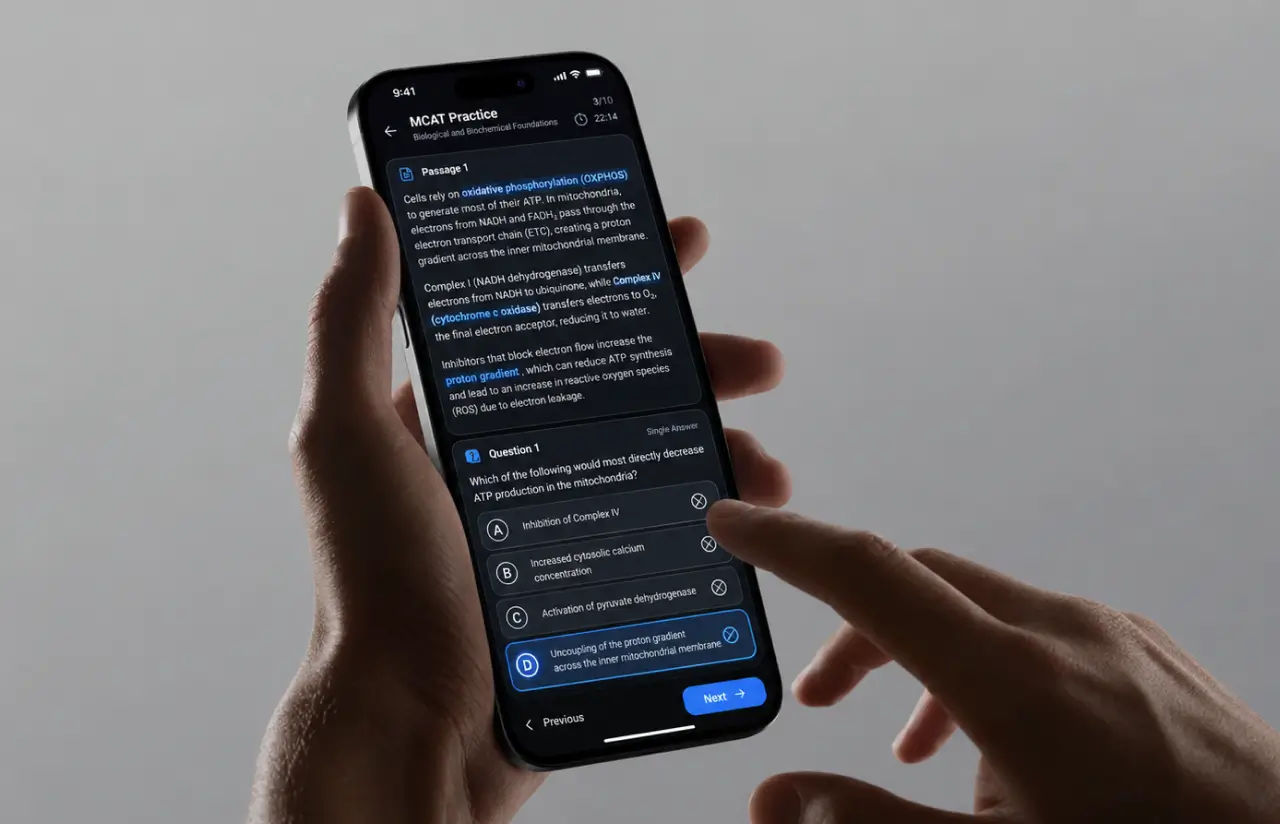
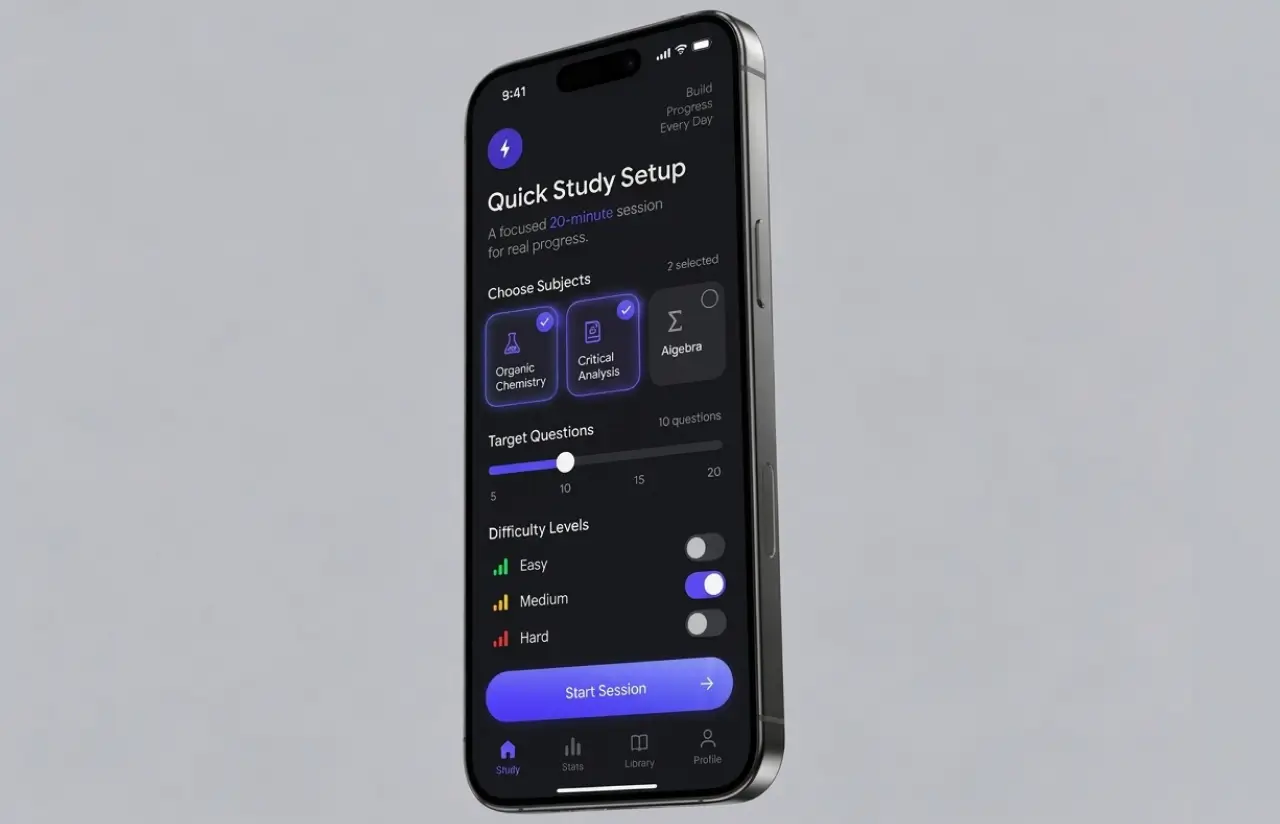
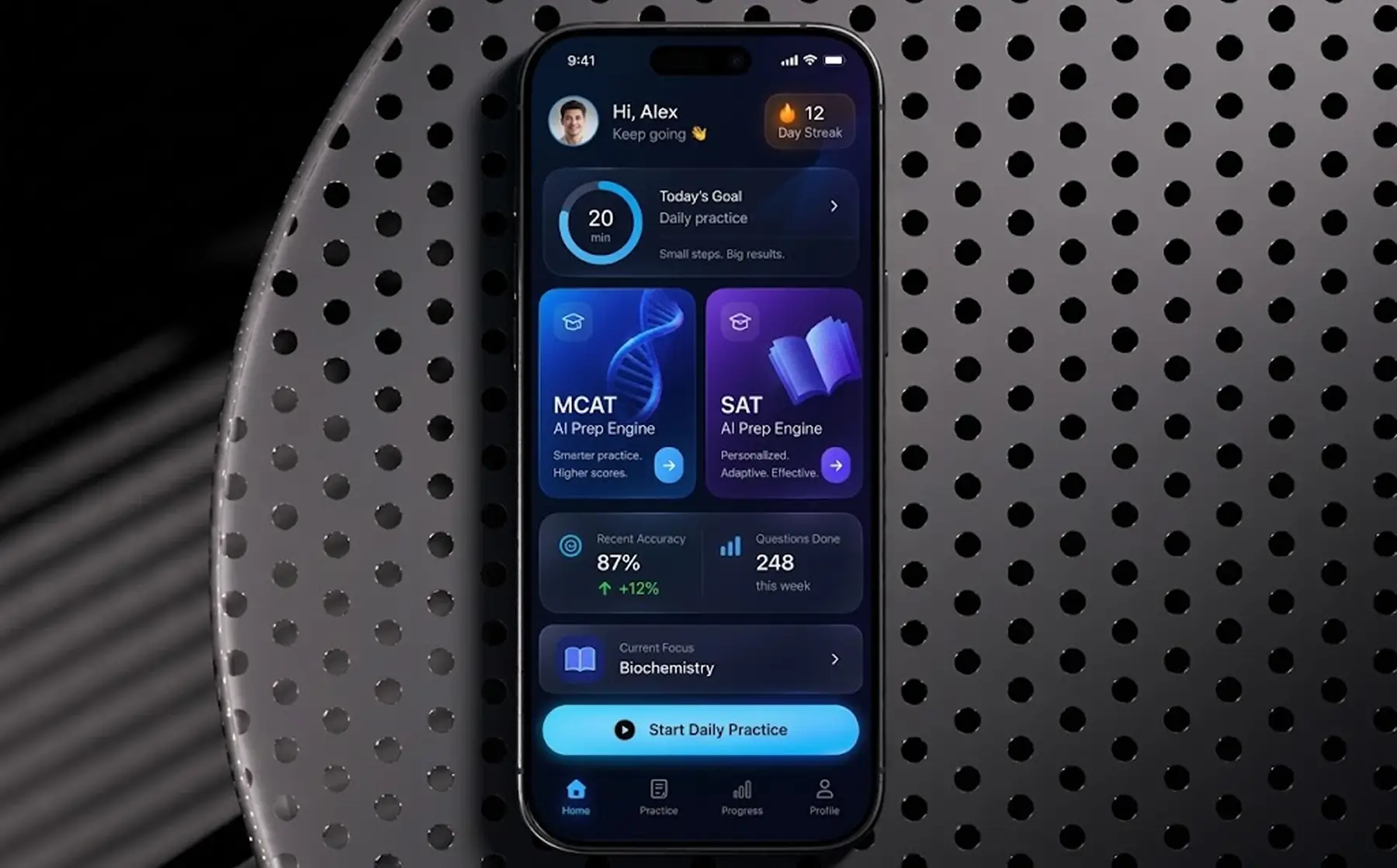
Design turned an accuracy limitation into a product decision. At 0.62, an interface that leads with the answer invites students to copy it, which is both pedagogically useless and reputationally dangerous. The design leads with the explanation instead, giving reasoning the visual weight and placing the selected option underneath. That single choice changed what the product is: not an answer engine, but a study tool where the model’s reasoning is the thing being examined. It also made the accuracy rate survivable, because a visible chain of logic is checkable in a way a bare letter never is.
The layout solved the passage problem that generic prep apps ignore. An MCAT item is several hundred words of experimental description followed by a question, and the compact question-plus-four-options pattern that works for SAT items breaks completely. Students move between passage and options constantly while eliminating answers, so the layout keeps both in view rather than forcing a scroll back. On mobile, this took several iterations, and it is the difference between a tool used on a phone and one abandoned for a desktop.
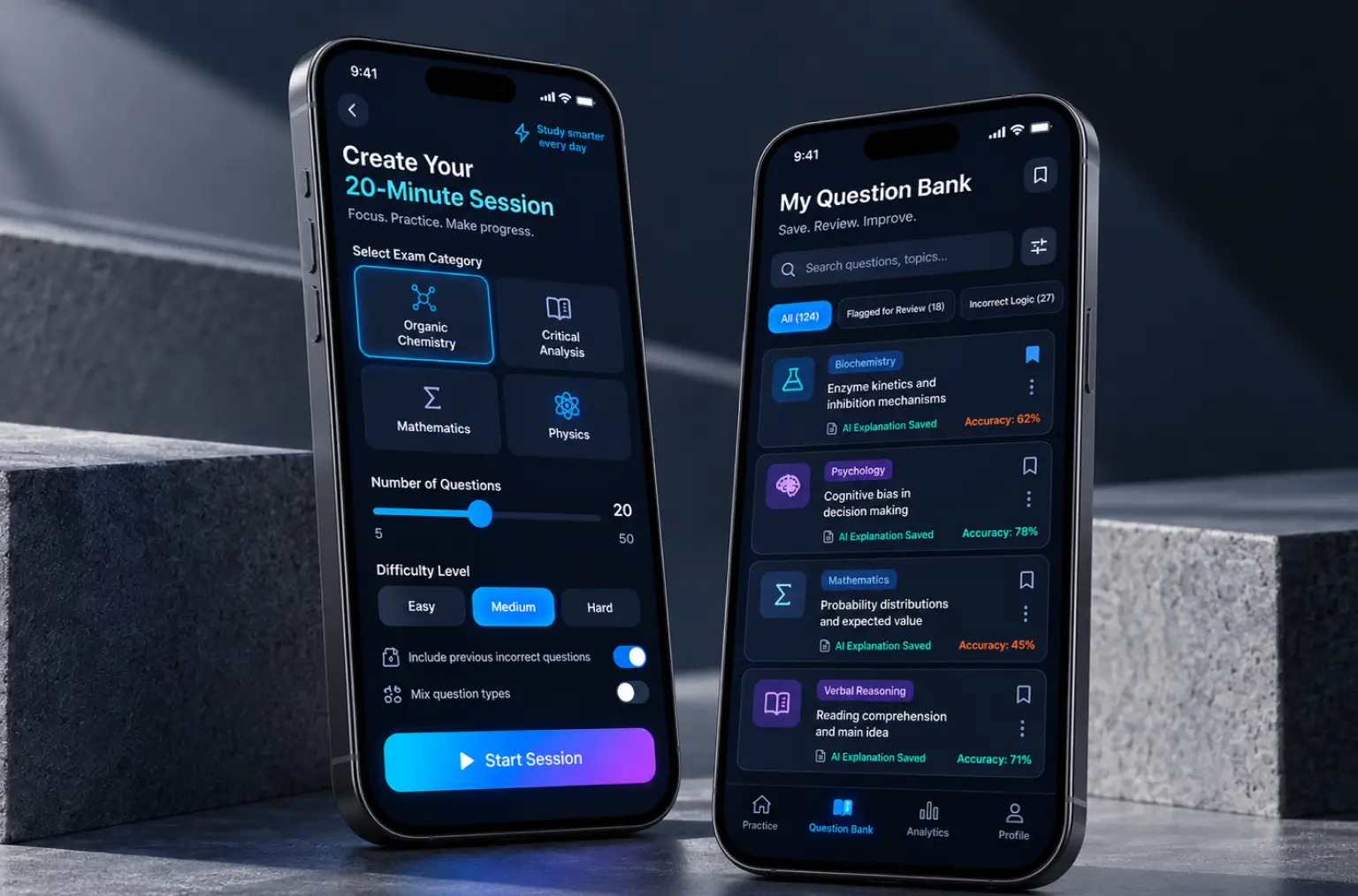
Session design drove the retention model. Most MCAT studying happens in twenty-minute gaps, not scheduled blocks. Sessions were sized for that reality, and progress tracking gave students an engaging reason to return the next day. For a subscription product, daily return is the whole business model, and it comes from session design rather than from feature count. One thing the design deliberately avoided: padding. No video library, no gamification layer, no social feed. That kept the build inside twelve months and the interface legible on a phone at 6 am.
Results & Impact
Before
- ✕No automated way to solve or explain MCAT and SAT multiple-choice questions.
- ✕Question analysis handled manually, one item at a time.
- ✕No measurement of how well a model performed on either test.
- ✕Datasets scattered, inconsistently formatted, answer keys unverified.
- ✕No student-facing product.
After
- ✔Two fine-tuned models, one per test, returning answers with detailed explanations.
- ✔Thousands of structured questions in a question bank with AI explanations.
- ✔0.62 accuracy rate measured against verified keys, with explanations expert-validated in QA
- ✔Curated training sets with verified keys and explanations for both tests.
- ✔iOS and Android apps plus a web admin platform for content management.
Impact of the MCAT Prep App After Launch
Verified Reviews
Our Reputation on Top Platforms
LITSLINK holds a 4.8 rating on top platforms. Those reviews point to technical depth, clear communication across long engagements, and delivery that holds its dates. See more of what our development services cover across AI and e-learning projects, from discovery through the maintenance and support services that follow launch.
Have an AI EdTech Project in Mind?
Planning test prep AI from scratch, or running a prep app whose content team is drowning in manual question review? Tell us what test formats you need to cover and what your question bank looks like. We come back within 48 hours with a scope, a timeline, and a number at a reasonable rate.
Thank you for your message. It has been sent.